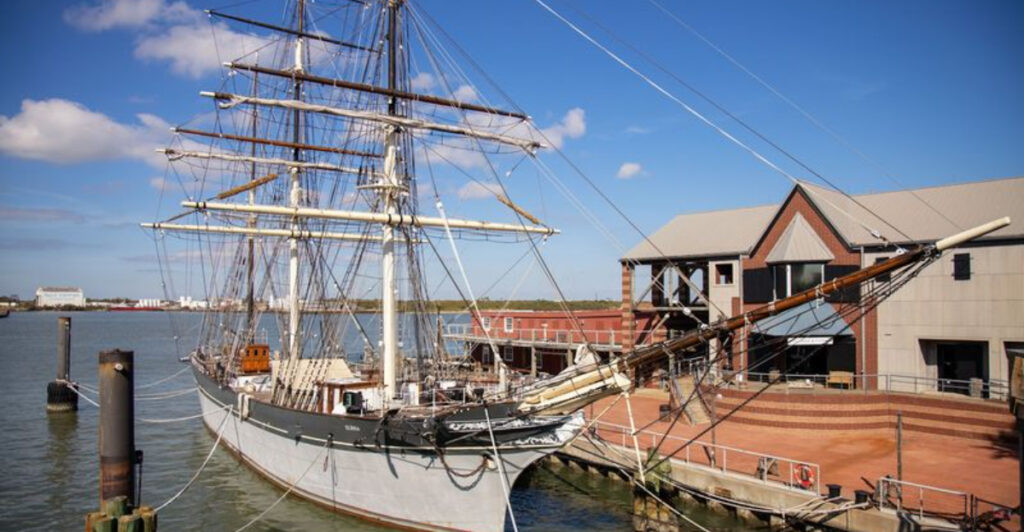
Docked at Galveston’s Pier 22, this floating piece of Texas history feels like a hidden treasure most visitors walk right past. The 1877 tall ship ELISSA isn’t just some dusty museum display—she’s a fully restored iron-hulled sailing vessel that still takes to the open water. Whether you’re a history buff, a maritime enthusiast, or just looking for something genuinely cool to explore on the Texas coast, this hidden gem delivers an experience you won’t find anywhere else in the state.
1. Step Aboard an Authentic 19th-Century Sailing Vessel
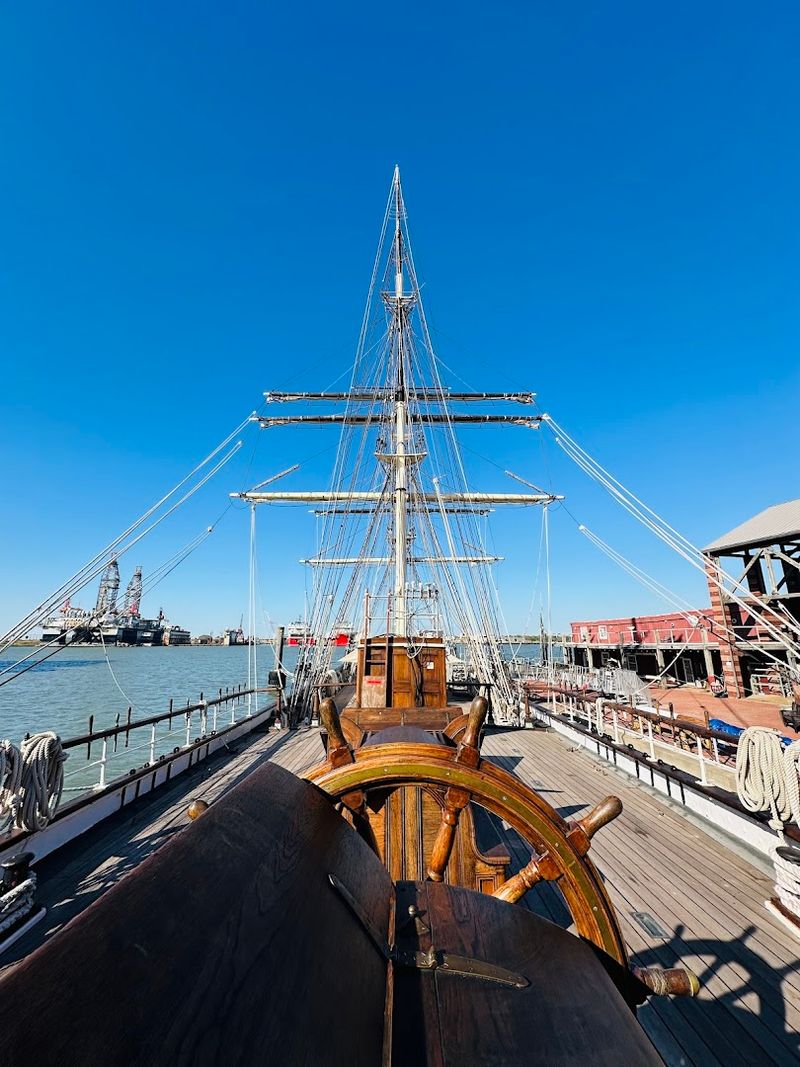
Walking onto the deck of the ELISSA feels like stepping through a portal to another era. Built in 1877 in Aberdeen, Scotland, this iron-hulled barque has sailed the world’s oceans for nearly 150 years. The ship measures 205 feet long with three towering masts that once carried 19 massive sails across the Atlantic.
What makes ELISSA truly special is her authenticity. You’re not looking at a replica or a permanently docked display piece. This vessel has been meticulously restored to her original glory, right down to the rigging and deck fittings.
Every plank, rope, and piece of hardware tells a story of maritime commerce from the golden age of sail.
Visitors can explore both the upper and lower decks at their own pace. Check out the crew’s cramped quarters below deck, peek into the captain’s cabin, and imagine what life was like for sailors who spent months at sea. The galley shows where meals were prepared on a rocking ship, and you can even grip the massive ship’s wheel and pretend you’re navigating through a storm.
The stairs are steep and narrow—just like they would have been in 1877—so wear comfortable shoes. Parents with small children should know that strollers won’t work below deck, but baby carriers are perfect. The tight spaces and authentic construction make the experience feel genuinely immersive, not sanitized for modern convenience.
2. Discover Galveston’s Role as the Ellis Island of the South
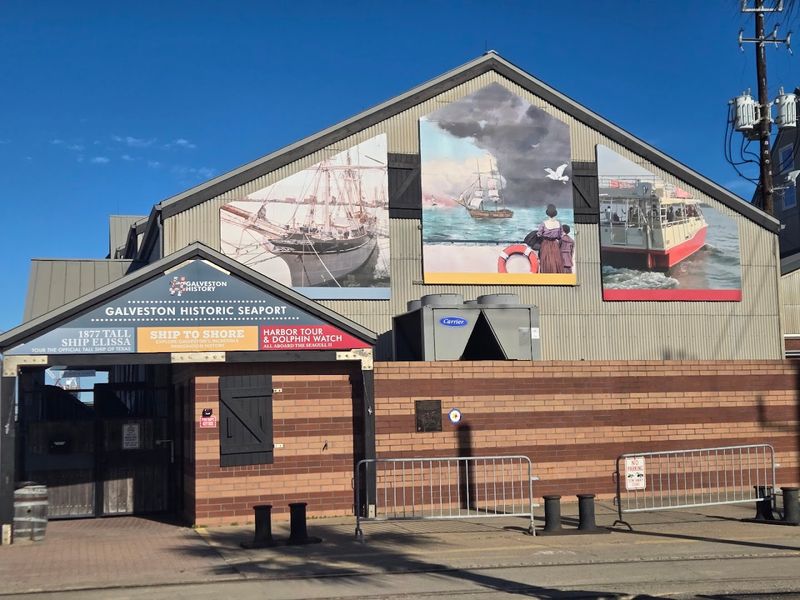
Most people think of New York when they hear about American immigration, but Galveston played a massive role too. Between 1846 and 1948, more than 200,000 immigrants passed through this Texas port, making it the second-busiest immigration center in America. The museum at the historic seaport brings this forgotten chapter of history to vivid life.
The immigration exhibits are surprisingly interactive and deeply personal. You’ll hear recorded voices of actual immigrants describing their journeys, see recreated living quarters from ships, and learn about the Galveston Movement that helped Jewish families escape persecution in Eastern Europe. Rabbi Henry Cohen and financier Jacob Schiff created the Galveston Plan to redirect Jewish immigrants away from overcrowded East Coast cities.
Walk through displays showing what families packed for their journeys, read letters they sent back home, and understand the hopes and fears they carried. Many immigrants arriving in Galveston headed inland via railroad to settle in the Texas Hill Country, which explains the strong German and Czech populations still thriving there today. Others traveled up the Mississippi River to establish communities throughout the Midwest.
The museum doesn’t shy away from the difficult parts of the story either. You’ll learn about the challenges immigrants faced, the discrimination they encountered, and how Galveston also served as a crucial stop on the Underground Railroad for enslaved people seeking freedom in Mexico. It’s powerful, educational stuff that most Texas history classes skip right over.
3. Watch Volunteers Keep a 147-Year-Old Ship Sailing
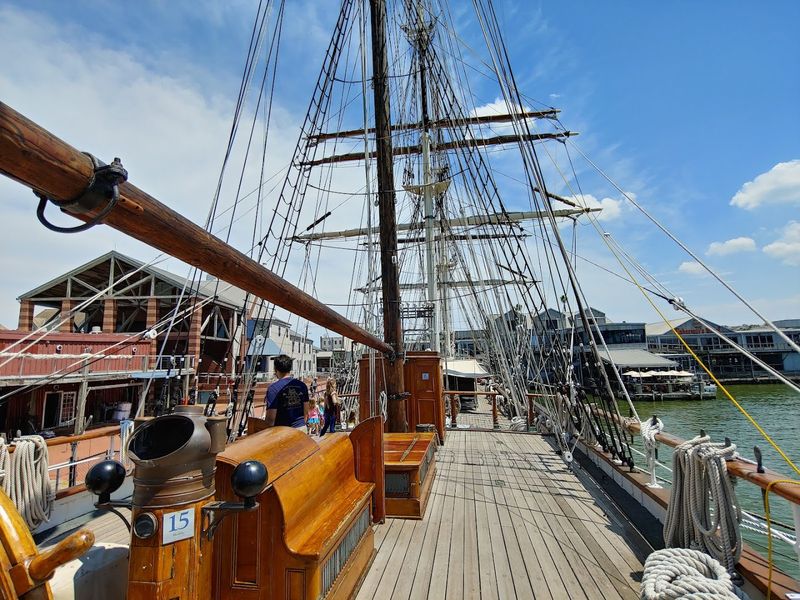
Here’s something that blows most visitors’ minds: ELISSA still sails. A dedicated crew of volunteers keeps this 147-year-old vessel seaworthy and takes her out for special sailing events throughout the year. When you visit, you might see crew members actively working on restoration projects, training on the rigging, or preparing for the next voyage.
Watching these volunteers work is fascinating. They use traditional maritime skills that most people have never witnessed—splicing rope, maintaining the rigging, treating the wood, and keeping the complex sailing systems functional. Some crew members have been volunteering for decades, learning the craft through hands-on experience and passing knowledge down to newer recruits.
ELISSA offers day sails in the spring where paying passengers can join the crew for an authentic tall ship experience. These aren’t cheap tourist cruises—they’re genuine sailing adventures where you might help raise the sails or watch experienced crew members climb the rigging. Previous participants rave about seeing all 19 sails set and feeling the ship heel under wind power.
Even if you’re not visiting during a sailing event, seeing the ship being actively maintained drives home that this isn’t just a museum piece. The volunteers’ passion is contagious, and many are happy to chat about the ship’s history, restoration challenges, and what it takes to keep a 19th-century vessel operational. It’s living history in the truest sense, not just something behind velvet ropes.
4. Explore Maritime History Without Breaking the Bank
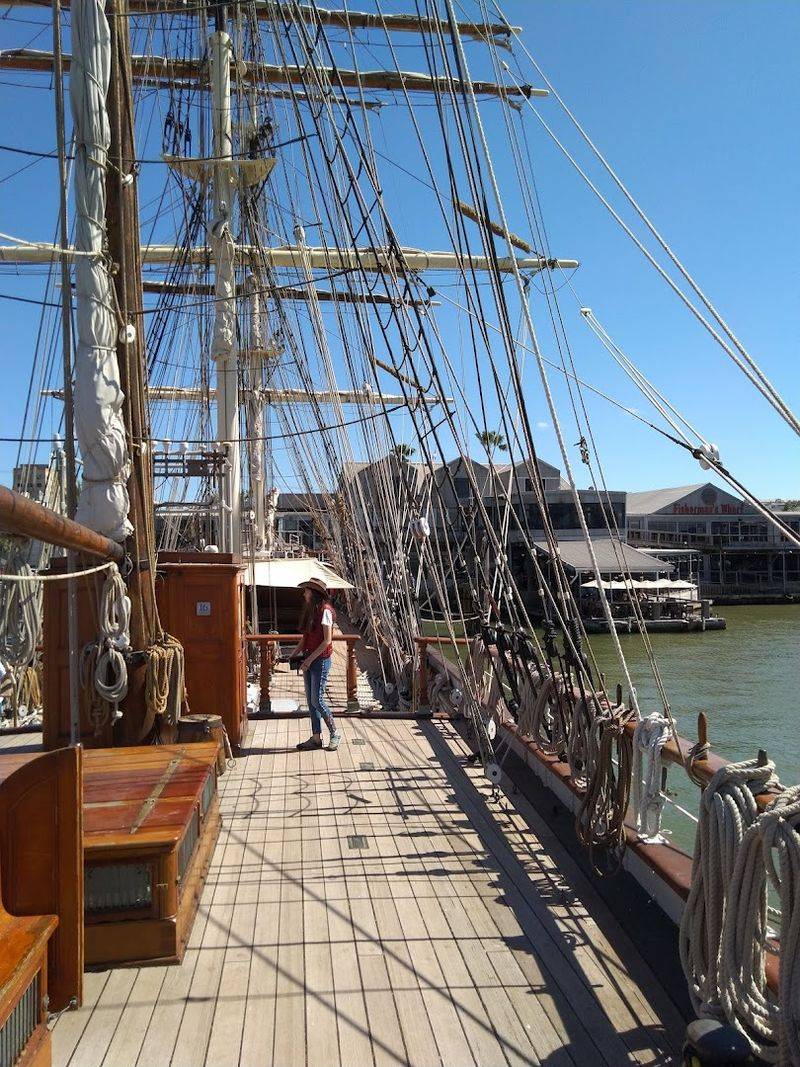
Quality museum experiences usually come with hefty price tags, but the Galveston Historic Seaport keeps things refreshingly affordable. General admission covers both the immigration museum and full access to the ELISSA, giving you hours of exploration for around $18 per adult and $12 per child. That’s a bargain considering you’re getting two distinct experiences in one visit.
The self-guided format means you can move at your own pace without feeling rushed. Spend ten minutes or three hours—nobody’s watching the clock. Your entry card activates audio stations throughout the museum where you can hear immigrant stories and historical details, adding depth without requiring a formal tour.
The interactive elements keep kids engaged while adults absorb the historical significance.
Combination tickets offer even better value. Bundle your seaport admission with a dolphin-watching harbor tour and you’ll get a comprehensive Galveston experience at a discounted rate. The harbor tours leave from the same location and provide fascinating commentary about the port’s modern operations alongside its historical significance.
You’ll see massive cruise ships, learn about the shipping industry, and usually spot dolphins playing in the bay.
The gift shop is worth browsing without feeling obligated to buy. They stock maritime-themed books, locally made items, and nautical gifts that aren’t the usual tourist trap junk. Restrooms are clean and easily accessible in the shop area, and there are benches outside if anyone in your group needs a break.
Paid parking is available right at the pier, making the whole visit convenient and stress-free.
5. Experience History Away from Galveston’s Crowded Tourist Spots
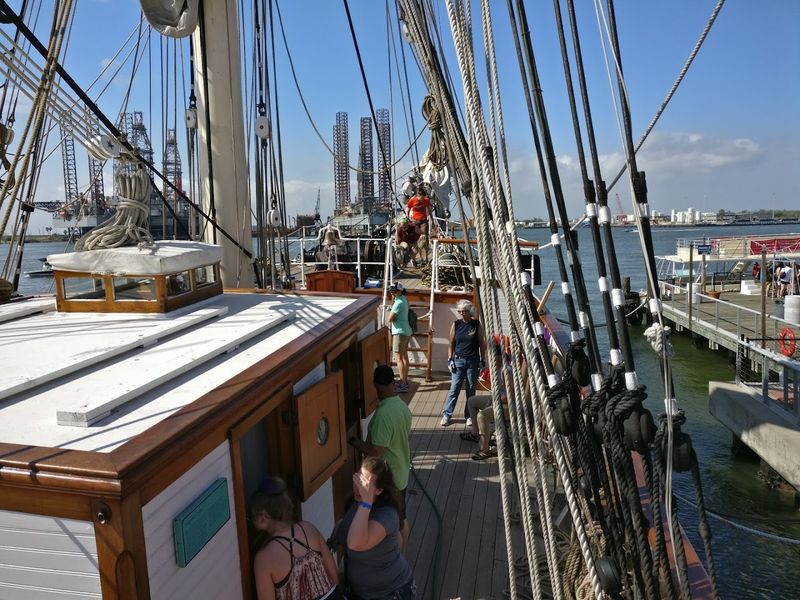
Galveston gets packed with tourists hitting the same predictable spots—the Strand, Pleasure Pier, beach bars. Meanwhile, the Historic Seaport sits just slightly off the beaten path, offering a completely different vibe. You’ll find engaged visitors genuinely interested in history rather than crowds hunting for T-shirts and margaritas.
The location on Pier 22 provides stunning views of Galveston Bay without the chaos. Watch enormous cruise ships dwarf the ELISSA as they maneuver in and out of port. Across the water, you might spot the Battleship Texas at her new berth.
The whole scene captures Galveston’s maritime character—past and present existing side by side.
Visiting during special events adds extra magic. The Dickens on the Strand festival transforms the area into Victorian England, and the seaport becomes a perfect backdrop for period costumes and activities. Many visitors say exploring ELISSA during the festival was their favorite part of the entire event.
The ship’s 1877 construction date aligns perfectly with the Victorian theme, creating an authentic atmosphere you can’t manufacture.
The seaport also makes a fantastic educational field trip destination that actually holds kids’ attention. Teachers appreciate the hands-on nature of exploring an actual ship, and the immigration stories connect to social studies curriculum in meaningful ways. Groups of homeschoolers frequently visit, taking advantage of the self-paced format and rich learning opportunities.
You’ll see families having genuine conversations about history rather than just snapping selfies and moving on.
6. Connect with Your Own Family’s Immigration Story
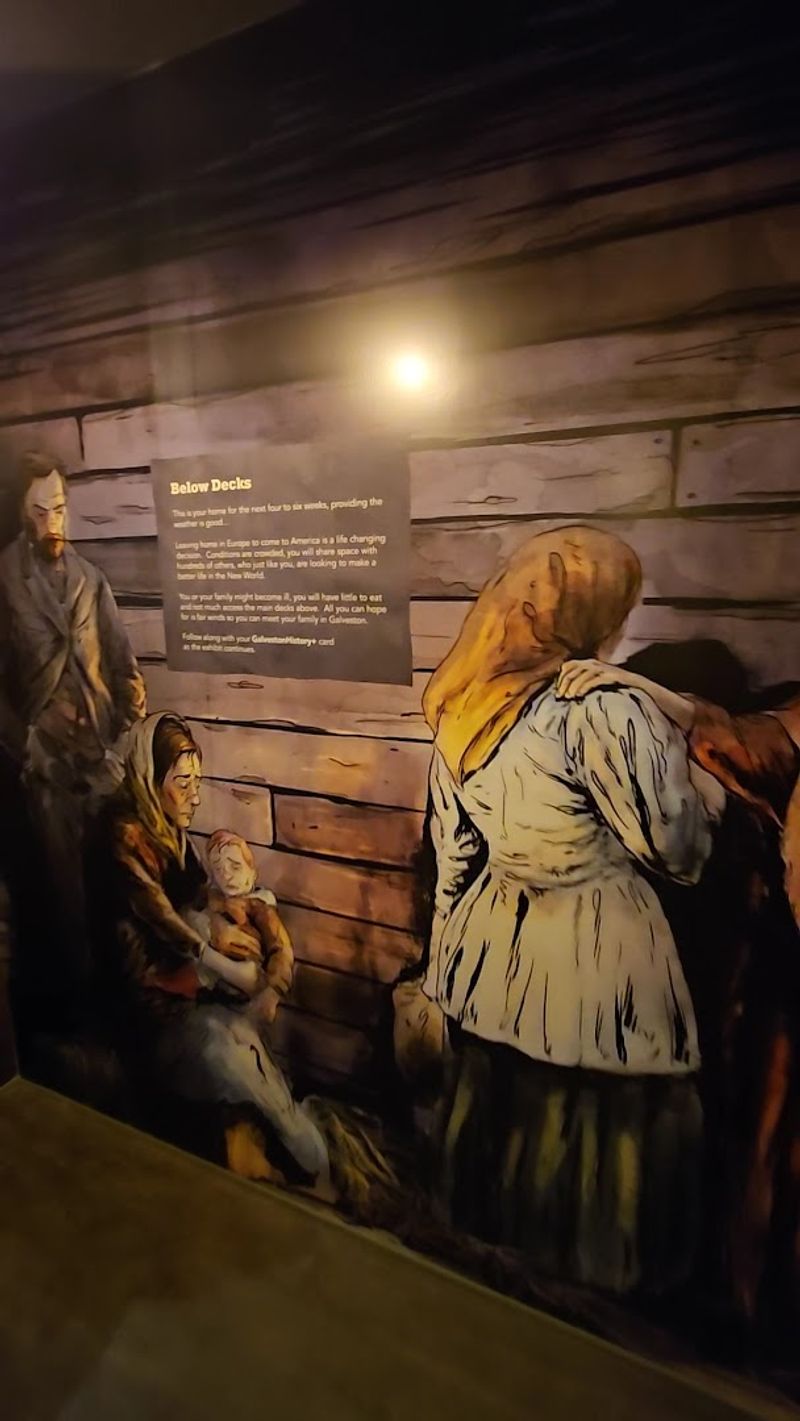
For many visitors, the seaport museum becomes unexpectedly personal. Thousands of Texans had ancestors who arrived through Galveston, and the museum helps connect those family stories to real places and experiences. One visitor discovered their Irish ancestors likely walked the same pier before heading inland, transforming abstract family lore into tangible history.
The museum provides context for understanding what your ancestors endured during their journeys. Seeing the cramped ship quarters, learning about the medical inspections, and hearing firsthand accounts makes those old family stories suddenly real. If your family came from Germany, Scotland, Ireland, Eastern Europe, or dozens of other regions, there’s a good chance Galveston played a role in your Texas roots.
Staff members are knowledgeable about Galveston’s immigration history and can point you toward additional research resources. While the museum itself doesn’t maintain searchable passenger lists, they can direct serious genealogy researchers to appropriate archives. Even without specific family connections, understanding this immigration gateway helps explain Texas’s incredible cultural diversity.
The Scottish connection adds another layer for visitors with heritage from that region. ELISSA was built in Aberdeen, and seeing a ship constructed in Scottish shipyards now preserved in Texas creates a poignant international link. Several reviews mention visitors with Scottish and Irish roots feeling especially moved by the experience, connecting both to the ship’s origins and to the immigration stories of people from their ancestral homelands arriving in America.
7. Enjoy a Family-Friendly Adventure That Actually Educates
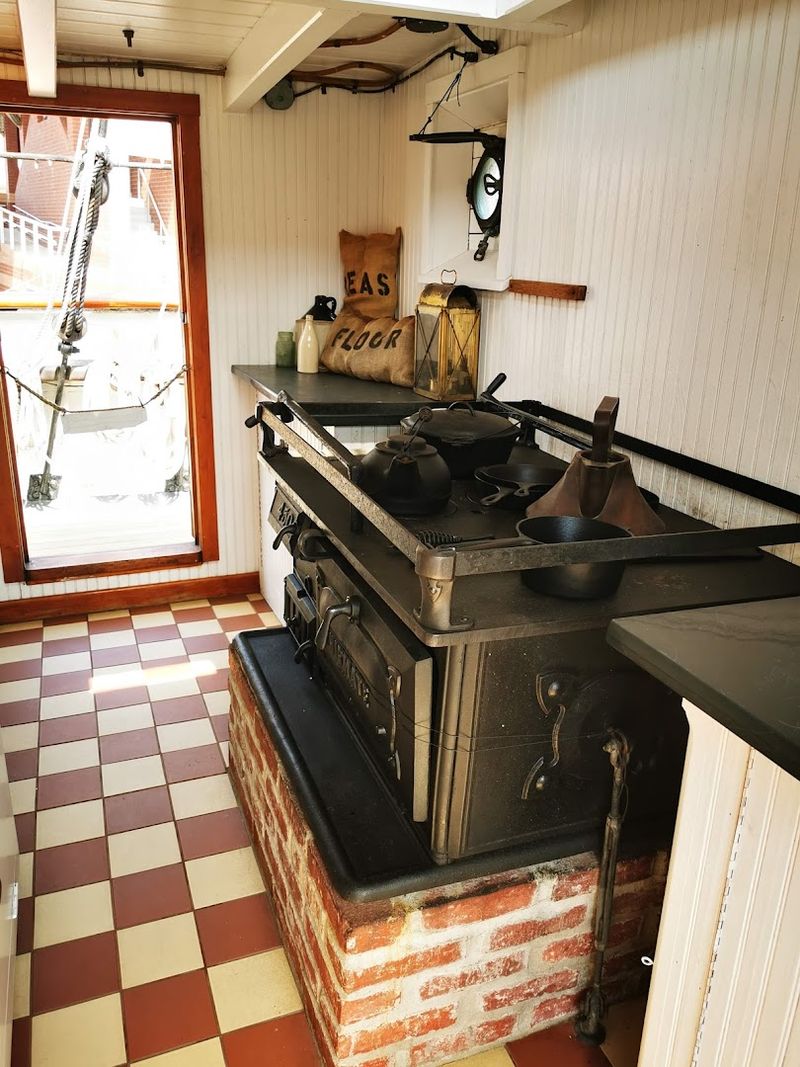
Finding activities that engage both kids and adults can be tricky, but the Historic Seaport nails this balance. Children love the adventure of exploring a real ship—climbing through tight passages, pretending to steer at the wheel, and imagining pirate battles. Parents appreciate that their kids are actually learning something substantial rather than just burning energy.
The self-guided format works perfectly for families with different attention spans. Older kids might spend 30 minutes examining every detail of the crew quarters while younger siblings are ready to move on after five minutes. Nobody feels rushed or held back.
The interactive museum elements keep even shorter attention spans engaged with buttons to push, audio to activate, and realistic recreations to explore.
Kids around age six and up handle the ship exploration well. The stairs are manageable for most children who can climb regular stairs independently, though parents should supervise on the steeper sections. Toddlers can definitely visit if you’re wearing them in a carrier, but the tight spaces and stairs make strollers impractical below deck.
The crew members are patient and friendly with curious kids asking endless questions.
The educational value extends beyond the visit itself. Families report their kids bringing up what they learned weeks later—asking questions about immigration, wondering how sailors navigated before GPS, or drawing pictures of tall ships. Teachers would call this a “sticky” learning experience, the kind that actually sticks in young minds because it involved real exploration and discovery rather than just reading from a textbook.
8. Witness a Rare Piece of Maritime History Still Afloat
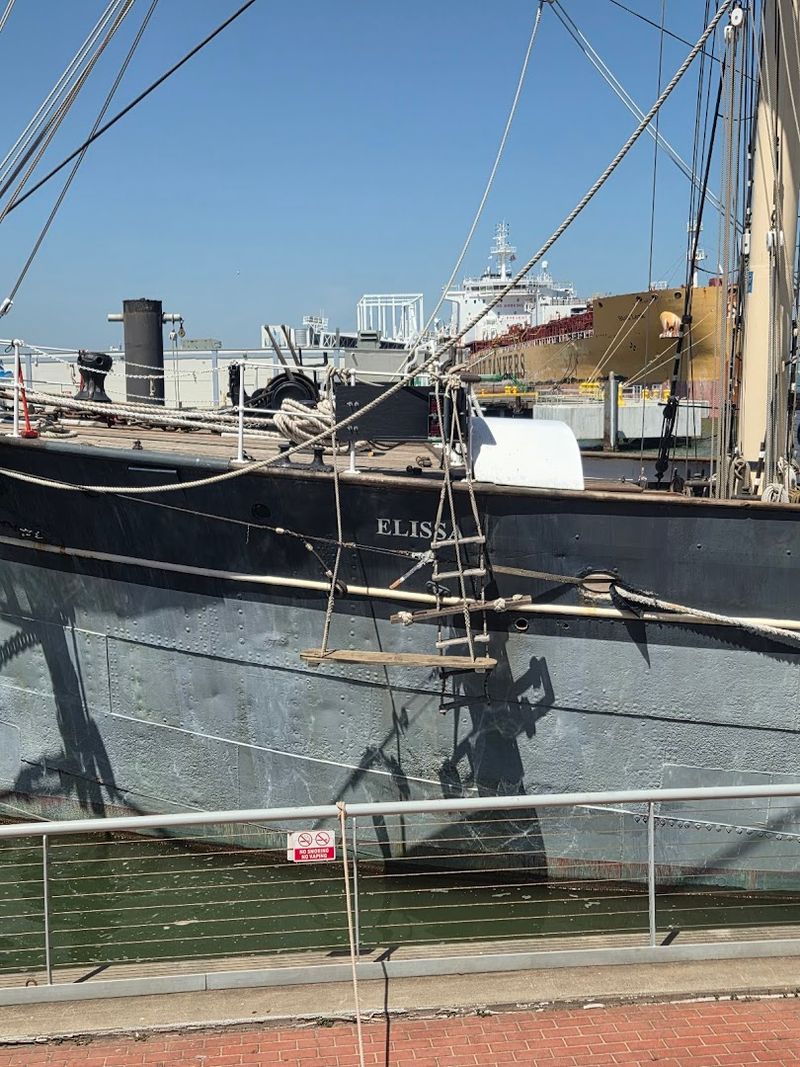
Only a handful of 19th-century sailing vessels survive worldwide, and even fewer remain seaworthy. ELISSA ranks as one of the oldest merchant ships still sailing, putting her in extraordinarily rare company. Maritime historians consider her preservation a minor miracle given how many similar vessels were scrapped, sunk, or left to rot over the past 150 years.
ELISSA’s survival story reads like an adventure novel. After decades of service hauling cargo worldwide, she was nearly broken up for scrap multiple times. The Galveston Historical Foundation discovered her deteriorating in Greece in 1970, bought her for $40,000, and spent years painstakingly restoring her.
The restoration required traditional shipbuilding techniques, period-appropriate materials, and countless volunteer hours. What they accomplished stands as one of maritime preservation’s great success stories.
Walking the decks, you’re experiencing something genuinely irreplaceable. The iron hull construction represents a transitional period in shipbuilding—after wooden vessels but before modern steel ships dominated. The rigging and sail configuration showcase the peak of wind-powered maritime technology.
Every element reflects the craftsmanship and engineering knowledge of 1877, preserved for modern visitors to appreciate.
Maritime enthusiasts travel from around the world specifically to see ELISSA. She’s featured in international tall ship registries and participates in special maritime festivals when her schedule allows. For Texans, having such a significant piece of sailing history right here on the coast is something to genuinely appreciate.
Most states don’t have anything remotely comparable, making this truly a hidden treasure worth discovering before everyone else catches on.
Share this story