Tucked along the northern shores of Lake Huron, Negwegon State Park stretches across more than 3,400 acres of wild Michigan coastline, dense forest, and quiet backcountry trails that most people in the state have never heard of. Even longtime Michigan residents are often surprised to learn it exists.
Getting there requires navigating narrow, sandy two-track roads that feel more like forest paths than park entrances, which might explain why it stays so wonderfully quiet. The Friends of Negwegon State Park, based at 248 State Park Rd in Harrisville, plays a quiet but essential role in keeping this place as raw and rewarding as it is.
The Sandy Road That Keeps Casual Visitors Away
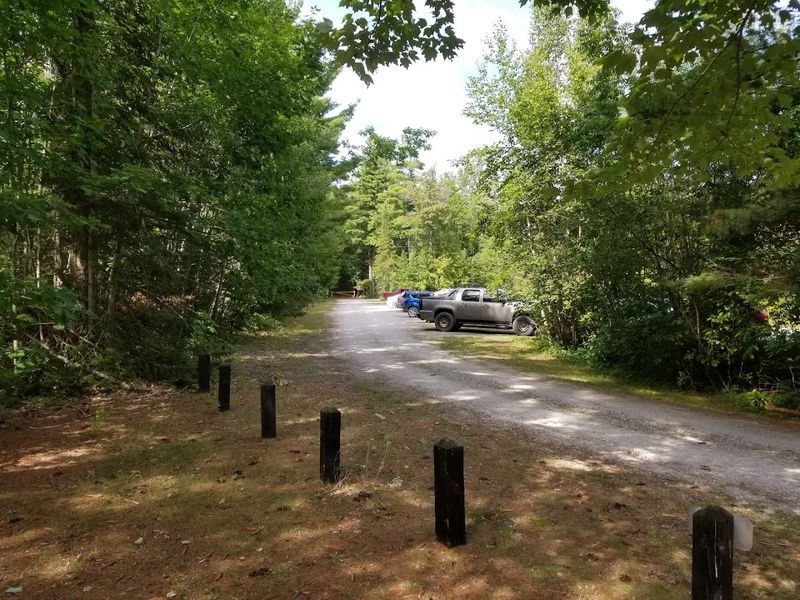
Before you ever see the beach or smell the lake, the road tests you. Getting to Negwegon State Park from the south is manageable for most vehicles, but the approach from the north is a different story entirely.
Soft sand, narrow two-track lanes, and occasional oncoming cars that leave both drivers searching for a pullout spot make this entrance feel more like an adventure than a commute.
Visitors who have made the drive more than once tend to agree: come from the south. The road is still unpaved and sandy, but it feels far less like you might get your car stuck in a dune.
A few reviewers have noted needing four-wheel drive during wet stretches, and that is not an exaggeration worth ignoring.
What this road actually does, without anyone intending it, is filter the crowd. People who want a quick, easy beach stop tend to turn around.
Those who push through arrive at a small gravel parking lot feeling like they earned something. It is a modest lot, room for a handful of cars, and there are spots along the way to pull off when traffic passes.
The drive itself has its own quiet reward. Tall pines and birch trees press close on both sides.
On a sunny morning, the light filters through in broken streaks. You might spot deer tracks near the edge of the road, or catch a glimpse of something moving just inside the tree line.
There are no gas stations out here, no convenience stores, and cell service gets unreliable fast. Pack what you need before leaving Harrisville.
That small detail separates a smooth visit from a frustrating one, and the park absolutely deserves a smooth visit.
Miles of Shoreline With Almost No One On It
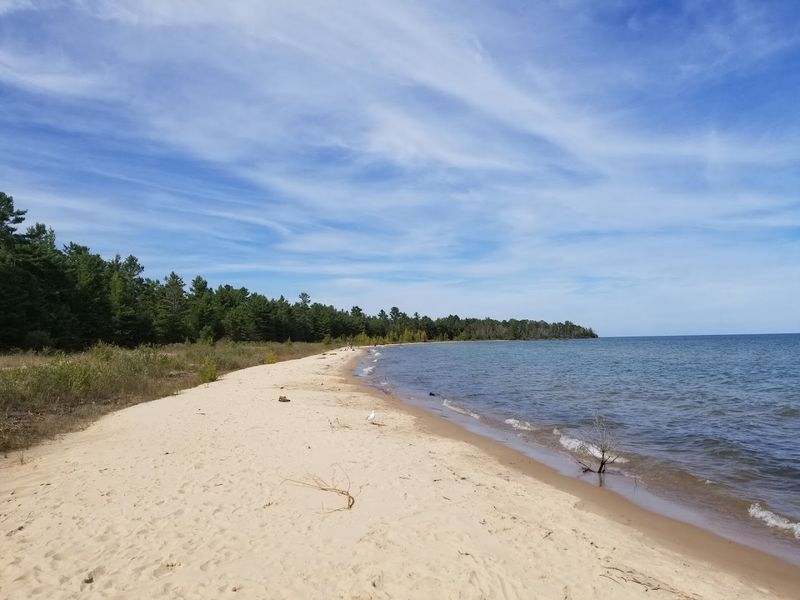
Walk out onto the beach at Negwegon and the first thing you notice is the silence. Not the complete silence of an empty room, but the kind that comes from being far enough from roads, traffic, and crowds that what you hear is just wind, water, and the occasional bird call from somewhere in the dunes behind you.
The beach runs for roughly three miles of public shoreline, and on most weekdays it feels entirely yours. Even when the parking lot fills up, the sheer length of the beach means people spread out naturally.
Animal tracks show up clearly in the wet sand near the waterline. Deer, birds, and coyotes leave their marks overnight, and you can follow them along the shore without any particular destination in mind.
Lake Huron here behaves differently depending on the day. One morning the waves can roll in close to two feet, crashing with real energy and pulling at the sand.
Come back the next afternoon and the surface might be nearly glassy, barely a ripple reaching the shore. That unpredictability makes it interesting.
The water is sandy and warm in the shallows, with sandbars that shift position through the season. A water fountain near the beach access point lets you rinse your feet before heading back to the car, which is a small touch that regulars seem to genuinely appreciate.
Toward South Point, the shoreline gets rockier and the hiking gets more interesting. Glacially deposited rocks sit scattered along the upper shore, some of them large enough to sit on while you watch the light change over Thunder Bay.
It is the kind of place that makes you forget how long you have been standing there.
Backcountry Campsites That Reward the Effort
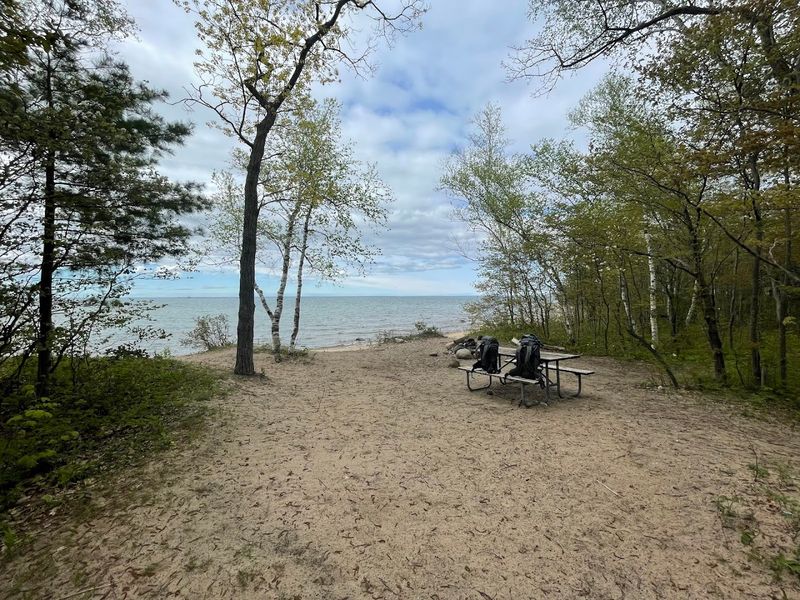
Spending a night at Negwegon is not like booking a campsite at most Michigan state parks. There are no drive-up spots, no electric hookups, and no camp store nearby.
What exists instead is a small number of primitive backcountry sites, each requiring a hike in of roughly two miles or more, carrying everything you need on your back.
The campsites are reservable through Harrisville State Park, which handles logistics for Negwegon. Each site comes with a fire ring, a picnic table, a bear box or bear pole for food storage, and a vault toilet.
The toilet situation gets mentioned in nearly every review, usually with a laugh, but the fact that it exists at all out here is genuinely useful.
South Point Site 4 gets talked about often. It sits right on Thunder Bay, facing north, with a clear view of a couple of small islands and, on clear nights, the distant lights of Alpena across the water.
The tradeoff is wind. That site catches northern gusts more than the others, and while it can make starting a fire a challenge, it also keeps the bugs away in a way that feels like a fair exchange.
Sites 1 through 3 sit closer together and offer a more sheltered feel, with an eastern beach exposure that rarely catches strong wind. The Chippewa Trail runs nearby, and the birch forest along that route is the kind of thing people come back to describe to friends in detail.
Falling asleep to the sound of Lake Huron is genuinely different from falling asleep in a campground surrounded by RVs. The water makes a low, rhythmic sound that changes with the wind, and by the second night, most people stop noticing it consciously.
It just becomes the sound of the place.
The Hiking Trails That Go Quiet Fast
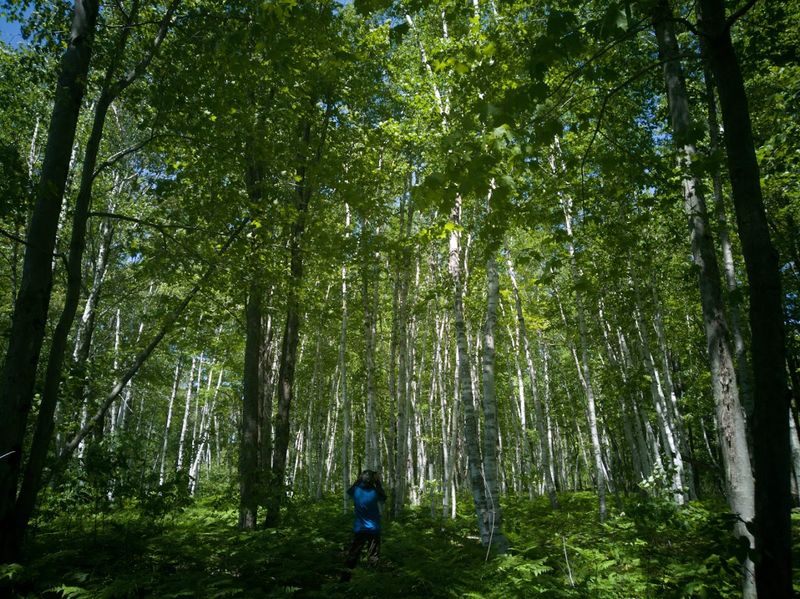
Most of the trail system at Negwegon sits flat, which makes it accessible for people who are not experienced hikers but still want to cover some real ground. The paths move through mixed forest of pine and birch, passing over small wooden bridges that span the wetter, murkier sections of the route.
In dry summer conditions, the trails are easy to follow and well-worn enough that getting turned around is unlikely.
The loop trail runs over five miles, and while the terrain stays mostly gentle, thick leaf cover in autumn can hide roots and rocks in ways that catch you off guard. At least one reviewer mentioned stumbling more than once on the back half of the loop.
Sturdy footwear matters more here than it might seem from the flat description.
Wildlife sightings happen regularly along these trails. Deer move through the woods in the early morning and again near dusk.
Snakes appear occasionally on sunny stretches of path where they warm themselves. A few visitors have come across skunks, which tends to make the story more memorable than any scenic overlook would.
Mosquitoes are real from late spring through midsummer. Bug spray is not optional in the wooded sections, especially if you venture away from the shoreline breeze.
Near the water, the wind usually handles most of the insect problem naturally, but the interior forest is a different situation entirely.
The Potawatomi Trail is another option, though early in the season it can look overgrown and the tick population picks up in tall grass areas. Walking the beach as an alternative is never a bad choice.
Some days the best hike is the one that keeps the lake in sight the whole time.
Dark Sky Preserve and Stargazing Above Lake Huron
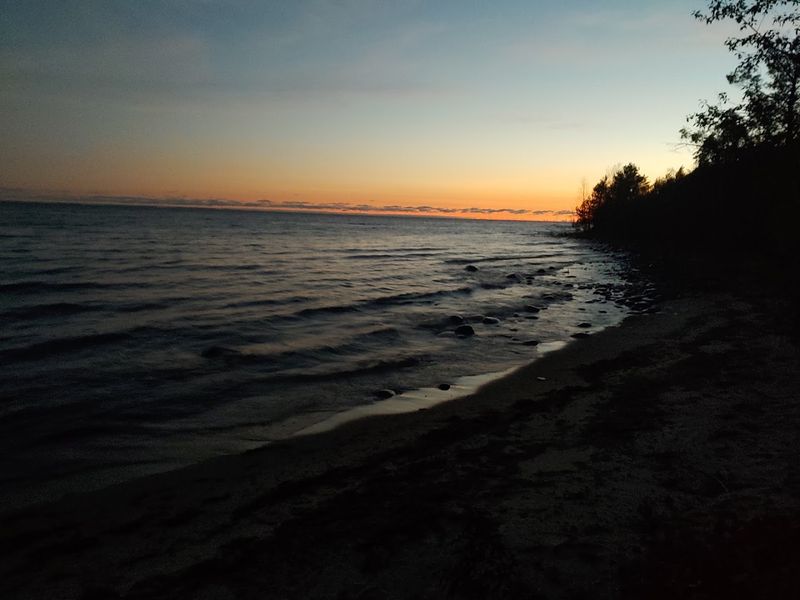
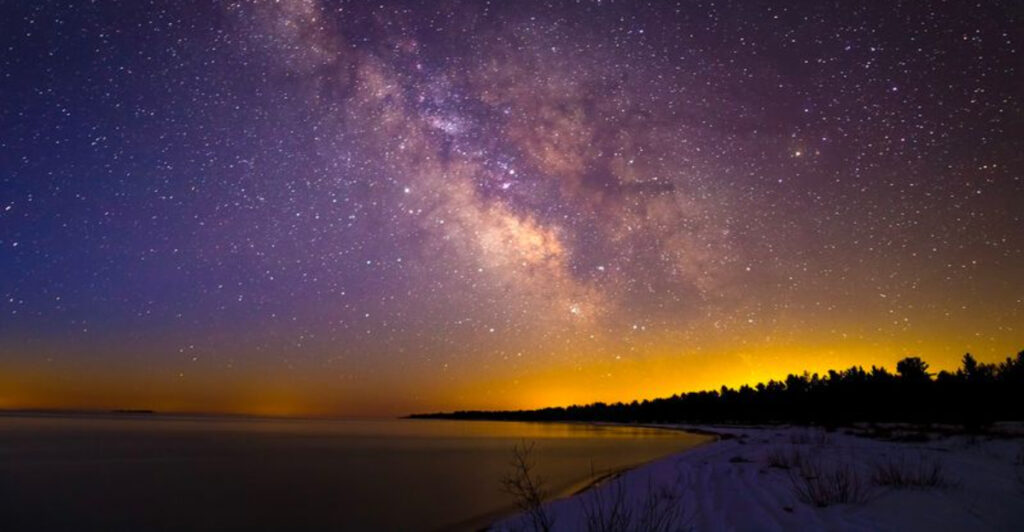
Negwegon State Park carries a Dark Sky Preserve designation, which means the absence of artificial light is not accidental. The park sits far enough from any significant town that on a clear night, the sky over Lake Huron fills with more stars than most people from urban or suburban Michigan have ever seen in one place.
One reviewer described catching a meteor shower from the beach, watching Mars rise and then seeing its reflection stretch across the lake surface. That kind of moment does not happen near city glow.
It requires genuine darkness, and Negwegon has it in abundance.
The beach is an ideal spot for stargazing because the horizon over the water is completely unobstructed to the east. You can set up a chair at the waterline and watch the sky rotate slowly overhead without a single rooftop or streetlight interrupting the view.
The Milky Way becomes a visible band on nights when the moon is new or still low.
For campers staying at the backcountry sites, the experience deepens further. Away from even the small parking lot lights, the forest trail back to the campsites runs through complete darkness.
A headlamp is essential, but there are stretches near the shore where stopping and letting your eyes fully adjust reveals a sky that feels almost overwhelming in its detail.
Timing matters. Late summer and early autumn offer some of the clearest skies along this stretch of the Lake Huron shoreline.
The air tends to be drier, the humidity drops, and the nights get long enough to actually settle in and watch the stars move. Bring a blanket, arrive before full dark, and give yourself at least an hour before expecting your eyes to fully adapt.
The Friends of Negwegon and Why the Park Stays This Way
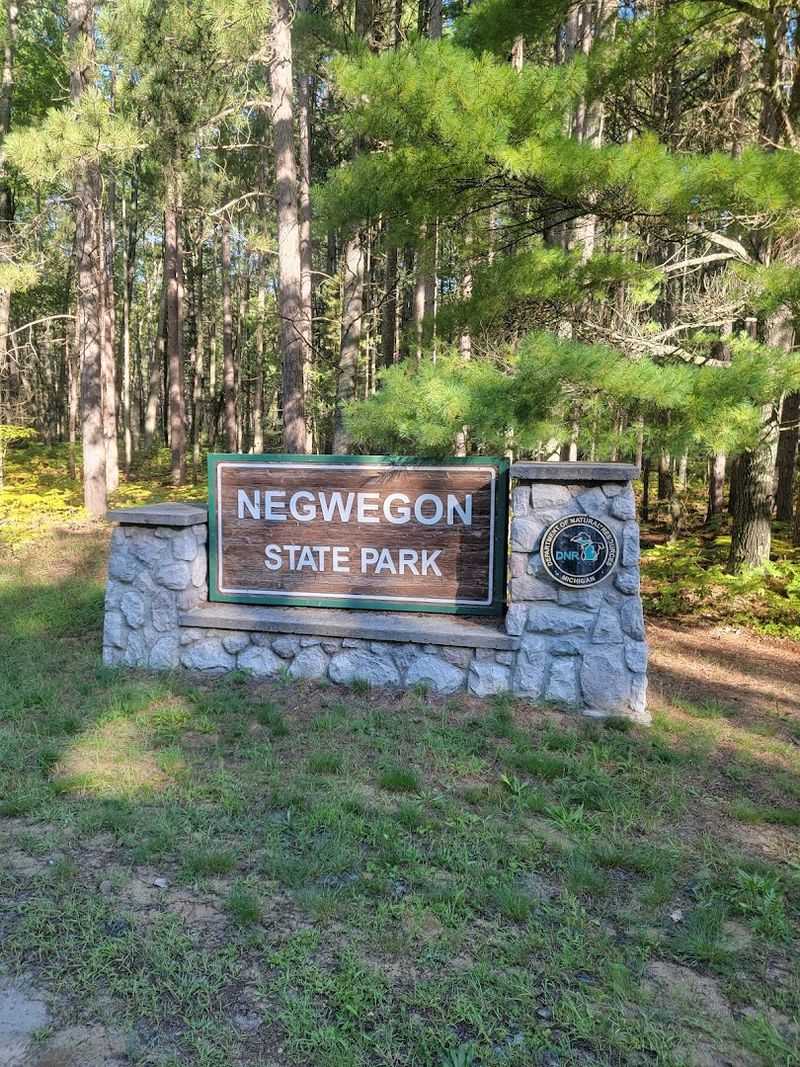
Negwegon does not maintain itself. The trails, the bridges over the marshy sections, the signage, the overall condition of a park this remote and this lightly staffed, all of it depends significantly on volunteer effort.
The Friends of Negwegon State Park, reachable at fonsp.org and based at 248 State Park Rd in Harrisville, is the organization that fills that gap.
As a registered non-profit, the Friends group coordinates with the Michigan Department of Natural Resources to support trail upkeep, park improvements, and public awareness. They operate with a strong connection to the local community and a genuine investment in keeping the park accessible without turning it into something it was never meant to be.
Their phone number is (989) 724-5126, and the organization maintains regular hours throughout the week, which reflects how seriously they take accessibility and community engagement. For visitors who want to do more than just show up, the Friends group offers a way to contribute something back to a place that gives a lot.
The park has a 4.8-star rating across hundreds of reviews, which is remarkable for a place with vault toilets, no picnic tables, and a two-track sand road as its main entrance. That rating reflects what the Friends organization helps protect: the feeling that the park has been cared for without being overdeveloped.
Keeping a wilderness area functioning well is less glamorous work than it sounds. It involves cutting fallen trees off trails after storms, maintaining the bridges, and making sure the small infrastructure that exists stays usable.
The people who do that work tend not to seek recognition for it. But the quality of a visit to Negwegon is a direct reflection of their effort, whether visitors realize it or not.
Rocky Shores, Glacial Finds, and the Quiet Pull of South Point
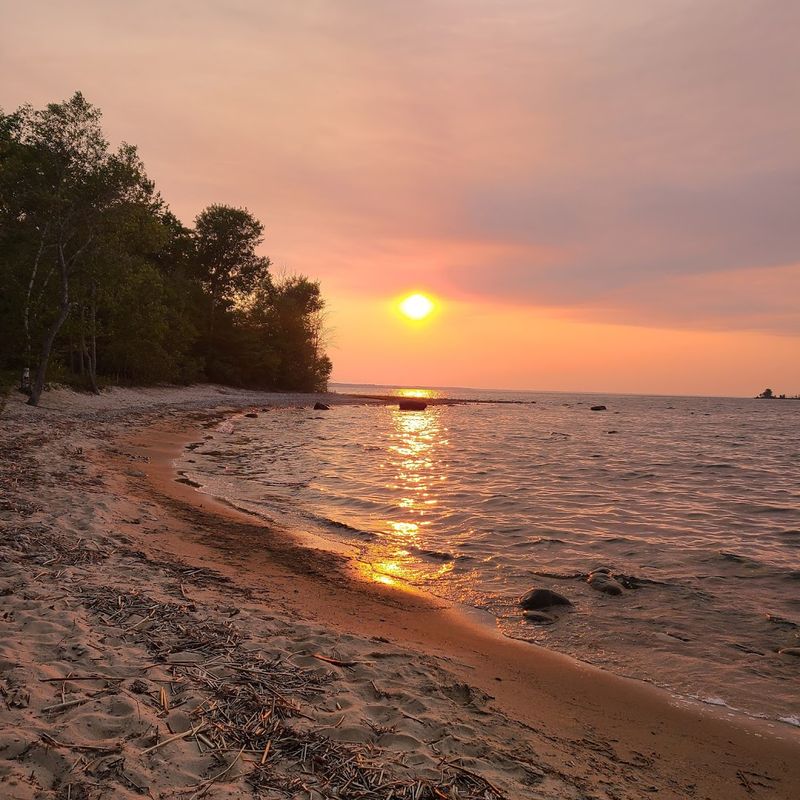
Not every part of Negwegon is a sandy beach. Head north along the shoreline toward South Point and the character of the coast shifts noticeably.
The sand gives way to exposed rock, and the rocks here are the kind that geologists and casual walkers both find worth stopping for.
Glacial erratics, boulders and stones deposited by retreating ice sheets thousands of years ago, sit scattered along the upper shore in sizes ranging from a fist to a small car. Some are smooth and rounded from water action.
Others have broken edges that suggest they have not moved much since the ice dropped them. Picking through them becomes its own slow activity, especially for anyone who enjoys hunting for Petoskey stones or other Lake Huron shoreline finds.
South Point itself offers a view that feels genuinely different from the main beach. Looking north across Thunder Bay, you can see Bird Island in the distance.
That small island is home to a large seabird colony, and during nesting season the noise carries across the water in a way that surprises people who were not expecting it. One visitor camped nearby and described the sound as relentless through the night, which, depending on your perspective, is either charming or maddening.
The walk to South Point from the main beach access is not a formal trail. It follows the shoreline naturally, stepping over rocks and occasionally cutting through low vegetation near the water edge.
Sturdy shoes make this significantly more comfortable than sandals would.
On calm days, the water near the point is clear enough to see the bottom well out from shore. The light hits differently here than at the main beach, partly because of the angle and partly because the rocky bottom changes how the color reads.
It is one of those small visual details that sticks with you after the drive home.
Share this story