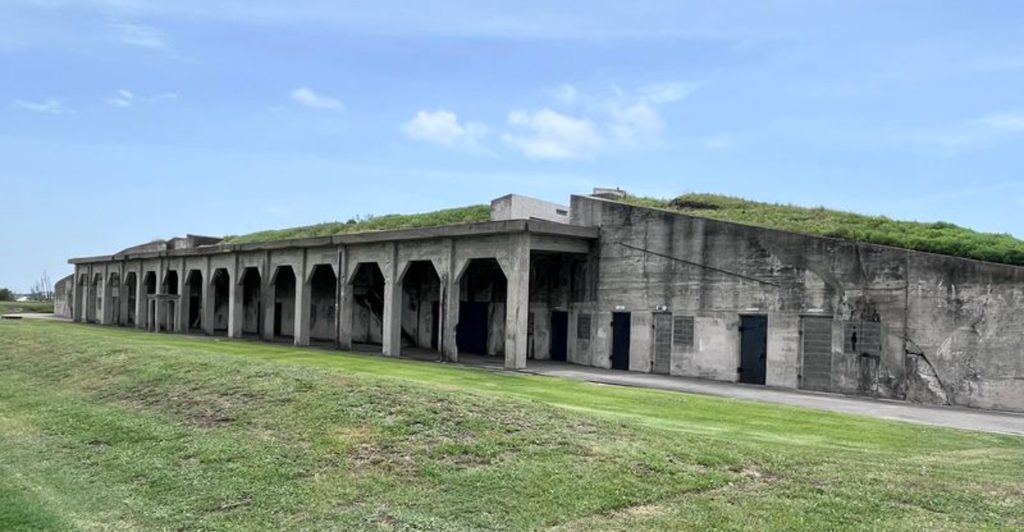
Out on the windswept tip of Bolivar Peninsula, a collection of massive concrete bunkers rises from the coastal grass like something straight out of a wartime thriller. Fort Travis isn’t your typical Texas roadside attraction. This place defended Galveston Bay through multiple wars, witnessed dramatic military operations, and now sits quietly along the shoreline where you can walk right up to its weathered gun batteries and imagine the soldiers who once manned them.
The stories hidden in these walls could easily fill a binge-worthy streaming series.
1. A Strategic Military Outpost Born From Conflict
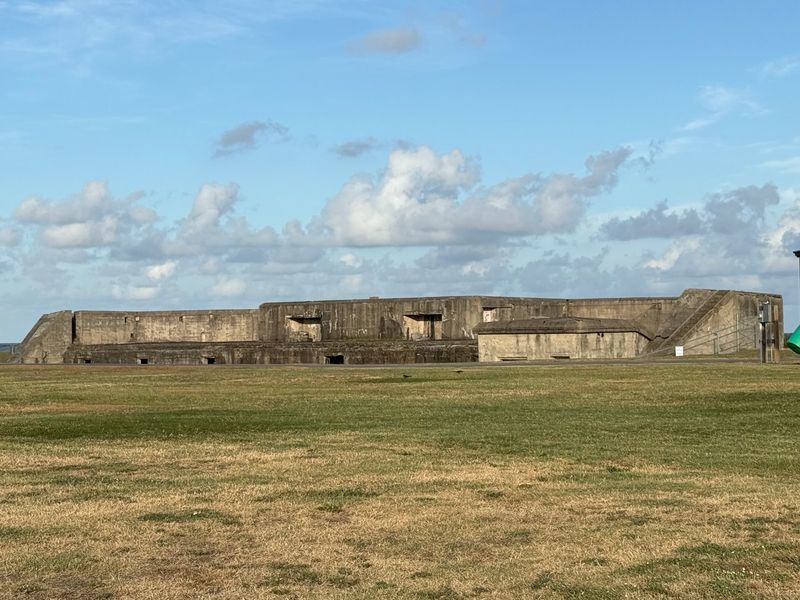
Fort Travis first appeared on maps back in 1898 when the United States needed coastal defenses during the Spanish-American War. Military planners chose this spot on Bolivar Peninsula because it offered perfect sight lines across the entrance to Galveston Bay. Any enemy ship trying to sneak into the bay would have to pass directly in front of these guns.
The original fortification actually dates back even further. A historical marker at the site mentions defensive positions standing here as early as 1836, right when Texas was fighting for independence. Those early structures were simple compared to what came later, but they proved the location’s tactical importance.
When the U.S. Army built the modern fort, they constructed it to last. Massive concrete gun emplacements were designed to withstand bombardment while housing huge artillery pieces that could sink warships.
The fort operated continuously from 1898 through 1949, serving through World War I and World War II.
During its active years, Fort Travis worked alongside other coastal batteries to create an impenetrable defense network. Soldiers stationed here trained constantly, ready to protect one of Texas’s most important ports. The fort saw upgrades and modifications as military technology evolved, with newer weapons replacing older systems.
Today, those concrete structures stand as monuments to over 50 years of military readiness, each bunker telling stories of the men who served and the wars they prepared to fight.
2. Massive Gun Batteries That Could Sink Battleships
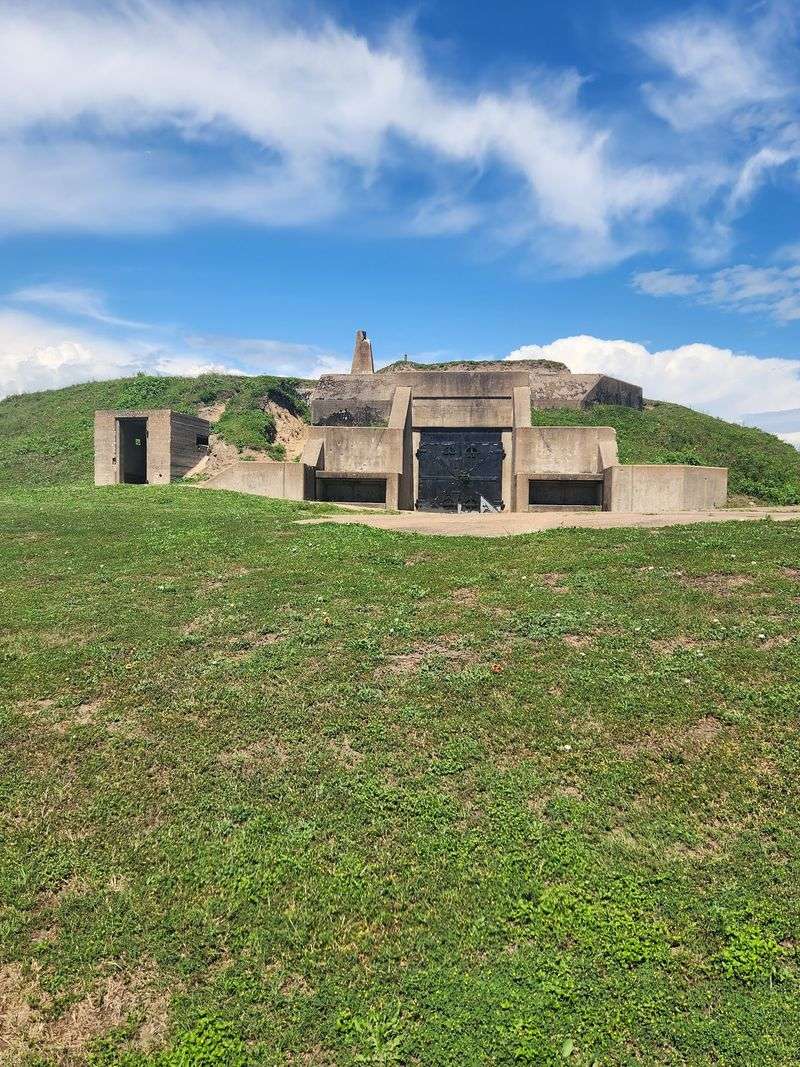
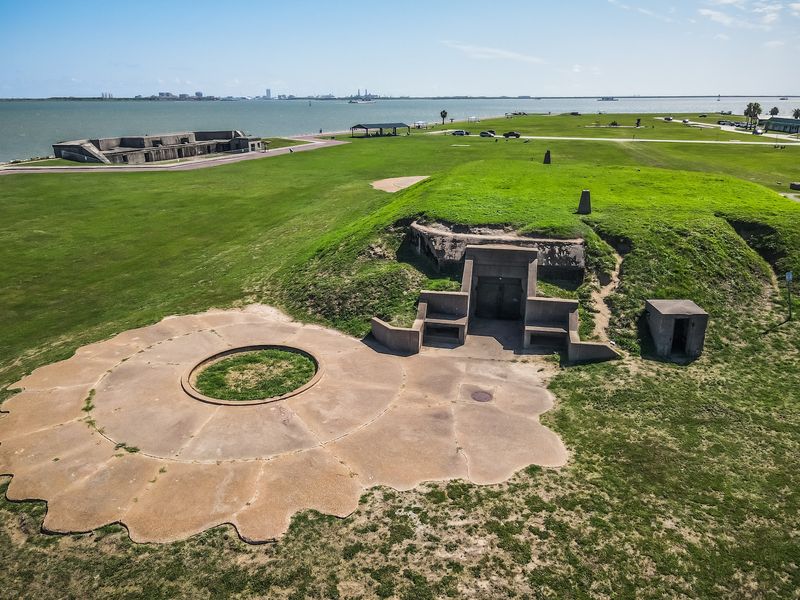
The two main gun batteries at Fort Travis are the stars of the show. These aren’t small defensive positions. We’re talking about reinforced concrete structures built to house artillery pieces capable of hitting targets miles out at sea.
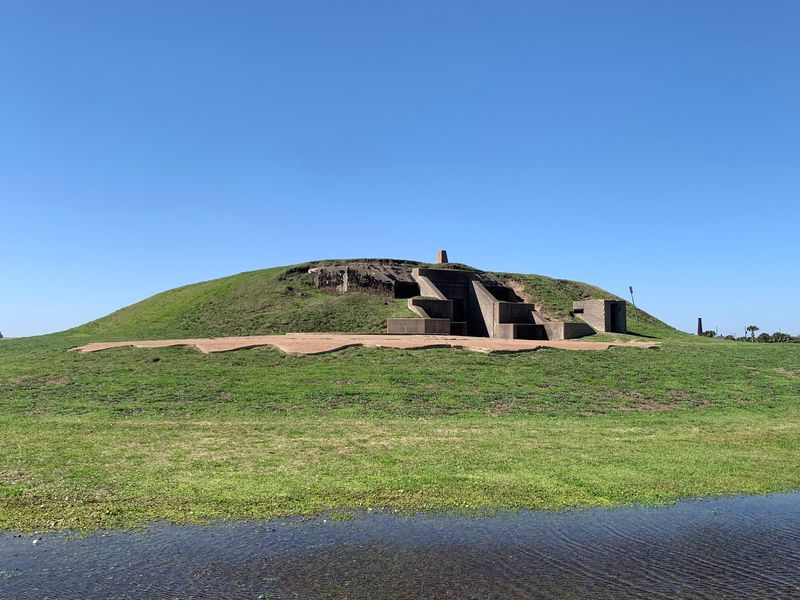
Battery Kimble and Battery Ernst stand today as hollow giants, their massive gun mounts long removed but their purpose unmistakable. Walk up to these batteries and you’ll understand the scale of coastal defense. The walls are several feet thick, designed to absorb direct hits from enemy fire while protecting the gun crews inside.
Each battery featured multiple levels and rooms where ammunition was stored, soldiers worked, and officers coordinated fire. The design allowed crews to load, aim, and fire heavy artillery in coordinated volleys. Imagine the noise and chaos when these guns were actually firing during training exercises.
Visitors today can walk around the exterior of these batteries and peek through openings to see the interior spaces. Unfortunately, safety concerns mean the doors are welded shut, so you can’t explore deep inside. Still, standing next to these concrete behemoths gives you a real sense of their power.
The view from the batteries is spectacular, looking out over the same waters these guns once protected. You can watch modern cargo ships passing by, following the same shipping channels that Fort Travis was built to defend generations ago.
3. The Free Ferry Ride That Gets You There
Getting to Fort Travis is half the adventure, and it won’t cost you a penny. The Galveston-Bolivar ferry runs continuously throughout the day, carrying cars, trucks, and pedestrians across the channel. It’s one of the last free ferry services in Texas.
The ferry ride takes about 20 minutes, and during that time you’re treated to views of Galveston Bay, passing cargo ships, dolphins if you’re lucky, and seabirds everywhere. Kids especially love riding the ferry. You can get out of your car and stand at the rail, feeling the salt breeze and watching the water.
Multiple reviews mention the ferry as part of the Fort Travis experience. One visitor called it “more than worth the FREE ferry ride” just to explore the fort. The ferry runs frequently, so you rarely wait long, though summer weekends can get busy with beach traffic.
Once you cross to Bolivar Peninsula, Fort Travis sits about 15 minutes down TX-87. The drive takes you past beach houses and coastal scenery. Many visitors make Fort Travis part of a larger day trip that includes the ferry ride, exploring the fort, and hitting the beaches.
The ferry itself operates year-round in all but the most severe weather. Watching massive cargo ships navigate the channel while you cross gives you perspective on why this waterway needed military protection. That free ferry ride connects you to the same strategic waterway Fort Travis was built to guard.
4. Ship Watching From A Historic Vantage Point
One of the most popular activities at Fort Travis has nothing to do with history. People come here to watch ships. Lots of ships.
The fort sits right along one of the busiest shipping channels on the Gulf Coast.
From the seawall and the old gun batteries, you get front-row seats to massive cargo vessels, tankers, and container ships heading into or out of the Port of Houston. These aren’t small boats. We’re talking about ships as long as football fields, stacked high with containers from around the world.
Visitors consistently mention the ship watching in their reviews. One person noted “wide open ocean views of all the ships,” while another called it “a great view of all the ships waiting to get into port.” Sometimes you’ll see multiple vessels lined up, waiting their turn to enter the channel.
The ships pass surprisingly close to shore. You can see crew members on deck and read the names painted on the hulls. Bring binoculars if you want an even better look.
The constant maritime traffic makes the fort’s defensive purpose feel real and relevant.
Photography enthusiasts love this spot for ship pictures, especially during golden hour when the light hits the water just right. The combination of historic military structures in the foreground and modern commercial shipping in the background creates unique photo opportunities. It’s a living reminder that this waterway remains as strategically and economically important today as it was when the fort’s guns stood ready to defend it over a century ago.
5. A Park Built On Military Bones
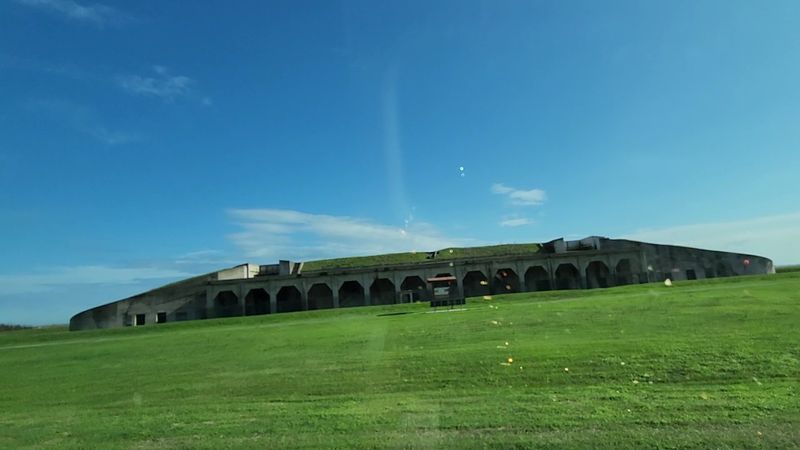
After the military decommissioned Fort Travis in 1949, Galveston County eventually transformed it into a public park. The conversion is brilliant because it preserves the historic structures while making them accessible to everyone. No admission fee.
No gate. Just open access to history and nature.
The park features wide green spaces perfect for picnics, a paved trail that loops around the property, and modern amenities like playgrounds, pavilions with BBQ grills, and clean restrooms. One reviewer mentioned “tons of beautiful green grass that the kids loved playing in.” Another noted the park was “well maintained” with “shaded picnic tables.”
The paved trail is popular with joggers, dog walkers, and families with strollers. It’s about a two-mile loop that takes you past all the major structures while offering ocean breezes and coastal views. Several visitors mentioned walking the entire perimeter takes an hour to an hour and a half, depending on how much time you spend exploring.
Families appreciate the combination of history and recreation. Kids can play on the playground, then run around the bunkers pretending to be soldiers. Parents can relax under a pavilion while keeping the historic structures in view.
The park opens at 8 AM and stays open until 8 PM daily, giving you plenty of time to visit. Cold-water showers are available if you’ve been playing on the nearby beach. Fort Travis Seashore Park proves that historic preservation and public recreation can coexist beautifully.
6. Graffiti, Vandalism, And The Price Of Public Access
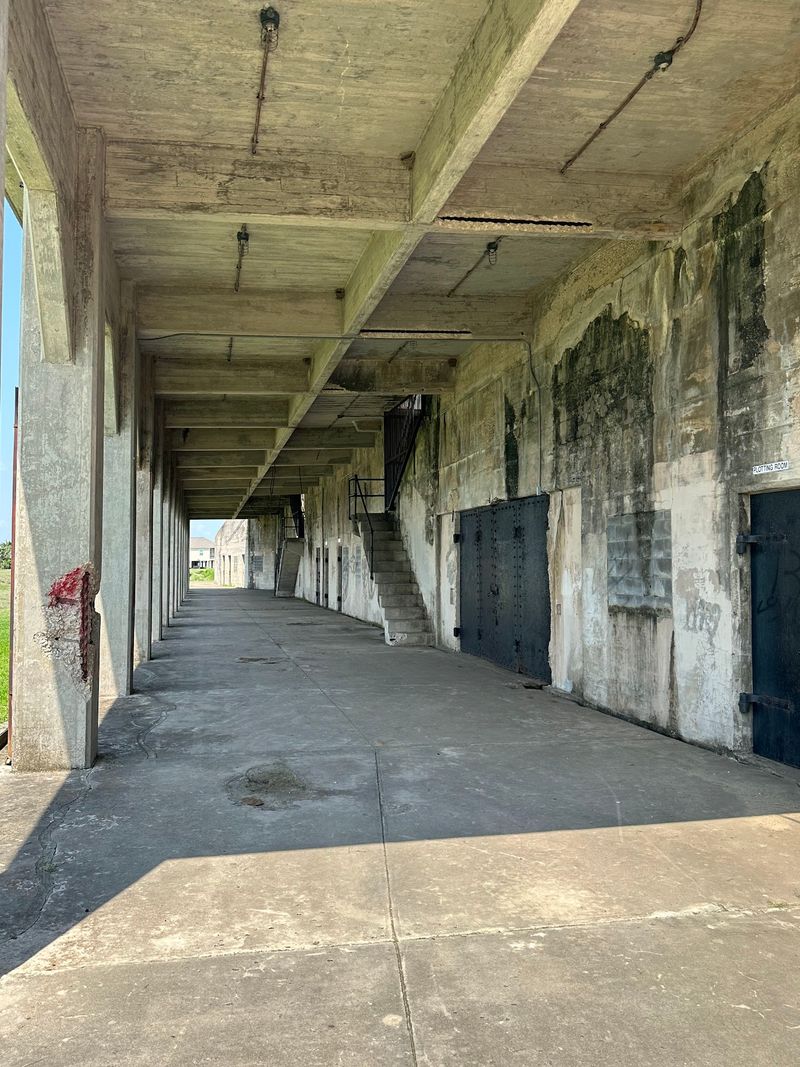
Here’s the downside of free public access to historic structures. Fort Travis suffers from graffiti and vandalism. Multiple reviews mention spray paint covering the concrete walls, and it’s a legitimate complaint.
Seeing historic military bunkers tagged with modern graffiti feels disrespectful to the site’s significance.
One visitor noted “quite a bit of vandalism, which takes away from the experience.” Another called it “a shame that there is graffiti all over such a neat piece of history.” The county does clean up periodically, but it’s an ongoing battle.
The vandalism is one reason why most of the interior spaces are welded shut. Safety concerns exist, sure, but keeping people out also helps prevent further damage to the structures. Some visitors expressed disappointment that they couldn’t explore inside the bunkers, wishing they could pay an admission fee for guided interior access.
Despite the graffiti, most visitors still rate the park highly. The historic significance and coastal setting outweigh the cosmetic damage for most people. Still, it’s frustrating to see important Texas history treated carelessly.
County officials face a tough balance between keeping the site accessible and protecting it from harm.
If you visit, please respect the structures. Don’t add to the graffiti problem. Don’t climb on areas marked off-limits, even though some people ignore those signs.
These bunkers represent real history and real sacrifice. They deserve better than spray paint and trash. The more visitors treat Fort Travis with respect, the longer it will remain open and accessible for future generations to experience and learn from.
7. Limited Access Creates Mystery And Frustration
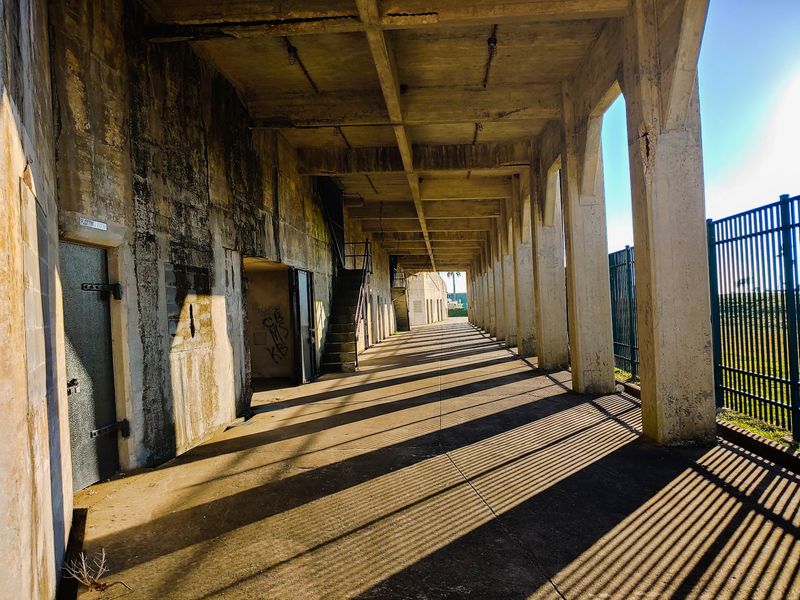
You can see Fort Travis, but you can’t fully experience it. That’s the frustration several visitors express in their reviews. The most interesting parts, the interior rooms where soldiers lived and worked, are off-limits.
Doors are welded shut. Fences block certain areas. You’re left peering through gaps and imagining what lies beyond.
One reviewer summed it up perfectly: “You can really only see the outside of these forts and whatever you can see through the holes of the buildings or through the fenced off areas.” Another wished they could “get up top since it was locked,” while someone else wanted to “open up access to inside the bunkers.”
The restrictions exist for good reasons. The structures are old, potentially unstable in places, and could pose safety hazards. Wildlife nests in the corners.
One visitor in June 2024 warned about “A LOT of small birds nesting in the corners of the ceilings” that fly down and startle people.
Still, the limited access creates a sense of mystery. What’s behind those welded doors? What do the ammunition storage rooms look like?
How did soldiers navigate these spaces during wartime? Your imagination fills in the blanks, which can be part of the appeal.
Several visitors suggested bringing a strong flashlight to see better through the gated areas. That’s actually smart advice. You can illuminate the interior spaces and get a better sense of the layout.
Some adventurous visitors admitted to climbing on top of the structures despite posted warnings, reporting “breathtaking” views. We can’t recommend breaking the rules, but we understand the temptation when such dramatic history sits right in front of you.
8. A Quiet Alternative To Crowded Beach Towns
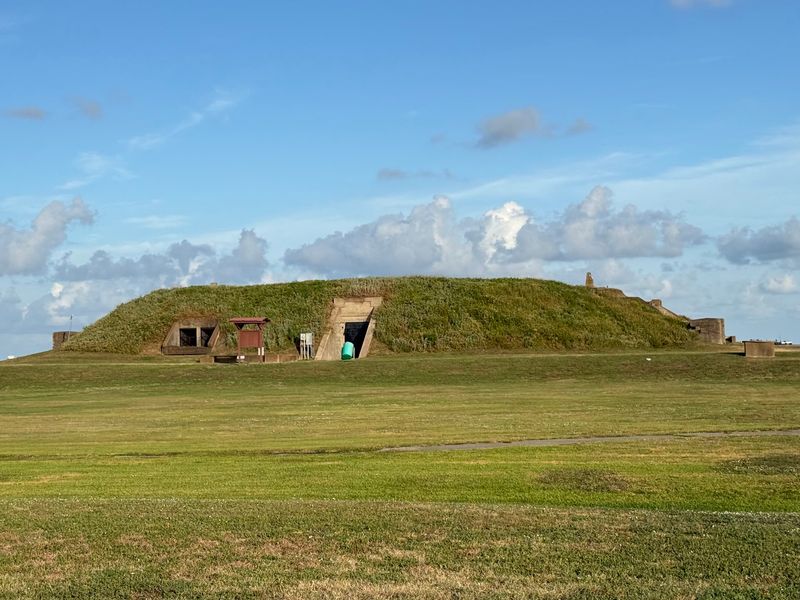
If you’re tired of fighting crowds at Galveston’s beaches, Fort Travis offers a refreshing alternative. The park rarely gets packed, even on nice weekends. One visitor who came on Christmas Eve reported “NOT a single person in sight” and had “the WHOLE Fort to ourselves.”
Another reviewer specifically mentioned it’s “far less busy than Crystal Beach,” making it perfect for a relaxed picnic and fishing. The tucked-away location on Bolivar Peninsula keeps it off most tourists’ radar. You need to GPS it because it’s not on the main beach strip.
The peaceful atmosphere enhances the experience. Walking among the bunkers without crowds lets you really absorb the history and imagine what this place was like during its military days. The sound of waves, the sea breeze, the cry of seabirds, it all creates a contemplative mood.
Families appreciate the space. Kids can run around without parents worrying about them getting lost in crowds. Dogs are welcome, and the paved trails make for excellent dog-walking.
Several reviews mention bringing dogs and enjoying the open space.
The park’s combination of history, nature, and solitude makes it special. You can have a genuine experience without fighting for parking or elbowing through tourist groups. One visitor described it as “peaceful, scenic and well maintained,” which captures the vibe perfectly.
Whether you come for the history, the ship watching, or just a quiet place to relax by the water, Fort Travis delivers without the commercial beach-town chaos. It’s Texas coastal history on your own terms, at your own pace.
Share this story