Most Michigan hikes do not open with the kind of rock drama that makes you double-check what state you are in. The Ledges Trail – West Trailhead in Grand Ledge pulls off that trick almost immediately, trading flat expectations for cliffs, river views, and a landscape that looks far older than the usual wooded stroll.
It is short enough to stay approachable, but striking enough to scramble your mental map of the Lower Peninsula. If you want one walk that delivers surprise fast, this is the one to read about first.
Michigan’s Unexpected Stone Wall
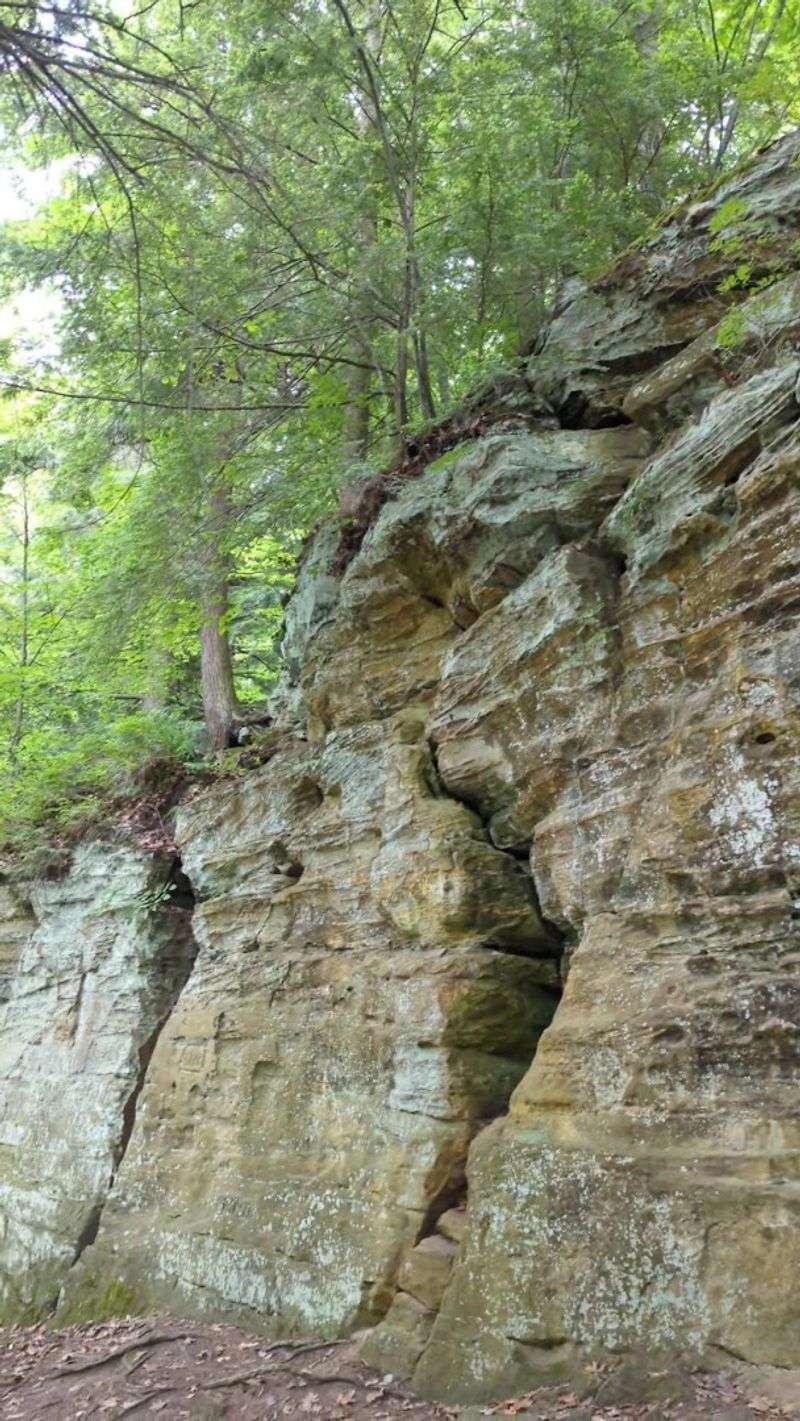
The surprise starts before the trail has even worked very hard. Grand Ledge is not where most people expect stone walls, narrow shelves, and sudden vertical drama, yet the sandstone rises above the Grand River with an old-world severity that looks borrowed from a much bigger landscape.
That visual shock is the hook: Michigan woods, then cliffs, and not the modest kind you dismiss after one glance.
From the west trailhead, the route quickly shows why this place commands attention so fast. The ledges are layered, cracked, and weathered in ways that make every angle look sculpted, while the river softens the scene just enough to keep it from turning harsh.
You get contrast instead of monotony, which is exactly why the landscape reads so well in person and through a camera lens.
Unlike a destination that asks for a flight, a long drive, and a full vacation plan, this hike delivers its payoff almost immediately. You are not grinding through miles waiting for one overlook to justify the effort.
The terrain places the best scenery close at hand, then keeps shifting with roots, rock edges, tree cover, and sudden openings over the water.
That is the real trick of The Ledges Trail – West Trailhead. It compresses the kind of scenery people associate with canyon country into a short, approachable walk in mid-Michigan, without pretending to be anything other than itself.
The place wins by being unexpected, close, and visually bolder than the map suggests.
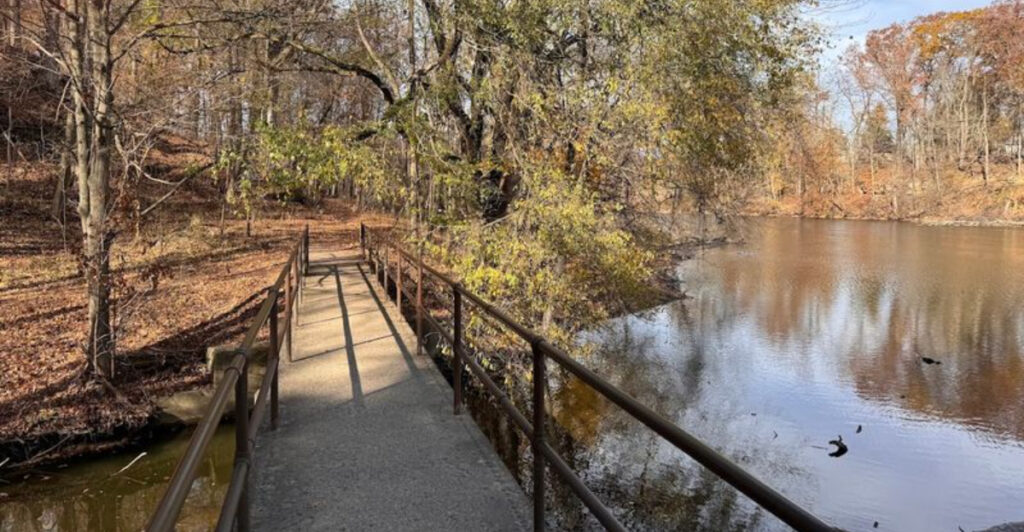
Even the approach adds to the reveal. A bridge crossing, wooded slopes, and the curve of the river create a slow build before the rock finally dominates the frame.
For a trail that measures short on mileage, it opens with outsized confidence and makes familiar surroundings look briefly foreign in the best way.
Why the Ledges Look So Wild
The main attraction here is not just height. It is texture.
The sandstone along The Ledges Trail shows off layering, fractures, and weathered faces that turn a short hike into an outdoor geology lesson, even if you arrive with no intention of thinking about rock at all.
Those surfaces are full of detail. Some sections look neatly stacked, others split into vertical seams, and others appear rounded where years of water, wind, and seasonal change have worn the edges down.
Instead of one massive blank cliff, you get a complicated wall with pockets, ledges, shadow lines, and irregular forms that keep pulling your eyes in different directions.
That complexity matters on the trail because the scene never settles into a single postcard view. As you move, the rock changes character, sometimes reading as rugged and severe, sometimes almost patterned and architectural.
A quick walk can feel much longer visually because every bend presents another variation in shape, light, and depth.
The river helps complete the effect. Its calmer horizontal line sits against the vertical and diagonal force of the ledges, giving the whole place a strong sense of structure without making it look staged.
Trees soften the stone in summer, while leaf-off seasons can expose even more of the cliff face and make the rock seem larger.
This is also why the trail stands apart within the Lower Peninsula. Michigan has plenty of pleasant woodland walks, but relatively few spots where sedimentary rock becomes the headline and the forest plays supporting cast.
Here, the ledges are not background decoration. They control the pace, the sightlines, and the reason you keep stopping to look up instead of only ahead.
A Short Hike With Constant Payoff
One of the smartest things about this trail is how efficiently it uses distance. The route is not a marathon, and that works in its favor.
Instead of saving everything for the end, it spreads visual rewards throughout the walk so the experience feels active from the beginning.
That makes the trail especially appealing if you want scenery without committing a full day. Newer hikers can tackle it without the psychological drag of a long backcountry route, while regular hikers still get enough terrain variation to stay interested.
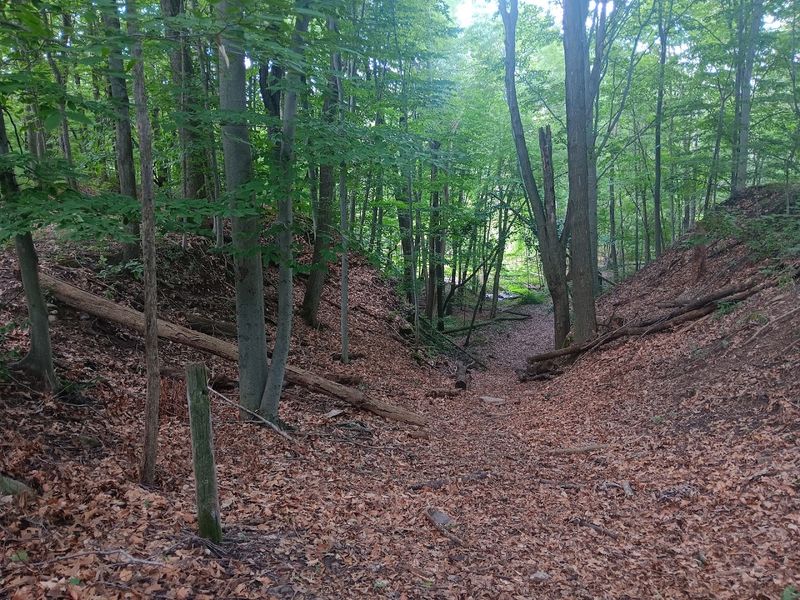
You are walking through woods, crossing near the river, watching for roots underfoot, and regularly lifting your gaze toward the rock.
The catch is that short does not mean mindless. Uneven ground, exposed roots, leaves hiding the path in cooler months, and occasional muddy conditions after rain all ask for attention.
Good footwear matters more than the mileage might suggest, especially near slopes and worn sections where footing can turn awkward fast.
That slight edge of caution improves the hike rather than spoiling it. The trail stays approachable, but it never becomes a flat park loop where your brain switches off.
You remain engaged with the ground, the turns, and the changing sightlines, which gives the whole outing a pleasant rhythm of walking, scanning, and pausing.
For families, casual explorers, or anyone rebuilding hiking confidence, that balance is hard to beat. The route offers enough challenge to feel real, enough scenery to justify every stop, and enough flexibility to keep the experience enjoyable instead of exhausting.
In practical terms, it is the kind of trail you can fit into an afternoon and still talk about like a proper excursion.
River, Bridge, and the Best Angles
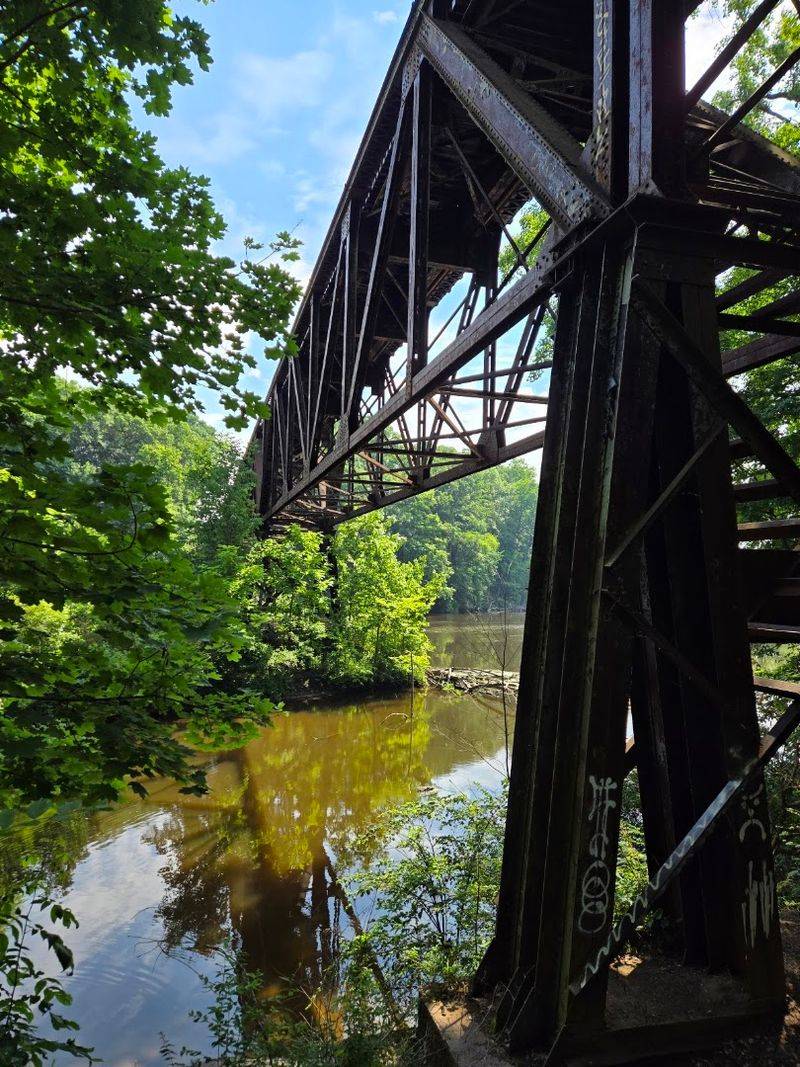
The route does not rely on cliffs alone. Water and infrastructure quietly shape the experience, starting with the river crossing that helps set the mood before the trail fully unfolds.
That bridge moment matters because it introduces movement, perspective, and a sense of transition from ordinary park space into something more cinematic.
Once the Grand River enters the composition, the hike gains a second visual anchor. The water reflects light upward, opens wider views through the trees, and gives the ledges a natural stage.
Rock without the river would still be interesting, but the combination turns the scene into a layered landscape instead of a simple bluff in the woods.
Angles change constantly here. In one stretch, you are looking across to stone faces.
In another, the trail invites a longer glance downstream, where the river pulls your attention outward and the cliffs frame the view rather than dominate it. That back-and-forth keeps the walk from becoming visually predictable.
There is also a satisfying mix of built and natural elements. Railings, paths, and park connections provide structure, yet the area never reads as overmanaged or polished into blandness.
You still notice raw surfaces, tangled roots, and rough contours, which preserve the sense that the landscape is doing the talking.
If timing lines up with moving water near the dam area or bright seasonal color in the trees, the route becomes even more dynamic. The setting can shift from quiet and shaded to bright and expansive within a short span.
That range is rare on a compact trail, and it gives photographers, walkers, and curious first-timers several different ways to read the same place.
Grand Ledge, Michigan Has a Local Legend Vibe
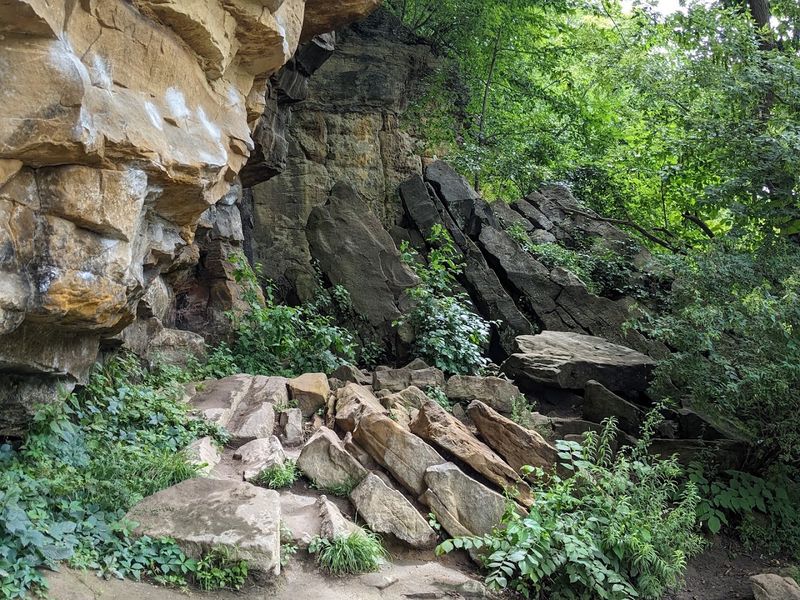
Some places impress because they are famous. This one impresses because it is woven into local outdoor life while still catching newcomers off guard.
The Ledges Trail sits in a park setting that supports everyday use, yet the rock formations give it the air of a place that should have a bigger national reputation.
That contrast creates a strong local-legend quality. Families come for a walk, longtime residents return out of habit, college-stressed visitors find a reset, and out-of-state travelers end up wondering why they had never heard of Grand Ledge before.
The trail works across those groups because it is easy to access but visually uncommon for this part of Michigan.
There is also a broader context around it. Fitzgerald Park includes more than a single path, and nearby park amenities reinforce that this is a lived-in community landscape, not an isolated showpiece.
Even so, the ledges remain the defining signature, the element that elevates the area from nice municipal green space to a destination with real identity.
Seasonal change sharpens that identity. October color can make the cliffs and river corridor glow, while bare branches in colder months expose more of the rock and make the topography read more clearly.
Summer fills the trail with green contrast, and quieter shoulder seasons can make the route feel more spacious and observant.
What stands out most is how naturally Grand Ledge carries this feature. The cliffs are not treated like novelty props.
They are simply part of the town’s landscape, which somehow makes them more impressive. A place becomes more compelling when it does not need overstatement, and this trail has that exact kind of confidence.
How to Time the Walk Like You Know the Area
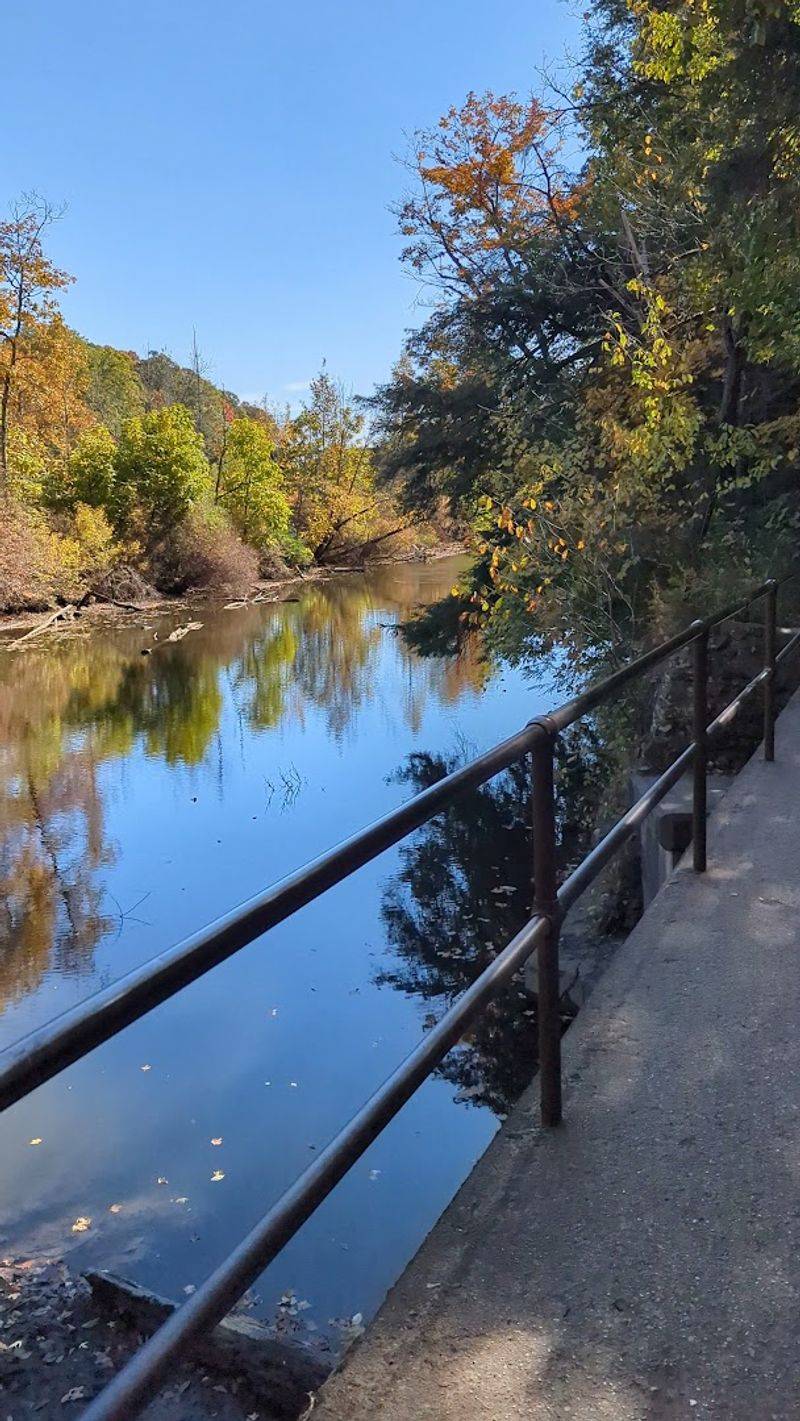
The best way to experience The Ledges Trail – West Trailhead is to treat it like a visual walk, not a speed lap. Give yourself time to stop often, look across the river, and notice how the ledges change shape with every shift in position.
Rushing through misses the point because this trail’s strength is detail, not distance.
Early morning can be especially rewarding if you prefer calmer conditions and softer light. The woods tend to feel quieter, temperatures are often more forgiving, and the rock surfaces can pick up a gentler range of shadow and color.
Late afternoon also works well, especially when angled light adds more contrast to the cliff faces.
Weather matters here more than some casual hikers expect. After rain, muddy spots and slick areas can make already uneven ground trickier, and worn sections require extra attention.
In fall, a thick layer of leaves can hide roots and small dips, so the trail may look easier than it actually is underfoot.
Good shoes, a little patience, and realistic pacing go a long way. This is not the place for distracted walking while staring at a phone.
Children, newer hikers, and anyone unsure on rough footing can still enjoy it, but the terrain rewards people who stay aware of where they are stepping.
If closures or repairs affect access points, it is worth adjusting expectations rather than forcing a sketchy route around barriers. The trail is at its best when experienced attentively and safely.
Choose decent conditions, walk slowly enough to absorb the scenery, and let the path unfold as a sequence of views instead of a mileage goal.
The Sharpest Reason to Go
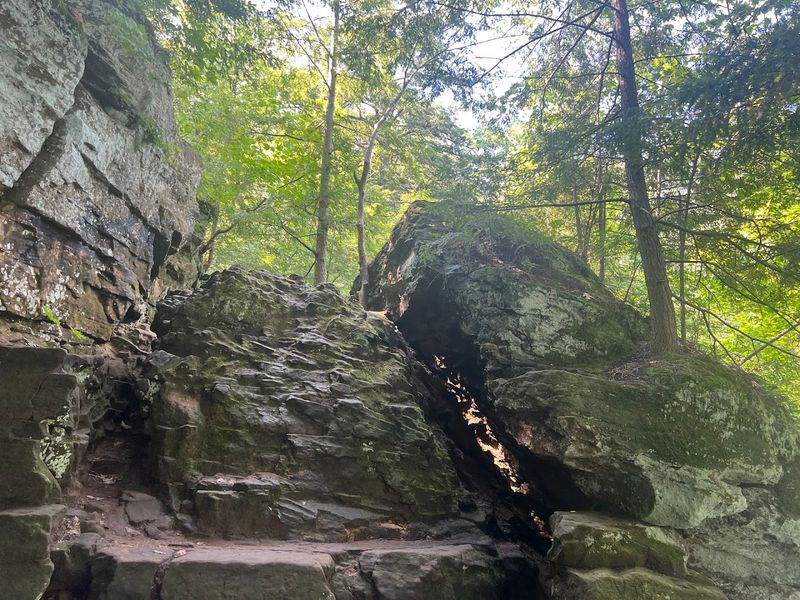
The sharpest reason this place stands out is simple: it rewrites expectation. Plenty of trails are pleasant, wooded, and easy to recommend.
Very few in this region deliver a scene that makes you pause and think about how unusual it is to find cliffs, ledges, river views, and such concentrated drama inside a compact Michigan hike.
That distinction matters more than raw size. The Ledges Trail does not need extreme elevation, remote wilderness, or a full-day commitment to feel notable.
Its strength comes from compression. The scenery arrives quickly, the terrain stays visually active, and the rock gives the route a level of character that many longer walks never achieve.
It also offers a rare middle ground between accessibility and surprise. You can bring family, fit it into a regular afternoon, and still end up with views that feel outside the normal script for the Lower Peninsula.
The trail avoids the trap of being either too tame for adventurous walkers or too demanding for casual ones.
Even the imperfections are part of the practical reality rather than a reason to ignore it. Mud, roots, occasional closures, and worn spots mean the place asks for attention and decent judgment.
That does not diminish the destination. If anything, it confirms that the trail is a real landscape, not a flattened attraction built only for convenience.
In the end, the Peru comparison works because this hike triggers the same basic pleasure: the shock of stone appearing where you did not expect it. No passport, no altitude, no big itinerary.
Just Grand Ledge, a river, and a cliff line strong enough to make an ordinary day trip feel far more adventurous than it has any right to be.
Share this story