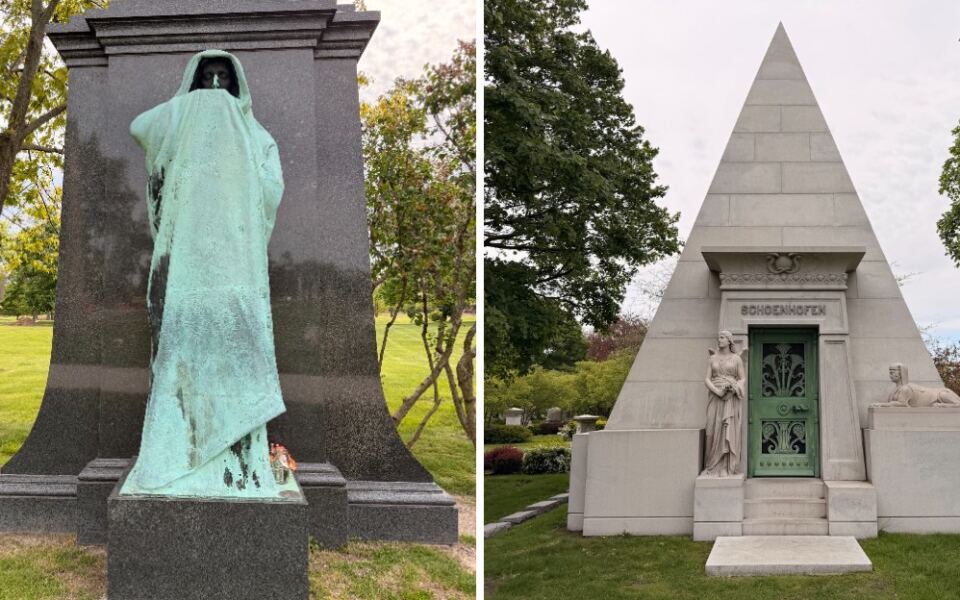
A hooded bronze figure has hidden its face under a dark cloak since 1909, and it still looks spooky today. Nearby, a railroad tycoon rests beneath layers of steel rails and concrete. Down another path, Mr. Cub himself has a spot.
That’s a normal stroll at one of the most fascinating places in Illinois. The grounds hold famous architects, sports heroes, and business giants who shaped a whole city. Many of their tombs look like tiny temples, castles, and art pieces.
I like how the setting feels more like a sculpture garden than a sad place. Huge trees, a calm pond, and winding roads make it ideal for a slow walk.
I can’t imagine a better free history lesson anywhere in the Midwest. Honestly, I’d pack comfortable shoes, charge my phone camera, and plan to stay a while.
Wander Through The City’s Most Famous Outdoor History Book
Founded in 1860, Graceland Cemetery has been collecting stories longer than most Chicago neighborhoods have existed. Today it covers about 119 acres on the city’s North Side, right in the middle of busy Uptown and Lakeview.
The magic comes from the mix. Grand mausoleums, detailed bronze statues, and carved stone pieces sit among rolling lawns and huge old trees.
Many of the people resting here built the Chicago you see today. Architects, merchants, inventors, athletes, and reformers all share these grounds.
That’s why the place feels like a museum without walls. Every turn of the path brings another name you might recognize from a textbook or a street sign.
Here’s a nice bonus for your wallet. Walking the grounds is free, so you can wander as long as the gates stay open.
Since Graceland is still an active cemetery, a little respect goes a long way. Keep voices low near services, stay on paths, and treat the monuments like the art they are.
Think of it as a calm escape in the middle of Illinois’ biggest city. The traffic on Clark Street fades fast once the trees take over.
The Skyline’s Biggest Names Ended Up As Neighbors
Architecture fans, get ready to feel a little starstruck. Graceland Cemetery is often called the resting place of Chicago architects, and the list backs it up.
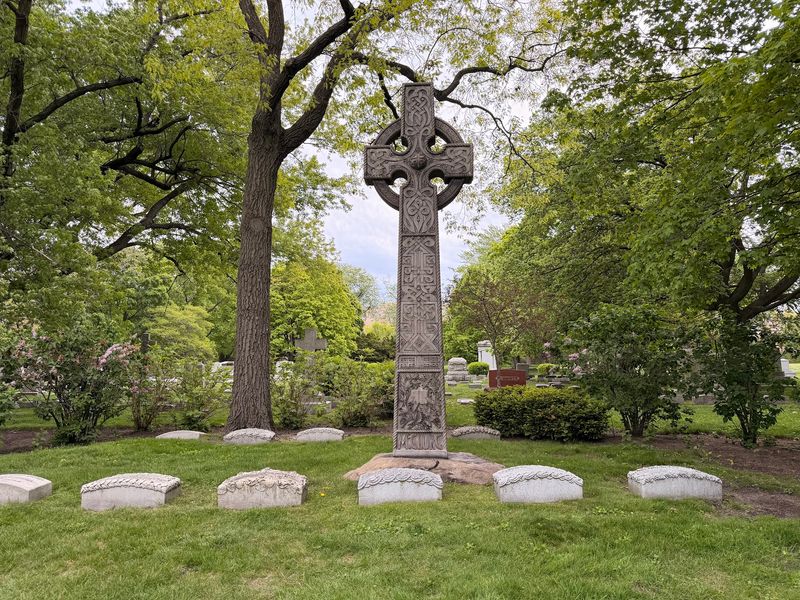
Louis Sullivan, the man famous for the phrase form follows function, is here. His monument features a carved design that echoes his love of rich ornament.
Daniel Burnham, who helped plan the 1893 World’s Columbian Exposition, rests on a small island. His longtime partner John Wellborn Root is also buried at Graceland.
William Le Baron Jenney, often linked to the first steel-frame skyscraper, has a spot too. So does Ludwig Mies van der Rohe, the modernist known for glass-and-steel towers.
Mies has one of the simplest markers on the grounds. A plain, flat stone with his name feels exactly right for a man who preached less is more.
The contrast is half the fun. Sullivan’s fancy carving and Mies’ bare slab tell the whole story of American architecture in a short walk.
Grab a map at the visitor center before you start hunting. These names are spread out, and the grounds are bigger than they look.
A Tiny Tomb That Architecture Students Still Study
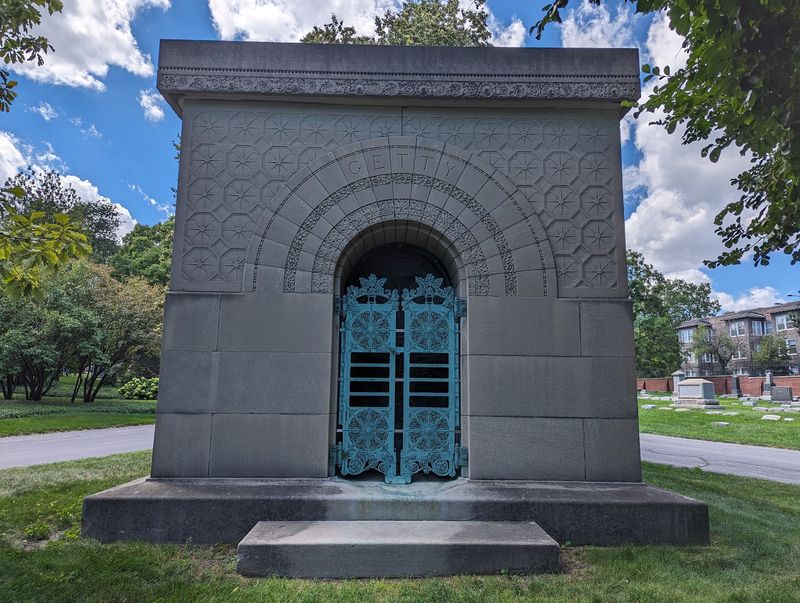
Some buildings change history while being smaller than a garden shed. The Getty Tomb, designed by Louis Sullivan and finished in 1890, is one of them.
Sullivan created it for Carrie Eliza Getty, the wife of lumber businessman Henry Harrison Getty. The result is a limestone tomb covered in delicate geometric patterns and graceful arches.
Look closely at the upper half. The stone carvings look almost like lace, which is pretty wild for something made of rock.
The bronze doors and gates are just as detailed. Many architecture historians call this tomb a turning point toward modern American design.
The City of Chicago agrees that it matters. The Getty Tomb was named an official Chicago Landmark, which is a big honor for such a small building.
Not far away, Sullivan also designed the Martin Ryerson tomb. Its dark, sloping form has an Egyptian feel and makes a fun comparison.
Bring a phone with a good zoom lens if you love details. You’ll want close-up shots of those patterns, and you might spot a new swirl every time.
Good Luck Staring Into The Hood Of Eternal Silence
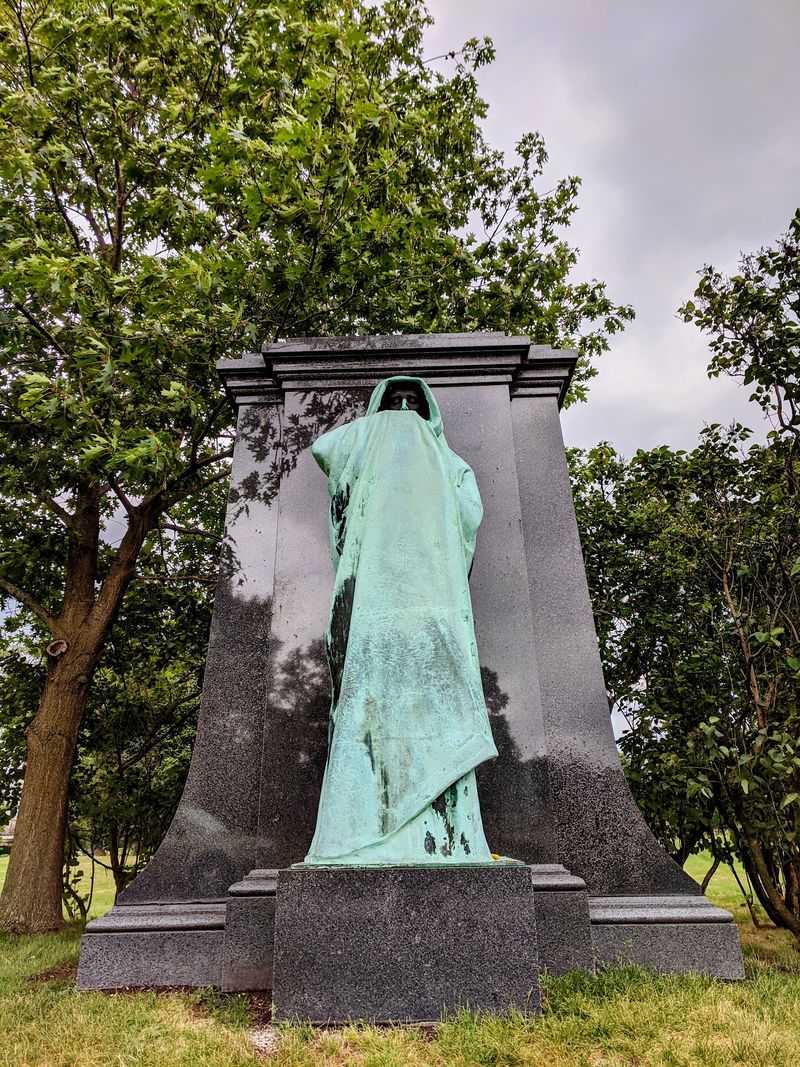
Nobody forgets their first meeting with this statue. Eternal Silence, created by sculptor Lorado Taft in 1909, stands guard over the Dexter Graves family plot.
The tall bronze figure wears a long hooded robe. One arm covers the lower half of its face, so only shadowy eyes peek out.
Over time, the bronze has turned dark with green streaks. That weathered look makes the statue feel even more mysterious and dramatic.
Many people call it the Statue of Death, though Eternal Silence is the official name. Either way, it’s one of the most photographed sights at Graceland Cemetery.
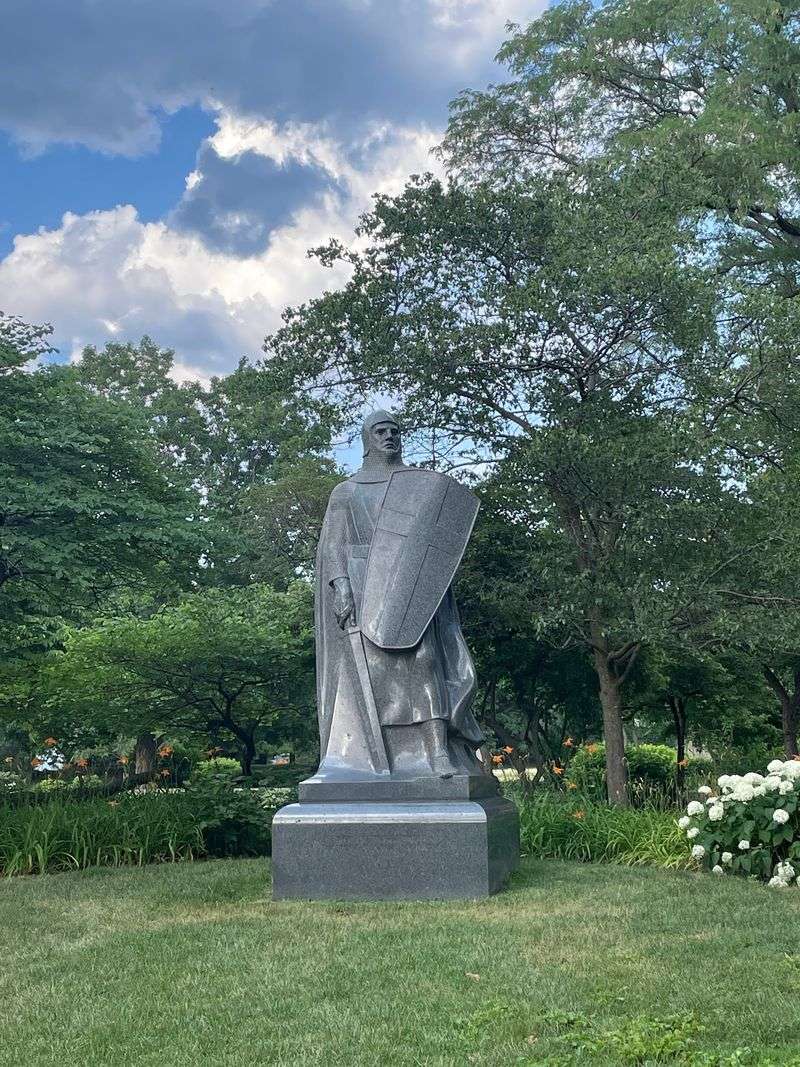
Taft didn’t stop there. He also created The Crusader, a stern knight figure that marks the resting place of newspaper publisher Victor Lawson.
The Crusader holds a sword and shield, and its carved face looks serious and brave. Seeing both Taft works on the same trip feels like visiting a mini art gallery.
Try visiting on a cloudy or misty day for extra mood. A soft gray sky makes the dark bronze stand out and gives your photos real drama.
Sports Legends, Detectives, And Department Store Kings
Cubs fans, this one’s for you. Ernie Banks, the beloved Mr. Cub, rests at Graceland Cemetery, just a short trip from Wrigley Field.
Boxing history lives here too. Jack Johnson, the first Black world heavyweight champion, is buried on the grounds.
Then there’s Allan Pinkerton, founder of the famous Pinkerton detective agency. Yes, a real-life private eye has a spot among the trees.
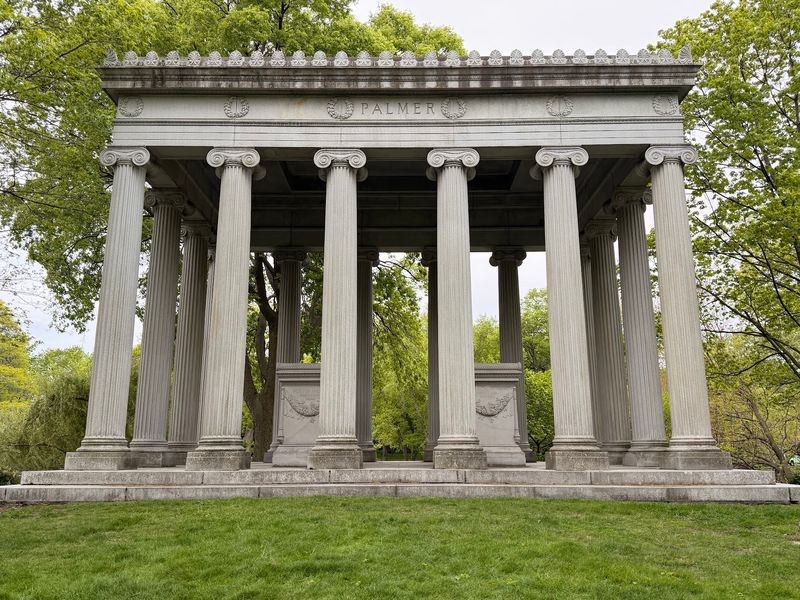
Business giants show up everywhere. Marshall Field, the department store pioneer, rests here along with hotel builder Potter Palmer and his wife Bertha.
The Palmer tomb is hard to miss. Its gleaming columns make it look like a small Greek temple dropped onto a Chicago lawn.
George Pullman, the railroad sleeping car tycoon, has one of the strangest stories. His coffin was placed under layers of concrete and steel rails, a choice still talked about today.
White Sox great Minnie Miñoso also rests at Graceland. That means both sides of the city’s baseball rivalry are represented, which feels very Chicago.
Make a short list of your favorite names before visiting. Checking them off turns the walk into a fun scavenger hunt.
The Little Girl In The Glass Box Has A Big Mystery
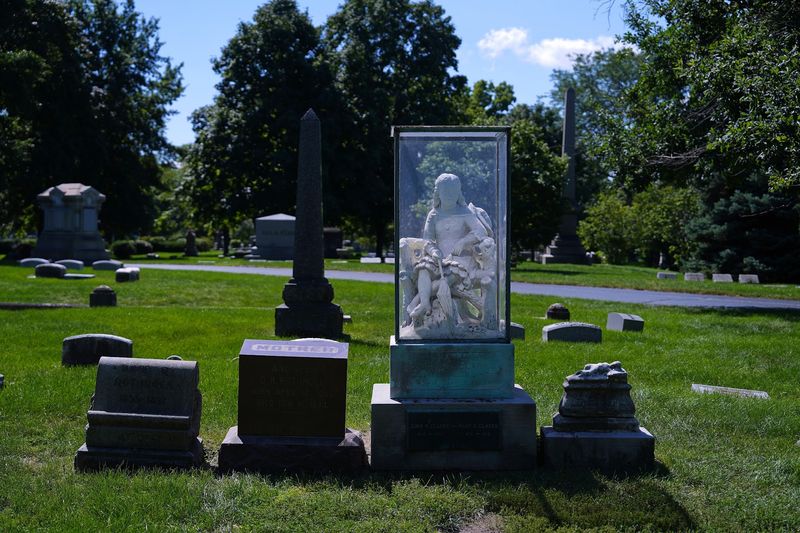
Few sights at Graceland Cemetery spark as many questions as this one. A marble statue of a young girl sits inside a protective glass case, holding a small parasol.
The monument carries the name Inez Clarke. For years, local legends claimed strange things about the statue, from vanishing during storms to looking slightly different each visit.
Historians have since dug into the records. Researchers found evidence suggesting the child buried there may have had a different name, which only made the story more intriguing.
That’s what makes this stop so fun. It’s part art, part history puzzle, and part classic Chicago ghost story.
Visitors often leave tiny gifts nearby, such as small toys or coins. It’s a sweet sign of how many people feel connected to this little statue.
The glass case keeps the marble safe from the weather. As a result, the carving still looks crisp, from the bow on the dress to the tiny shoes.
Bring kids who love mysteries for this one. Just remind them that this is a real family’s memorial, so gentle voices and gentle hands are the rule.
A Peaceful Pond Steals The Spotlight
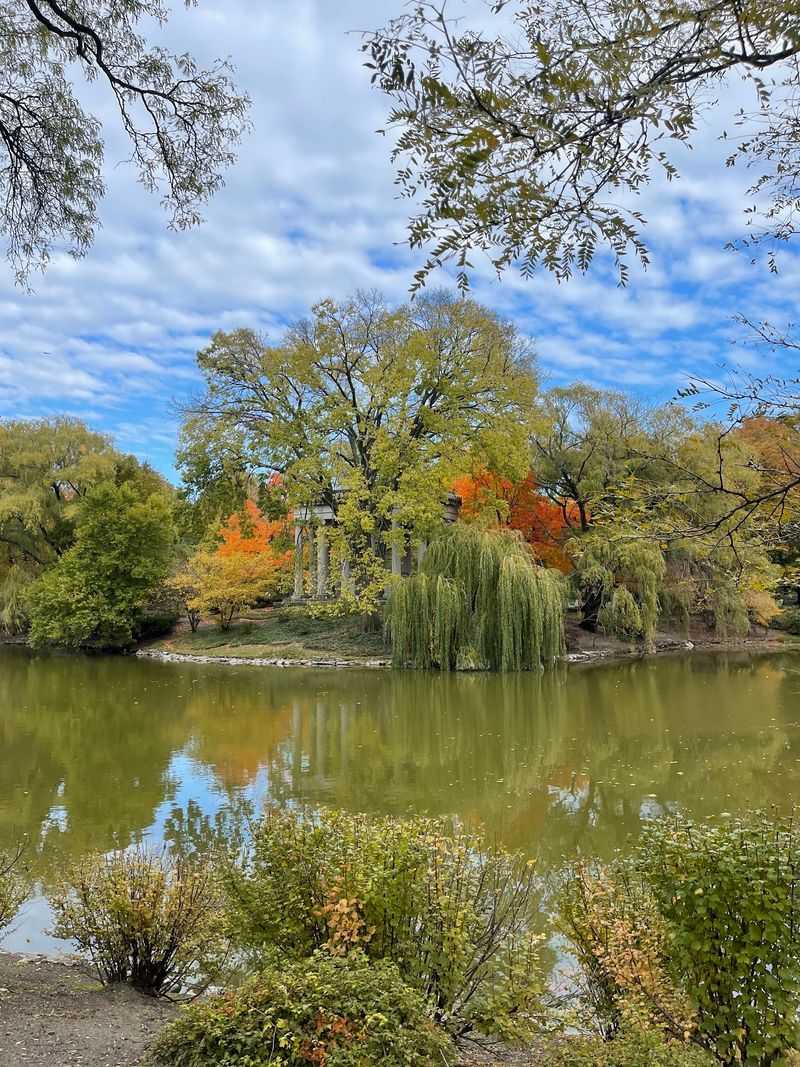
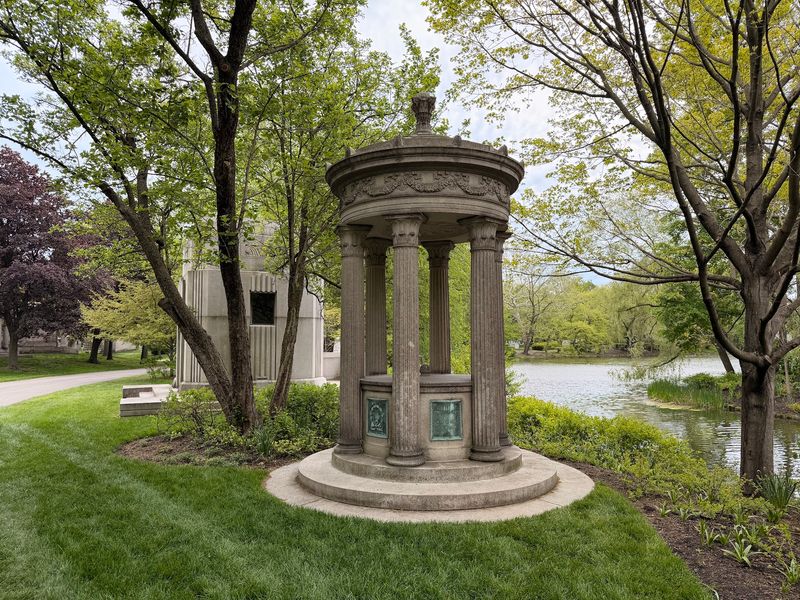
Water changes everything in a landscape. At Graceland Cemetery, Lake Willowmere gives the grounds a calm center that feels miles away from city noise.
The pond’s shore is lined with trees and monuments. Their reflections on the water make this one of the prettiest photo spots on the property.
Remember Daniel Burnham’s island? It sits right in this lake, so the famous planner rests in one of the most scenic corners of all.
The overall design came from big landscape thinkers. Horace W. S.
Cleveland helped shape early plans, and Ossian Cole Simonds later guided much of the look you see now.
Simonds favored natural, flowing scenery over stiff rows. His style used native plants, open lawns, and curving roads to make the grounds feel like a park.
That approach is why the place feels so relaxing. Instead of a grid, you get gentle surprises around every bend.
Plan a little pause by the water during your walk. It’s the perfect moment to rest your feet, take in the view, and decide which monument to hunt next.
Tree Lovers Might Never Want To Leave
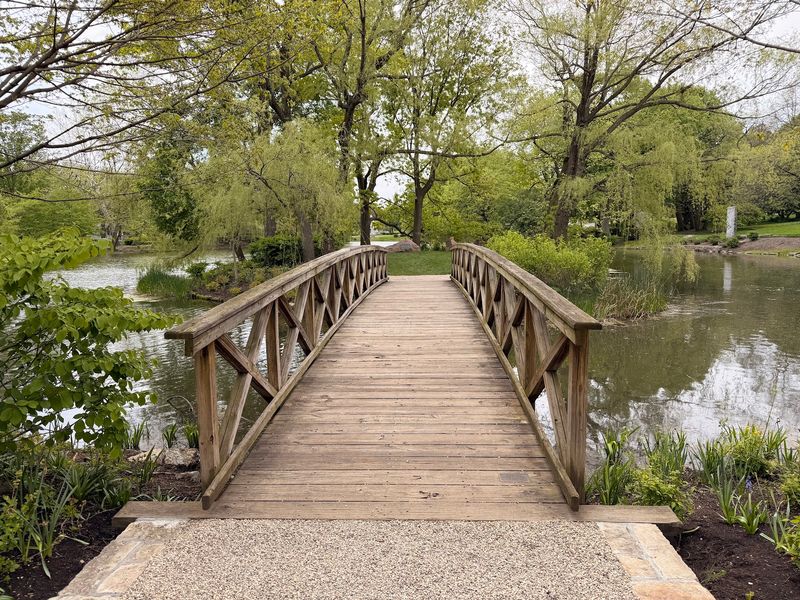
Monuments get the headlines, but the trees deserve their own fan club. Graceland Cemetery is an accredited arboretum with thousands of trees across the grounds.
Towering oaks, maples, and many other species shade the winding roads. Some trees are older than most buildings in the surrounding neighborhood.
The visitor center has offered tree tour materials to help you identify different species. It’s a great way to turn a simple walk into a nature lesson.
Autumn is a showstopper here. Red, orange, and gold leaves frame the stone tombs, creating scenes that look almost too good to be real.
Spring brings fresh green leaves and blooming plants. Summer offers welcome shade, which really helps on hot Illinois afternoons.
Wildlife enjoys the space too. Birds are easy to spot, and coyotes are known to roam the grounds, so stay on designated paths and observe wildlife from a distance.
Binoculars are a smart addition to your bag. Birdwatchers will appreciate them, and they also help with spotting high carvings on taller monuments.
In a city full of concrete, this much greenery feels like a gift. Your lungs will thank you.
Smart Moves For Planning Your Visit
Graceland Cemetery opens at 8 a.m. on weekdays and 9 a.m. on weekends. Gates close at 4 p.m. in fall and winter, while spring and summer weekday visits can stretch until 6 p.m.
The main entrance sits at 4001 N Clark St, Chicago, IL 60613. That’s at Clark Street and Irving Park Road, right near the Uptown and Lakeview border.
Public transit makes things easy. The CTA Red Line Sheridan stop is a short walk away, and several bus lines run nearby.
Driving? Check the Cubs schedule first. Wrigley Field is close by, and game days can make street parking tricky and pricey.
Stop at the visitor center near the entrance before exploring. You can pick up a map, ask staff for directions, and use the restrooms.
Guided tours add rich backstory to the monuments. The Chicago Architecture Center offers walking tours here, and other local historians lead tours too.
Give yourself at least two hours if you want to see the big highlights. Wear sturdy shoes, bring water, and keep an eye on the clock.
Honestly, one visit rarely feels like enough. Most people start planning their next lap before they reach the gate.
Share this story