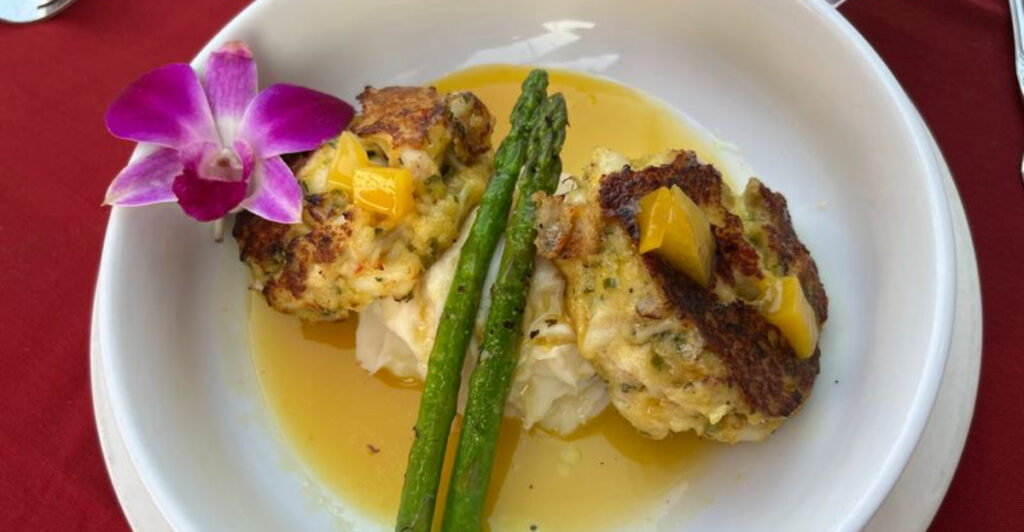
The crab cakes at Freda’s Cafe do not need much help, but the mango sauce beside them knows exactly what it is doing. Sweetness meets well-seasoned crab, mashed potatoes catch the extra sauce, and a familiar Shore dinner suddenly has far more personality than expected.
That balance captures this tiny Cape May restaurant in one plate. Freda’s occupies an intimate space at 210 Ocean Street, steps from the Washington Street Mall yet easy to miss among the city’s grand Victorian buildings and crowded dining rooms.
Chef Steve Howard and his wife, Carol, have run the restaurant for more than three decades, combining the West Indian flavors Steve learned from his mother with Carol’s Italian heritage and pastry training. The result is neither a Caribbean restaurant nor an Italian one.
It is a deeply personal American menu shaped by seafood, scratch cooking, and two family traditions. Cape May has plenty of celebrated restaurants, but Freda’s remains one of the city’s most rewarding surprises.
Freda’s Cafe Is the Hidden Gem Cape May Diners Are Missing
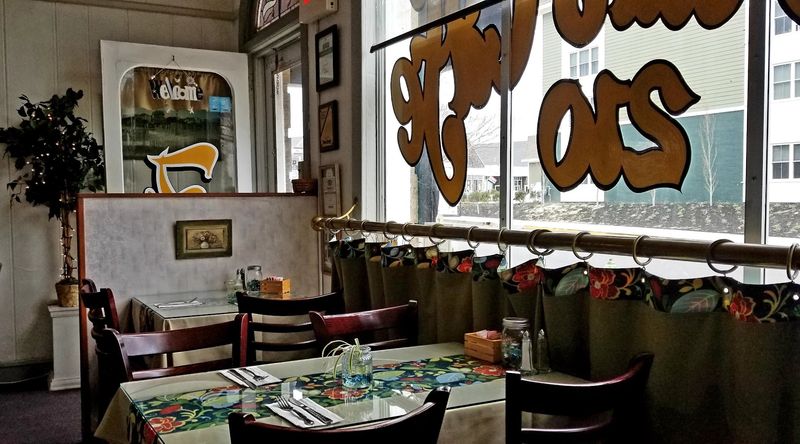
Cape May visitors can walk within a few feet of Freda’s Cafe without realizing one of the city’s longest-running independent restaurants is right beside them. The restaurant sits at 210 Ocean Street, near the Washington Street Mall and roughly half a mile from the beach.
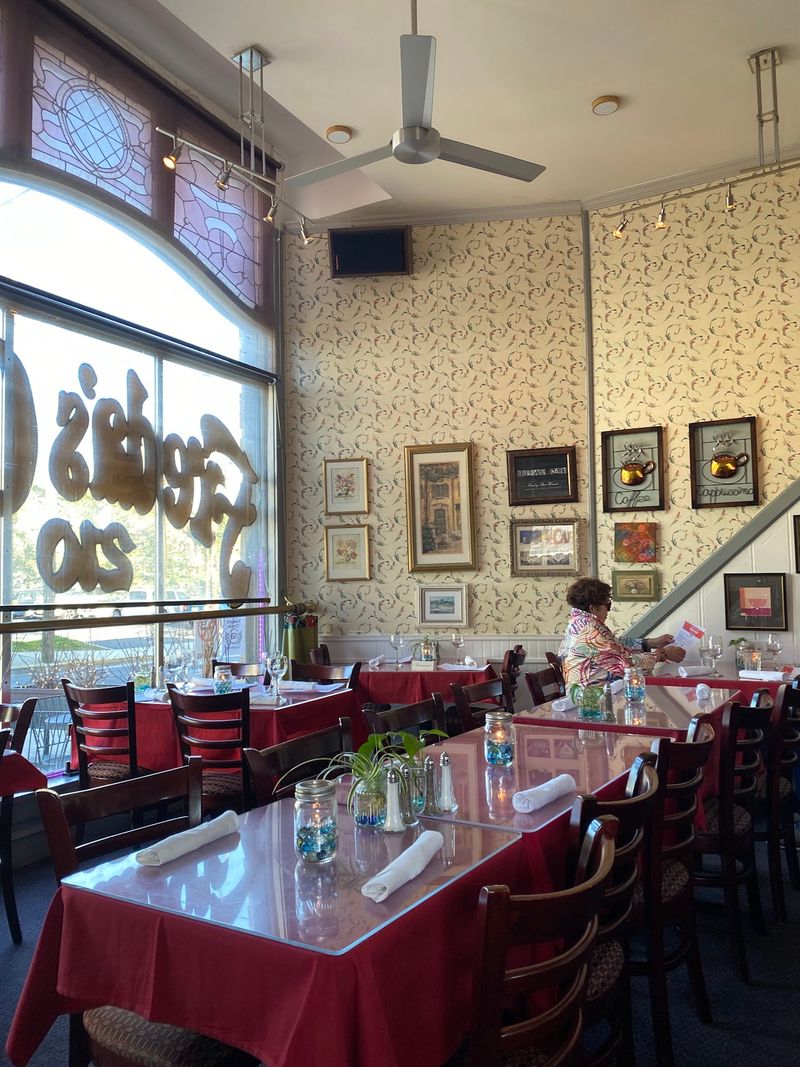
Its storefront is modest, especially compared with the Victorian inns and high-traffic restaurants that dominate the historic district. Inside, the dining room holds only about 30 to 35 guests.
Tables sit close together, tea lights glow in small glass holders, and artwork collected over the years fills the walls. Nothing about the room feels designed for social media, which may be one reason it feels so refreshing.
This is a restaurant focused on dinner rather than spectacle. Freda’s is also BYOB, so guests can bring wine or beer without paying Cape May cocktail prices.
Reservations are a sensible move because the room fills quickly, particularly on summer weekends and around holidays. Outdoor tables provide additional seating during warmer months, but this remains an intimate operation rather than a sprawling seasonal restaurant.
The schedule changes during the year, with dinner commonly served from 5 to 9 p.m. on select evenings. Freda’s generally opens more days during the warmer season and scales back during quieter months, so checking the current hours before making plans is important.
The small size has another benefit. Service feels personal, and chef Steve Howard can adjust dishes when the kitchen has room to accommodate a request.
Regulars know the staff by name, while first-time diners often receive the sort of welcome usually reserved for returning customers. In a destination where restaurants can become overwhelmed by summer crowds, Freda’s still operates like a neighborhood place.
It happens to be tucked into one of New Jersey’s busiest seaside towns.
Two Culinary Traditions Come Together Under One Roof
The two cultures shaping Freda’s menu are not announced with flags, themed decorations, or separate pages of dishes. They appear in the seasoning.
Steve Howard credits his West Indian mother, Freda, with teaching him that flavor must be present in every bite. Carol Howard brings Italian family influences and formal pastry training to the restaurant.
Their backgrounds meet in a menu that moves comfortably between tropical fruit, fresh seafood, house-made pasta sauces, carefully cooked meat, and desserts prepared from scratch. That combination explains why a crab cake might arrive with mango sauce rather than the expected remoulade.
The fruit supplies sweetness and acidity against the salty crab, while mashed potatoes make the plate feel substantial. Elsewhere, seafood may be paired with cheese-filled tortellini in a light, broth-like sauce made for soaking up with a homemade roll.
Neither dish fits neatly into a single culinary category, and that is the point. Freda’s is not trying to reproduce one regional cuisine with rigid rules.
Steve uses the flavors he grew up eating, the techniques he and Carol learned professionally, and whatever ingredients are worth buying from his fishmonger. The West Indian influence gives the cooking confidence with spice, sweetness, and contrast.
The Italian side contributes an appreciation for pasta, sauces, pastry, and meals that unfold at an unhurried pace. Even the simplest components receive attention.
Entrées come with warm homemade rolls and a side salad dressed with either a bright Russian dressing or a sharp ginger vinaigrette. Sauces, soups, and desserts are made in the kitchen rather than poured from a container.
The result is a menu best described as creative American cooking, though that label barely explains it. Freda’s tastes like the Howard family’s history translated through more than 30 years of serving Cape May diners.
The Remarkable Journey Behind Freda’s Cafe
The restaurant began with a move away from New York and a gamble on small-town life. Steve and Carol Howard both attended Johnson and Wales University before building careers in hospitality.
Steve worked at New York City’s Plaza Hotel and gained management experience, while Carol trained as a pastry chef. By 1986, the couple was ready for more independence.
They left New York for Cape May and opened a small deli on Sunset Boulevard in West Cape May. The business gave them room to test recipes, meet local customers, and learn the rhythms of a town that changes dramatically between February and July.
Its success eventually led to a larger opportunity. In 1991, the Howards opened their restaurant on Ocean Street and named it Freda’s Cafe in honor of Steve’s mother.
Her West Indian cooking had shaped his palate long before culinary school or hotel kitchens entered the picture. Naming the restaurant after her was both a tribute and a statement about the kind of food he intended to serve.
Flavor would come first. More than three decades later, Steve and Carol are still running the business.
Longevity is difficult in any restaurant town, but Cape May adds its own complications. Summer brings heavy crowds, while winter can reduce foot traffic dramatically.
Ingredient prices change, local seafood supplies fluctuate, and independent operators compete with restaurant groups occupying some of the city’s most prominent properties. Freda’s has survived by staying small, cooking from scratch, and adjusting specials according to what is available.
Its consistency has produced generations of regulars. Couples who first visited with young children now return with those children as adults, sometimes bringing grandchildren to the same little dining room.
Freda’s has also become Cape May’s only Black-owned brick-and-mortar restaurant, giving its continued presence additional significance in a city with a substantial but often overlooked Black history. The restaurant’s story is not one of overnight success.
It is a 40-year lesson in patience, adaptation, and knowing exactly how you want your food to taste.
Seafood Favorites Bring Bold Flavor to the Table
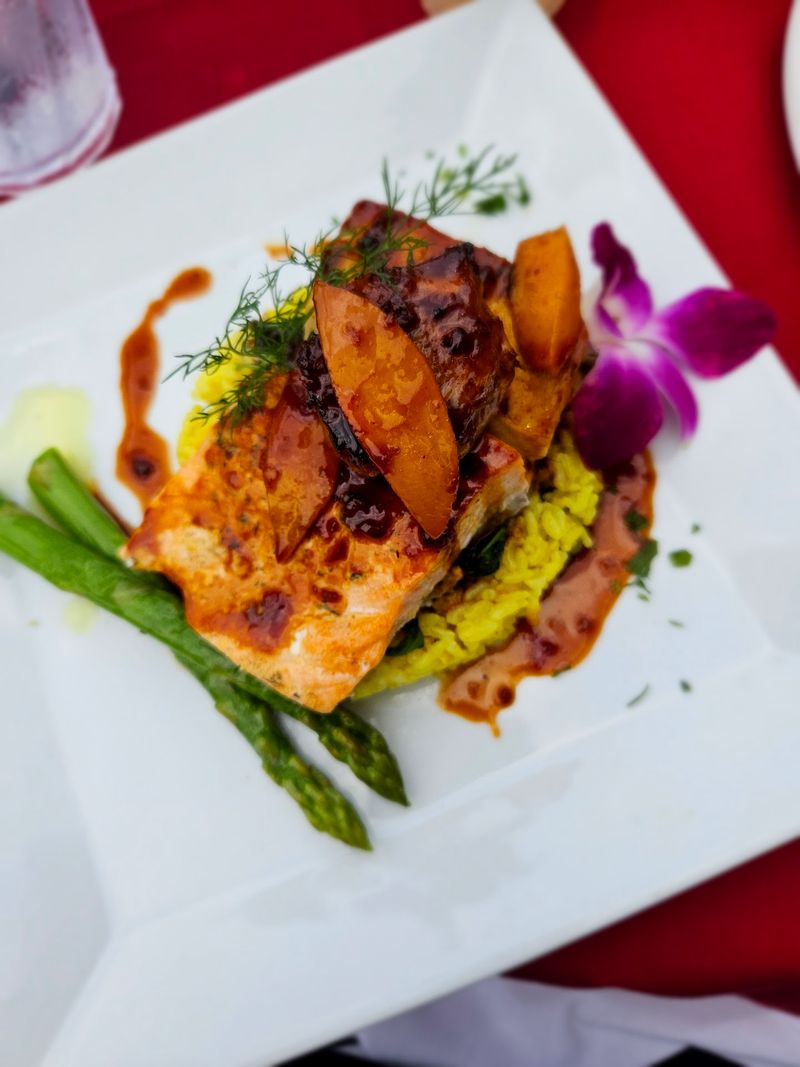
“You’re at the Shore” may be an obvious reason to put seafood on a menu, but Freda’s refuses to treat crab or fish as automatic crowd-pleasers that require little effort. Steve builds each seafood dish around contrast, seasoning, and texture.
The signature crab cakes are the clearest example. Rather than burying the crab beneath filler, the kitchen keeps the meat at the center of the plate and pairs it with mango sauce.
The sweetness of the fruit balances the savory cake, while mashed potatoes catch both flavors. It is familiar enough for traditional seafood diners and distinctive enough to remain memorable after a weekend filled with restaurant meals.
The seafood specials depend heavily on what Steve can source. Scallops and certain fish may come from local waters when supplies allow, while other selections arrive from farther away.
That flexibility means the board can be more interesting than the regular menu. A shrimp, scallop, and crab tortellini special might arrive loaded with large scallop pieces, tender crab, and plump cheese-filled pasta in a light broth.
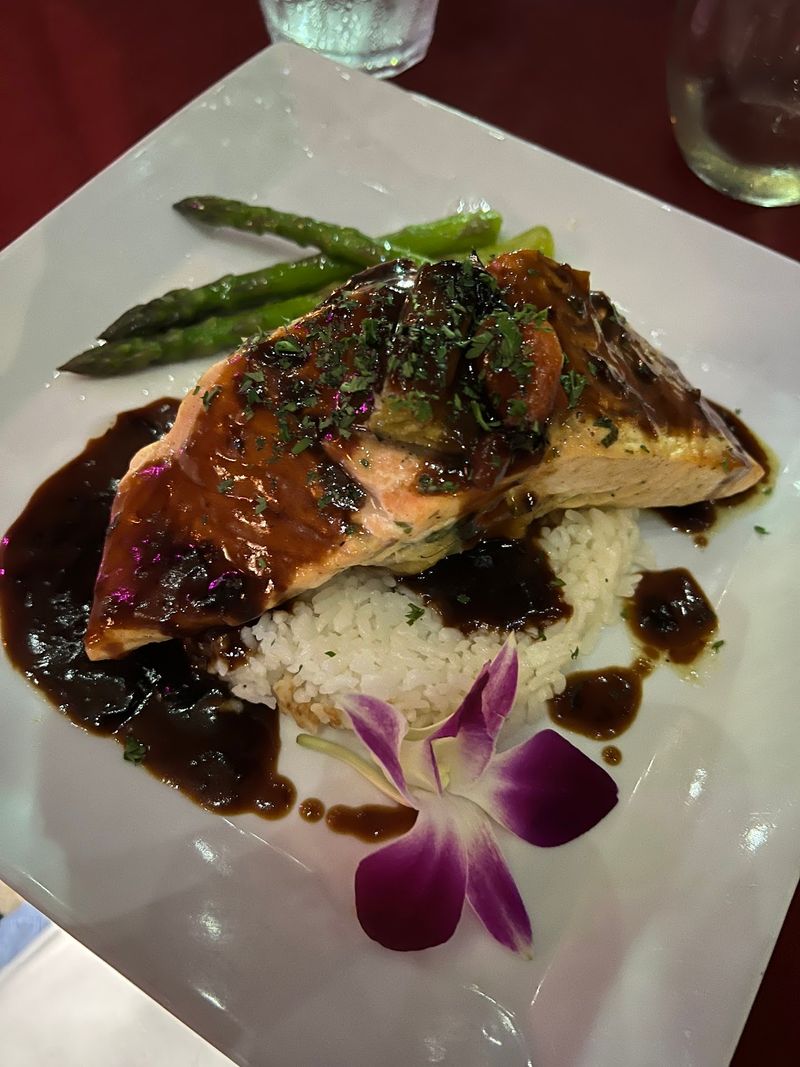
Fresh fish can appear with seasonal vegetables, an unexpected crust, or a sauce influenced by the Howards’ combined West Indian and Italian backgrounds. Other recurring favorites have included seared ahi tuna with a green tea and sesame crust, sticky rice, soy reduction, and wasabi mayonnaise.
Coconut-crusted jumbo shrimp and seafood wontons show the kitchen’s willingness to move beyond standard Cape May preparations. Portions are generous, but Freda’s does not rely on size alone.
The kitchen understands that seafood can become bland when chefs are too cautious with it. Here, sauces have acidity, crusts add texture, and seasonings are allowed to register.
Prices commonly fall within the range expected for an independent Cape May dinner restaurant, with many entrées around the upper $30s or beyond depending on the seafood and market conditions. What arrives, however, is scratch-made food rather than a view of the ocean added to the bill.
The Creative Specials Make the Menu Even More Irresistible
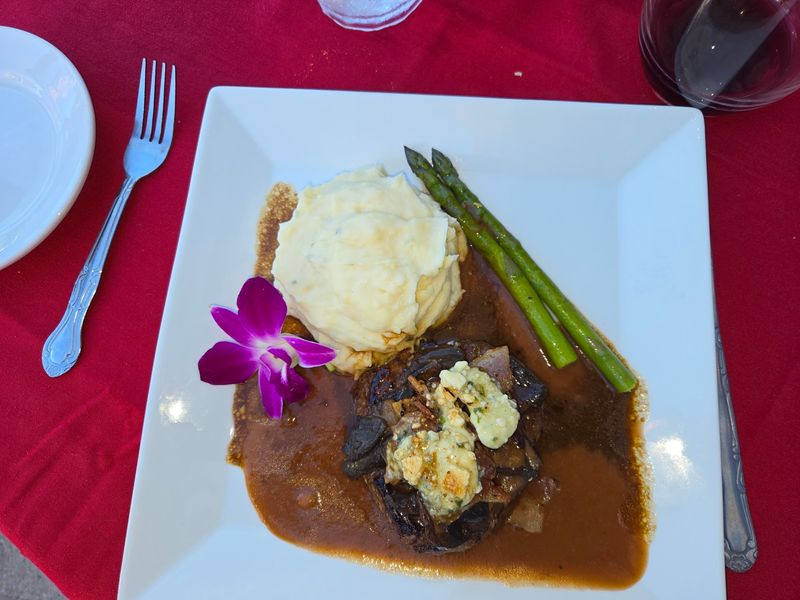
A chalkboard or specials list at Freda’s deserves a proper reading before anyone commits to an order. Steve Howard treats specials as his chance to respond to the ingredients available that week rather than repeat the same plates all year.
That freedom can produce anything from a seafood-packed pasta to chicken Parmesan finished with shrimp and crabmeat. The combinations are sometimes playful, occasionally unexpected, and rarely timid.
Diners who prefer meat have plenty to consider. Beef Wellington, bacon-wrapped filet, rack of lamb, veal chops, pork tenderloin, and roasted duck have all appeared among the restaurant’s popular dishes and rotating offerings.
Sauces and garnishes keep these plates from feeling like steakhouse standards. A filet may arrive with blue cheese and mushrooms, while pork can be paired with pistachios or another nutty element that changes its texture.
Steve’s seasoning philosophy remains consistent even when the menu changes. A dish should wake up the palate, not merely occupy the center of a plate.
The meal begins with details that other restaurants might outsource. Warm rolls are made in-house.
Soups and sauces start in the kitchen rather than a package. Even the salad dressings have enough character to be remembered, particularly the ginger vinaigrette with its sharp, lively finish.
Then Carol’s pastry training becomes especially useful. The warm bread pudding is dark, soft, and rich, with homemade caramel sauce melting into every uneven corner.
Guests have been known to stop in specifically for dessert and coffee. Flourless chocolate cake, cheesecake, and other sweets may also appear depending on the evening.
Dinner for two is not inexpensive—a meal with two entrées, dessert, and tip can approach or exceed $135—but Freda’s operates in a city where special-occasion pricing is hardly unusual. The difference is visible in the work.
From the roll at the beginning to the sauce on the final dessert, the meal carries evidence that someone in the kitchen made it rather than simply opened it.
Why This Black-Owned Eatery Deserves a Spot on Your Shore Itinerary
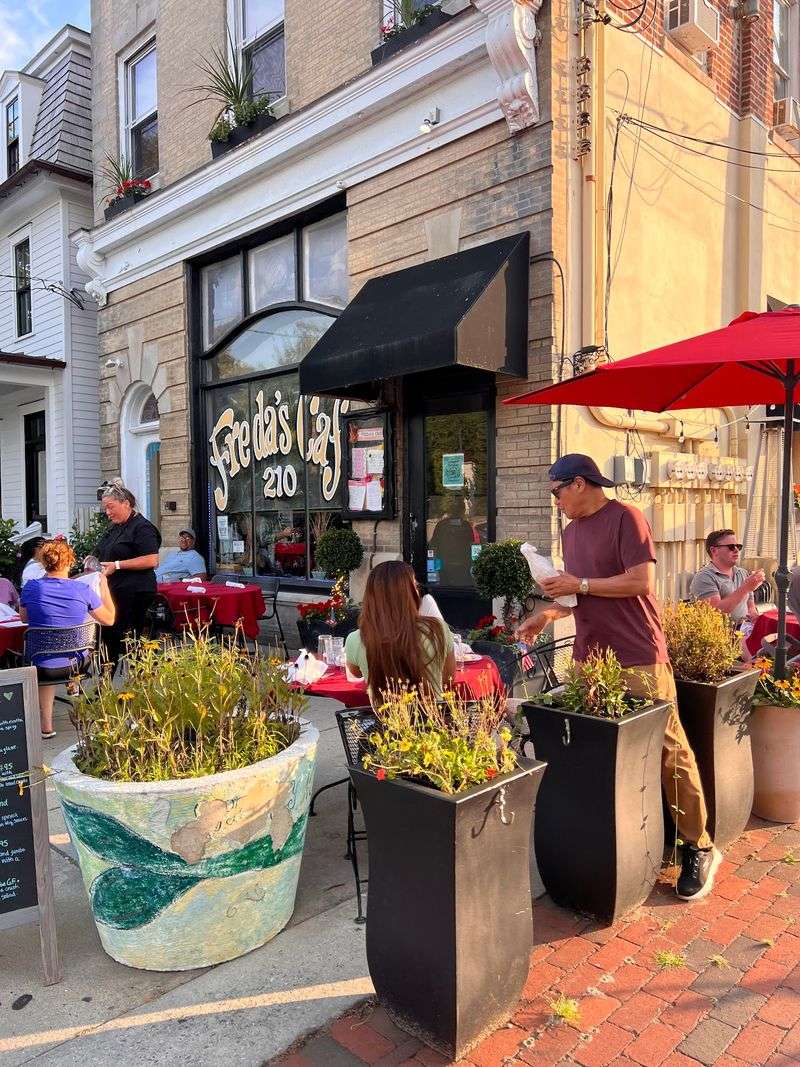
Cape May’s polished image can make the town seem preserved in amber, but Freda’s Cafe tells a more interesting story about who has shaped this seaside community.
The restaurant is located less than a quarter-mile from the Harriet Tubman Museum of New Jersey, which documents Tubman’s time in Cape May and the city’s role in abolitionist history.
Black residents and business owners were once a highly visible part of local life, particularly during the early 20th century. Freda’s continued presence connects the modern dining scene to that deeper history without turning dinner into a history lesson.
It remains, first and foremost, a family-run restaurant. That independence is evident in its small dining room, seasonal schedule, changing specials, and personal service.
There is no corporate menu engineered to be identical every night. Steve buys according to availability, cooks according to instinct, and makes changes when a guest has a reasonable request.
Carol’s pastry background ensures dessert is part of the restaurant’s identity rather than an afterthought. The staff brings the warmth that keeps longtime customers returning year after year.
Practical details matter in Cape May, where a spontaneous dinner can become complicated quickly. Freda’s is close enough to the Washington Street Mall for an easy walk after shopping, but its limited seating makes reservations wise.
The restaurant is BYOB, so a bottle from a nearby shop can keep the final bill more manageable. Dinner hours and open days shift seasonally, making a quick phone call to 609-884-7887 worthwhile before heading over.
None of those quirks feels inconvenient once the meal begins. They are reminders that Freda’s is a small operation built around the Howards rather than a high-volume restaurant designed for endless turnover.
More than 30 years after opening on Ocean Street, it still reflects Steve’s West Indian roots, Carol’s Italian heritage, and the couple’s decision to make Cape May their home. The crab cakes may be what first gets people talking, but that personal history is the ingredient holding the restaurant together.
Share this story