A shopping cart rattles across the floor, somebody two aisles over gasps at a pair of boots, and near the front, a first-timer is quietly realizing the debit card in their wallet will not help them here. That is usually how a trip to Red White & Blue Thrift Store in West Berlin announces itself.
This is not the kind of thrift shop where you pop in for five polite minutes and leave with one mug. The store at 590 NJ-73 feels built for people who know the rules: bring cash, wear comfortable shoes, check every tag, and do not assume the good stuff is gone just because the first rack looks picked over.
Locals in Camden County have treated this place like a standing appointment for years. Part warehouse, part scavenger hunt, part patience test, it rewards shoppers who slow down, double back, and know better than to brag too loudly.
The Route 73 thrift store that feels more like a warehouse hunt
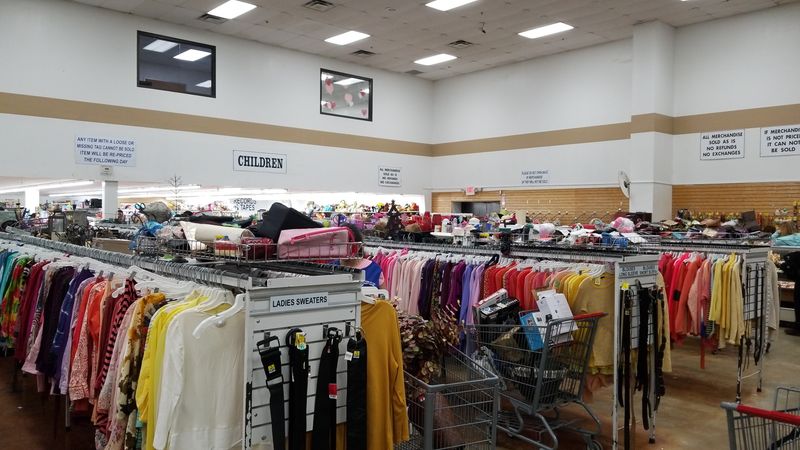
Route 73 is not exactly shy. It is a busy South Jersey corridor lined with shopping centers, chain restaurants, traffic lights, and the kind of errands people try to knock out in one loop.
That is part of what makes Red White & Blue so easy to underestimate. From the outside, it looks like another thrift store tucked into the everyday retail rhythm of West Berlin.
Inside, it feels more like somebody opened the back room to an entire secondhand department store. The address is 590 NJ-73, right in Camden County, which puts it within easy reach of Berlin, Voorhees, Marlton, Cherry Hill, and the Philadelphia suburbs.
That location matters. This is not a hidden farmhouse shop down a gravel road.
It is hiding in the most New Jersey way possible: in plain sight, along a highway people drive every week without realizing what is waiting behind the doors. Once inside, the scale is the first thing that gets you.
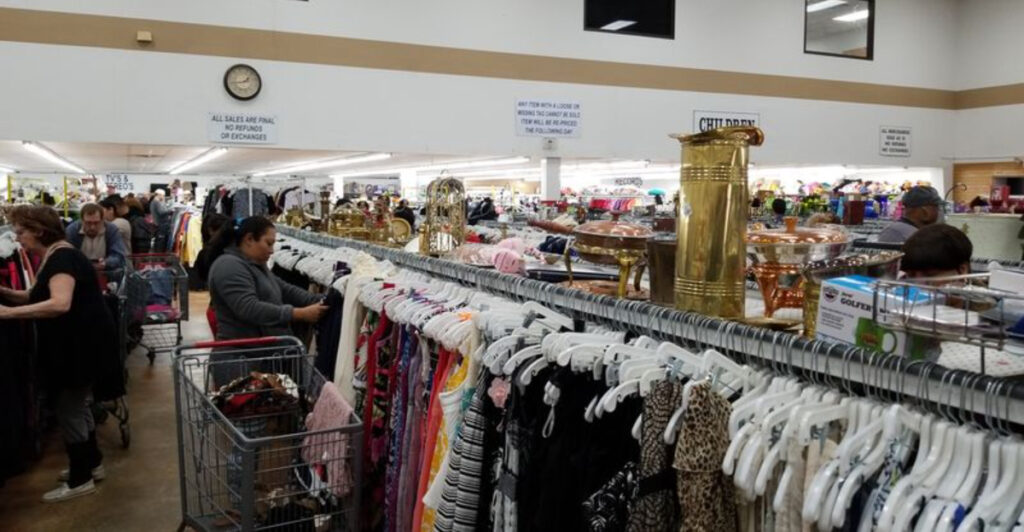
Clothing racks seem to keep going, shoes take up serious territory, and the housewares section can swallow more time than you planned to give it. This is not a boutique thrift experience where everything is lightly curated and arranged like a Pinterest board.
It is bigger, busier, and more unpredictable. That is the appeal.
You do not walk in expecting the store to hand you a perfect vintage leather jacket in the first ten minutes. You work for it.
You scan sleeves, check seams, lift plates, open baskets, peek under shelves, and circle back because something new always seems to appear after you have already passed through. The smart move is to pick a lane before you start.
If you try to cover clothing, shoes, books, furniture, kitchenware, toys, and décor in one casual visit, the store will win. Locals know to treat each trip like a mission.
One day is for coats. Another is for glassware.
Another is for shoes you absolutely do not need but might buy anyway because they are sitting there looking smug in your size.
Why West Berlin locals keep coming back with empty trunks
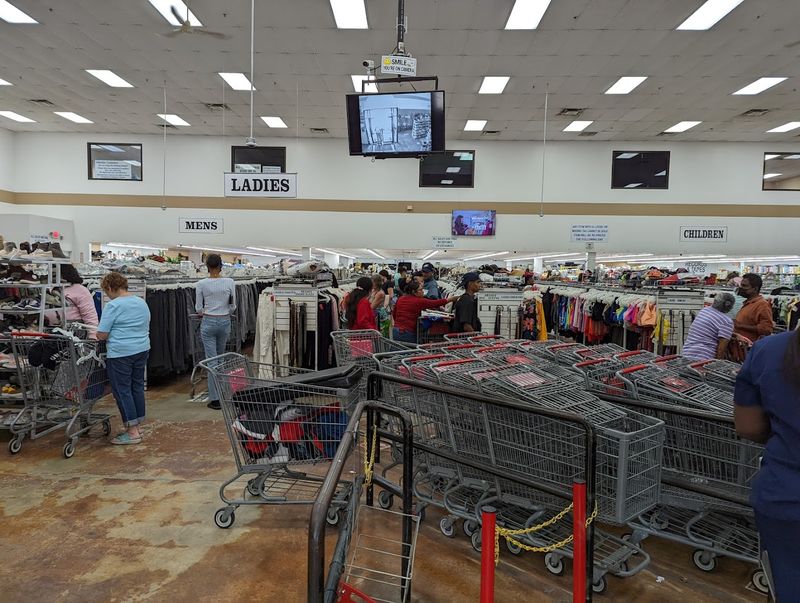
There is a certain kind of South Jersey shopper who does not leave home for Red White & Blue with one reusable tote. They clear the back seat.
They make trunk space. They come prepared like they are picking up a Facebook Marketplace dresser and somehow also buying half a fall wardrobe.
That may sound dramatic until you see the range of what people actually haul out of this place. A visit can turn into a stack of sweaters, a lamp, a set of plates, a bag of kids’ clothes, a framed print, a pair of barely worn sneakers, and one odd little ceramic thing nobody can identify but everyone agrees has “shore house bathroom” energy.
The reason locals keep returning is not just that the store is big. Plenty of big thrift stores are full of tired merchandise that looks like it has been passed over since the Clinton administration.
Red White & Blue has turnover, and turnover is the whole game. The company promotes fresh merchandise arriving daily, and regular shoppers act accordingly.
They know the inventory is never really finished. The item that was not there yesterday might be hanging on a rack today.
That constant movement creates a little bit of urgency without making the place feel precious. You are not shopping a carefully staged antique mall where every object has a backstory and a price tag to match.
You are digging through a working thrift store where good finds can still appear at normal-person prices. The West Berlin location also serves a wide mix of shoppers.
You will see parents looking for kids’ clothes, resellers moving quickly through racks, college students hunting cheap apartment pieces, older couples browsing housewares, and people who clearly stopped in “just to look” and are now dragging a cart that squeaks under the weight of their decisions. That is why empty trunk space matters.
Red White & Blue is dangerous for anyone who thinks they are immune to impulse buys. The store has a way of making practical purchases look virtuous and ridiculous purchases feel necessary.
The color-tag system that makes every aisle a gamble
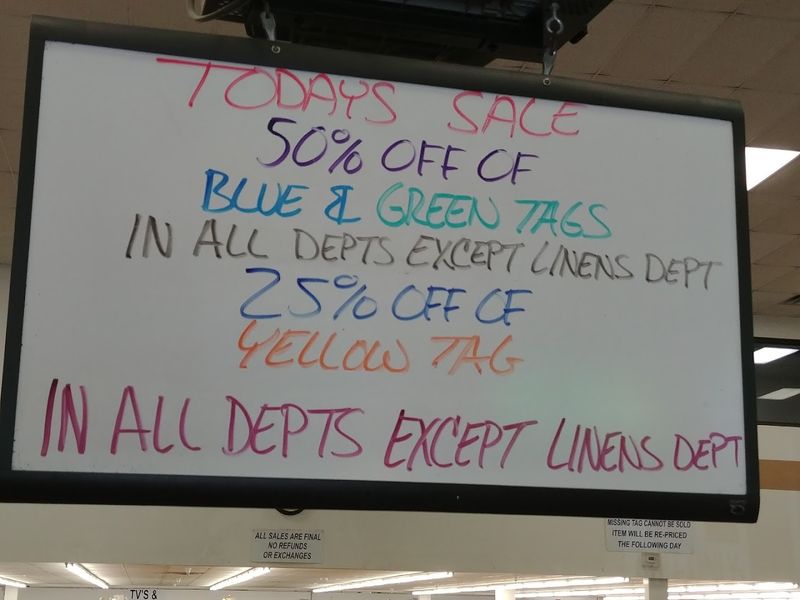
The first thing to know is that Red White & Blue does not behave like every thrift store you have memorized. Clothing is arranged heavily by color and department, and the sale system revolves around colored tags.
That means the rack in front of you is not just a rack. It is a little math problem with hangers.
On a given day, certain tag colors may be discounted, sometimes steeply. The original story notes markdowns that can run as high as 75% off depending on the rotating sale.
That is where the fun starts, because suddenly you are not simply asking, “Do I like this?” You are asking, “Do I like this enough at full price, or do I love it because the tag just made it a minor financial victory?” The system makes browsing slower, but not necessarily worse. In a size-organized store, you march straight to your section and reject everything in peace.
Here, the color arrangement nudges you into looking more broadly. You might start in black jackets, drift into green blouses, and somehow end up holding a cream cardigan you never would have searched for on purpose.
That can be charming or maddening depending on your patience level. The gamble is real.
A great item in the wrong tag color may not be discounted that day. A not-quite-perfect item in the right tag color suddenly becomes tempting.
And because the tags rotate, the store rewards people who learn the rhythm and come back often. It is not unusual for serious thrifters to plan their visits around sale days or check what colors are moving before committing to a full cart.
This is also where discipline comes in. A discount is not magic.
If the sweater does not fit, if the zipper sticks, if the mug has a crack, the color tag is just flirting with you. Experienced shoppers inspect everything.
They check collars, underarms, hems, soles, cords, lids, and the inside of every bag. The price may be nice, but thrift-store regret is still regret.
The color-tag system turns the store into a game, and like most games, it favors people who understand the rules.
What shoppers actually find inside Red White & Blue
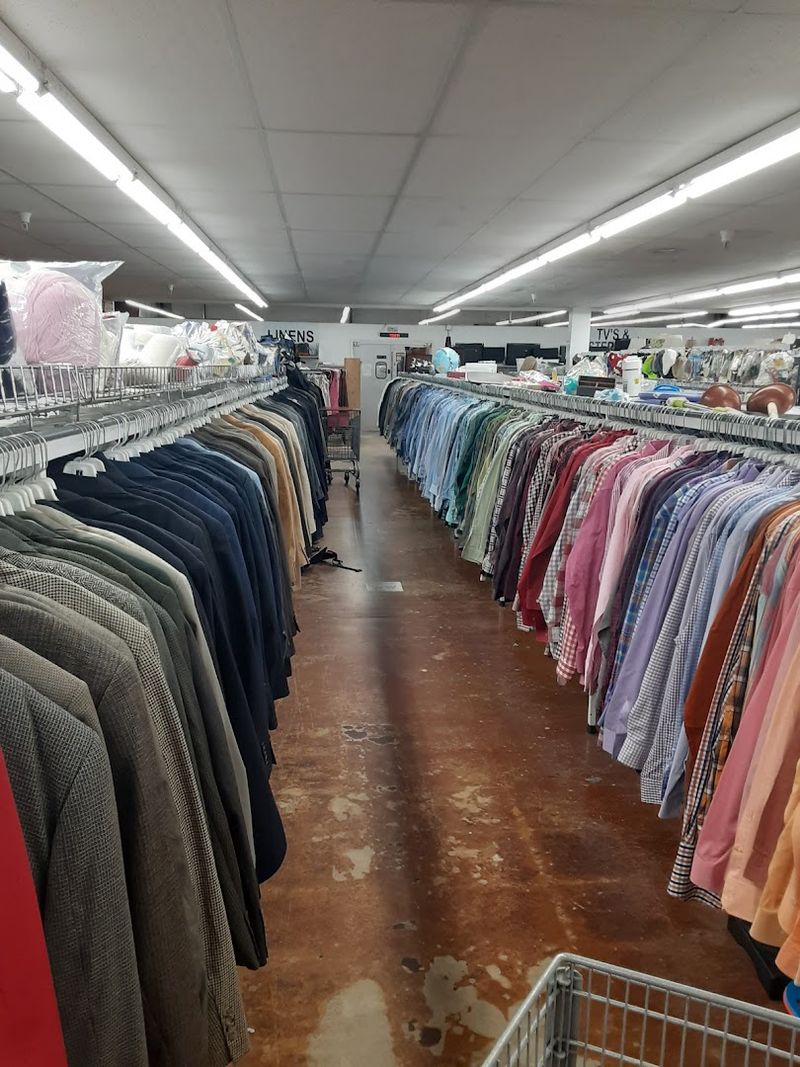
The best way to describe the inventory is this: imagine the contents of several Camden County garages, a few careful closets, a retired aunt’s dining room cabinet, a college apartment, and a department store clearance rack all agreeing to meet in one building. Clothing is the obvious draw.
There are racks of everyday basics, office pieces, coats, jeans, dresses, and the occasional garment that makes you stop and say, “Who owned this, and why was their life more interesting than mine?”
Brand names do turn up, and so do new-with-tags pieces. That does not mean every rack is a designer jackpot, but it does mean the patient shopper has a reason to keep flipping.
Shoes are another strong category. Red White & Blue locations are known for carrying a large footwear selection, and the West Berlin store has the kind of shoe area that can trap people who only meant to browse.
You may find sneakers, boots, flats, heels, sandals, kids’ shoes, and the occasional pair that looks like it was purchased for one wedding and retired immediately after the chicken entrée. Housewares might be the sneakiest section.
This is where the practical treasures live: mixing bowls, serving platters, mugs, frames, small appliances, lamps, baskets, and seasonal décor. If you are setting up a first apartment, replacing something that broke, or building the kind of mismatched kitchen that somehow looks intentional, this section can be better than a big-box run.
Books, toys, and oddball finds round it out. The joy is in the randomness.
One shopper may be hunting Pyrex. Another may be looking for work pants. Someone else is standing in front of a shelf deciding whether a ceramic goose is charming or threatening. Both answers are possible.
Prices can vary, especially when an item is clearly high quality or still has original tags attached. That sometimes surprises shoppers who expect every thrift item to cost pocket change.
But the value is still there if you know what you are comparing it to.
The cash-only rule first-timers should know before going
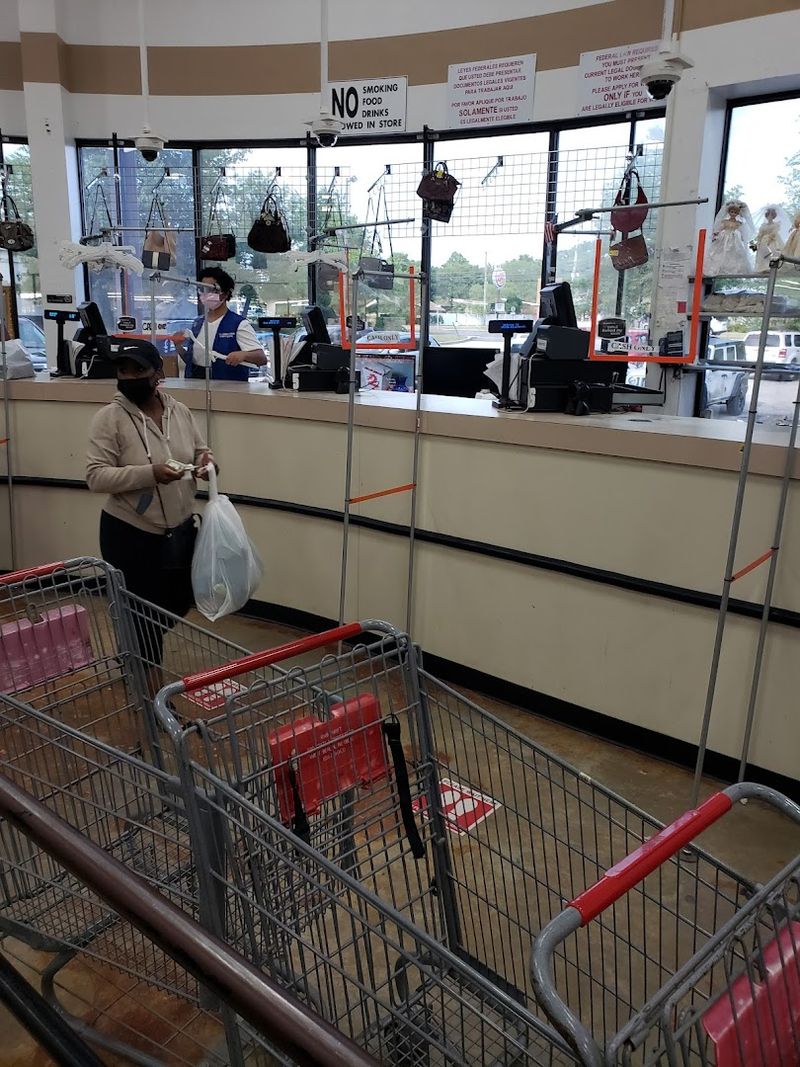
Here is the detail that has humbled many confident shoppers at the register: bring cash. Red White & Blue’s West Berlin store has long been known for its cash-only policy, and it is the kind of rule you want to know before your cart is full.
There is an ATM in the store, which helps, but nobody enjoys paying an ATM fee after spending an hour congratulating themselves for being financially responsible. The better move is to stop at your own bank first or set a cash budget before you leave home.
Honestly, the cash rule changes the shopping experience in a useful way. Thrift stores are built for temptation.
Every aisle has something that is “only a few dollars,” and those few dollars are very good at forming a crowd. When you shop with cash, your budget is visible.
You can feel it thinning. That makes it easier to choose the leather boots over the novelty mug, or the good lamp over the third denim jacket you are calling “different” because the wash is slightly lighter.
First-timers should also know that clothing shopping here requires a little strategy. The original story notes that fitting rooms are not part of the setup, and that can make apparel purchases feel like a calculated risk.
This is where regulars get clever. Wear slim, comfortable layers so you can hold pieces against yourself.
Bring a tape measure if you are serious about jeans, coats, or furniture. Know the measurements of a jacket or pair of pants you already like, and compare from there.
For furniture and home goods, inspect before buying. Open drawers. Check wobble. Look for chips. Test zippers. Count pieces in a set.
If something plugs in, be cautious and look for any available way to check condition before you commit. A bargain toaster that does not toast is just counter clutter with a backstory.
The cash-only policy may feel old-school, but it fits the place.
Why the best treasures disappear before lunch
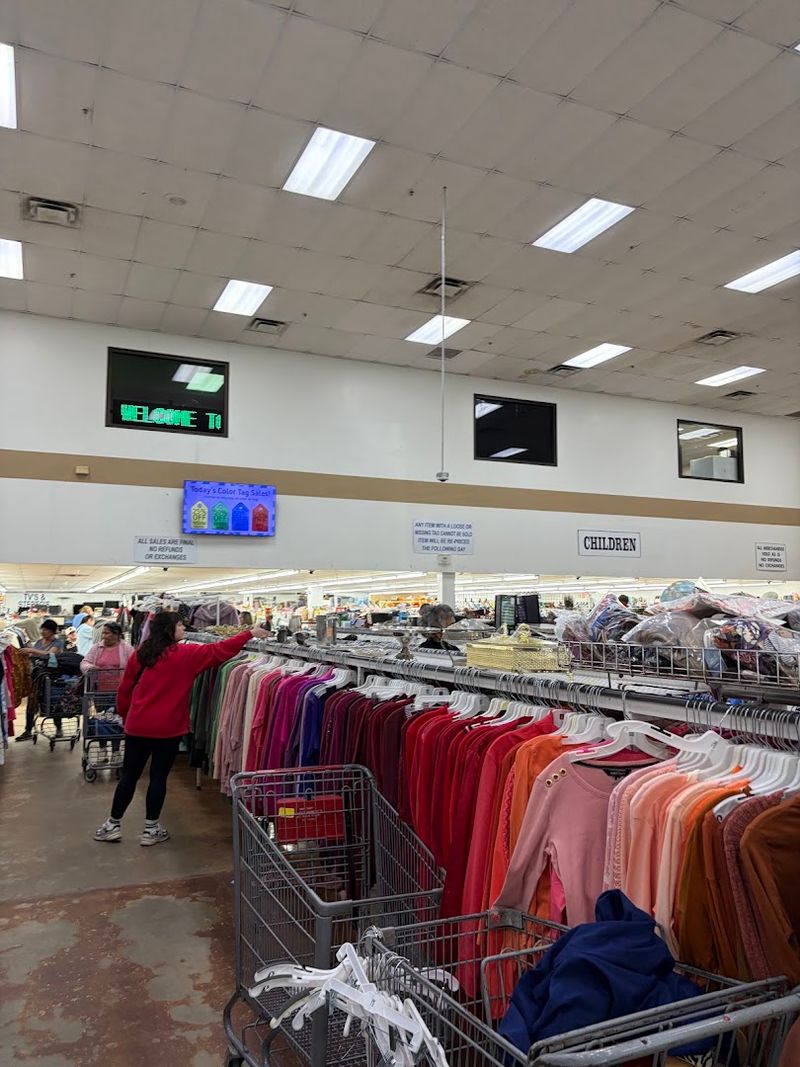
Morning has an advantage here, and regulars know it. By noon, the best pieces have often been handled, debated, claimed, returned to the rack, claimed again, and wheeled toward checkout by someone who arrived with a coffee and a plan.
This is especially true on weekends and sale-change days. The shoppers who care most about the color tags tend to show up early, because discounted merchandise does not wait politely for late risers.
If a great coat, a clean pair of boots, or a still-in-the-box kitchen gadget hits the floor at the right price, it can vanish quickly. That does not mean afternoon shopping is pointless.
Far from it. Staff members restock throughout the day, and thrift stores are unpredictable by nature.
Someone can abandon a perfect item at the end of an aisle because they ran out of cash or came to their senses. A fresh cart can roll out when you least expect it.
The late-day shopper still has a shot. But mornings give you the widest first look. The racks are less disturbed. The shelves are easier to scan.
The parking lot is less of a negotiation. You have more patience because the day has not yet worn you down, and patience is probably the most underrated thrift skill.
The other reason treasures disappear early is simple: Red White & Blue has regulars who know exactly what they are doing. They are not wandering.
They move with purpose. Some head straight for shoes. Some know the housewares section like a grocery-store aisle. Some can spot quality fabric from three feet away.
If you stroll in casually at 2 p.m. on a Saturday, you are shopping after the pros have already taken their lap. Still, that is part of the charm.
This Camden County thrift store is not beloved because it makes bargain hunting easy. It is beloved because it keeps the possibility alive.
Every visit has a chance of producing something you did not know you wanted at a price that makes the whole errand feel slightly heroic. By lunchtime, plenty of treasures may be gone.
But in a store this big, the next good find is usually hiding one aisle over, pretending not to be noticed.
Share this story