The “Trenton Makes, The World Takes” sign still glows over the Delaware River like it has something to prove, and honestly, maybe it does. Trenton is not trying to charm you with boutique sidewalks or brunch reservations booked three weeks out.
It is a capital city with scuffed edges, Revolutionary War bones, old brick rowhouses, neighborhood bakeries, train whistles, park benches, and rents that still look surprisingly reasonable in a state where “affordable” often feels like a prank.
The original inspiration for this piece points to Trenton as a rare New Jersey place where low rent and slower living still overlap, and while today’s rental prices vary by listing, the bigger idea holds up: this city offers a different bargain than the polished towns around it.
You get history without preciousness, access without frenzy, and a pace that lets the day breathe.
Why Trenton Still Feels Like New Jersey’s Best Kept Secret
Trenton is the kind of place people talk around before they actually talk about it. They mention Princeton up the road, Hamilton next door, maybe Lambertville if they are feeling cute and riverside.
Then Trenton sits there in the middle of everything, quietly being the state capital, a county seat, a transit hub, and one of New Jersey’s most historically loaded cities without asking for applause.
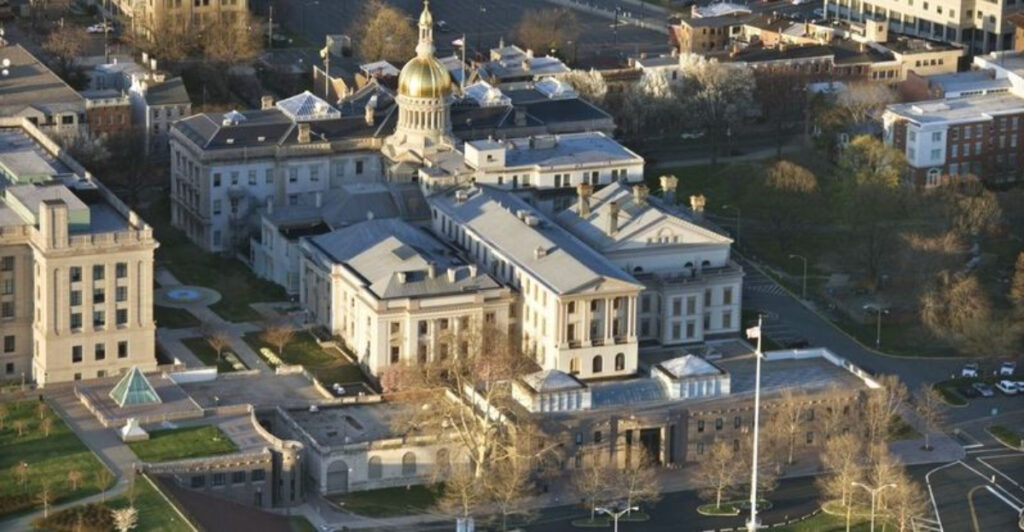
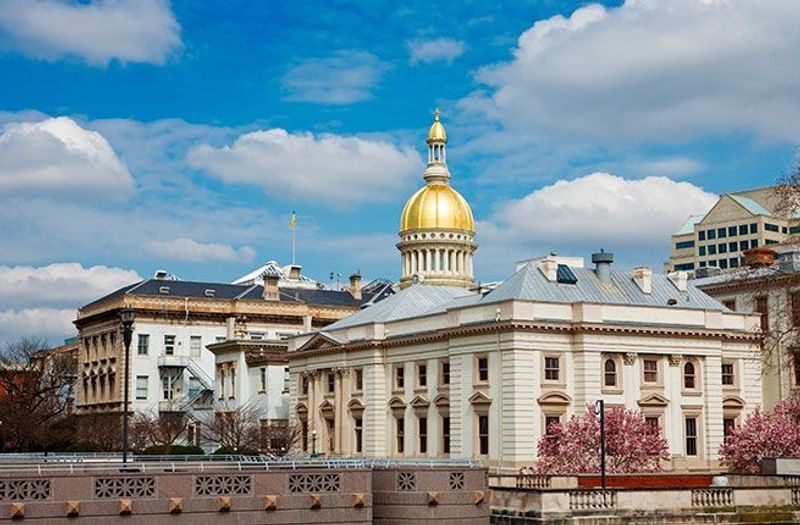
The city became New Jersey’s capital in 1790, and the State House has been home to state government since 1792, which makes walking around downtown feel less like sightseeing and more like stumbling into the file cabinet of American history.
That is part of the appeal. Trenton does not smooth itself into a weekend getaway fantasy. It is lived-in. Some blocks are beautiful in a cracked-sidewalk, mature-tree, old-masonry kind of way. Some are plain. Some need love.
But the city has a texture that newer suburbs cannot fake. The gold dome of the State House, the Old Barracks on Barrack Street, the Battle Monument rising above the neighborhood, the Delaware River sliding past the edge of town — these are not decorative touches.
They are part of daily life here. What makes Trenton underrated is not that it is secretly perfect. It is that it is more interesting than its reputation.
People who only know it from quick headlines miss the everyday rhythm: buses pulling through downtown, office workers grabbing lunch near State Street, neighbors sitting on stoops, families heading to the market, commuters catching trains, and old houses still standing with the kind of detail builders stopped bothering with decades ago.
In a state obsessed with prestige ZIP codes, Trenton’s confidence comes from not pretending to be one.
Affordable Rent Is Only Part of the Appeal
Here is the practical reason Trenton keeps popping up in affordability conversations: compared with much of New Jersey, it still gives renters a little breathing room.
Current rental data shifts by source and month, but Apartments.com listed Trenton’s average rent at about $1,581 in May 2026, with studios around $998, while RentCafe recently put the city’s average closer to $1,511.
That is not pocket change, and it is not the same thing as saying every apartment is cheap, but in New Jersey’s rental market, those numbers stand out for being lower than many better-hyped places. The real value, though, is what sits around the rent.
Trenton gives you access to state jobs, county offices, hospitals, colleges nearby, the Northeast Corridor, and major highways without forcing you into the price bracket of towns that market themselves with cobblestone strolls and $19 cocktails.
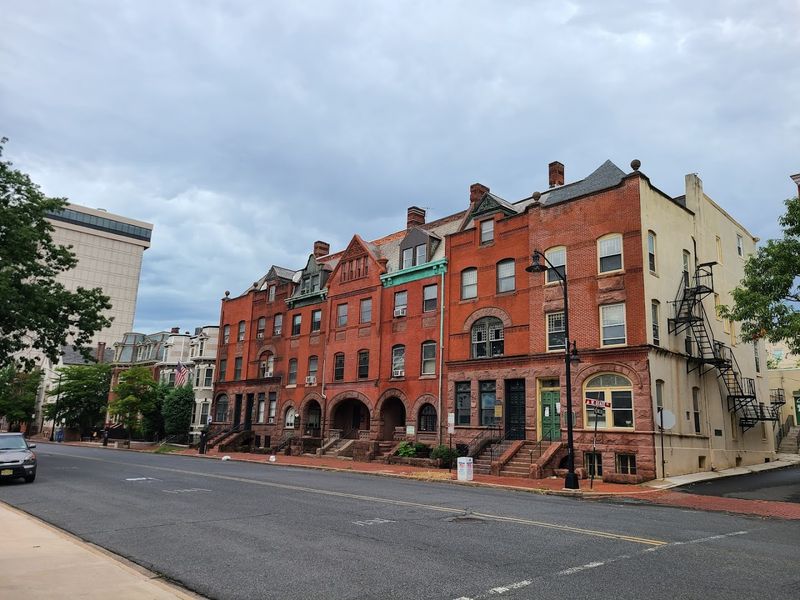
There are still older apartments, duplexes, rowhomes, and small multifamily buildings here, which means the housing stock feels more varied than the standard “luxury rental community” template spreading across New Jersey.
Affordability in Trenton also has a personality attached to it. You are not just renting a box near a parking lot.
You might end up near a block where the houses have cornices, porches, stained glass, or the sort of front steps where people actually pause for a conversation. You might be close enough to walk to a corner store, a bus stop, a park, or a pizza place that has been feeding the same families for years.
That matters. Rent is the headline, but the slower pace is the footnote that makes it livable.
In Trenton, the bargain is not only measured in dollars. It is measured in how much room the city leaves for ordinary life.
Historic Streets Give Everyday Life a Little More Character
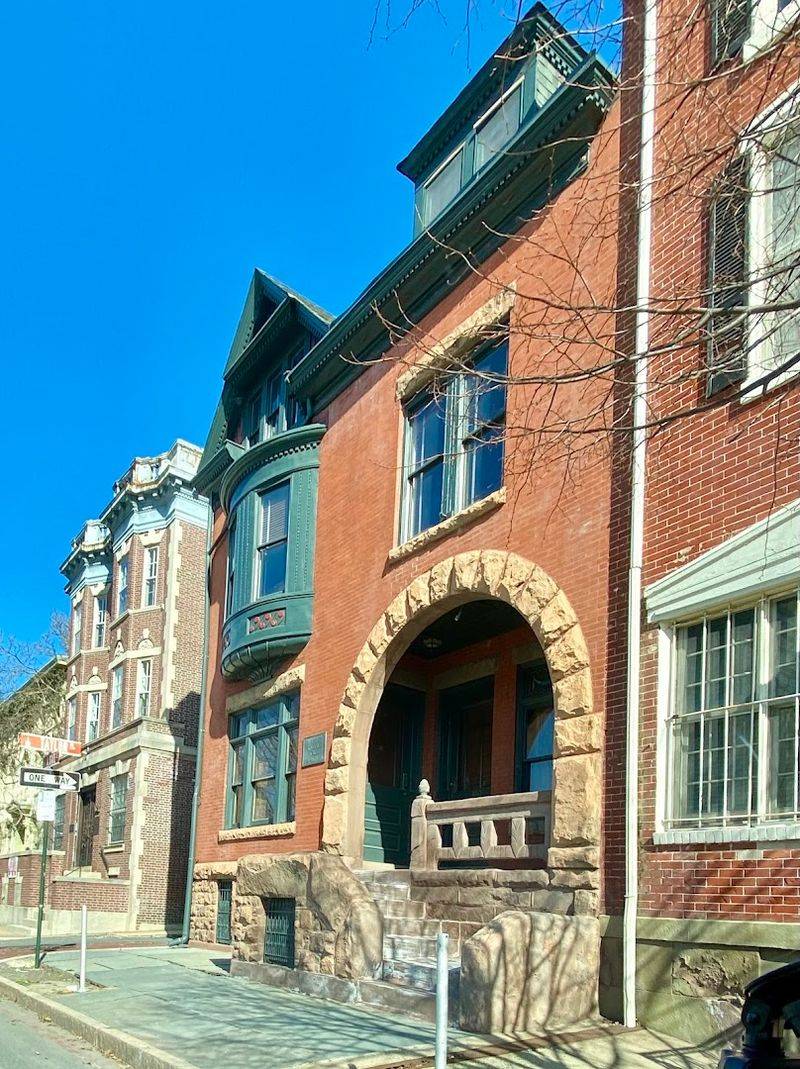
Mill Hill is where Trenton shows off without acting like it is showing off. The neighborhood sits near downtown, but its brick homes, narrow streets, and old-fashioned scale make it feel tucked away from the heavier traffic a few blocks over.
The Old Mill Hill Society describes it as a historic, primarily residential neighborhood, and the Trenton Historical Society traces the area’s significance back to the late 1600s, when a grist mill stood along the Assunpink Creek. That is a lot of history for a place where someone might simply be walking a dog before dinner.
This is one of Trenton’s quiet tricks. History here does not always arrive with a velvet rope.
It is stitched into normal errands. You can pass the Old Barracks Museum, a building constructed in 1758 for British soldiers during the French and Indian War, then keep going toward a deli, office, or bus stop.
The Barracks later witnessed Revolutionary War history tied to Washington’s victory at Trenton, but it still sits right in the city grid, not isolated on some manicured historic campus. The Trenton Battle Monument adds another layer.
At 148 feet high, it marks the area where American artillery helped turn the tide during the Battle of Trenton, and it rises from an urban neighborhood rather than a distant battlefield park. That contrast is what gives the city its character.
Trenton’s old streets are not preserved in amber. They are used.
People live in the houses, park on the streets, sweep the steps, argue about snow removal, and decorate for holidays. You feel the past, but you also feel Tuesday afternoon.
For anyone tired of places that package history until it feels more like branding than memory, Trenton offers the messier, better version: real buildings, real neighborhoods, real stories, still doing their job.
The Delaware River and Cadwalader Park Keep the Pace Unhurried
The Delaware River changes the mood of Trenton before you even realize it. One minute you are near traffic and government buildings; the next, the water is there, broad and steady, with Pennsylvania just across the way.
South Riverwalk Park gives the city a small but meaningful stretch of riverfront, with 6.5 acres along Lamberton Street and an interpretive area that tells Trenton’s river history through five 100-year sections. It is not some overproduced waterfront playground.
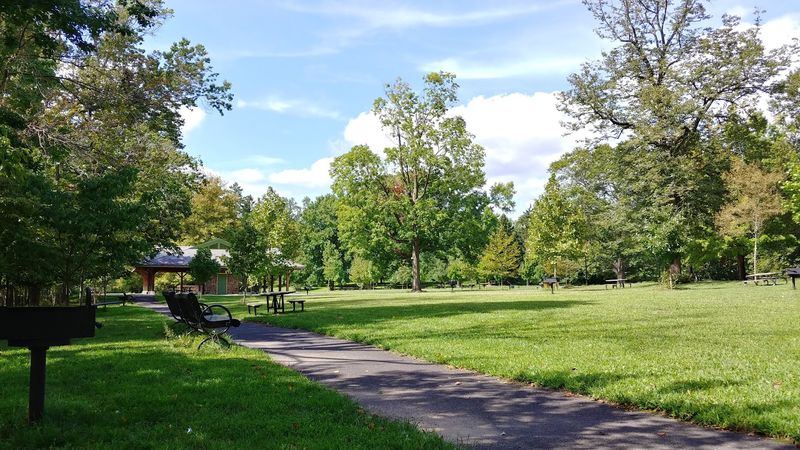
It is simpler than that, which is exactly why it works. Then there is Cadwalader Park, the city’s great green reset button.
Frederick Law Olmsted visited Trenton in 1891 to consider the site, and the National Park Service describes Cadwalader as his last great urban park. The Cadwalader Park Alliance also notes that it is New Jersey’s only public park designed by Olmsted Sr. and that it spans more than 100 acres.
That is not a small perk. In a dense, working city, 100-plus acres of rolling lawns, old trees, paths, and open views can change how a day feels.
You can go there to walk, sit, clear your head, bring kids to burn off energy, or wander over toward Ellarslie Mansion, which houses the Trenton City Museum. The park does not need to be dramatic to be valuable.
Its beauty is in how casually it fits into people’s routines. A slow life is not always about moving to the middle of nowhere.
Sometimes it is about having a place nearby where the city loosens its grip for an hour. Between the river and Cadwalader, Trenton has that.
Not polished. Not precious. Just enough space to exhale.
Local Food Markets and Tomato Pies Make the City Feel Lived In
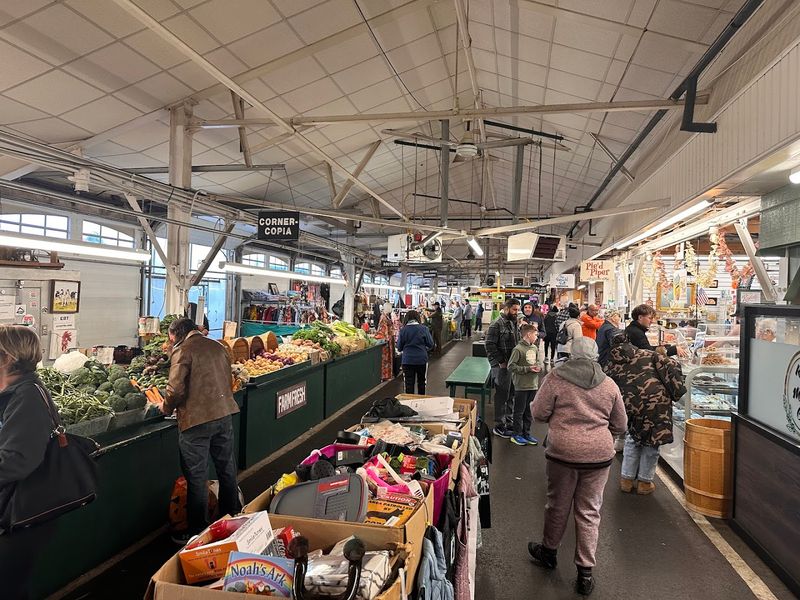
Food in Trenton has never needed a mood board. It has tomato pie, market counters, kielbasa, baked goods, dairy runs, and the kind of places where the regulars already know what they are ordering before they reach the counter.
The Trenton Farmers Market, located on Spruce Street in Lawrence since 1948 and operating as a farmer-owned cooperative since 1939, is one of the best examples.
Its current hours run Wednesday through Saturday from 9 a.m. to 6 p.m. and Sunday from 9 a.m. to 3 p.m., and the vendor mix is gloriously practical: Jersey Fresh produce, Amish meats and poultry, Polish deli items, cheese, baked goods, barbecue, rotisserie chicken, vegan selections, sweets, donuts, local wine, burgers, fries, and more.
That is not “curated local flavor.” That is dinner. Next door, Halo Farm keeps the dairy tradition going at 970 Spruce Street, with additional locations in Princeton and Hamilton Square, and hours listed daily from 8 a.m. to 9 p.m.
Then comes the tomato pie question, because in Trenton, pizza is not just pizza. Trenton tomato pie flips the usual order by putting cheese and toppings down first and crushed tomatoes on top, giving the pie that bright, saucy finish people get oddly loyal about.
De Lorenzo’s Tomato Pies traces its roots to the Chambersburg section of Trenton, where the family opened one of the early tomato pie restaurants in 1936 before Chick De Lorenzo established his own place on Hudson Street in 1947. This is the food culture that makes Trenton feel inhabited rather than staged.
You do not come here for a single photogenic dish. You come because the market still smells like bread and produce, the tomato pie debate still has local stakes, and lunch can feel like a neighborhood habit instead of a lifestyle choice.
Big City Access Without Big City Rent
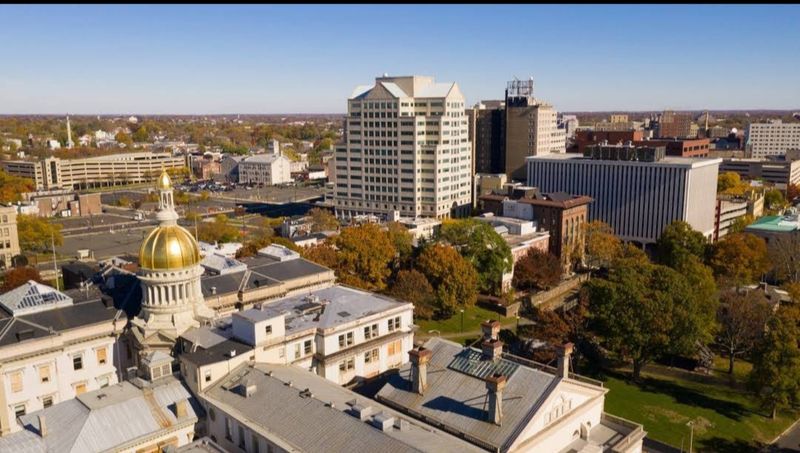
Trenton’s location is almost unfair. The city sits roughly 28 miles northeast of Philadelphia and about 55 miles southwest of New York City, which means it belongs to both conversations without fully surrendering to either one.
That is a big deal for renters who need access but do not want to pay the full emotional and financial tax of living inside a larger city. Trenton Transit Center connects riders to NJ Transit’s Northeast Corridor, SEPTA’s Trenton Line, Amtrak, and the River LINE, making it one of the more useful stations in the region.
The Northeast Corridor can get you toward Princeton Junction, New Brunswick, Newark, and New York Penn Station, while SEPTA links Trenton to Philadelphia through Bucks County. The River LINE runs south toward Camden along the Delaware River corridor.
That does not mean every commute is painless. New Jersey commuting has never been a spa treatment.
Trains get crowded, schedules matter, and anyone pretending otherwise is trying to sell you a condo. But the point is that Trenton gives you options.
You can work in one place, visit another, and come home to a city where the streets calm down sooner than they do in the bigger hubs. The slower pace shows up in small ways.
Downtown thins out after government hours. Residential blocks settle into evening earlier.
The river is nearby. The park is nearby.
The market is a weekend errand, not an expedition. Trenton is not trying to be the next polished New Jersey darling, and that may be its strongest argument.
It offers access, history, food, and rent that still feels comparatively grounded, all while leaving enough quiet in the day to notice where you are.
Share this story