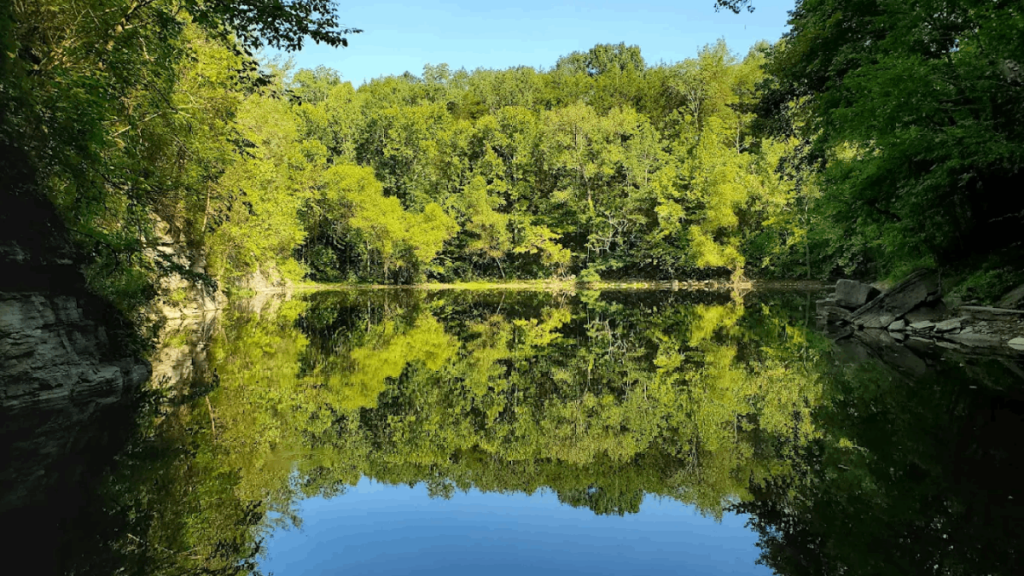
Just outside Nashville sits a lake so clear and unexpected, it looks like something from a postcard. Hidden Lake at Harpeth River State Park isn’t your typical Tennessee swimming hole—it’s an old rock quarry that nature reclaimed, creating a stunning blue-green oasis surrounded by limestone cliffs.
What makes this spot truly special is how close it is to the city while feeling like a complete escape into wilderness.
The Hidden Nashville Lake That Feels Like a Secret Escape
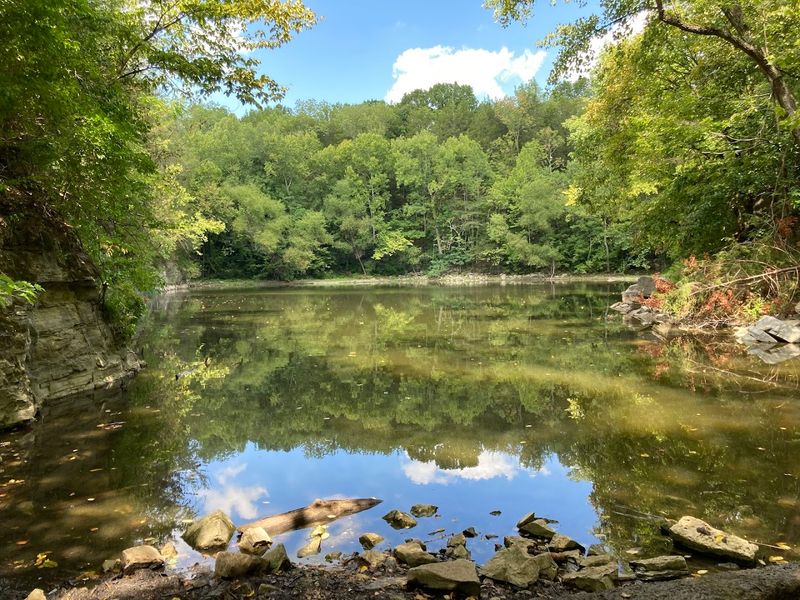
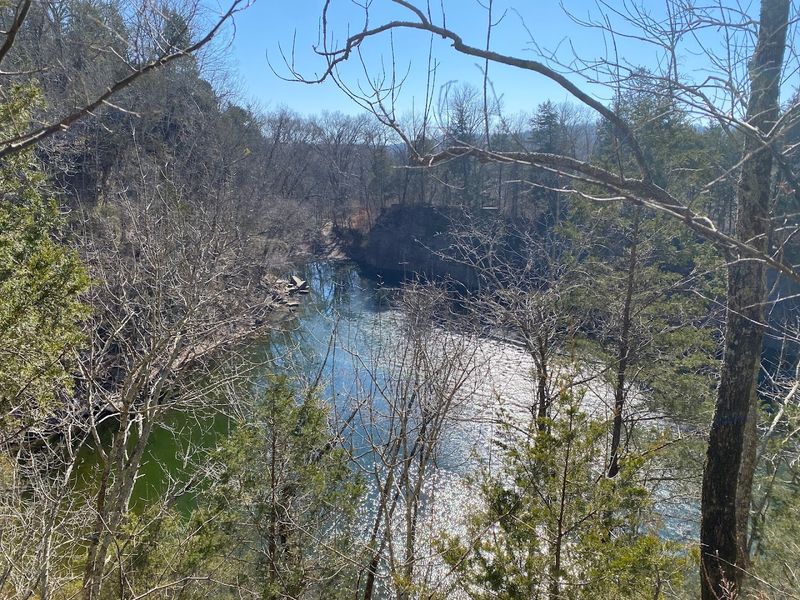
Hidden Lake earned its name honestly. Tucked away in Harpeth River State Park, this former rock quarry transformed into one of Middle Tennessee’s most photogenic natural spots. The water glows with an almost tropical turquoise color that seems impossible for a landlocked state, but the limestone walls and spring-fed depths create that magical effect.
What started as an industrial quarry in the early 1900s became an unexpected gift to nature lovers. After operations stopped, the quarry filled with groundwater and rainwater, creating a lake that reaches impressive depths. The surrounding cliffs rise dramatically from the water’s edge, making the whole scene feel more like a hidden canyon than a typical Tennessee lake.
Visitors often stop in their tracks when they first glimpse the water through the trees. The contrast between the deep blue-green lake and the pale limestone walls creates an almost surreal landscape. On sunny days, the water practically glows, and you can understand why photos of this place rack up likes on social media.
The park’s location just fifteen minutes from Nashville makes it ridiculously accessible for a quick nature fix. You can leave downtown, drive through some suburban neighborhoods, and suddenly find yourself staring at this geological wonder. It’s the kind of place that makes you feel like you’ve discovered something special, even though thousands of others have walked the same trail.
The lake sits quietly in its quarried bowl, surrounded by second-growth forest that’s reclaimed the industrial past. Old concrete foundations and remnants of the 1920s resort era peek through the vegetation, adding layers of history to the natural beauty.
This isn’t just a pretty lake—it’s a testament to how quickly nature bounces back when given the chance.
Where to Find Hidden Lake at Harpeth River State Park
Getting to Hidden Lake couldn’t be simpler, even for first-timers. The park entrance sits at 7851 McCrory Lane in Nashville, easily accessible from Highway 70. Punch the address into your GPS, and you’ll wind through residential areas before arriving at a surprisingly large gravel parking lot that handles weekend crowds without much trouble.
Harpeth River State Park actually consists of several disconnected tracts along the Harpeth River, but the Hidden Lake section is the most visited. You’ll know you’re in the right spot when you see the information kiosk near the parking area.
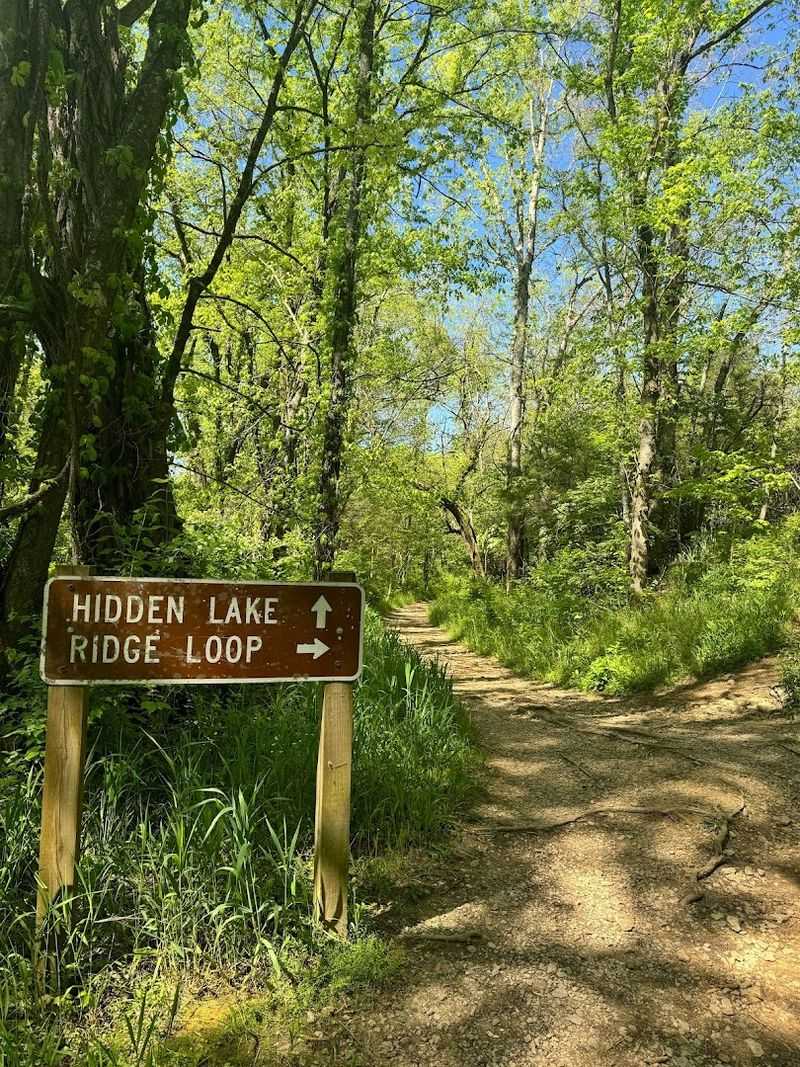
The trailhead starts right from the parking lot—no confusion about where to begin your walk. Clear signage points you toward the Hidden Lake Trail, and you’ll immediately enter a beautiful wildflower meadow that blooms spectacularly in spring and summer. This opening stretch sets the tone for the whole experience, with a storybook walk featuring signs that kids especially enjoy.
From downtown Nashville, you’re looking at roughly a twenty-minute drive depending on traffic. The park sits in the western part of Davidson County, tucked between the suburban sprawl and genuine countryside. It’s close enough that you could stop by after work or squeeze in a morning hike before brunch.
Parking fills up on beautiful weekends, especially during peak spring and fall seasons. Arriving early or visiting on weekdays gives you a better chance at snagging a close spot and enjoying the trail without crowds. Summer weekends bring river outfitters and kayakers to the Harpeth River access points, so the parking situation gets tighter during those times.
The park is free to visit, which makes it even more appealing for budget-conscious adventurers or families looking for an affordable outdoor activity.
Why This Crystal-Clear Lake Feels So Magical
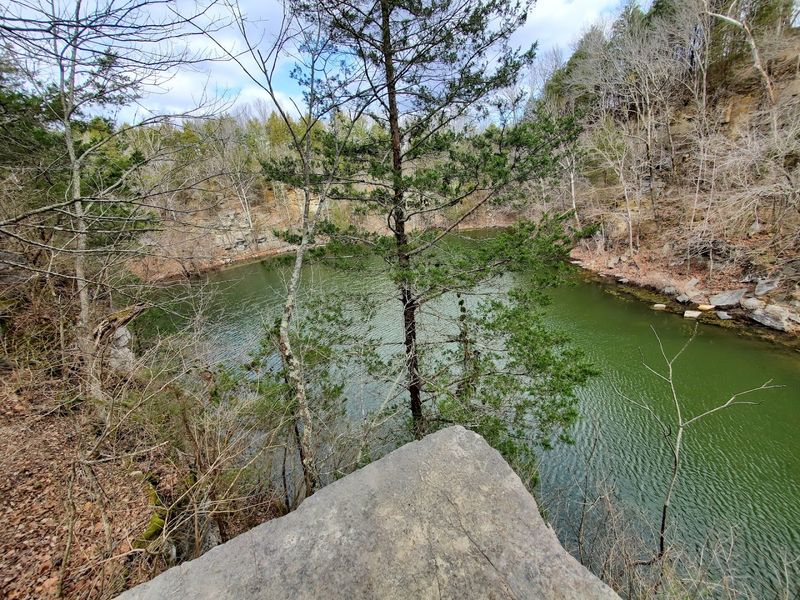
The water clarity at Hidden Lake genuinely surprises people. Unlike muddy Tennessee rivers or algae-filled ponds, this quarry lake maintains remarkable transparency thanks to its spring-fed nature and limestone geology. The mineral content and depth combine to create that signature blue-green color that photographs almost too perfectly.
Limestone has this wonderful way of filtering and clarifying water naturally. As groundwater seeps through the porous rock and fills the quarry, it picks up minerals that give the lake its distinctive hue. The depth—some areas drop to considerable depths—means the water stays cooler and clearer than shallow ponds that heat up and encourage algae growth.
Standing on the trail above the lake, you can often see straight down into the water, watching turtles glide through the depths. Eastern box turtles and three-toed box turtles make appearances along the shoreline, and visitors report spotting tadpoles, snakes, and other aquatic life. The ecosystem has established itself beautifully in the decades since the quarry closed.
The magical feeling comes partly from the unexpected discovery. You’re walking through Tennessee forest, following a gentle trail, and suddenly this jewel-toned lake appears below you. The quarry walls create natural amphitheater acoustics, making the space feel quieter and more enclosed than typical open lakes.
Bird songs echo off the limestone, and the whole environment takes on an almost sacred quality.
Historical remnants add another layer of enchantment. The old dance floor from the 1930s resort era still exists, slowly being reclaimed by moss and roots. Concrete foundations from quarry operations peek through the undergrowth.
These ghosts of human activity remind you that this beautiful space has stories to tell, transformations it’s undergone. Nature didn’t just create this magic—it reclaimed it from industrial use, which somehow makes it even more special.
The Easy Trail That Leads to the View
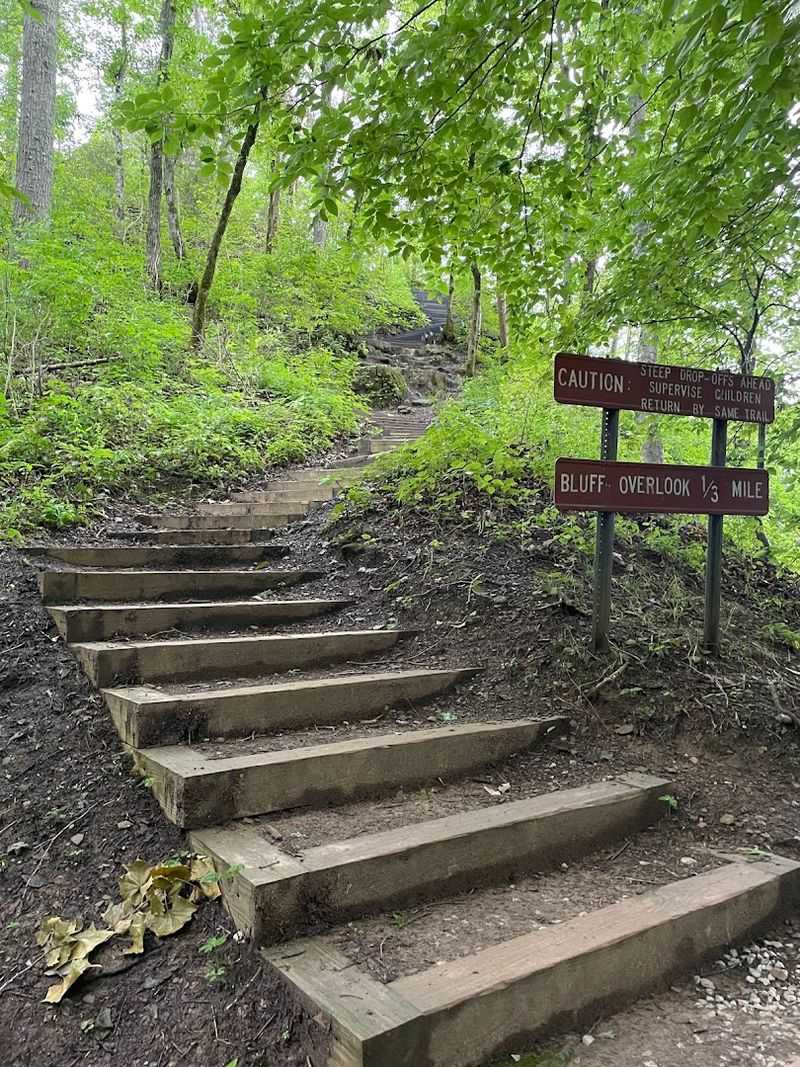
Forget grueling uphill slogs—the Hidden Lake Trail welcomes everyone. The main path stretches about a mile to a mile and a half, depending on which loop you choose, with minimal elevation changes that make it perfect for young kids, older adults, or anyone who prefers gentle walks over hardcore hiking.
You’ll start by meandering through a wildflower field that absolutely explodes with color during growing season. Butterflies dance between blooms, and the open meadow provides a lovely warm-up before you enter the shaded forest sections. The storybook walk features educational signs that keep children engaged, turning the hike into an interactive experience rather than just a walk.
The trail surface consists mostly of packed dirt and some gravel sections. Tree roots cross the path in places, and you’ll navigate around some rocks, but nothing that requires serious scrambling. Most people complete the walk in comfortable sneakers without needing hiking boots.
The forest canopy provides excellent shade coverage which makes summer walks much more pleasant.
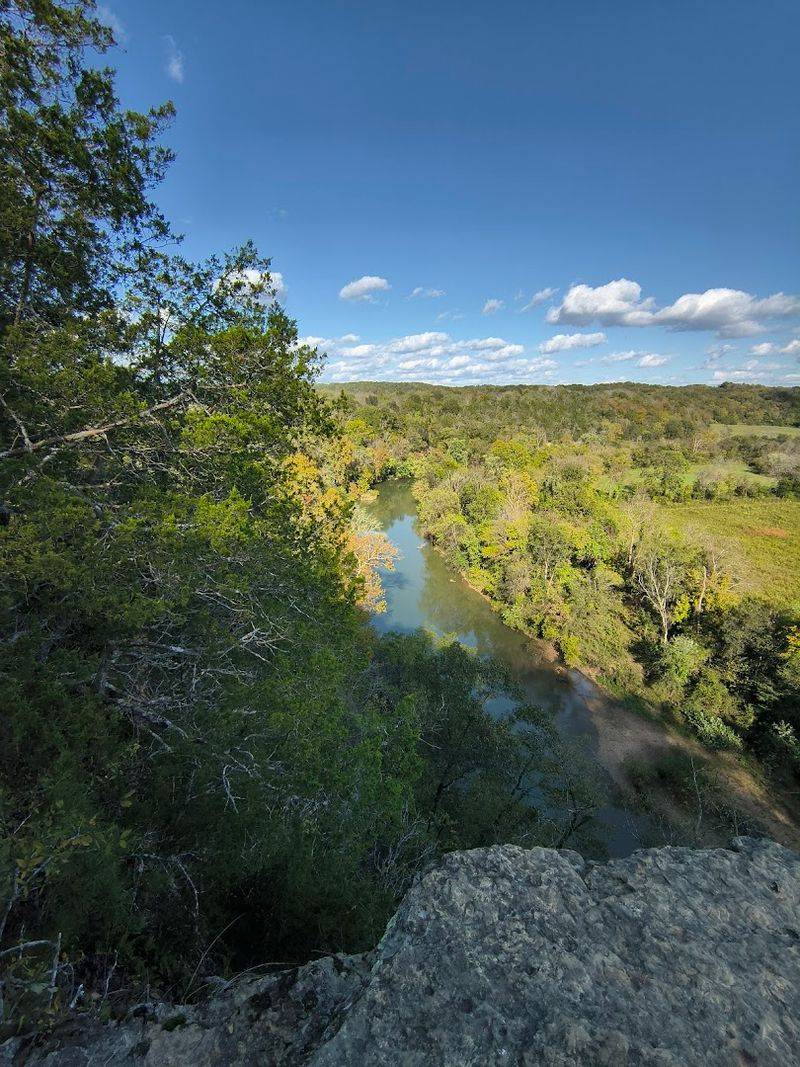
Multiple viewpoints offer different perspectives of the lake. Some spots put you right at water level, while others perch you high on the old quarry walls looking down. The bluff overlook provides a gorgeous view not just of Hidden Lake but also of the nearby veterans cemetery, creating an unexpectedly moving moment during your walk.
Trail options include a simple out-and-back or a loop that circles the lake for roughly 1.9 miles total. The upper loop takes you along the quarry rim with those dramatic views, while the lower trail hugs closer to the water. You can customize your experience based on time and energy levels, making this trail genuinely flexible for different abilities and interests.
What Makes Harpeth River State Park Worth the Trip
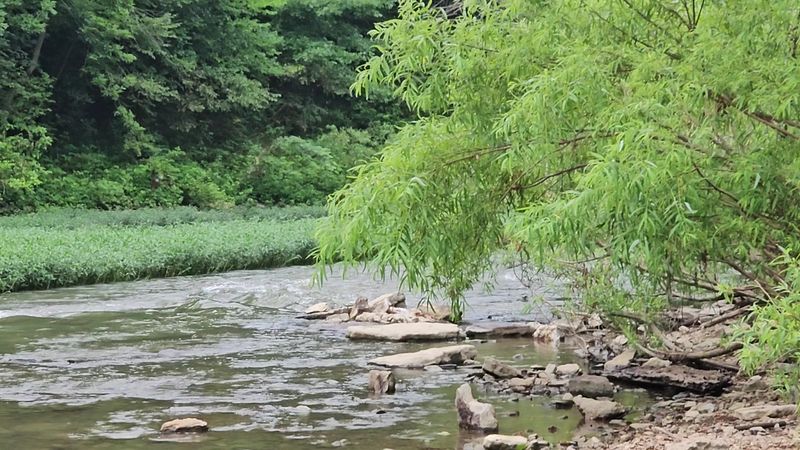
Hidden Lake represents just one slice of what Harpeth River State Park offers. The park actually encompasses multiple tracts along the Harpeth River, each with distinct character and activities. The Narrows section features a short but steep climb to stunning bluff overlooks, while the Gossett Tract provides easy riverside strolls.
Tunnel Trail leads adventurers to a waterfall flowing through a rock tunnel—another hidden gem within the park system.
River access makes this park special for paddlers and anglers. Multiple put-in and take-out points let kayakers and canoeists explore the Harpeth River’s gentle currents and occasional whitewater sections. Local outfitters run trips through here regularly, and families with kids aged seven and up find the river experience manageable and fun.
Low water periods might require some walking through shallow sections, but that adds to the adventure.
The historical significance deepens your appreciation of the landscape. Beyond the quarry operations, this area hosted a resort in the 1920s and 1930s where people came to swim in the quarry and dance on platforms that still exist in crumbling form. Learning this history transforms your hike from a simple nature walk into a journey through Tennessee’s industrial and recreational past.
Wildlife sightings happen regularly enough to feel special without being guaranteed. Deer graze near the parking areas, turtles sun themselves on logs, and the butterfly population thrives in the wildflower meadows. Bird watchers bring binoculars to spot species attracted to the diverse habitats where forest meets water meets open meadow.
The park’s proximity to Nashville without feeling urban makes it invaluable. You can genuinely escape into nature, enjoy real quiet interrupted only by birdsong and rustling leaves, yet still grab lunch in the city thirty minutes later.
Tips for Visiting Hidden Lake Like a Local
Timing your visit makes a huge difference in your experience. Weekday mornings offer the best chance at having the trail largely to yourself, letting you soak in the peaceful atmosphere without dodging other hikers. Weekend warriors should arrive early—think 8 or 9 AM—before the parking lot fills and the trail gets crowded.
Summer weekends bring the biggest crowds due to river outfitters, so consider visiting during shoulder seasons if you prefer solitude.
Spring and summer showcase the park at its most colorful. Wildflowers carpet the meadow in waves of blooms that attract those famous butterfly populations. The lush green canopy provides maximum shade and makes the forest sections feel almost primordial.
Fall brings gorgeous foliage, though Tennessee’s autumn colors peak later than in northern states, usually hitting their stride in late October and early November.
Don’t plan on swimming in Hidden Lake itself. Multiple reviewers warn against it, and the park discourages swimming in the quarry for safety reasons. The water might look inviting, but old quarries can hide underwater hazards and have unpredictable depths.
Enjoy the visual beauty and save your swimming for designated areas elsewhere in the park system.
Bring water and snacks since there are no facilities beyond the portable restroom at the parking area. The trail isn’t long enough to require serious provisioning, but having a water bottle keeps you comfortable, especially during warm months.
Dog owners will be happy—the park welcomes leashed dogs, and many visitors mention hiking with their pups. The easy terrain works well for most dogs, though be mindful during hot weather since the shaded sections alternate with open areas. Keep dogs from drinking the quarry water just as you wouldn’t swim in it yourself.
A Peaceful Tennessee Getaway Just Outside the City
Nashville’s reputation as Music City often overshadows its surprising abundance of natural spaces. Hidden Lake exemplifies how quickly you can transition from urban energy to forest tranquility in this part of Tennessee. The psychological shift happens fast—within minutes of leaving traffic and pavement behind, you’re surrounded by birdsong and rustling leaves, your breathing slows, and city stress melts away.
The peaceful quality of this park resonates through visitor reviews. People consistently describe it as quiet, tucked away, and feeling remote despite its proximity to civilization. You might hear distant traffic if you listen for it, but the forest sounds dominate.
The quarry’s natural amphitheater shape creates acoustic effects that make the space feel even more enclosed and separate from the outside world.
Locals use this park as their mental health maintenance spot. Quick visits after work, early morning meditation walks, weekend family outings—the easy access means you can incorporate nature into regular life rather than saving it for special vacation trips.
The free admission removes financial barriers that keep some people from exploring state parks with entrance fees. Families can visit weekly without budgeting concerns, and individuals dealing with tight finances can still access high-quality outdoor experiences. This democratic approach to nature access feels particularly important as outdoor recreation becomes increasingly commercialized elsewhere.
Veterans might find special meaning in the cemetery overlook, adding a reflective element to what might otherwise be just a pretty hike. The historical layers—quarry, resort, now protected park—tell stories about how we use and value land across generations. This peaceful getaway offers more than just scenery; it provides perspective, breathing room, and a reminder that nature persists and heals even after human disruption.
Share this story