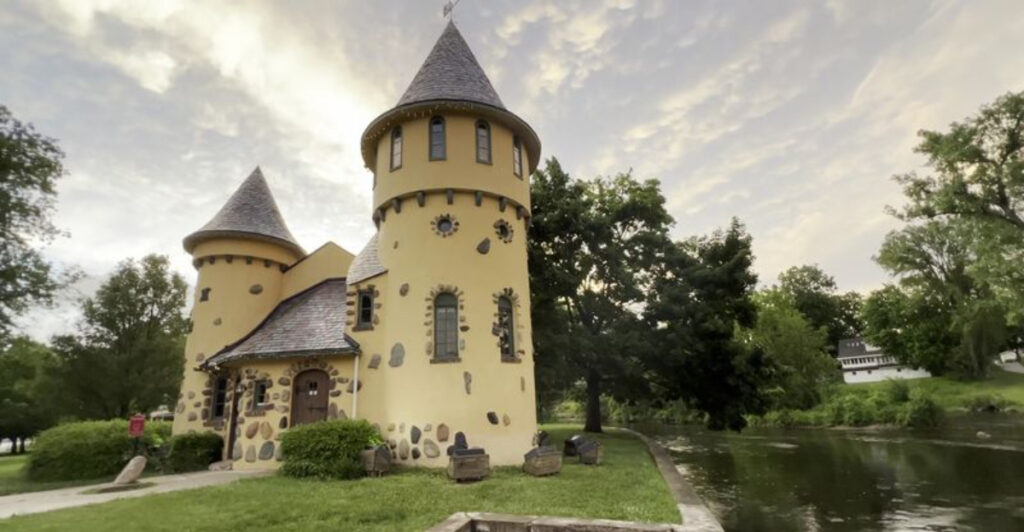
Tucked along the Shiawassee River in the small city of Owosso, Michigan, Curwood Castle is the kind of place that makes you stop your car and do a double-take. Built in 1922 as a private writing studio, this French Norman-style stone tower was the creative sanctuary of James Oliver Curwood, one of the most widely read adventure novelists of his era.
It sits quietly on a riverbank, surrounded by green parkland, looking like something lifted straight out of a storybook. Whether you come for the history, the architecture, or just a peaceful afternoon by the water, this little castle has a way of staying with you long after you leave.
The Castle Itself: A Stone Tower That Defies Expectations
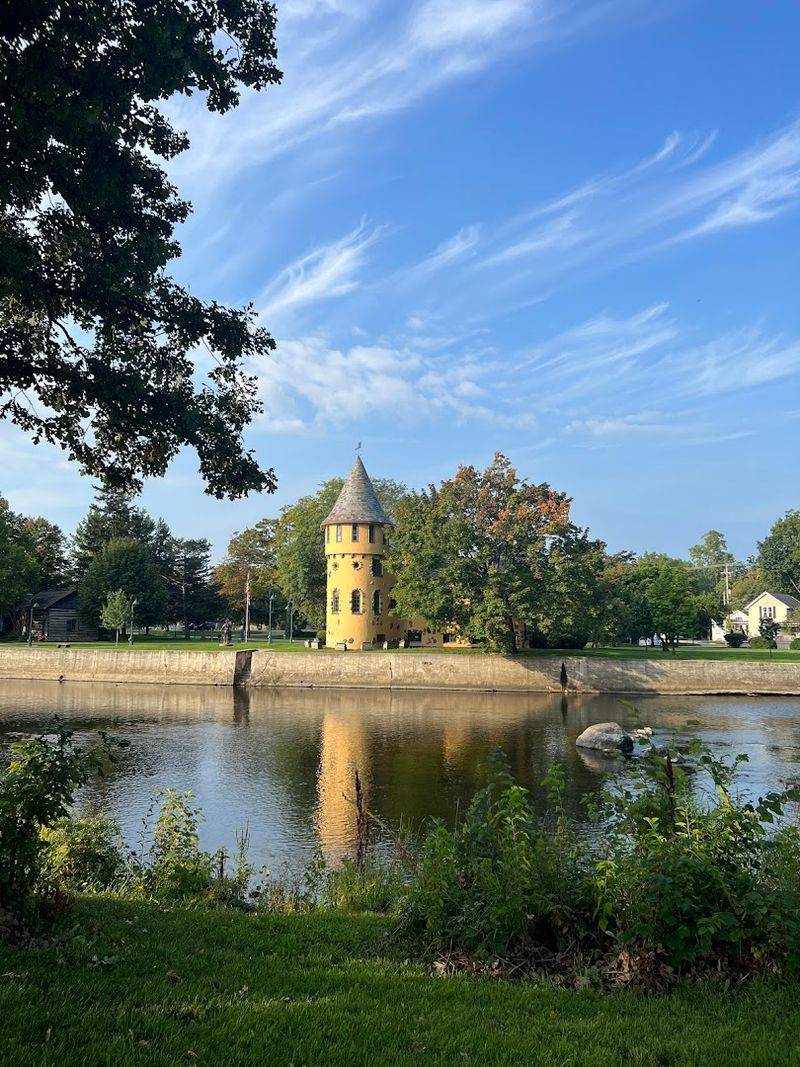
Nobody expects to find a castle in a mid-Michigan city of about 15,000 people. That first glance across the park lawn tends to catch visitors completely off guard, and that reaction is kind of the whole point.
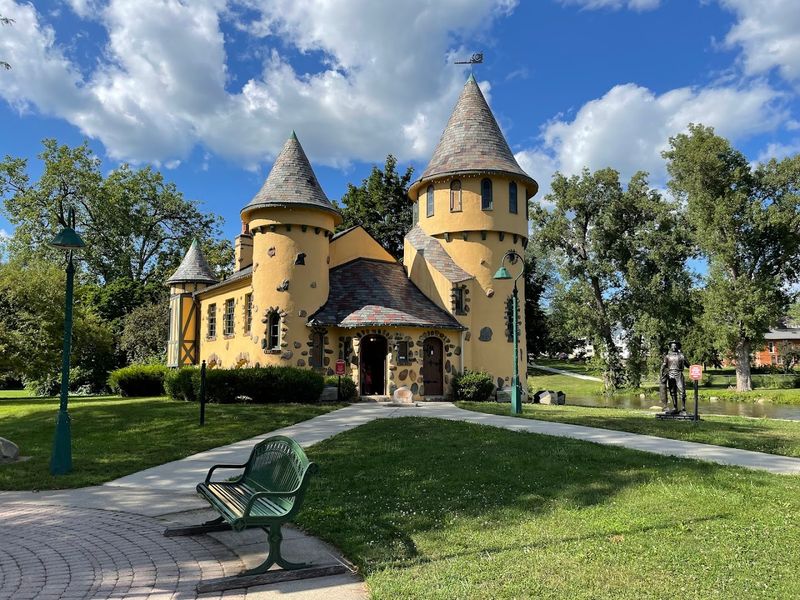
Curwood Castle was designed to look like the chateaux James Oliver Curwood had admired during his travels in France. The result is a compact but striking stone structure with a round turret, arched windows, and a silhouette that feels genuinely out of place in the Midwest in the best possible way.
It is not enormous. You could walk around the entire exterior in under two minutes.
But the detail packed into its facade makes it feel much larger than its footprint suggests.
The riverfront placement adds a lot to the overall picture. Sit on the grass nearby and you get this odd, quietly cinematic view of a medieval-looking tower reflected against the slow-moving Shiawassee.
Locals jog past it daily and still glance over. That says something.
Up close, the stonework has a handcrafted quality that photographs do not fully capture. The mortar lines, the slightly irregular cut of the stone, the way the turret narrows as it rises, all of it gives the building a texture and weight that modern construction rarely achieves.
It feels old in a way that feels earned rather than manufactured.
First-time visitors often walk around it twice before going inside, just taking it in from different angles. From the back near the river, the castle looks almost romantic.
From the front near the road, it looks more like a fortified retreat. Both impressions are accurate, and neither one fully prepares you for what is waiting on the inside.
James Oliver Curwood: The Man Behind the Turret
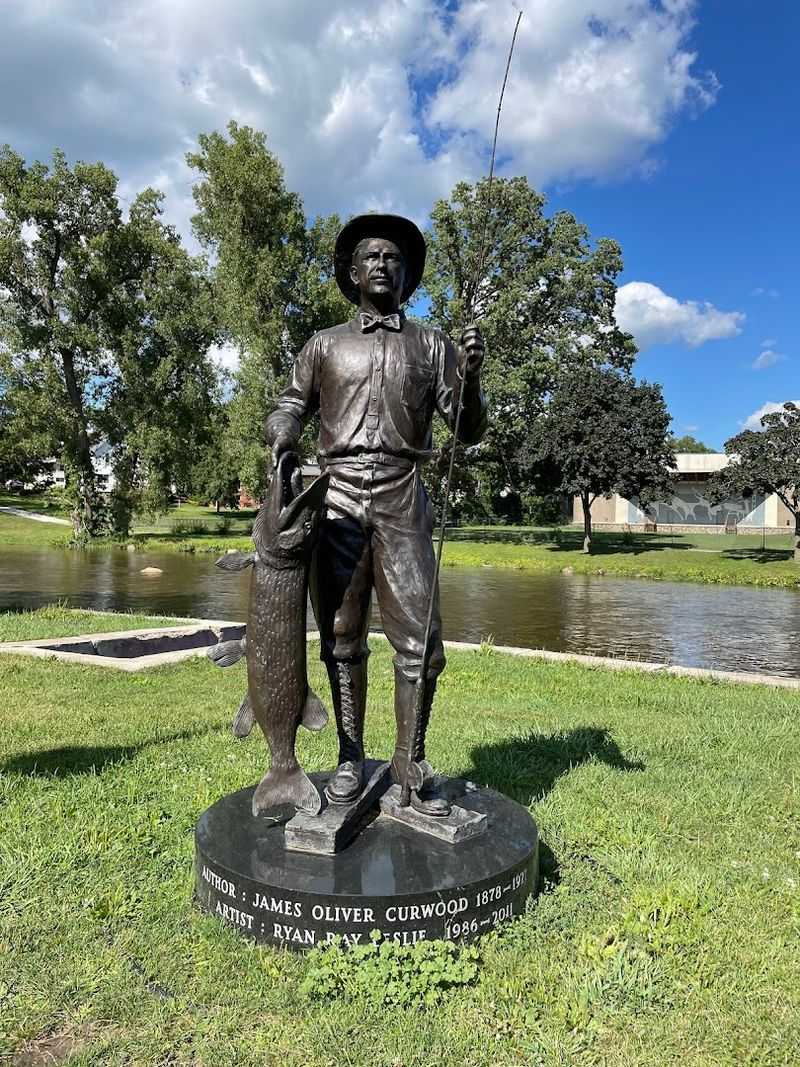
Before visiting the castle, most people have never heard of James Oliver Curwood. By the time they leave, they tend to wonder how that was ever possible.
Curwood was born in Owosso and went on to become one of the best-selling fiction writers in the United States during the early twentieth century. His adventure novels, many set in the Canadian wilderness, sold millions of copies and were adapted into films at a rate that would impress even modern Hollywood.
The museum estimates his work influenced well over two hundred movie productions, which is a staggering number for any author, let alone one who has largely faded from mainstream recognition.
What makes his story particularly compelling is the shift he underwent later in life. Curwood began as a hunter and outdoorsman who used the wilderness as raw material for dramatic storytelling.
Over time, his relationship with nature changed. He became a vocal conservationist, advocating for wildlife protection at a time when that position was far from popular or profitable.
The castle itself was partly a symbol of that transformation, a place to think, write, and reconnect with the natural world just beyond his window.
The museum does a good job of presenting Curwood as a full, complicated person rather than just a famous name on a building. You learn about his writing process, his travels, his opinions, and his contradictions.
There are personal artifacts, original manuscripts, and photographs that make him feel like someone you could have actually known.
Standing in the room where he worked, looking out at the same river view he had every day, gives the whole story a weight that a biography page alone cannot deliver. Some people find that surprisingly moving.
The Watch Tower Study: Where the Writing Actually Happened
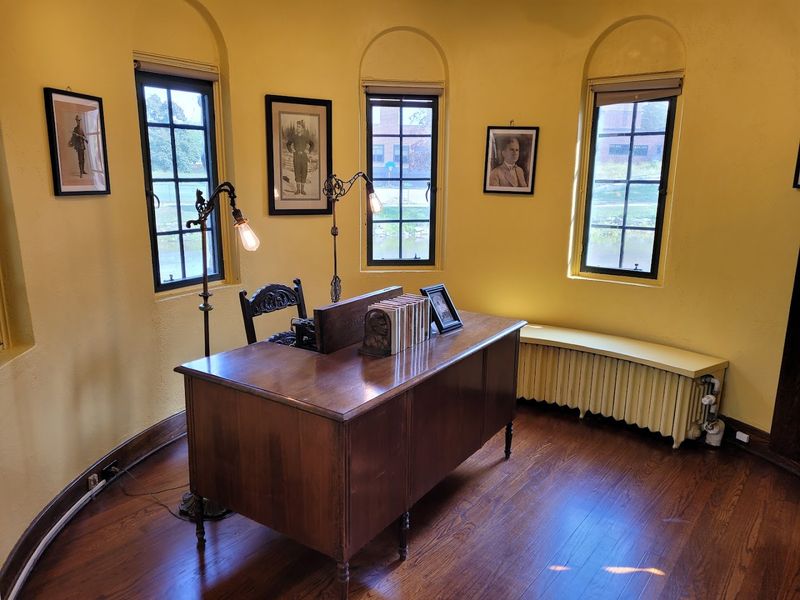
Climb the narrow staircase inside the turret and you arrive at the room that started everything. The tower study is compact, circular, and almost monastically simple.
It is exactly the kind of space a writer would design for themselves if they were being completely honest about what they actually needed.
A desk positioned near the arched window looks out over the Shiawassee River. On a clear afternoon, light comes through at an angle that makes the whole room feel golden and slightly suspended in time.
You can see why Curwood chose this specific spot. There is nothing distracting in the view, just water, trees, and the occasional duck making its way downstream.
The kind of quiet that makes sentences come easier.
The room holds a modest collection of items connected to Curwood’s working life, books, writing tools, personal mementos. Nothing is behind heavy glass or roped off at an uncomfortable distance.
The scale of the space forces a kind of closeness with the objects that larger museums cannot replicate. You are standing in the room, not observing it from a threshold.
Visitors who are writers themselves tend to linger here longer than anywhere else in the building. There is something about seeing the physical conditions of someone else’s creative work that feels both inspiring and oddly reassuring.
The room is not glamorous. It is functional, quiet, and purposeful.
Which is probably how Curwood wanted it.
Even if you have no particular interest in literature, the tower study rewards a slow visit. The view alone earns the climb.
And the feeling of standing in a space that was deliberately built for thinking is rarer than it sounds.
The Basement Museum: Owosso History Goes Deeper Than You Think
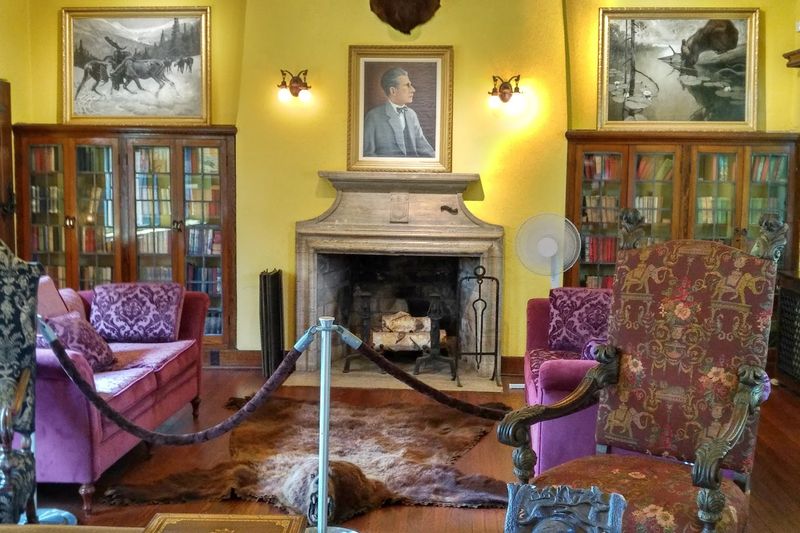
Most visitors come for the castle and the Curwood story, but the basement level of the museum tends to catch people off guard in a completely different way. Owosso turns out to have a surprisingly layered history, and the exhibits down here make a strong case for paying attention to it.
One of the more unexpected sections covers Thomas E. Dewey, the two-time presidential candidate who grew up in Owosso.
Dewey ran against Franklin Roosevelt in 1944 and Harry Truman in 1948, coming notably close in both races. For a city this size, producing a figure with that kind of national footprint is remarkable, and the exhibits treat that history with appropriate depth rather than just hanging up a few photographs and calling it done.
There is also material related to the prisoner of war camps that operated in the Owosso area during World War II. This is the kind of local history that rarely makes it into broader national narratives, and seeing it presented here with care and context is genuinely interesting.
It reframes the region in a way that feels important.
The basement has a different energy than the upper floors. Where the tower study feels intimate and creative, the lower level feels more civic, like a community working through its own complicated past with honesty.
The exhibits are well-maintained and clearly organized, which makes it easy to move through without feeling overwhelmed.
Spending time down here before heading back upstairs gives the whole visit a different dimension. The castle stops being just about one writer and becomes a window into a place that has quietly accumulated more history than most people realize.
That realization tends to stick around after you leave.
The Surrounding Park: A Riverfront Space That Earns Its Reputation
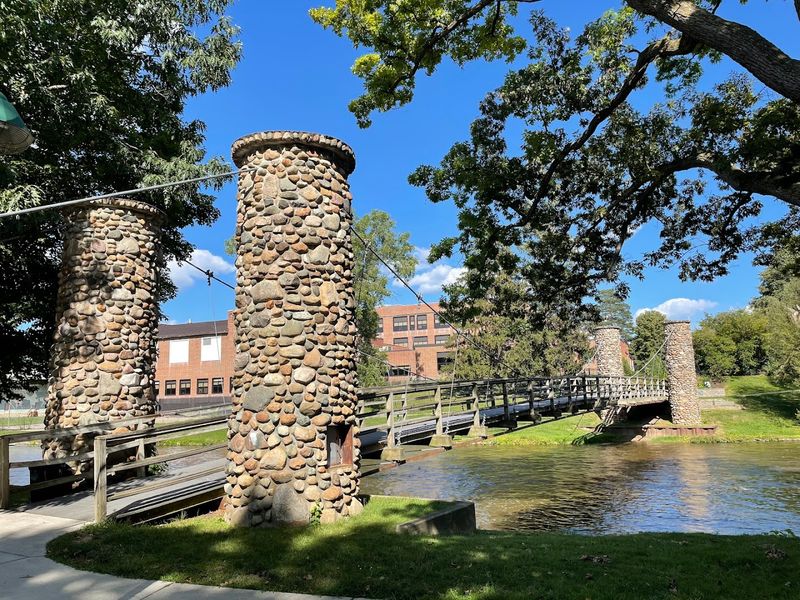
Even on days when the castle itself is closed, the park surrounding it is open and entirely worth the stop. The grounds run along the Shiawassee River with enough shade trees and open lawn to make it feel like a full destination rather than just a parking lot with a view.
The bridge nearby is a consistent favorite among visitors, and it is easy to see why. Standing on it gives you a clean look back at the castle from the water side, which is probably the most photogenic angle on the property.
The reflection on the river on a calm day is the kind of image that ends up framed on someone’s wall. Locals seem to treat the bridge as a regular stopping point, and there is usually at least one person leaning over the railing watching the current.
Families use the park in a relaxed, unpressured way. Kids run across the grass.
People sit under trees with books or coffee. There are ducks and squirrels that have clearly decided the grounds belong to them as much as anyone else.
Nobody is rushing anywhere, which gives the whole space a particular kind of ease that is hard to manufacture.
String lights are strung across parts of the property, which means the park has a completely different character after dark. Several visitors mention specifically that the evening version of the grounds is worth seeking out, especially during warmer months when the lights reflect off the river and the castle takes on a quieter, more atmospheric quality.
The park also connects to a nearby art walk, so an afternoon here can stretch into something longer without much planning. It just flows naturally from one thing to the next.
The Annual Curwood Festival: When the Castle Comes Fully Alive
If you have any flexibility in your timing, planning a visit around the annual Curwood Festival is worth the extra effort. The event transforms the park and surrounding area into something that feels genuinely festive without tipping into overcrowded or chaotic.
Art vendors set up throughout the grounds, and the range of work on display tends to be more interesting than your average craft fair. Local and regional artists bring work that reflects the natural themes Curwood himself championed, wildlife, wilderness, waterways.
It fits the setting in a way that feels intentional rather than coincidental.
Historical reenactors are part of the festival as well, and they add a layer of texture that makes the whole event feel more immersive. Seeing people in period-appropriate dress moving through the same grounds where Curwood once walked creates an odd but effective sense of time collapsing slightly.
Kids especially respond to this with immediate enthusiasm.
The castle itself is open during the festival, and the combination of the outdoor activity and the indoor exhibits creates a full-day itinerary without any awkward gaps. You can wander the vendors, step inside to look at manuscripts, climb the tower, come back out for food, and repeat in whatever order feels right.
Reviews from past festival visitors consistently mention the energy of the event as something different from the quieter weekday visit. Both versions of the castle are worth knowing.
The regular hours offer reflection and calm. The festival offers community and color.
Depending on what kind of traveler you are, one will appeal more than the other, but it is worth knowing both options exist before you book anything.
Practical Details, Admission, and What to Expect on Arrival
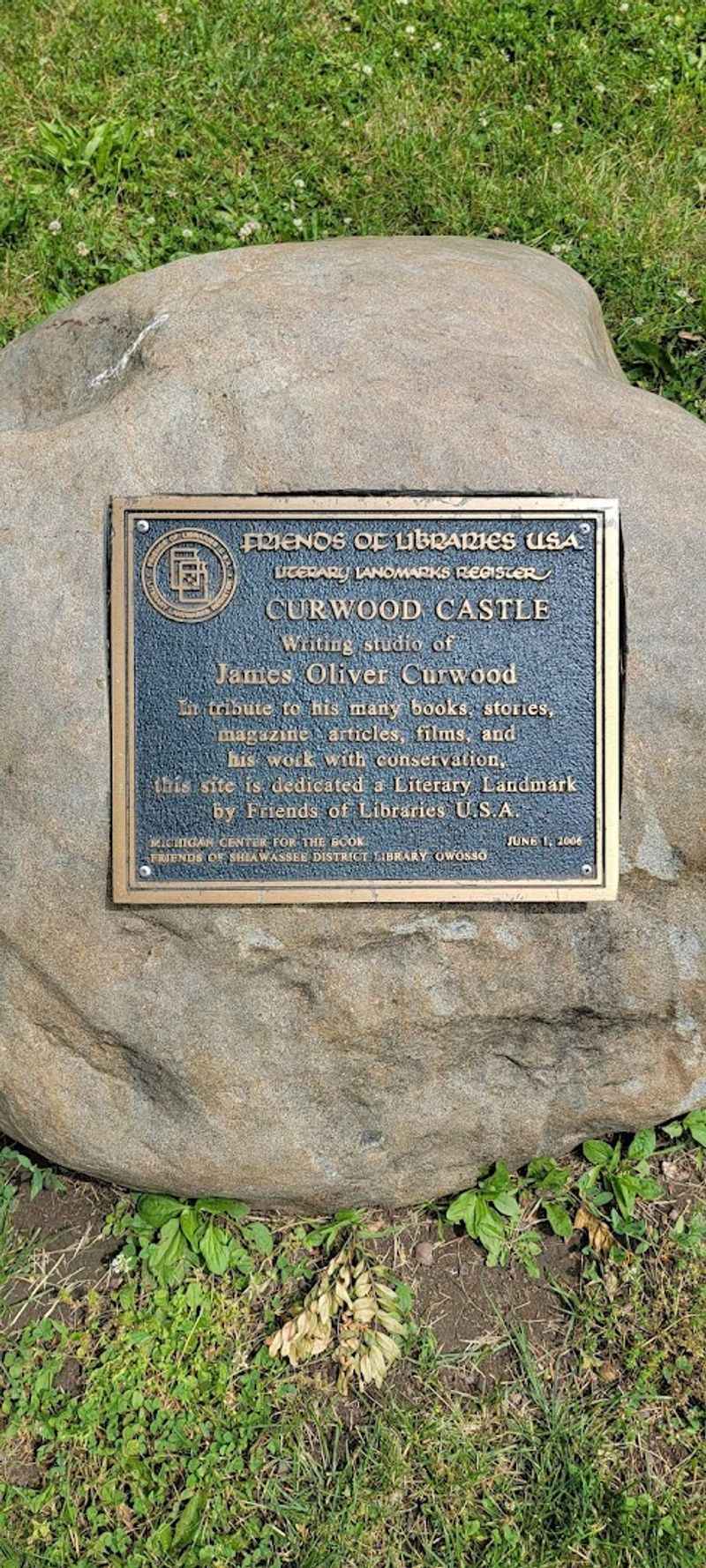
Getting oriented before you arrive makes the visit smoother, and there are a few things worth knowing ahead of time. The castle is open Tuesday through Sunday from 1 to 5 PM and is closed on Mondays.
If you show up on a Monday, you can still walk the grounds and read the informational signage posted around the property, which several visitors mention as a perfectly decent alternative.
Admission for the indoor tour runs around five dollars per person, which is one of the more honest price points you will find at any Michigan attraction. Multiple reviewers specifically call it out as reasonable, and given what is included across the main floor, tower study, and basement exhibits, that reaction makes sense.
You are not paying five dollars for a brochure and a pamphlet. You are paying for a guided look at a genuinely unusual piece of state history.
The staff on site are consistently praised in visitor reviews for being knowledgeable, warm, and genuinely enthusiastic about the place. This is not a site where a bored attendant hands you a map and disappears.
The people working here tend to know Curwood’s story in real depth and are happy to answer questions or offer context that is not on any of the placards.
Parking is straightforward and the location at 224 Curwood Castle Drive in Owosso is easy to find. The nearby art gallery shares similar hours and is worth factoring into your afternoon.
If you want to extend the day further, a local tea room is within walking distance and pairs well with the general pace of the visit.
Call ahead at 989-723-2155 or check owossohistory.org if you are planning around a specific date or event.
Share this story