Blink while driving through southern Illinois and you could easily miss one of the state’s most memorable small towns. Makanda may be tiny, but its historic boardwalk, artist studios, wooded setting, and easy access to towering sandstone landscapes give it a personality far larger than its size suggests.
Rather than relying on polished tourist attractions, the village wins visitors over with creativity, scenery, and an atmosphere that encourages slow wandering. If you’re looking for an Illinois destination that feels genuinely different from the usual weekend getaway, Makanda is well worth discovering.
A Boardwalk Main Street That Looks Dropped Into the Trees
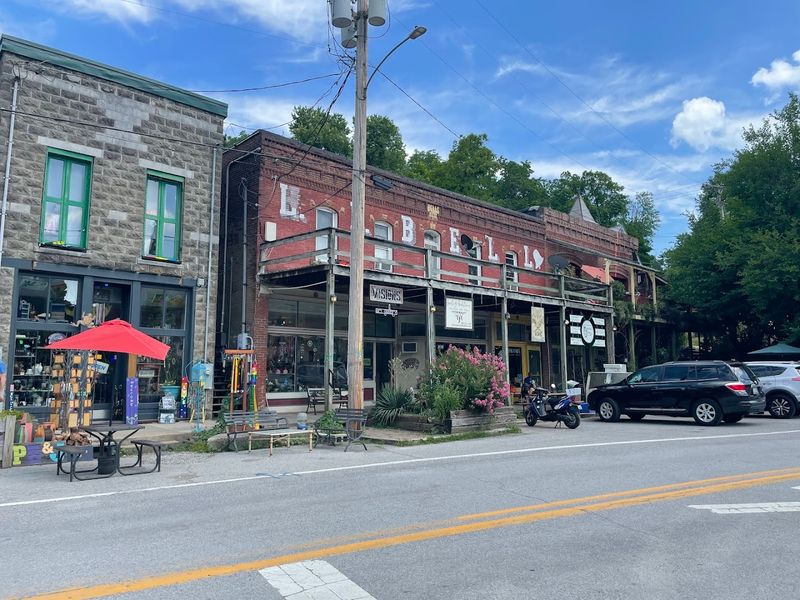
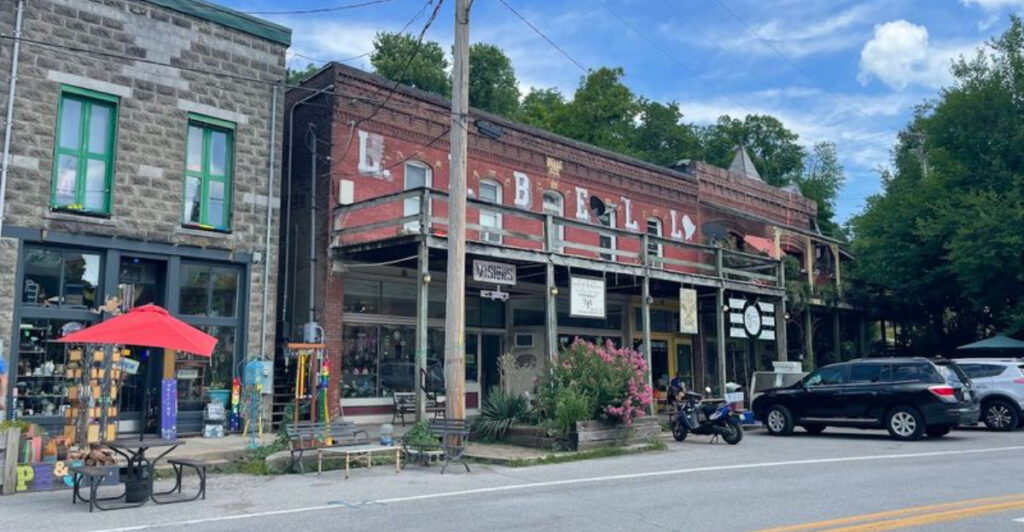
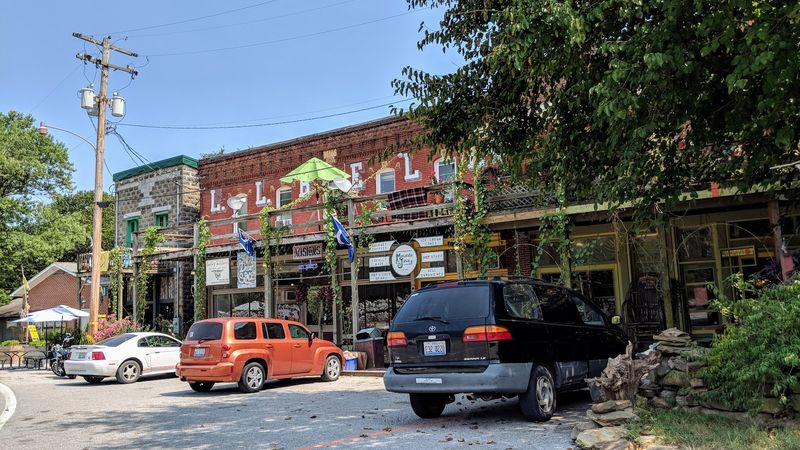
The surprise in Makanda hits fast. Instead of a standard little downtown with angled parking and brick storefronts, the village center unfolds along a weathered boardwalk tucked into thick greenery.
Buildings sit close together in a way that feels intimate rather than crowded, and the whole scene looks framed by the surrounding hills instead of spread across flat farmland.
That physical layout changes the experience immediately. You are not simply driving through another small Illinois town and glancing at a courthouse square before moving on.
In Makanda, the arrangement slows your steps, pulls your eyes toward porches and signs, and makes every storefront feel like part of one connected setting.
The boardwalk itself is the signature visual. Wood underfoot, shaded edges, and a close mix of shops give the district a slightly offbeat, almost storybook quality without tipping into theme-park polish.
It feels handcrafted, modest, and rooted in the landscape, which is exactly why it stands apart from more predictable roadside stops.
Makanda also benefits from scale. Because the village is so small, details are easier to notice: the way foliage presses near the buildings, the way the road narrows your focus, the way one doorway naturally leads your attention to the next.
Nothing is oversized, and nothing needs to be. That compactness is the point. Makanda does not try to impress with grand architecture or a long list of landmarks.
Its opening move is simpler and better – it gives you a streetscape that looks unlike almost anywhere else in Illinois, then lets the setting do the work.
Where Southern Illinois Turns Dramatic
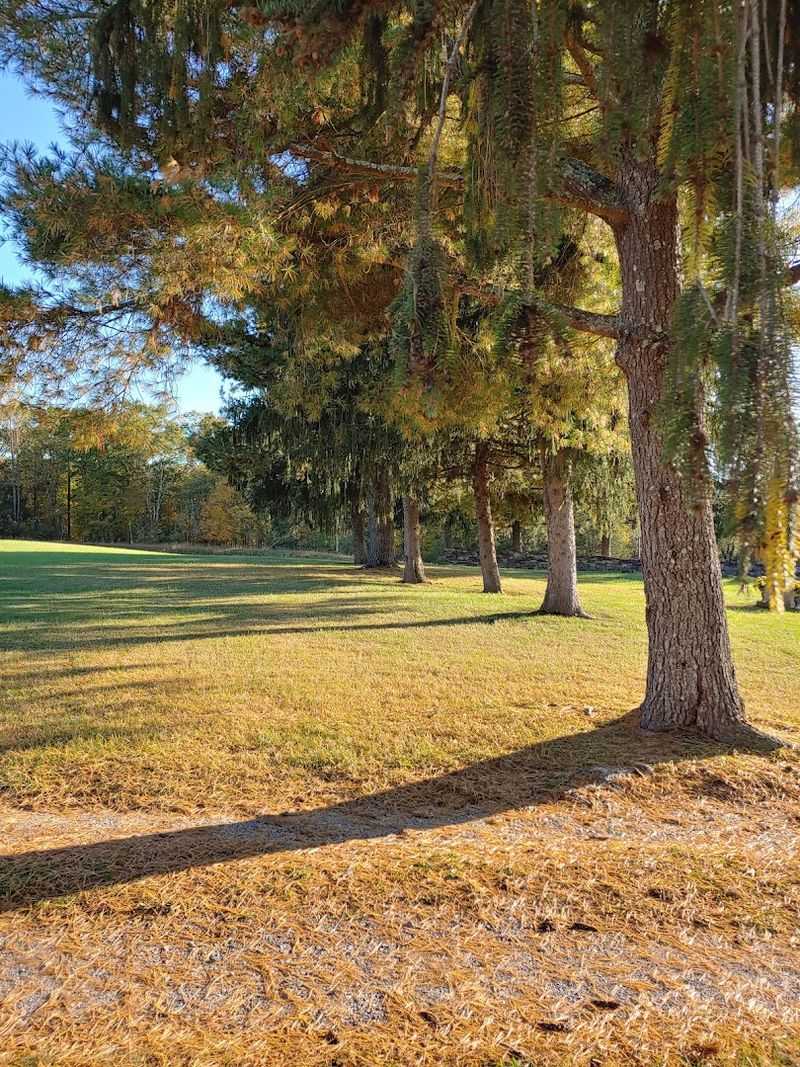
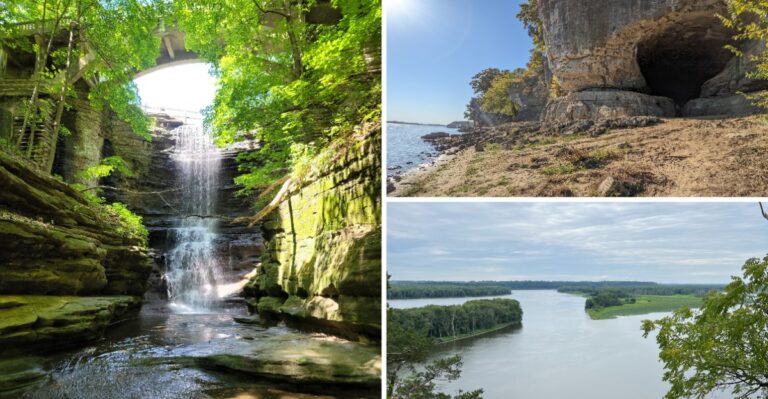
Makanda works because the landscape around it is not background scenery. Southern Illinois gets more rugged here, with wooded slopes, rock formations, and a terrain that adds shape and movement to every arrival.
Even before you start exploring, the village is introduced by curves, trees, and elevation changes that separate it from the flatter mental picture many travelers have of the state.
That setting gives the town a stronger identity than its size would suggest. The village does not need a huge downtown or a stack of attractions to hold attention when the surrounding topography is already doing so much.
Roads feel more cinematic, views open and close quickly, and the vegetation makes the built environment appear almost tucked inside the forest.
This is also why Makanda lands differently in person than it does on a map. On paper, it is a very small village in Jackson County with a modest population.
On the ground, it reads as a gateway to one of Illinois’ most visually interesting regions, where sandstone and dense tree cover create a sense of separation from the everyday. The natural context shapes the mood of the town without needing exaggerated language. Shade is deeper here.
The edges of the road feel softer. Buildings seem less exposed and more protected, which makes a short walk through the center feel connected to the woods rather than detached from them.
For travelers who want scenery to be part of the town itself, not just a nearby bonus, Makanda delivers that blend cleanly.
The village and the landscape are not competing features. They reinforce each other, and that pairing is the reason the place feels so distinctive.
Tiny Shops, Artful Details, and Zero Sameness
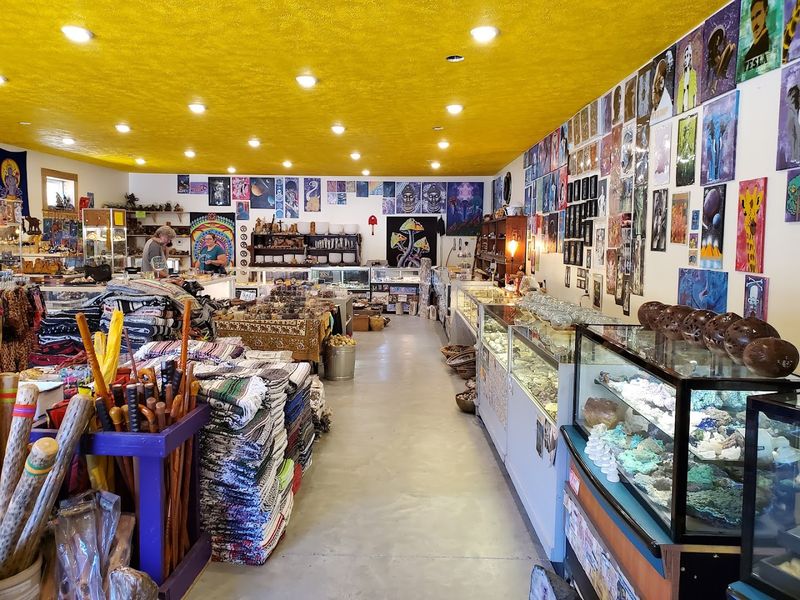
One of Makanda’s biggest strengths is that its commercial core does not read like a generic antique strip or a souvenir row built around filler. The shops along the boardwalk tend to feel personal, with a creative, independent streak that fits the village’s scale.
Even when you are only peeking through windows or scanning displays from outside, the impression is specific rather than interchangeable.
That matters in a place this small. A tiny town can either feel sharply curated by its local character or disappointingly thin once the novelty of the setting wears off.
In Makanda, the storefronts extend the visual story of the boardwalk instead of interrupting it, adding texture through signage, porch displays, handmade touches, and a general lack of chain-store sameness.
The appeal is not about rushing to check off purchases. It is about the pace the district encourages. You linger a little longer in front of one shop, notice the details on another porch, then realize the browsing experience is driven by atmosphere and design as much as by whatever is for sale inside.
That gives Makanda a useful kind of depth. Even a short stop can feel active because there is enough visual material packed into a small space.
Doors, railings, plantings, and product displays all contribute to the scene, so the village remains interesting between destinations instead of relying on one anchor business to carry the experience.
For travelers tired of small towns that promise charm but offer mostly empty windows and repetition, this is a meaningful distinction. Makanda’s retail strip is modest, but it has personality in the built details and in the way each storefront participates in the boardwalk’s quietly unusual rhythm.
Why This Tiny Illinois Town Feels Bigger Than Its Size
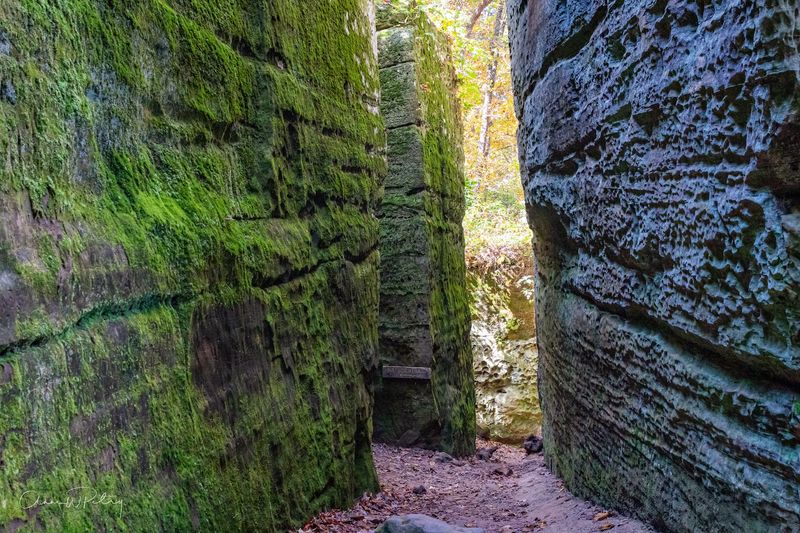
Makanda’s size can be misleading. With only a few hundred residents, it would be easy to assume there is little more than a quiet crossroads waiting beyond the trees.
Instead, the village has built an identity that feels far larger than its population through its historic boardwalk, thriving arts community, and remarkable natural setting. Rather than competing with bigger destinations, Makanda succeeds by offering an experience that feels personal, creative, and unmistakably rooted in Southern Illinois.
Its location is a major part of that appeal. Sitting near Giant City State Park and just a short drive from Carbondale, Makanda naturally fits into a day of hiking, scenic drives, or exploring the Shawnee Hills region.
Many visitors arrive for the surrounding landscapes but quickly discover that the village itself is worth slowing down for, with independent shops, galleries, cafés, and welcoming local businesses creating an atmosphere that encourages wandering rather than rushing. There is also a creative energy here that separates Makanda from many other small Illinois towns.
Artists, craftspeople, musicians, and locally owned businesses have shaped the boardwalk into something that feels authentic instead of manufactured. Rather than filling storefronts with generic souvenirs, the village celebrates handmade work and individual expression, giving visitors a stronger sense of place with every stop.
That combination of scenery, creativity, and small-town charm is what gives Makanda such an outsized presence. The village never relies on flashy attractions or oversized entertainment to make an impression.
Instead, it invites visitors to slow their pace, notice the details, and enjoy a destination that feels genuinely different. For such a tiny Illinois town, Makanda leaves a remarkably lasting impression, proving that memorable places are often measured by character rather than size.
How to Experience Makanda Without Rushing It
Makanda is best approached as a slow stop, not a speed run. The village is small enough that trying to optimize every minute misses the point, because the reward here comes from walking, looking, and letting the setting reveal itself in layers.
A quick pass in the car will show you the basic layout, but it will flatten nearly everything that makes the place work. The better move is to park, get on foot, and treat the boardwalk as the spine of the visit. That simple change puts the town’s scale in your favor.
Distances are short, transitions are easy, and you can give proper attention to storefront details, porches, signs, and the way the wooded backdrop keeps pressing into the built scene.
Because the district is compact, timing matters more than mileage. A little extra patience can make the village feel fuller, especially if you leave room to browse rather than marching through with a checklist.
Makanda is not a place that overwhelms you with endless options; it rewards curiosity and a willingness to notice small variations from one shopfront to the next.
This also makes the town ideal as part of a broader Southern Illinois day. It can anchor a scenic drive, break up a weekend of outdoor exploration, or provide a lower-key contrast to busier college-town energy nearby.
The stop never has to be long to feel complete, but it does need enough breathing room to unfold at its natural pace.
If you approach Makanda expecting spectacle, you may move too fast. If you approach it as a concentrated piece of place design, with landscape and village stitched tightly together, the whole visit becomes clearer, more textured, and much more satisfying.
Best Times to Go for Light, Shade, and Breathing Room
Makanda’s appeal shifts noticeably with light and season, which means planning the timing of your visit can sharpen the entire experience. Because the village is wrapped in trees and shaped by shade, bright midday sun does not always show it at its best.
Softer morning light or late afternoon tends to bring out the textures of wood, foliage, and storefront details more effectively.
Season matters too, especially in a place where the natural setting plays such a large role. Leafy months emphasize the tucked-away quality of the village, with green edges making the boardwalk feel almost nested inside the hills.
In cooler seasons, the structure of the place becomes easier to read, and the surrounding terrain can look more dramatic as sightlines open up through the trees.
Autumn, unsurprisingly, is especially strong in Southern Illinois, and Makanda benefits from that regional color. The boardwalk, rustic facades, and wooded backdrop pair naturally with seasonal change.
Spring also works well if you want the landscape to feel fresh and active without the heavier density of summer growth.
Even practical comfort is part of the equation here. Since the town encourages walking and lingering outdoors, milder temperatures make browsing more enjoyable and help keep the pace relaxed.
This is not a place where you dash between huge indoor attractions, so weather influences the mood more directly than it would in a larger destination.
None of this means there is only one correct time to go. It simply means Makanda rewards attention to conditions.
Choose a day with enough time to stroll, enough light to catch the textures, and enough patience to let the village’s small scale open into something much richer than a quick map glance suggests.
Why Makanda Is Unlike Any Other Small Town in Illinois
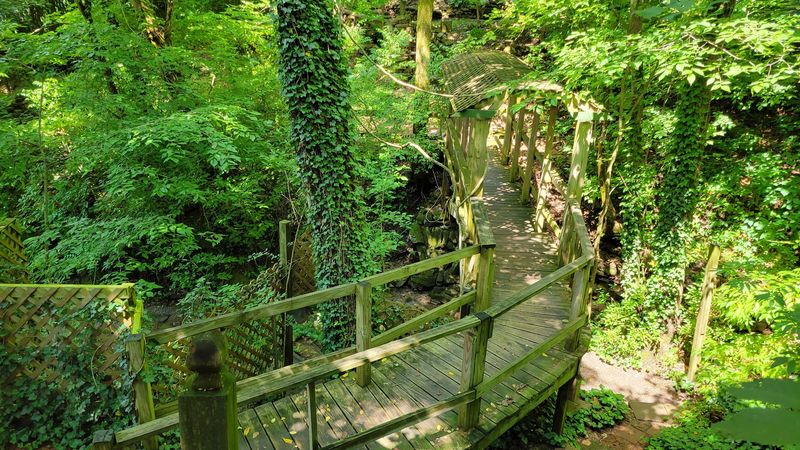
Plenty of Illinois towns are pleasant. Fewer are visually distinct within seconds. Makanda clears that bar because it combines several elements that rarely arrive together in such a compact package: a wooded Southern Illinois setting, a boardwalk-style commercial strip, independent local character, and a scale that invites wandering instead of logistics.
That combination gives the village an identity sharper than many better-known stops. It is not trying to compete with larger destinations on volume, nightlife, or major attractions.
Instead, it offers an unusually cohesive scene, where the architecture, terrain, and pace all point in the same direction and create a place that makes sense immediately once you are standing in it.
There is also a practical advantage to Makanda’s size. You can understand the town quickly without exhausting it too quickly.
A short visit still feels complete, yet there is enough visual density to keep the walk engaging from start to finish. That balance is harder to achieve than it looks, and many small towns miss it entirely.
For travelers building a Southern Illinois itinerary, Makanda adds contrast. It is not simply another outdoor stop, and it is not just a shopping stretch dropped beside a highway.
The village works because its built features and natural features are tightly interlocked, giving the visit a shape that is easy to enjoy and easy to recommend.
If you have never heard of Makanda, that may be part of its advantage. The village still has the power to surprise, and surprise is increasingly rare in regional travel.
In a state full of overlooked places, this one stands near the top because it looks, moves, and settles into the landscape on its own terms.
Share this story