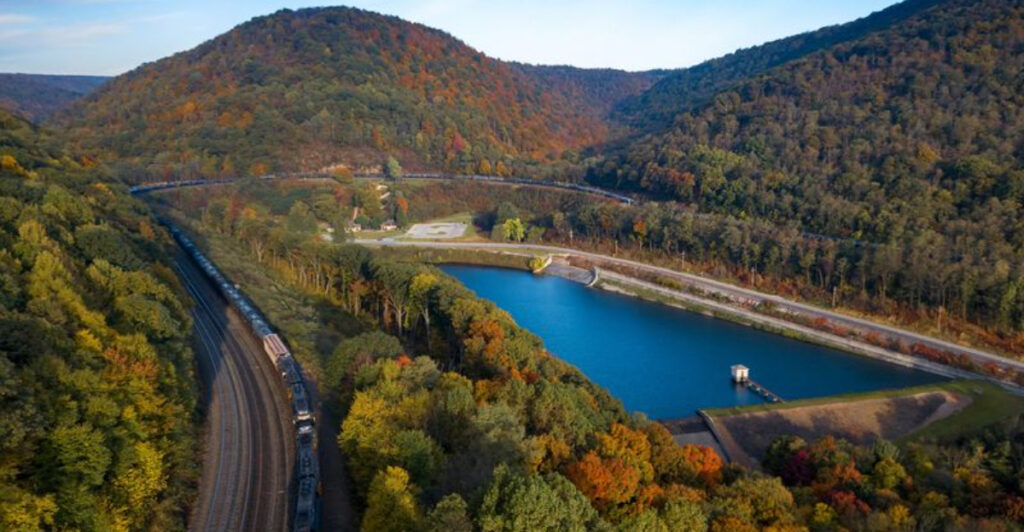
At Horseshoe Curve in Altoona, a passing train feels less like ordinary transportation and more like live theater on steel rails. The mountain setting, the sweeping bend, and the deep blast of a locomotive horn turn a short stop into a memory that stays with visitors long after they leave. Watching a massive train wind its way around the famous curve is a surprisingly dramatic experience, made even more impressive by the surrounding scenery and elevated viewpoints.
This landmark is packed with railroad history, but it is the anticipation of seeing a long freight or passenger train emerge around the bend that keeps people lingering. Along the way, visitors can learn about the engineering achievement that helped transform transportation in the region and played a major role in American railroading. If you want one Pennsylvania attraction that combines spectacular views, fascinating history, remarkable engineering, and pure railfan excitement, this is it.
1. Why The Curve Became So Famous
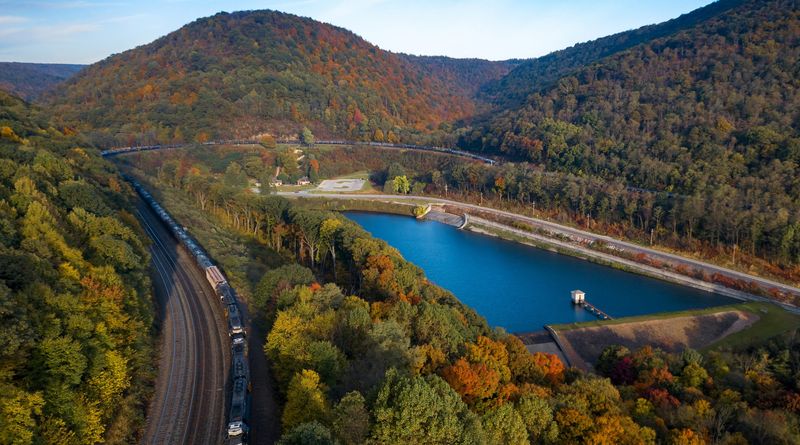
Horseshoe Curve became famous because it turns railroad engineering into something you can instantly understand with your own eyes.
Built in 1834, this sweeping 2,375-foot bend helped trains climb the Allegheny Mountains and changed how goods and people moved across Pennsylvania.
Standing here, you are not just looking at tracks; you are seeing one of the most recognizable railroad landmarks in America.
What makes it feel special is how the curve reveals the full drama of a train in motion.
You can often watch the lead engines enter one side while the rest of the train still snakes around the opposite end, creating a scene that feels almost impossible at first glance.
That mix of mountain scenery, industrial power, and living history is exactly why this Altoona landmark keeps drawing visitors back.
2. What You Actually See From The Overlook
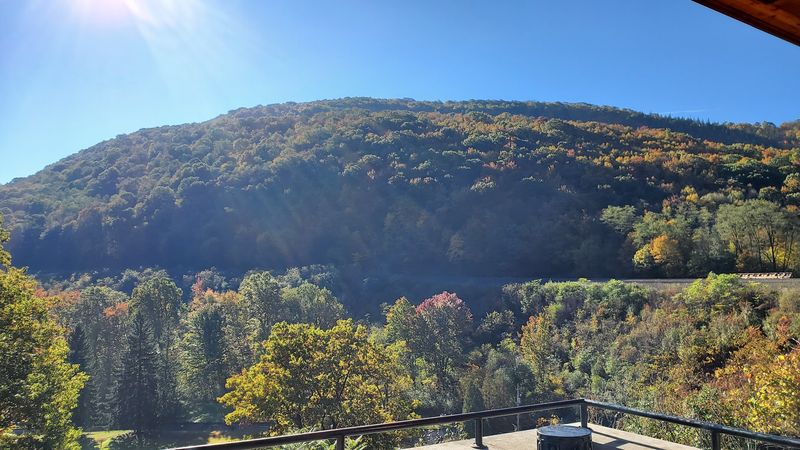
The overlook is where Horseshoe Curve stops being a famous name and becomes a full experience.
From the top, you get a commanding view of the tracks bending through the mountainside, with trains pushing uphill and curving through the landscape below.
Several visitors also mention the reservoirs visible from the viewing area, which add another layer of scenery beyond the rails.
The best part is the sense of anticipation that builds while you wait.
Even when no train is passing, the curve itself is impressive, and every distant horn makes people look up at once.
When a freight train finally appears, the overlook gives you a clean, dramatic angle that makes the engines, cars, and movement feel larger than life, especially when the full length of the train comes into view.
3. The Train Watching Experience
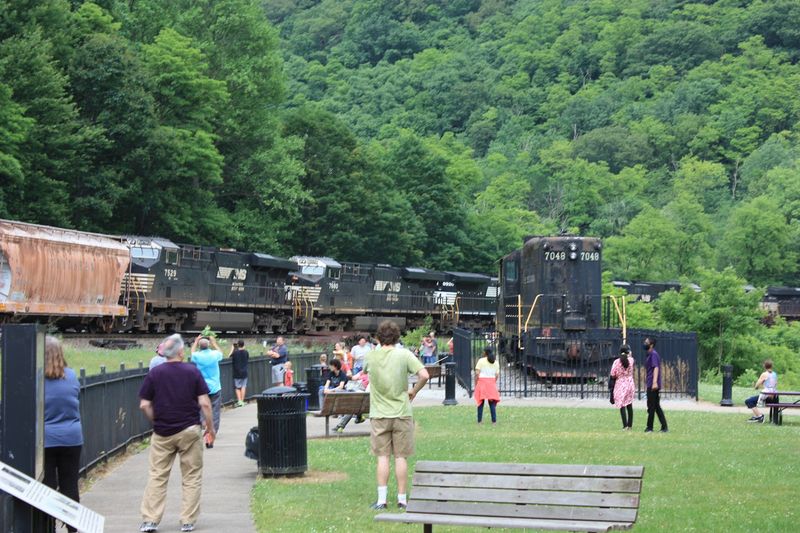
Train watching here feels surprisingly exciting, even if you do not arrive as a diehard railfan.
Reviews regularly mention seeing multiple trains in a short visit, and some people get lucky enough to watch two trains at once moving in different directions.
Because the line stays active, the waiting never feels pointless, and each horn raises the energy around the whole platform.
There is something oddly satisfying about hearing the engines work against the grade before the full train reveals itself.
The sound builds first, then the locomotives appear, and finally the endless string of cars follows the curve in a way that keeps your eyes moving from one end to the other.
It turns a simple pass-by into a real event, which is exactly why people stay longer than they expected.
4. A Landmark Built For The Mountains
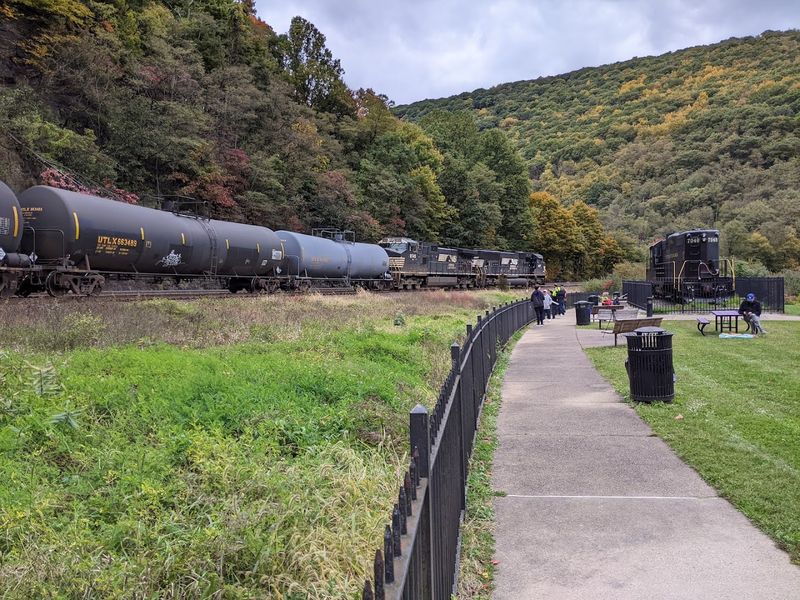
One reason Horseshoe Curve leaves such a strong impression is the way it solves a big geographic problem so elegantly.
The Allegheny Mountains once stood as a serious obstacle to rail travel, and this curved alignment helped trains gain elevation without an impossibly steep climb.
Even today, the route feels like a bold answer to the shape of the land around it.
That mountain setting gives the landmark much of its personality.
Instead of feeling dropped into a flat industrial space, the tracks wrap naturally through wooded slopes, and the whole scene feels tied to the terrain that made it necessary.
You do not need to know every technical detail to appreciate it, because the design explains itself once you see a heavy train working its way around the bend and up the grade.
5. Climbing The Steps To The Top
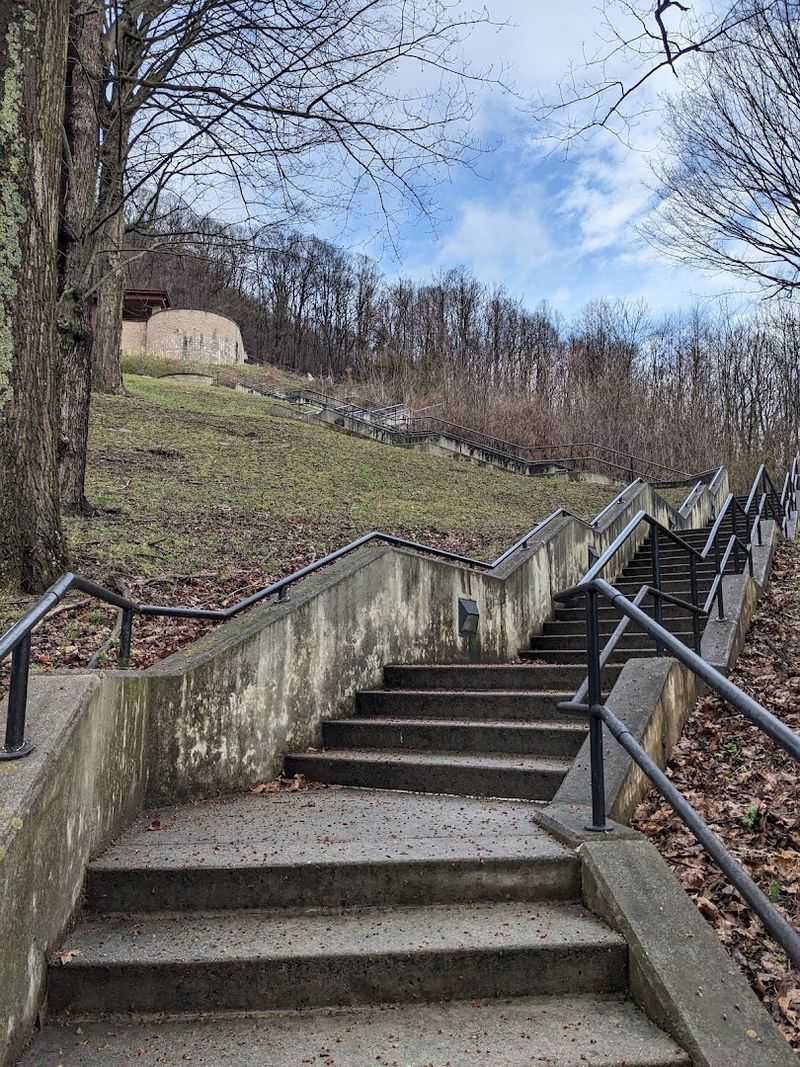
Getting to the top can be part of the adventure, especially when the funicular is not operating.
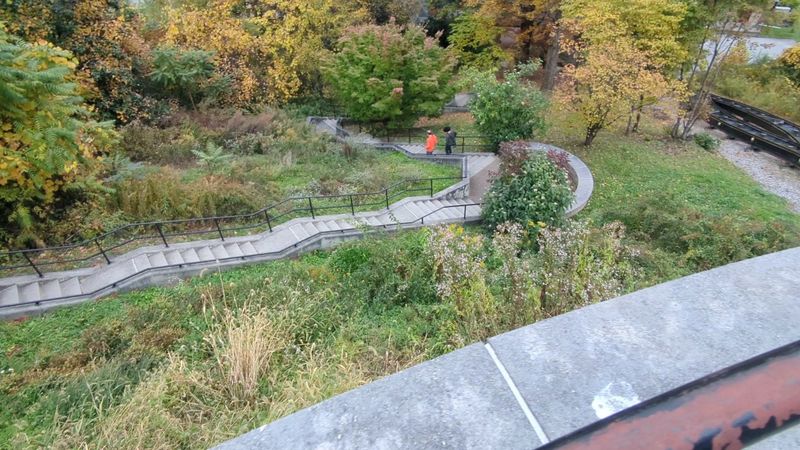
Many visitors mention climbing about 194 steps, and while that sounds intimidating at first, plenty of reviews describe the walk as manageable if you take your time.
By the time you reach the overlook, the elevated view makes the effort feel worthwhile.
The climb also builds a little anticipation before the main attraction reveals itself.
You move from the entrance area into the hillside, then emerge at a spot where the curve opens up in front of you and the train sounds feel closer and sharper.
For some people, those steps become part of the memory, because reaching the top adds just enough effort to make the first view feel earned and satisfying.
6. The Visitor Center And Museum Stop
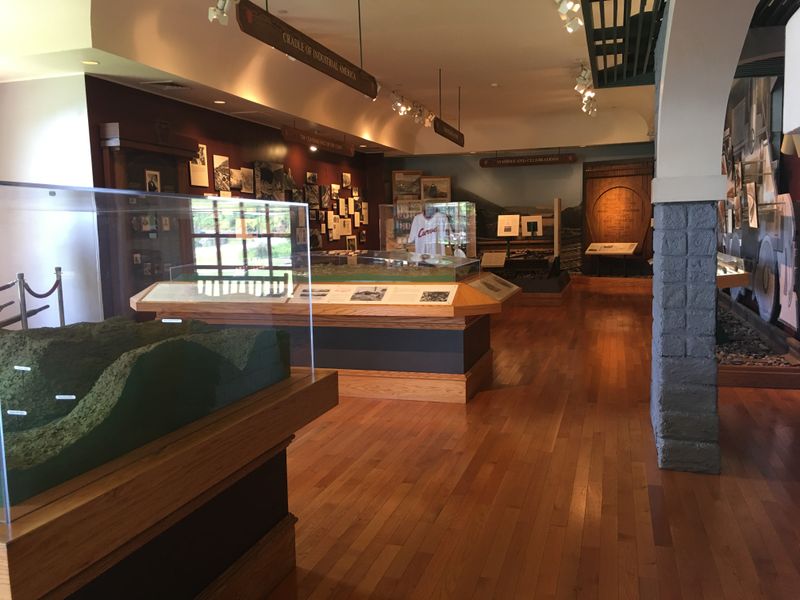
The museum and visitor center give the landmark more depth than a quick scenic stop might suggest.
Visitors often describe the exhibits as informative and well put together, with displays that explain the history of the curve, the railroad, and the role Altoona played in building America’s rail network.
It helps connect the thrilling train views outside with the larger story behind them.
If you arrive before a train comes through, the museum gives you a worthwhile way to spend the wait.
Some reviews also mention a small theater and a gift shop, making the experience feel more rounded than simply climbing the hill and hoping for a passing freight.
For families, casual visitors, and history buffs alike, that indoor component adds context, comfort, and a stronger sense of why this place matters.
7. What Families And Casual Visitors Enjoy
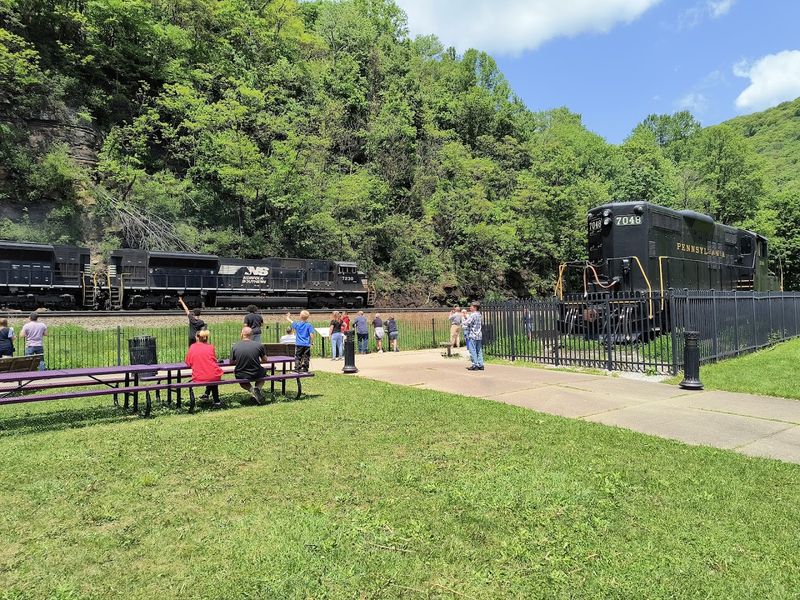
Horseshoe Curve works well for more than hardcore train enthusiasts, which is part of its appeal.
Families talk about how fun it is to wait together for the next train, hear the horn echo through the hills, and watch the whole length of a freight snake around the bend.
Even people who are just tagging along often end up enjoying the scenery and the energy of the place.
The site also gives you room to slow down rather than rush through.
Reviews mention benches, picnic tables, and enough open space to settle in for a while if you come prepared with drinks or lunch.
That matters because once trains start rolling through, it is easy to lose track of time.
What begins as a quick stop can turn into a relaxed outing with real wow factor for all ages.
8. The Sound, Scale, And Motion Of Passing Trains
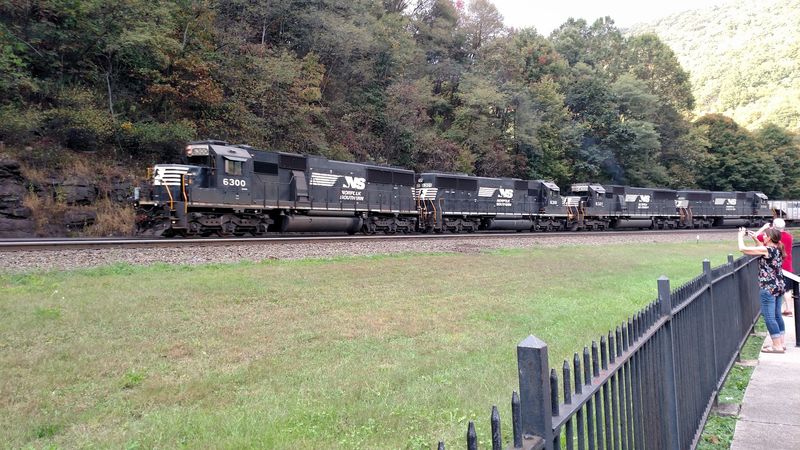
Part of what makes this landmark unforgettable is that the experience is not only visual.
You hear the horn first, then the rumble of steel, then the groan and squeal of the train working through the curve and up the grade.
That layered sound gives the whole place a physical presence you can feel in your chest as much as hear with your ears.
The scale is just as impressive as the noise.
Long freight trains seem to stretch forever, and the curve lets you track the locomotives and trailing cars at the same time in a single sweeping view.
When conditions are right, you can watch the front of the train advance while the rest still bends through the mountain, creating a scene that feels powerful, mechanical, and strangely graceful all at once.
9. Best Times To Visit And What To Expect
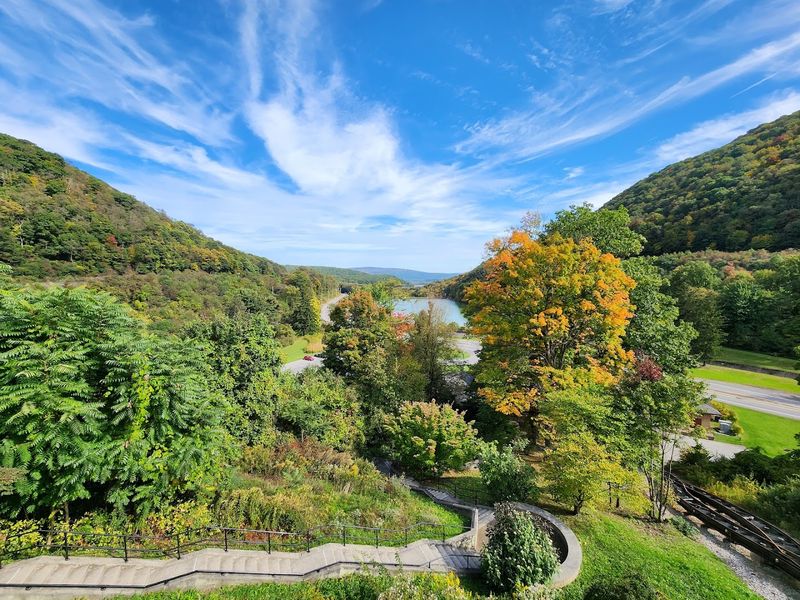
Planning ahead helps you get more out of a visit to Horseshoe Curve.
The site is currently open Wednesday, Thursday, Saturday, and Sunday from 9 AM to 4 PM, while Monday, Tuesday, and Friday are closed, so showing up on the right day matters.
Reviews suggest trains can appear throughout the day, which means you do not need a perfect schedule to have a rewarding experience.
Morning visits can feel especially nice if you want cooler temperatures, lighter crowds, and more time to wait for several pass-bys.
Because there is not much food or drink available on site, visitors often recommend bringing what you need if you plan to stay awhile.
A little preparation goes a long way here, and it can turn a short scenic stop into a full, satisfying day of train watching.
10. What Visitors Love Most
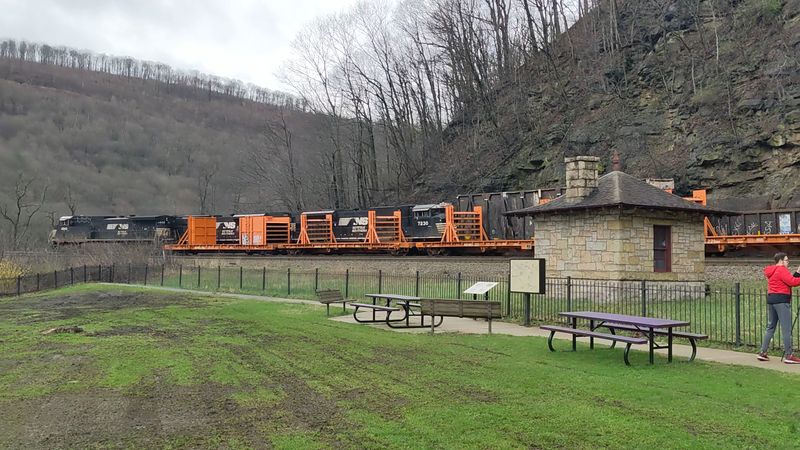
Looking through visitor reactions, a few themes come up again and again.
People love the active rail traffic, the thrill of hearing train horns, the chance to see multiple trains in one visit, and the unusual perspective that lets you watch a long train wrap around itself.
Many also praise the museum, the mountain views, and the overall feeling that this is a classic Pennsylvania experience.
There is also a sense of surprise in many reviews, which says a lot about the place.
Some visitors arrive expecting a quick roadside attraction and leave talking about how long they stayed, how many trains they saw, or how exciting a simple pass-by turned out to be.
That reaction may be the clearest sign of Horseshoe Curve’s appeal: it consistently turns curiosity into genuine enthusiasm once you are standing there.
11. A Few Honest Drawbacks To Know
Horseshoe Curve is memorable, but it helps to go in with realistic expectations.
Several visitors mention that vegetation can block parts of the wider arc, which means you may not always get the fully open, postcard-style view you imagine.
Others note that when the funicular is down, the stairs become the only way up, and that can be inconvenient for some travelers.
A few reviews also mention maintenance concerns, from worn signage to a slightly tired overall appearance in certain areas.
Even so, most people still come away impressed by the trains, the history, and the setting itself.
The key is to think of this as a working historic landmark rather than a polished theme attraction.
If you do that, the strengths of the place usually outweigh the imperfections once the first train enters the curve.
12. Why It Is Still Worth The Trip
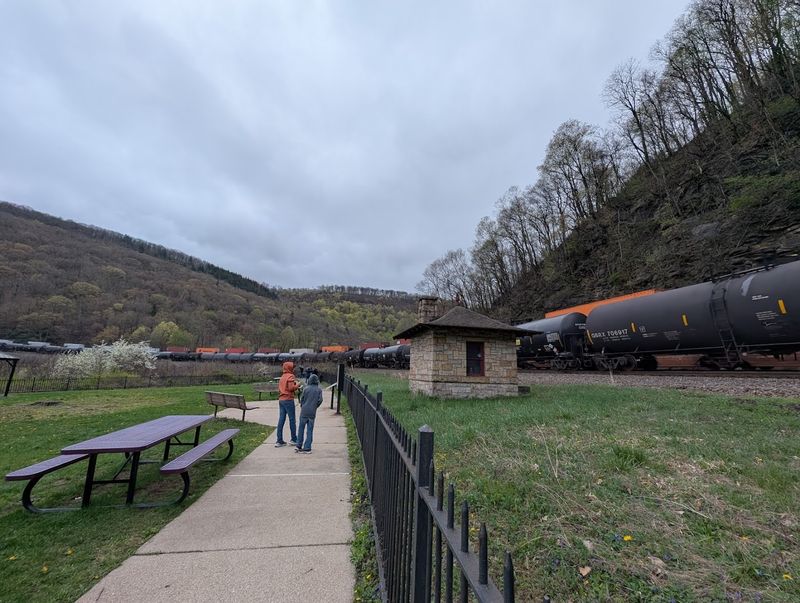
Horseshoe Curve remains worth the trip because it delivers something increasingly rare: a historic attraction that still performs its original function in a dramatic, public way.
You are not just reading a plaque about what happened here long ago.
You are watching active trains tackle the same famous bend that made this place important in the first place.
That blend of history, scenery, and real motion gives the site lasting power.
Whether you come for the engineering story, the railfan appeal, the mountain overlook, or simply a unique stop in Altoona, the experience sticks with you because it feels alive.
The curve turns waiting into suspense and a passing train into a show.
Few landmarks can do that so naturally, and that is exactly why this Pennsylvania classic still earns its must-see reputation.
Share this story