Two full mammoth skeletons stand in a college building in western Massachusetts, and nobody charges a cent to see them. Nearby sits a T-Rex skull, a Triceratops head, and wall after wall of dinosaur footprints pulled from the local ground.
The whole place spreads across three floors and traces the story of life on Earth, from bacteria to giant mammals. It is the kind of day trip that fits a rainy Saturday, a curious kid, or a grown-up who never outgrew a love of fossils.
Admission is free, the staff are eager to help, and there is a self-guided tour you can run from your phone. Keep reading to learn where it is, what the standout exhibits are, how to handle the famously tricky parking, and why so many Massachusetts families keep coming back to this small museum in Amherst.
A Natural History Treasure on Barrett Hill

Tucked onto the Amherst College campus, the Beneski Museum of Natural History sits at 11 Barrett Hill Dr, Amherst, MA 01002, in the heart of the Pioneer Valley.
It is a working college museum that opens its doors to the public for free. The building is modern, clean, and laid out with care.
The museum describes its mission simply. It holds exhibits exploring ancient life on Earth, with more than 1,700 species on display.
Those species trace the history of life from tiny bacteria all the way up to giant mammals. That is a big story for a building many people call small.
And small is a relative word here. The collection fills three floors, and an elevator connects them all.
For Massachusetts residents looking for a meaningful outing that does not require a long drive or a big budget, this spot checks a lot of boxes. Western Massachusetts families often treat it as a go-to, and travelers passing through Amherst find it an easy detour.
Before getting to the mammoths, though, it helps to know why the tracks matter so much in this particular valley.
Footprints From the Connecticut River Valley
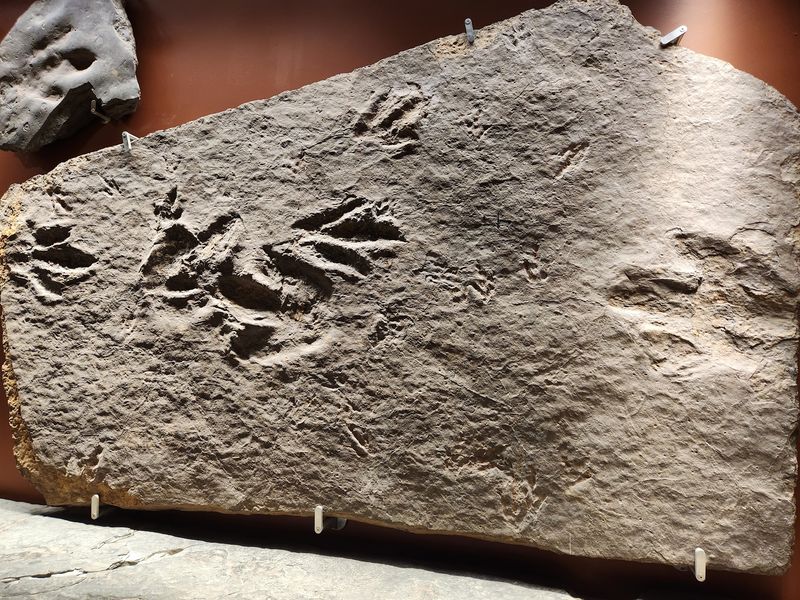
Long before Amherst had a college, the ground beneath it was recording the steps of dinosaurs.
Much of the museum focuses on local geologic history. Most of the dinosaur tracks on display were found right here in the region.
Displays throughout the building reference the Connecticut River Valley. That gives the exhibits a strong sense of place that a big-city museum might not offer.
Instead of showing fossils from far-off deserts alone, the museum connects what you see to the land you drove through to get there. It turns a local landscape into a time machine.
The collection is so focused on footprints that it has picked up a reputation for having one of the largest collections of dinosaur tracks anywhere. That claim has even shown up in the Pokemon Go game, where the museum serves as a PokeStop.
Some guests leave so inspired that they head out to see dinosaur footprint sites along the Connecticut River bank for themselves.
It is a neat example of a museum that does not just store history. It sends people back outside to find more of it, and that local link sets the stage for the walls inside.
Walls Covered in Dinosaur Tracks
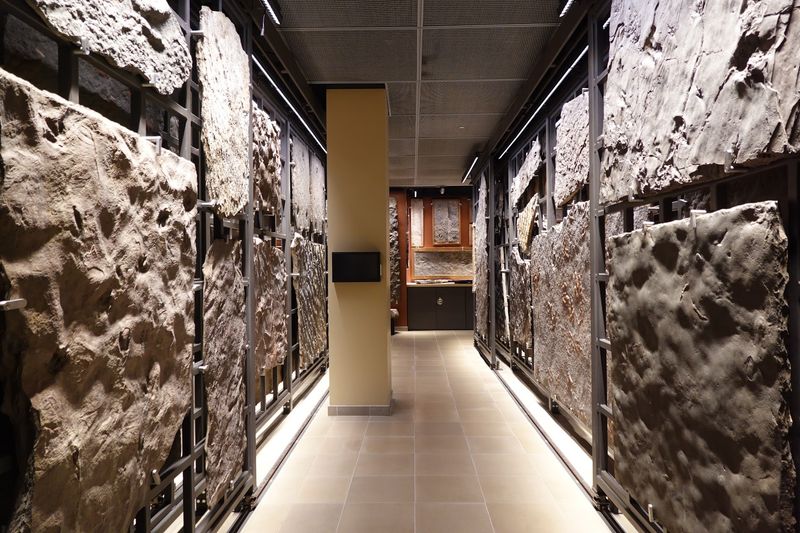
Most museums show off a few footprints behind glass. Here, the tracks get whole walls.
Slab after slab of stone carries the marks of ancient creatures that once walked through the valley. The sheer number is what surprises first-timers most.
Dinosaur tracks come up again and again when people talk about this museum. They are the backbone of the collection and the reason many fans make the trip.
The footprints tell a different kind of story than bones do. A skeleton shows what an animal looked like, but a track shows where it went and how it moved.
That difference makes the exhibit feel a bit like reading a very old set of footnotes. Each print is a small clue about life in the region millions of years ago.
Kids tend to love comparing the size of the prints to their own shoes. Adults often linger, reading the labels and trying to sort out which creature left which mark.
There is a handy tool to help with that sorting, and it fits right in your pocket.
The QR Code Track Tour
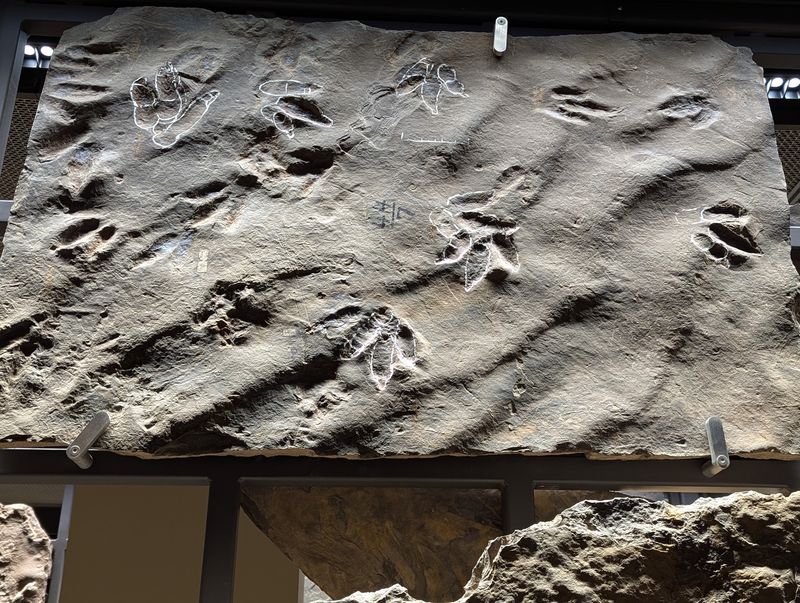
Here is a tour guide that never runs late and never asks you to keep up.
The museum offers a QR code based track tour. Scan a code, and your phone becomes a guide to the dinosaur footprints around you.
The length gets plenty of praise. It is long enough to share real details and short enough to keep the excitement going instead of dragging on.
That balance matters, especially for families. A tour that wears out a seven year old by the second stop is not much of a tour.
Because everything is self-guided, groups can move at their own speed. Some breeze through, while others stop at every slab.
The format also suits anyone who likes to learn quietly without a crowd around a single guide. It is flexible in a way traditional tours often are not.
A small tip worth remembering: there is a dinosaur icon marking the track tour, so keep an eye out for it.
Once the footprints have had their moment, it is time to meet the giants that tower above them.
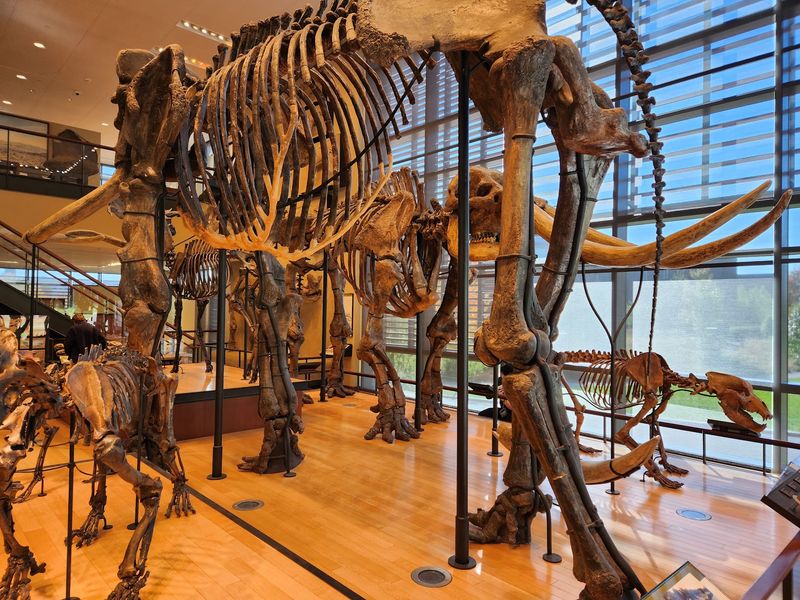
Two Full Mammoths Under One Roof
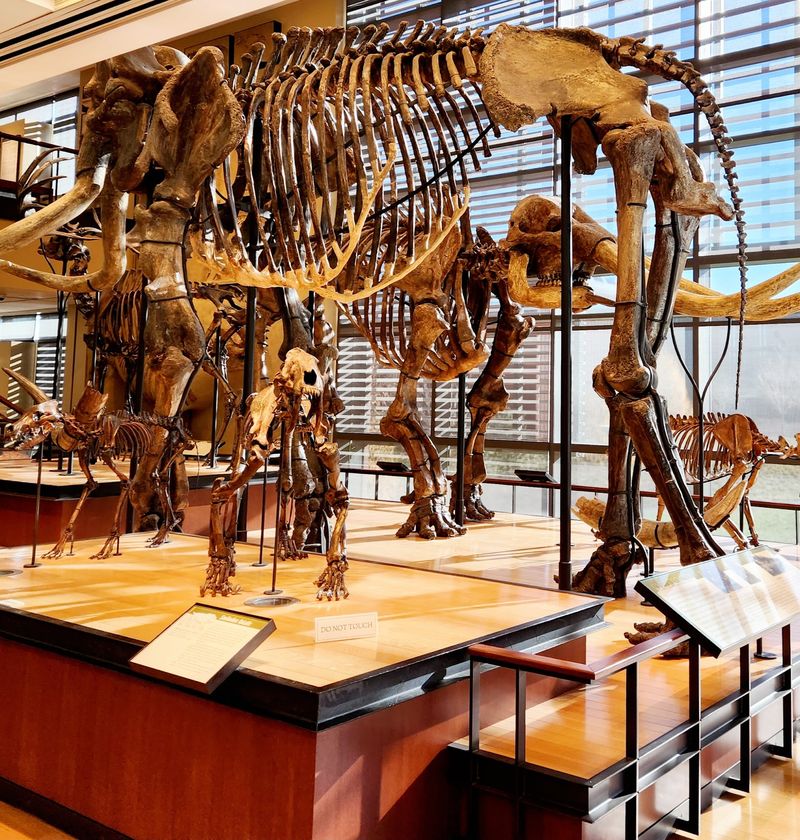
One mammoth skeleton would be enough to make most small museums famous. This one has two.
Both are full skeletons, and they are among the most memorable sights in the building. They show just how massive these Ice Age mammals were.
For many guests, the mammoths are the moment the trip goes from interesting to unforgettable. It is hard to stay casual standing next to a creature that size.
The pair also fits the museum’s larger theme. The collection traces life all the way up to giant mammals, and the mammoths are the headliners of that chapter.
Having two side by side gives you a chance to compare them. That kind of close look is part of what makes the displays feel thoughtful rather than crowded.
Other large animals share the space, including an elk and horses. Together they round out a picture of mammal life that goes well beyond dinosaurs.
Kids who walk in expecting only dinosaurs often walk out talking about mammoths instead. It is a mammoth surprise, in the best sense, and it leads straight to the next big skull.
A T-Rex Skull and a Triceratops Head
Every dinosaur fan has a favorite, and odds are good it is one of these two.
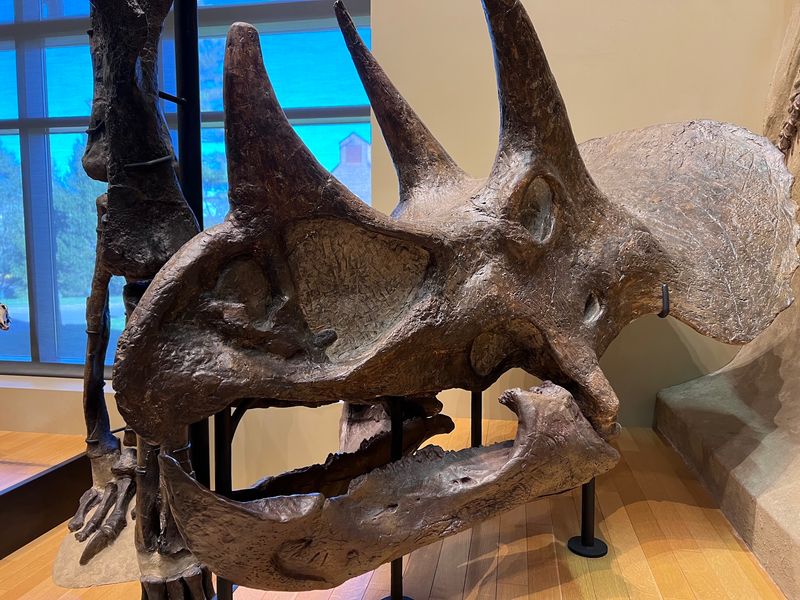
The museum displays a T-Rex skull along with a Triceratops head. They rank among the most talked about pieces in the collection.
The T-Rex skull is exactly the kind of thing that stops a young dinosaur lover in their tracks. Its size and shape make the famous predator feel very real.
Across the way, the Triceratops head offers a fine contrast. One was a meat eater with a fearsome bite, and the other carried horns and a broad frill.
Seeing both helps visitors of every age understand how different dinosaurs could be. Comparing them is a lesson in itself.
These pieces join a broader group of full skeletons and dinosaur bones. Families who come because a child loves dinosaurs tend to find that the collection more than delivers.
Plenty more waits beyond the famous names too. The building holds well known specimens from many corners of natural history, and some of them are hiding in plain sight.
A Wall of Gemstones at the Entrance
First impressions matter, and this museum opens with a glittering one.
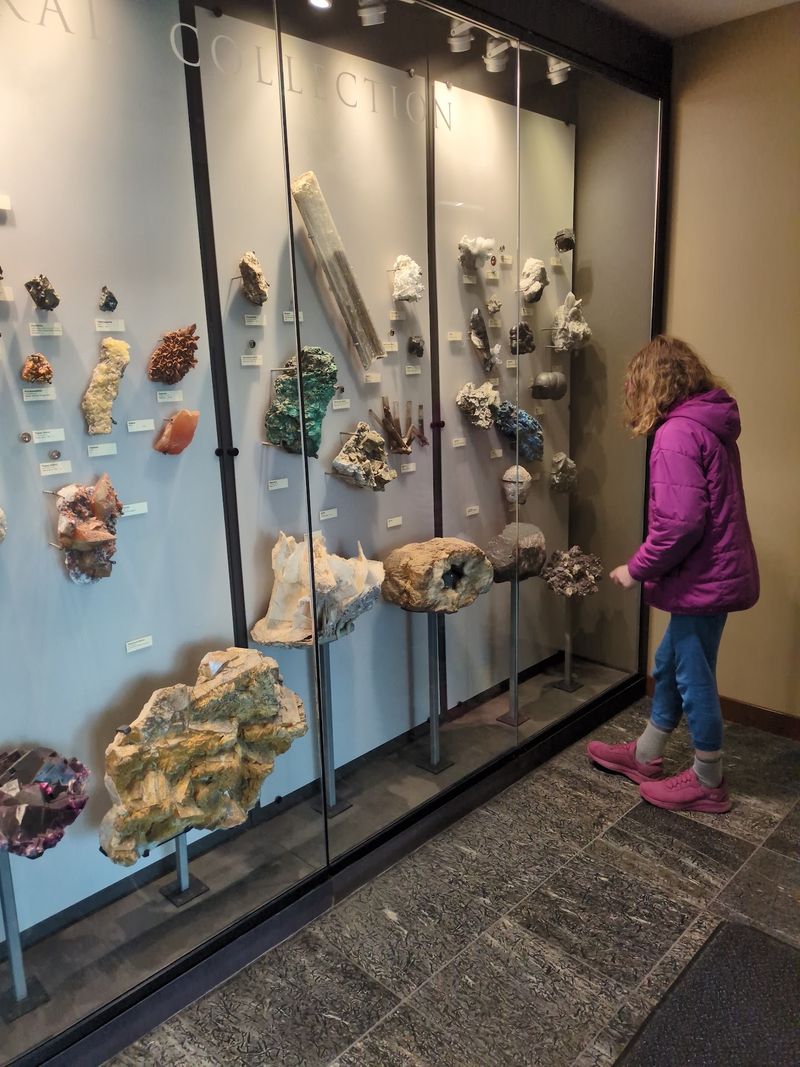
Right inside the building, a wall of gemstones greets guests. It is an eye-catching start before any bones come into view.
The mineral collection is a highlight for rock lovers. Colorful rocks and minerals fill the displays, with a wide range of shapes and forms.
Teens and adults often find this part just as gripping as the dinosaurs. The spectrum of colors tends to pull people in for a closer look.
It is a fine reminder that natural history is not only about animals. The planet itself has a long story, and minerals help tell it.
For budding rock hounds, this section can easily become the favorite stop of the day. Some families plan return trips just to spend more time here.
Fair warning for parents: a young geologist may leave with a sudden interest in collecting pebbles from every parking lot. That is a small price for curiosity.
And there is even more tucked away, if you know where to pull.
Secrets Inside the Drawers
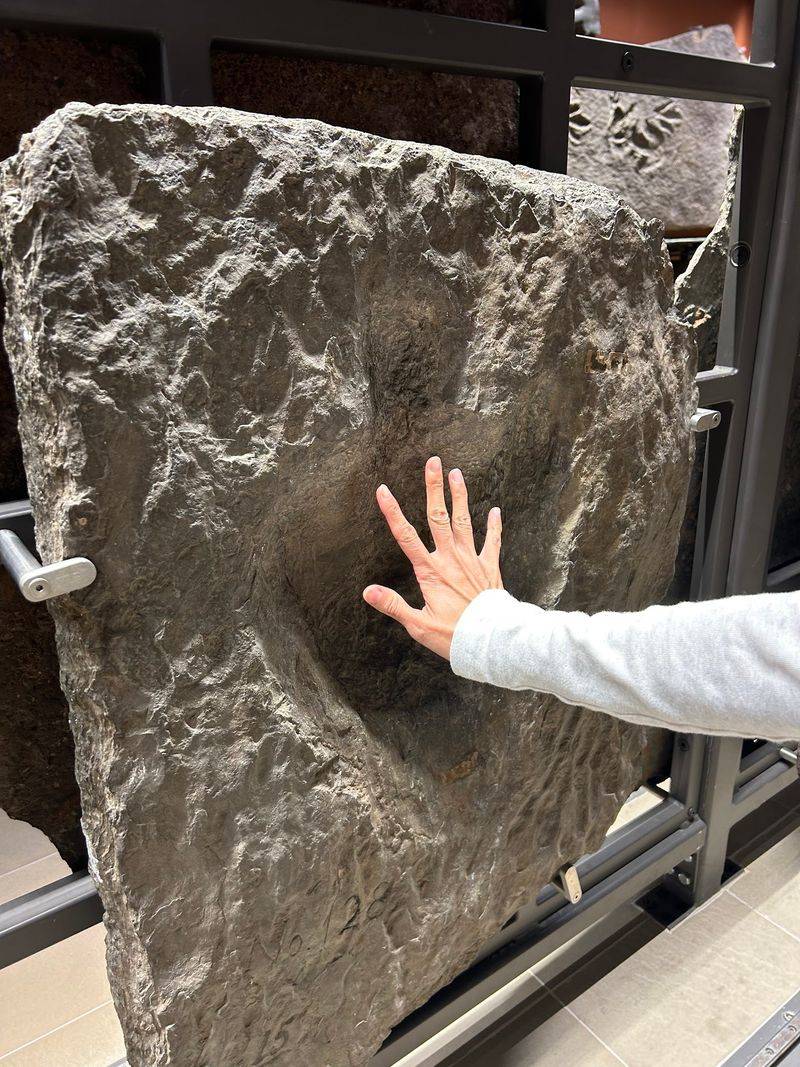
Not everything here is out in the open. Some of the best finds are waiting in drawers.
The walls include pull-out drawers with more specimens inside. Opening them reveals extra fossils and objects that are easy to miss on a quick walk.
It is a small design choice with a big payoff. Exploring becomes hands-on, and kids get the thrill of discovery.
Remember to open them. Plenty of people walk right past without realizing there is more to see.
The drawers also show how deep the collection goes. Over 1,700 species are represented, and the museum makes room for far more than what fits on the main displays.
Preserved fossils, archaeological creatures, and other curiosities fill the space. The variety keeps the trip from feeling repetitive.
There is also a display reaching back to around 530 million years ago. That is a long stretch of time to fit in one building.
Drawers like these turn a museum visit into a bit of a treasure hunt. Next up, the people who help make that hunt easier.
Student Docents Who Know Their Stuff
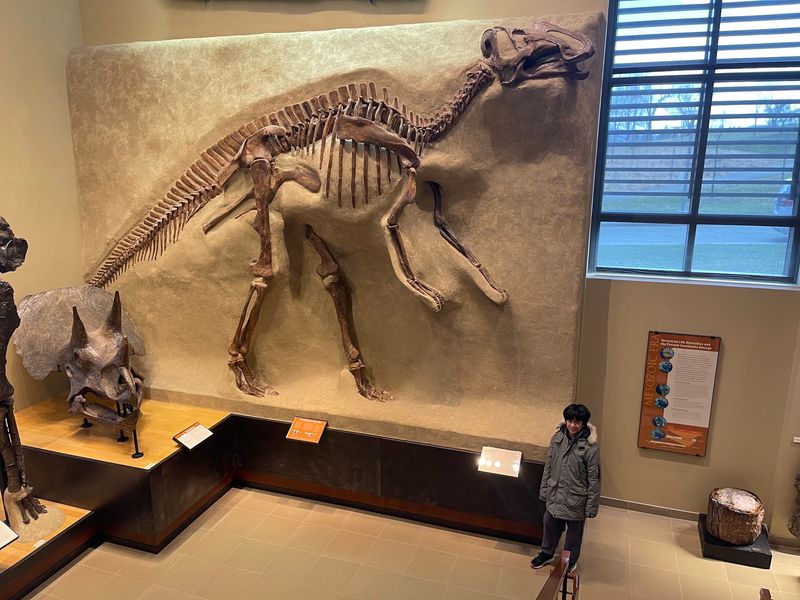
Ask a question here, and chances are someone will happily answer it.
Staff greet people at the door and encourage questions. Many of the helpers are students, and they know the collection well.
They are known for being friendly, patient, and knowledgeable. That patience shines with toddlers who ask the same question four times.
Professors sometimes join in too, welcoming guests and taking time to explain things. It adds a real academic flavor to a casual outing.
Staff have even been known to share local dining suggestions with first-timers. That kind of hospitality makes a campus museum feel like a neighborly stop.
Because tours are self-guided, help is there when needed and out of the way when not. It is a nice balance for groups who like to wander.
For curious kids, talking with a college student who loves fossils can be a powerful moment. It shows that science is something real people do every day.
Good guides make good exhibits better, and the exhibits themselves are built with plenty of care.
Elegant Design Across Three Floors
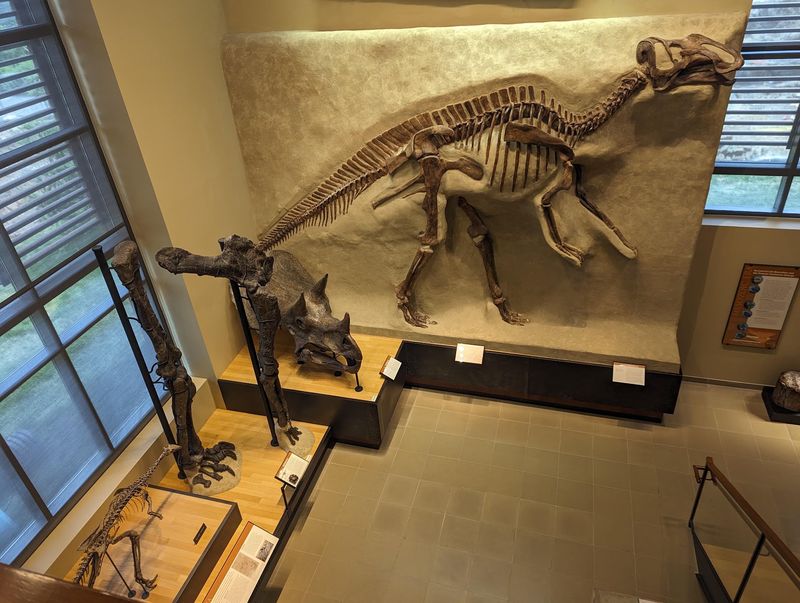
Some museums feel like storage rooms with labels. Not this one.
The Beneski is often described as modern, spotless, and superbly organized. The exhibits are cleanly laid out and clearly labeled.
Models help show how natural processes happen and happened. They make tricky ideas much easier to grasp.
Three floors hold the collection, and an elevator connects them. Restrooms are available on site as well.
Getting around is easy, which makes the museum workable for groups with mixed needs. Families have brought older relatives along and found it comfortable to explore together.
One wish comes up from time to time: more chairs for adults to sit while kids keep looking. It is worth knowing if anyone in your group needs frequent breaks.
The building also has strong air conditioning. That makes it a smart pick on a hot summer day when outdoor plans lose their appeal.
Good design keeps people curious longer, and that matters when deciding how much time to set aside.
Who Will Love It Most
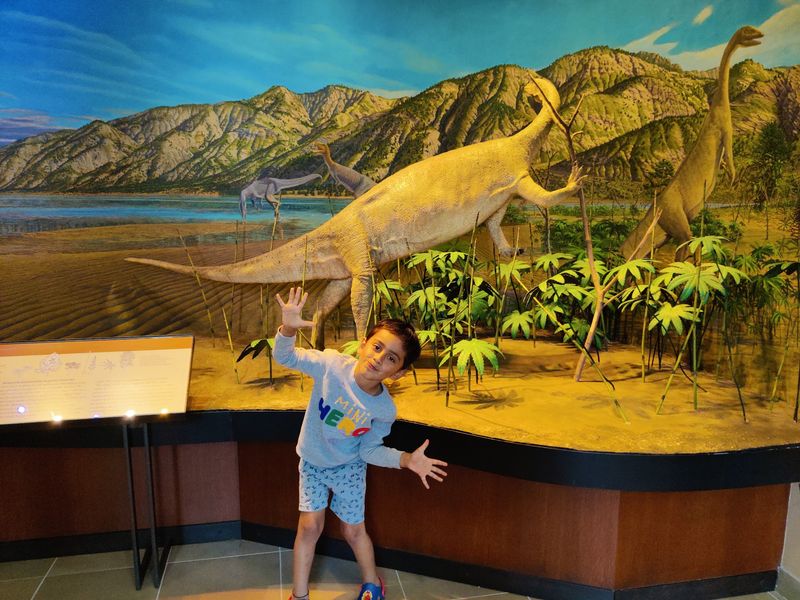
Toddlers, teens, grandparents, and grad students all seem to find something to like here.
Young kids do especially well. Even two and three year olds have had a great time on a rainy afternoon.
For children, the museum is a place where curiosity about natural history can really take root. Dinosaur fans are in for a treat.
Adults are not left out either. The labels and models go deep enough to keep grown-ups reading.
Rock lovers get their gem wall, and footprint fans get their tracks. Mammal enthusiasts get the mammoths.
It also works well as a shared outing. Spending a couple of hours with a friend or family member here feels easy and rewarding.
Massachusetts residents looking for low-cost, low-stress outings will appreciate how simple it is to plan. There is no need for a long drive to Boston or New York to see a serious fossil collection.
Rainy days are a particularly good fit. When the forecast turns grim, this museum turns into a lifesaver for restless families.
Timing your trip well can make it even better.
Hours, Admission, and Timing Tips

Good news first: admission is free.
The museum is closed on Mondays. Tuesday through Friday, it is open from 10 AM to 4 PM.
On Saturday and Sunday, hours run from 10 AM to 5 PM. That extra hour on weekends helps families with busy schedules.
Arriving right at opening on a weekend can pay off. Early birds sometimes have the galleries nearly to themselves.
Plan for about two hours to see things comfortably. Some people feel they could easily spend all day.
With three floors to cover, giving yourself ample time is wise. There is a lot to read and look at.
Hours can change, so checking the official Amherst College museum website before heading out is a smart move. That is especially true around holidays or the academic calendar.
Free admission makes repeat trips easy. Many families come once, then return to catch what they missed.
The museum itself is simple to enjoy. Finding a parking spot is a slightly different story.
Cracking the Parking Puzzle
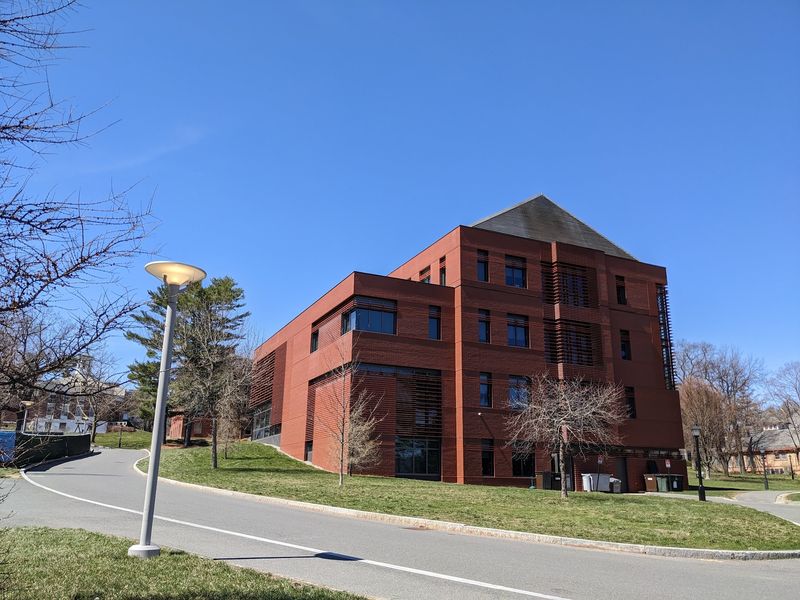
Finding the museum can be the hardest part of the trip, so a little planning helps.
Parking near the building is limited. Narrow campus streets can make the drive in a bit confusing for first-timers.
The fix is simple once you know it. Free public parking is available across the street, a short walk from the museum.
Searching for Amherst Museum Parking in Google Maps points you toward the lot. Both the museum and that parking are free to the public.
Expect the lot to be a few blocks down the road. After that small hurdle, the rest of the visit tends to go smoothly.
The walk is a nice chance to see the campus. The grounds are lovely, and the short stroll is part of the experience.
Some families bring a picnic and enjoy it on a bench by the World War II memorial. That spot offers a great landscape view.
A little patience at the start leads to a very easy afternoon. And that brings everything to its final verdict.
Worth the Trip to Amherst
Free, focused, and full of surprises, the Beneski Museum punches far above its size.
It holds a 4.8 star standing across hundreds of opinions online. That kind of consistency is rare for any attraction.
The appeal is easy to understand. Two mammoths, a T-Rex skull, a Triceratops head, a gem wall, and walls of local dinosaur tracks are a lot for zero dollars.
Add friendly student docents, a smart phone tour, and a clean building with an elevator. The result is an outing that works for nearly any group.
It also tells a uniquely Massachusetts story. The footprints came from the Connecticut River Valley, so the history on display is truly local.
For residents rediscovering their own state, it is a reminder that remarkable experiences can be close to home. No long drive or hefty ticket required.
Bring a picnic, sort out parking, and leave time to open every drawer. The dinosaurs have been waiting a very long time, and a few more hours of attention is the least they deserve.
Share this story