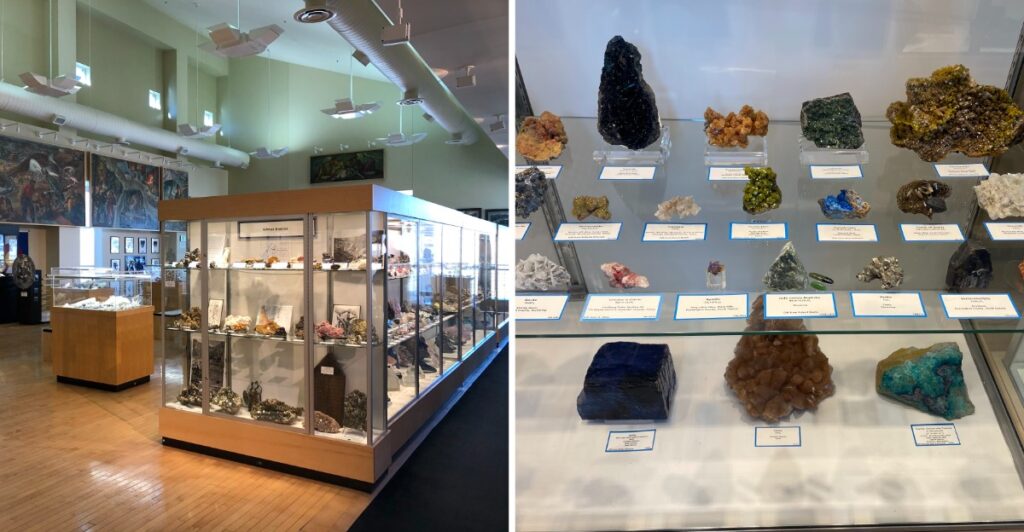
Colorado’s underground treasures can be every bit as spectacular as the mountains rising above them. At the free Mines Museum of Earth Science in Golden, glittering crystals, colorful minerals, and remarkable specimens reveal a side of the state most travelers never get to see.
The extensive Colorado mineral collection connects naturally to the region’s geology and mining history, while fossils, meteorites, and even a moon rock push the experience far beyond local discoveries. Best of all, exploring the exhibits does not cost admission. For anyone fascinated by what lies beneath the surface, this museum turns rocks into something surprisingly difficult to stop staring at.
A Colorado Welcome Written in Stone
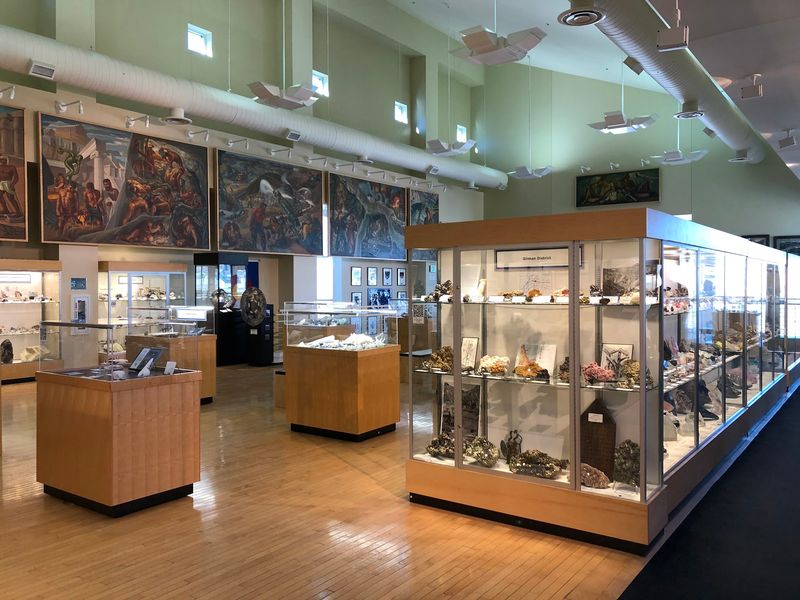
Golden has mountains in view, but the most colorful pieces of Colorado’s landscape are indoors at the Mines Museum of Earth Science. Behind glass, crystals show off sharp points, soft bands, and colors that seem almost painted on. The cases invite a closer look rather than a quick walk past.
Start by noticing the labels beside the specimens. A mineral’s name tells you what it is; its location tells you where it belongs in Colorado’s story. Two pieces with similar colors may have come from very different places or formed in different ways.
The collection gives visitors a rare chance to compare those details in one building. Instead of seeing a single pretty stone, you can examine many examples side by side. Look for changes in crystal size, shape, and color as you move between cases.
No geology background is needed. Pick one specimen that grabs your attention, then read its label before looking at the next one. That small pause turns a wall of dazzling objects into a series of discoveries you can follow at your own pace.
The museum sits on the Colorado School of Mines campus at 1310 Maple Street. Its setting makes sense: the school studies the earth and the materials people take from it. Here, those subjects become visible through actual specimens rather than diagrams alone.
Give the Colorado cases your attention before heading toward the fossils and objects from farther away. Their range is the heart of this visit. Even a short comparison can change how you picture the ground under a familiar Colorado trail or street.
Colorado’s Mineral Treasures, Place by Place
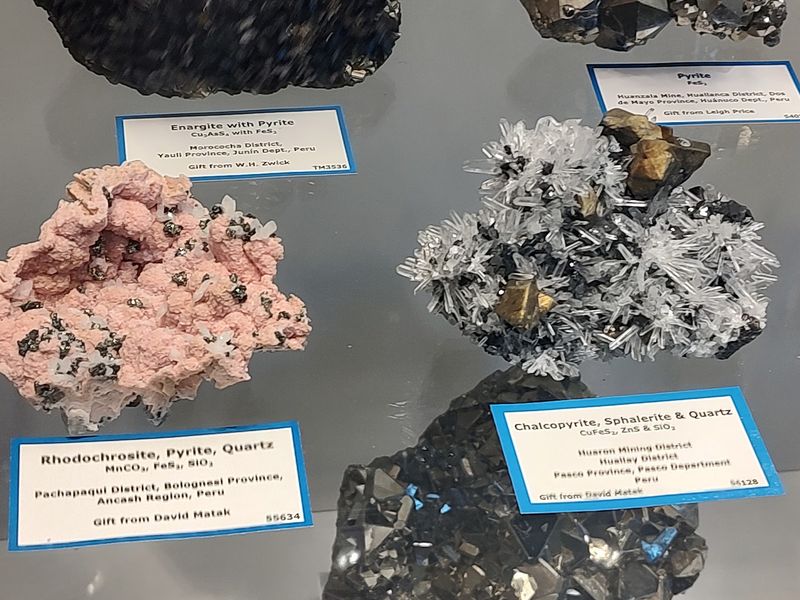
A mineral label can work like a tiny map. At this museum, Colorado specimens are identified by where they were found, giving each crystal a connection to a real part of the state. Reading those place names adds another layer to the colors in the case.
Look especially for rhodochrosite associated with Alma, Colorado. Its pink color is easy to spot, but the location label is just as interesting. It links an eye-catching mineral to the mountain region where it formed, rather than leaving it as an unnamed decoration.
Gold specimens offer a different kind of surprise. Gold is often pictured as smooth bars or coins, while a natural specimen can look much less tidy. Compare the raw material with the familiar images you already know; mining begins long before anything becomes jewelry or money.
Colorado’s minerals also show why a collection needs more than one example of each type. Crystals can grow in different shapes, join other minerals, or appear in a range of colors. Take a moment to find two specimens that share a name but look unlike each other.
The museum’s regional organization helps with that little experiment. It lets you notice patterns without memorizing scientific terms. If you are visiting with a child, ask them to choose a color, locate three examples, and check whether all three came from the same place.
Those labels do more than organize shelves. They keep the connection between a mineral and its source intact. By the time you leave the Colorado displays, a bright crystal may bring to mind not only its color, but also a specific spot on the map.
Follow the Mine Entrance Downstairs
A mine entrance inside a museum might look like a playful detour. Follow it anyway. The lower level includes a walk-through mining display that moves the story beyond sparkling finds and toward the work involved in reaching materials underground.
Upstairs, it is easy to focus on what people collected. Downstairs, the mining setting asks a different question: how did anyone get to it? A mineral in a case may be small enough to hold in one hand, yet removing it from the earth could require tools, planning, and labor.
Slow down when you reach the signs near the display. They provide context for the methods and history represented there. If you have children along, let them describe what they see first, then connect their observations to the information provided by the museum.
The museum is part of the Colorado School of Mines, so the link between rocks and human problem-solving is especially fitting. Earth science is not limited to naming specimens. It also deals with where useful materials come from and the choices made when extracting them.
Some displays address the ways raw materials become things people use. Look for examples that connect a natural specimen to a processed form or a recognizable piece of technology. That comparison helps explain why minerals appear in conversations about everyday life, not only in display cases.
Mining history can include difficult parts, and it deserves more thought than a quick photo. Give the exhibits time to explain both the materials and the work behind them. Then return to a favorite specimen upstairs with a clearer picture of its journey from ground to glass.
From Earth’s Past to Space
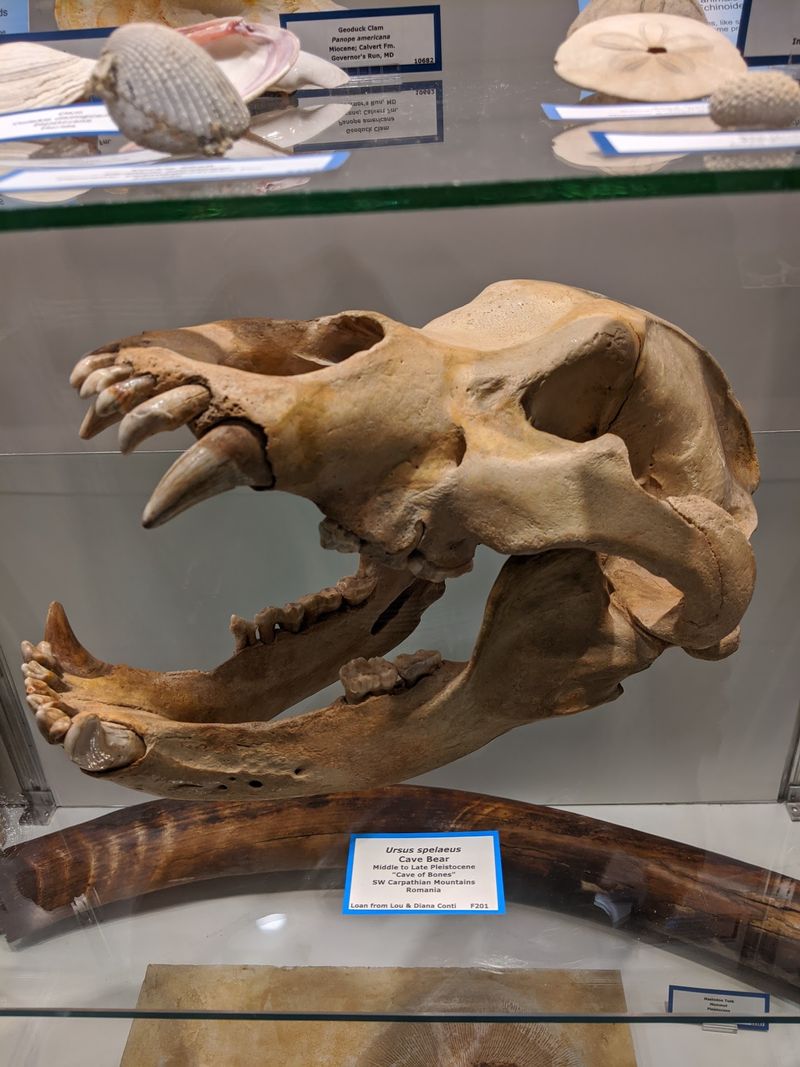
One room can send your thoughts in two directions at once: deep into Earth’s past and far beyond it. Alongside the museum’s minerals, you can find fossils, meteorites, and a moon rock. They make a useful reminder that earth science covers more than glittering crystals.
Begin with the fossils. Unlike a crystal, a fossil holds evidence of living things from long ago. Study its outline or surface, then read the label to learn what the specimen represents.
The shape often becomes easier to understand once you know what you are looking for.
Meteorites call for a different kind of close inspection. They are pieces of material that arrived from space, yet they sit here as solid objects you can examine with your eyes. Compare their appearance with the nearby minerals rather than expecting every space rock to look dramatic.
When you reach the moon rock display, take a moment with the information beside it. A small piece can lead to a very large question about where rocks come from and what they reveal. Asking about the display at the museum desk can help you locate it if you miss it.
For families, this section offers an easy way to keep curiosity moving. Invite children to pick one object from Earth’s past and one from space, then explain what makes each unusual. There is no need for a perfect answer; the labels can settle the details afterward.
Plan to see these exhibits before your visit runs short. Colorful minerals may catch your eye first, but the fossils and space specimens widen the story. Together, they show how carefully studied objects can carry clues across enormous distances and stretches of time.
A Scavenger Hunt for Sharp Eyes
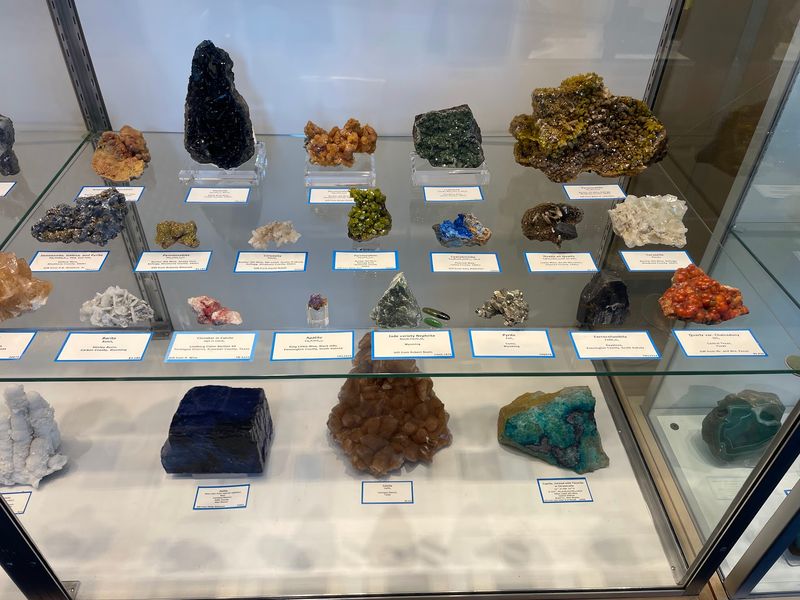
Finding one particular rock among hundreds sounds simple until every case offers a new distraction. That is part of the fun of a museum scavenger hunt. At Mines Museum of Earth Science, the activity gives younger visitors a reason to study details instead of racing past them.
Check for a scavenger hunt when you arrive, since available activities may change. If one is offered, read the clues together before starting through the galleries. A clue can turn a label, color, or unusual shape into something a child wants to investigate.
There is plenty to examine without an activity sheet, too. Try choosing a family theme: find a mineral that looks spiky, a specimen with stripes, and one that changes appearance under different display lighting. Let children explain their choices in their own words before reading the scientific names.
Some minerals respond to special lighting with surprising colors. When a display shows that effect, compare what you see with specimens under ordinary light. The difference can open a simple conversation about how light helps us notice properties that are otherwise easy to miss.
The lower level also offers a change of pace after a long look at cases. Moving between the mine display, fossils, and minerals can help children stay interested without turning the visit into a rush. Give them time to return to an object they want to see again.
A hunt works best as a guide, not a race to the last answer. Leave room for odd discoveries that are not on the page. A child who stops to compare two nearly matching stones is doing exactly the kind of careful looking the museum encourages.
Make the Free Visit Work for You
Free admission takes one decision out of planning, but it does not mean every part of the outing is free. The Mines Museum of Earth Science is on the Colorado School of Mines campus in Golden, where parking rules and costs can vary. Check posted signs before leaving your car.
The museum is listed as open from 10 a.m. to 4 p.m. every day of the week. Hours can change, especially around holidays or campus events, so confirm them before setting out. Arriving well before closing gives you time for both floors.
For a quick visit, choose a few priorities rather than trying to read every label. The Colorado mineral collection makes a strong starting point. Then head downstairs for the mine exhibit, fossils, meteorites, and moon rock if those match your interests.
Visitors who enjoy reading exhibit text should allow more time. A small specimen can carry a surprising amount of information about its source, form, and use. Moving slowly also makes it easier to spot connections between displays that might seem unrelated at first glance.
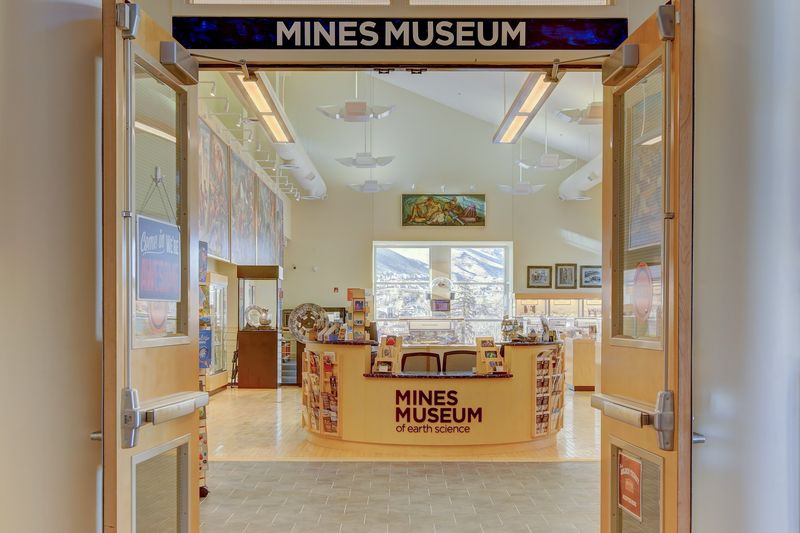
The gift shop offers a place to browse science-themed items and souvenirs after the exhibits. Treat it as an optional stop, not a requirement for a free museum day. Restrooms are available on the lower level, which is useful to know before you settle into the upstairs cases.
The address is 1310 Maple Street, close enough to Golden’s center to fit into a wider day in town. Inside the museum, however, resist planning every minute. Pick a few must-see objects, keep an eye on closing time, and leave space for whatever catches your eye behind the next case.
The Tiny Details Behind the Big Claim
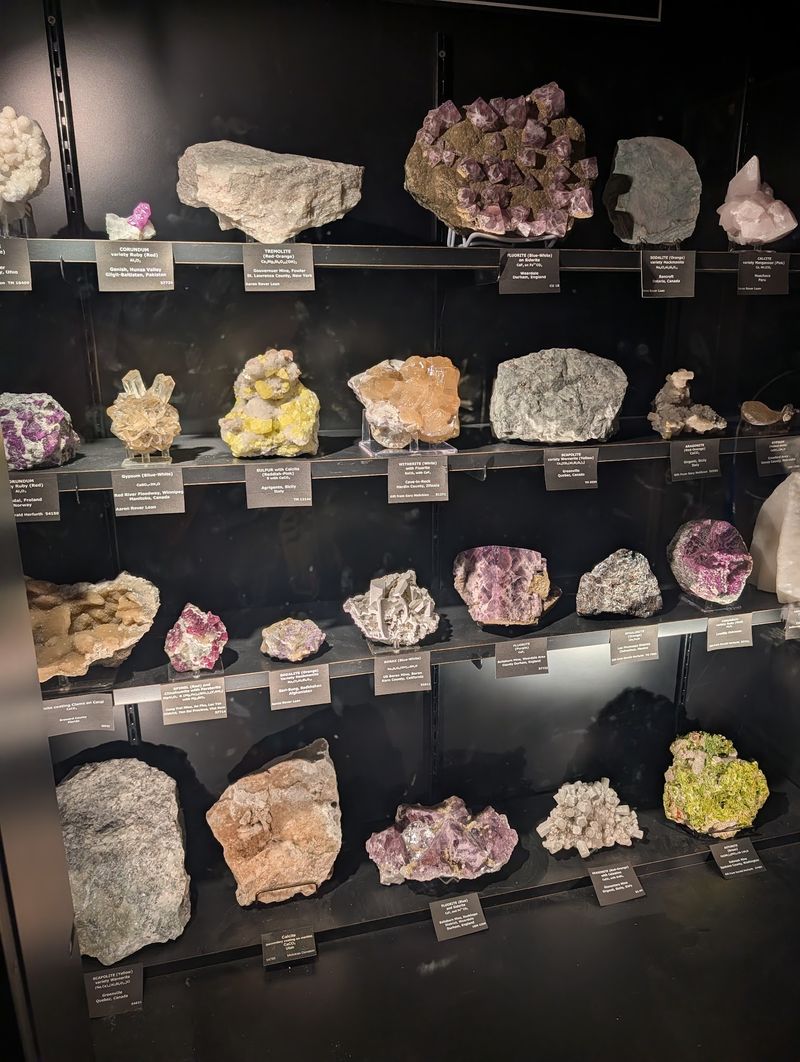
The grand claim in the title becomes more interesting when you stop looking for one grand object. At Mines Museum of Earth Science, the Colorado collection is compelling because of its range. A case of specimens can show how many different forms a mineral treasure can take.
Stand back first and scan the colors. Then move closer to the edges and surfaces: some crystals have neat faces, while others grow in clusters or sit inside rougher stone. Those differences are clues to natural processes, even if you do not know every scientific term.
Labels keep the spectacle grounded. A location tells you that a specimen came from somewhere specific, not from an imaginary treasure chest. Read several in a row and the displays start to resemble a portrait of Colorado built from individual finds.
Next, look beyond beauty. The museum connects earth materials with mining history and, in some exhibits, with their uses in familiar technology. A polished gem and a useful raw material may begin with the same larger question: what is this object made of?
That question travels well through the two floors. Fossils shift attention to life in the distant past, while meteorites and the moon rock bring space into the picture. Each section offers a different reason to study a specimen rather than merely admire it.
Before leaving, return to the Colorado mineral that first caught your attention. Read its name and source one more time, and notice a detail you missed earlier. The museum’s strength is right there in the case: careful labels, varied specimens, and enough close-up surprises to make an ordinary rock seem less ordinary.