A 50-foot marine reptile, a Revolutionary-era document, and an 8K journey through the solar system are not usually part of the same afternoon. At the New Jersey State Museum in Trenton, they are practically neighbors.
This four-level building beside the State House holds more than two million artifacts and specimens covering billions of years, from the state’s earliest geology to art created within our own lifetimes.
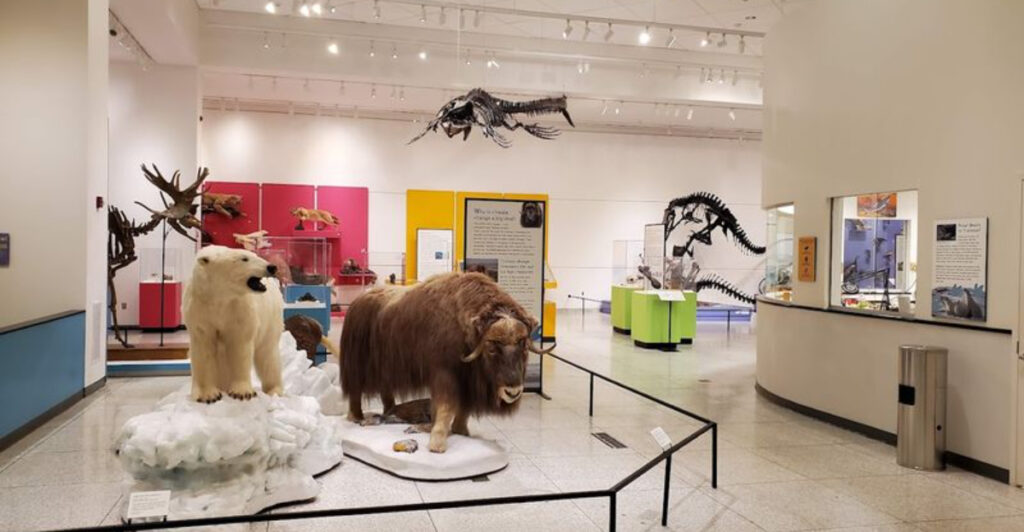
You can stand beside New Jersey’s state dinosaur, study objects connected to the Lenape, see flags carried by local Civil War regiments, and then settle under a planetarium dome for a guided look at the night sky.
The most surprising number, however, is the price at the front door. General admission is completely free.
Add an old-school tomato pie from one of the Trenton area’s most historic pizzerias, and this becomes the rare day trip that delivers dinosaurs, serious history, fine art, and dinner without requiring a carefully guarded vacation budget.
The New Jersey State Museum Packs More Than Two Million Objects Into One Free Destination
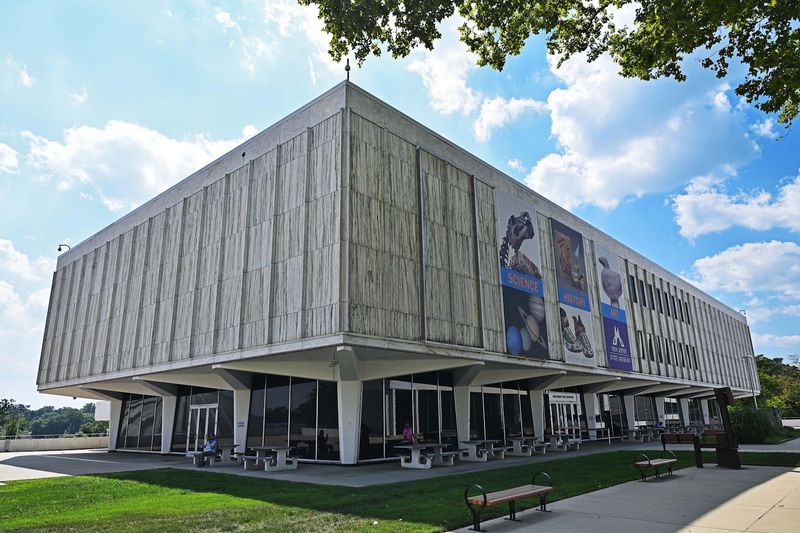
More than two million artifacts sounds like the inventory of several museums combined, yet that is the scale of the collection housed at 205 West State Street. The holdings are divided among four major areas: archaeology and ethnography, cultural history, fine art, and natural history.
Naturally, the museum cannot display every object simultaneously. Much of the collection is carefully stored, researched, preserved, and brought into galleries through permanent installations and changing exhibitions.
What visitors do see is remarkably varied. One floor may introduce a dinosaur discovered in New Jersey, while the next holds paintings, pottery, photographs, military objects, furniture, or tools that once belonged to ordinary Garden State residents.
That variety makes the museum especially useful for mixed groups. The dinosaur-obsessed child, the parent who loves local history, and the art fan who wants to wander quietly through a gallery can all find their own reason to slow down.
General admission remains free, and no advance reservation is required for an independent gallery visit. The museum is normally open Tuesday through Sunday from 9 a.m. to 4:45 p.m., although galleries begin closing at 4:30 p.m.
It is closed on Mondays and state holidays. Visitors should also expect enhanced entry security, including bag inspections and passage through magnetometers, so leaving large backpacks in the car is a smart move.
Weekday parking includes metered spaces and a limited number of visitor spots in the nearby State House garage. On weekends, free parking is available in adjacent lots and along the street in front of the museum.
Those practical details matter because this is not a place that requires an elaborate plan. You can arrive in the morning, follow whichever exhibit grabs your attention first, and spend the next few hours discovering just how much New Jersey has managed to collect.
A Collection Founded in 1895 Still Tells New Jersey’s Remarkable Story
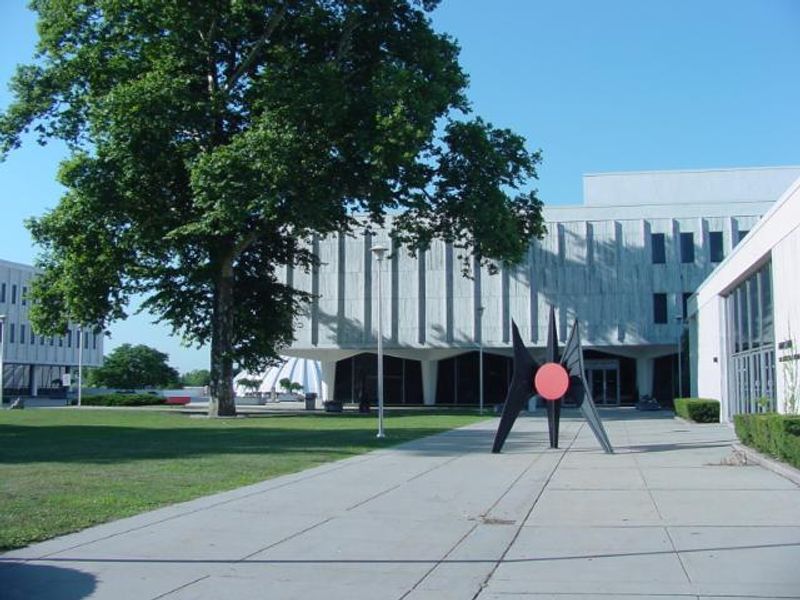
The museum’s roots reach back long before its current modernist building appeared beside the State House. New Jersey lawmakers formally established the institution in 1895, giving it a mission to collect and exhibit materials related to natural history, archaeology, and industrial history.
Some of its original scientific specimens were even older, having been assembled during 19th-century surveys of the state’s geology and natural resources. Archaeology became an increasingly important focus during the early 1900s, supported by museum fieldwork and research.
In 1914, the museum began an Education Extension Service that sent models, specimens, and lantern slides to schools around New Jersey. It was an early version of taking the museum on the road, decades before anyone could pull up a virtual exhibit on a classroom screen.
The collections continued expanding. Decorative arts joined the mission in 1929, while the acquisition of North American Indian art helped establish an ethnographic collection during the following years.
Anthropologist Frank Speck later collected materials among Delaware communities in Oklahoma and Canada, strengthening a collection that now helps document Lenape traditions, movement, and cultural survival.
The biggest physical change came in 1965, when the museum moved into the newly completed cultural complex on West State Street.
The four-level building opened with an adjoining planetarium and auditorium, and fine art became the fourth major collecting area. That timeline explains why the galleries do not feel like unrelated subjects placed under one roof.
Natural science, archaeology, art, and social history have been added layer by layer for more than a century, each broadening the museum’s ability to explain New Jersey.
The institution received its first accreditation from the American Alliance of Museums in 1974 and has operated as a division of the New Jersey Department of State since 1983.
What began as a state collection of scientific and industrial specimens has become an unusually wide-ranging record of the people, creatures, landscapes, and ideas that shaped New Jersey.
Fossils, Minerals, and Prehistoric Creatures Reveal the State’s Ancient Past
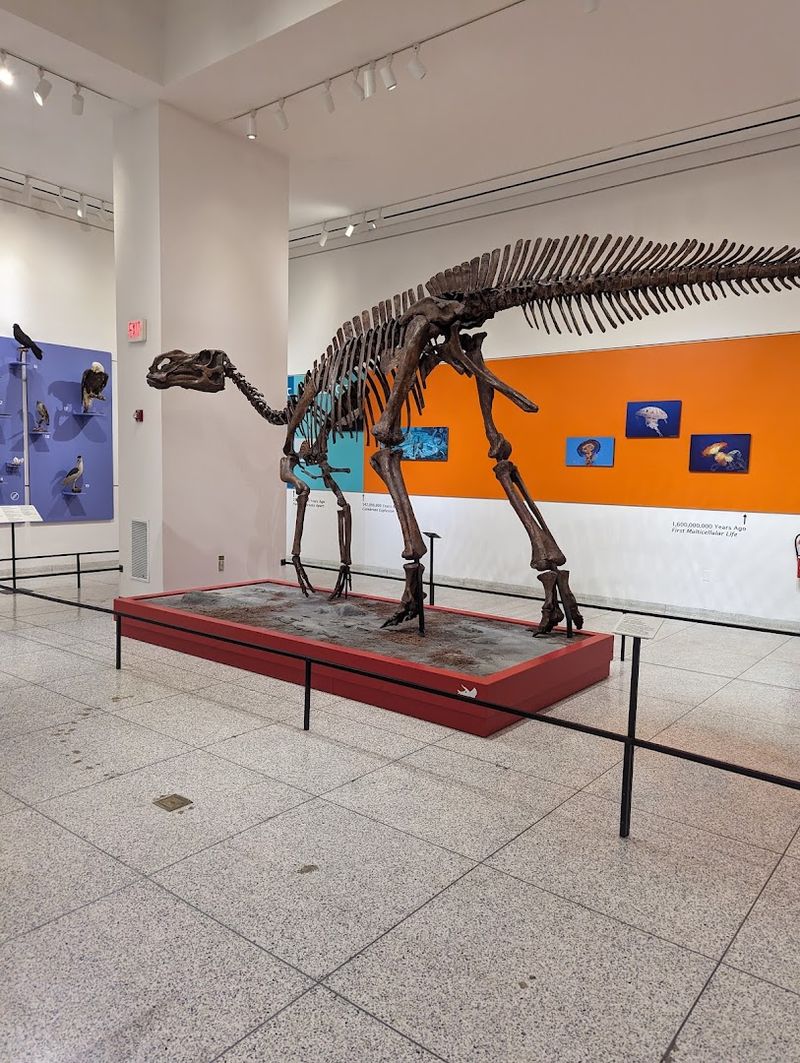
Long before traffic circles, boardwalks, and Parkway exits, part of New Jersey sat beneath ancient seas filled with enormous reptiles.
“Written in the Rocks: Fossil Tales of New Jersey” rewinds the state’s story by roughly 3.5 billion years, using fossils and geological evidence to show how local environments changed as continents shifted, species evolved, and entire groups of animals disappeared. The crowd-pleasers are appropriately huge.
A reconstructed Dryptosaurus represents the first scientifically recognized carnivorous dinosaur from North America, while a life-size cast of Hadrosaurus foulkii introduces the duck-billed creature that became New Jersey’s official state dinosaur.
Then there is Mosasaurus maximus, a marine reptile that reached approximately 50 feet and was discovered in southern New Jersey.
It is a sharp reminder that the state’s prehistoric wildlife once included something considerably more intimidating than a particularly bold Shore seagull. The natural history collection behind the exhibits contains about 250,000 specimens.
Its strengths include fossils, industrial minerals and ores, bones, shells, birds, insects, reptiles, mammals, taxidermy, historic photographs, and field reports.
One especially important group comes from the Ellisdale fossil site in Monmouth County, where researchers found 75-million-year-old mammal remains described as the first Cretaceous mammals discovered in eastern North America.
The museum also preserves roughly 300 type specimens, meaning scientifically significant examples used to formally document fossil species. Younger visitors have more to do than stare at labels.
The gallery includes an Observation Station with microscopes, magnifying glasses, and selected fossils that can be touched. A live paleontology laboratory may offer a glimpse of museum scientists preparing or studying real specimens, depending on who is working during the visit.
Nearby, the free Discovery Den gives children ages 8 and younger a dedicated place for books, puzzles, art, sensory activities, and nature-based games. The result is a natural history floor that handles serious science without making it feel like homework.
Lenape Artifacts and Archaeological Treasures Bring Thousands of Years of History to Life
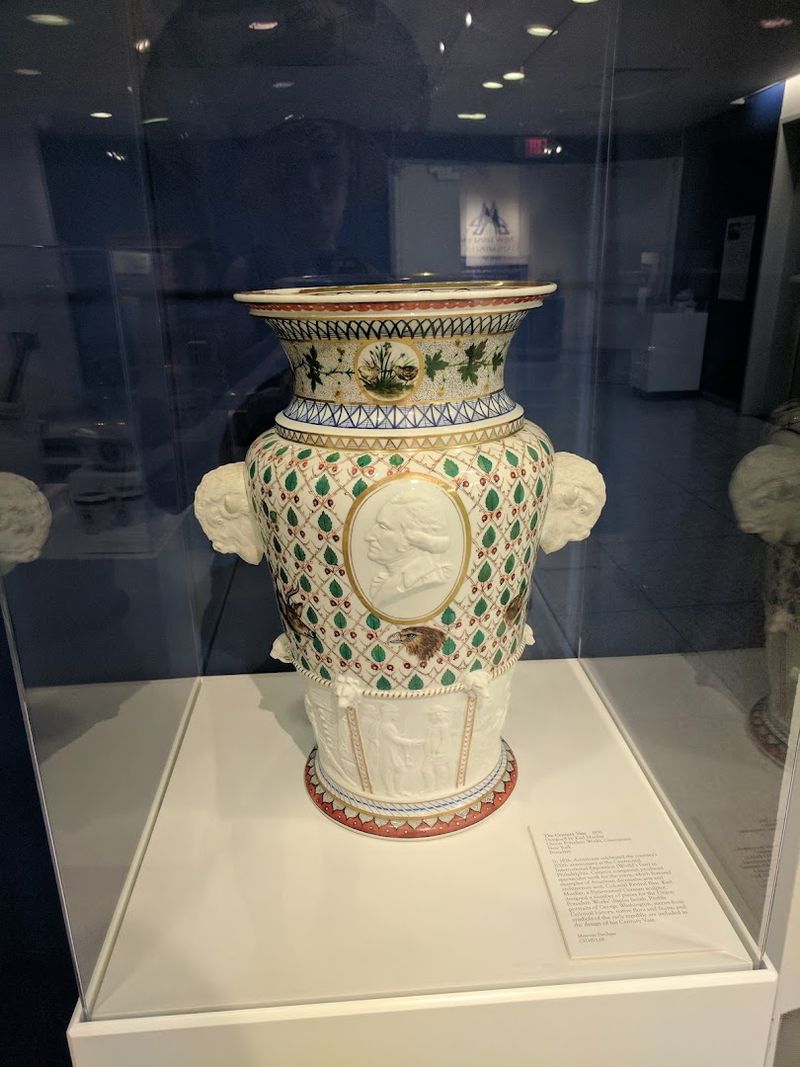
Down on the lower level, New Jersey’s human history begins thousands of years before the state had its current name or borders. The archaeology and ethnography galleries focus heavily on the Lenape, whose communities lived throughout the region long before European colonization.
“New Jersey’s Original People” uses archaeological evidence to explore how Lenape communities responded to changing climates and landscapes.
Visitors can examine stone tools, pottery, and other objects while learning how archaeologists interpret material left behind at former settlements. A reconstructed excavation area helps explain that process, turning broken pottery, soil layers, and tool fragments into evidence rather than simply displaying them as isolated objects.
The story continues through “Cultures in Competition,” which looks at early encounters between the Lenape and Europeans.
Beaver pelts, copper, trade goods, maps, written accounts, and wampum help show how economic relationships altered daily life and shifted the balance of power. “A Much Moved People” then addresses a more difficult chapter: the displacement of Delaware communities from New Jersey between the 18th and 19th centuries.
Beaded clothing, baskets, household objects, and personal belongings illustrate how traditions were maintained even as families were repeatedly forced or pressured to relocate.
The museum’s archaeology holdings are considered an important research collection for the study of New Jersey prehistory and the wider Northeast.
Many objects came from professional excavations conducted by museum staff, universities, consulting archaeologists, and government projects. The galleries also connect this deep history directly to Trenton.
Archaeological work at locations such as the State House, the Old Barracks, Petty’s Run, and the Trent House has uncovered Indigenous materials, pottery fragments, beads possibly associated with enslaved residents, and even a hollowed wooden log once used in the city’s 19th-century water system.
These are not grand monuments commissioned to impress future generations. They are fragments of meals, labor, trade, movement, and home life—the small pieces that often provide the clearest picture of how people actually lived.
Fine Art, Cultural History, and a Planetarium Fill Four Levels With Surprises
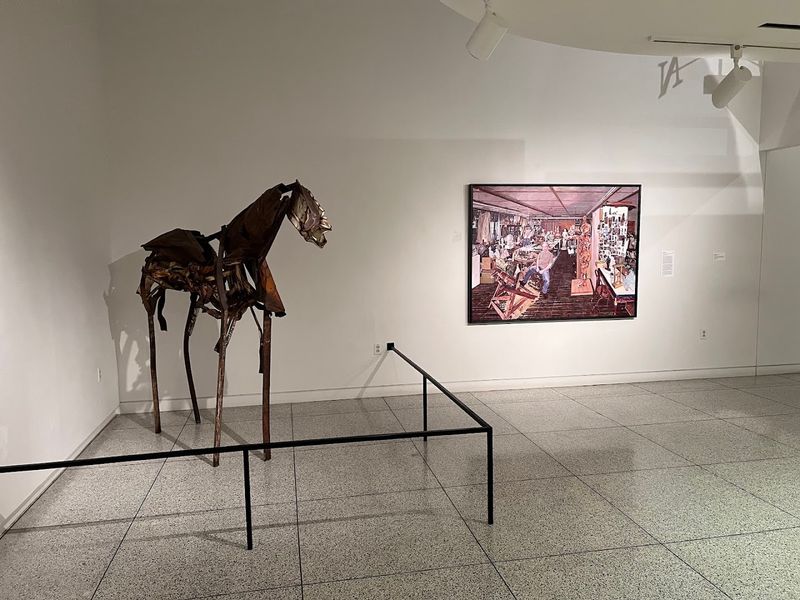
The second floor can shift the mood from fossil bones to bold American art in a matter of minutes. The museum’s fine art collection includes more than 12,000 paintings, prints, photographs, drawings, and sculptures, with an emphasis on American art and artists connected to New Jersey.
“American Perspectives” places work from the 19th through 21st centuries together, exploring how migration, politics, travel, social change, and international artistic movements influenced what American artists created.
The broader collection is particularly strong in American modernism, African American art, abstraction from the 1930s and 1940s, contemporary New Jersey work, and prints by artists including Ben Shahn and Jacob Landau. Cultural history brings the focus back to everyday life.
More than 13,000 objects document the state’s political, military, agricultural, maritime, industrial, and domestic past.
Trenton-made ceramics sit within the same collection as furniture, textiles, trade tools, toys, household objects, and flags carried by New Jersey regiments during the Civil War. “Pretty Big Things” uses carefully selected pieces to tell stories that are understandable without flattening the state’s history into a parade of famous names.
Temporary galleries add another reason to check what is showing before a visit. In 2026, exhibitions have included rarely displayed government documents connected to America’s 250th anniversary and a look back at New Jersey’s Bicentennial era of the 1970s.
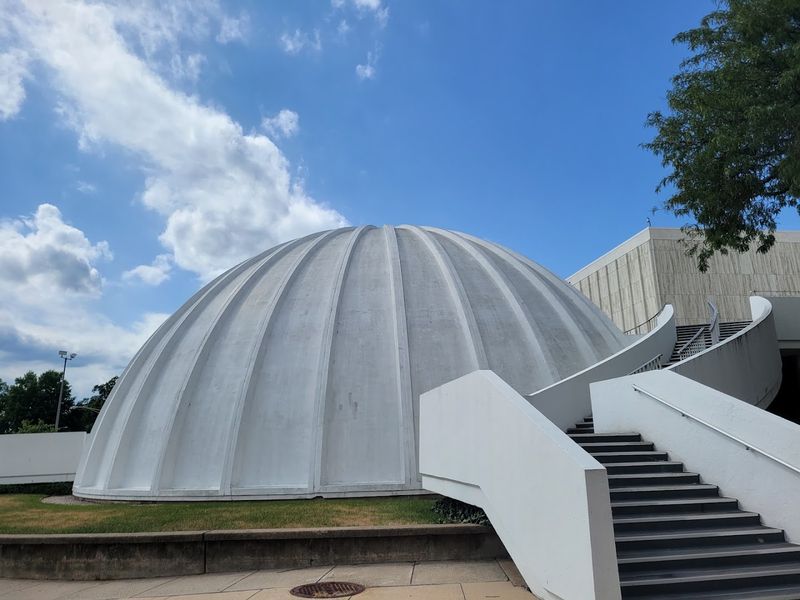
The biggest change of pace waits under the adjoining planetarium dome. Its upgraded 8K projection system surrounds the audience with planets, constellations, spacecraft, and distant astronomical events.
Shows generally include a live 15- to 20-minute sky talk followed by a full-dome film, creating an experience of roughly 45 minutes.
Planetarium admission is separate from the free museum galleries and currently costs $10 for adults and $5 for children 12 and younger, with discounts for seniors, students, members, groups, and active-duty military personnel.
Public shows are generally scheduled on weekdays and several times each weekend, making the planetarium an easy finale rather than an all-day commitment.
A Classic Trenton Tomato Pie Makes the Perfect Finish to the Day
After several floors of New Jersey history, the logical next subject is one of the state capital’s greatest edible inventions. A Trenton tomato pie looks familiar until you notice the order of operations.
Instead of burying tomato sauce beneath a heavy layer of cheese, the traditional style puts cheese and toppings on the dough first, then spreads or splashes tomato over the top. The finished pie is thin, crisp, slightly charred, and unmistakably tomato-forward.
One of the most historic places to try it is Papa’s Tomato Pies, now located at 19 Robbinsville-Allentown Road in Robbinsville, roughly seven miles from Trenton. Giuseppe “Joe” Papa established the business in Trenton in 1912 after learning the trade as a teenager.
The restaurant remained in the city for more than a century before moving to Robbinsville in 2013, carrying its recipes and family history into a larger location.
Papa’s describes itself as the oldest continuously family-owned pizza restaurant in the United States, and the current menu does not complicate the signature order.
A plain 14-inch tomato pie costs $16, while the 16-inch version is $17. Both are normally baked well-done, producing the light char that regulars expect.
The more adventurous order is the mustard pie, a local specialty made with a thin layer of spicy brown mustard between the crust and cheese before tomato is added on top. It costs $18 for a small and $19 for a large, and it tastes far more natural than the phrase “mustard pizza” has any right to suggest.
Papa’s also serves toppings such as fresh sausage, pepperoni, meatballs, hot cherry peppers, pork roll, broccoli rabe, and breaded eggplant, along with Italian entrees and sandwiches.
It is open seven days a week, beginning at 11 a.m., with closing times of 9 p.m. most nights and 9:30 p.m. on Fridays and Saturdays.
After an afternoon spent tracing New Jersey from prehistoric seas to outer space, a crisp pie with bright tomato sauce brings the story back to the kind of local tradition people can still taste.
Share this story