Standing tall on Griswold Street in downtown Detroit, the Guardian Building stops people cold the moment they spot it. Its vivid orange-red brick exterior and dazzling tiled lobby have left first-time visitors genuinely unsure whether they have stumbled into a cathedral, a museum, or something else entirely.
Built in 1928 and completed in just 18 months, this 39-story Art Deco skyscraper earned the nickname “Cathedral of Finance” for good reason. Once you step through those grand revolving doors, the mystery of what this building actually is becomes the best part of the whole experience.
The Exterior That Stops Traffic on Griswold Street
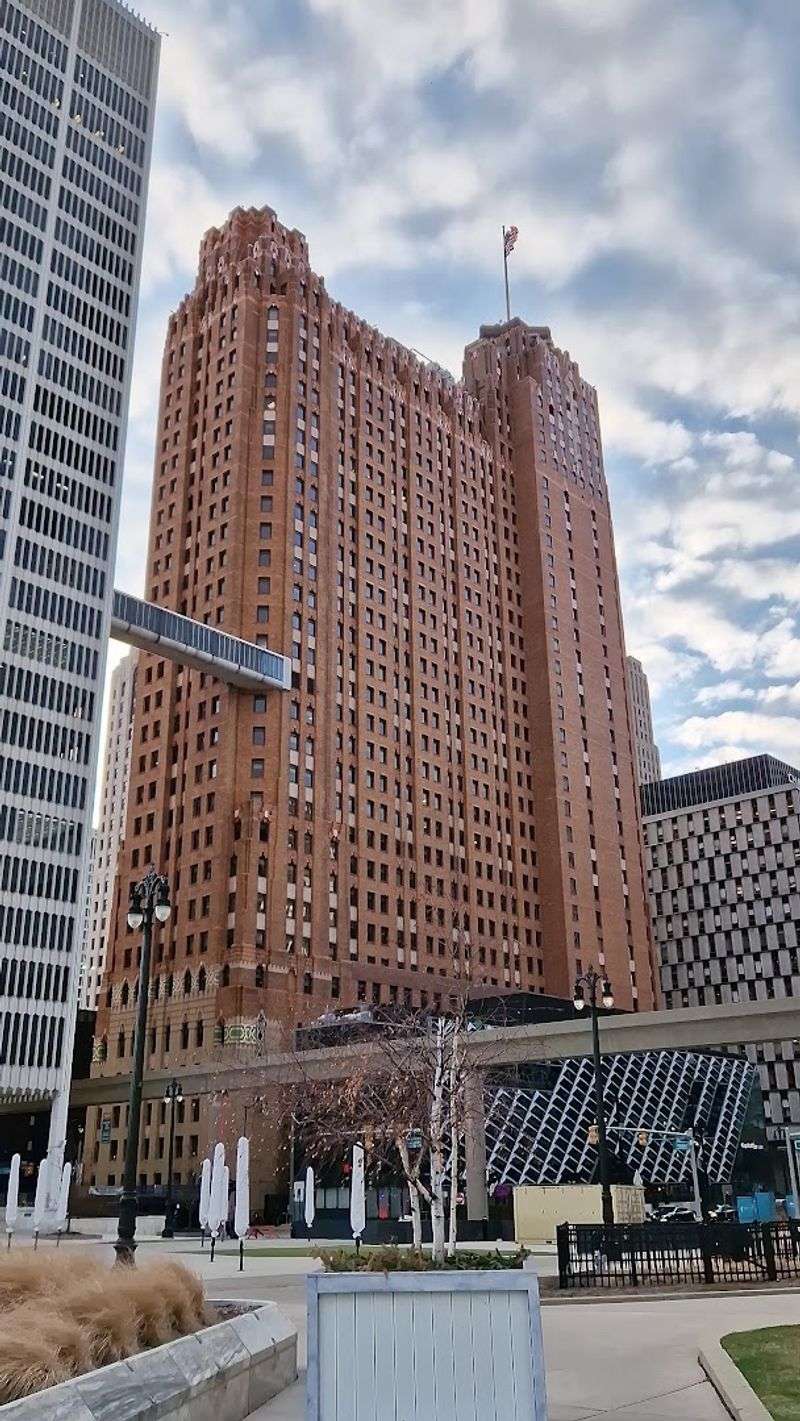
Most skyscrapers from the 1920s played it safe with gray granite or pale limestone. The Guardian Building went in a completely different direction.
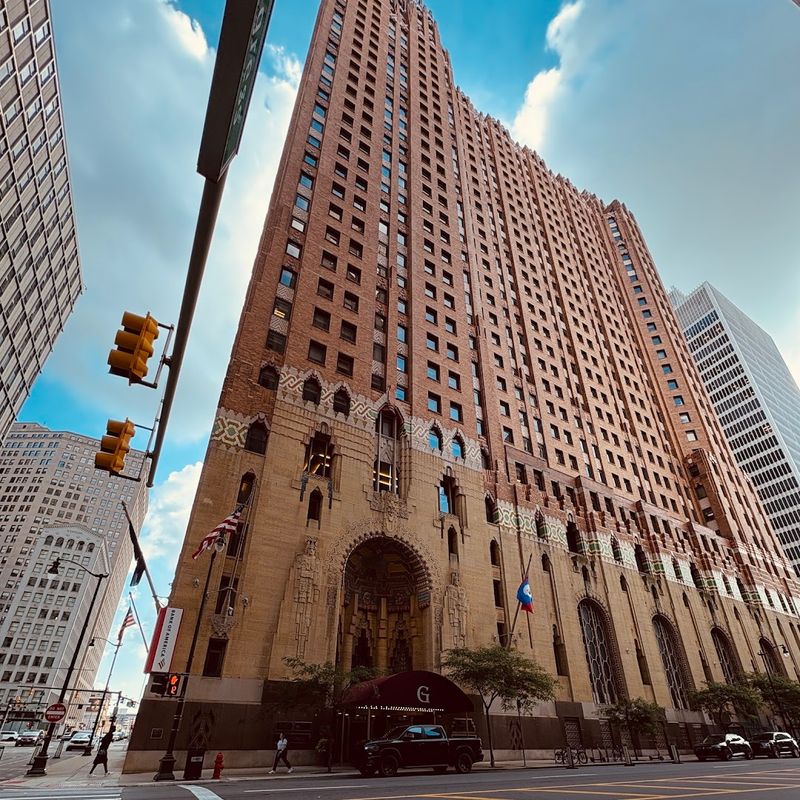
Custom-made orange-red face brick wraps the entire tower, giving it a warmth and visual intensity that no other building on the Detroit skyline can match. From half a block away, it already looks like something designed to be noticed.
The geometric patterns cut into the facade borrow heavily from Native American and Aztec art, a bold creative decision that set the building apart from the European classical styles dominating architecture at the time. Architect Wirt Rowland worked these angular, interlocking motifs into the brickwork, the stone trim, and the decorative crown at the top.
Every level of the building rewards a closer look.
Standing at street level on Griswold, the scale becomes genuinely hard to process. At 39 stories, the tower stretches upward in a way that forces your head back.
The setbacks built into the upper floors give it a layered, almost sculptural silhouette against the sky. Detroit has no shortage of impressive buildings, but this one reads differently from the rest because the color alone commands attention before any of the finer details even register.
Visitors who approach from Hart Plaza or the Detroit Riverwalk get a particularly dramatic angle, with the building rising above the surrounding streetscape in full view. Early morning light catches the brick in shades of amber and copper that photographs can barely capture accurately.
The facade is not just decoration. It is a statement about what Detroit believed it could build during the city’s most confident era, and that confidence has not faded one bit in nearly a century.
Inside the Vaulted Lobby: Where Tiles Tell the Whole Story
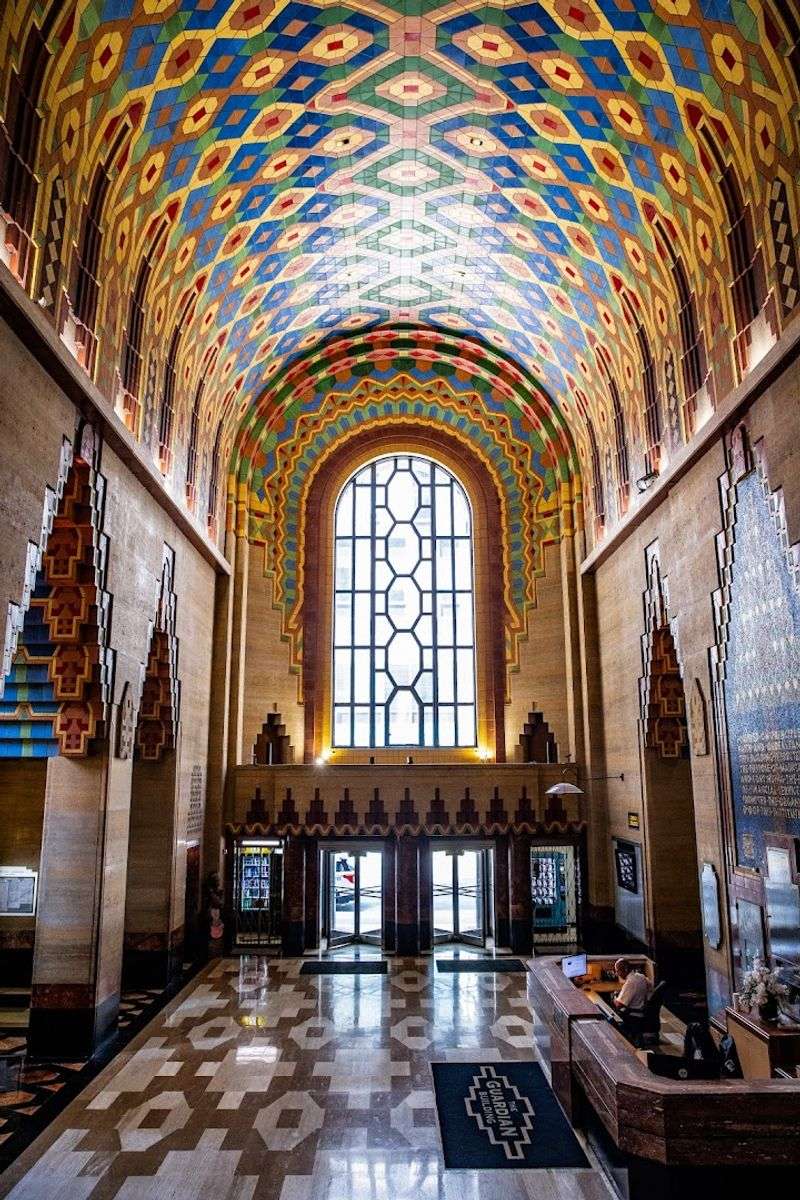
Pushing through the revolving doors on Griswold Street and stepping into the lobby is the kind of moment that makes people freeze mid-step. The vaulted ceiling rises overhead in a cascade of hand-painted interlocking tiles, hundreds of thousands of them, crafted by two legendary studios: Detroit’s own Pewabic Pottery and Mueller Mosaic.
Shimmering gold leaf threads through the geometric patterns, catching light from every angle and making the ceiling appear almost alive.
Pewabic Pottery has been a Detroit institution since 1903, and the Guardian Building lobby represents one of its most ambitious commissions. The tiles were not mass-produced.
Each one was made by hand, fired in kilns, and fitted into place with a precision that borders on obsessive. The result is a surface that looks different depending on where you stand and what time of day you visit.
Stained glass windows line the upper reaches of the lobby, and when afternoon sun hits them directly, the colors spill across the floor in shifting pools of amber, blue, and deep red. Natural light does a lot of the decorating here.
The architects understood how sunlight would move through the space across different hours, and the design accounts for that movement deliberately.
Scattered throughout the lobby are hidden symbols tied to the building’s original owner, Union Trust Company. The letters U and T appear repeatedly in the metalwork, tile borders, and carved stone details.
Once spotted, they show up constantly. The ornate metal gate at the banking hall entrance, the elevator door panels, and even the clock face all carry these embedded references.
Spend fifteen minutes in the lobby without a guide and you will notice maybe half of them. Spend an hour with a knowledgeable tour guide and the number keeps climbing.
Michigan’s Most Dramatic Hidden Feature: The Bank Vault
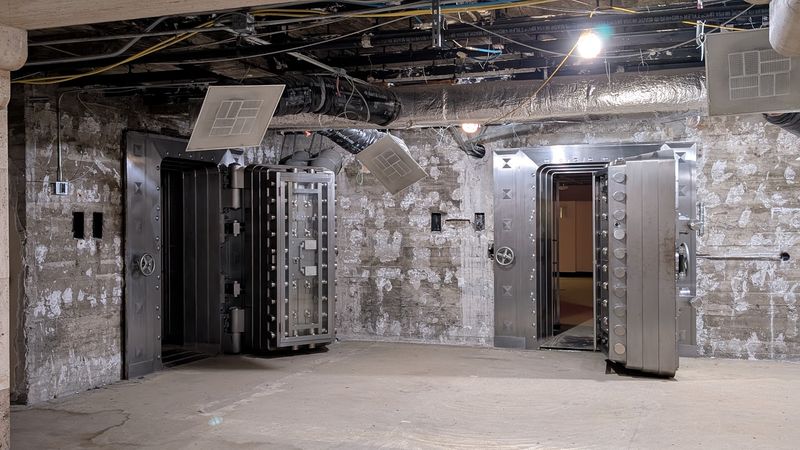
Below the glittering lobby, tucked into the building’s basement, sits one of Detroit’s most cinematic hidden spaces. The original bank vault built for Union Trust Company still stands largely intact, its massive steel door and reinforced walls a direct link to the era when this building handled serious financial business.
Stepping inside feels less like a museum visit and more like walking onto a film set, except every detail is real.
The vault became accessible through guided tours, and it consistently ranks as the highlight for people who take the full Insider’s Tour. The scale alone is impressive.
These were not small safe deposit rooms. The vault was built to hold the kind of wealth that made Detroit one of the most economically powerful cities in America during the late 1920s.
Thick walls, precision engineering, and mechanisms designed to outlast everything around them give the space a quiet, almost eerie sense of permanence.
Tour guides bring the space to life by connecting it to the broader story of Detroit’s boom years and the financial collapse that followed just months after the building opened. Union Trust commissioned this building at the absolute peak of the city’s confidence, and the vault represents that peak in physical form.
The irony of its timing is not lost on anyone who hears the full story.
Getting into the vault requires booking a guided tour in advance, which runs roughly 60 minutes and covers the lobby, upper floors, and this basement highlight. The after-4pm tours add access to the 32nd floor observation area, where panoramic views of downtown Detroit stretch in every direction.
For a building this layered, the tour is not optional. It is the difference between seeing the Guardian Building and actually understanding it.
Art Deco at Its Absolute Peak: The Design Details Worth Slowing Down For
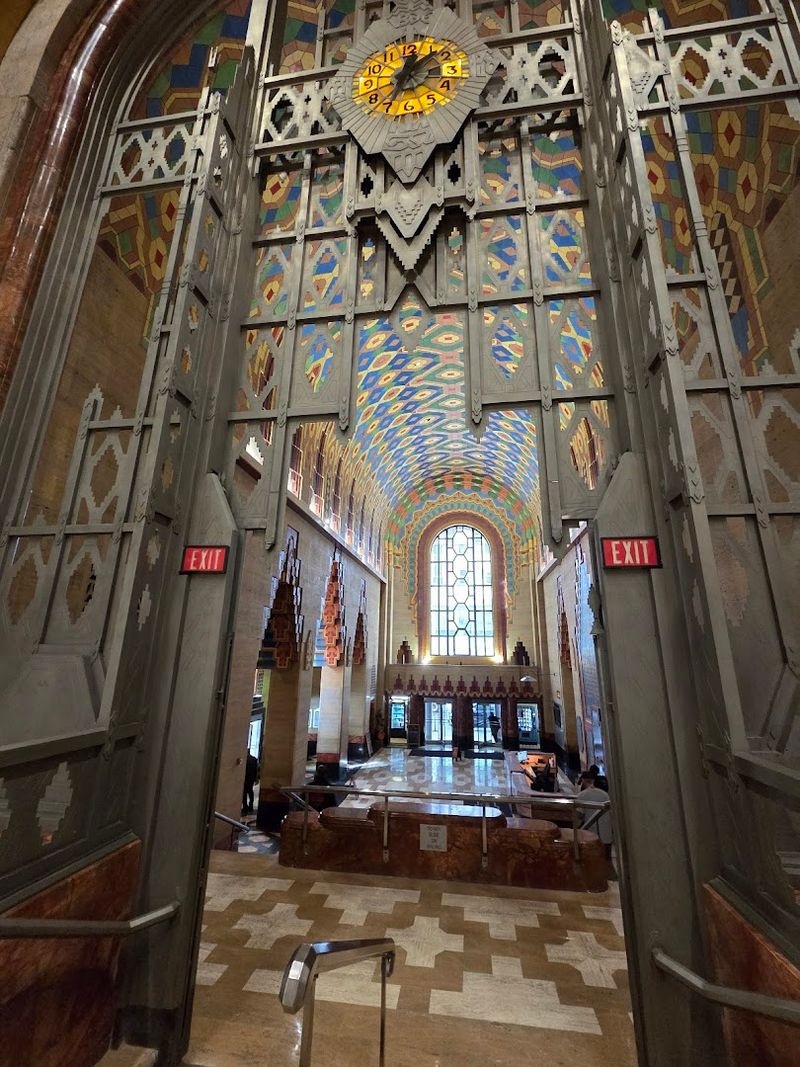
Art Deco as a style gets thrown around a lot, but the Guardian Building demonstrates what the movement looked like when budget and ambition had no ceiling. The elevator doors alone could anchor a design museum exhibit.
Each set is covered in precisely engineered geometric metalwork, layered with angular shapes that repeat and interlock in patterns that somehow feel both mathematical and organic at the same time.
The railings along the staircases carry the same level of attention. Running a hand along them, the craftsmanship is immediately obvious.
These were not stamped out of a factory mold. Artisans worked these pieces individually, and the variation between sections proves it.
The same care extends to the window surrounds, the light fixtures, the door handles, and the stone floor inlays. Every surface was treated as a design opportunity rather than a background detail.
Marble sourced from Tunisia lines parts of the interior, a detail that underscores just how globally ambitious this project was. Importing specific stone from North Africa for a building in the American Midwest was not a small decision in 1928.
It reflects the scale of investment Union Trust was willing to make to signal its power and permanence to the world.
The murals painted across certain walls add another layer of visual complexity. Large-scale imagery depicting industry, commerce, and the spirit of Detroit’s working culture fills spaces that lesser buildings would have left plain.
Nothing about the interior reads as an afterthought. Visitors who slow down and move through the lobby methodically, rather than simply photographing the ceiling and leaving, consistently discover details they had completely missed on their first pass.
That reward for careful looking is part of what makes the building genuinely worth multiple visits.
The Cathedral of Finance: Understanding Its Place in Detroit History
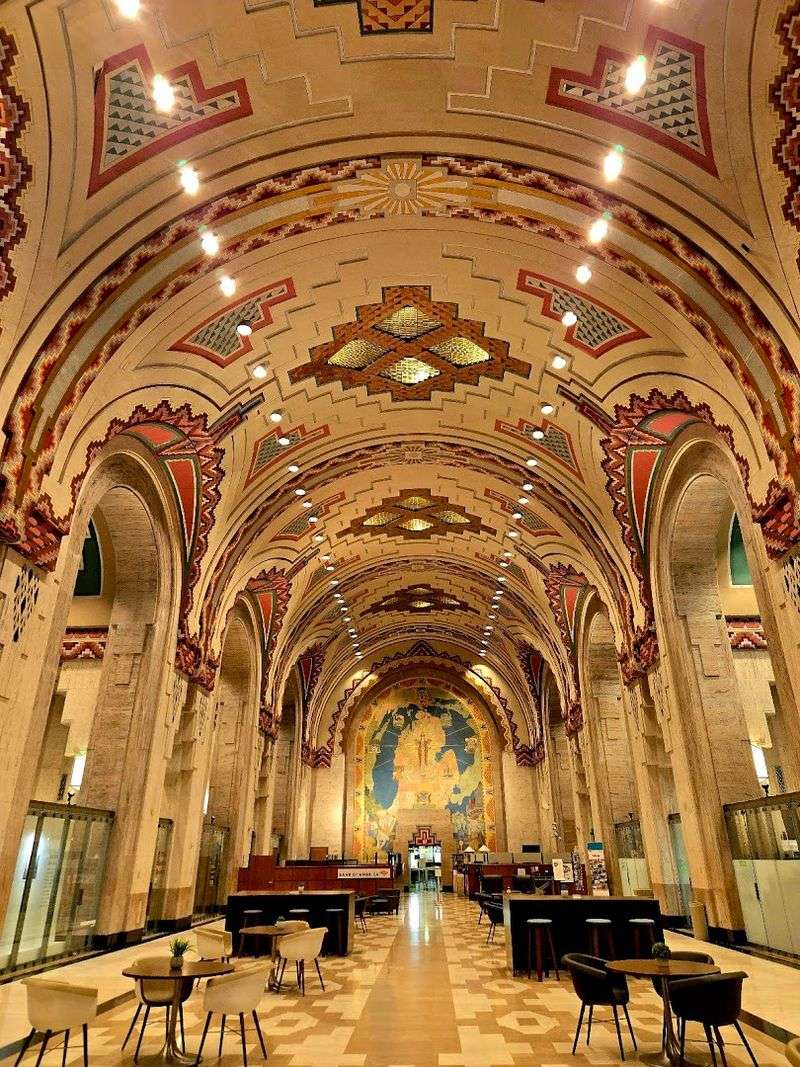
The nickname “Cathedral of Finance” was not invented by a tour brochure. It grew organically from the building’s design philosophy, which borrowed the soaring vertical proportions, the light-filled vaulted spaces, and the overwhelming sense of grandeur typically reserved for houses of worship.
Union Trust Company wanted clients to feel that their money was being held somewhere sacred. The architecture delivered that message with remarkable effectiveness.
Construction began in 1928 and wrapped up in 1929, a timeline that places the building’s completion almost exactly at the moment the American economy began its catastrophic collapse. The building opened as one of the most ambitious financial structures in the country, just as the industry it was built to celebrate started unraveling.
That tension between triumph and timing gives the Guardian Building a historical weight that goes beyond its architectural significance.
Detroit during the late 1920s was producing automobiles at a rate that made it the industrial capital of the world. The city had money, ambition, and an appetite for bold statements.
The Guardian Building was the built expression of all three. Its location in the heart of the financial district placed it among the banks, law firms, and corporate offices that ran the Motor City’s economic engine during its golden era.
Understanding that context changes how the building reads. The lobby is not just beautiful.
It is a document of a specific moment in American history when a midwestern city believed it could build something that would last forever and looked like it was doing exactly that. Stones from Tunisia, tiles from Detroit, gold leaf from somewhere that could supply it, all assembled in 18 months by workers who understood they were building something meant to outlast them.
That intention is still visible in every square inch of the place.
Touring the Guardian Building: How to Actually Experience It Right
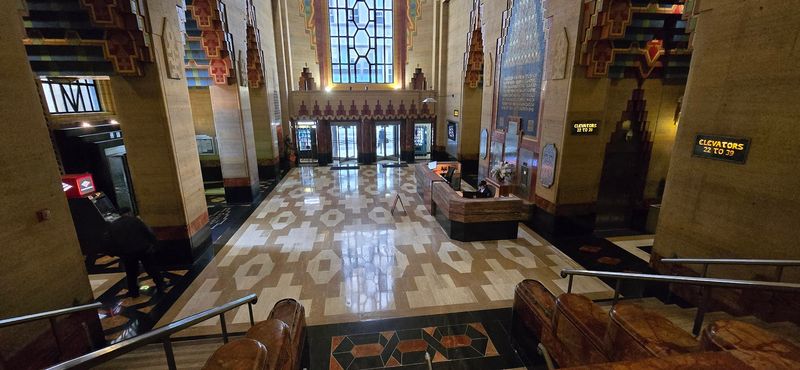
Walking into the lobby for free is a perfectly valid way to visit, and plenty of people do exactly that. The lobby alone, with its tiled ceiling and ornate banking hall, justifies the trip downtown.
But the guided Insider’s Tour runs about 60 minutes and covers territory that casual visitors simply cannot reach on their own, including the basement vault and upper-floor access that transforms a nice stop into a full experience.
Tours run throughout the day, with the after-4pm sessions offering something extra: access to the 32nd floor, where wraparound views of downtown Detroit stretch out across the river toward Windsor, Canada. The city looks completely different from that height, and the contrast between the intricate interior details below and the open skyline above gives the tour a satisfying sense of scale.
Guides from operations like Detroit City Tours bring genuine expertise and storytelling energy to the experience, covering the building’s construction, its original purpose, and the broader arc of Detroit’s history.
Bringing a good camera is worth the effort. The lobby ceiling shot taken from the center of the space, aimed straight up, is one of the most striking architectural photographs possible in Michigan.
Afternoon light through the stained glass creates conditions that shift quickly, so moving through the space at different angles and times produces very different results. Photographers regularly spend extended time here without running out of new compositions.
The building also has a gift shop stocked with Detroit and Michigan-themed items, and public restrooms are available on site. Seating areas in the lobby make it possible to simply sit and absorb the space without any agenda.
For anyone spending time in downtown Detroit, the Guardian Building fits naturally into a walking route that includes Hart Plaza, the Detroit Riverwalk, and Campus Martius Park.
Why No Other Building in Detroit Quite Compares
Detroit has impressive architecture scattered across the city, from the Fisher Building a few blocks north to the ornate facades along Woodward Avenue. The Guardian Building sits in a category of its own, not because it is the tallest or the oldest, but because no other structure in the city combines exterior drama, interior craftsmanship, and historical layering at this concentration and this level of quality.
The Fisher Building carries its own nickname, the Cathedral of Commerce, and the comparison between the two reveals something useful about Detroit’s architectural ambitions during the 1920s. Both buildings were designed to project financial confidence through artistic excess.
The Guardian Building edges ahead in raw visual intensity, partly because of that distinctive brick color, which gives it a presence that reads as immediately distinct even from a distance, and partly because the interior tilework is simply unlike anything else standing in Michigan today.
At 4.7 stars across more than 2,600 reviews, the building maintains a rating that most tourist destinations never approach. First-time visitors and returning architecture enthusiasts consistently respond to it with the same level of surprise, which says something meaningful about how effectively the building holds up across repeated encounters.
Familiarity does not dull it.
Open every day of the week around the clock, the Guardian Building is accessible in a way that most landmarks of its stature are not. Stopping by at night, when the lobby lighting shifts the tile colors into deeper, richer tones, offers a completely different visual experience than a midday visit.
The building earns its reputation not through one spectacular feature but through the relentless accumulation of extraordinary details that reward every level of attention a visitor is willing to bring to it. That is what makes it genuinely irreplaceable in Detroit’s landscape.
Share this story