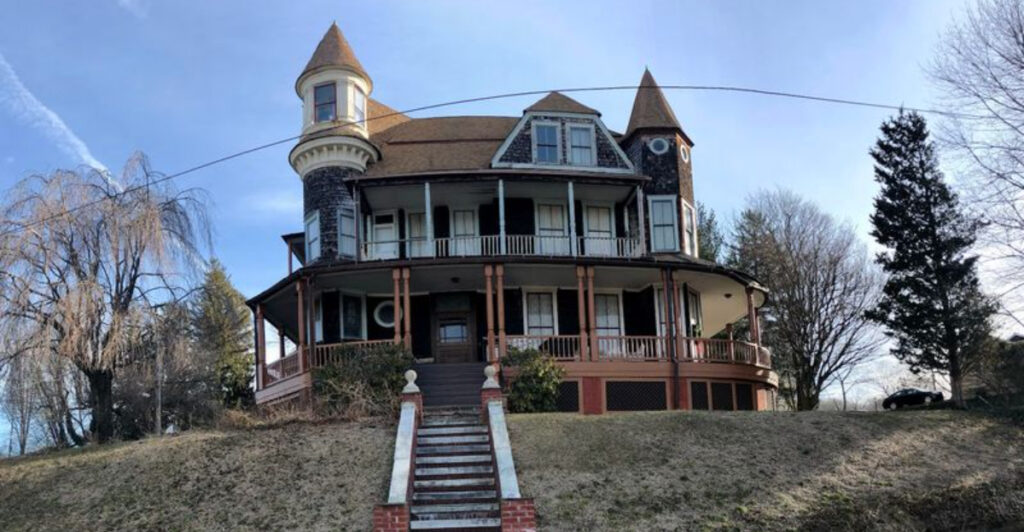
A flamethrower-wielding killer once stalked the staircases of a grand Victorian mansion high above Sandy Hook Bay. The grisly scenes were only make-believe, but the house was very real—and it is still standing in Atlantic Highlands more than four decades later.
Built in 1893, the Strauss Mansion has lived several wildly different lives.
It began as a wealthy New York merchant’s 21-room summer retreat, became a collection of run-down apartments, played the sinister family home in the cult horror film Don’t Go in the House, and narrowly escaped demolition before reopening as a local history museum.
Then there are the stories that refuse to stay neatly in the past: footsteps in empty rooms, unexplained voices, wandering shadows, and objects reportedly moving without help. The museum is currently closed following serious winter storm damage, but the old house on Prospect Circle has survived worse.
Its towers, porches, movie history, and ghostly reputation remain firmly woven into this small Monmouth County town.
The 1893 Victorian Mansion That Still Towers Over Atlantic Highlands
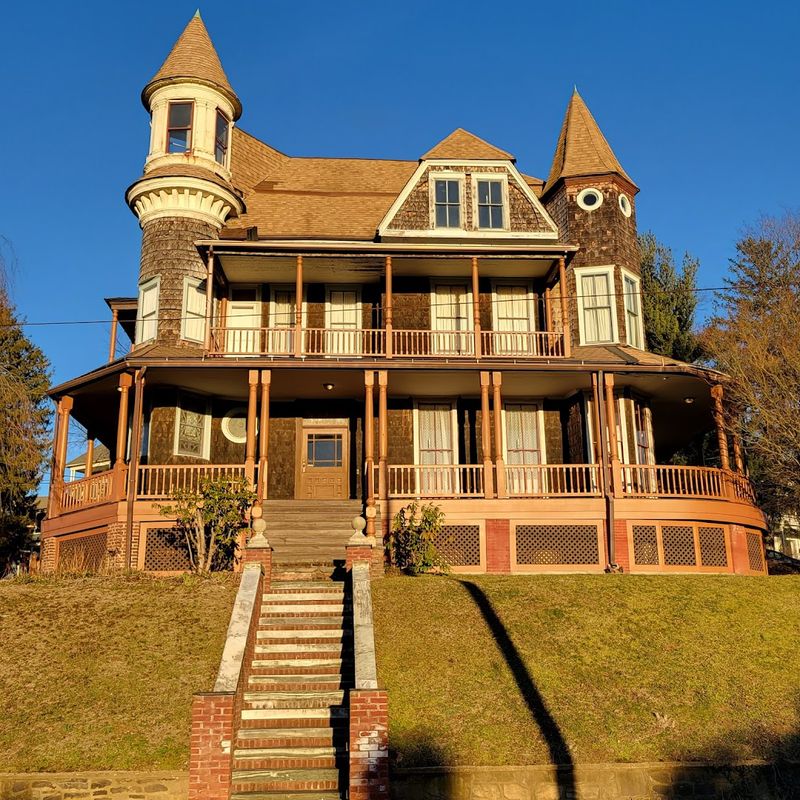
From Prospect Circle, the Strauss Mansion looks as though someone ordered a haunted house from central casting and then gave it a first-rate view of the Jersey Shore.
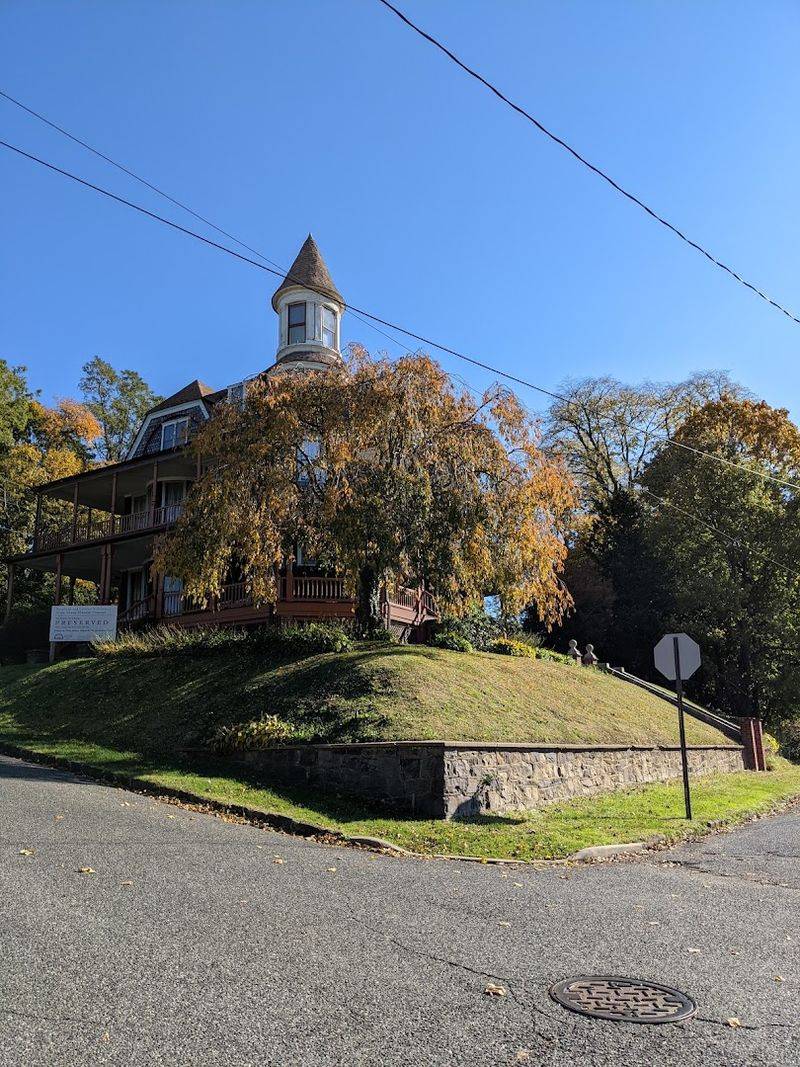
The wood-shingled Queen Anne residence rises from a hillside above Atlantic Highlands, crowned by steep gables, an irregular roofline, and the distinctive towers that earned it the early nickname “The Towers.”
A broad porch wraps around much of the exterior, while the upper floors look across the harbor, Sandy Hook, and the distant Manhattan skyline.
The best panorama comes from the third-floor Tower Room, where the mansion’s original summer residents could watch boats moving through the lower New York Bay.
Architect Solomon Cohen designed the house, and builder Adolph Hutera completed it in 1893 during Atlantic Highlands’ great era as a fashionable coastal escape.
Queen Anne architecture was never interested in behaving quietly, and this place proves it. Rounded and angular forms compete for attention, decorative cedar shingles cover the exterior, and the asymmetrical façade seems to change depending on where you stand.
Inside, the building contains 21 rooms spread across three floors, including formal entertaining spaces, bedrooms, servant areas, and narrow passages that become considerably more interesting once somebody mentions the ghost stories. The mansion was not built as a gloomy hideout, of course.
It was designed to capture sunlight, salt air, and wide water views during the hottest months of the year. More than 130 years later, however, weathered shingles and towering silhouettes have given it exactly the sort of brooding personality that horror directors spend fortunes trying to create on a soundstage.
Adolph Strauss Built the 21-Room Estate as a Grand Summer Escape
In the late 1800s, a summer trip from Manhattan to Atlantic Highlands could begin with a steamboat ride rather than a crawl down the Garden State Parkway. Wealthy New Yorkers crossed the bay by ferry, stepped onto a long pier, and continued uphill by carriage to hotels and elaborate seasonal residences.
Adolph Strauss, a successful New York importer and businessman, joined that migration when he commissioned his enormous family retreat in 1893. Strauss belonged to a Jewish summer community that helped turn Atlantic Highlands into one of the region’s liveliest resort towns.
Several prominent businessmen associated with Manhattan’s West 49th Street built homes on the surrounding hills and became locally known as the “49ers.” Strauss’s version of a summer cottage was hardly modest.
The house included formal parlors, detailed woodwork, a grand staircase, parquet flooring, servant quarters, and enough bedrooms to accommodate family members, guests, and household staff without anyone getting too familiar.
A stained-glass transom above the entrance even carried Strauss’s initials, leaving no mystery about who had paid for the place. The positioning was equally deliberate.
Breezes coming off Sandy Hook Bay provided natural relief before air conditioning, while the porches created outdoor rooms for reading, visiting, and watching ships pass below.
Atlantic Highlands itself was booming during this period, with vacation homes, inns, bathing beaches, entertainment pavilions, and nearly 70 hotels and lodging properties appearing around town.
The mansion captured that confident moment perfectly. It was grand without being isolated, perched among other impressive houses and connected to New York by one of the oldest commuter shortcuts around—the water.
Today, its scale can feel almost theatrical, but every tower and carved detail originally served a family enjoying the Jersey Shore in full Gilded Age style.
Don’t Go in the House Turned Its Shadowy Rooms Into Horror History
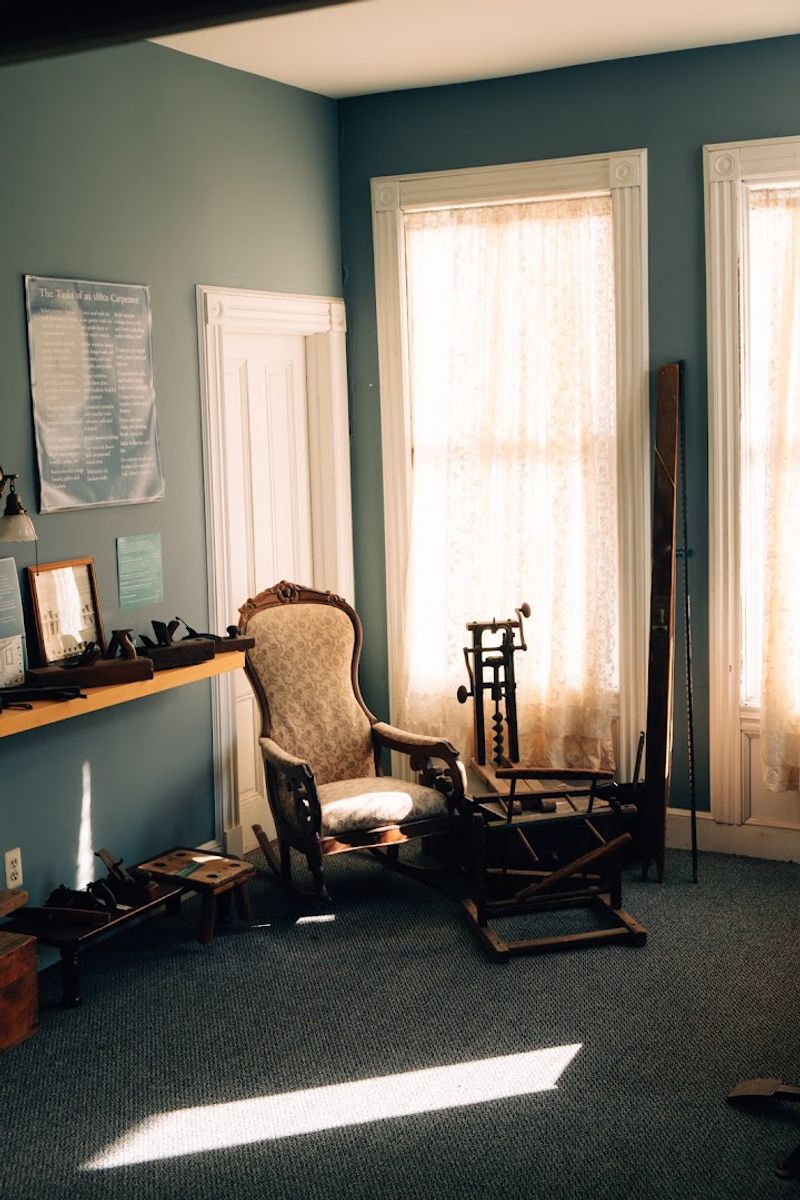
Long before New Jersey became a regular filming destination for major studios, a small horror production discovered that the aging Strauss Mansion already had everything it needed.
Director Joseph Ellison filmed much of Don’t Go in the House there in early 1979, when the property was in rough condition and still divided into apartments.
There was no need to fake decades of neglect. The peeling surfaces, dark hallways, worn rooms, and looming exterior supplied the production design naturally.
Released in the spring of 1980, the film stars Dan Grimaldi as Donny Kohler, a deeply disturbed factory worker whose abusive childhood and obsession with fire send him into a murderous spiral after his mother dies.
The mansion plays Donny’s isolated family home, and its staircases, bedrooms, corridors, and forbidding façade become central to the story.
The movie developed a reputation for graphic violence, particularly its most notorious flamethrower sequence, and faced cuts and censorship in some international releases. It was hardly polished Hollywood horror.
That rawness became part of its appeal, helping the film find a lasting audience among fans of grimy late-1970s and early-1980s exploitation cinema. Grimaldi later became far more familiar to television viewers as Patsy Parisi on The Sopranos, adding another New Jersey connection to the production’s unusual legacy.
The house survived the movie’s fictional destruction, and its real appearance remains remarkably recognizable to viewers comparing old scenes with the building today.
Local horror fans have continued to embrace the connection, with the historical society screening Don’t Go in the House at the mansion during past October programs.
Watching the film inside the same rooms where it was shot adds a wonderfully strange layer to movie night, especially once the floorboards begin making noises of their own.
Footsteps, Voices, and Moving Objects Fuel the Mansion’s Haunted Reputation
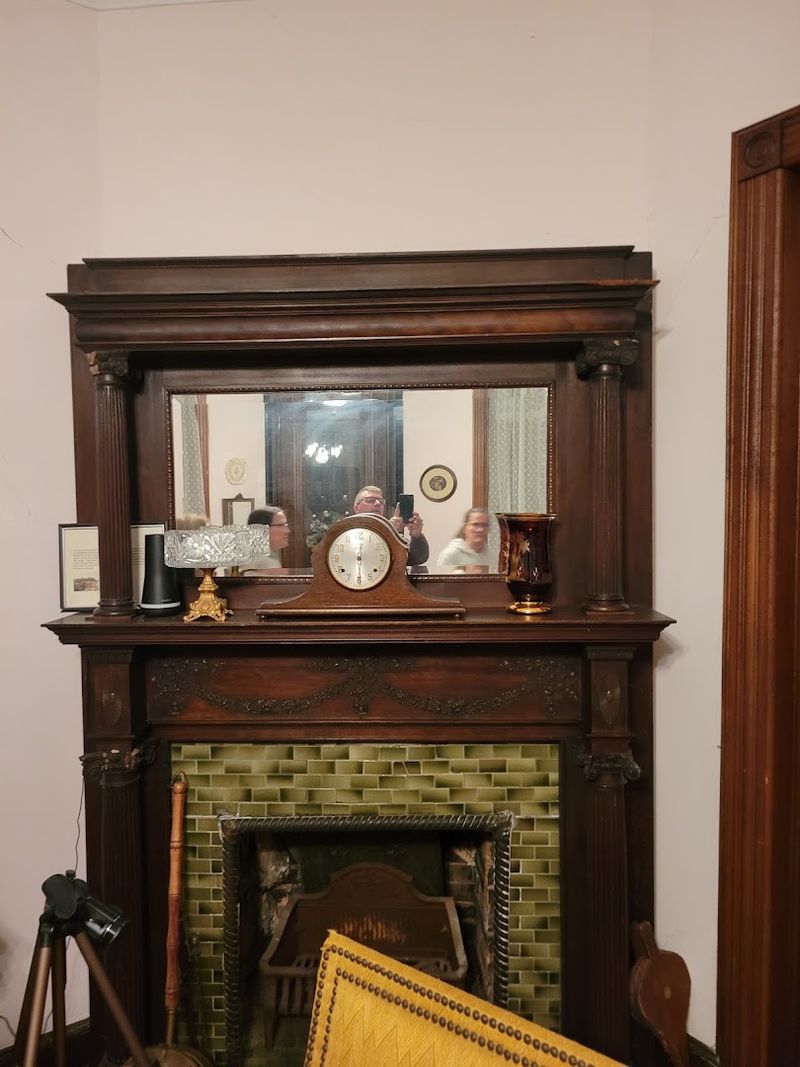
The film crew eventually packed up its cameras, but according to volunteers and paranormal investigators, the mansion did not become any quieter. Reports of unexplained activity have circulated since the Atlantic Highlands Historical Society took over the property.
Visitors and volunteers have described disembodied voices, creaking floorboards, footsteps moving across upper stories when nobody is there, and shadows passing through otherwise empty spaces. Those claims are stories rather than proven facts, but some of the reported incidents are unusually specific.
Historian and paranormal investigator Greg Caggiano first investigated the building in August 2013 and later joined the historical society’s board.
He recalled a particularly active period in 2014 when investigators reported furniture being dragged several feet, objects changing position, and voices apparently responding during recording sessions.
During an October lecture in the parlor, a picture frame reportedly flew from the wall in front of roughly 40 people. Investigators have also focused on a figure they call Bob, believed to have lived in a third-floor apartment during the 1970s.
According to Caggiano’s account, communication sessions produced details connected to Bob Dylan and rock music; investigators later found a name and a Dylan lyric written on a wall that had been hidden behind stored boxes.
Another often-discussed piece of footage appears to show a shadow moving near a second-floor bathroom window.
Skeptics can reasonably blame an old building, settling wood, traffic vibrations, suggestible crowds, or the creative behavior of shadows after dark. The mansion certainly has enough pipes, floorboards, windows, and oddly shaped rooms to manufacture a convincing scare.
Still, its paranormal programs repeatedly attracted crowds, and sold-out ghost-story evenings helped raise money for preservation. Whether the house contains spirits or simply excellent acoustics, it knows how to hold a room’s attention.
A Local Historical Society Saved the Condemned Mansion From Demolition
The mansion’s closest encounter with death had nothing to do with ghosts or horror movies. After the Strauss era ended, the house passed through several owners and was eventually divided into apartments during the 1960s.
By the time Don’t Go in the House arrived, decades of alterations and deferred maintenance had taken a heavy toll. Building inspectors condemned the property for code violations in 1981, placing one of Atlantic Highlands’ grandest surviving homes in danger of disappearing.
The Atlantic Highlands Historical Society stepped in at precisely the right moment. The organization had been formed in 1973 as the borough prepared for the United States Bicentennial, beginning with 78 charter members and a mission to protect local history.
Around 1980 and 1981, the society acquired the deteriorating mansion and started the slow process of making it safe again. Volunteers did not simply sweep the floors and hang a few antique photographs.
They faced structural problems, missing decorative elements, outdated systems, and years of damage caused by the building’s conversion into apartments. Restoration work uncovered original cedar shingles beneath later siding, while removed stained-glass windows reportedly had to be tracked down and purchased back.
On June 8, 1986, the first floor opened to the public as the Strauss Mansion Museum and became the society’s permanent headquarters. Preservation continued long after opening day.
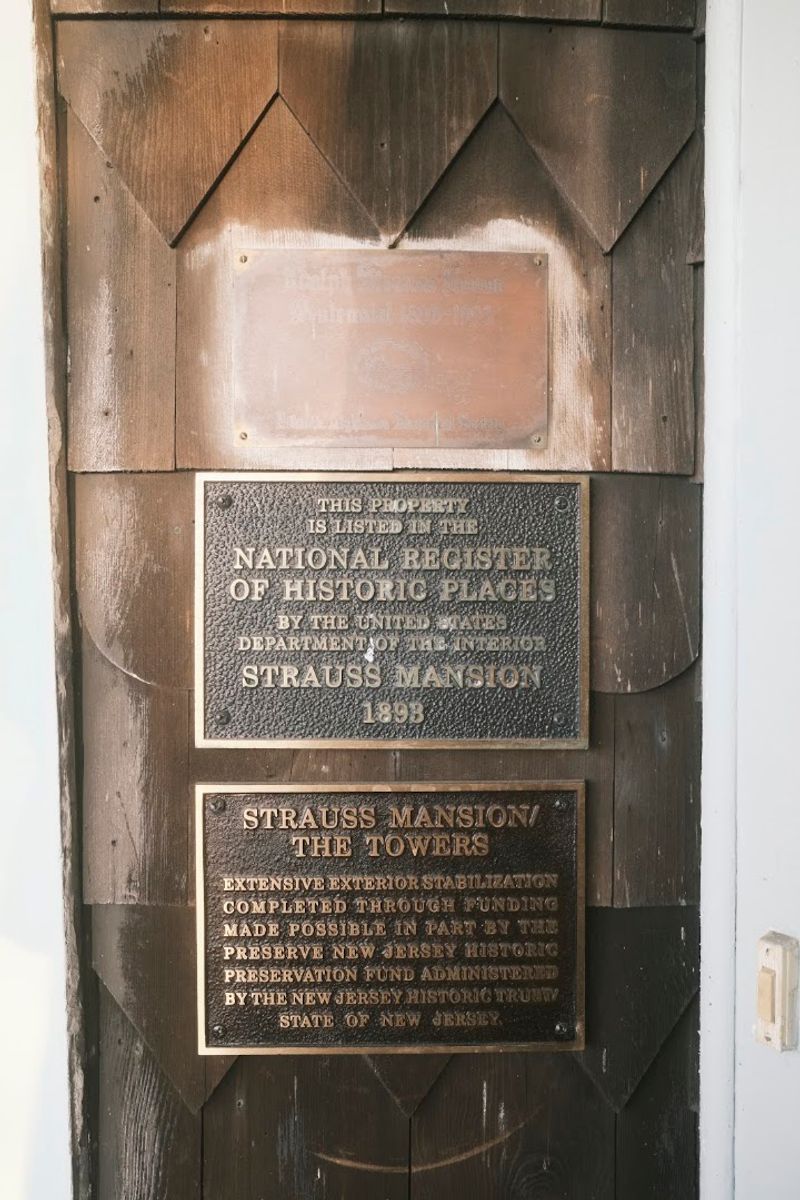
The New Jersey Historic Trust awarded grants of $27,000 in 2009, $33,660 in 2012, and $133,448 in 2015 to support planning, stabilization, and restoration.
The property was added to the New Jersey and National Registers of Historic Places in 2012, recognizing it as an important surviving example of a Queen Anne summer residence from the golden age of Atlantic Highlands.
The rescue gave the town more than a museum. It preserved the very rooms, towers, and staircases that connect resort history, immigrant success, local filmmaking, and a healthy supply of ghost lore under one complicated roof.
The Strauss Mansion Is Still Standing but Temporarily Closed for Repairs
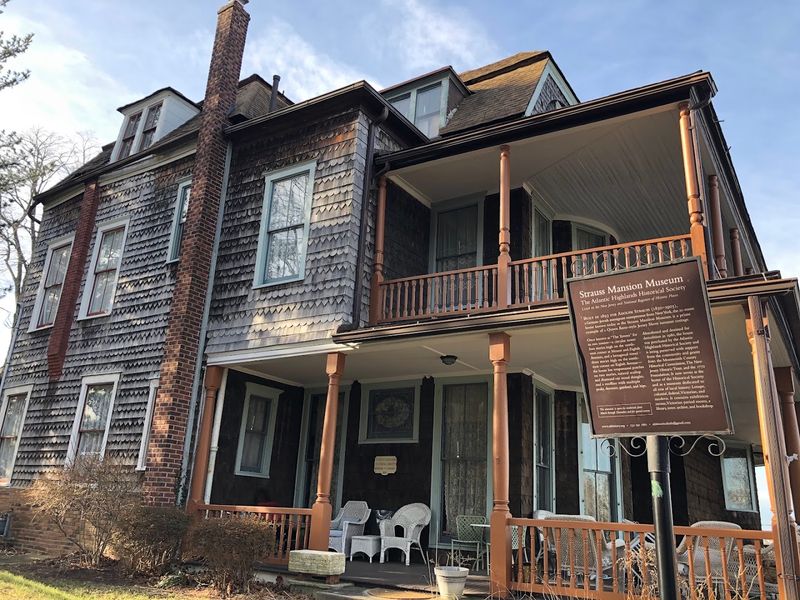
For now, the front door at 27 Prospect Circle is closed. As of July 2026, the Atlantic Highlands Historical Society reports that the museum remains shut because of catastrophic winter storm damage, with no confirmed reopening date announced.
Ongoing repair work has forced the organization to move parts of its 2026 programming elsewhere in town. Its America 250 lecture series, for example, has been held at the Atlantic Highlands Arts Council Gallery at 54 First Avenue rather than inside the mansion.
That temporary arrangement keeps the historical society active while protecting visitors and giving preservation crews room to address the building’s needs.
Before the closure, the museum generally operated during a season running from April through December, with Sunday tours, monthly lectures, concerts, Victorian teas, flea markets, film screenings, and a reliably busy schedule of spooky October events.
The displays extended well beyond the Strauss family. Rooms held Victorian period pieces, local photographs, clothing, maritime material, newspaper archives, maps, yearbooks, and an exhibit devoted to the Lenni Lenape.
A visit could begin with carved woodwork and end with a deep dive into Atlantic Highlands history—or an uncomfortable glance toward the staircase after hearing a thump overhead. The latest damage is a serious setback for a volunteer-run nonprofit without an endowment, but it is not the first time the mansion has required an ambitious rescue.
This is a building that survived apartment conversion, condemnation, a fictional inferno, and more than a century of coastal weather. Even while closed, its shingled towers remain visible above the hillside, holding their place in the Atlantic Highlands skyline while another chapter of restoration unfolds inside.
Share this story