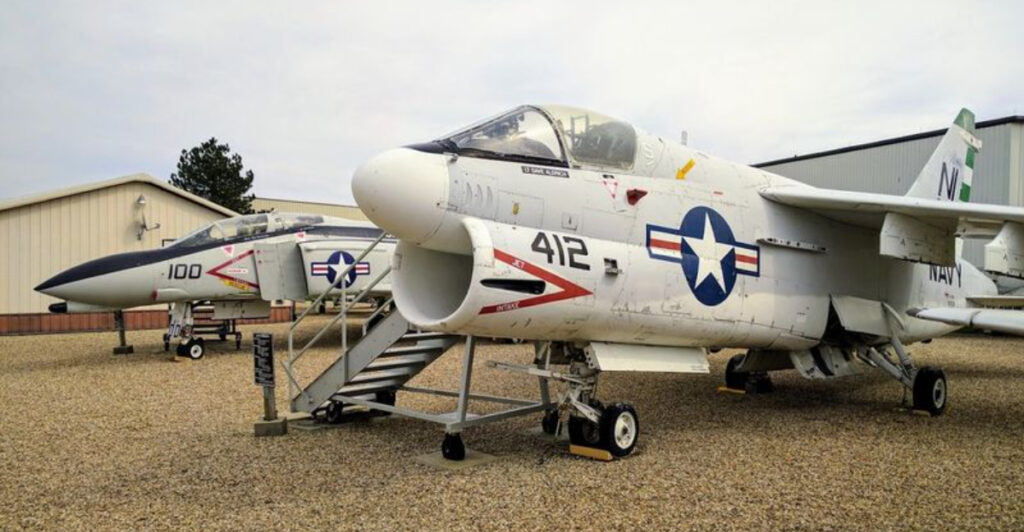
You do not have to be a pilot to appreciate the thrill of standing beneath a fighter jet. Tucked away in Bloomington, Illinois, the Prairie Aviation Museum offers an up-close look at military aircraft, aviation history, and the machines that once dominated the skies.
Visitors can explore outdoor aircraft displays, peer into cockpits, and learn fascinating stories from knowledgeable volunteers who bring the exhibits to life. Unlike larger museums where it’s easy to feel overwhelmed, this hidden gem delivers a more personal and immersive experience. For aviation enthusiasts and curious travelers alike, it’s a destination that deserves far more attention.
The Roadside Entrance With Real Jet Drama
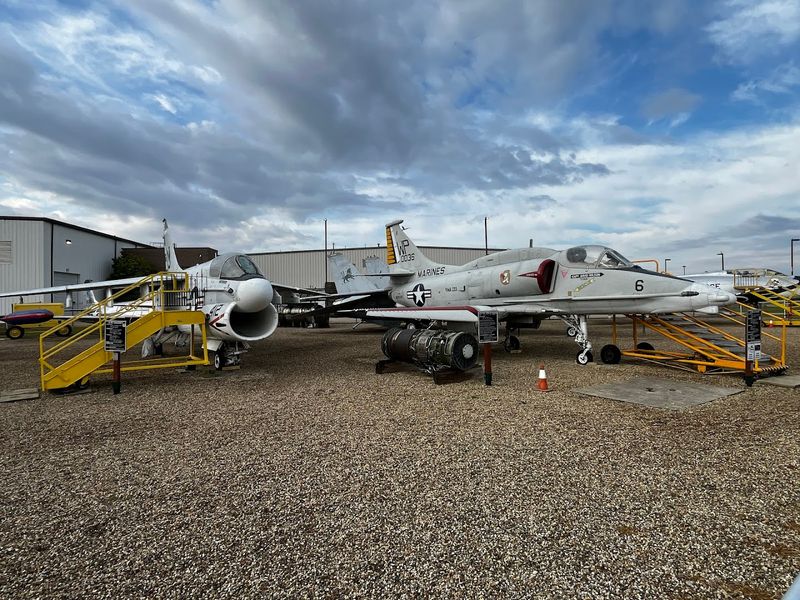
Prairie Aviation Museum does not hide its best tease behind a long driveway or grand gate. The visual hook starts almost immediately, with military aircraft positioned in a way that turns a routine Bloomington commercial corridor into an unexpected aviation sightline.
One glance toward the grounds and the whole stop shifts from casual curiosity to a genuine pull over the shoulder moment.
That quick impact matters because the museum works best when the outdoor collection grabs you before the building ever has to explain itself. Metal surfaces, angled wings, and tall tails create a strong silhouette against the open Illinois sky, and the scale becomes obvious once you stand at ground level beside them.
These are not miniatures, not replicas in glass cases, but aircraft that make the surrounding landscape suddenly seem smaller.
The setting adds to the effect. Prairie Aviation Museum sits near the airport corridor, so the location feels appropriate rather than random, as if the museum grew from the same air minded instincts that shape the area around it.
Traffic, pavement, and nearby businesses make the jets look even more surreal, which gives the whole place a slightly cinematic quality, closer to a hard cut in an action film than a quiet museum approach.
For anyone arriving with kids, cameras, or a lifelong weakness for fighter planes, that first view does a lot of work. It promises access, not distance, and that promise mostly holds once you get closer.
Before reading a single plaque, you already understand the museum’s strongest move: it puts actual aircraft directly into your line of sight and lets size, stance, and presence do the talking.
Why the Tomcat Steals the Entire Scene
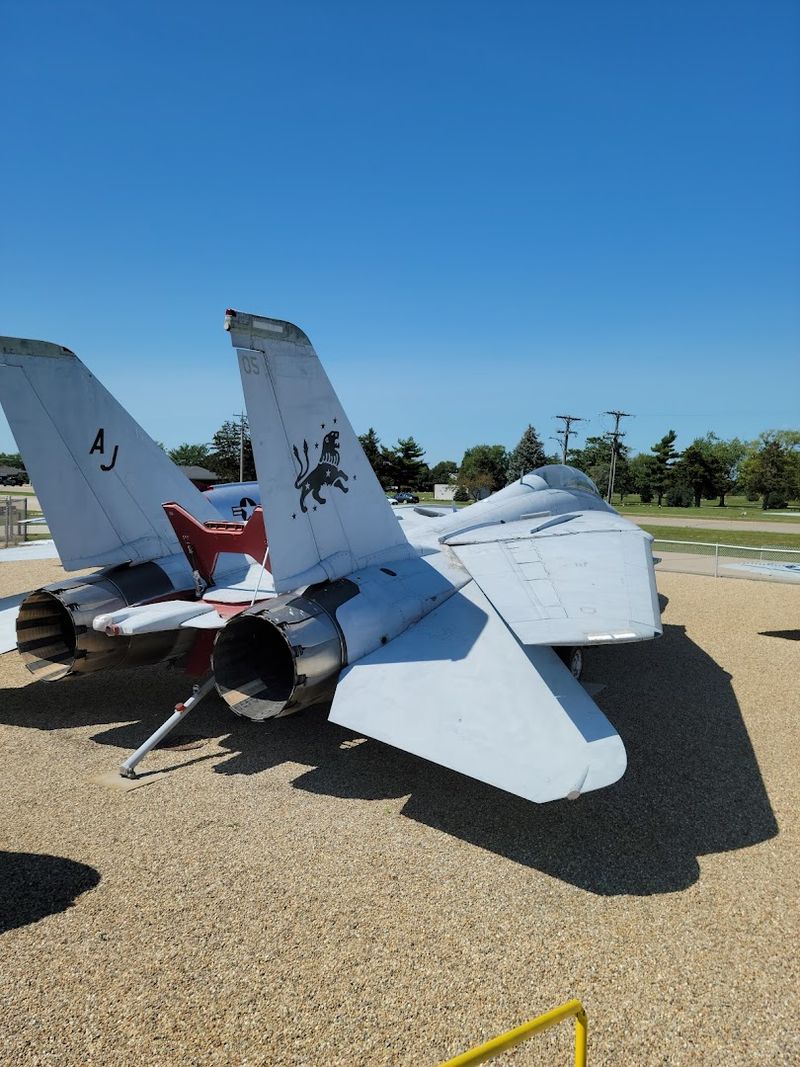
Every aviation museum has one machine that changes the temperature of the visit, and here that role belongs to the F-14 Tomcat.
Even people with only a passing interest in aircraft tend to recognize its shape, especially the broad stance and the unmistakable profile made famous by decades of film and military imagery. At Prairie Aviation Museum, seeing it outdoors and up close gives that familiar silhouette real physical weight.
The Tomcat works as the museum’s anchor because it combines pop culture power with serious mechanical presence. You are not looking at a sleek image on a poster or a screen framed by soundtrack cues.
You are looking at weathered metal, panel lines, intakes, landing gear, and a machine built for speed and force, now standing still long enough for details to take over.
That shift from icon to object is where the visit gets interesting. Standing beside the aircraft reveals scale that photographs flatten, and the museum’s approachable layout lets you examine the Tomcat without the detached feeling larger institutions sometimes create.
Instead of being one famous plane lost inside a massive collection, it gets room to dominate the experience, which makes the whole stop sharper and more focused.
It also helps that Prairie Aviation Museum understands the value of proximity. This is the kind of place where the aircraft do not feel quarantined from the audience.
Whether you arrive as a hardcore aviation fan or just someone who grew up with fighter jet movies in the background, the Tomcat gives the museum an immediate centerpiece, one bold enough to carry excitement on its own and strong enough to pull the rest of the collection into orbit.
Small Building, Dense History Inside
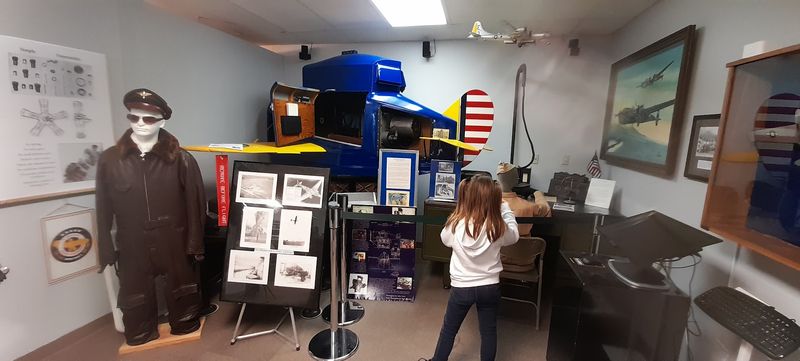
After the outdoor hardware grabs attention, the indoor museum changes the pace. The building is modest in size, which actually works in its favor, because the rooms feel concentrated rather than sparse.
Instead of marching through endless square footage, you move through a compact cluster of displays that asks for closer reading and rewards slower looking.
The interior reportedly includes a mix of aviation history, models, memorabilia, documents, and display material that broadens the experience beyond simple aircraft spotting. That matters because a jet on a pedestal can impress on size alone, but museum context is what turns admiration into understanding.
Photos, binders, books, artifacts, and informational panels create a bridge between machine and mission, between the object outside and the larger story around it.
There is also a practical advantage to the museum’s scale. Families can handle it without fatigue, kids can move between indoor and outdoor sections without losing focus, and adults who actually want to read can do so without feeling buried by too much content.
The place appears carefully arranged for an hour or two of active attention, not a marathon day that leaves you skimming labels by the end.
That balance keeps Prairie Aviation Museum from becoming a one note roadside stop. The aircraft may be the visual stars, but the indoor galleries supply texture, chronology, and plenty of material for people who like the why as much as the wow.
In a larger institution, some of these details might dissolve into background noise. Here, the smaller footprint makes each case, shelf, and wall panel easier to approach, and easier to remember accurately later.
Cockpit Access Is the Secret Weapon
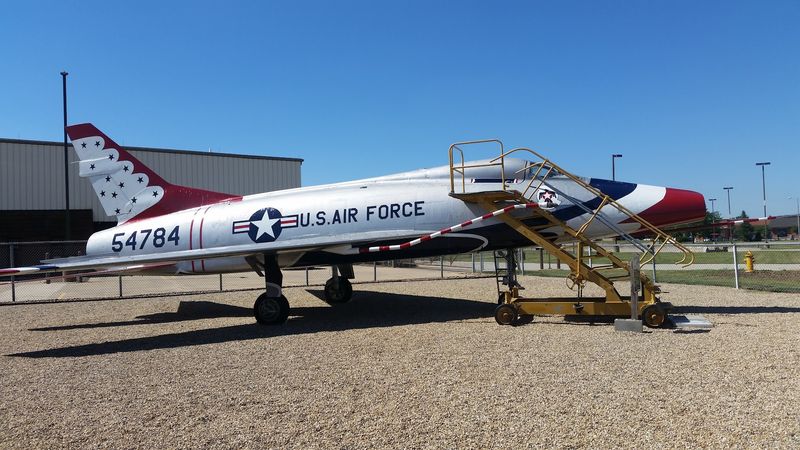
One of the smartest things Prairie Aviation Museum offers is not flashy branding or oversized spectacle. It is access.
Several reviews point to steps, ladders, and cockpit viewing opportunities that let you get closer to the aircraft than many larger museums ever allow, and that physical closeness changes the whole visit from passive looking to active inspection.
There is a big difference between seeing a jet behind barriers and standing near enough to study the canopy, instrument layout, seat position, and tight geometry of the pilot’s space. Even when cockpits are not open for sitting inside, simply being able to peer in from an elevated vantage point adds scale and realism.
You start noticing how compact these machines are where it counts, and how demanding their design must have been in actual service.
The Huey helicopter stands out in comments, and that makes sense. Rotorcraft carry a different kind of visual intrigue than fighters, with their own balance of utility, exposure, and military history.
Juxtaposing helicopters with jets gives the museum’s outdoor area a broader rhythm, so the walk is not just one sleek aircraft after another, but a more varied look at how flight served very different purposes.
For kids, cockpit access can be the decisive factor between polite interest and full engagement. For adults, it restores a tactile dimension that too many museums sacrifice.
Prairie Aviation Museum appears to understand that aviation history becomes more vivid when the audience can inspect the human scale inside the machine.
That is the move that turns a quick stop into a real outing, because the aircraft stop reading as distant symbols and start functioning as spaces built around actual bodies.
The Illinois Volunteers Add the Missing Altitude
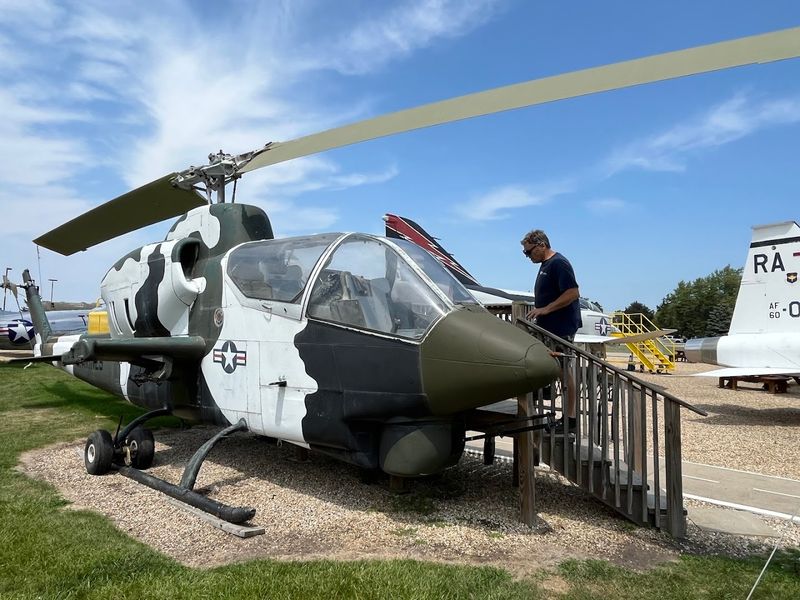
Aircraft can pull people onto the grounds, but people are what give Prairie Aviation Museum depth. Again and again, the most persuasive detail tied to the museum is the volunteer presence, especially during tours and special open cockpit events.
Knowledgeable staff and veterans transform the stop from a static display into a conversation, which is exactly what a smaller regional museum needs to stand apart.
That human element matters because aviation history can easily become abstract when reduced to dates, model numbers, and technical labels.
A volunteer explaining how a cockpit worked, why a particular aircraft mattered, or what a mission demanded gives shape to information that might otherwise stay flat on a placard.
The museum’s scale supports this kind of exchange well, since visitors are not being funneled through overwhelming crowds or scattered across giant exhibit halls.
In Illinois, where a weekend museum stop might begin as an easy family errand or a detour off the road, this kind of direct interaction raises the whole experience. Some guests have described personalized tours and the chance to hear stories from pilots or veterans during special days.
Those moments are hard to replicate digitally and impossible to get from a distant fence line, which makes the museum stronger than its footprint suggests.
Just as important, the tone appears welcoming rather than formal. That is a major advantage when children are asking rapid fire questions or when adults want to linger over one aircraft longer than expected.
Prairie Aviation Museum seems built on enthusiasm that is shared plainly, without performance. Instead of guarding expertise behind institutional language, the volunteers make the subject more reachable, and that accessibility gives the entire visit lift.
From Static Displays to Future Aviators
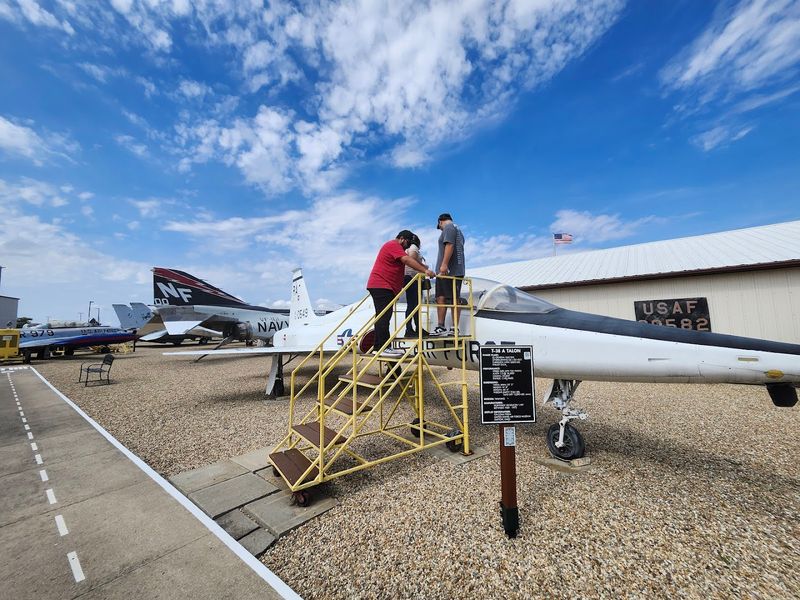
Many aviation museums focus primarily on preserving aircraft. Prairie Aviation Museum does that as well, but it also appears committed to preserving something less obvious: curiosity.
The combination of real military aircraft, accessible exhibits, and enthusiastic volunteers creates an environment where visitors can connect with aviation history in a way that feels personal rather than distant. That approach is especially effective for younger visitors.
Children can stand beneath fighter jets, examine helicopters up close, and begin connecting the machines in front of them to the pilots, engineers, and crews who once relied on them.
For some, it may be the first time aviation history feels tangible rather than something confined to textbooks, documentaries, or displays viewed from behind barriers.
The museum’s smaller scale plays an important role in that experience. Instead of competing with enormous crowds or sprawling galleries, Prairie Aviation Museum allows visitors to spend meaningful time with individual aircraft and exhibits.
A single jet, helicopter, or display case can spark conversations about military service, engineering, technology, and the evolution of flight. That slower pace often encourages deeper engagement than larger institutions can easily provide.
Special events and open cockpit days add excitement, but they work best as extensions of the museum’s larger mission. Whether guests arrive during a featured event or on a regular weekend, the goal remains the same: making aviation approachable and understandable.
Prairie Aviation Museum succeeds because it invites people to look closely, ask questions, and explore at their own pace. In the end, the museum offers more than a collection of aircraft.
It creates opportunities for learning, discovery, and inspiration, helping transform aviation history from something observed at a distance into something visitors can genuinely connect with and remember long after the visit ends.
Why This Bloomington Stop Hits Harder Than Expected
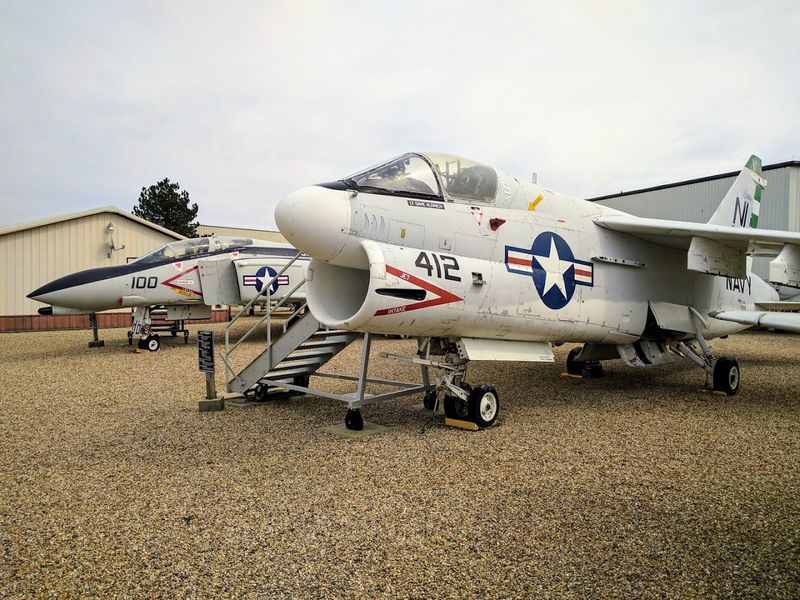
Prairie Aviation Museum lands in a sweet spot that larger aviation institutions often miss. It has enough real aircraft to spark awe, enough exhibit material to add substance, and enough personal interaction to keep the experience grounded.
Nothing about it depends on spectacle alone, yet the visual impact is strong enough that the place can catch even casual passersby off guard.
The museum also benefits from restraint. It does not need endless hangars, elaborate digital effects, or a giant campus to make aviation feel exciting.
Its strength comes from proximity and focus. You can stand near a Tomcat, study the details of grounded military aircraft, move indoors for history and memorabilia, then return outside with a better sense of what you are actually looking at.
That rhythm is probably why the museum keeps winning people over despite its modest size. The stop begins with clear visual drama, then gradually becomes more layered through context, cockpit access, and volunteer knowledge.
For families, it offers a rare combination of room to move and material worth learning. For enthusiasts, it provides the pleasure of seeing notable aircraft up close without the fatigue that sometimes comes with massive institutions.
In Bloomington, a city better known to many travelers as a practical stop on the map, Prairie Aviation Museum adds a sharper identity. It turns a stretch of central Illinois into a place where aviation history is not tucked away behind distant barriers or oversized formalities.
The aircraft are right there, the stories are close at hand, and the whole visit stays compact enough to feel satisfying instead of overwhelming. That is a rare format, and here it works.
Share this story