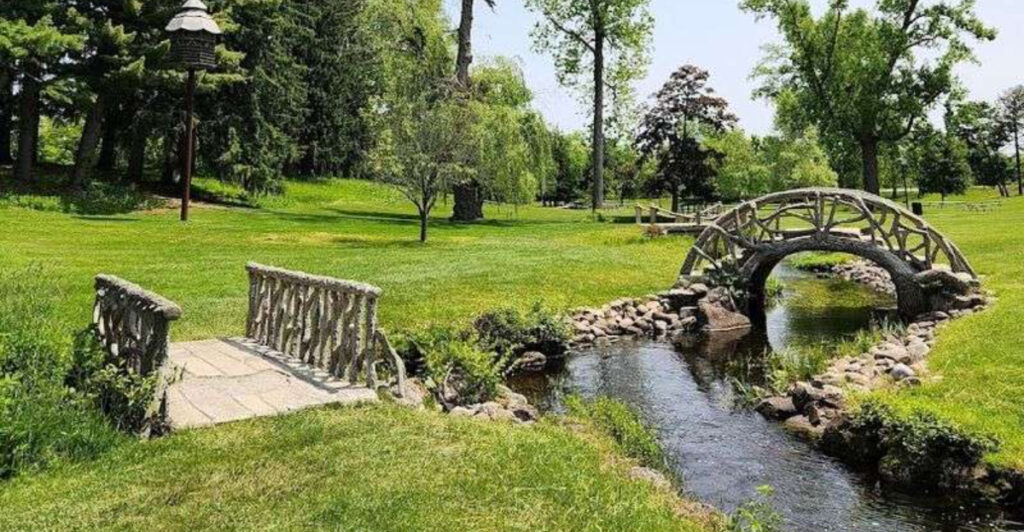
At first, it looks like a peaceful creekside park. Then you notice the “logs” are concrete, the “branches” were sculpted by hand, and the whole place suddenly feels like a hidden outdoor art experiment.
In Cement City, Michigan, McCourtie Park is home to 17 remarkable concrete bridges shaped to resemble twisted wood, gnarled limbs, braided rope, and rustic footpaths. The park was once part of a wealthy businessman’s estate, where concrete became a showcase for craftsmanship rather than ordinary construction.
Today, that unusual vision gives the grounds a dreamlike quality that is hard to explain until you walk across it yourself. For anyone chasing a Michigan stop that feels quiet, strange, artistic, and completely unlike the usual park visit, McCourtie Park is a true surprise.
Seventeen Bridges That Defy What Concrete Is Supposed To Look Like
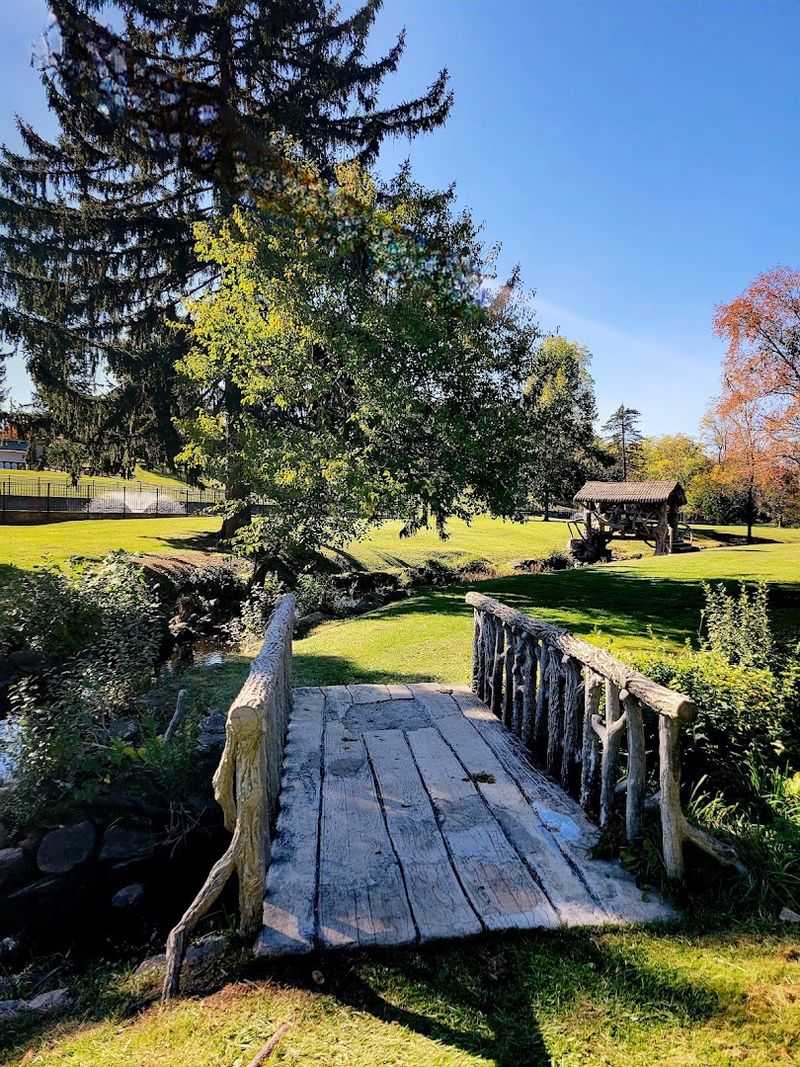
Most people assume concrete means cold, gray, and industrial. At McCourtie Park, that assumption gets dismantled bridge by bridge.
The creek winding through the property is spanned by seventeen hand-built structures, each one sculpted to mimic natural wood so convincingly that first-time visitors crouch down to knock on them just to confirm they are not actually timber.
The craftsmanship comes from two Mexican artisans, George Cardoso and Ralph Corona, hired in the early 1930s by estate owner Herb McCourtie. Their specialty was a style called trabajo rustico, a technique involving sculpting concrete into organic shapes that replicate bark textures, knotted limbs, rope twists, and branching forms.
The detail is extraordinary. Knots, grain lines, and even moss-like surface textures were worked directly into the concrete before it cured.
No two bridges look alike. Some arch dramatically over the water while others sit low and flat, almost level with the creek surface.
One mimics a fallen tree crossing the stream at an angle. Another looks like bundled rope looped into a sturdy railing.
Walking the full length of the creek path means encountering a new surprise at nearly every turn.
The bridges have stood for close to a century, which says as much about the quality of construction as it does about the ongoing care the park receives. Weathering has softened some edges and added genuine patina to the surfaces, making them look even more convincingly natural over time.
Photographers consistently return to shoot here in different seasons because the bridges interact with the landscape so differently in spring green, autumn gold, and winter snow. The bridges are the reason most people make the drive out to Cement City, and they deliver completely on the reputation that precedes them.
The Oilman, The Cement Mogul, And The Estate Behind The Park
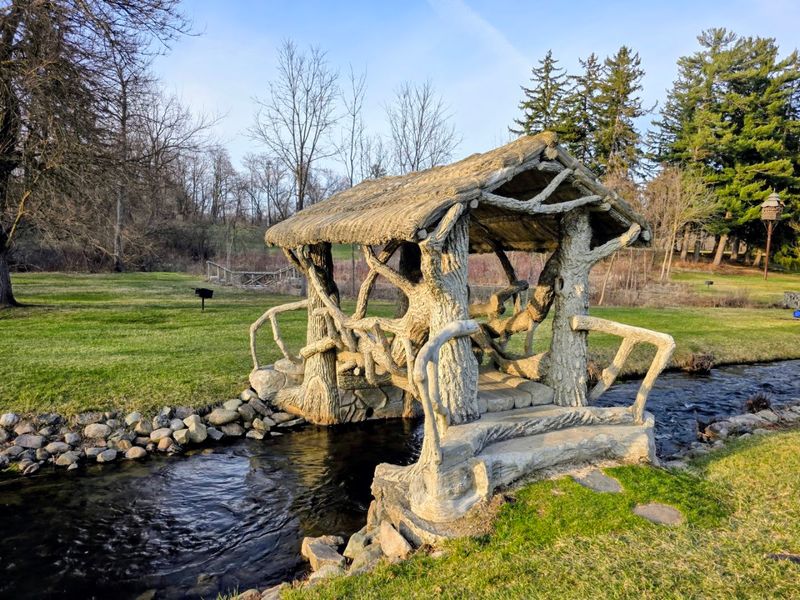
Herb McCourtie made his first fortune in the Texas oil fields, then pivoted to the cement industry and built a second one. He purchased a large property in southern Michigan and transformed it into a personal estate that doubled as a showcase for what his cement business could produce.
The bridges, grills, benches, and decorative structures scattered across the grounds were never purely ornamental. They were a live demonstration of concrete artistry.
McCourtie hired Cardoso and Corona specifically because their trabajo rustico technique pushed the material far beyond its utilitarian reputation. For a cement company owner, commissioning work that made people stop and ask “is that really concrete?” was the most effective advertising imaginable.
The estate became both a private retreat and a working argument for the beauty of the product he sold.
The property also included a Rathskeller, a below-ground structure built into a hillside specifically so it could not be spotted from the road. During Prohibition, this space functioned as a speakeasy, hidden in plain sight on a private estate far enough from town to avoid easy scrutiny.
The building still stands on the property today and opens for visits on select days, giving the park an extra layer of historical curiosity beyond the bridges.
After McCourtie’s death, the estate eventually passed into public hands and became the community park it is today. The transition preserved nearly all the original concrete structures, which is remarkable given how much time has passed.
Local community members have also stepped up to protect the park when vandalism threatened the structures, organizing restoration efforts that kept the grounds in the condition visitors find today. The history here is not just interesting background.
It is physically present in every sculpted surface across the property.
Following The Creek Path From Bridge To Bridge
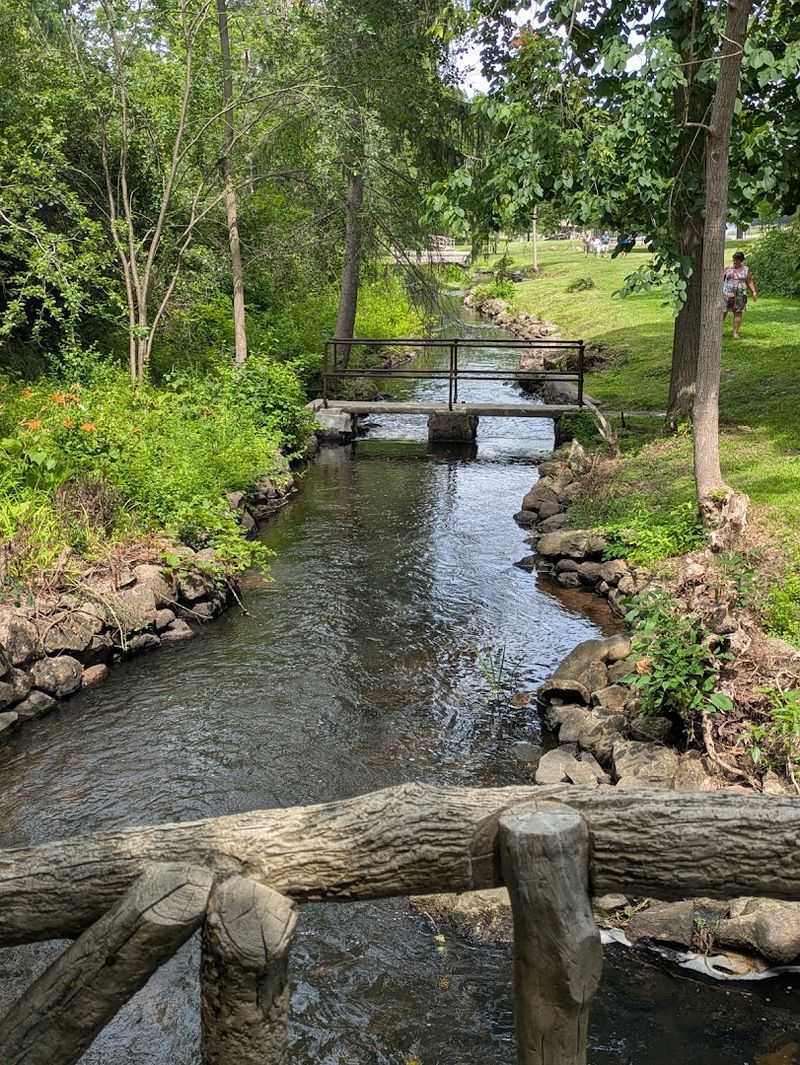
The best way to move through McCourtie Park is to follow the creek. A natural path runs alongside the water, dipping under bridges and weaving through tree cover in a way that feels more like a nature trail than a maintained park walkway.
The scale stays human-sized throughout, which makes the whole route feel unhurried and easy to pace at whatever speed suits the day.
Starting from the main parking area, the path opens gradually as the creek comes into view. The first bridge appears quickly and sets the tone immediately.
From there, the route keeps delivering new structures every short stretch, so there is always a reason to keep moving forward rather than doubling back. The full walk covering all seventeen bridges takes roughly thirty to forty-five minutes at a relaxed pace, though most people extend that time by stopping frequently to examine bridge details up close.
The creek itself adds steady background sound to the whole experience. Water moving over rocks and around tree roots creates a low, consistent noise that softens the rest of the environment.
On a weekday afternoon, the park can feel genuinely quiet, with the creek sound doing most of the acoustic work. That combination of moving water, tree cover, and unusual architecture creates a specific atmosphere that is hard to replicate anywhere else in southern Michigan.
The terrain along the path involves some gentle slopes and uneven ground near the water’s edge, so sturdy footwear helps. Accessibility along certain sections is limited by the natural landscape, though the open lawn areas of the park are easily navigable.
Bringing a camera or keeping a phone ready pays off repeatedly along this route because good compositions appear constantly, and the light shifts noticeably as the path moves through different tree canopy densities.
More Than Bridges: What The Rest Of Michigan’s McCourtie Park Offers
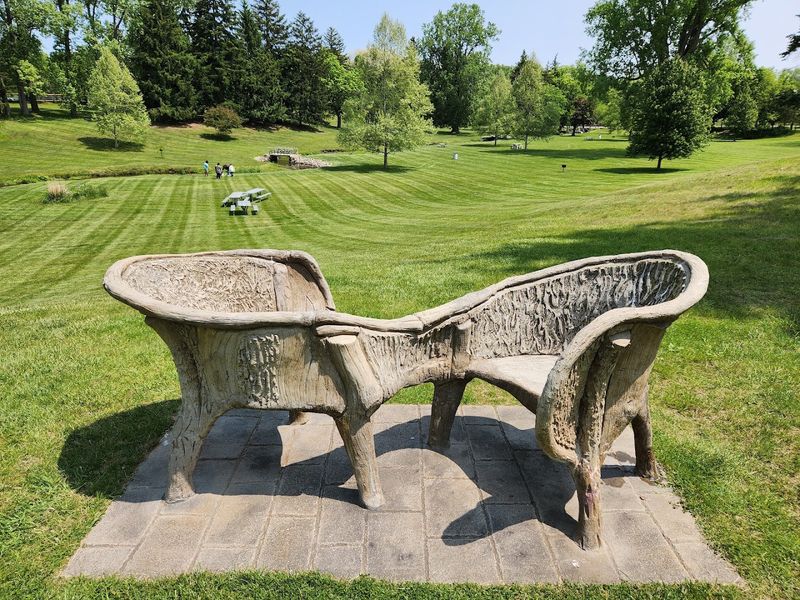
The bridges draw most of the attention, but the park extends well beyond the creek corridor. A large covered pavilion anchors the main open area, surrounded by picnic tables and charcoal grills that make the space genuinely useful for group gatherings.
The pavilion is big enough to shelter a decent-sized crowd and gets used regularly for family reunions, graduation parties, and community events throughout the warmer months.
Disc golf is another draw, with a course laid out across the park’s open acreage. The combination of flat sections and gentle terrain variation gives the course some character without being punishing for casual players.
Basketball and baseball facilities are also present, along with a children’s playground featuring swings and a jungle gym that gives younger kids something to do between bridge explorations.
The grounds themselves are well maintained and noticeably clean. Wide stretches of open lawn invite simple activities like tossing a frisbee, spreading out a blanket, or letting a dog burn off energy before the next stop on a road trip.
The property’s scale means multiple groups can spread out without crowding each other, which keeps the park feeling relaxed even on busier days.
Winter brings a completely different use case. The hills scattered across the property become prime sledding terrain after snowfall, with slope options ranging from gentle inclines suitable for toddlers to longer drops that older kids and adults enjoy.
The park transitions between seasons without losing its appeal, which explains why it draws visitors year-round rather than just during peak summer months. Parking is available near the main entrance, though the lot is not enormous, so arriving early on busy weekends makes the logistics easier.
The location just off Michigan Avenue keeps it accessible without requiring much navigation off main roads.
Photography Opportunities That Keep People Coming Back Every Season
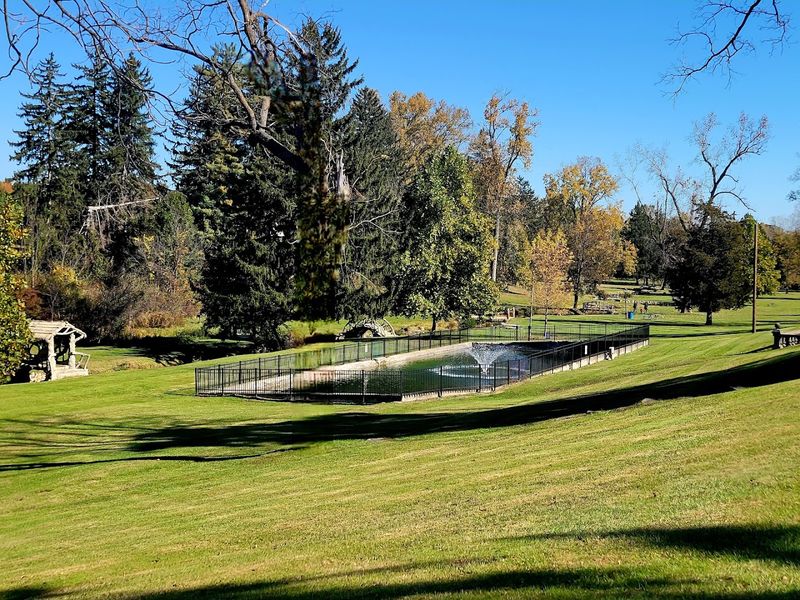
McCourtie Park has developed a quiet reputation as one of southern Michigan’s best photography locations, and the reasons are structural rather than accidental. The concrete bridges provide consistent, photogenic subjects that interact with natural light in endlessly variable ways depending on time of day and season.
Morning light hitting the textured bridge surfaces creates deep shadows that emphasize the sculpted details. Late afternoon turns the same surfaces golden and warm.
The creek adds a reflective element that photographers use to double the visual impact of bridge shots. Still water in calm conditions mirrors the bridge arches cleanly.
After rain, the creek runs faster and the moving water creates soft blur effects in longer exposures. Both conditions produce compelling images, just with different energy and mood.
The variety of bridge designs means a single visit can yield a wide range of compositions without repeating the same subject twice.
Portrait and event photographers have also discovered the location. Engagement shoots, senior portraits, and family sessions all work naturally here because the backgrounds are unusual without being distracting.
The organic textures of the sculpted concrete complement human subjects in ways that plain stone walls or generic park benches simply do not. Graduation photos taken at the bridges have a specificity and visual interest that standard outdoor portrait locations rarely achieve.
Fall is arguably the strongest season for photography at McCourtie Park. The combination of autumn foliage, the creek’s dark water, and the aged concrete creates a color palette that is both rich and cohesive.
Spring brings fresh green growth that frames the bridges in a completely different way. Even winter, when snow settles into the carved grooves of the bridge surfaces, produces striking images.
The park rewards repeat visits because no two trips look identical through a lens.
The Hidden Speakeasy Built Into A Hillside
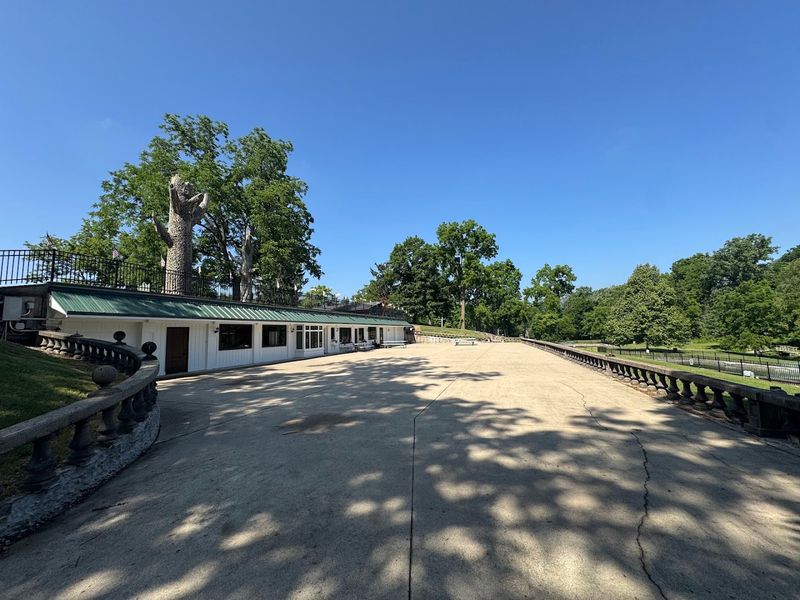
Not every park comes with a Prohibition-era secret embedded in its hillside. The Rathskeller at McCourtie Park is exactly that: a below-ground structure that Herb McCourtie had constructed during the 1920s as a hidden speakeasy.
The building was deliberately sited into the slope of a hill so that it remained invisible from the road, an essential design feature for anyone hosting illegal gatherings during Prohibition.
The term Rathskeller originally referred to a basement-level bar or tavern, common in German-influenced architecture. McCourtie adapted the concept to fit both his property’s topography and the legal climate of the era.
The result is a structure that blends into the landscape so thoroughly that visitors unfamiliar with its existence can walk the park without noticing it at all. That invisibility was entirely intentional.
The building opens for visits on Fridays, giving curious visitors the chance to step inside and experience the space directly rather than just viewing it from outside. The interior reflects the era in which it was built, and the combination of its underground positioning, historic function, and unusual architecture makes it one of the more distinctive secondary attractions in any public park in Michigan.
It adds a layer of storytelling to a property that already has considerable historical depth.
Standing outside the Rathskeller entrance and looking back toward the main park, it becomes clear how effectively the hillside conceals the structure. The sight lines from the road confirm exactly why this location was chosen.
For history enthusiasts, the speakeasy alone justifies the visit independently of the bridges. For everyone else, stumbling across it mid-walk adds an unexpected dimension to a park visit that already delivers more than most people anticipate before arriving.
Check locally for current Friday visiting hours and access details before planning around it.
Planning Your Visit To Cement City’s Most Surprising Green Space
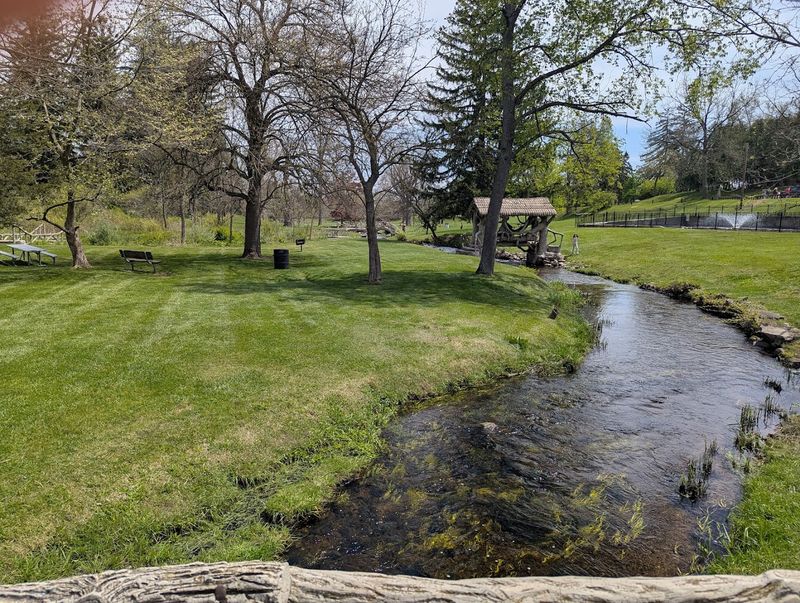
McCourtie Park sits at 10426 S Jackson Rd in Cement City, Michigan, just off Michigan Avenue in Lenawee County. The address puts it in a rural stretch of southern Michigan that most people pass through without stopping, which is precisely why the park remains relatively uncrowded compared to better-known destinations in the region.
Getting there requires a short detour from the main road, but the navigation is straightforward and the signage is adequate once you are in the right area.
The park operates dawn to dusk daily, which means the visiting window shifts significantly between summer and winter. Arriving in the morning on a weekday almost guarantees a quiet experience, especially along the creek path.
Weekend afternoons in summer and fall draw larger groups, particularly families with children and photographers scouting for portrait locations. Arriving by mid-morning on weekends balances good light with manageable crowd levels.
Parking is available in a recently upgraded lot near the main entrance. The lot is not large, so overflow parking can be an issue during peak times or when events are scheduled at the pavilion.
Facilities on-site are limited to a port-a-potty, so planning accordingly before arrival makes the experience more comfortable. The nearby Meckleys Cider Mill is close enough to combine into a single outing, making the drive to this part of Michigan efficient for a full day trip.
No admission fee is charged to enter the park, which removes any barrier to stopping in even for a short visit. Dogs are welcome on the grounds, and the open lawn areas give them plenty of room to move around.
The disc golf course, playground, and pavilion round out the practical amenities for groups with varied interests. Pack a lunch, bring a camera, and plan for at least ninety minutes to cover the full property without rushing.
Share this story