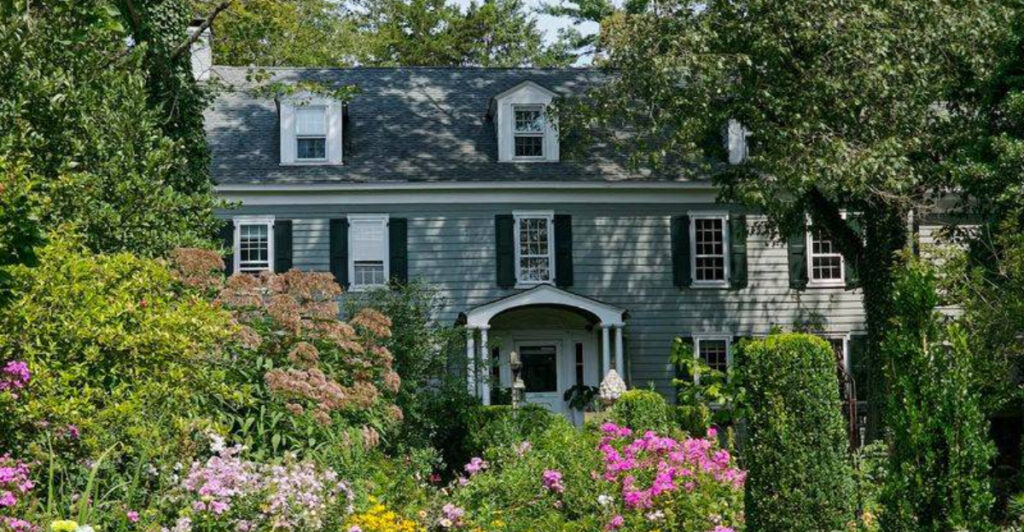
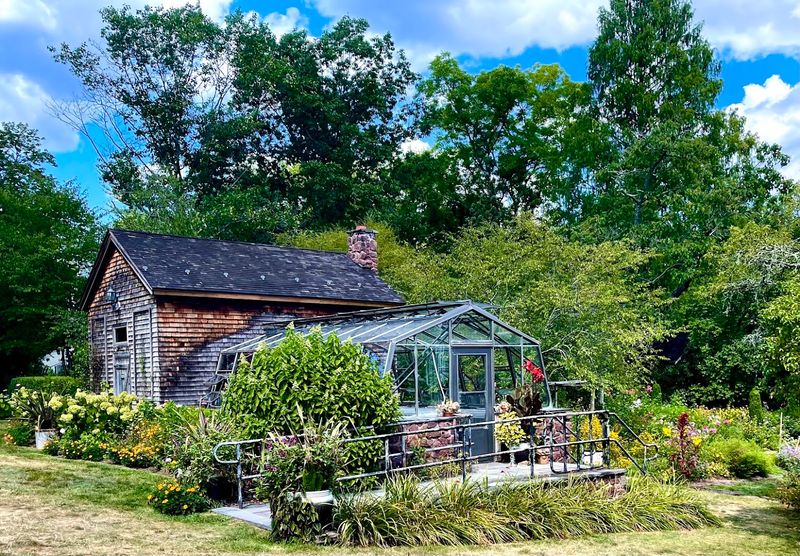
A gravel path, a stone barn, a sweep of meadow, and then suddenly there it is: the kind of garden scene that makes you slow down without anyone telling you to. Willowwood Arboretum doesn’t announce itself with big drama.
Tucked along Longview Road near Far Hills, it feels more like you accidentally found the private grounds of someone with excellent taste and a weakness for rare trees. Except this Morris County gem is public, free to visit, and open daily from 8 a.m. to dusk.
That combination alone feels almost suspiciously generous in New Jersey. There are no rides, no food trucks, no loud centerpiece trying to steal the day.
Instead, you get old farm buildings, formal gardens, wandering paths, open lawns, seasonal flowers, and the steady feeling that every turn has been quietly waiting for you to notice it.
The Far Hills Arboretum That Feels Like a Secret Garden
A place can be quiet without being boring, and Willowwood Arboretum proves it about five minutes after you park. The entrance doesn’t feel like the beginning of a major attraction.
It feels more like being let in on something. The address puts you on Longview Road in the Far Hills area, where Morris County starts leaning into horse country, rolling fields, old estates, and roads that look especially good when the trees are full.
Then you step onto the grounds and the mood changes from “nice park” to “wait, how did I not know this was here?”
Officially, Willowwood is part of the Morris County Park Commission, but it doesn’t have that heavily programmed park feeling. It is a historic farm set among field and forest, with formal and informal gardens, meadow paths, and rare plant specimens spread across the property.
The Park Commission describes the arboretum as having more than 2,100 types of native and exotic plants, plus seven unique garden areas and multiple state Champion trees. That sounds impressive on paper, but the better part is how casually it all unfolds.
You might pass the Stone Barn, drift toward the Tubbs House gardens, find yourself beside a shaded path, and then end up looking across a meadow that feels much farther from Route 206 than it actually is. Willowwood is not manicured into stiffness.
It has polish in the right places and a little wildness in the right places, which is exactly why it works. Personal photos are welcome, picnics are allowed on the lawns, and food is not sold onsite, so it has that pack-a-water-bottle, bring-a-sandwich, stay-longer-than-planned energy.
Pets are not permitted, which is worth knowing before you promise the dog a nature day.
How Willowwood Grew From a Country Farm Into a Living Collection
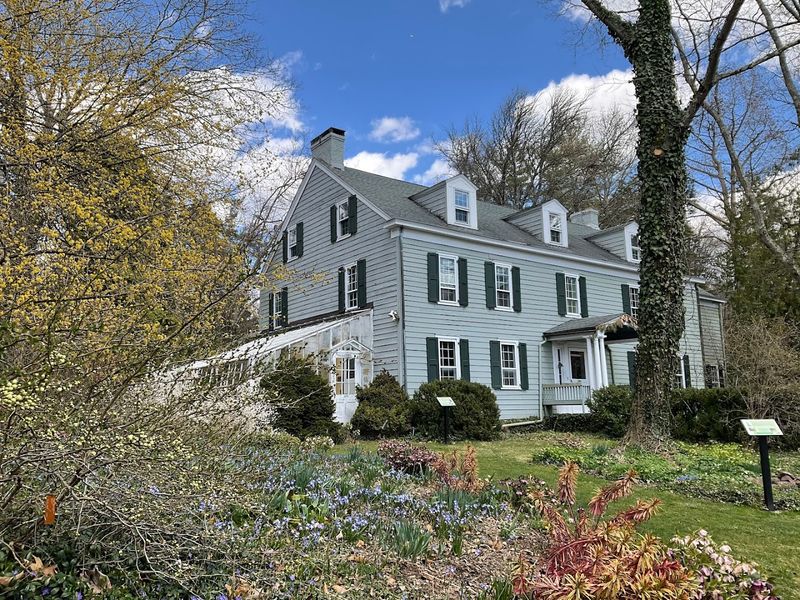
Willowwood’s story starts with two brothers, Henry and Robert Tubbs, who bought a country home near Gladstone in 1908 and slowly turned it into something far more lasting than a weekend retreat.
Along with Henry’s adopted son, Dr. Benjamin Blackburn, they developed the property into what the Willowwood Foundation describes as New Jersey’s most comprehensive and longest continually operating arboretum.
That history matters because Willowwood still feels personal in a way many public gardens do not. It was not born as a grand civic showpiece with everything planned for crowds from day one.
It grew out of curiosity, collecting, experimenting, and the kind of plant obsession that starts with one unusual tree and somehow becomes a life’s work.
The Tubbs House, which is generally open to visitors only during special events, remains part of that atmosphere, especially because the surrounding gardens still carry the sense of a home landscape expanded into something bigger.
After the Tubbs era, Willowwood also had a chapter with Rutgers University before the Morris County Park Commission took legal control on March 13, 1980. Dr. Blackburn continued as administrator and host, teaching field botany classes there before his death in 1987.
That is the thread running through the whole property: it is beautiful, yes, but it is also a classroom, a collection, a preserved landscape, and a quiet tribute to people who took plants seriously without making the place feel intimidating. You do not need to know a zelkova from a witch hazel to enjoy it.
Still, if you do happen to care about old trees, rare specimens, garden design, or plant history, Willowwood rewards that attention with the kind of details you miss at faster, louder attractions.
Meadows, Woodlands, and Garden Paths Make Every Walk Feel Different
One of the nicest surprises at Willowwood is that it refuses to be just one thing. Start with the open meadows and you get long views, grasses, wildflowers, and that loose, sunlit feeling that makes a walk feel unhurried.
Slip toward the wooded areas and the mood cools down fast, with shade, canopy, and paths that feel more tucked away. Head back toward the formal garden spaces and suddenly the place tightens into stonework, beds, borders, and old-house charm.
This is why Willowwood is so good for people who like nature but do not necessarily want a strenuous hike. You can wander gently and still feel like the scenery keeps changing.
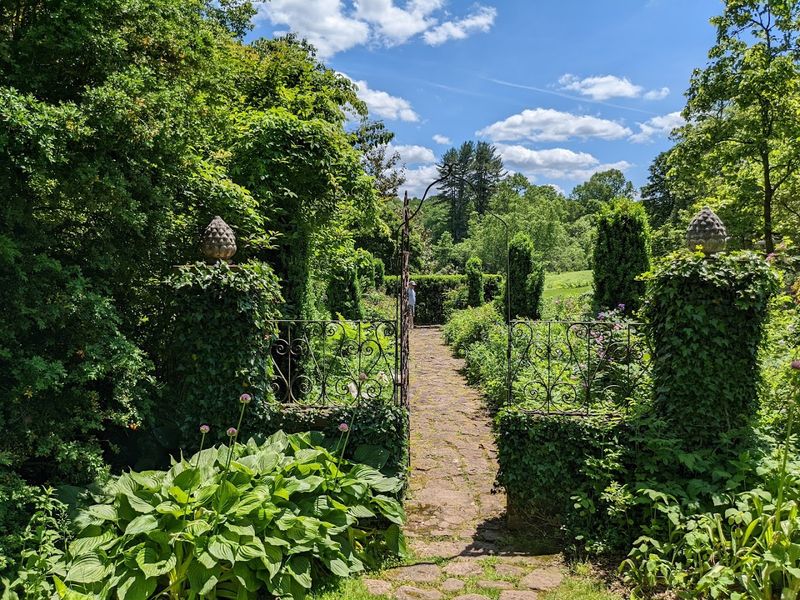
Long Meadow is one of the signature spaces, with a path leading toward a far hillside view of the arboretum and a gate that continues the journey toward Bamboo Brook. In spring, dogwoods and crabapples help frame the meadow; in summer and fall, native grasses and wildflowers take over the show.
Monarda Meadow adds another kind of beauty, with mature oaks, deciduous azaleas, woodland shrubs, and spring blooms from dogwoods, redbuds, and shadbush. Then there are the gardens around the house, where the experience becomes more intimate.
Pan’s Garden, tucked behind the Tubbs House, was designed with a playful sense of perspective, including rectangular beds inspired by a Persian prayer rug, conical boxwoods, and a bust of the Greek god Pan. It is the sort of specific, almost mischievous detail that keeps Willowwood from feeling like a generic pretty place.
Every area has its own little personality, and the best way to visit is not to over-plan it. Let the paths do some of the deciding.
Rare Trees and Seasonal Blooms Give Nature Lovers Plenty to Chase
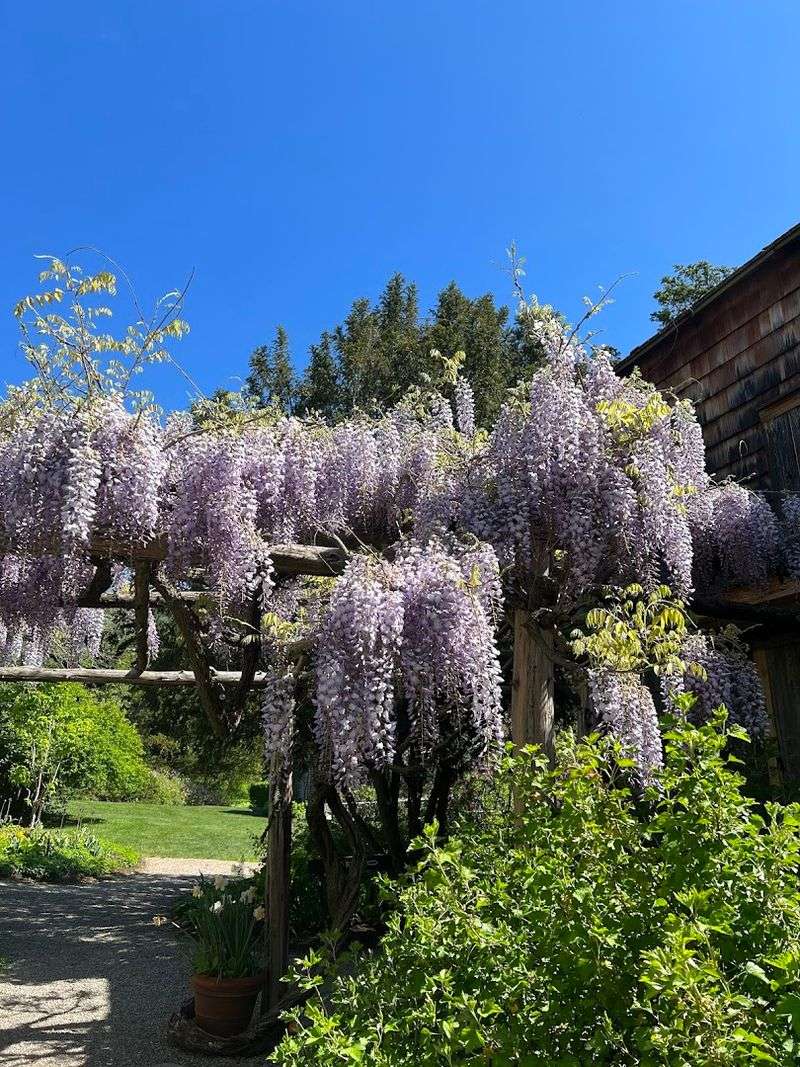
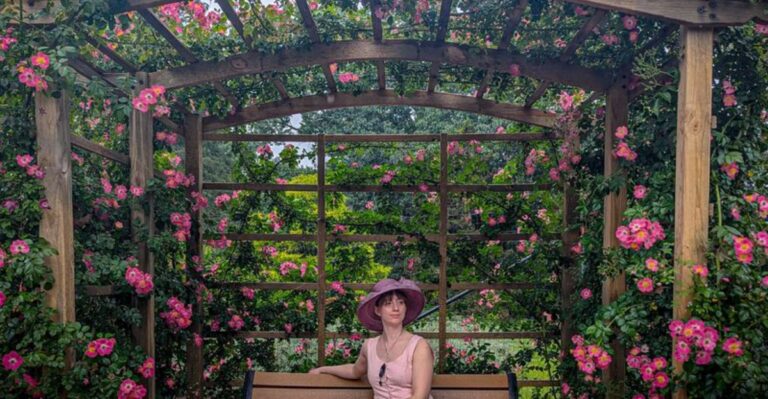
Plant people can get wonderfully nerdy here, but Willowwood is kind to casual wanderers too. The official seasonal rhythm is easy to understand: lilacs in spring, roses in summer, conifer-scented air in autumn, and witch hazels in winter.
The Park Commission notes that with more than 2,100 plant types across the property, there is color every month of the year. That does not mean every visit looks like peak bloom, and honestly, that is part of the fun.
Willowwood changes its outfit constantly. One visit might be all about soft spring flowering trees.
Another might belong to summer perennials, meadow color, and shady green paths. Come later in the year and the trees do more of the talking.
Even winter has its own low-key charm if you are the sort of person who appreciates bark, branching structure, evergreens, and the surprise of witch hazel when most gardens are still half-asleep. The Orchard is a good example of how the arboretum blends beauty with horticultural purpose.
It was planted as an evaluation collection, and notable specimens include Japanese flowering cherries and mature zelkova trees. The Rockery, Chive Walk, and Rosarie add a different flavor.
The Rosarie is not a traditional rose garden, but a Mediterranean-style space created by Dr. Ben Blackburn in the 1960s and 1970s, with bold foliage, hot flower colors, roses, shrubs, vines, perennials, annuals, and tender plants from late spring through fall. That specificity is what makes Willowwood so easy to revisit.
It is not a one-and-done attraction where you check off the main thing and move along. The main thing keeps changing.
Bring someone who likes flowers and they will have plenty to point at. Bring someone who simply needs a calmer afternoon and they will understand the appeal without knowing a single Latin name.
Bamboo Brook Next Door Turns a Quiet Visit Into a Bigger Adventure
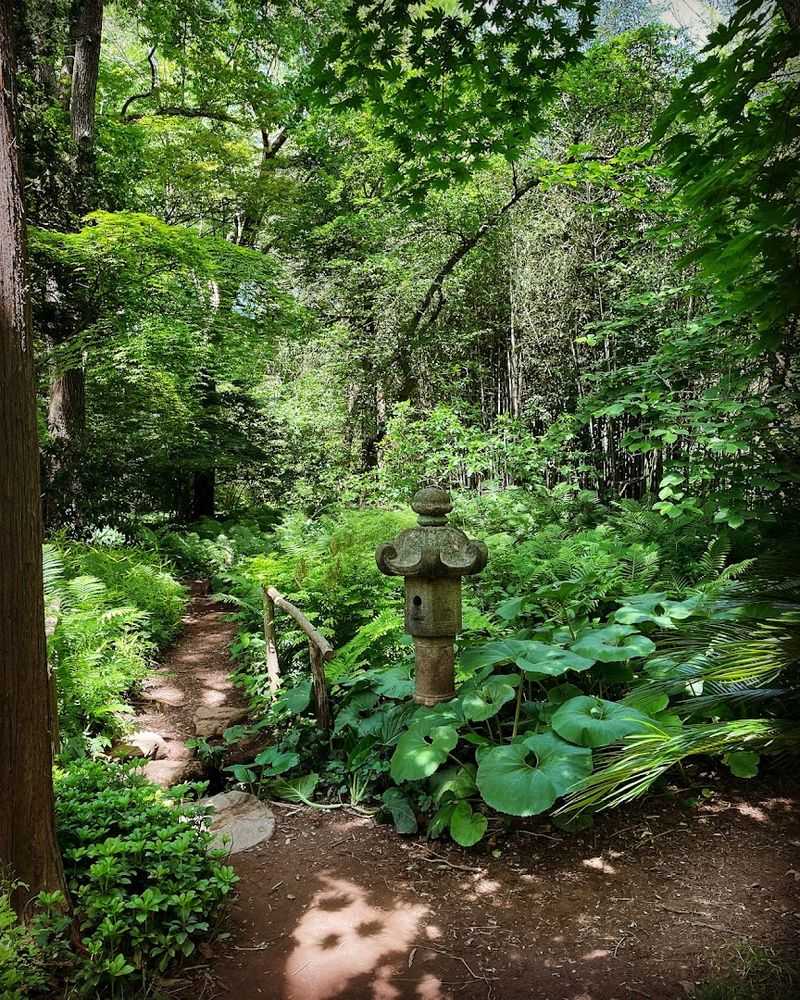
Local context makes Willowwood even better: it sits close enough to Bamboo Brook Outdoor Education Center that the two can feel like one expanded Morris County garden day. That matters because Bamboo Brook is not just “more nature nearby.”
It has its own identity, shaped by Martha Brookes Hutcheson, one of America’s first female landscape architects.
The Morris County Park Commission describes Bamboo Brook as a public garden dedicated to preserving Hutcheson’s former home and gardens, with design ideas that include water, changes in elevation, native and exotic plants, and landscapes restored to their 1945 appearance.
The gardens are listed on the New Jersey and National Registers of Historic Places.
In other words, if Willowwood gives you the feeling of a plant collector’s country place, Bamboo Brook gives you the feeling of a designed landscape with a very clear hand behind it. The two sites complement each other beautifully.
Willowwood has that rambling, secret-garden, meadow-and-collection personality. Bamboo Brook brings formal vistas, garden rooms, native materials, and the thoughtful use of water as a design element.
There is also a walking connection between the properties, with Willowwood’s own visitor information pointing guests to trail maps for moving between Bamboo Brook and Willowwood. That turns a short visit into something more flexible.
You can keep it simple with a peaceful loop around Willowwood, or stretch the outing into a two-garden wander without needing to invent a complicated itinerary. Both places are open daily and free to the public, and both prohibit dogs, so the rules are easy to remember.
The reward is a rare kind of New Jersey outing: historic, outdoorsy, pretty, quiet, and surprisingly spacious without requiring a big drive to the middle of nowhere.
Why This Free Morris County Escape Feels Like Such a Find
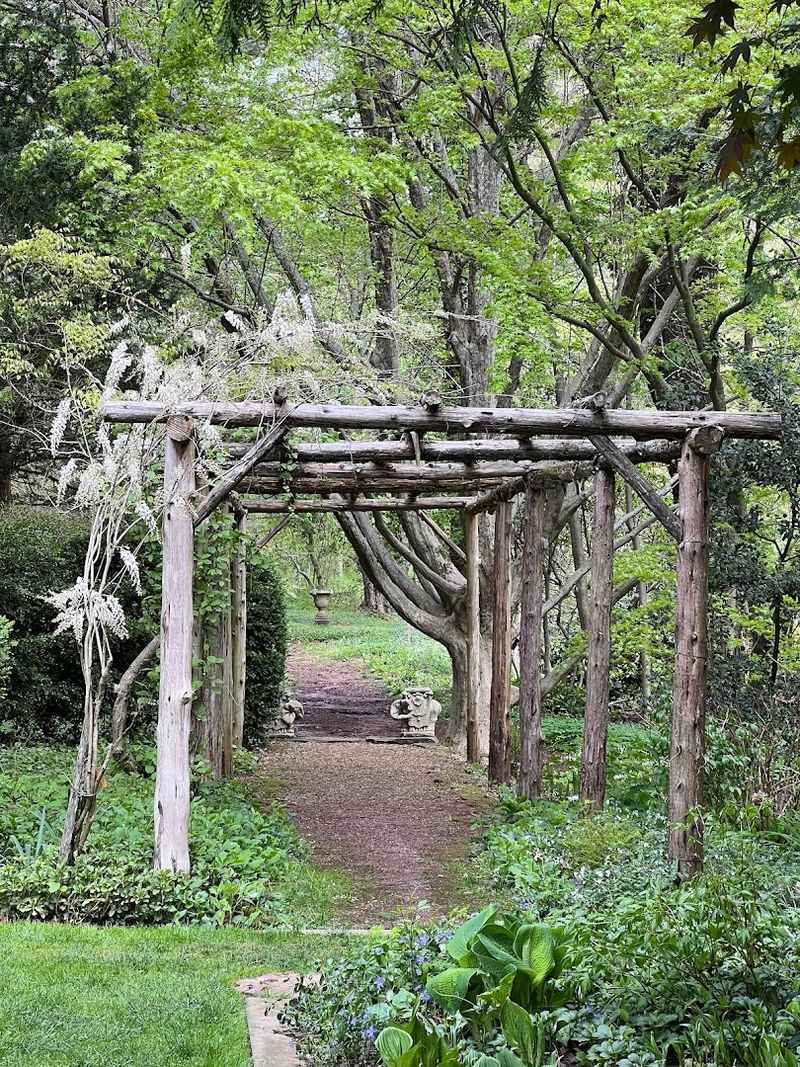
Free admission changes the whole feel of Willowwood. There is no pressure to “get your money’s worth,” no need to rush through every garden, and no guilt if you only have an hour.
You can stop by for a slow walk, sit with a picnic on the lawn, take casual phone photos, and leave when the day says it is time. Normally, there is no admission fee, though special programs may charge separately, and the grounds are open year-round from 8 a.m. to dusk.
That makes Willowwood one of those rare places that works for many different versions of a good day. It can be a solo reset when your brain needs less screen and more trees.
It can be a quiet date walk that does not require reservations or a dinner bill. It can be a parent-and-kid ramble, as long as everyone is ready for garden manners and not climbing into beds or water features.
It can also be a soft landing after lunch in the Somerset Hills area, when you want somewhere pretty but not crowded in the boardwalk sense of the word. The practical details help keep expectations right.
Food and beverages are not sold onsite, grilling is not permitted, visitors are asked to carry out trash, and professional photography requires a permit. Those small rules help preserve the thing that makes Willowwood special in the first place: it still feels cared for, not consumed.
New Jersey has plenty of places that are loud about being destinations. Willowwood does the opposite.
It stays quiet, lets the gardens do the charming, and somehow makes a simple walk feel like you found the side gate into a much older, greener world.
Share this story