Something incredible is heading toward Michigan, and train lovers are already buzzing with excitement. Nickel Plate Road No. 765 is scheduled to enter Michigan on Friday, June 19, and Saturday, June 20, 2026, as part of the Indiana Rail Experience’s Tri-State Scenic Steam Excursion.
The all-day round trip begins at 9 a.m. in Edon, Ohio, before rolling through northeastern Indiana and reaching Hillsdale, Michigan, around 11:30 a.m. For anyone who has ever wanted to see a massive, roaring steam engine up close, this is a rare chance to witness a piece of American railroad history making a special appearance in the state.
The Story Behind Nickel Plate Road No. 765
Built in 1944 by the Lima Locomotive Works in Lima, Ohio, Nickel Plate Road No. 765 arrived during one of the most demanding periods in American history. World War II was pushing railroads to their absolute limits, and powerful steam engines like this one were essential for moving freight across the country.
The 765 was designed as a Berkshire-type locomotive, a classification known for speed and raw hauling power.
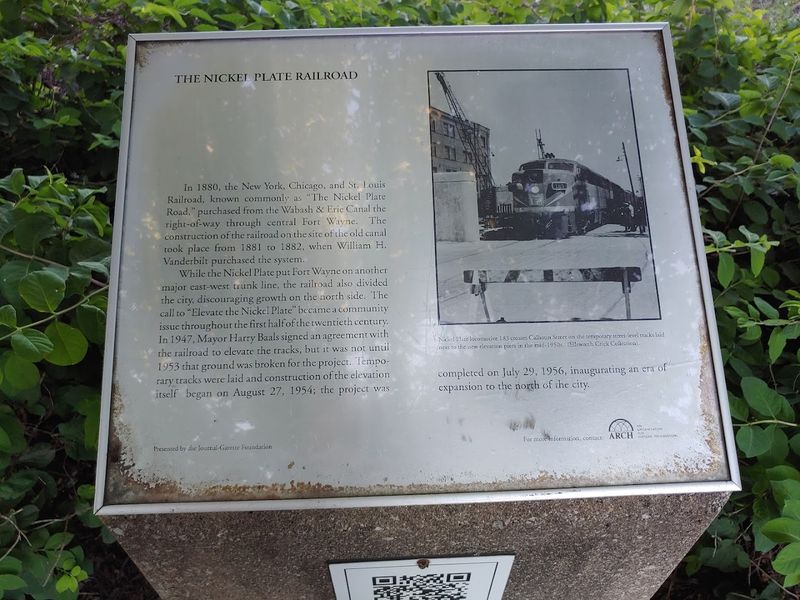
The Nickel Plate Road railroad itself was a major line connecting Buffalo, New York, to Chicago, Illinois, cutting through the industrial heartland of the Midwest. No. 765 spent its working years hauling heavy freight along that route, earning a reputation as one of the hardest-working locomotives on the line.
When diesel engines started replacing steam power in the 1950s, the 765 was retired in 1958 after a remarkably productive career.
What makes this locomotive especially meaningful is that it never got scrapped. The Fort Wayne Railroad Historical Society rescued it and spent decades carefully restoring it to working condition.
That kind of dedication is rare in the preservation world, and it speaks to how much people genuinely love this machine. Today, No. 765 is considered one of the finest restored steam locomotives in North America, capable of pulling excursion trains at impressive speeds.
Seeing it operate is not just a visual experience — you feel the ground shake and hear that unmistakable whistle echo for miles. Michigan residents who get to witness this locomotive in person are experiencing something that most people only see in old photographs or black-and-white films.
This is living, breathing railroad history, and it is coming to your backyard soon.
What Makes the Berkshire Design So Special
Not every steam locomotive is built the same, and the Berkshire type stands apart from the crowd in a big way. Developed in the 1920s, the Berkshire wheel arrangement — known technically as a 2-8-4 — gave engineers a powerful combination of traction and speed that earlier designs simply could not match.
The extra trailing wheels under the cab allowed for a much larger firebox, which meant more steam and more power without sacrificing smooth performance.
The Lima Locomotive Works, which built No. 765, was actually the company that pioneered the Berkshire design. Lima engineers called their approach “Super Power,” and the name was not just marketing talk.
These locomotives genuinely outperformed older designs in fuel efficiency and raw output, setting a new standard for American steam railroad engineering during the 1930s and 1940s. Railroads across the country quickly took notice and began ordering Berkshires for their most demanding freight routes.
For the Nickel Plate Road, the Berkshire was a perfect match. The railroad needed locomotives that could handle heavy trains at high speeds across relatively flat Midwestern terrain, and the 765 delivered exactly that.
Crews who worked with these engines often developed a deep respect for their reliability and responsiveness. Mechanics appreciated how well-balanced the design was compared to older, more temperamental steam power.
When you watch No. 765 moving at speed, the synchronized pumping of those massive driving rods is almost hypnotic. Every part of the machine works in concert, a mechanical symphony that engineers spent years perfecting.
Understanding the Berkshire design helps you appreciate why preservationists fought so hard to keep No. 765 alive — it represents the absolute peak of American steam locomotive engineering before diesel took over for good.
The Fort Wayne Railroad Historical Society’s Role in Saving No. 765
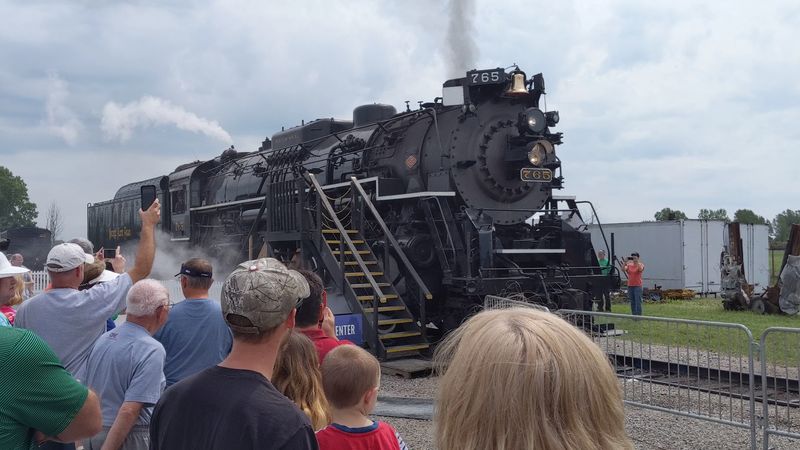
Saving a steam locomotive from the scrap heap takes more than enthusiasm — it takes years of hard work, serious fundraising, and an unshakable commitment to history. The Fort Wayne Railroad Historical Society took on that challenge when they acquired Nickel Plate Road No. 765, and the result of their effort is one of the most impressive restoration stories in American preservation history.
Without this group, the 765 would almost certainly be gone today.
Founded in Fort Wayne, Indiana, the society is made up of dedicated volunteers who genuinely love railroads and understand the cultural value of keeping historic equipment operational. Restoring a locomotive of this size is not a casual weekend project.
It involves sourcing rare parts, rebuilding mechanical systems, and meeting strict federal safety requirements for a machine that will actually carry passengers. The level of technical knowledge required is extraordinary, and society members have spent countless hours developing that expertise.
What sets the Fort Wayne Railroad Historical Society apart from many preservation groups is their insistence on keeping No. 765 in operational condition rather than just displaying it as a static museum piece. A steam locomotive that actually runs tells a story that no exhibit label can fully capture.
When the 765 fires up its boiler and rolls down the track, it connects people to a world that existed long before they were born. The society regularly brings the locomotive out for excursion runs and special events, giving the public genuine access to this piece of heritage.
Their work has inspired other preservation groups across the country and demonstrated that community-driven efforts can accomplish remarkable things. Michigan fans who attend the upcoming appearance owe a quiet thank-you to these dedicated volunteers who refused to let history disappear.
Why Michigan Is Getting This Rare Visit
Michigan has a rich railroad history of its own, so it is fitting that No. 765 would make an appearance here. The state was once crisscrossed by dozens of rail lines that moved lumber, automobiles, and agricultural goods to markets across the country.
Bringing a locomotive like the 765 into Michigan is not just a tourist attraction — it is a conversation between two chapters of the same American story.
Excursion runs featuring No. 765 are genuinely rare events. The locomotive requires careful preparation before each outing, and the logistics of moving a working steam engine across state lines involve significant planning and coordination.
When the Fort Wayne Railroad Historical Society announces a run, rail enthusiasts from across the region immediately start making plans. Tickets for these events tend to sell out quickly, which tells you everything about how much demand there is for authentic steam experiences.
Michigan offers some genuinely scenic territory for a steam excursion, with rolling farmland, small-town depots, and lakeside views that make for a memorable journey. Passengers who board for the ride get the full package — the sound of the whistle, the smell of coal smoke, the rhythmic clatter of steel wheels on iron rails.
These sensory details are impossible to replicate and nearly impossible to forget. For families bringing kids along, it is often a transformative experience that sparks a lifelong interest in history and engineering.
For older passengers, it can bring back memories of a time when trains were the backbone of everyday American life. Whatever your connection to railroads, seeing No. 765 work its way through Michigan countryside delivers something genuinely special that a museum visit simply cannot match.
What to Expect When You See No. 765 in Person
Seeing a working steam locomotive for the first time is one of those experiences that catches people completely off guard. You expect it to be impressive, but the actual scale and presence of a machine like No. 765 tends to exceed every expectation.
Standing near the tracks as this locomotive approaches, you feel the vibration in your chest before you even see the engine clearly through the steam.
The sound alone is worth the trip. Steam locomotives produce a layered symphony of noise — the rhythmic exhaust beat from the stack, the hiss of steam escaping through valves, the clang of the bell, and of course that iconic whistle that carries for miles in every direction.
No recording or video does it justice. The experience is fundamentally physical, and that physicality is exactly what makes it so memorable for people of all ages.
If you plan to attend the Michigan appearance, a few practical tips will help you get the most out of the day. Arrive early to secure a good viewing spot along the tracks, because crowds at these events can build up faster than you might expect.
Bring a camera with a decent zoom lens if you want to capture close-up shots of the locomotive in motion — the details on these machines are extraordinary. Dress in layers, since excursion events can involve standing outside for extended periods regardless of weather.
If you have the option to ride rather than just watch from the platform, strongly consider booking a ticket for the full experience. Riding behind a working steam engine is something that stays with you for years, and No. 765 is about as good as it gets when it comes to authentic steam power still operating today.
The Significance of Keeping Steam Locomotives Running
There is a real argument to be made that keeping historic steam locomotives operational matters more than simply parking them in museums. A static locomotive can show you what something looked like, but a running locomotive shows you what it actually was — a living, working piece of engineering that shaped the modern world.
No. 765 belongs to that second category, and every mile it travels under steam power makes that argument more convincingly than any exhibit ever could.
From an educational standpoint, operational steam excursions reach people who would never voluntarily walk into a history museum. Families come for the novelty and leave with a genuine appreciation for the ingenuity of earlier generations.
Kids who ride behind No. 765 often start asking questions about how steam engines work, how railroads were built, and what life was like before cars and highways dominated American transportation. Those conversations have lasting value that is hard to quantify but easy to recognize.
Preserving a working steam locomotive also keeps specialized mechanical skills alive. The knowledge required to maintain, operate, and repair a machine like No. 765 is not available in any textbook.
It exists in the hands and minds of experienced craftspeople who learned from earlier generations of railroad workers. If locomotives like the 765 stopped running, that knowledge would fade within a generation and could never be fully recovered.
Every excursion run creates an opportunity to train new volunteers and pass those skills forward. Michigan residents who show up to support this appearance are doing more than watching a cool old train — they are participating in an act of cultural preservation that keeps an irreplaceable piece of American industrial heritage alive and moving forward into the future.
How to Plan Your Trip to See No. 765 in Michigan

Planning ahead is everything when it comes to a rare event like this. Nickel Plate Road No. 765 is scheduled to enter Michigan on Friday, June 19, and Saturday, June 20, 2026, as part of the Indiana Rail Experience’s Tri-State Scenic Steam Excursion, and this is not the kind of experience you want to figure out at the last minute.
The round trip begins at 9 a.m. at 206 South Michigan Street in Edon, Ohio, so anyone hoping to ride behind the locomotive should know that passengers board in Ohio, not Michigan.
That detail matters because this is more than a chance to watch a historic steam engine roll through town. You can actually travel with it.
Passengers ride the all-day excursion through northeastern Indiana before reaching Hillsdale, Michigan, at approximately 11:30 a.m. Once there, the schedule includes a three-hour layover, giving riders time to eat, walk around, and explore downtown Hillsdale before the train departs again at 2:30 p.m.
If you prefer to see No. 765 from the ground, Hillsdale is still a great place to experience the locomotive during its Michigan appearance. Bring a camera, give yourself extra time to park and walk, and remember that a steam event can draw a crowd quickly.
The return trip is scheduled to include a planned photo runby around 4 p.m., with the train arriving back in Edon at about 6 p.m., which gives rail fans another special moment to watch the engine in action.
The most important thing is to confirm the latest ticketing, schedule, and operational details through the official Indiana Rail Experience schedule before you travel. Steam excursions depend on timing, equipment, weather, and logistics, so checking before you go is part of the adventure.
Whether you ride behind No. 765 or simply stand trackside and feel the whistle shake the air, this is one of those limited-time Michigan moments that train lovers will not want to miss.
Share this story