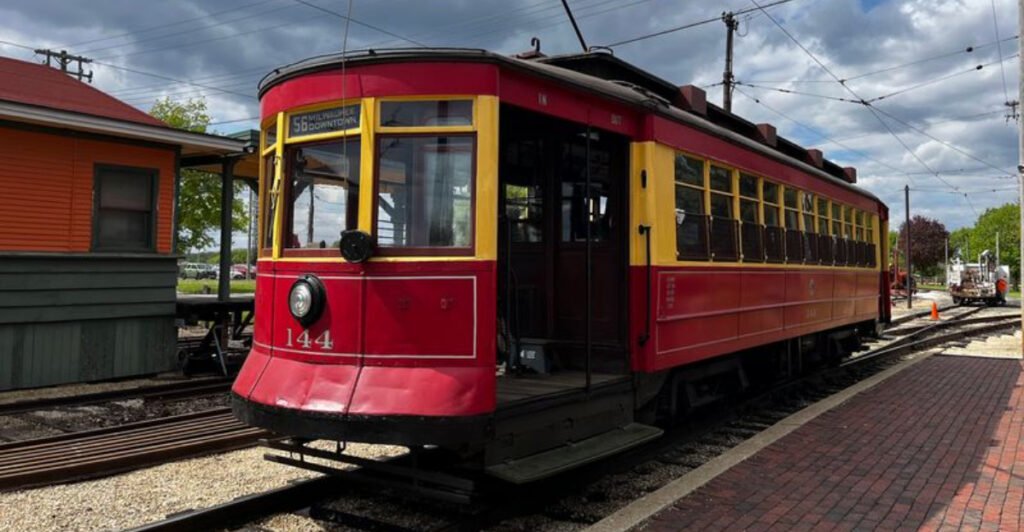
The clang of a bell and the rumble of steel wheels make history feel surprisingly alive at the Illinois Railway Museum in Union. Instead of viewing every vintage streetcar and train from behind a barrier, visitors can climb aboard select equipment and experience the sounds, movement, and atmosphere of rail travel from another era.
As the trolley rolls along the museum’s track, changing scenery outside the windows adds another dimension to the ride. It is part transportation history and part journey back in time, without ever leaving Illinois. Here, the past does not simply sit on display—it still moves down the rails.
A Ride That Moves History Instead Of Locking It Behind Glass
Most museums ask visitors to stand back, read a sign, and picture the past in their heads. Here, the story starts moving the minute a trolley begins to hum along the tracks.
That simple shift changes everything, because transportation history suddenly becomes physical, noisy, and easy to understand.
Inside the Illinois Railway Museum, the trolley experience is one of the clearest examples of that living approach. Riders do not just inspect a preserved car from the outside.
They step aboard, hear the wheels work against the rails, feel the steady sway, and notice how different travel once felt before modern transit became sealed off and smooth.
That hands-on quality matters for families, school-age kids, and adults who like practical history more than textbook dates. A moving trolley explains design, engineering, and daily life all at once.
Seats, windows, sounds, and speed tell a fuller story than a static exhibit ever could. The setting adds another layer. Instead of a short indoor demonstration, the ride travels through open museum property where the scale of the collection becomes clear.
Barns full of streetcars, locomotives, and passenger cars show how many kinds of rail travel shaped cities and small towns alike.
Because so much of the museum is large, spread out, and active, the trolley helps tie the visit together. It is transportation as artifact and transportation as transportation at the same time.
That rare double role is a big reason the museum has such strong appeal for rail fans, curious kids, and anyone who wants history to do more than sit still on a platform.
Where Illinois Streetcar Days Still Sound Alive
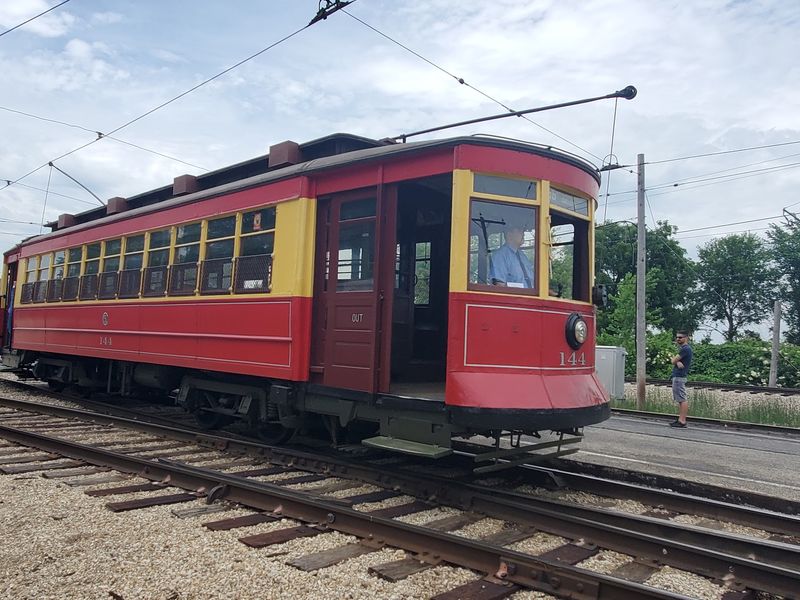
Long before highways shaped everyday travel, streetcars connected neighborhoods, downtown stores, and growing suburbs. The Illinois Railway Museum keeps that chapter alive with working electric cars that show how local transit once sounded and operated.
Bells, motors, track joints, and open views bring back a form of travel many people know only from old photos. That sound is part of the appeal. A trolley does not roar like a diesel locomotive or breathe like a steam engine.
Its personality comes from a lighter, sharper voice, a whir from the motors, a ring from the bell, and the steady metal rhythm underneath the floor.
For younger visitors, that makes the ride easy to compare with buses, cars, and modern trains. The differences are obvious right away.
Streetcars were built for close contact with the city or town around them, and even on museum grounds, the design still explains that purpose through wide windows, simple seating, and a straightforward layout.
The museum is especially strong because it does not treat electric transit as a side note. Streetcars and interurban equipment have a real presence across the site, giving the trolley ride context before and after boarding.
A child can ride one car, then walk into a barn and see many more examples lined up like a timeline in steel and wood.
That combination makes the visit richer than a single train excursion. It turns the trolley into a doorway to bigger ideas about how Illinois communities once moved, expanded, and stayed connected.
Instead of hearing that streetcars mattered, riders can hear, see, and feel why they mattered every time the wheels start rolling again.
The Scenic Line Adds More Than A Short Loop
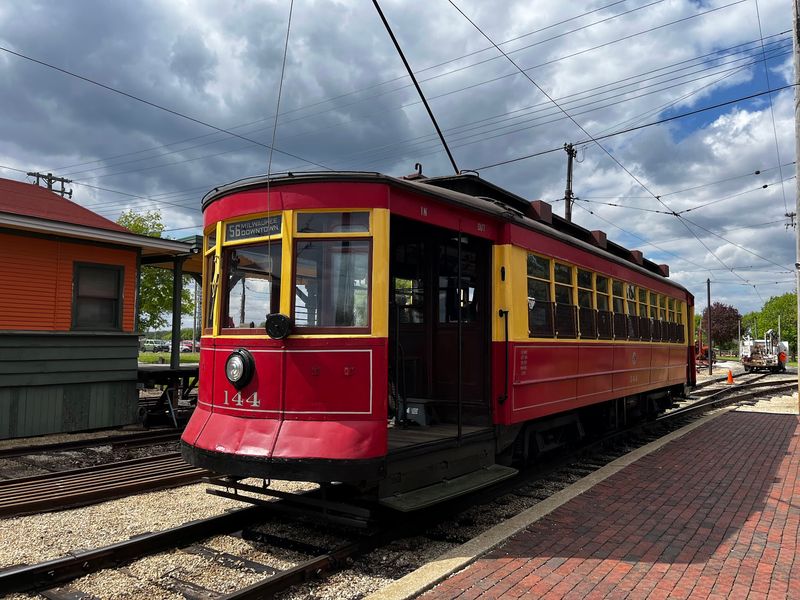
A trolley ride becomes much more interesting when the view outside matters as much as the car itself. At the Illinois Railway Museum, the line gives riders room to look outward, not only inward at historic details.
Open land, long track views, and changing scenery make the trip feel like actual travel rather than a tiny amusement loop.
That scenic quality supports the article title in a practical way. Old trolleys were built to move through real places, carrying workers, shoppers, and families between destinations.
A route with breathing space around it helps recreate that older rhythm, where rail travel linked people with the landscape instead of rushing past everything behind tinted glass. Children often notice the motion first, then the windows. Adults often do the opposite.
Either way, the route invites both groups to pay attention to small details like poles, track curves, crossings, and the changing angle of light on the fields and museum grounds.
There is also a useful contrast between the museum barns and the outdoor ride. Indoors, the collection shows preservation at rest, with rows of equipment waiting to be studied.
Outside, the trolley line returns one part of that collection to its original job, carrying people through space at a calm, readable pace.
For anyone planning a visit, sitting by a window is the simplest way to get the most from the experience. Keep a phone or camera ready, but do not spend the whole ride looking through a screen.
The value of the trip comes from watching the route unfold, listening to the car work, and noticing how a century-old machine still makes ordinary scenery more vivid.
Barns Full Of Giants Make The Trolley Feel Even Smarter
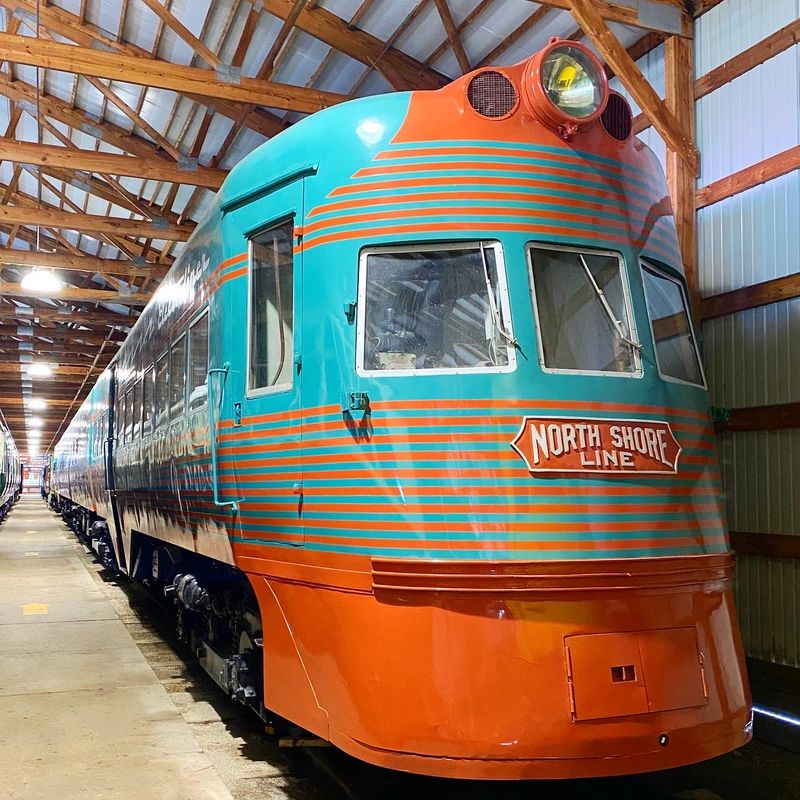
Size can be hard to grasp until a museum puts people right next to the machines. At Illinois Railway Museum, the huge display barns do exactly that, surrounding visitors with locomotives, passenger cars, streetcars, and transit equipment on a scale that pictures rarely capture well.
The trolley ride works better because these barns prepare the eye first. Walking through the collection before boarding gives useful context.
Streetcars stop being isolated curiosities once they are seen beside heavyweight railroad cars, diesel locomotives, and electric equipment from other eras.
The comparison shows how different rail vehicles solved different jobs, from city travel to long-distance service and freight movement.
Several visitors mention how much ground there is to cover, and that observation fits the layout. This is not a one-room museum with a quick exit.
It is a broad campus where barns, outdoor tracks, stations, and operating rides all cooperate to tell one bigger story about rail transportation.
The trolley fits that story neatly because it is smaller and more approachable than some of the towering locomotives nearby. After standing beside equipment that looks enormous, stepping onto a streetcar can feel personal and practical.
The scale invites closer attention to controls, seating, windows, and the way passengers once used public transit every day.
Good shoes are a smart idea here, because the museum rewards wandering. A slower pace also helps, especially for families balancing train rides with exhibit time.
By the time the trolley starts rolling, riders have already seen how rich the collection is, and the trip becomes more than a ride. It becomes a moving answer to everything the barns introduced a few minutes earlier.
Volunteer Knowledge Keeps The Past Running On Time
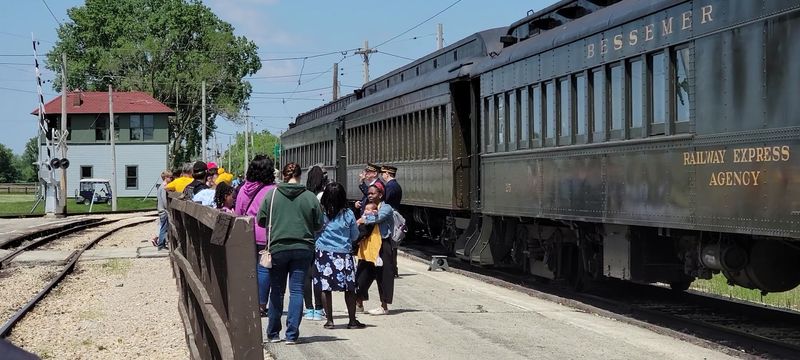
Old rail equipment does not operate itself, and that is one of the museum’s biggest strengths. The Illinois Railway Museum depends on knowledgeable volunteers and staff who help transform preserved vehicles into working lessons.
Their presence gives the trolley ride a human link to the past, because someone has to maintain, explain, and safely operate these machines.
That effort shows up in small ways all day. A conductor gesture, a clear answer to a child’s question, or a quick explanation about a car’s origin can turn a simple ride into a richer experience.
Instead of vague nostalgia, visitors get direct information tied to real equipment right in front of them. For kids, that matters because transportation history can seem huge and abstract.
Hearing an adult explain why the trolley uses overhead power or how riders once depended on cars like this makes the subject concrete. For adults, the same conversation often opens up technical details that make the machinery easier to appreciate.
The volunteer energy also fits the museum’s tone. This is a place built around preservation, restoration, and operation, not a polished theme park pretending to be old-fashioned.
That difference gives the trolley line extra credibility, since the ride comes from long-term care and historical interest rather than decorative staging.
Anyone visiting with children should leave space for a few unplanned chats. The museum’s most useful facts may come beside a platform, inside a barn, or while waiting for the next departure.
Those moments deepen the trolley experience because they remind riders that keeping century-old transit alive takes patience, skill, and many careful hands, not just a set of tracks and a ticket.
How To Plan The Best Day Around The Trolley
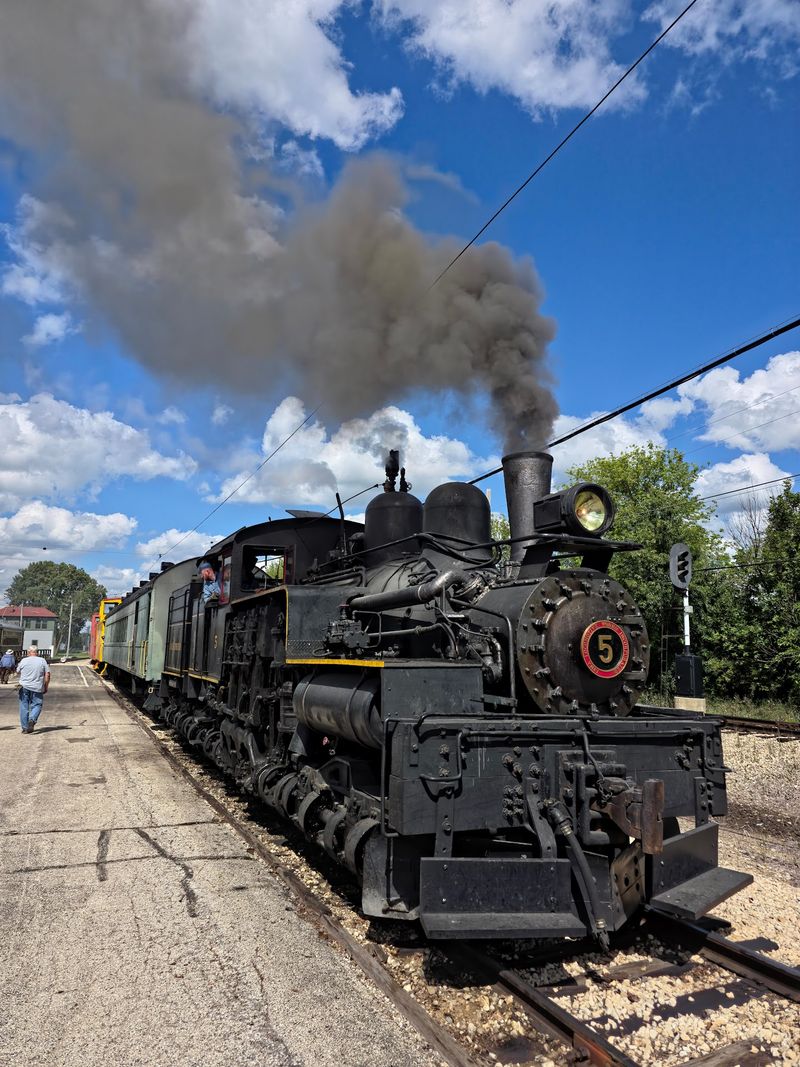
A great visit here usually comes down to pacing, not speed. The Illinois Railway Museum covers a lot of ground, and the trolley is only one part of the experience.
Anyone who arrives expecting a fast stop may end up rushing past some of the most rewarding pieces of the day.
Start early if possible. With operating hours centered on daytime visits, an earlier arrival gives more flexibility for train rides, barn exploration, snack breaks, and repeat trips on favorite equipment.
That matters because historic rides run on schedules, and it is easier to relax when there is room to miss one and catch the next.
Comfort also matters more here than at a compact indoor museum. Wear walking shoes, carry water, and plan for weather changes across open grounds.
The site can be sunny, windy, hot, or chilly depending on the season, and the day works better when clothing matches the conditions instead of fighting them.
Families with young children may want to balance active ride time with quieter indoor moments in the exhibit barns. Rail fans often prefer the opposite, lingering over equipment details before boarding anything.
Either approach works, because the trolley ride slots nicely between larger train excursions and slower look-around periods.
One practical tip stands out above the rest. Do not save the trolley for the final minutes of the day if it is a main reason for the visit.
Ride it while energy is still high, then use the rest of the museum to build on that excitement. That sequence helps children stay engaged, gives adults a better mental map of the property, and turns the whole outing into a connected experience instead of a scramble from one attraction to another.
Why The Century-Old Trolley Story Still Lands So Well
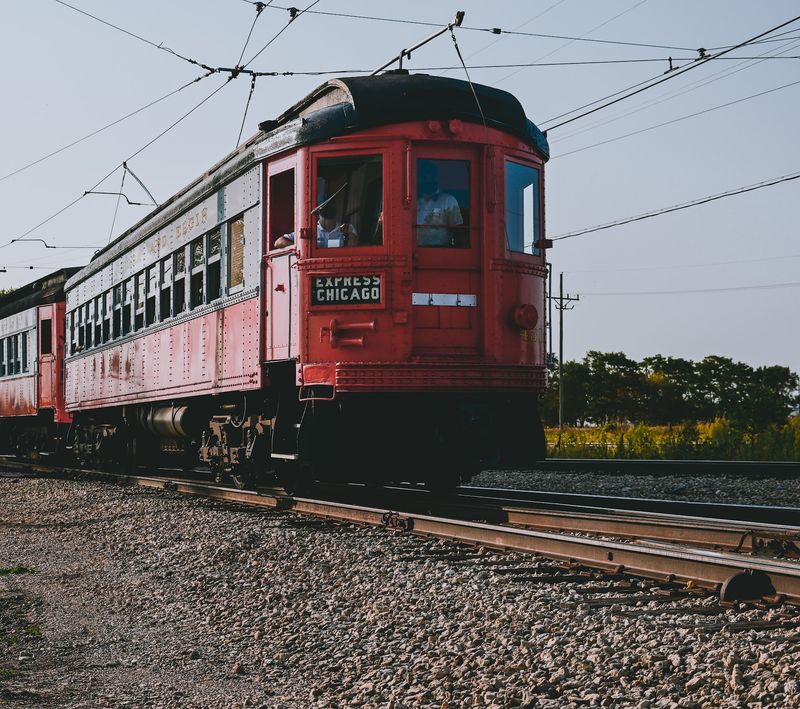
Some historic attractions depend on imagination more than action. The Illinois Railway Museum succeeds because it offers both, and the trolley captures that balance better than almost anything else on the property.
It is old enough to teach, active enough to excite, and accessible enough for families who may know very little about rail history before arriving.
The phrase about rumbling along like it did a century ago works because the ride still carries the basics that matter.
There is the mechanical sound, the visible track ahead, the simple seating, and the feeling of being moved by a machine built for a different era.
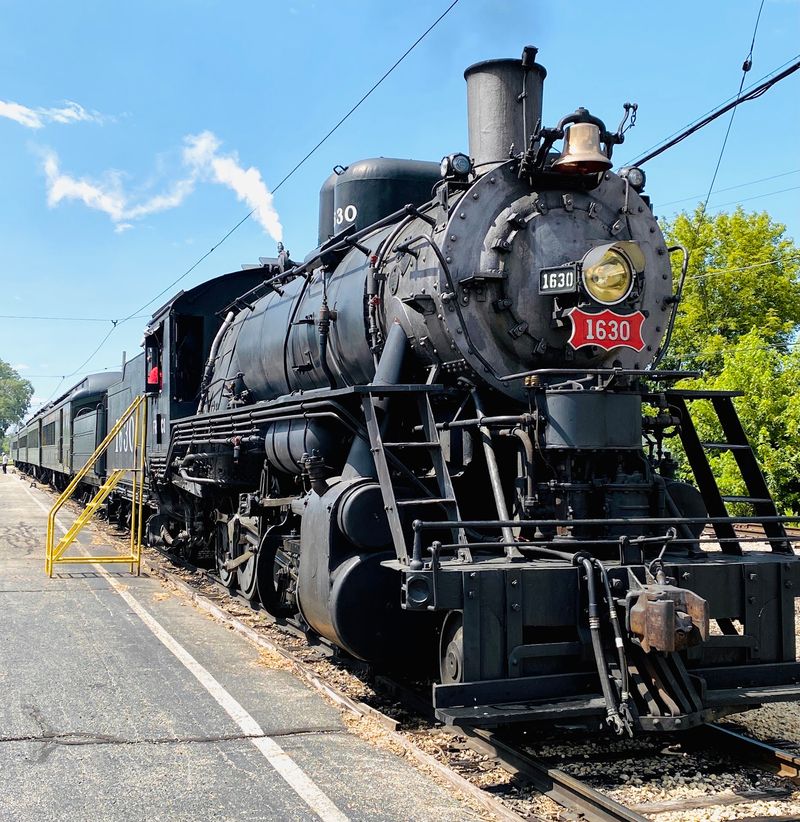
Those details create a direct bridge between modern riders and everyday transportation from long ago. At the same time, the museum does not isolate the trolley from the rest of railroad history. Steam locomotives, diesel trains, cabooses, passenger cars, signals, and display barns broaden the story.
That larger setting keeps the streetcar from feeling like a novelty and instead places it inside a much wider transportation world.
For local families, the museum offers an easy history lesson without classroom stiffness. For serious rail fans, it provides operating equipment and deep collection value.
For travelers passing through northern Illinois, it delivers a rare chance to do more than look at old transit cars from behind a rope.
The final impression is surprisingly simple. A trolley that still runs can explain a century of change with very few words.
Sit down, listen to the wheels, watch the route unroll outside the window, and the point comes through clearly. History moved people then, and at Union, Illinois, it still does.
Share this story