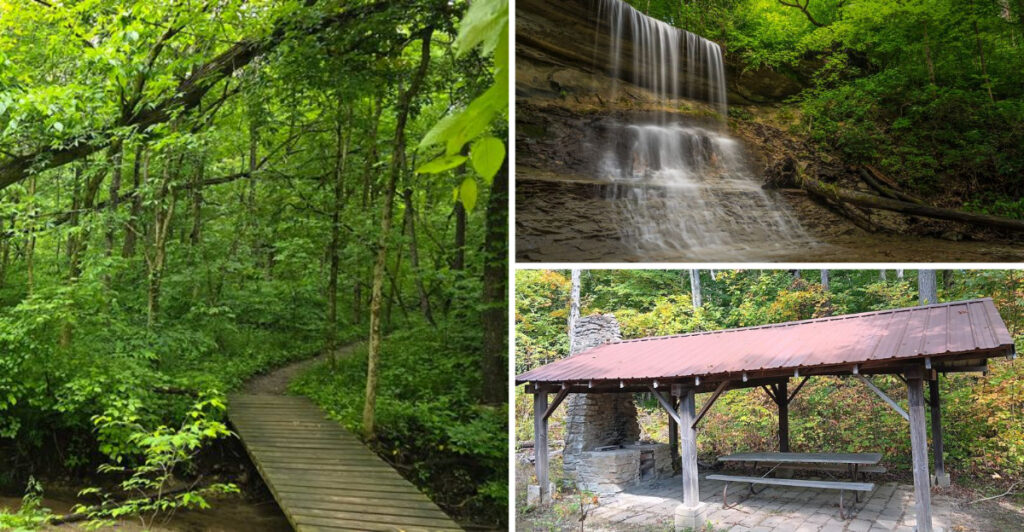
Northern Indiana is not usually the first place people look for waterfalls, but Kokiwanee Nature Preserve near Lagro quietly defies expectations. Once home to a Girl Scout camp, this scenic preserve now protects rugged ravines, towering limestone bluffs, wooded hiking trails, river overlooks, and an astonishing collection of seasonal waterfalls that emerge throughout the landscape after rainfall.
The combination of striking natural beauty and traces of the property’s past creates an experience unlike anywhere else in the region. Whether you’re chasing waterfalls, exploring scenic trails, or discovering one of Indiana’s most overlooked outdoor destinations, Kokiwanee Nature Preserve is a hidden gem that’s well worth seeking out.
The Entrance Gives Almost Nothing Away
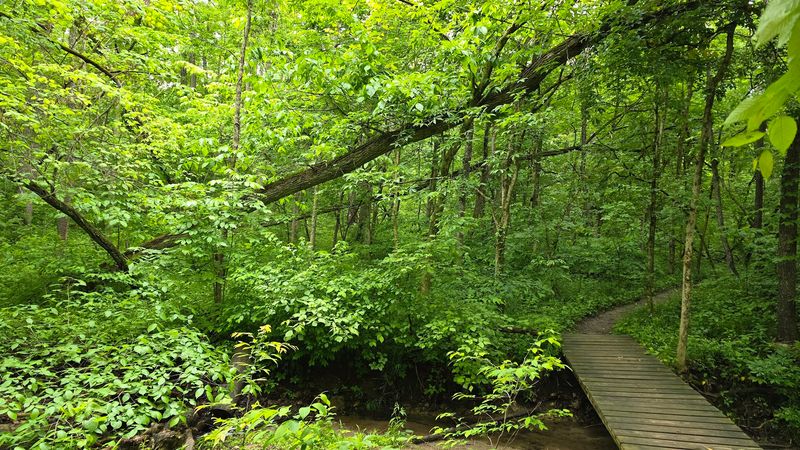
The first surprise at Kokiwanee is how modest the trailhead looks. There is no grand gateway, no oversized overlook platform, no dramatic setup that hints at what waits beyond the trees.
You step in expecting a pleasant local walk, and the preserve begins unfolding in layers instead. The terrain changes quickly enough to reset your assumptions about this part of Indiana.
Instead of a flat out-and-back through open woods, the trail dips, bends, narrows, and starts working around ravines, creek cuts, and uneven ground.
Those shifts give the preserve a sense of movement right away, as if the landscape is pulling you forward with one new detail after another.
That first stretch matters because it establishes Kokiwanee as a place of transitions. Light flickers through the canopy, then the woods thicken.
A simple footpath can suddenly angle toward a slope or skirt a wetter patch where runoff has turned the soil dark and slick.
Even before the waterfalls enter the picture, the preserve has texture. Birdsong carries through the trees, deer are not unusual here, and the trail network creates the feeling that you can shape the hike to your own energy level.
Short loop, longer ramble, river overlook, side trail with a little mystery – it all starts from the same understated entrance.
That contrast is one of Kokiwanee’s sharpest strengths. Plenty of places advertise every feature up front, but this preserve lets the landscape do the persuasion.
By the time the bluffs, water, and old camp remnants start showing themselves, the low-key beginning already feels like part of the trick.
Where Indiana Suddenly Turns Rugged
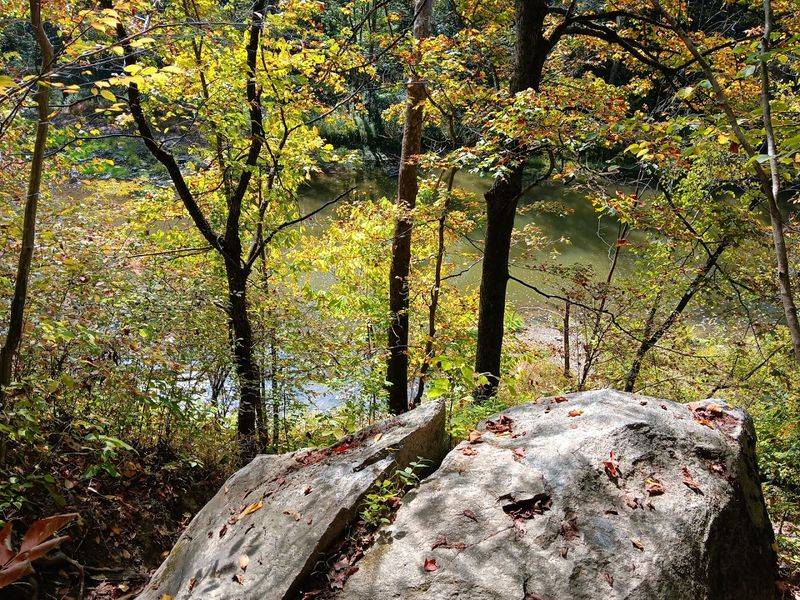
Kokiwanee’s biggest shock may be its vertical drama. For a preserve in northern Indiana, the bluffs and ravines feel unexpectedly bold, especially when the trail begins tracing edges, dropping into hollows, and climbing back out.
The ground is not mountain-country extreme, but it is lively enough to keep your eyes on both the scenery and your footing. That ruggedness gives the preserve its personality. A walk here is not just about distance.
It is about contour, with hills that break up the pace and create those quick visual reveals where river views or wooded slopes open up through the trees.
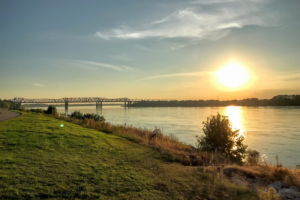
Along the bluff sections, the Wabash River becomes part of the whole composition. You are not simply near water – you are above it, beside it, and occasionally moving toward it through a changing sequence of timber, dirt, and rock.
Those changing elevations help the preserve feel larger than it looks on a map. The bluff scenery also explains why this place can swing from beginner-friendly to slightly adventurous depending on the route and conditions. Some paths are easy to follow and approachable for a casual outing.
Others can get muddy, uneven, or a little rough, especially after rain when the preserve’s creeks and falls have more energy.
That combination is where Kokiwanee earns its pull. You can come for a straightforward hike and still catch a surprising amount of topographic drama, or you can wander into sections that feel much more rugged than the surrounding region usually suggests.
Indiana has scenic trails all over the state, but this one stands out because the land does not behave the way many people expect it to. It folds, drops, and rises with real confidence.
The Waterfall Hunt Is the Real Hook
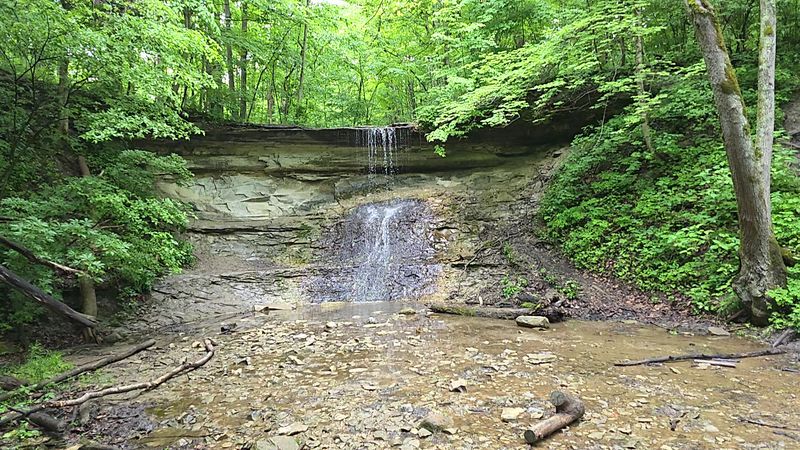
The headline feature here is water, but not in one single postcard frame. Kokiwanee is more interesting than that.
Instead of building the whole visit around one oversized waterfall, the preserve offers a scavenger-hunt version of the experience, with small falls, seasonal cascades, runoff-fed drops, and creek scenes that appear as the terrain twists through the woods.
That is why timing matters. After rain, during wetter stretches, or in cooler seasons when the ground holds moisture, the preserve shows more of its watery side.
The creeks become louder, muddy patches deepen, and the waterfall sections gain enough flow to shift from nice detail to true destination.
Some hikers come in expecting a giant plunge and leave pleasantly corrected. This is Indiana waterfall country in a compact, wooded form: layered, tucked into ravines, and tied closely to weather.
The best way to enjoy it is to treat each cascade as part of a chain of discoveries rather than measuring it against western national park spectacle.
That approach changes the pace of the hike. You start noticing where tiny channels cut through slopes, where water gathers at the base of exposed earth, and where sound reaches the trail before the view does.
Even a modest waterfall becomes more dramatic when it appears after a bend in a dense ravine. Kokiwanee’s water features also make the preserve repeatable. Dry-day visits emphasize bluffs, river views, and woodland structure.
Wet-day visits turn the same routes into a different show, with creek crossings, slick trail edges, and a stronger sense that the preserve is actively reshaping itself. For a relatively short hiking area, that weather-driven variability gives it unusual range and keeps the waterfall hunt from feeling like a one-time checklist.
Old Camp Traces Add a Layer of Intrigue
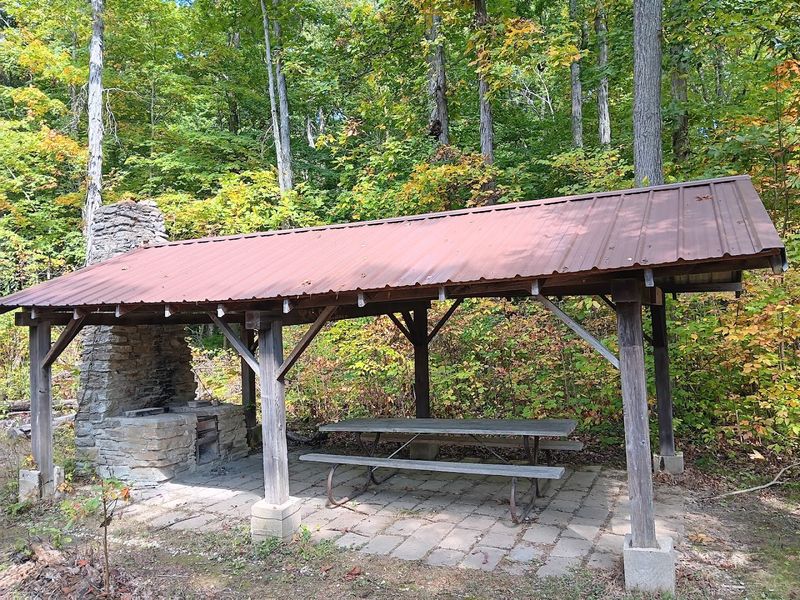
Kokiwanee is not only a nature preserve. It also carries the lingering shape of a former camp landscape, and that background changes the way the woods read as you move through them.
The setting is natural, quiet, and heavily wooded, yet there are moments when the human history of the property peeks through in subtle, slightly eerie ways.
Old building remnants and camp-era traces give the preserve a different texture from a standard trail system cut through untouched forest. You are walking through a place that had another life before it became a destination for hikers and birdwatchers.
That older layer adds curiosity without overwhelming the natural setting. The effect is not theatrical ruin tourism. It is more understated than that.
A fragment here, a structure there, a sense of former use embedded in the layout – enough to make the preserve feel storied, but not so much that the landscape stops being the star.
This is where Kokiwanee becomes especially memorable for people who like trails with narrative. Waterfalls and bluffs give you the scenery.
The old camp connections give the hike context, making the preserve feel less like a random patch of woods and more like a property that has been lived in, adapted, and reinterpreted over time.
That history also pairs naturally with the winding trail network. Branching paths and surprise reveals suit a place where different eras overlap.
One section might focus your attention on ravines and creek noise, while another invites a quick pause because the woods suddenly suggest human stories just beneath the surface. It keeps the hike from becoming visually repetitive.
Even when you are not looking at a waterfall or river vista, there is still a reason to stay alert to the details around the trail.
Loops, Spurs, and the Art of Choosing Your Own Hike
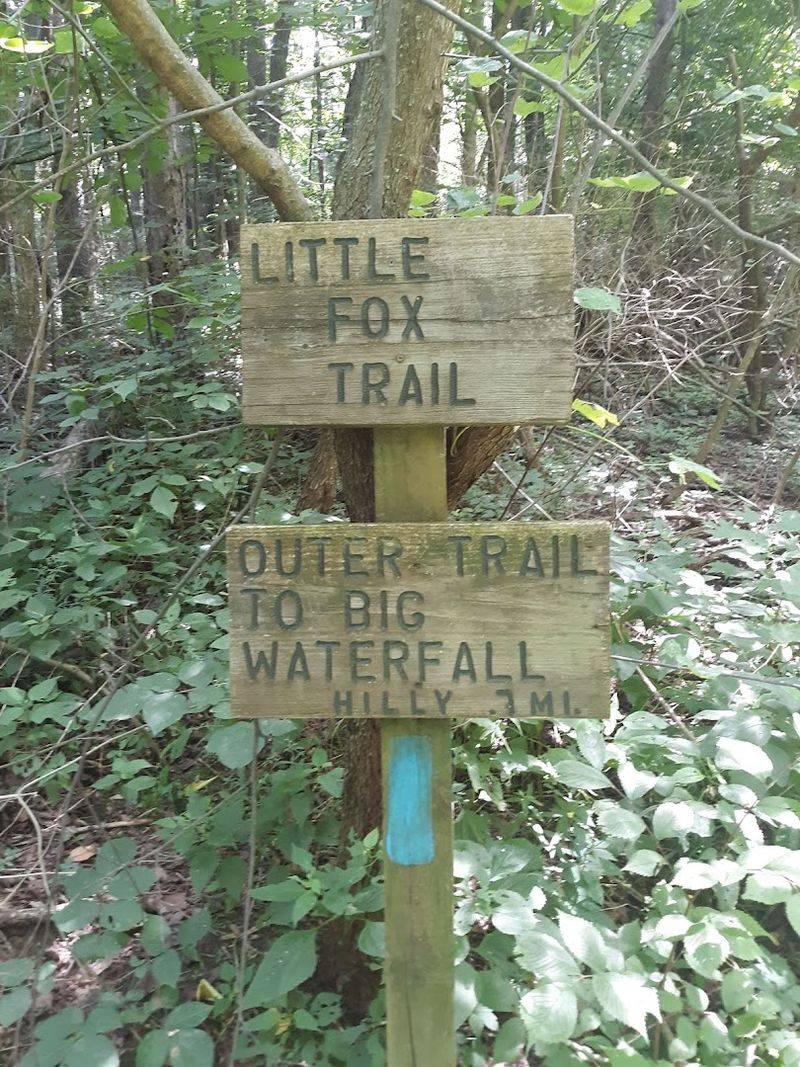
One of Kokiwanee’s smartest features is the way its trails branch and reconnect. That layout gives the preserve flexibility, which is a big reason it works for both casual walkers and hikers who want more terrain in one outing.
You are not locked into a single experience from the minute you start. A shorter loop can keep the day simple, especially if the goal is a quick waterfall stop or an easy walk with just enough elevation to stay interesting.
Stretch things out, and the preserve starts behaving more like a small adventure maze, with twists, turns, bluff sections, and side routes that reward a little extra time. That variety keeps the trail system from feeling repetitive even when distances stay manageable.
The branching design also changes your mindset. Instead of marching toward one fixed endpoint, you move with more curiosity. Every junction carries a tiny decision: stay high, dip lower, extend the route, or turn back toward the main path.
That flexibility is particularly helpful because conditions can vary. Mud, runoff, and occasional closures or rougher sections may shape the best route on any given day.
A preserve with only one rigid path would be less forgiving, but Kokiwanee gives you room to adjust without feeling like the trip has been cut short.
For newer hikers, that makes the place more approachable. For more experienced hikers, it keeps things dynamic.
You can tailor the outing to weather, energy level, and how much wandering you want to do, which is part of why Kokiwanee gets described as easy in some moments and a little more demanding in others.
The preserve is not trying to be one thing all the time. It gives you options, and in a trail system this compact, that design choice adds a lot of value.
Best Seasons, Best Conditions, Best Expectations
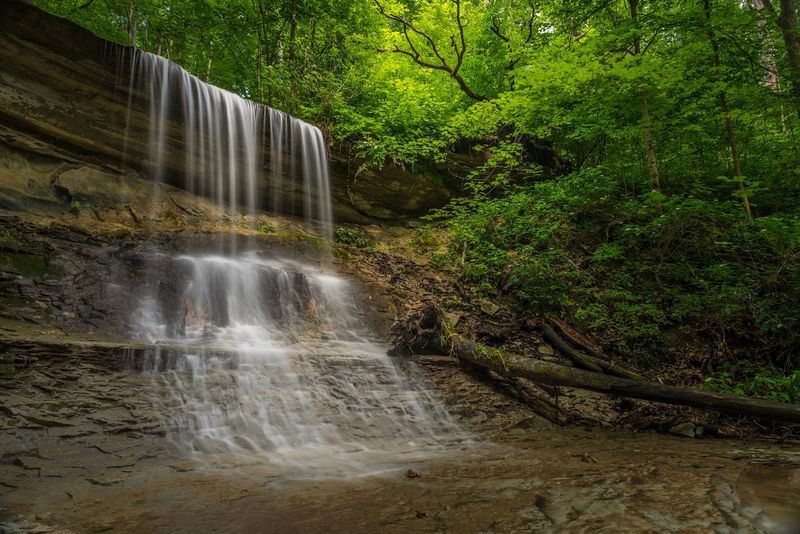
Timing can completely change how Kokiwanee presents itself. Visit during a wetter stretch, and the preserve leans hard into its ravines, trickling channels, and waterfall personality.
Go during drier conditions, and the focus shifts toward the bones of the landscape: bluff lines, river views, trail contours, and the architecture of the woods.
Spring has obvious advantages. Wildflowers can brighten the forest floor, visibility through less dense foliage can make route-finding easier, and recent rain often gives the falls more life.
Early May in particular tends to hit a sweet spot between fresh growth and active water, though conditions always depend on recent weather.
Cold or rainy days can also be surprisingly rewarding here. This is one of those preserves where gray skies are not necessarily a drawback.
Moisture adds sound, darkens bark and soil, and sharpens the contrast between moving water and the surrounding woods.
Summer likely closes in visually as the vegetation thickens, making some sections feel tighter and more enclosed. That can be beautiful in its own way, but it also means more attention to footing, humidity, and trail surface.
In leaf-off periods, the preserve opens up and lets the shape of the terrain do more of the talking. The smartest expectation is to come for a varied Midwestern hike, not a single oversized spectacle.
Kokiwanee delivers by stacking smaller moments – a creek crossing, a bluff edge, a river overlook, a hidden cascade, a muddy descent – into one evolving route.
If you arrive ready for that kind of layered experience, the preserve makes a strong case for itself in almost any season. If you show up chasing only one picture-perfect waterfall, you may miss the better story the landscape is telling all around it.
Why Kokiwanee Stands Out in a Crowded Hiking State
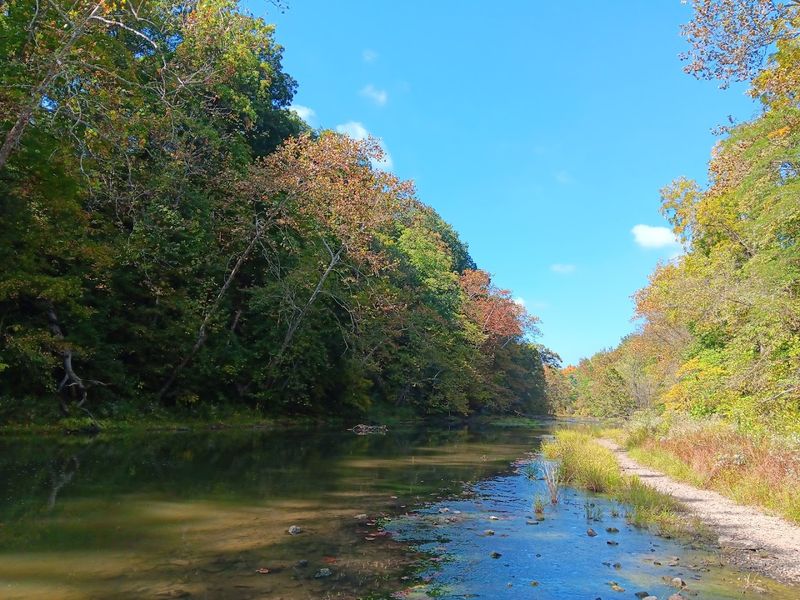
Indiana has no shortage of places to walk through woods, follow rivers, or catch seasonal color. Kokiwanee stands out because it compresses several different landscape experiences into one preserve without making any of them feel tacked on.
You get the river, the bluffs, the ravines, the waterfalls, the looping trail choices, and the ghosted traces of an older camp property all working together.
That combination gives the preserve unusual rhythm. One minute the hike is gentle and quiet. The next, the trail tips into rougher ground, a creek starts talking through the trees, or a river overlook opens where you did not expect one.
Just as important, Kokiwanee does not demand expert-level planning to be rewarding. It can handle a quick local escape, a family outing on easier sections, or a longer, more exploratory walk if you want to chase side trails and changing terrain.
Few small preserves balance accessibility and surprise this well. There is also a regional thrill to it. This is the kind of place that upends lazy assumptions about northern Indiana being visually predictable.
Kokiwanee has enough relief, moisture, and route variety to keep the hike active from start to finish, and enough quiet to make wildlife sightings feel plausible rather than rare.
In the end, the preserve’s real advantage is density. It packs more visual turns, topographic shifts, and natural drama into a modest footprint than many larger, better-known spots manage.
That makes it easy to revisit and hard to reduce to one feature. Even with waterfalls as the obvious draw, Kokiwanee succeeds because the entire setting is doing the work – every bend, every bluff, every muddy little descent toward water. For Lagro, that is a remarkably strong piece of terrain.
Share this story