Some restaurants reinvent themselves every few years, but the ones that become legends usually stay true to what works. Lucca Grill in Bloomington has been serving its signature thin-crust pizza since the 1930s, earning generations of loyal customers with a recipe that has stood the test of time.
Known for its crisp, cracker-thin crust, classic Italian-American dishes, and welcoming old-school atmosphere, this beloved neighborhood institution continues to draw locals and travelers alike. Every meal feels like a reminder that great food never goes out of style. If you’re searching for one of Illinois’ most iconic pizza destinations, Lucca Grill deserves a place on your list.
Where Market Street Suddenly Looks Hungrier
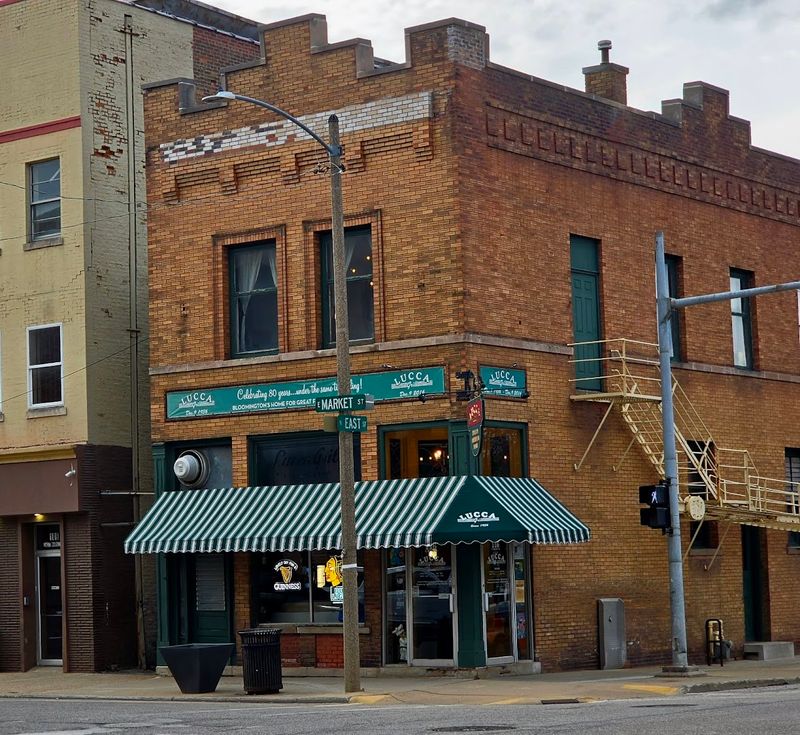
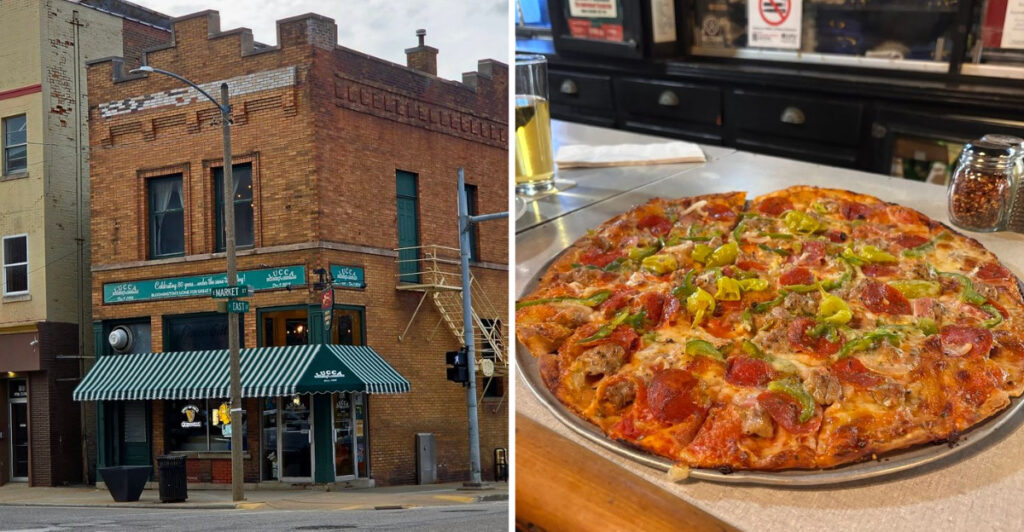
On East Market Street, The Lucca Grill catches your eye before a menu ever enters the conversation. The building carries the kind of downtown Bloomington character that newer restaurant spaces spend years trying to fake, with a storefront that looks settled, busy, and completely at home in its block.
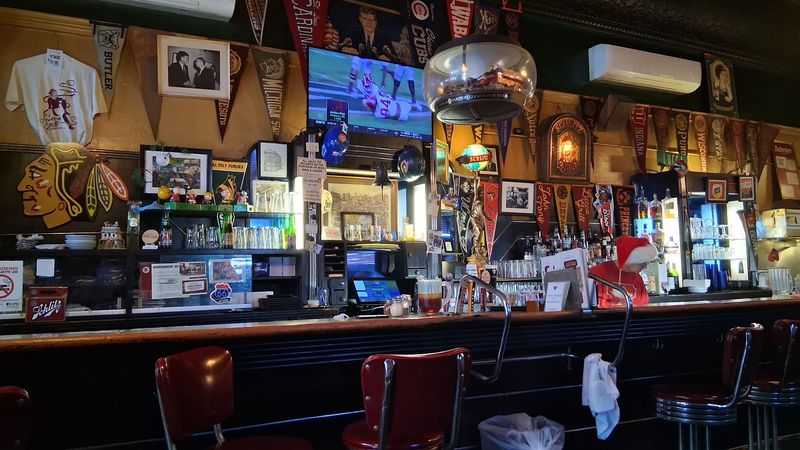
You do not approach it expecting minimalism or polished trendiness. Inside, the details lean proudly old school. A tin ceiling stretches overhead, the bar has antique weight to it, and the room is layered with memorabilia that gives your eyes plenty to do while you wait for a server to slide past with practiced speed.
None of it reads staged for social media first, which is exactly why the space has pull. The dining room works because it looks used in the best possible way.
Tables fill, conversation rises, plates move quickly, and the whole place has that compact, humming energy of a restaurant that understands how to stay lively without tipping into chaos.
Even before the food lands, you get a clear sense that this is a habit spot for Bloomington, not a one-time curiosity.
That visual identity matters because it prepares you for the kind of meal Lucca wants to serve. This is not deep dish drama or oversized gimmick pie.
It is an established Illinois restaurant with a distinct point of view, housed in a room that tells you consistency matters here.
By the time the first aroma of baked crust and marinara drifts across the table, the setting has already done half the introduction.
The Thin Crust That Built the Reputation
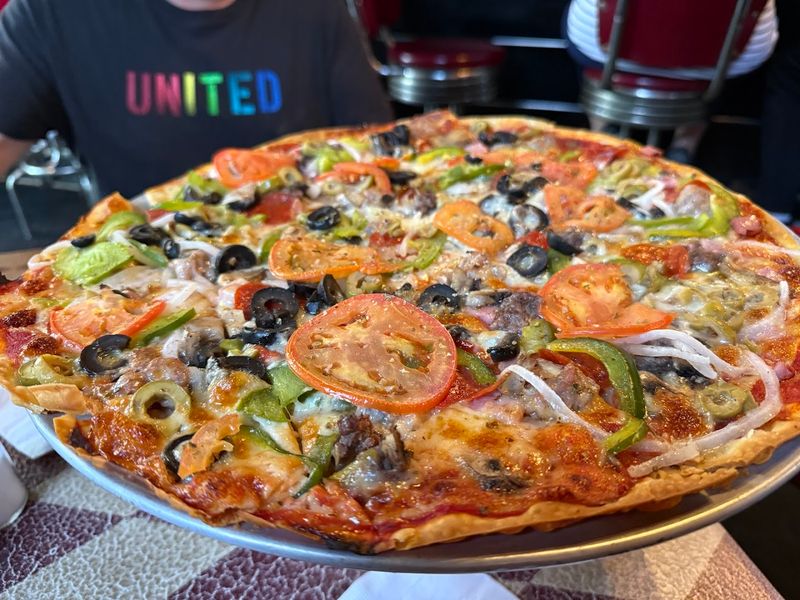
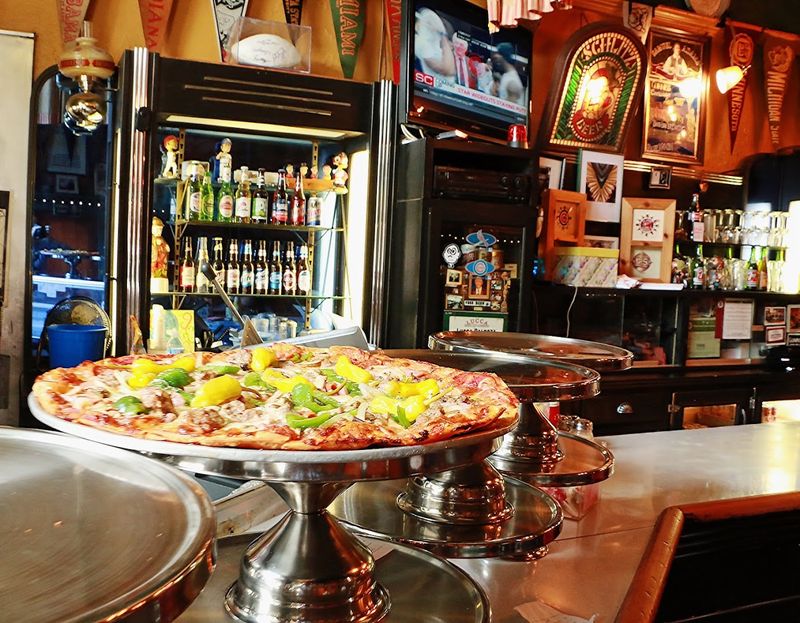
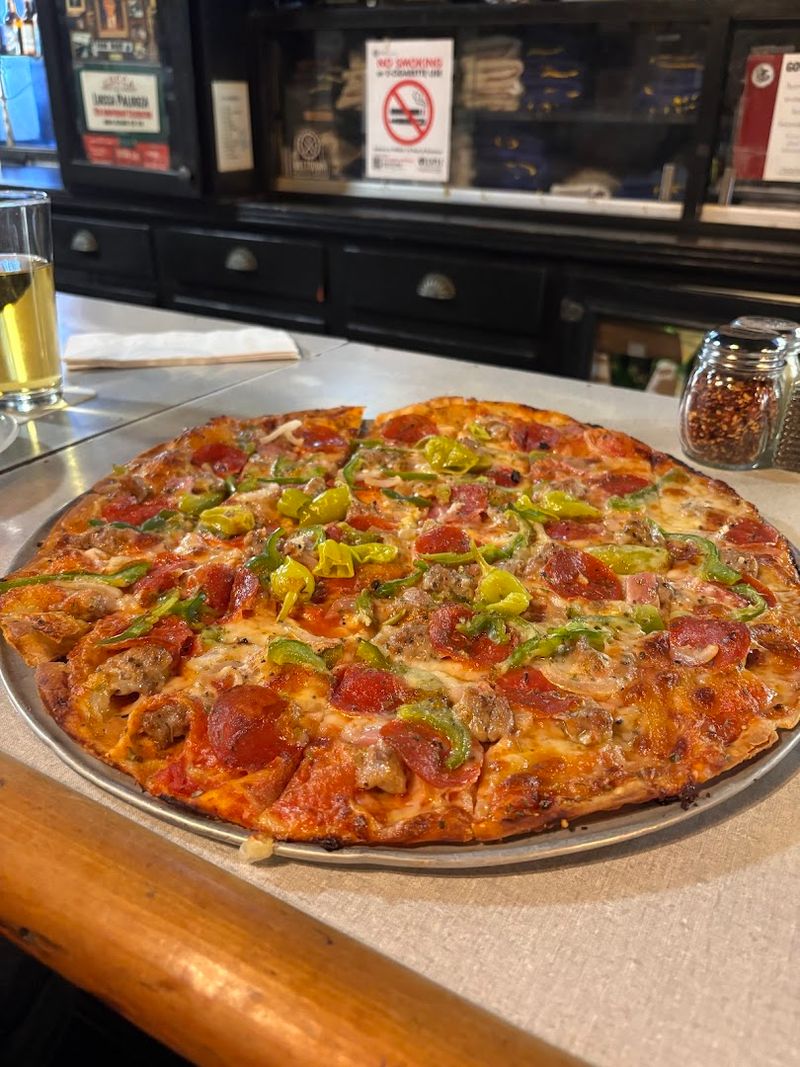
The central event at Lucca Grill is the thin crust pizza, and it earns that starring role without relying on spectacle. This is a crisp, old-school style that breaks with a light snap rather than drooping under its own toppings, closer to a tavern-crust instinct than a soft, foldable slice.
Its appeal starts with texture, but the structure is only part of the story. A good thin crust has to balance restraint and flavor, and that is where Lucca seems to understand its audience.
Sauce, cheese, and toppings need enough presence to register clearly, yet not so much that the crust loses the brittle edge people come for.
When it works, each bite moves fast: crunch first, then tomato, then cheese, then the seasoning from whichever topping combination hits next.
Several dishes in the room may tempt you, but pizza stays the conversation anchor for a reason. Specialty pies like the frequently mentioned A La Baldini have built recognition over time, while simple builds with sausage or pepperoni let the crust do more of the talking.
Either route makes sense if your goal is to understand why a restaurant open since 1936 still gets tied to one signature format.
That longevity also explains the confidence of the style. Lucca is not trying to reinterpret thin crust for the current moment or pile on novelty to prove relevance.
You order it because you want the restaurant’s version, rooted in repetition, muscle memory, and a kitchen that knows exactly what kind of pizza it wants crossing the dining room.
Do Not Skip the Bread and the Red Sauce
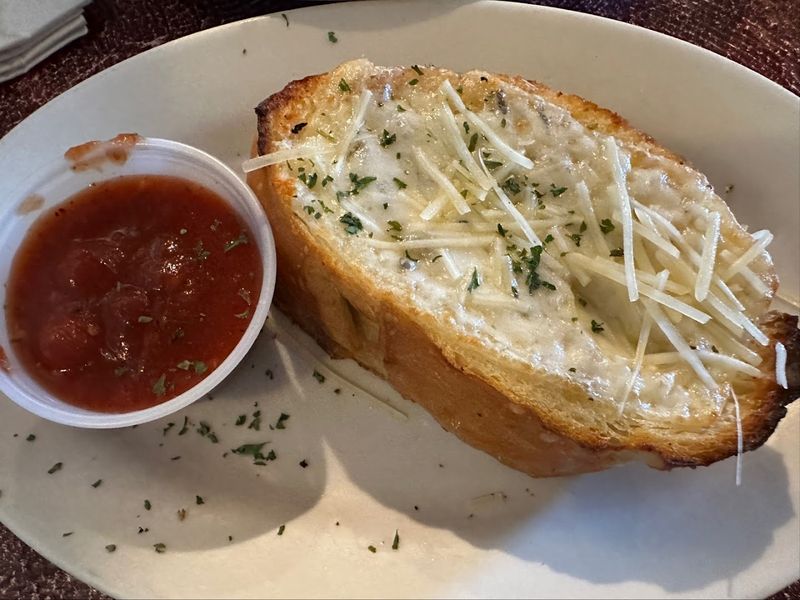
As strong as the pizza reputation is, Lucca Grill does not behave like a one-note pizza parlor. Starters and side dishes have their own following, especially the garlic bread and cheese garlic bread, which show up again and again in conversations about what actually lands on the table first.
That matters because these opening plates set the tone for the meal: simple, familiar, and executed with conviction. The bread draws attention for texture as much as flavor.
You get that useful contrast between a crisp exterior and a softer interior, with enough garlic to announce itself and enough richness to keep each piece from disappearing too quickly. Paired with marinara, it becomes more than filler while you wait for entrées.
The sauce deserves its own moment because dipping sauce can tell you a lot about a restaurant’s priorities. A marinara that tastes lively, seasoned, and intentional makes every supporting item stronger, whether it lands beside garlic bread or breaded meat ravioli.
Instead of reading like an afterthought parked on the side of the plate, it helps tie the appetizer spread back to the Italian-American identity of the room.
Then there are the other small temptations that broaden the experience. Breaded ravioli, antipasto, spinach artichoke dip, onion rings, even fries with sandwiches suggest a kitchen comfortable serving both classics and crossover comfort foods without losing focus.
If you arrive thinking only about pizza, the opening round can quietly widen your order and turn a quick dinner into a longer, more layered one.
More Than Pizza Behind the Red Booth Energy
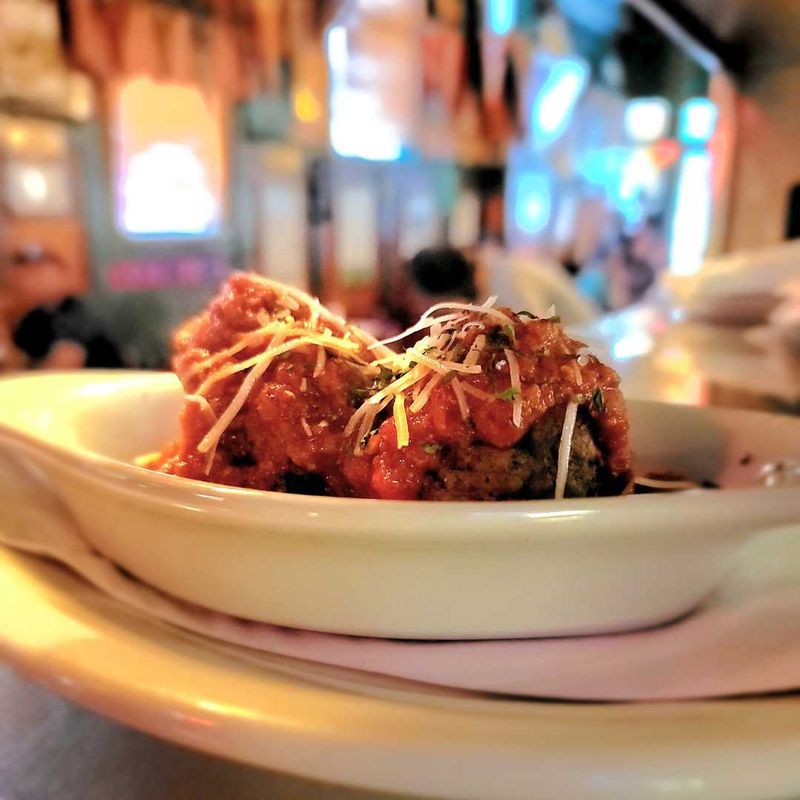
Even though the thin crust gets top billing, Lucca Grill clearly understands the comfort of a broader Italian-American menu. Pasta, sandwiches, salads, and familiar red-sauce standards give the place a wider range than the word pizza alone suggests, which makes it useful for mixed groups.
Not everyone arrives wanting the exact same thing, and this menu leaves room for that. Chicken Parmesan, spaghetti and meatballs, cannelloni, Alfredo, shrimp pasta, and meatball subs all fit the house identity without fighting for attention.
These are the kinds of dishes that belong in a room with an antique bar and a tin ceiling because they match the restaurant’s steady, recognizable tone. You can picture them arriving hot, generously portioned, and ready to satisfy rather than surprise.
That breadth changes how Lucca functions in real life. It is not merely a destination for one specific pie but a place where a table can split between pizza, pasta, sandwiches, and dessert without anyone seeming like they ordered incorrectly.
A grilled chicken Caesar salad can appear beside a specialty pizza, and the restaurant still looks completely coherent.
Dessert helps close that circle. Tiramisu comes up often enough to register as more than a random sweet option, offering a cold, creamy finish after a meal built on crust, cheese, and red sauce.
By the end, Lucca reads less like a narrowly defined pizza stop and more like a durable neighborhood Italian restaurant that happens to have a signature crust people refuse to stop talking about.
Since 1936, Bloomington Has Kept This Room Busy
Longevity can become background noise in restaurant writing, but Lucca Grill’s 1936 starting point actually changes how you read the room. A place that has operated across so many decades is not surviving on nostalgia alone.
It has to remain useful to its city, adaptable enough for current diners, and consistent enough that traditions do not get dropped every time fashions change.
That is why the old-school design lands so well here. The antique bar, the ceiling, the memorabilia, and the layered visual clutter do not seem added to suggest history; they are the natural texture of a business that has been around long enough to accumulate identity honestly.
You are not looking at a retro concept. You are looking at a restaurant that had no need to invent one. Bloomington gives the setting extra context.
Downtown restaurants depend on rhythm from workday lunches, date nights, family dinners, and event traffic, and Lucca appears built for all of those shifts.
It can serve as a quick midday stop, a lively evening meal, or the kind of pre-show dinner that turns into a standing habit when you are heading out nearby.
That local embeddedness may be the most persuasive detail of all. Historic restaurants often become admired from a distance, photographed more than truly used.
Lucca comes across differently: active, booked, fed by regular demand, and still central to how people eat in this part of town. Its age is impressive, but the sharper point is that the place still functions like a current Bloomington institution.
A Dining Room That Moves Fast Without Feeling Rushed
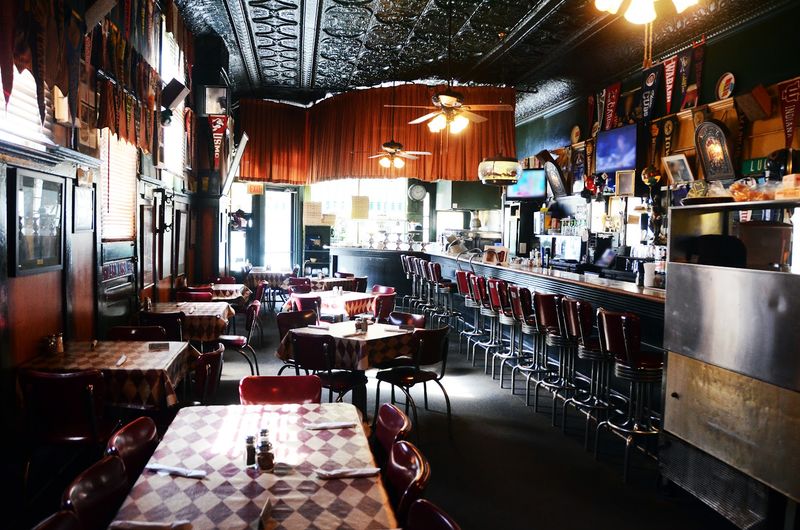
One of the clearest signs of a seasoned restaurant is how the floor works when the room is full. At Lucca Grill, service is frequently described as quick, attentive, and friendly, but the more revealing detail is the pace.
Servers seem to move with the confidence of people who know the room well, threading between tables efficiently without turning the experience mechanical.
That kind of service matters in a busy restaurant with a menu that covers pizza, pasta, sandwiches, appetizers, and desserts. Timing has to stay organized when one table wants a fast bite and another is settling in for a longer dinner.
Lucca’s staff appears to understand that rhythm, checking in often enough to keep things comfortable while still letting the meal maintain its own momentum.
The energy this creates is lively rather than frantic. A packed dining room can easily become noisy in an exhausting way, especially in older spaces, yet here the movement seems to contribute to the restaurant’s identity.
Food reaches the table hot, drinks stay in motion, and attention does not vanish just because the place is busy. That balance also reinforces the old-neighborhood personality of Lucca without turning it into theater. You are not being sold on exaggerated hospitality cues or scripted charm.
Instead, the service supports the food and the room by making a crowded night run smoothly, which may be one reason so many parties leave already planning the reservation timing for their next visit.
How to Time Your Lucca Grill Run in Illinois
If you want the smoothest Lucca Grill experience, timing matters almost as much as appetite. This is the kind of established downtown spot that can fill quickly, especially later in the week and on weekends, so walking in casually is not always the smartest move.
A reservation is the practical play when dinner matters, particularly if you are aiming for prime evening hours. The posted schedule gives you a useful framework.
Lucca opens at 11 AM Monday through Saturday, runs until 10 PM on most weekdays, stays open until 11 PM on Friday and Saturday, and shifts to a shorter 3 PM to 9 PM window on Sunday.
That makes lunch a potentially calmer way to get acquainted with the room if you prefer less competition for tables.
Location helps too. Being on East Market Street puts you right in downtown Bloomington, which makes Lucca easy to fold into a broader evening rather than treating it as an isolated errand.
You can plan dinner around other stops nearby, or simply let the restaurant anchor the night and give yourself enough time to enjoy appetizers before the pizza arrives.
The best strategy depends on the kind of meal you want. If your goal is pure thin-crust focus, an earlier visit can keep the experience straightforward and relaxed.
If you enjoy a busier room with more motion, later dinner hours deliver that classic full-house energy, where plates fly, the dining room buzzes, and the restaurant looks exactly like a local institution should.
Why This Roosevelt-Era Favorite Still Lands
The strongest argument for Lucca Grill is not that it is old, beloved, or busy, though all of those things are true. The sharper argument is that its identity is unusually clear.
You walk in knowing you are at a long-running Italian-American restaurant, and every major element, from the room to the crust to the service tempo, backs that up without wobbling.
Too many legacy restaurants coast on reputation while the actual experience fragments into disconnected parts. Lucca appears more disciplined than that.
The historic surroundings support the food, the food matches the style of service, and the menu gives enough range to welcome different appetites while still keeping the thin crust at the center of the story.
That cohesion is why the place stands out in a world crowded with louder concepts. It does not need novelty toppings, oversized portions, or constant reinvention to stay relevant.
Instead, it offers a version of dining that many restaurants try to imitate later: recognizable specialties, a room with texture, and a sense that the systems behind the scenes have been sharpened by years of repetition.
If you are deciding whether The Lucca Grill deserves a stop, the answer rests in that combination of clarity and endurance.
Bloomington has no shortage of places to eat, but not many can point to a 1936 origin and still make their signature dish feel current at the table.
Order the thin crust, add the garlic bread, settle into the old-school surroundings, and the restaurant’s logic becomes obvious.
Share this story