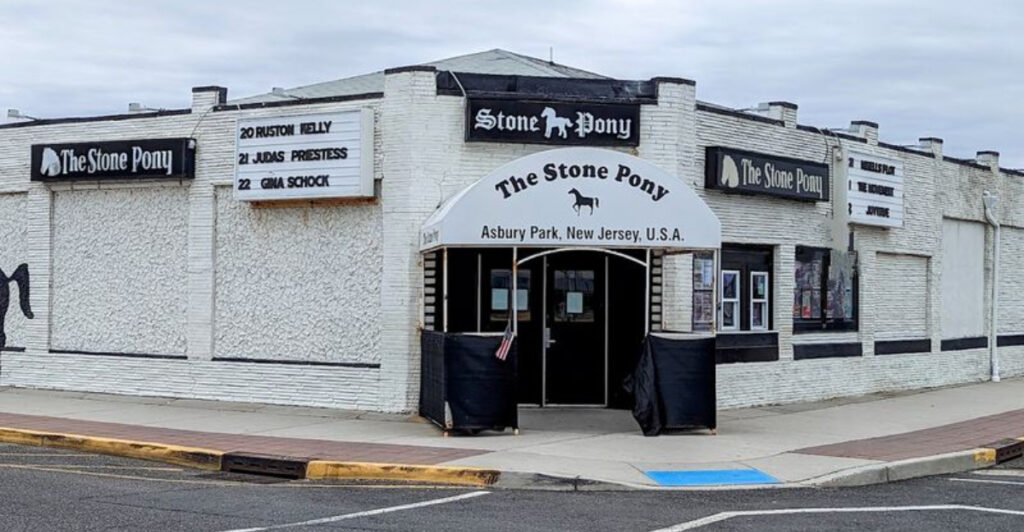
A few steps from the Asbury Park boardwalk, a black pony silhouette hangs above a building where an ordinary concert ticket has occasionally turned into the story of a lifetime. The scheduled band might be halfway through its set when Bruce Springsteen suddenly walks out with a guitar.
A young Jon Bon Jovi might be onstage when one of his heroes joins him. A local group playing three nights a week might develop a horn-driven sound that soon travels across the country.
That is the kind of history packed into The Stone Pony, the Ocean Avenue nightclub that opened in 1974 and somehow became both a neighborhood hangout and an international rock landmark.
Its walls have absorbed decades of loud guitars, sweaty crowds, benefit shows, career-making performances, closings, comebacks, and surprises nobody could have advertised in advance.
More than 50 years later, the room still feels less like a polished monument than a working club where rock history could happen again before last call.
The Asbury Park Nightclub That Became a Global Rock and Roll Landmark
The building at 913 Ocean Avenue did not begin life with platinum records and famous faces on the walls. It had previously housed Mrs. Jay’s, a popular restaurant and bar, followed by an abandoned disco called The Magic Touch.
John P. “Jack” Roig bought the property and brought in his former co-worker Robert “Butch” Pielka as general manager and minority partner. Together, they opened The Stone Pony on February 8, 1974, joining an Asbury Park music culture already shaped by venues such as the Upstage, the Student Prince, and the Sunshine-In.
Nobody involved could have known that their new club would eventually be mentioned in the same breath as America’s most storied music rooms. The location helped give it an identity that could never be copied.
The Pony stood near the Atlantic in a shore city that had seen glamorous resort years, severe decline, and a long struggle to rebuild. While much of the surrounding oceanfront sat neglected, musicians and fans continued gathering inside this relatively modest building.
That contrast became part of its appeal. The place was never an ornate theater or a carefully preserved architectural masterpiece.
It was a working rock club where bands had to win over real audiences at close range. National acts including Elvis Costello, Stevie Ray Vaughan, Blondie, The Ramones, Cheap Trick, Joan Jett, Green Day, Oasis, No Doubt, The Kinks, and countless others eventually passed across its stage.
Yet the club never stopped making space for Jersey musicians still trying to earn a following. That combination turned The Stone Pony into more than a famous room.
It became a bridge between Asbury Park’s local scene and the wider rock world, carrying the sound and attitude of the Shore far beyond Ocean Avenue.
A Snowstorm and One Paying Customer Nearly Ended the Story Before It Began
Seven inches of snow covered Asbury Park on opening night, the club’s heater stopped working, and the total receipts reportedly came to one dollar. That is not the opening chapter anyone would write for a future rock institution unless it had actually happened.
The trouble did not disappear when the roads cleared. By December 1974, less than a year after the doors opened, creditors were closing in and foreclosure looked possible.
The Pony needed more than a few decent weekends. It needed a reason for people to return regularly, even when there was no nationally known act on the bill.
Salvation arrived in the form of a local group called the Blackberry Booze Band. The band began playing the club frequently and drawing the kind of crowds that could keep the lights on.
Its lineup included Ocean Grove’s John “Southside Johnny” Lyon and Middletown musician Steve Van Zandt, two names that would become central to the Jersey Shore sound.
As personnel shifted and the repertoire grew heavier on soul, classic R&B, horns, and dance-floor energy, the group evolved into Southside Johnny and the Asbury Jukes.
They settled in as a house band, playing as often as three nights a week and transforming a struggling new bar into a genuine scene. The early Pony was not surviving because tourists wanted souvenirs from a famous venue; it was not famous yet.
It survived because local audiences wanted to hear this music, drink a cold beer, dance, and come back the next night. That distinction matters.
The club’s legend did not begin with a corporate launch or a celebrity endorsement. It began with a broken heater, an almost empty register, and musicians who played often enough and well enough to prevent the whole experiment from collapsing before its first anniversary.
Bruce Springsteen’s Surprise Sets Turned Ordinary Nights Into Rock History
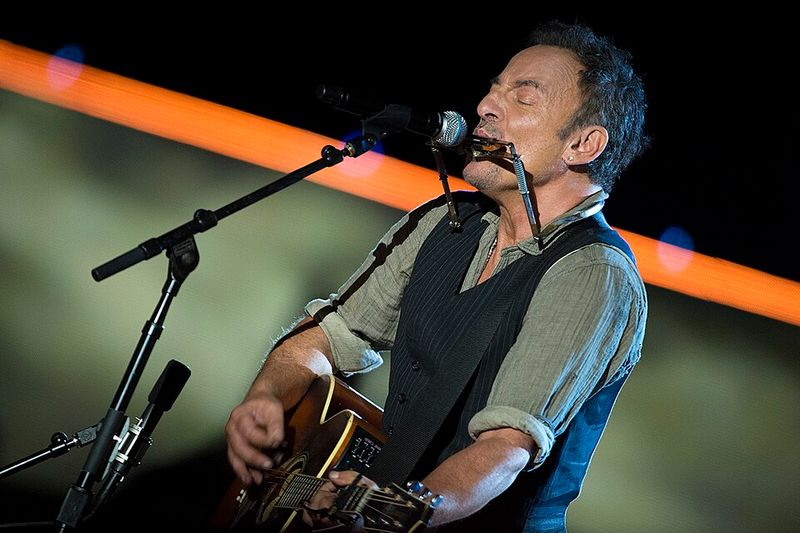
For generations of Pony regulars, part of buying a ticket has been wondering whether the name printed on it will be the biggest name they see that evening. Bruce Springsteen created much of that delicious uncertainty.
Although his career was already developing elsewhere in the New Jersey club circuit when The Stone Pony opened, he quickly became inseparable from its story. His first surprise appearance there came in September 1974, when he joined the Blackberry Booze Band, the group that would soon become Southside Johnny and the Asbury Jukes.
Springsteen kept returning as his own audiences grew from club crowds to arenas and stadiums. He appeared with friends, E Street Band members, local musicians, benefit-show lineups, and bands whose fans had walked in expecting a perfectly normal evening.
One of the club’s defining early events came on Memorial Day weekend in 1976, when a Southside Johnny and the Asbury Jukes concert was broadcast across a network of radio stations.
Springsteen, E Street musicians, Ronnie Spector, and Lee Dorsey joined the show, helping place both the band and the venue before a much larger audience.
Their performance of Sam Cooke’s “Havin’ a Party” became an unofficial anthem for the club and the city. The surprises continued decades later.
In September 2024, on the night before his Sea.Hear.Now festival headlining set, Springsteen turned up at a Stone Pony afterparty and performed several songs with Danny Clinch’s Tangiers Blues Band alongside guests including Jake Clemons and Robert Randolph.
Moments like that explain why longtime fans pay attention to the side of the stage whenever a familiar guitar case appears.
Springsteen’s connection to The Pony is not simply a historical plaque attached to the wall. It is a living habit of returning home, stepping into a smaller room, and reminding everyone that a Jersey Shore bar can still produce the most memorable set of the year without putting it on the poster.
Southside Johnny and Bon Jovi Helped Shape the Sound of the Jersey Shore
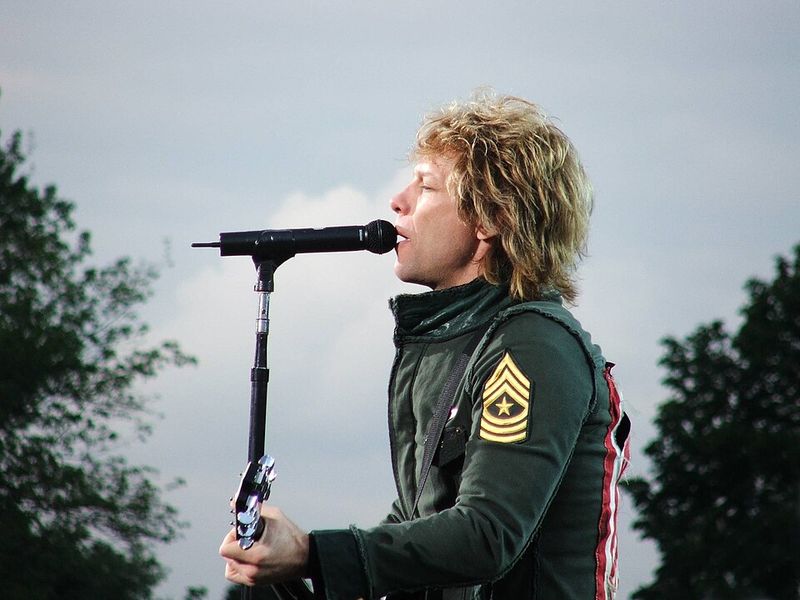
Long before the phrase “Jersey Shore sound” carried international recognition, Southside Johnny and the Asbury Jukes were building it night after night in front of The Stone Pony’s crowd.
Their music mixed rock with the punch of classic soul, rhythm and blues, prominent horns, and the communal release of a bar band determined to keep everyone moving.
Steve Van Zandt helped shape that approach as a musician, manager, songwriter, and producer before joining Springsteen’s E Street Band. By 1976, the Jukes had signed with Epic Records and released their debut album, I Don’t Want to Go Home.
The Memorial Day broadcast from The Pony that year carried the band’s music well beyond New Jersey, proving that a sound developed in a Shore nightclub could command national attention. Jon Bon Jovi belonged to the next wave of ambitious Jersey musicians who treated local clubs as proving grounds rather than waiting rooms.
As a teenager, he performed with Atlantic City Expressway and other early bands around the circuit. One particularly tidy piece of rock folklore took place in 1979, when the 16-year-old singer was performing Springsteen’s “The Promised Land” at The Stone Pony and Springsteen himself joined him onstage.
Bon Jovi later developed into one of the biggest arena-rock bands in the world, but his connection to the club did not vanish when the crowds grew. He returned for performances and community events, including a benefit held after the September 11 attacks to honor victims and assist their families.
The Pony’s real contribution was not magically creating stars the moment they crossed its threshold. It gave musicians a demanding room, a knowledgeable audience, and a community where collaborations happened naturally.
Southside Johnny, Van Zandt, Springsteen, and Bon Jovi did not all sound alike, but they shared a local musical ecosystem that valued big choruses, soul influences, hard work, and the ability to make a crowded room feel involved in every song.
The Summer Stage Brings Huge Concerts to the Edge of the Atlantic
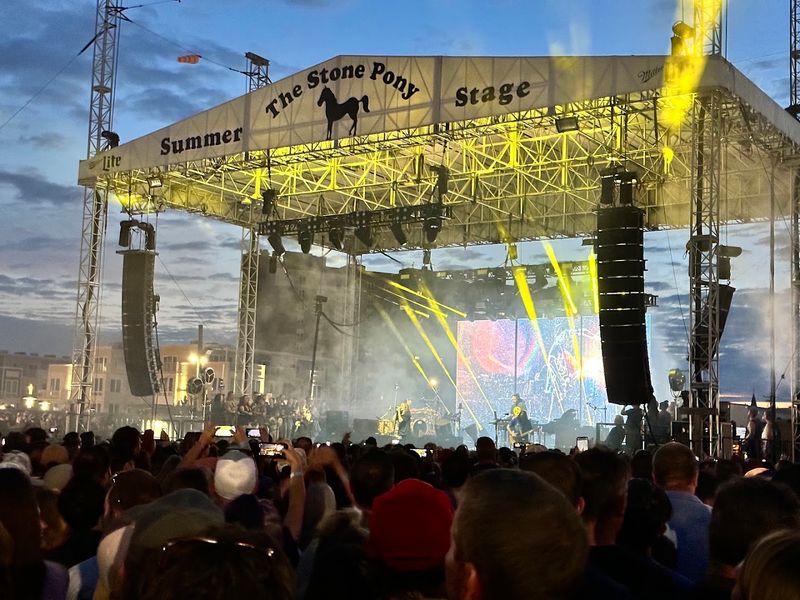
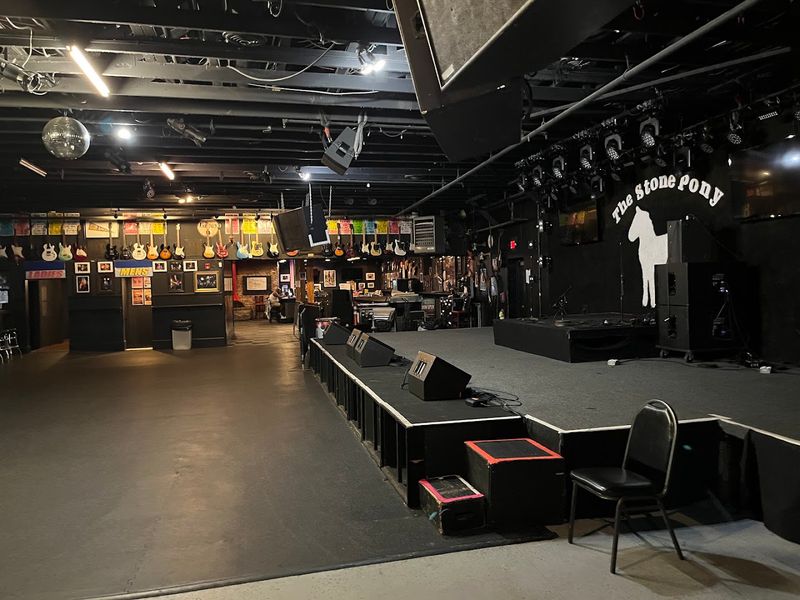
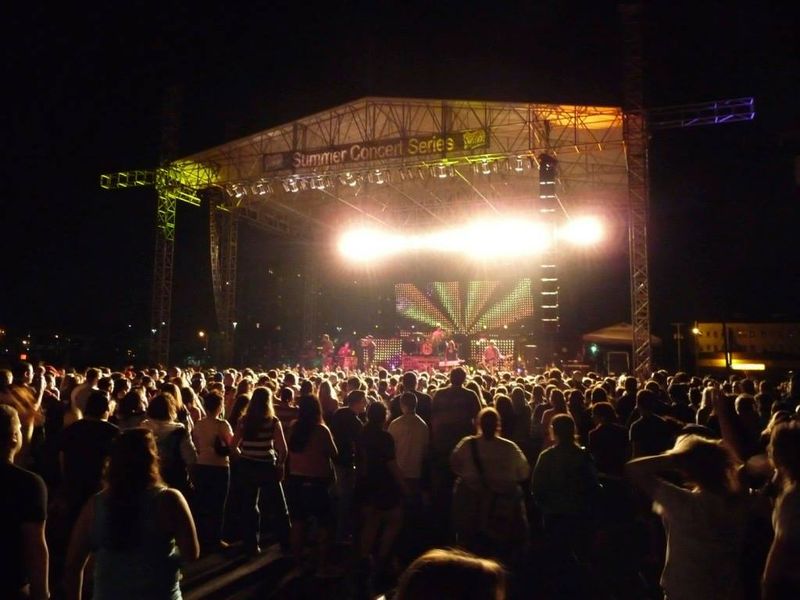
The experience changes completely when the music moves outside. The Stone Pony Summer Stage, opened in 2009, expands the venue from an intimate indoor club holding roughly 850 people to an outdoor concert space with room for about 4,500.
The stage rises beside the original building near the boardwalk, where the usual concert ingredients of towering speakers, lighting rigs, and tightly packed crowds arrive with an unmistakably Asbury Park addition: salt air drifting in from the ocean.
Shows generally fill the warmer stretch from May into early fall, allowing the Pony to book performers whose audiences would overwhelm the indoor room without losing the connection to the historic club.
The 2026 schedule shows how far the programming now stretches.
Lucy Dacus, Blues Traveler, Gin Blossoms, Spin Doctors, Chance the Rapper, The Front Bottoms, Social Distortion, All Time Low, Charley Crockett, and Rise Against are among the artists scheduled for outdoor dates, covering indie rock, alternative, hip-hop, punk, country, and the kind of 1990s singalongs that can carry across half of Asbury Park.
Summer Stage events sometimes include music inside the Pony before or after the outdoor headliner, creating a full evening that moves between the club’s two personalities. Outdoors, the production is bigger, the crowd is broader, and dusk can become part of the show as the lights take over from the setting sun.
Indoors, the ceilings are lower and the history feels close enough to touch. The two settings complement each other rather than compete.
One preserves the sweaty, close-quarters club experience that built the Pony’s reputation. The other proves the venue can host major touring acts beside the Atlantic without turning into a generic amphitheater that could have been dropped into any city.
Why The Stone Pony Still Ranks Among the World’s Greatest Rock Clubs
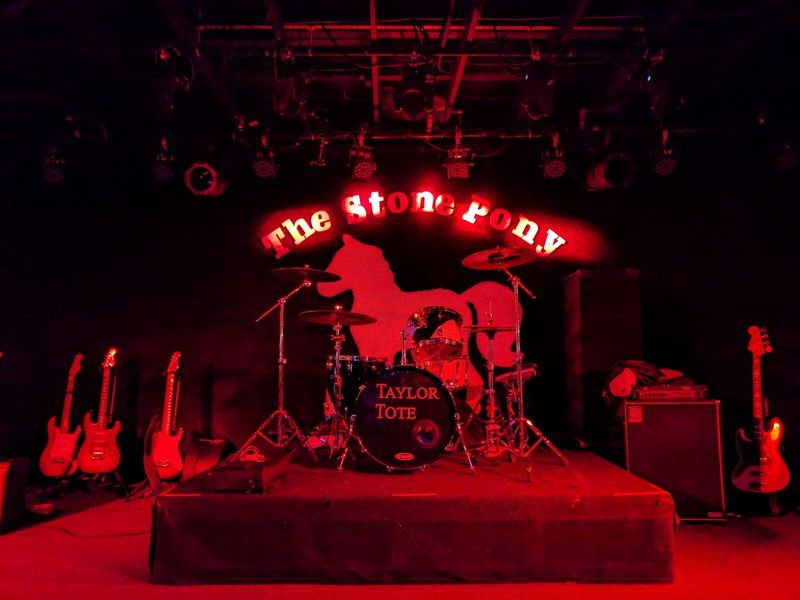
Longevity alone does not make a nightclub great. Plenty of old rooms survive without shaping the culture around them, while plenty of famous venues disappear once the neighborhood changes or the finances stop working.
The Stone Pony has come uncomfortably close to that fate more than once. Rising expenses and financial trouble led to bankruptcy proceedings in the early 1990s.
The club later closed after a final run of shows known as the “Pony’s Last Ride,” and proposals connected to Asbury Park’s redevelopment repeatedly raised fears that the building might vanish. Musicians, fans, employees, and local supporters refused to treat it as disposable.
New owner Domenic Santana renovated and reopened the venue in May 2000, improving the lighting, sound, outdoor area, and facilities while preserving the character that made people care about it. The reopening included performances by The Smithereens, Gary U.S.
Bonds, and Lance Larson, along with community events and support for the Stephen Crane House. Since then, the Pony has continued balancing national touring acts, local bands, charity concerts, rehearsals, recording projects, and surprise appearances.
Its stage has welcomed artists ranging from The Ramones, Stevie Ray Vaughan, and Iggy Pop to Maroon 5, The Strokes, The Lumineers, The Jonas Brothers, and The 1975.
Former Rock and Roll Hall of Fame executive Robert Santelli has described it as a venue that has firmly earned a place among rock’s great clubs, and its international reputation now rests on more than celebrity names.
The Stone Pony matters because the room remains active. New bands still have to face the crowd.
Established musicians still come back. Fans still enter knowing precisely what happened there before, yet listening for something they have never heard.
Outside, Asbury Park keeps changing. Inside, the essential arrangement remains wonderfully simple: a stage, a band, a packed floor, and the possibility that tonight’s show will be the one people talk about for decades.
Share this story