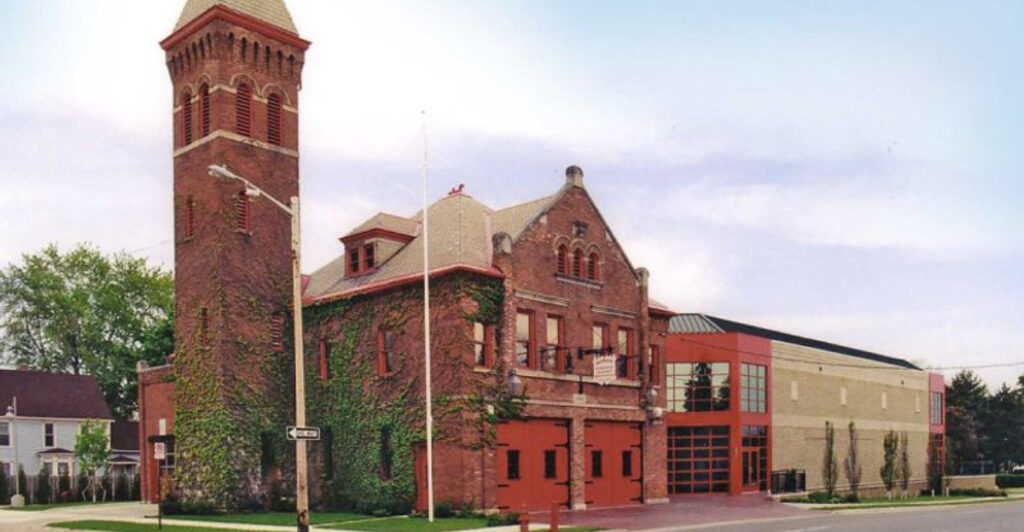
Tucked along West Cross Street in downtown Ypsilanti, the Michigan Firehouse Museum and Education Center is one of those places that surprises nearly everyone who walks through its doors. Housed inside a genuine historic firehouse, this three-floor museum packs in over a century of firefighting history, from hand-pulled hose carts to early motorized pumpers.
Kids can climb on real fire trucks, adults can explore beautifully preserved crew quarters, and history buffs can spend hours reading through displays that most people never even knew existed. For families, curious travelers, or anyone passing through southeastern Michigan, this spot delivers a lot more than its modest exterior suggests.
The Building Itself Tells the First Story
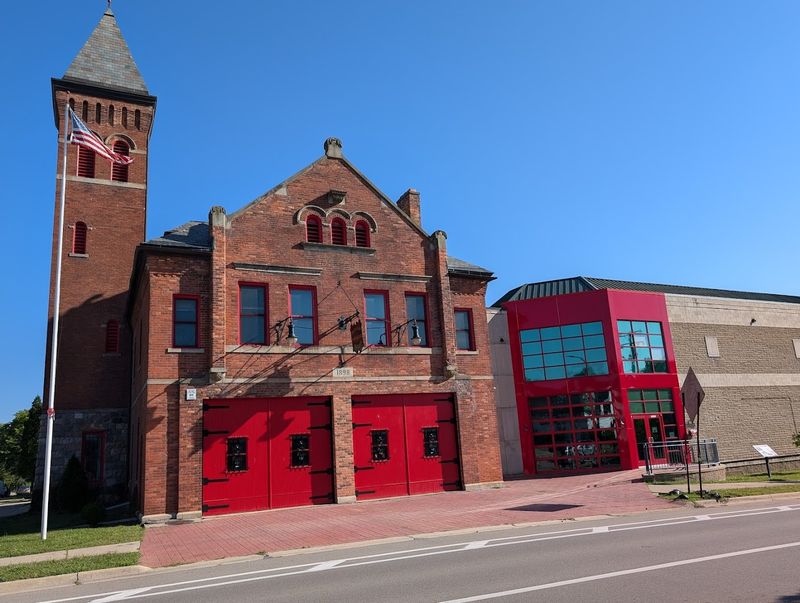
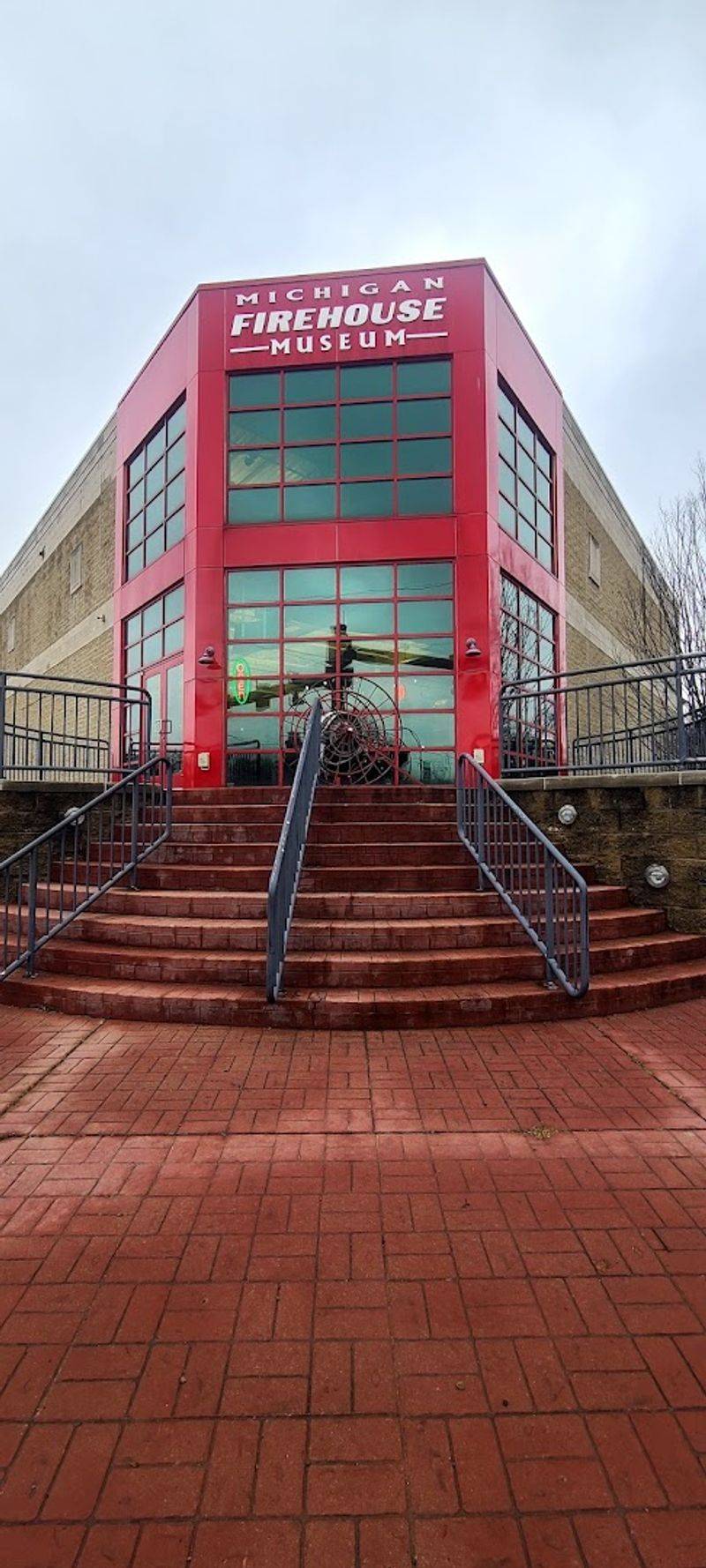
Before you even step inside, the building at 110 W Cross St makes a statement. The original firehouse structure has been carefully preserved, and standing outside, you can already sense that this place carries real history inside its walls.
The brick facade, the wide bay doors, and the classic proportions of the architecture all signal that this was once a working station where real firefighters lived and responded to emergencies.
The museum is physically attached to the old firehouse, which means the exhibits are not just collections placed inside a generic building. The space itself is part of the story.
Walking through the main entrance, visitors immediately encounter the scale of the collection, with apparatus spread across the ground floor in a layout that rewards slow, attentive exploration.
Three floors connected by both stairs and an elevator give the museum a surprisingly generous footprint. Families with strollers have no trouble navigating between levels, which makes it genuinely accessible for all ages.
The ground floor opens up the main firehouse bay, while upper levels hold the restored crew quarters and additional displays, and the basement extends the collection further with more vintage vehicles.
The building’s age adds texture to every exhibit. Standing near a horse-drawn hose cart on the same floor where firefighters once prepared for calls makes the history feel grounded rather than abstract.
Visitors often comment that the physical space enhances the exhibits rather than just containing them. For a museum that operates on a modest budget with volunteer energy, the overall presentation is genuinely impressive.
The care that has gone into maintaining both the structure and the collection is visible in every corner, from the polished brass fittings to the neatly organized display cases lining the walls.
Vintage Fire Trucks Spanning Nearly Two Centuries
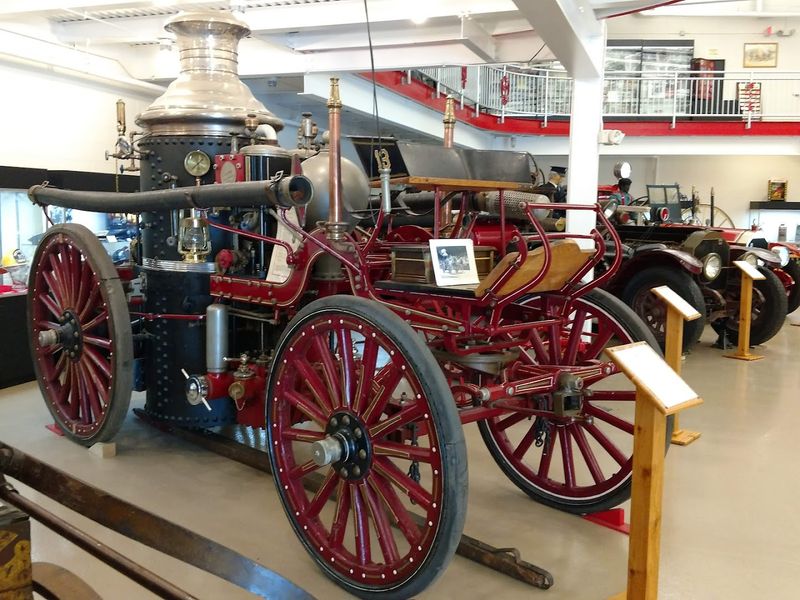
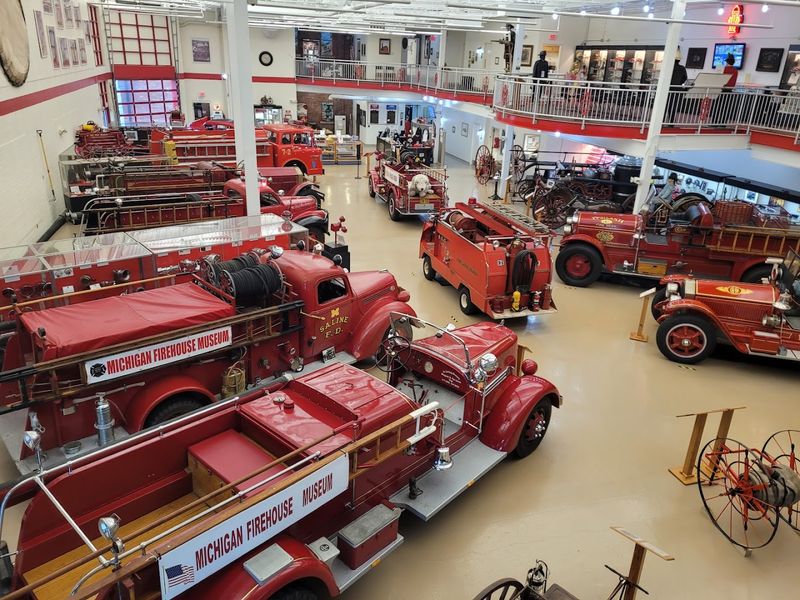
The fire apparatus collection here is the undeniable centerpiece of the Michigan Firehouse Museum and Education Center. With more than 20 pieces of equipment reportedly spanning from the 1890s through the 1960s, the variety is striking.
Horse-drawn hose carts sit alongside early motorized pumpers, and the progression of firefighting technology becomes visually clear just by walking the floor from one end to the other.
Each vehicle carries its own backstory, often connected to specific Michigan fire departments. Some pieces were donated by departments upgrading their fleets, while others came through private collectors who recognized their historical value.
The result is a lineup that covers an unusually broad range of eras, making it possible to trace the evolution of the fire truck from a simple cart to a complex piece of machinery in a single visit.
The condition of the vehicles is worth noting. Many have been restored with obvious attention to detail, with paint, chrome, and mechanical components brought back to impressive shape.
Getting up close to a piece of apparatus from the 1890s and being able to study the hand-stitched leather hose connections or the original pump mechanisms is the kind of experience that simply cannot be replicated through a screen.
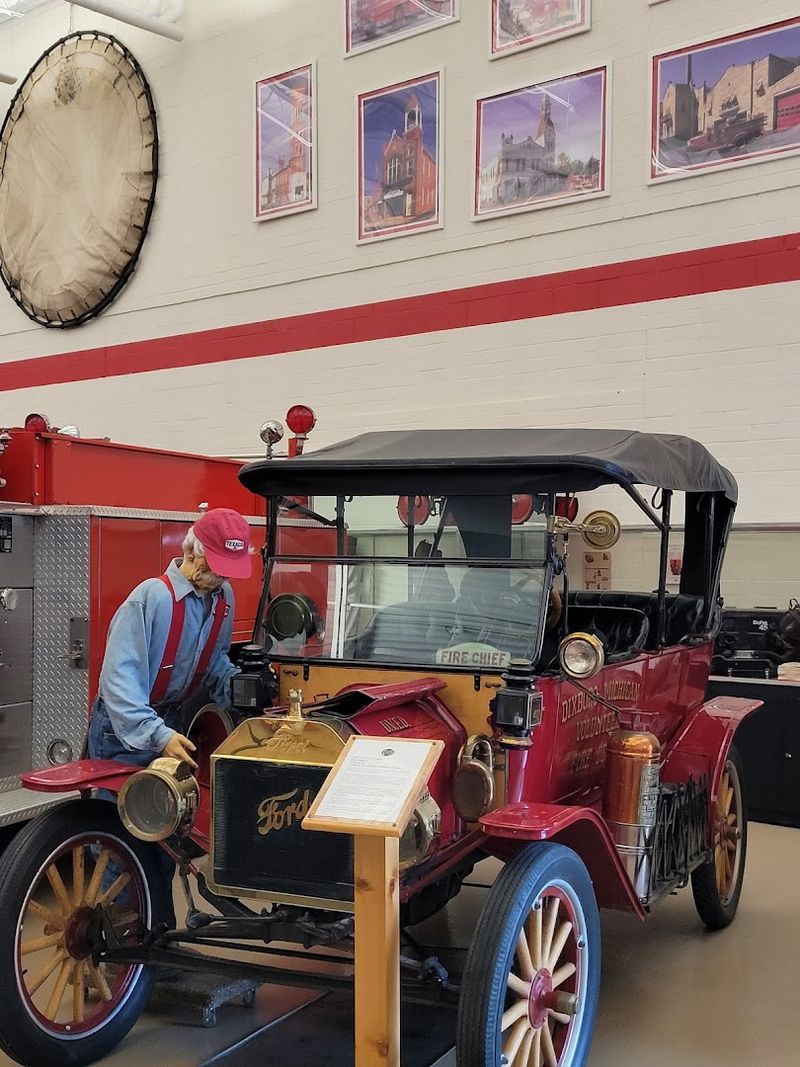
Two of the trucks are accessible for climbing, which is a major draw for younger visitors. A functioning cab with working lights gives kids a real sense of what it might feel like to ride in a fire truck.
Former firefighters who have visited say the collection brings back genuine memories, and staff members are known for sharing personal stories connected to specific pieces. That human layer on top of the mechanical history makes the apparatus feel alive rather than simply parked and preserved.
Restored Crew Quarters That Freeze Time Upstairs
Head upstairs and the atmosphere shifts completely. The restored crew quarters on the upper level of the Michigan Firehouse Museum offer a window into the daily lives of firefighters from an earlier era, and the detail put into the restoration is what makes it work.
Vintage bunk arrangements, period kitchen setups, and personal items recreate the texture of a working firehouse from decades past.
Most fire museums focus exclusively on the equipment. This one goes further by showing where the people lived between calls.
That distinction matters. Seeing a firefighter’s living space, the communal kitchen, the modest sleeping area, the worn furniture, creates a human connection that a row of trucks alone cannot achieve.
It reframes the collection downstairs by reminding visitors that real people maintained and rode those machines.
The old-time sliding pole is a particular highlight that draws consistent excitement from visitors of all ages. Positioned between floors, it serves as both a functional relic and a crowd favorite.
Staff members sometimes demonstrate its use, which tends to generate a lot of enthusiasm, especially from younger visitors who may have only ever seen a firehouse pole in cartoons or movies.
The upper mezzanine area includes a section dedicated to Smokey Bear, the iconic fire prevention figure whose history is more layered than most people realize. Display materials trace the origins and evolution of fire safety education in America, offering adults a genuinely interesting read while kids engage with the more tactile elements nearby.
The crew quarters section does not overstay its welcome. It is compact, well-curated, and covers ground that feels meaningfully different from everything else in the museum, making the trip upstairs feel like a complete change of scene rather than just more of the same.
Hands-On Features That Keep Kids Genuinely Engaged
A lot of museums ask kids to look but not touch. This one takes a different approach in several key areas, and the difference shows in how children respond.
The climbable fire trucks are the obvious standout, but the interactive elements extend well beyond that. A functioning cab with operational lights gives younger visitors a tactile experience that holds attention far longer than a standard exhibit panel ever could.
The basement level includes a dedicated play area designed with smaller children in mind. While the upper floors lean more toward history and equipment displays, this space gives toddlers and early elementary-age kids room to engage on their own terms.
Parents with children in strollers can access every floor via elevator, which removes a logistical barrier that often discourages families from fully exploring a space.
Staff members have a well-earned reputation for connecting with young visitors. There are accounts of employees operating a siren for curious kids, handing out plastic firefighter helmets during certain visits, and taking extra time to explain exhibits in kid-friendly language.
That kind of personal attention turns a good outing into a memorable one. A coloring area and video stations add further variety for children who need a change of pace mid-visit.
A Japanese firefighting game available on-site adds an unexpected and quirky layer to the interactive offerings. It is the sort of detail that catches visitors off guard in the best way, broadening the museum’s scope beyond purely American firefighting history.
Families who have visited multiple times report that children consistently find something new to focus on with each return trip. That repeatability is a strong sign that the hands-on elements have been thoughtfully layered rather than just added as an afterthought to the main collection.
What Michigan’s Firefighting History Actually Looks Like
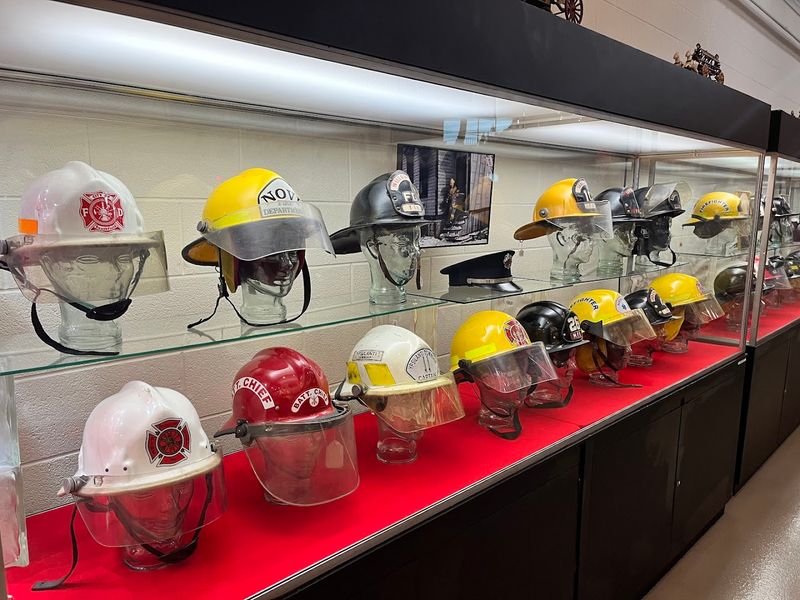
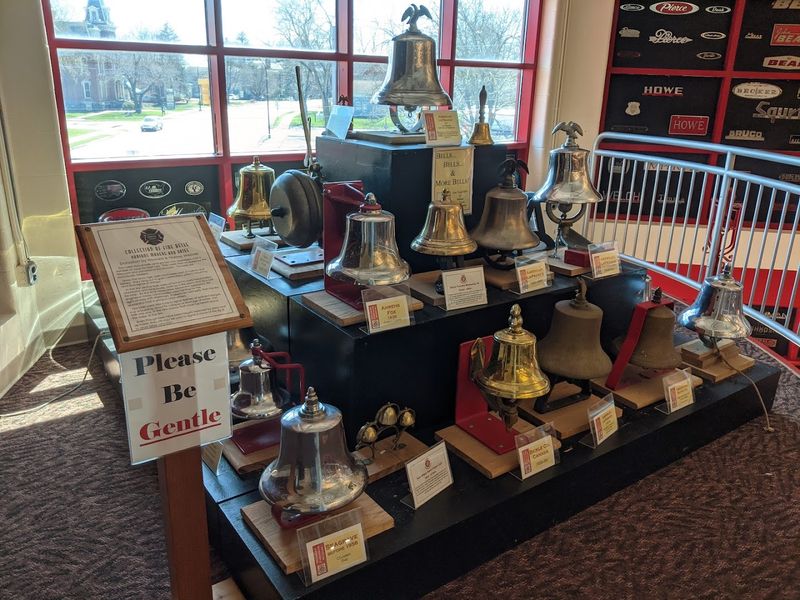
Beyond the trucks and the crew quarters, the display cases throughout the museum tell a detailed story about firefighting’s evolution specifically within Michigan. Hats and patches from fire departments across the state line the walls, creating a patchwork record of local departments that most people have never thought to look up.
It is the kind of hyperlocal historical detail that transforms a general firefighting museum into something with genuine regional identity.
The far wall on the main level highlights the evolution of fire extinguishers, tracing the technology from early chemical models to modern pressurized cylinders. It sounds like a narrow subject, but the display is surprisingly compelling.
Seeing the physical progression of a tool that most people take for granted today makes the engineering history tangible in a way that text alone cannot replicate.
An early communications switchboard from the pre-radio era of firefighting is another standout piece. Understanding how fire departments coordinated responses before modern technology reframes the difficulty and danger of the profession in earlier decades.
The switchboard is not just an old piece of equipment. It represents an entire system of coordination that kept cities safer during a period when fires spread quickly and response times were everything.
Exhibits spanning nearly two centuries of firefighting history are organized in a way that rewards careful reading. Visitors who move through the space slowly, pausing to read the informational panels alongside each piece, consistently report learning details they never expected to encounter.
Staff members add another layer of depth, often sharing context and stories that go beyond what is written on the plaques. For adults who appreciate history with specific, verifiable roots in their own state, this section of the museum carries a weight that lingers well after the visit ends.
Planning Your Visit to Ypsilanti’s Best-Kept Secret
The Michigan Firehouse Museum and Education Center is open Thursday through Sunday, with hours running from 12 PM to 4 PM each of those days. Monday, Tuesday, and Wednesday the museum is closed, so planning around that schedule is essential.
Arriving closer to opening time on a weekday tends to mean a quieter experience, while weekends can draw more families, especially when the weather outside is less than ideal.
Admission is modest, and the price point consistently earns appreciation from visitors who expected to pay more for what they received. A gift shop and welcome center greet visitors near the entrance, offering souvenirs that lean toward firefighting themes and items suited for younger fans of the subject.
Staff at the welcome center are known for being approachable and genuinely knowledgeable, happy to point out specific exhibits worth prioritizing if time is limited.
Parking behind the building accommodates a small number of vehicles at no charge. When those spots are taken, Frog Island Park nearby offers overflow parking within an easy five-minute walk.
The surrounding area on West Cross Street has restaurants, a farmers market during the appropriate season, and a gas station across the street for anyone who needs a quick snack refuel mid-outing.
Most visitors spend between one and two hours inside, though those who read every panel and engage with staff can stretch that to nearly three. Membership options are available for families planning to return, with annual access making repeat visits easy to justify financially.
The museum also hosts private events and has hosted weddings and after-hours gatherings, which speaks to the versatility of the space. For anyone already planning a day in Ypsilanti, Michigan, adding this stop requires almost no detour, since the location sits right in the heart of the downtown corridor.
Why This Small Museum Punches Well Above Its Weight
Small museums often struggle to justify the trip against bigger, better-funded institutions. The Michigan Firehouse Museum and Education Center sidesteps that problem by doing something large museums rarely manage: every square foot carries purposeful content.
Nothing feels padded or placed just to fill space. The three floors move through distinct themes, the collection is deep enough to hold attention, and the staff bring a level of personal engagement that no audio guide can replicate.
The personal connections embedded in the collection add a dimension that purely institutional museums lack. One staff member maintains a specific truck tied to his father and grandfather, turning a piece of equipment into a living family story.
That kind of provenance gives the collection emotional grounding without veering into sentimentality. Visitors across a wide age range, from toddlers to retired firefighters, consistently find their own entry point into the material.
The museum also functions as a genuine community resource. Private events, school group visits, and community gatherings have all taken place within its walls.
The building itself carries civic history as a former working firehouse, and the organization behind it clearly understands that preserving equipment is only part of the mission. Preserving the culture, the human stories, and the local connections is equally central to what makes the place work.
For travelers moving through southeastern Michigan or residents of the greater Ann Arbor and Ypsilanti area who have never stopped in, the museum rewards curiosity in a way that is hard to predict from the outside. The modest storefront on West Cross Street gives no indication of the depth inside.
That gap between expectation and experience is precisely what makes the Michigan Firehouse Museum and Education Center one of the more genuinely surprising stops in the region.
Share this story