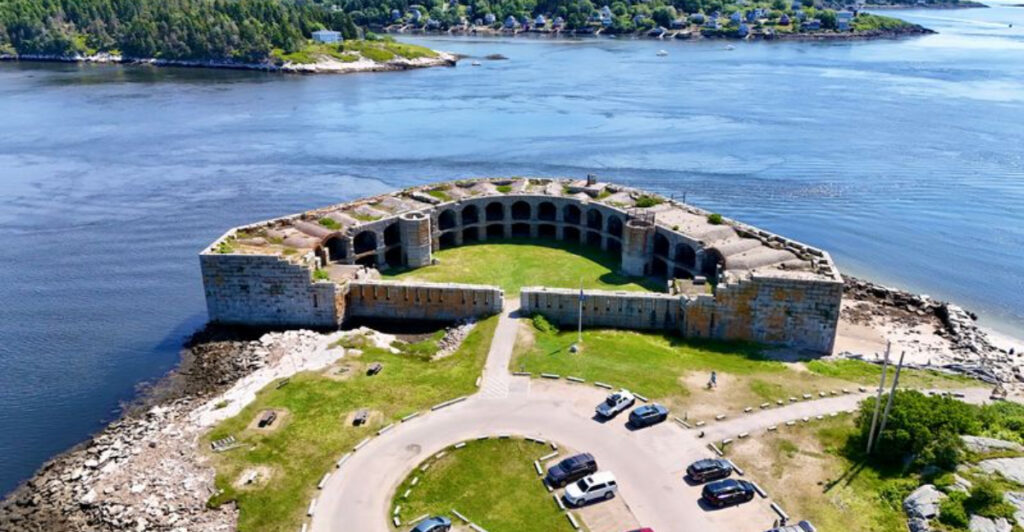
At the far edge of Phippsburg, Fort Popham rises from the shoreline like a stone answer to Maine’s rough coastal weather. It is the kind of place that catches you off guard, because the setting is as dramatic as the history.
One minute you are looking at thick granite walls and arched openings, and the next you are staring across open water where seals sometimes surface. If you want a historic site that delivers scenery, texture, and a strong sense of place in a single walk, this one earns your full attention. The fort feels both imposing and surprisingly peaceful, with ocean views that compete easily with the architecture for your attention.
Granite Walls at Water’s Edge
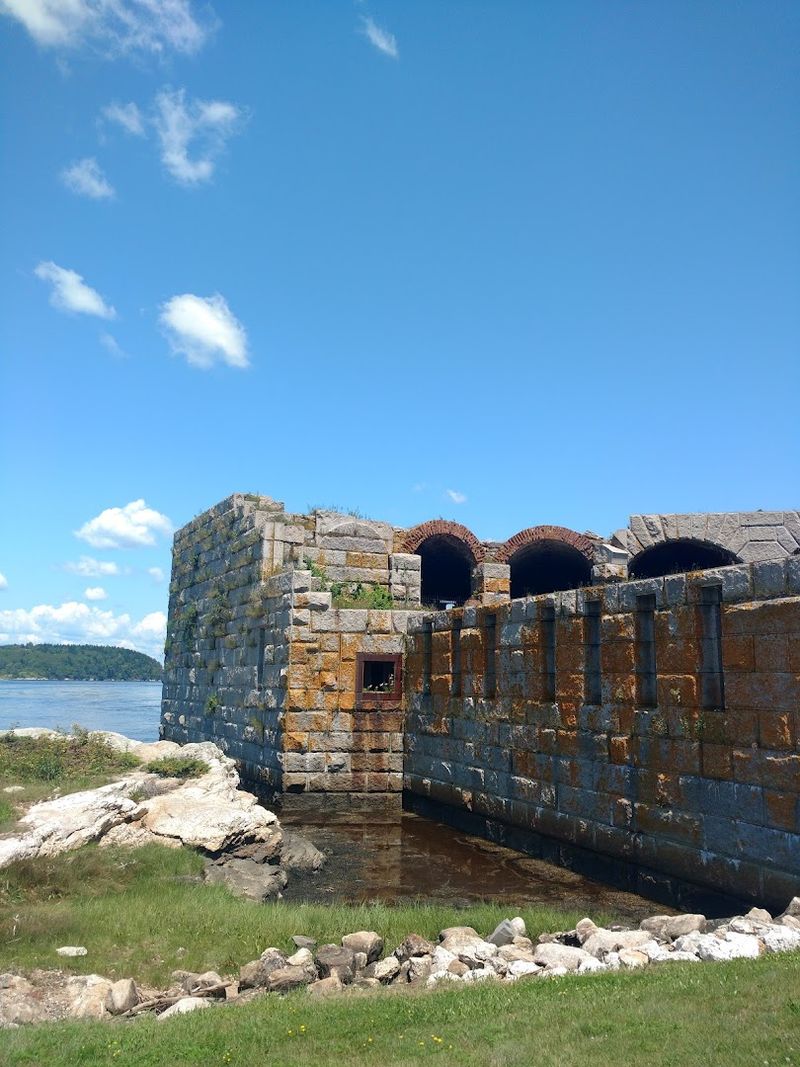
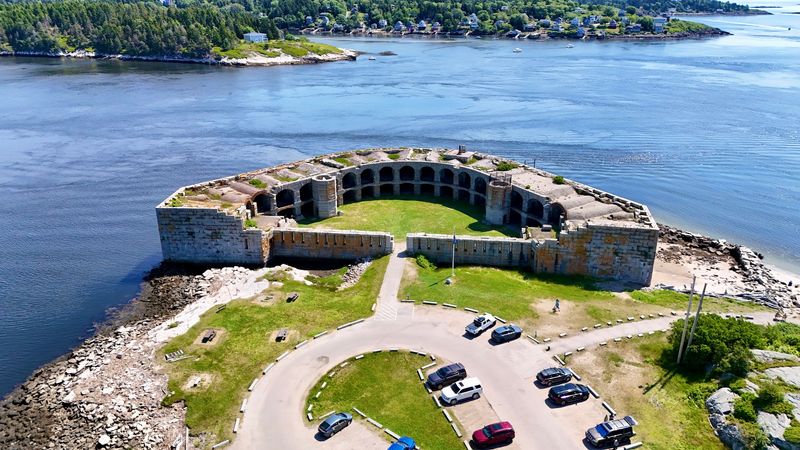
Fort Popham does not reveal itself with a long approach or a polished grand entrance. It appears suddenly near the end of the road, a heavy granite curve pressed against the edge of the Kennebec River where the water opens toward the sea.
That first view is striking because the fort looks both engineered and elemental, as if the shoreline grew masonry.
The structure has a blunt, muscular shape that immediately sets a different tone from the usual white lighthouse postcard version of coastal Maine.
Dark openings puncture the stone walls, the rounded front faces the water with quiet authority, and the whole site carries the kind of visual weight that slows your pace without asking for it. Even before reading a single sign, you can tell this place was built for defense, not decoration.
Yet the surroundings soften the scene in unexpected ways. Wind skims across the point, gulls cut overhead, and the changing light bounces off both stone and tide, giving the fort a shifting color palette from cool gray to warm silver.
Depending on the hour, the building can look severe, calm, or almost theatrical. That contrast is the hook. Fort Popham feels rugged without being remote, dramatic without needing any staged interpretation, and compact enough that you can grasp its layout quickly while still wanting to circle it from every angle.
There is very little visual clutter here, which makes each detail stand out more sharply. You arrive expecting a historic stop and immediately get a landscape composition too. Granite, water, sky, and the fort’s curved face do all the work.
Before you step inside, the landmark has already told you exactly what kind of visit this will be: brisk, vivid, coastal, and grounded in plain physical presence.
Inside the Fort’s Curved Maze
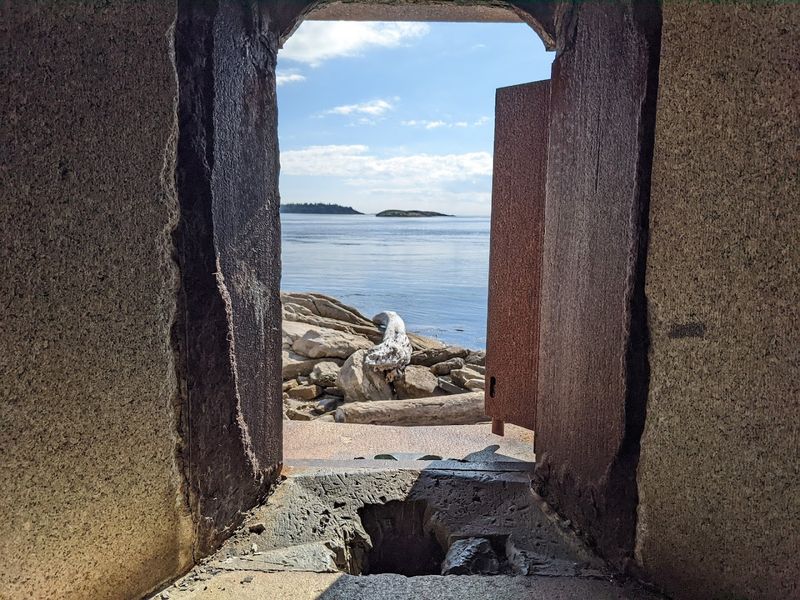
Step through the openings and Fort Popham changes from an impressive object into a tactile experience. The interior is not vast in the way a city museum is vast, but it has enough turns, vaults, and layered sightlines to keep your eyes moving.
Every chamber frames the next one through thick arches and cool stone shadows. The curved design matters once you are inside.
Instead of a straight march through rooms, the fort nudges you along a bend, revealing the structure in pieces rather than all at once.
That creates a natural sense of discovery, especially when the light shifts from bright waterfront glare to dim interior recesses and back again.
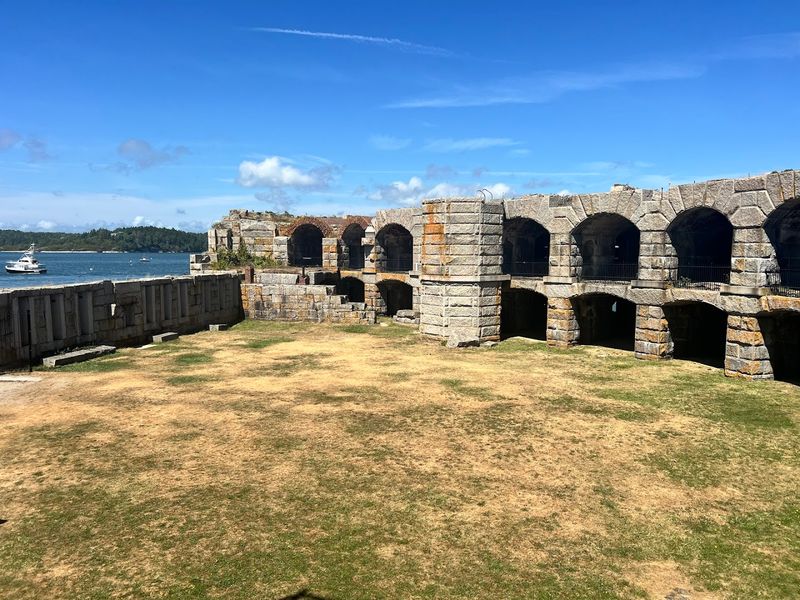
There is a satisfying roughness to the materials. The masonry is weathered but sturdy, the openings are deep enough to feel defensive rather than decorative, and the worn surfaces carry the kind of texture that cameras love but hands appreciate even more.
You notice how the fort was built to absorb weather, salt air, and time. Upper levels add another perspective. Looking out from higher openings changes the scale of the place, because the fort stops being only a wall around you and starts reading as part of a larger coastal system of river, channel, and open water.
The architecture makes more sense once the view expands. This is also where the site works especially well for curious kids and detail-focused adults at the same time.
One person can concentrate on masonry, another on views, another on the simple fun of moving through towers and stairways.
The fort gives you enough structure to explore with purpose, but enough openness that the visit never turns into a rigid lesson.
Where Maine History Meets the Tide
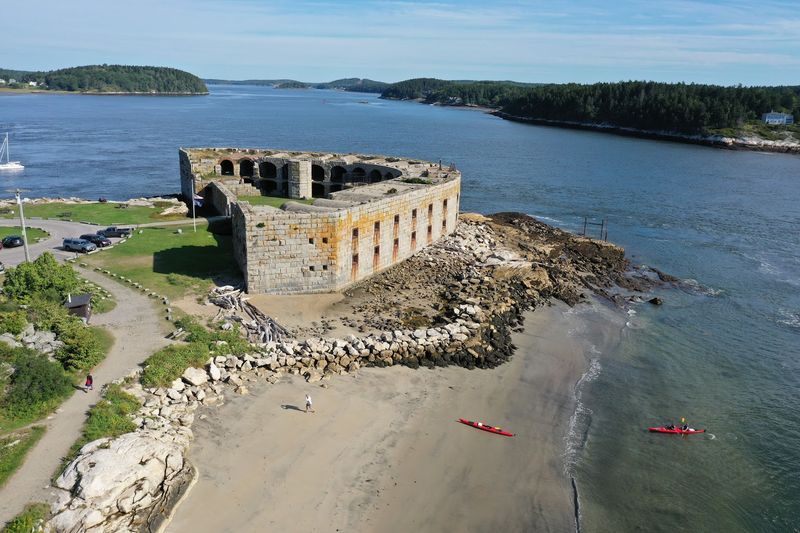
Fort Popham earns its historical interest partly through location. Set at the mouth of the Kennebec, it occupies a place that makes immediate strategic sense even if you arrive knowing very little about military history.
Stand by the walls, watch the water routes around the point, and the logic of the site becomes visible in real time.
This is not history sealed behind glass. The setting explains the fort better than a long label could, because the landscape still behaves like a corridor of movement.
River traffic, changing tides, exposed shoreline, and broad sightlines all suggest why a defensive position here once mattered to the state and to the coast beyond it.
The fort itself dates to the nineteenth century, and its unfinished qualities are part of the intrigue rather than a flaw. You are not looking at a perfectly polished monument restored beyond recognition.
Instead, you see a structure that carries evidence of ambition, interruption, and long-term survival in a marine climate that never treats buildings gently.
That gives the place a more grounded kind of historical power. Instead of telling a simple triumph story, Fort Popham shows how coastal defense architecture fits into larger patterns of uncertainty, shifting priorities, and regional geography.
The walls are substantial, but they also remind you that fortifications depend on context, logistics, and time. For travelers who like history best when it is attached to a real landscape, this site delivers. The fort is not isolated from the environment that shaped it.
Water presses close, weather stays part of the experience, and the broad coastal view keeps pulling your attention outward, exactly where the original builders would have been looking.
The Quiet Extras Beyond the Battlements
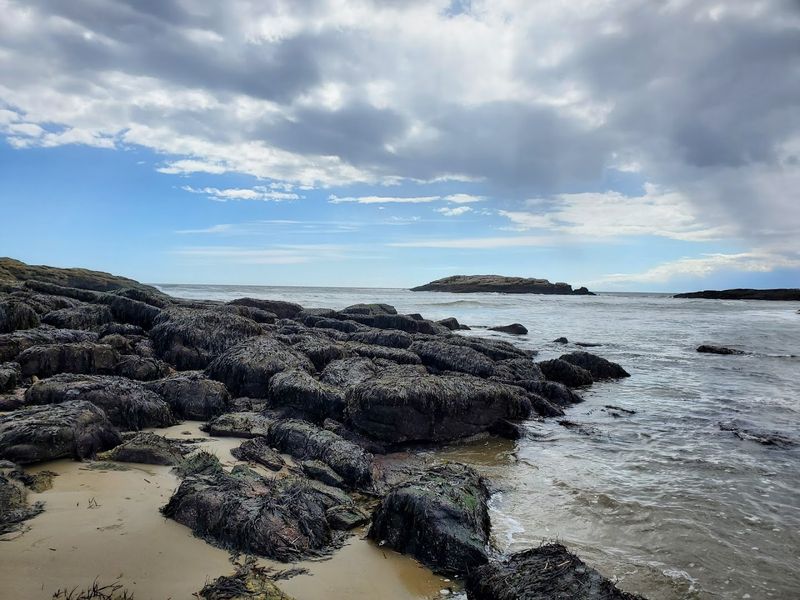
The fort is the headline, but the surrounding details keep the visit from feeling one-note. Just beyond the stonework, the shoreline opens into a compact beach and rocky edges where the site shifts from military geometry to loose coastal texture.
That change in terrain broadens the experience without sending you far from the main attraction. On a clear day, the water itself becomes part of the entertainment.
Seals are sometimes spotted offshore, and even when wildlife stays out of view, there is plenty to watch in the movement of boats, waves, and tide around the point. The setting encourages short pauses that turn into longer ones.
The beach beside the fort matters because it resets your eyes after all that masonry. Sand, seaweed, low surf, and scattered stones break up the disciplined lines of the architecture and make the site more flexible for different moods.
You can explore the fort closely, then drift toward the water for a softer, wider scene. There is also a practical advantage to this layout.
Families can split attention without splitting up entirely, with one person studying the structure while another wanders the beach edge or scans the water. The whole area remains compact enough that the visit feels manageable, not sprawling or overprogrammed.
Most historic sites ask you to focus inward on exhibits, ropes, and labels. Fort Popham keeps pushing your attention outward instead, toward horizon lines, currents, wind, and shoreline life.
That outdoor dimension gives the place a more active rhythm than many history stops, and it prevents the experience from flattening into a single educational note. Here, the extras are not filler. They are part of why the fort lands so well.
The Fort Reveals Itself Best One Layer at a Time
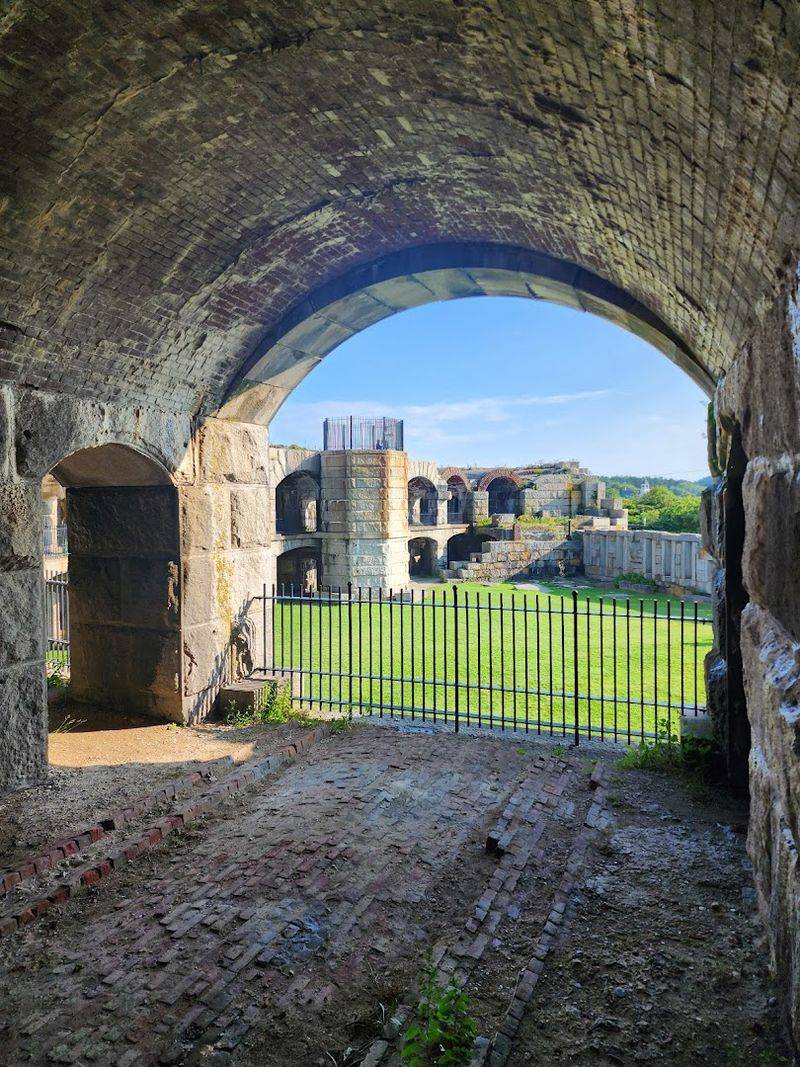
Fort Popham rewards visitors who let the experience unfold gradually. From the shoreline, the structure appears almost deceptively simple: a broad granite curve facing the water with thick walls and dark openings that hint at what waits inside.
Seen from a distance, the fort feels imposing yet compact, firmly anchored to the landscape around it. The closer you get, the more the details begin to emerge.
Inside, the fort becomes far more intricate than its exterior suggests. Arched chambers, winding passages, and shifting light create a series of spaces that reveal themselves one after another.
The heavy masonry carries a sense of permanence, while the weathered surfaces remind visitors just how much wind, salt air, and time the structure has endured. Every turn offers a slightly different perspective, making the interior feel larger and more layered than expected.
Higher vantage points add another dimension. Looking outward from elevated openings connects the architecture to the wider setting of river, channel, and open sea.
From above, the fort no longer feels like an isolated landmark. Instead, it becomes part of a larger coastal landscape where geography and history intersect in ways that are easy to understand at a glance.
The shoreline provides a fitting contrast to the stonework. Beyond the walls, the beach and water soften the scene with open views, shifting tides, and the occasional glimpse of wildlife offshore.
Granite, sand, sky, and sea all contribute to the atmosphere. What makes Fort Popham memorable is not simply its history or architecture, but the way each layer of the site builds upon the last.
By the end of a visit, the fort feels less like a monument and more like a place shaped continuously by both people and the Maine coast itself.
Smart Timing for a Fort Popham Day
Fort Popham is easy to underestimate on the map because it sits at the end of a road and looks like a quick detour.
In practice, a little planning improves the visit a lot, especially during busier periods when space and timing matter more than you might expect. This is a compact site, and compact sites can get complicated fast if everyone arrives at once.
Weekday hours generally favor daytime visits, with the site opening in the morning and closing in late afternoon.
That schedule makes it especially appealing for a scenic lunch-hour side trip, an early afternoon history stop, or a coastal add-on before heading elsewhere in Phippsburg.
It is smart to check seasonal conditions too, since winter access can be more limited. Parking deserves real attention here.
The area is known for limited designated spaces, and that is not the kind of detail to shrug off when you arrive on a narrow road near the water.
A relaxed visit starts with parking carefully, legally, and without trying to improvise a spot that looks close enough.
Weather also changes the experience more than it changes many inland historic sites. Wind can be sharp even on bright days, and the exposed setting means layers are useful in every season except the hottest stretch of summer.
Good shoes help too, because the fun here involves walking on mixed surfaces rather than staying on one smooth path.
If the goal is a calm, photo-friendly visit, aim for a quieter window and build in time to move from fort to shoreline without rushing.
Fort Popham does not require a full-day commitment. It rewards a well-timed hour or two, handled with enough flexibility to let the coast set the pace.
Why This Corner of Maine Hits Different
Some historic places depend on reenactments, dense exhibits, or a long list of must-see rooms. Fort Popham works with fewer moving parts, which is exactly why it stands out.
A solid nineteenth-century fort, a sharp coastal location, and open access to both architecture and shoreline are enough to create a visit with real shape.
The site’s strongest quality is how directly it delivers its identity. You do not need a long orientation talk to understand that this place belongs to the water, to Maine weather, and to an older vision of coastal defense.
The granite curve, the river mouth, and the broad marine horizon explain the site with unusual efficiency. There is also a pleasing lack of overproduction.
Fort Popham still feels like a place to explore rather than a place designed to funnel you through a scripted experience.
That freedom changes your pace. You notice stairways, wall thickness, tide patterns, and sightlines because you are moving through the fort instead of being talked over by it.
For travelers who want one stop that combines history, scenery, and a little unpredictability, this corner of Phippsburg is unusually effective.
The fort can be windy, bright, quiet, crowded, gray, sparkling, or full of seal-watching interruptions depending on the day.
Those variables do not distract from the landmark. They sharpen it. Plenty of Maine destinations are beautiful. Fewer are this visually tough, geographically exposed, and easy to grasp in one visit.
Fort Popham leaves you with stone underfoot, salt air in the background, and a clearer sense of how deeply New England history is tied to the shape of its coastline.
Share this story