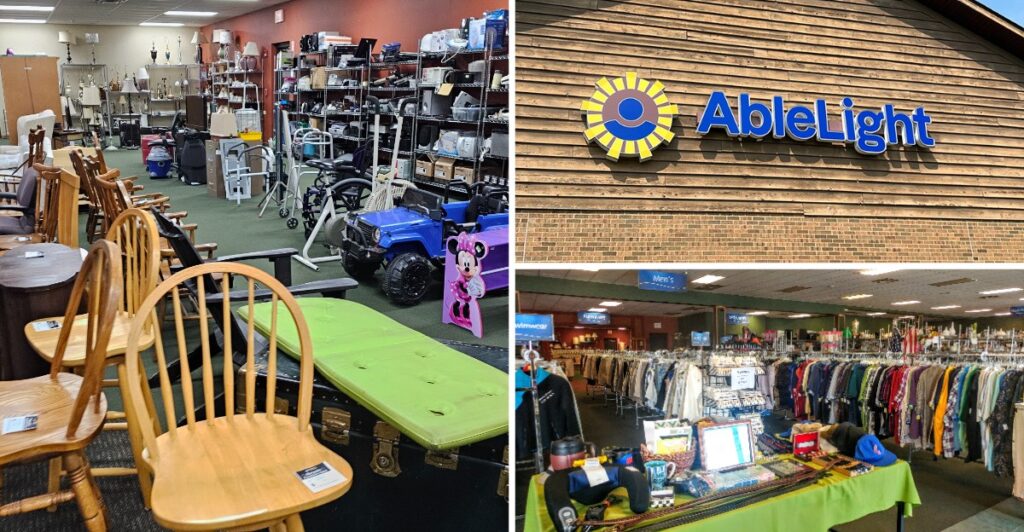
Treasure hunting gets serious when the thrift store is big enough to make grabbing a cart feel like a smart strategy. AbleLight Thrift Shop in Crystal Lake fills its spacious store with clothing, books, dishes, furniture, seasonal décor, and constantly changing secondhand finds that reward shoppers willing to browse every aisle.
The tidy setup makes digging for bargains easier, while each purchase supports a nonprofit serving people with disabilities. Since thrift inventory never stays the same for long, even regular customers have a reason to keep checking back. Bring some patience and an open mind, because the best find might be something you never planned to buy.
Grab a Cart, the Aisles Go On and On
Bring comfortable shoes. The building at 7606 US-14 is one of the larger thrift shops in the northwest suburbs, and the size shows up the second the front doors close behind you.
Long rows stretch toward the back wall, and the ceiling feels high enough to keep the space from getting cramped. Wide aisles leave room for two carts to pass without anyone doing an awkward shuffle. That extra breathing space makes a long browse far less tiring than squeezing through a packed corner store.
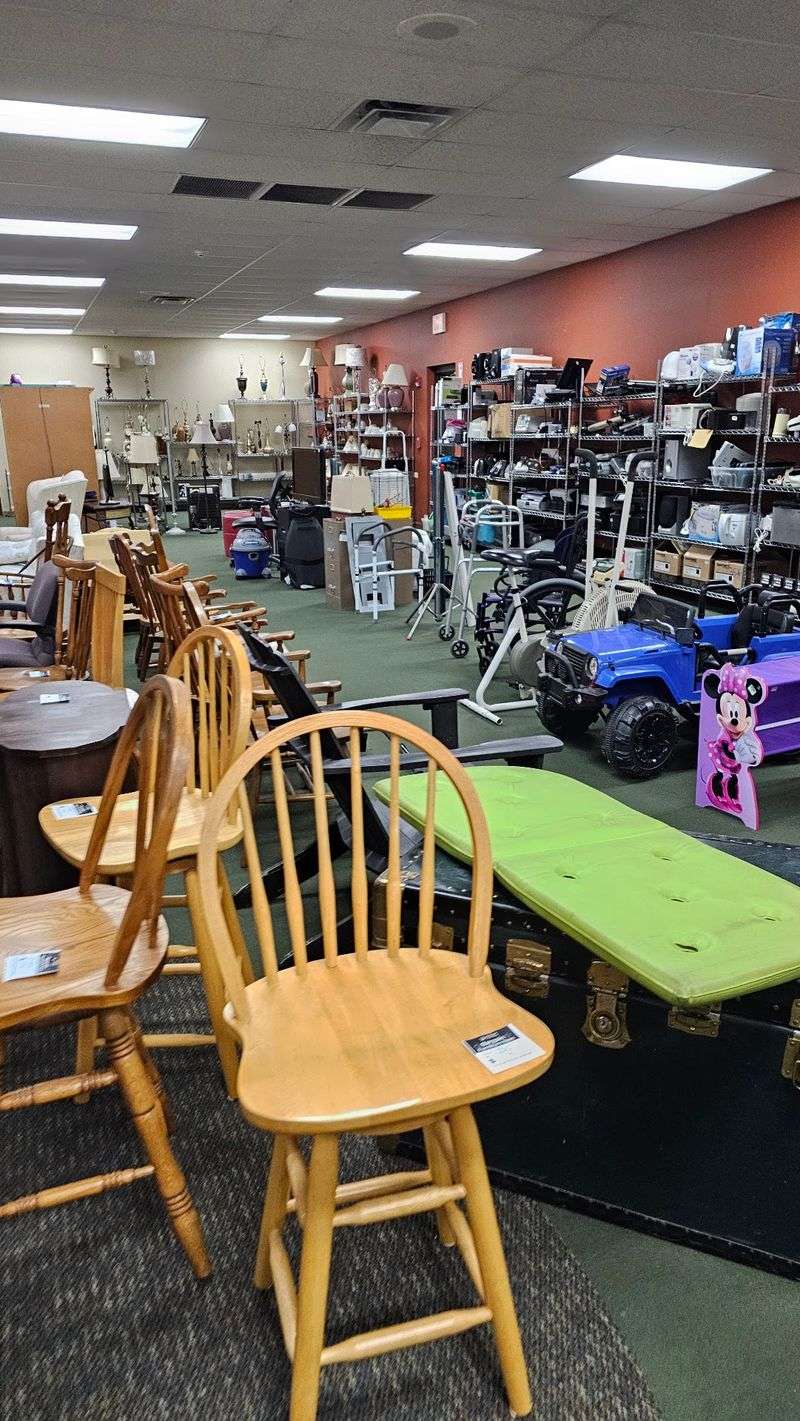
Much of the merchandise sits on open wire rack shelving. Because you can see through the racks, the store stays bright and easy to scan. You can spot a lamp two rows over or notice that the kitchen section is about to get busy.
Clean floors and fresh air help too. Plenty of resale shops carry that musty, old-attic smell, but this one tends to skip it. The restrooms are kept in good shape, which matters more than you might think when you plan to stay a while.
Size can be a little intimidating on a first visit. A smart move is to do one quick lap without stopping, just to learn the layout. Notice where clothing starts, where the housewares live, and where the furniture waits in the back.
After that first loop, slow down and work section by section. Shoppers who rush straight to one corner often miss the best stuff hiding on an end cap or a bottom shelf. Give yourself at least an hour, and more if you love digging through books or vintage glass.
Free reusable bags sit in a big bin near the front, so you can carry your finds home without buying a tote. Plenty of regulars bring their own canvas bags from home as well.
Racks Sorted Like a Department Store
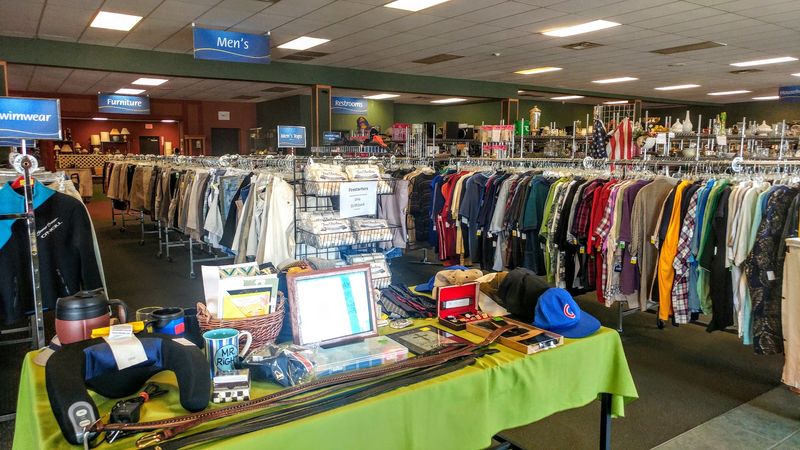
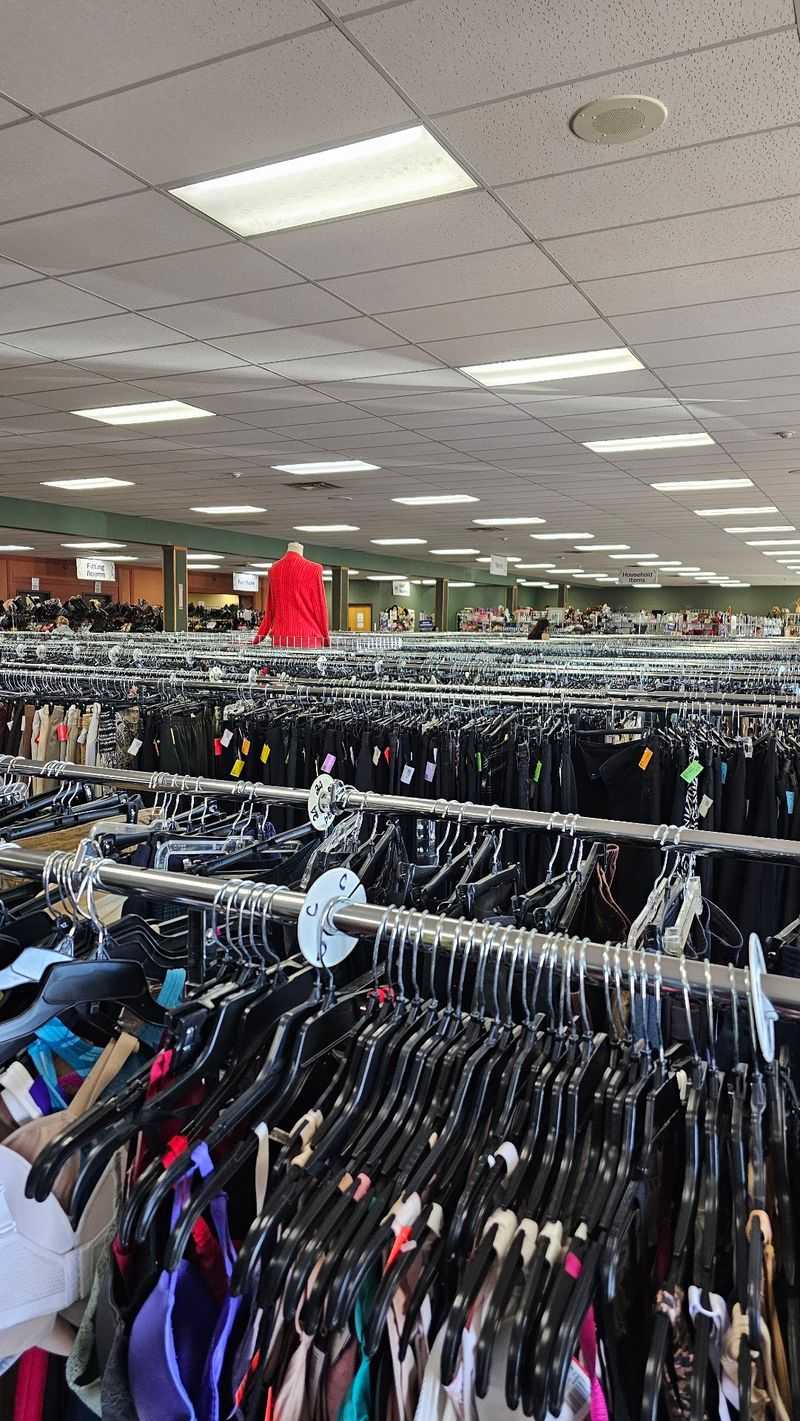
Picture a clothing section that actually tells you where to look. Signs hang above the racks, splitting things up by type, so jeans, sweaters, dresses, and coats each have their own home.
For anyone who has ever flipped through a jumbled pile of shirts at a cramped shop, this setup is a relief. You can march straight to the area you need and skip the rest. A parent hunting for kids’ jackets does not have to wade through formal wear first.
The selection is wide, covering everyday basics, workwear, and the occasional standout piece. Brand names from big retailers show up often. Seasonal items rotate, so winter coats and summer shorts appear when they make sense.
Prices on clothing are a bit higher than at some bargain bins. A nicer piece can land in the double digits, while plain items usually sit lower. Smart shoppers check the tag color first, because certain colors get marked down each day or week.
Racks can get tightly packed on busy weeks. Pull hangers forward one at a time rather than shoving the whole row, and you will see each item clearly. Checking fabric and seams right there saves trips back to the shelf.
Fitting rooms are available, and an attendant usually stands nearby to direct you to an open room. That small touch keeps things orderly and moving. Bring your top picks, try them on, and leave the maybes on the return rack.
One more tip: look at the ends of each row. Freshly sorted items sometimes land there before getting pushed into the main racks.
Catching them early can mean first dibs on a great jacket or a barely worn pair of boots. Walk out with a full outfit for the price of one new shirt elsewhere.
Vintage Ornaments, Crystal Glasses, and Endless Frames
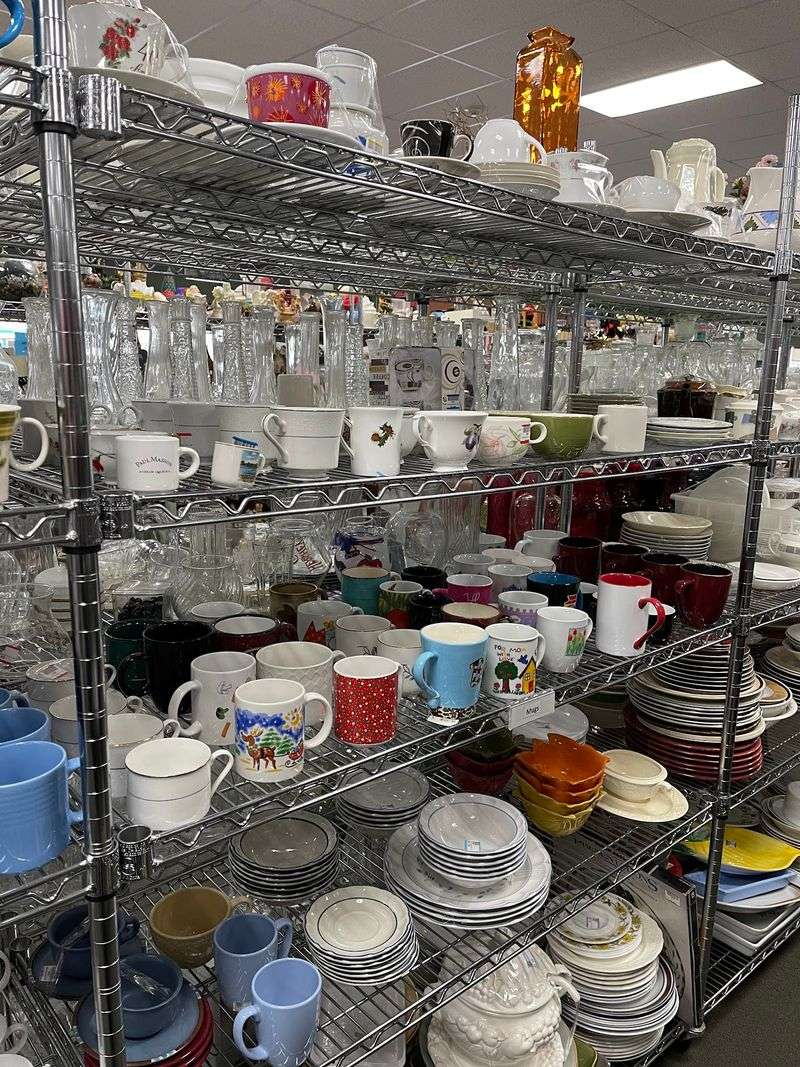
Six boxes of vintage Christmas ornaments, still in their original packaging, for $2.99 each. Finds like that turn up here, and they explain why collectors keep this store on their weekend loop.
Housewares fill a big chunk of the floor. Shelves hold crystal glasses, china sets, everyday drinking glasses, pots, pans, and small appliances. You might walk in for a mixing bowl and leave with a whole set of dessert plates.
Picture frames deserve their own mention. Stacks of them line the shelves in every size, from tiny tabletop frames to large wall pieces. Crafters and decorators love them, since a sturdy frame costs far less here than at a craft store.
Holiday decor is sorted by season. Christmas and Halloween get especially large displays, packed with lights, figurines, wreaths, and spooky props. Shopping a holiday section months early can mean better picks before the rush.
Books are another strong area. Shelves of novels, cookbooks, and kids’ titles give readers plenty to flip through. Board games and puzzles appear as well, and some are rubber-banded instead of taped shut, so you can peek inside and count the pieces.
Here is a useful habit: check glassware for tiny chips by running a finger along the rim. Hold crystal up to the light to spot cracks. For frames, look at the back to make sure the hanging hardware is still attached.
Small items also run the range from great deals to odd pricing. A single glass might cost more than expected, while a nice ornament set goes cheap.
Comparing a few options before you commit pays off. Leave room in your bag. The housewares aisles have a way of filling a cart faster than any other part of the store.
Furniture Hunting in the Back Room
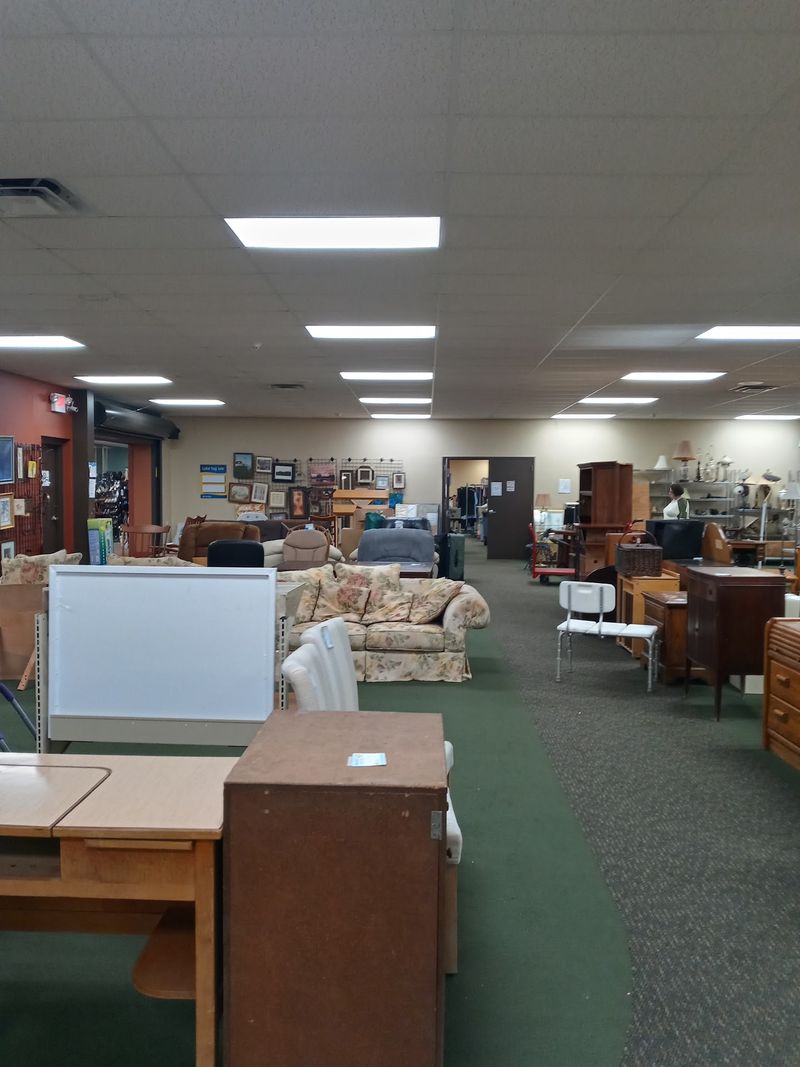
Head all the way back. Past the clothing racks and the housewares, the store opens into a furniture and artwork area that feels like a small showroom.
Dressers, chairs, tables, shelves, and cabinets fill the space. Large framed paintings and prints lean against walls or hang nearby. Some frames alone are worth more than their price tags, and crafty shoppers sometimes buy a big piece of art just to reuse the frame.
Furniture here is not always cheap. A bookshelf can carry a price closer to a discount store than a garage sale. That makes it smart to know what you want and what you are willing to pay before falling in love with a piece.
Solid wood is the thing to look for. Tap on a tabletop or check inside a drawer. Real wood feels heavy and shows grain on the edges, while particleboard tends to look the same all the way through.
Bring measurements of your room and doorways. A tape measure in your pocket can save you from hauling home a cabinet that will not fit up the stairs. Snap a photo of the price tag if you want time to think.
Watch for markdowns too. Pieces that sit for a while may get a lower price, and color-tag sales can apply to bigger items. Checking back over a couple of weeks sometimes pays off.
Plan your ride before you buy. A small sedan will not swallow a dresser, so bring a friend with a truck or an SUV with the seats folded down. Straps and an old blanket help protect the finish on the drive home.
Artwork lovers should take their time here. The back wall changes often, and a bold painting can transform a plain living room.
Cracking the Color Tag Code
Yellow, green, pink, blue. Those little colored tags hanging off every item are not just decoration, they are the secret to the best prices in the building.
AbleLight runs a color-of-the-week system. One tag color gets a special discount, and items wearing that color can drop to a fraction of their normal price. Shoppers who ignore the tags often pay full price for something that could have been half off.
Start every visit by finding the sale sign near the entrance or checkout. It tells you which color is discounted that day or week. Then shop with that color in mind, especially in clothing, where regular prices run higher.
Daily specials add another layer. Sales happen often, and some days bring storewide deals that make the whole trip cheaper. Wednesdays are a favorite for many, since seniors and veterans get 25 percent off.
A rewards program is available at the register. Signing up takes a minute, and it can bring extra savings over time. Regular shoppers should ask about it on their first trip.
Here is how a smart visit might go. Check the sign, grab a cart, and sweep through clothing looking only for the sale color. Then browse housewares and books at a slower pace, since those prices tend to be friendlier anyway.
At checkout, you may be asked whether you want to round up your total as a donation. That choice is entirely yours. A simple yes or no thank you works fine either way.
Keep an eye on tags you skipped last week. When colors rotate, an item you passed over might suddenly become the deal of the day. Patient shoppers who stop by often catch those shifts and score the biggest wins.
An Illinois Thrift Shop With a Bigger Mission
Money spent here travels further than the register. AbleLight is a nonprofit organization that supports people with intellectual and developmental disabilities, and its thrift stores help fund that work.
So when you buy a lamp, a sweater, or a stack of paperbacks, part of that money goes toward programs that serve real families. Shopping becomes a small way to give back without changing your routine.
Donations keep the shelves full. People drop off clothing, kitchen items, books, toys, and furniture, and staff sort everything into the tidy sections you see inside. That steady flow is why the store looks a little different every visit.
Dropping off is easy. Workers have been known to walk outside and help unload cars, which is a huge help if you are carrying heavy boxes. A warm thank you often comes with it, and donors tend to notice.
Before you donate, give items a quick check. Clean clothes, working electronics, and dishes without chips are the most useful. Broken or stained things usually cannot be sold and only create extra work for staff.
The team inside plays a big role in how the place runs. Friendly cashiers point out the rewards program, a fitting room attendant keeps things moving, and the manager is often seen chatting with shoppers. That kind of attention makes a big store feel more personal.
Crystal Lake residents have plenty of resale choices nearby. Picking this one means your clutter and your dollars both end up supporting a local cause. It is a simple swap that turns spring cleaning into community support.
Next time you clear out a closet, load the trunk and swing by on your way to errands. Then stay a few minutes to shop.
Timing Your Trip Down US-14
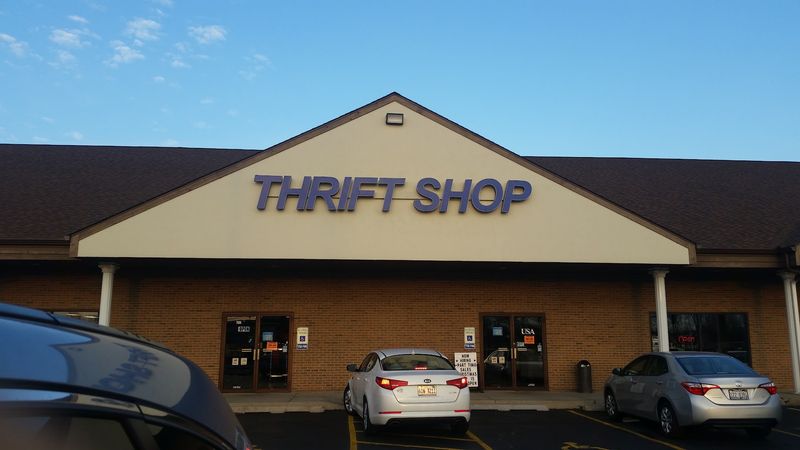
Ten in the morning, Monday through Saturday. That is when the doors open, and they stay open until 6 pm, giving you a solid eight-hour window six days a week. Sundays are closed, so plan your weekend thrifting for Saturday.
Early hours tend to be the calmest. Racks look freshly arranged, aisles are quiet, and you have first crack at items set out that morning. Arriving soon after opening is the move for serious hunters.
Wednesday stands out on the calendar. Seniors and veterans save 25 percent that day, which makes it popular with retirees and their families. If you qualify, it is the best day to stock up on bigger items.
Late afternoons work well for quick stops. Commuters heading home along US-14 can swing in for a fast lap through books or housewares. Just keep an eye on the clock, since 6 pm comes quickly when you are digging.
The store sits right on the highway on the west side of Crystal Lake, so it is easy to reach from nearby towns like Woodstock, McHenry, and Cary. Parking is right out front. That makes loading furniture or heavy bags much simpler.
Pack a few things before you go. Reusable bags, a tape measure, and room measurements for furniture all come in handy. A charged phone helps for looking up brand names or comparing prices.
Thrifters who stop by once a week or so usually find the most. New donations arrive constantly, and the color tag sale shifts too. Each visit can feel like a brand-new store.
Map it, set a time, and leave space in the trunk. A morning drive down US-14 could end with a treasure riding home in the back seat.
Share this story