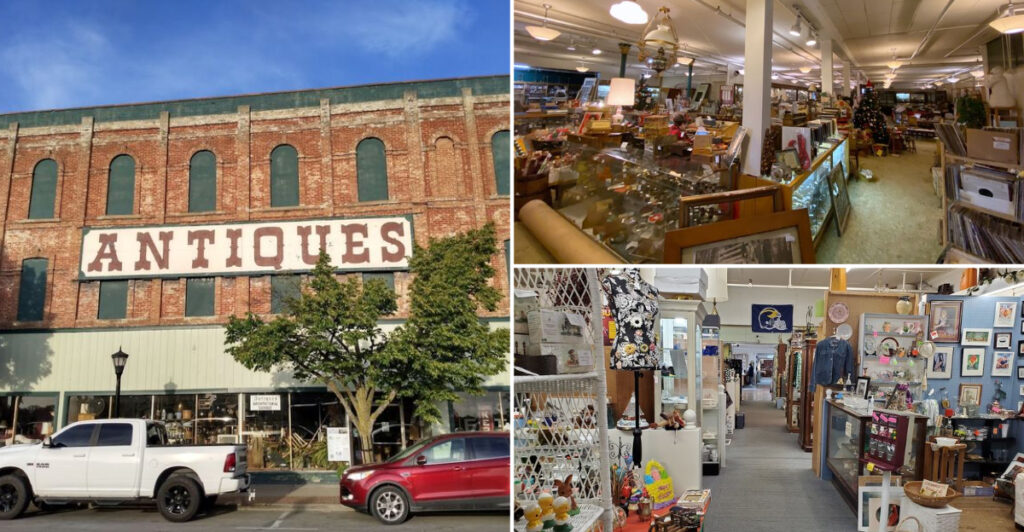
A good antique mall does not just invite browsing; it quietly steals an entire afternoon. Along the Saginaw River in Bay City, Michigan, the Bay City Antiques Center fills three floors of a historic building at 1020 N Water St with hundreds of booths, vintage finds, collectibles, jewelry, furniture, salvaged architectural pieces, and odd little treasures that keep pulling you into the next aisle.
Serious collectors can hunt with purpose, but casual wanderers may have even more fun letting the place surprise them. It is the kind of Michigan stop where one quick look turns into “just one more floor,” then suddenly the clock has disappeared.
Plan accordingly, because leaving empty-handed might be harder than finding something worth taking home.
Three Floors of Pure Antique Overload
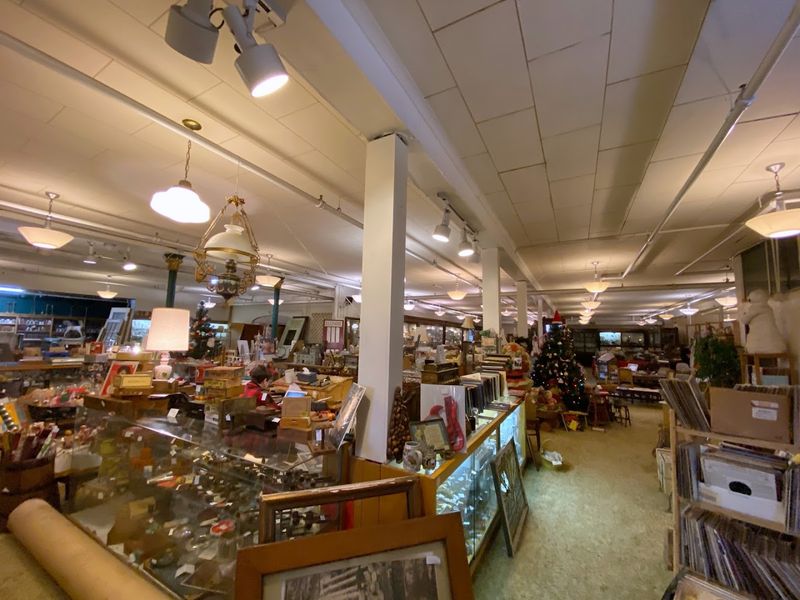
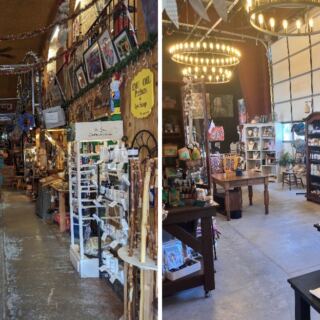
Walking into the Bay City Antiques Center for the first time feels like opening a door to a completely different era. The building stretches across what feels like an entire city block, and the three levels inside are packed so densely with merchandise that it takes a few moments just to figure out where to start.
Good lighting throughout helps make the space navigable despite the sheer volume of items on display.
The main floor handles foot traffic well, with wide enough aisles to accommodate strollers and wheelchairs in most areas. Moving upward to the second floor and then down into the basement levels reveals an entirely different set of dealers and categories.
Each floor has its own rhythm and personality, which keeps the experience from feeling repetitive even after an hour of browsing.
The basement sections deserve special attention. There are actually multiple lower-level spaces, and many shoppers skip them entirely without realizing what they are missing.
Furniture pieces, architectural salvage, and bulk collections tend to congregate down there, away from the more polished displays upstairs.
Navigating three floors takes real time. Most people who try to rush through leave feeling like they missed something, because they almost certainly did.
Budget at minimum two to three hours for a thorough pass, and consider a return visit if anything catches your eye early in the trip. The layout rewards patience and rewards it generously.
Prices span an enormous range too, from items that cost just a few cents to pieces valued at several thousand dollars, so there is genuinely something accessible at every budget level. The sheer vertical scope of this building alone separates it from nearly every other antique mall in Michigan.
The Coin Collection Near the Entrance Worth Stopping For
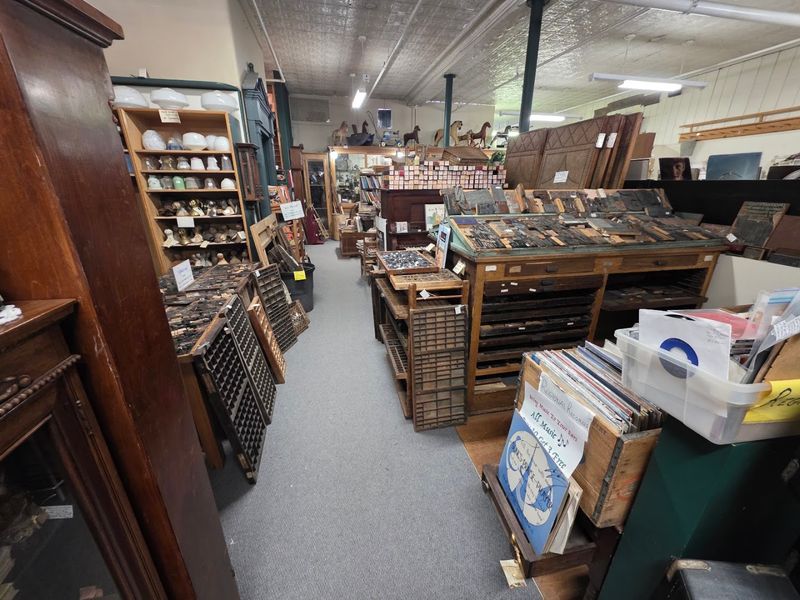
Right near the entrance, before the full scale of the building has even registered, there is a coin selection that stops collectors mid-stride. The display is sizable, well-organized, and stocked with pieces that range from common finds to genuinely hard-to-locate coins.
For anyone building a collection, stumbling onto a booth this well-curated near the front of such a large store is a pleasant surprise.
Coin collecting tends to attract a specific kind of shopper, someone methodical and patient, and this booth rewards exactly that approach. The inventory rotates as collectors come through and make purchases, so the selection on any given visit will look different from the last.
That unpredictability is part of what keeps dedicated hobbyists returning regularly rather than treating it as a one-time stop.
Beyond coins, the area near the entrance also offers a preview of the variety spread throughout the rest of the store. Jewelry cases, small collectibles, and display items cluster near the front, giving browsers a sense of what categories the mall covers before committing to the full walk-through.
It functions almost like an appetizer before the main course.
The pricing on coins here tends to be fair relative to what dealers in larger cities charge, though as with any booth in the mall, negotiation is sometimes possible depending on the individual seller. Striking up a conversation with the dealer is always a reasonable move, especially for higher-ticket pieces.
Staff members near the front are approachable and can often point you toward specific booths if you are hunting for something particular. Starting at the entrance and working inward is a solid strategy, but do not spend so long at the coin display that the rest of the three floors never gets explored.
Architectural Salvage That Builders and Restorers Cannot Ignore
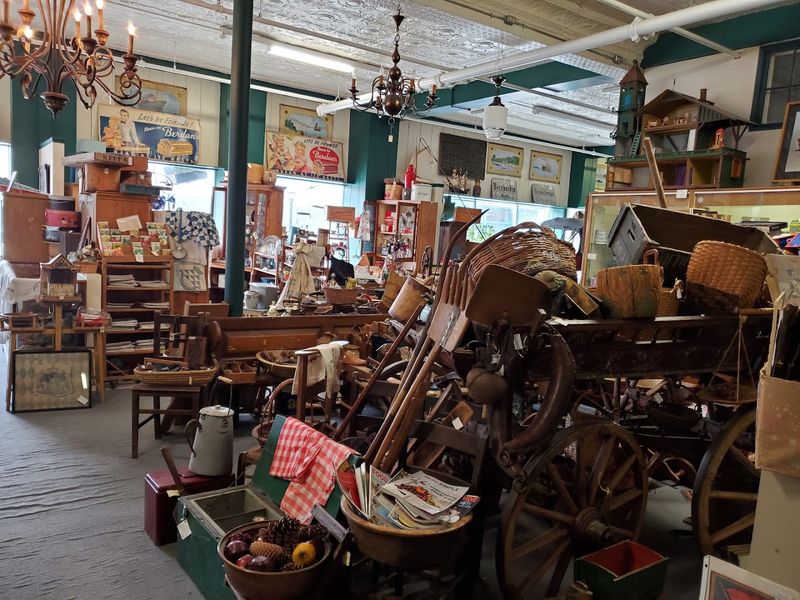
Most antique malls stock the predictable categories, glassware, toys, clothing, books. The Bay City Antiques Center does all of that, but it also carries something far less common: salvaged antique building materials.
Old doors with original hardware, decorative railings, carved banisters, columns, and an extensive range of vintage knobs, pulls, and hinges fill sections of the lower floors in a way that feels more like a specialty architectural warehouse than a typical antique shop.
For anyone working on a historic home restoration, this is a serious resource. Finding period-appropriate hardware is one of the most frustrating parts of any restoration project, and having a concentrated supply of original pieces available in one location saves considerable time and effort.
The variety covers different eras and styles, which means the inventory is useful for projects that span different architectural periods.
The salvage section also draws a creative crowd beyond strict restorers. Interior designers, prop stylists, and DIY enthusiasts regularly dig through these areas looking for statement pieces or raw material for custom projects.
A set of antique door knobs becomes cabinet hardware. An ornate railing section becomes a decorative room divider.
The possibilities multiply quickly once you start looking at the pieces outside their original context.
Aisles in these sections tend to run narrower than the main floor, so navigating with a cart or large bag requires some maneuvering. The trade-off is access to inventory that simply does not exist at most antique malls anywhere in Michigan.
Knowing this section exists before visiting allows shoppers to set aside specific time for it rather than rushing through at the end of the day when energy is low. Arrive early, bring measurements if a restoration project is in progress, and leave extra room in the vehicle.
How Bay City, Michigan Sets the Scene Outside the Door
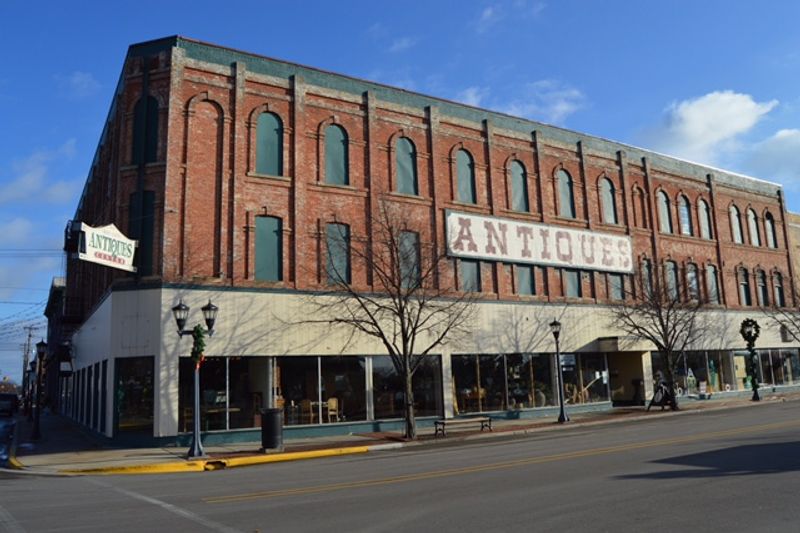
The location of the Bay City Antiques Center adds a layer to the visit that purely suburban strip-mall antique stores simply cannot offer. The building sits along the Saginaw River, directly adjacent to Wenona Park, with the Veterans Bridge and Liberty Bridge framing the view from either direction.
The setting is genuinely scenic, and the surrounding neighborhood makes the trip feel like more than just a shopping errand.
Bay City itself tends to fly under the radar compared to larger Michigan cities, but that underrated quality is part of its appeal. The downtown area near the antique center has restaurants, local shops, and waterfront access all within easy walking distance.
If hunger hits mid-browse, stepping outside for a meal and returning later is a completely viable plan. The proximity to food and the river makes it easy to turn an antique run into a full afternoon out.
St. Laurent Brothers Candy, a local landmark in its own right, sits kitty-corner from the antique center. The combination of two distinctive local businesses in close proximity gives the area a concentrated character that rewards explorers willing to spend a few hours in the neighborhood rather than just the store.
Taking the Veterans Bridge to reach the building also means no toll, a small but appreciated practical detail for repeat visitors.
Parking runs parallel along the front and side streets, which is workable for most vehicles. The waterfront setting means the walk from the car to the entrance is pleasant rather than a trek across a generic parking lot.
Bay City does not always make the short list of Michigan day-trip destinations, but the combination of the antique center, the river, and the surrounding blocks makes a strong case for putting it on the map.
The Range of Inventory That Keeps Every Type of Shopper Busy
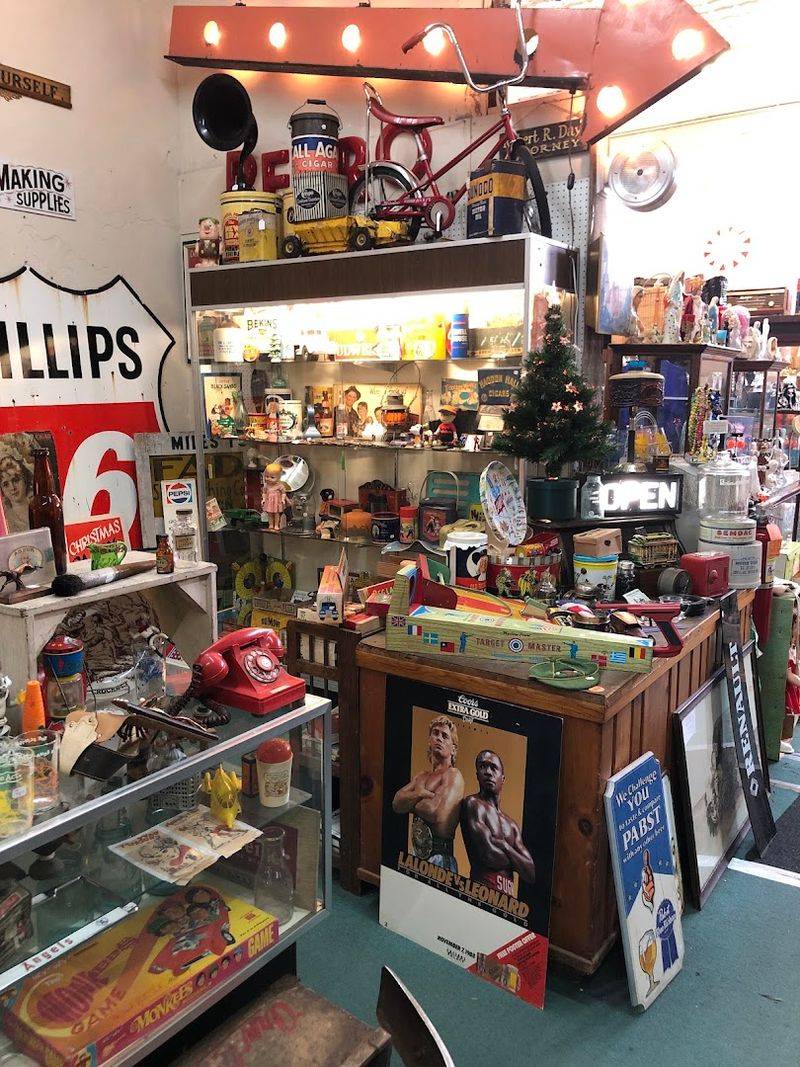
Calling the inventory here diverse is an understatement. Records and vintage clothing share space with dolls, figurines, books, magazines, furniture, jewelry, and knick-knacks that cover essentially every decade of the twentieth century.
The sheer categorical range means that two people with completely different collecting interests can visit together and both walk away satisfied, which is not always the case at more specialized shops.
One practical advantage of the mall format is that each booth is managed by an individual seller, which means pricing, curation, and specialty vary from one space to the next. A booth focused on mid-century kitchenware sits near another stacked with vintage sports memorabilia.
A dealer with a carefully arranged display of Depression-era glass occupies space alongside someone selling stacks of old Life magazines. The variety creates a browsing rhythm that feels genuinely unpredictable.
The organization within the mall is notably thoughtful. Flea market-style booths with newer, more eclectic merchandise are kept clearly separated from booths carrying true antiques.
That distinction matters to serious collectors who do not want to wade through modern reproductions or recently discounted retail goods to find period pieces. The deliberate separation reflects a management philosophy that respects both types of inventory without mixing them together carelessly.
Sales run on a rotating schedule, with different categories or booths discounting items on different days of the week. Checking in on what is currently marked down before committing to a full-price purchase is always a smart move.
The price range across the entire store stretches from a few cents for small paper goods or trinkets up to several thousand dollars for significant furniture or rare collectibles. That spread means casual browsers and serious buyers coexist naturally without either group feeling out of place.
The store accommodates everyone without pandering to any single crowd.
Staff, Pricing, and the Art of Negotiating a Deal
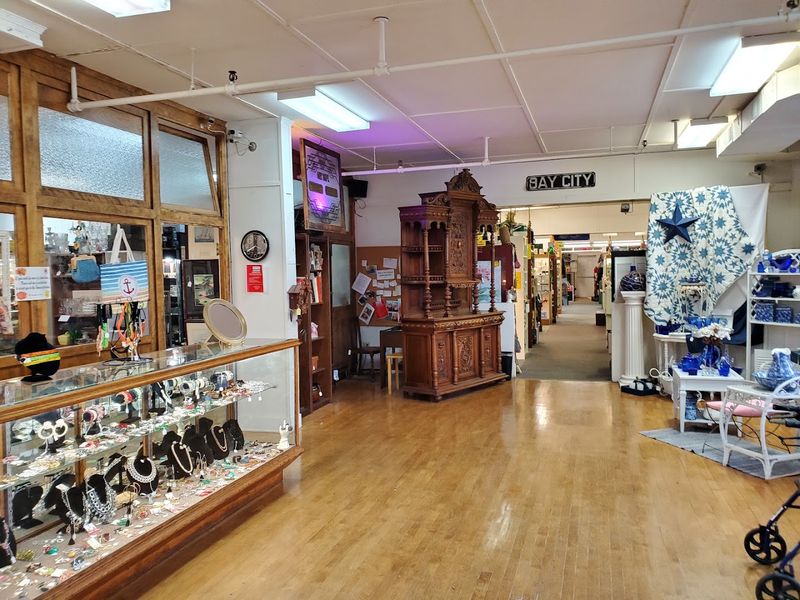
The staff at the Bay City Antiques Center consistently earn high marks for being approachable, knowledgeable, and genuinely interested in helping shoppers find what they need. That combination is rarer than it sounds in large multi-vendor spaces, where it can sometimes feel like no one is quite responsible for the whole operation.
Here, the team manages to maintain a cohesive, welcoming energy across a building that spans multiple floors and hundreds of individual booths.
On the pricing side, the experience is honest: some booths are priced competitively, and others lean higher than comparable items might sell for elsewhere. The key variable is whether the individual seller is open to negotiation.
Many are, particularly on larger items or when a buyer is purchasing multiple pieces from the same booth. A direct, respectful conversation with the dealer often opens up room that the listed price tag does not advertise.
Approaching those conversations with genuine curiosity about the item tends to go over better than leading with a lowball number.
The rotating daily sales add another layer to the pricing dynamic. Certain categories get discounted on specific days of the week, so timing a visit around a sale that aligns with a collecting interest can produce real savings.
Asking staff at the front about current promotions before starting a browse is a quick way to prioritize where to spend time first.
Friday hours extend to 8 PM, which makes end-of-workday visits possible for shoppers who cannot make it during standard daytime hours. Every other day of the week, the store opens at 10 AM and closes at 5 PM, with Sunday hours running from noon to 5 PM.
Planning around those hours, especially for anyone wanting maximum browsing time, makes a Friday visit the most flexible option on the weekly schedule.
Why Serious Collectors Keep Coming Back to This Address
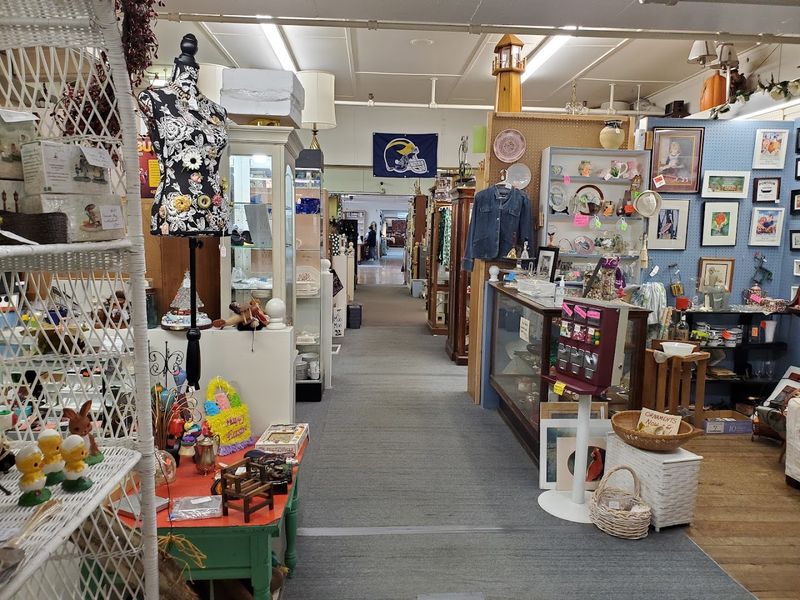
Repeat visitors to the Bay City Antiques Center are not a small group. The rotating nature of the inventory, driven by dozens of independent dealers who bring in new stock on their own schedules, means the store on any given Tuesday looks meaningfully different from the store three weeks earlier.
That constant refresh cycle is the engine behind repeat visits, because experienced collectors know that waiting too long on a specific piece usually means someone else takes it first.
The scale of the operation also supports sustained collecting over time. A shopper focused on vintage records will find enough to keep them busy across multiple visits without exhausting the category.
The same holds for furniture hunters, jewelry collectors, book enthusiasts, and anyone chasing specific decades of American material culture. The depth in most categories is substantial enough that a single afternoon barely scratches the surface.
There is also the matter of discovery, the kind that happens when you are not looking for anything specific and stumble across something genuinely unexpected. A set of original architectural hardware from a demolished Victorian building.
A box of photographs from a local family spanning fifty years. A piece of furniture with a provenance tag that tells an actual story.
These moments happen regularly at Bay City Antiques Center precisely because the inventory draws from so many different sources and sellers.
The building itself carries history independent of anything for sale inside it. Sitting along the Saginaw River in a structure that has clearly weathered decades, the physical space adds context to the objects housed within it.
That combination of location, scale, curatorial range, and consistent staffing creates the kind of destination that earns a permanent spot on a collector’s regular circuit rather than a single-visit checkmark on a road trip list. The address at 1020 N Water St has a way of pulling people back.
Share this story