Inside Great Lakes Crossing in Auburn Hills, an indoor attraction turns familiar toy bricks into a full-scale world of rides, cityscapes, and hands-on play. LEGOLAND® Discovery Center Michigan works best when you see it less as a museum and more as a compact, fast-moving playground built around creativity.
The appeal is not only the color and motion, but the way nearly every corner asks you to build, race, watch, climb, or pedal. For families looking for an all-weather outing in Michigan, this is one of the clearest examples of how a branded attraction can still feel lively, specific, and surprisingly local.
A Bright Burst Inside the Mall
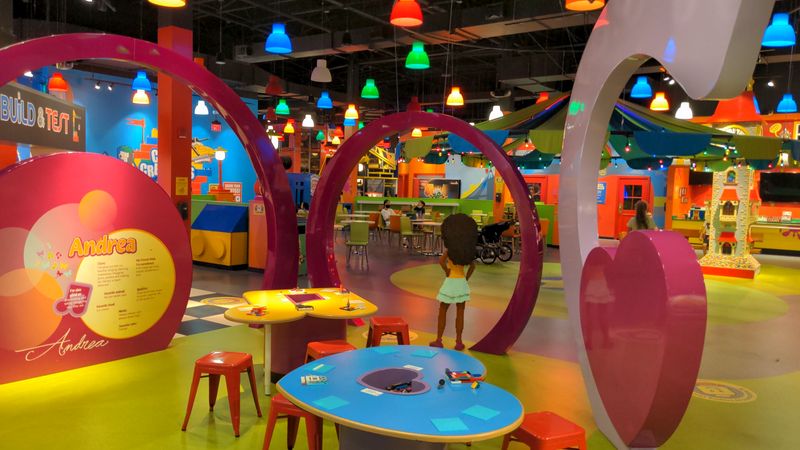
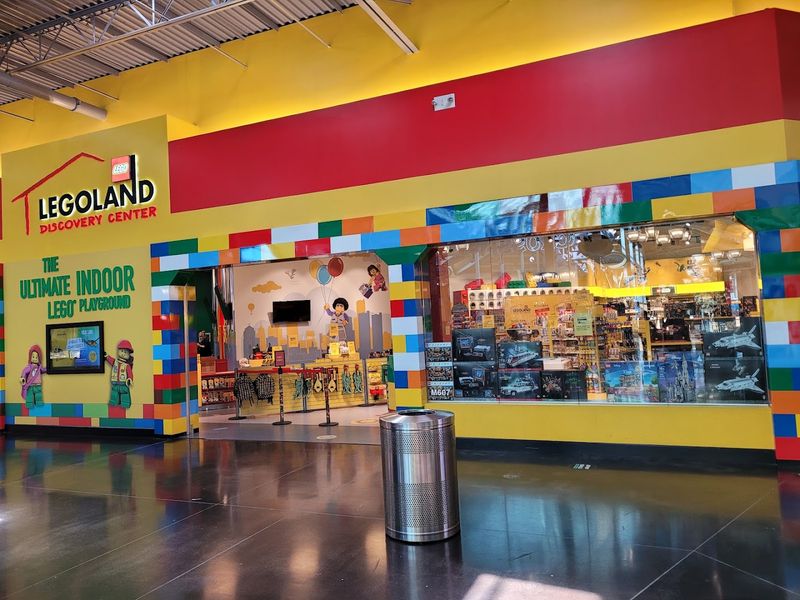
LEGOLAND® Discovery Center Michigan sits inside Great Lakes Crossing, which immediately changes the mood of the outing. Instead of treating the attraction as a standalone roadside stop, the setting frames it as a contained indoor escape, the kind of place you can reach without worrying about rain, cold, or a sudden schedule shift.
That practical advantage matters in Michigan, where weather can reshape family plans in a hurry.
Once you move past the mall corridor, the visual language shifts fast. Bright blocks of red, blue, and yellow take over, oversized LEGO details announce the theme without subtlety, and the scale is calibrated for younger kids while still giving adults plenty to look at.
The attraction does not depend on one giant reveal. It works through compression, with rides, building zones, and displays packed close enough to keep the energy moving.
That compact layout creates a useful rhythm. You are rarely walking long distances between activities, which means a child can jump from watching a model to building a car, then head straight toward a ride before attention drifts.
For parents, that shorter loop reduces the dead space that can make larger attractions tiring. For children, it makes the place read as one continuous invitation rather than a sequence of separate rooms.
The mall location also gives the center a distinct personality compared with outdoor theme parks. There is no long trudge across parking lots between attractions, no pressure to commit to an entire day outside, and no need to plan around heat or wind.
In Auburn Hills, that combination of convenience and concentrated play is the first reason this place stands out.
Mini Rides, Big Energy
The ride lineup is not enormous, but that is not the point here. LEGOLAND® Discovery Center Michigan uses a couple of compact attractions to break up the building and browsing, giving kids moments of motion between stretches of creative play.
That balance helps the center avoid the static feel that can affect some indoor family attractions built mostly around exhibits.
One of the most talked-about ride experiences is the interactive dark ride, where riders move through a themed environment and aim at targets to score points. It adds a game layer that keeps children focused and gives adults a reason to join in instead of standing off to the side.
Because the action is built around light competition rather than speed, it works well for mixed-age groups sharing the same car.
There is also a spinning ride with a physical twist: riders pedal to rise higher. That mechanic turns a simple ride into a small challenge, and it is easy to understand why kids keep trying to lift themselves a little more on the next round.
Neither attraction is huge, but together they change the pacing of the visit. They create spikes of excitement that stop the center from becoming one long block-building session.
That matters most for families planning two to five hours on site. In a compact attraction, variety has to work harder, and these rides help carry that load.
You are not coming here for roller-coaster scale thrills. You are coming for a more manageable kind of amusement, one where a quick spin, a score counter, and a burst of laughter can reset the day before the next build station pulls everyone forward.
Where Michigan Shows Up in Brick Form
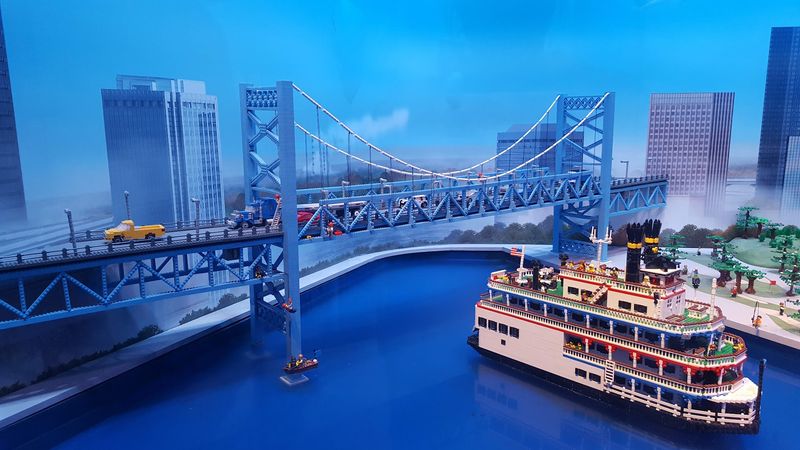
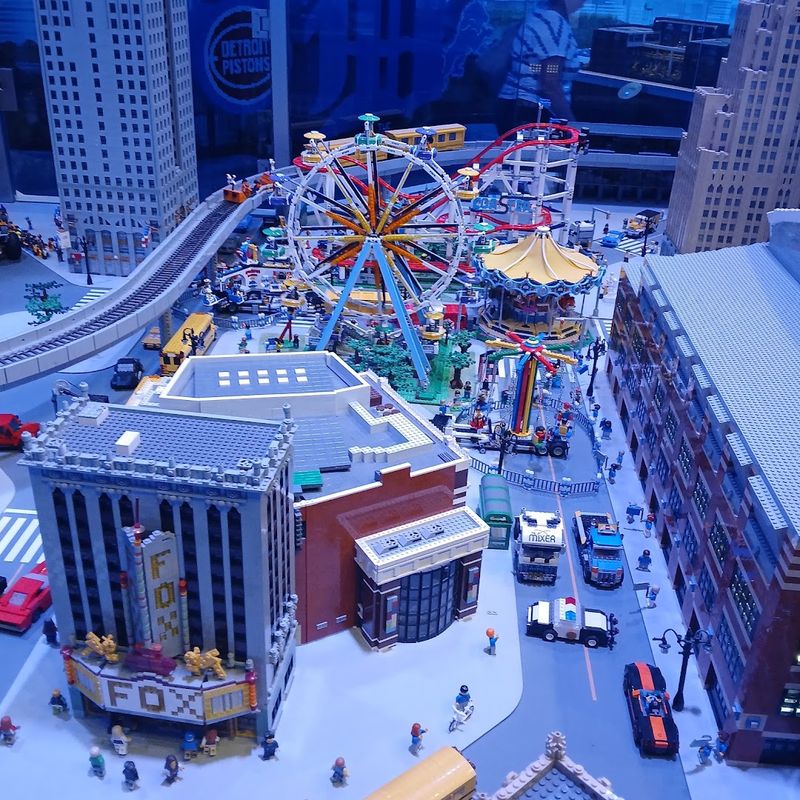
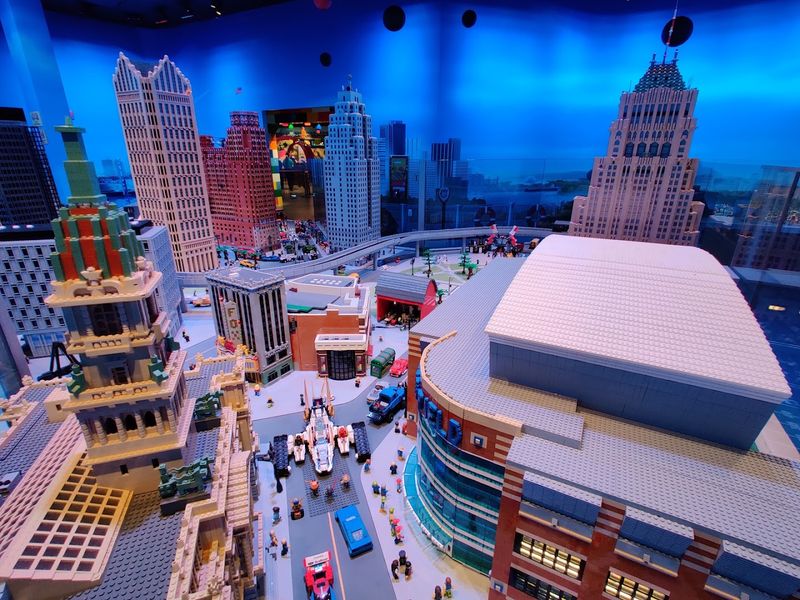
The strongest visual anchor inside LEGOLAND® Discovery Center Michigan is the miniature city display, where millions of bricks are transformed into detailed scenes that reward slow looking. Children may scan it for movement and recognizable shapes, while adults tend to lean in for the tiny jokes, architectural details, and engineering tricks tucked between buildings.
It is one of the few areas where the attraction deliberately asks visitors to pause.
This kind of display matters because it expands the place beyond pure play zone status. A build table is fun for ten minutes.
A densely packed model city can hold attention much longer because it operates on layers. At first glance, you get color and scale.
A few seconds later, you start noticing vehicles, figures, light effects, and small bits of motion that make the whole environment feel active.
At a Michigan location, that local angle gives the room extra value. Even without turning into a history lesson, the display connects the global LEGO brand to a specific regional identity, which helps the attraction feel less interchangeable.
Families from the Detroit area can search for familiar references. Out-of-town visitors get a compact visual introduction to the region through brick-built storytelling rather than brochures or wall text.
The display also solves a common problem in children’s attractions: how to entertain different age groups at the same time. Younger kids can react to trains, lights, and moving pieces.
Older children can inspect the craftsmanship. Adults often end up studying it the longest, not out of nostalgia alone, but because the amount of labor and planning is obvious at close range.
In a center full of activity, this is the section that quietly proves LEGO can be both toy and medium.
The Build Zones That Keep the Day Moving

Hands-on building is the backbone of the attraction, and LEGOLAND® Discovery Center Michigan understands that passive viewing alone would not carry a full visit. The building zones create a rotating cycle of trial, testing, rebuilding, and immediate payoff.
Instead of asking children to admire finished models from a distance, the center pushes them toward making something of their own, usually with a nearby challenge attached.
One of the smartest examples is the car-building and racing area. It turns a familiar pile of bricks into a mini design lab where shape, weight, and wheel placement suddenly matter.
A child can build a car, send it down a track, watch it lose, then return to the table and make quick changes. That loop is simple, but it teaches experimentation without announcing itself as education.
Elsewhere, the center layers in more open-ended stations where towers, creatures, and freestyle builds take over. This matters because not every child wants the same assignment.
Some want a clear goal and a finish line. Others just want a bucket of bricks and time.
By mixing structured and loose play, the attraction gives different personalities room to settle into their own pace instead of forcing one model of participation.
For adults, these zones are also where the visit becomes easiest to manage. Kids can stay occupied without standing in a line every ten minutes, and the activity naturally resets energy after louder sections.
In a place built around a globally recognizable toy, that may sound obvious, yet it is surprisingly important. The center succeeds when building is not a side feature, but the thread that ties the rides, theater, and displays into one coherent indoor experience.
4D Screens and Play Spaces After the Bricks
After a few rounds of building and riding, the 4D theater changes the texture of the visit. Short films with physical effects such as wind or water add a burst of sensory novelty without requiring a major time commitment.
That is a smart fit for this attraction. A long feature would stall momentum, but a compact theater break gives families a chance to sit down while still keeping children engaged.
The appeal is partly practical. Indoor attractions aimed at younger kids need moments where excitement continues but feet can stop moving.
The theater handles that reset neatly, and because the films are brief, it is easy to slot one in between other activities instead of building the entire visit around showtimes. It also widens the age appeal.
Even children who are less interested in careful building can enjoy a quick, immersive movie.
Then there is the play area, which serves a different function entirely. Where the theater compresses energy into one seated experience, the play structure lets that energy explode again.
Climbing, scrambling, and free movement matter more than theme precision here. For many families, this zone becomes the pressure valve at the end, the place where children burn off whatever excitement has been accumulating through the rest of the center.
Together, those features make the attraction more than a sequence of LEGO tables. They create alternating tempos: active, focused, seated, physical, then focused again.
That pacing is one reason families can stay longer than they expected. The center does not ask kids to behave in one fixed way all afternoon.
It gives them several modes of engagement and lets the visit swing between them, which is often the difference between a short stop and a full outing.
Best Timing for an Auburn Hills Visit
Timing shapes this experience more than many first-time visitors expect. LEGOLAND® Discovery Center Michigan operates on a daytime schedule, usually opening at 10 AM, with closing times that extend a bit later on weekends than on weekdays.
That makes arrival strategy important, especially for families trying to fit the attraction around meals, naps, or other stops inside Great Lakes Crossing.
Earlier entry generally gives you the cleanest runway. When you start near opening, you have a better chance of moving through the rides before lines build, and children often hit the build zones with more patience at the beginning of the day than at the end.
Late arrivals can still work, but they compress the experience. Reviews mention that entry and ride timing can become an issue later in the afternoon, which is worth factoring into any plan.
The center also works differently depending on the age of the group. Families with younger children may find two to three hours enough, especially if the main goal is hands-on play with a couple of rides and a movie.
Older kids who are still deeply into LEGO can stretch the visit longer by returning to race stations, inspecting display details, and revisiting favorite sections. The compact footprint helps, but it can also make crowded periods feel more noticeable.
If you are building a larger Auburn Hills day, the location inside the mall is a major advantage. Food options, restrooms, and other family-friendly stops are already nearby, so the attraction does not have to carry the full day on its own.
Treated as the centerpiece of a flexible indoor outing rather than an all-day destination by itself, it becomes easier to time well and enjoy on its own terms.
Why This Indoor Michigan Attraction Lands So Well

LEGOLAND® Discovery Center Michigan works best when judged by the experience it is actually built to deliver: a concentrated indoor family attraction where creativity and activity trade places every few minutes. It is not trying to compete with a sprawling outdoor theme park.
It is offering a weather-proof, mall-connected environment where children can build, ride, watch, climb, and reset without needing a car ride between each part of the day.
That focus gives the place a clear identity. The rides are modest, but they add momentum.
The miniature city models bring craftsmanship and local character. The theater introduces sensory variety.
The play structures let kids release energy in a way static exhibits never could. Most important, the build stations keep the center tied to the essential appeal of LEGO itself: not just looking, but making, testing, and trying again.
The attraction is also at its strongest when expectations are precise. Families expecting a giant full-day theme park may find the scale smaller than imagined.
Families expecting a compact, interactive outing for younger children, with enough visual interest to keep adults entertained too, are far more likely to understand why it draws repeat visits. In that sense, the location inside Great Lakes Crossing is not incidental.
It supports the exact kind of half-day or flexible-day experience the center delivers.
Among Michigan family attractions, this one stands apart because it turns a familiar toy into an environment rather than a product on a shelf. You are surrounded by the logic of LEGO the whole time: buildable, bright, modular, slightly chaotic, and designed for tinkering.
In Auburn Hills, those qualities come together indoors in a way that is easy to reach, easy to navigate, and hard for brick-loving kids to resist.
Share this story