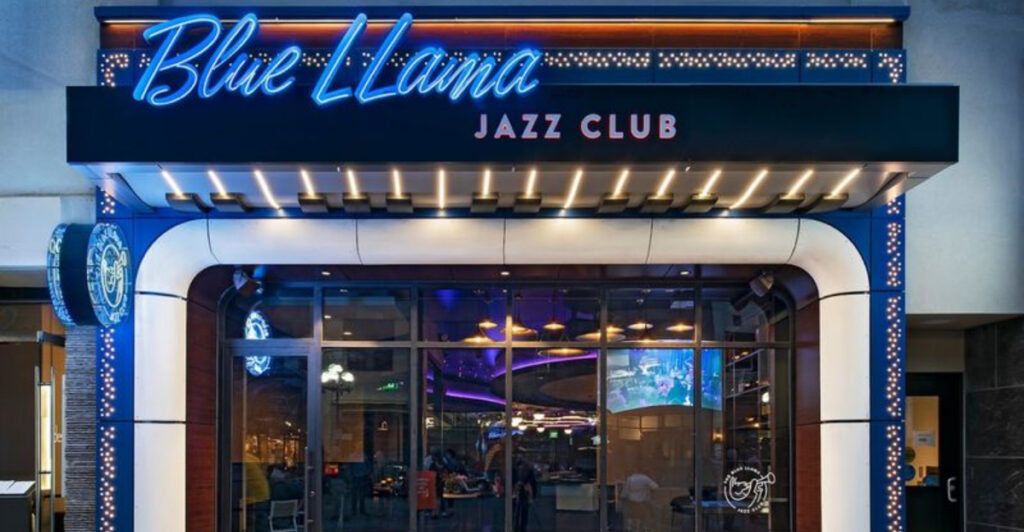
A great night out feels different when the music, food, and room all know exactly what they are doing. In downtown Ann Arbor, Michigan, Blue LLama Jazz Club and Restaurant brings that full experience to South Main Street with live jazz, a 4.7-star rating, and an audience that comes for more than just background music.
The performances give the room its pulse, while the Afro-Caribbean menu adds real culinary ambition to a setting that already feels intimate, polished, and alive after dark. It is a date-night spot, a music-lover’s destination, and one of those Michigan venues that makes the evening feel bigger than the address.
Once the first notes hit, Blue LLama turns Ann Arbor into something far moodier, warmer, and more unforgettable than expected.
A Room Shaped Like Music Itself
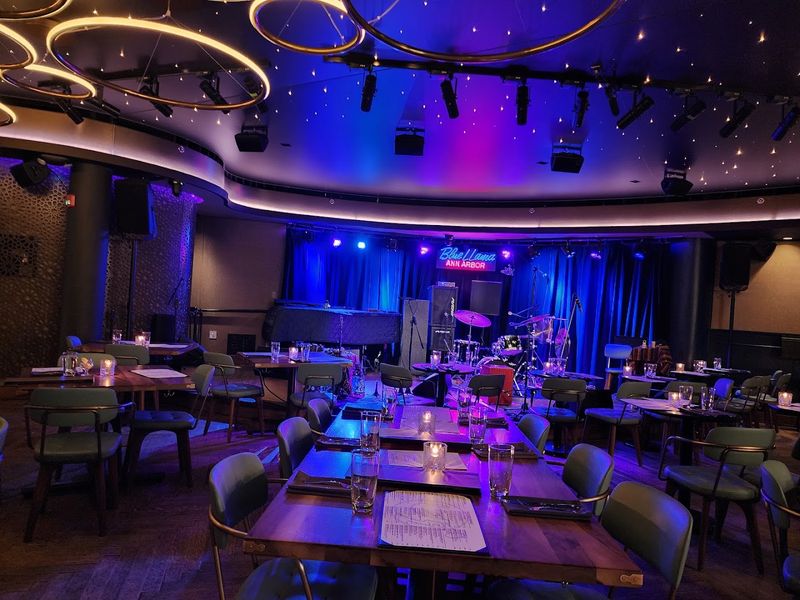
Walk through the front door of Blue LLama and the architecture does something clever before the band even plays a note. The interior is reportedly shaped like a piano, with curved seating arrangements and bench-style tables that radiate toward the stage.
Every single seat in the house faces the performance area, which is not a coincidence — it is a deliberate design decision that changes how the whole experience feels.
There is no awkward corner table where the sightlines are blocked, no pillar obstructing your view of the trumpet player mid-solo. The layout respects the music and the audience equally.
Warm lighting keeps the room from feeling sterile, and the overall decor lands somewhere between chic cocktail lounge and serious listening room.
The interior has drawn consistent admiration from those who notice design details — the kind of space where couples pause mid-conversation to look around and appreciate the craft that went into it. Dark tones, thoughtful materials, and stage-forward geometry make the room feel like it was built specifically for this purpose rather than converted from something else.
Ann Arbor has no shortage of bars and restaurants with live music tucked into a corner, but Blue LLama treats the performance space as the architectural centerpiece. That prioritization shows in how the room sounds, too.
Acoustics feel considered rather than accidental, so whether you are seated up front or toward the back, the music arrives with clarity and presence. The venue holds an intimate capacity that keeps the energy concentrated and personal rather than sprawling and impersonal.
The Afro Caribbean Menu Brings Serious Culinary Ambition
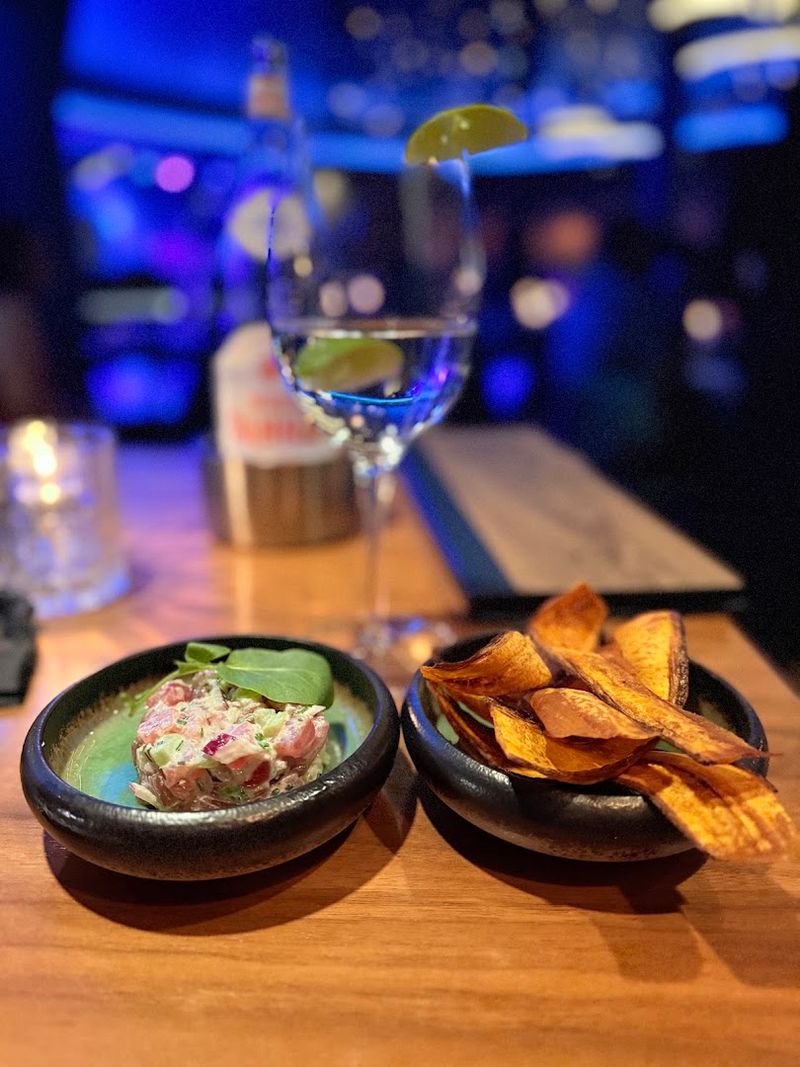
Afro Caribbean cuisine is not the first thing most people expect from a jazz club in Michigan, and that element of surprise is part of what makes Blue LLama memorable. The kitchen operates with a level of precision that goes well beyond standard dinner-and-a-show fare.
Dishes are plated with an artistic sensibility — ingredients chosen carefully, flavors balanced rather than simply stacked on top of each other.
The prix fixe and a la carte formats give diners flexibility depending on how they want to approach the evening. Those who opt for the chef’s tasting menu often find themselves working through four or five courses that build in complexity without ever becoming heavy.
Pumpkin soup arrives savory and buttery with a richness that reads more like a composed dish than a simple starter. Beef tenderloin comes with beet cream and a side of thinly sliced potatoes, mushroom, and zucchini — a combination that sounds straightforward but lands with unexpected elegance.
The scallop and shrimp ceviche has earned its own reputation as a standout preparation. A uniquely composed Caesar salad has also drawn attention for stepping outside the expected.
These are not dishes designed to blend into the background while musicians take center stage — they are confident enough to hold their own in the conversation.
Lighter preparations keep the meal from sitting heavily, which matters when you are settling in for a full evening of listening. The kitchen understands that pacing a tasting menu alongside a live performance requires timing and restraint.
Portions are calibrated to satisfy without overwhelming, and the Afro Caribbean influence gives the food a distinct identity that separates Blue LLama from every other upscale dining option on South Main Street.
World-Class Artists Make Ann Arbor, Michigan a Jazz Destination
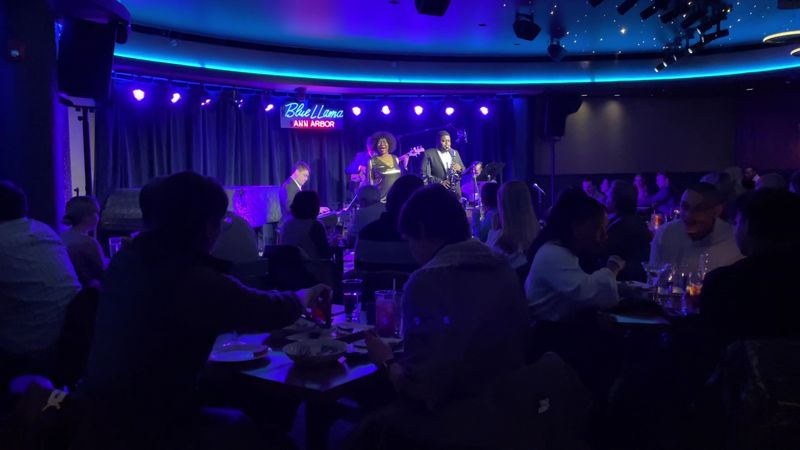
Kahil El’Zabar’s Ethnic Heritage Ensemble. Marcus Elliot and the Quintet.
Alune Wade. These are not local cover bands filling time between drink orders — these are working musicians with serious international reputations.
Blue LLama has built a booking calendar that would make larger city venues envious, pulling in artists whose performances carry genuine emotional weight and technical depth.
The music at Blue LLama is explicitly not background noise. That distinction matters more than it sounds.
In a lot of venues, jazz drifts pleasantly through the room while people talk over it. Here, the performance demands attention — horns with dynamic range, percussion that shifts the energy of the room, improvisation that takes the audience somewhere unexpected.
The intimacy of the space amplifies this effect considerably.
Shows typically run across two sets, and the club sometimes offers both an early and a late performance on the same night. That structure gives the musicians room to develop their sets fully rather than rushing through a truncated hour.
Audience members seated close enough to make eye contact with the performers report a kind of presence that larger concert halls simply cannot replicate at scale.
Reservations are essential and fill up fast, particularly for well-known headliners. The cover charge reflects the caliber of talent on stage rather than functioning as a token admission fee.
For jazz enthusiasts who have attended performances in Chicago, New York, or New Orleans, the quality of programming at Blue LLama consistently registers as a genuine peer rather than a regional approximation. Ann Arbor has a strong arts culture driven in part by the University of Michigan, and Blue LLama channels that energy into something specific, curated, and consistently delivered at a high level.
Cocktails and Drinks That Hold Their Own After Hours
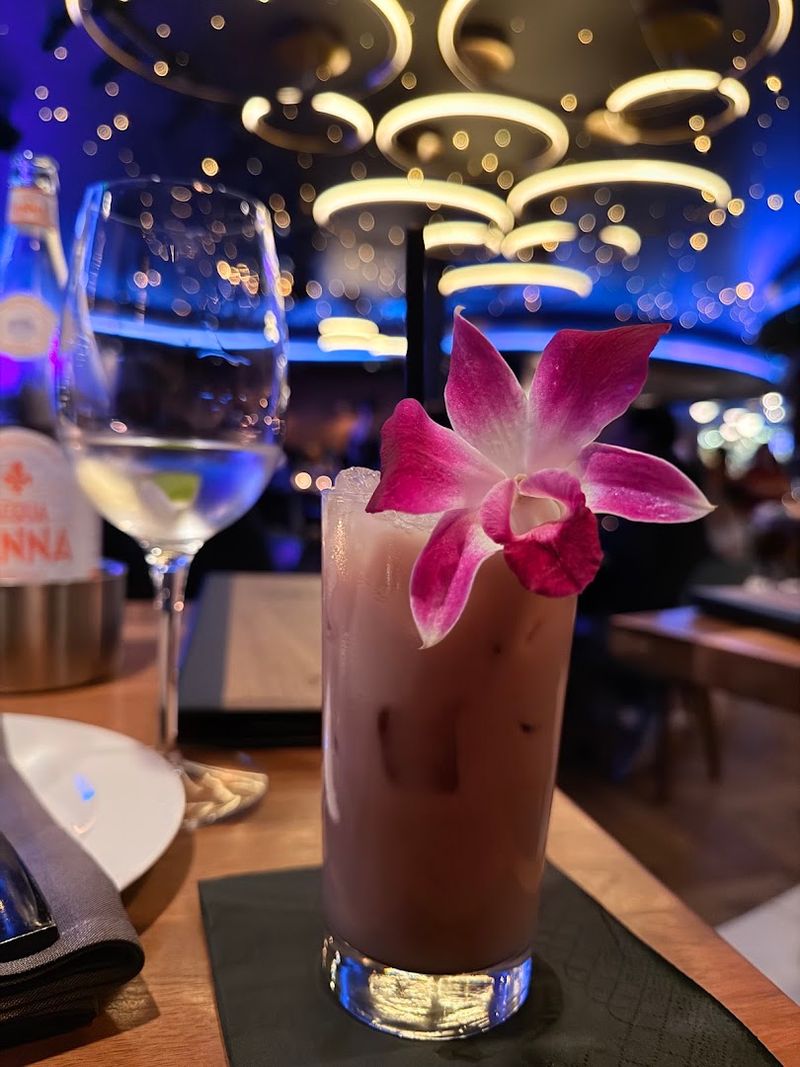
The bar program at Blue LLama does not coast on the reputation of the kitchen or the stage. Creative cocktails arrive with the same level of intention as the food — drinks that feel composed rather than assembled.
The menu spans a wide range, and the non-alcoholic options are taken seriously enough that they appear alongside the cocktail list rather than as an afterthought footnote.
Pricing sits on the higher end, which aligns with the overall positioning of the club. This is not a spot where you grab a cheap beer before the show — it is an environment where the drink in your hand is part of the full sensory picture.
Guests who lean into that framing tend to find the value more satisfying than those who approach it expecting bar-standard pricing.
The bar staff operates with attentiveness that matches the floor service. Drinks arrive promptly even during peak performance hours, which is a logistical challenge in a room where noise levels shift with the music and server movement needs to be coordinated carefully.
That kind of operational smoothness is harder to achieve than it looks, and Blue LLama manages it consistently across busy Friday and Saturday nights.
For those celebrating a special occasion, the drink menu provides enough range to build a memorable evening around — from pre-dinner aperitifs through dessert pairings. The Bananas Foster dessert, which arrives as a lattice pastry with banana ice cream rather than a flambeed tableside production, pairs particularly well with something cold and slightly sweet.
The bar also supports the prix fixe experience by offering wine pairings that complement the Afro Caribbean flavor profiles without overpowering them. Creative, considered, and well-executed — the drinks earn their place in the lineup.
How the Evening Actually Flows From First Course to Final Note
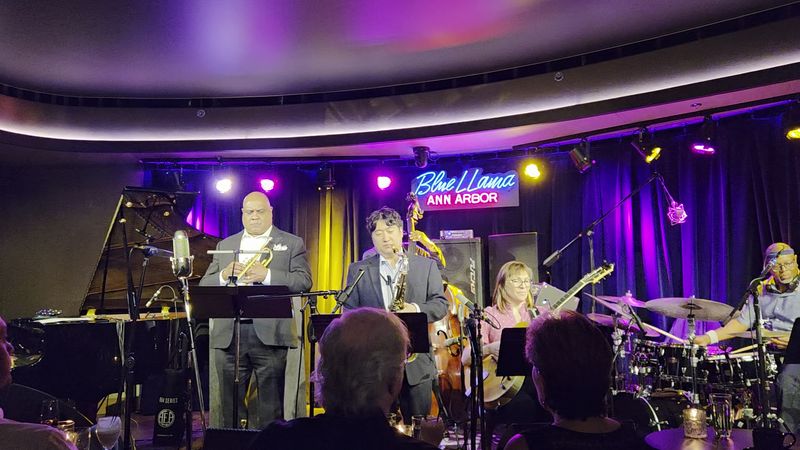
Blue LLama runs on a reservation-based model with set performance start times, which means arriving late is not a casual inconvenience — it changes the shape of your entire evening. The club schedules dinner service to align with the show, so courses arrive in sequence as the performance unfolds around you.
Getting there early enough to settle in, review the menu, and order before the first note lands makes a noticeable difference in how relaxed the experience feels.
Wednesday through Thursday hours run from 5:30 to 10 PM, while Friday and Saturday extend to 10:30 PM. Sunday offers an earlier window from 5 to 9 PM.
The club is closed Monday and Tuesday, which keeps the weekly schedule tight and the programming focused. Planning around those hours — and booking well in advance for weekend shows — is the single most practical piece of advice for a first visit.
The tasting menu and prix fixe format work best when treated as part of the performance experience rather than as a separate dinner. Pacing yourself through courses between sets lets you appreciate both the food and the music without either competing for your full attention.
Appetizers and drinks during the opening minutes, entrees during the first set, dessert arriving as the music reaches its later passages — when the timing works, it feels genuinely choreographed.
Service staff are attentive and trained to work around the performance rather than through it. That means quieter communication, efficient movement between tables, and an awareness of when to approach and when to let the room breathe.
For celebrations, birthdays, anniversaries, or milestone evenings, the format creates a natural arc to the night that most restaurants simply cannot offer. The structure is part of the experience, not a constraint on it.
The Local Context That Makes Blue LLama Mean Something More
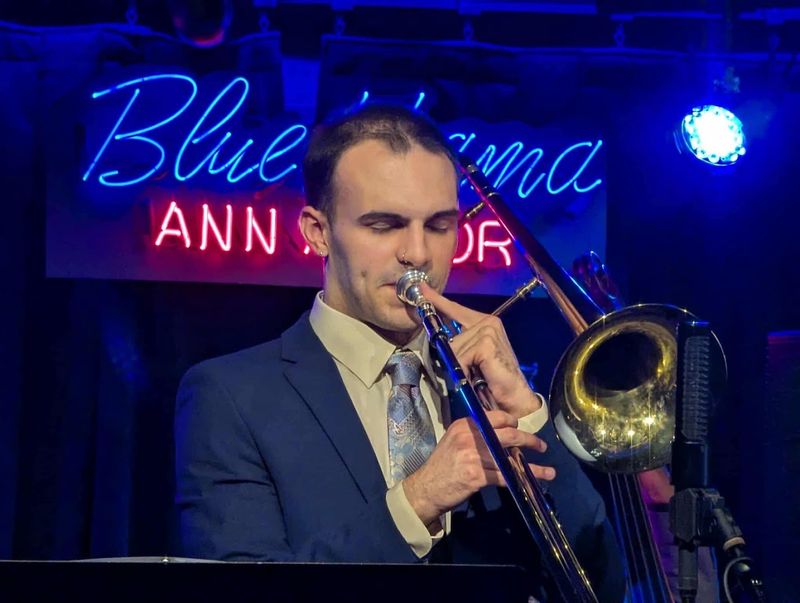
Ann Arbor has a cultural personality that does not fit neatly into the “college town” label most people reach for first. The University of Michigan brings a consistent influx of professors, researchers, graduate students, and visiting scholars who have traveled widely and carry demanding expectations for cultural programming.
Blue LLama opened into that environment and responded to it rather than panicking about it.
The crowd on any given night reflects that mix — academics sharing tables with longtime Ann Arbor residents, music enthusiasts who drove in from Detroit or Ypsilanti, couples celebrating anniversaries, and groups of friends who made a specific plan around a specific artist. The dress code lands in the comfortable-casual-but-tidy zone, which keeps the room from feeling either stuffy or sloppy.
Nobody is wearing a tuxedo, but nobody showed up in sweatpants either.
South Main Street positions Blue LLama within easy walking distance of much of downtown Ann Arbor’s dining and nightlife corridor. That location makes it straightforward to build an evening around — dinner at the club, a walk along Main Street afterward, or drinks at a neighboring spot before the show.
The neighborhood has density and energy without being overwhelming.
What Blue LLama does for Ann Arbor specifically is provide something the city lacked before its arrival: a dedicated, purpose-built jazz listening room with a food program serious enough to justify the full evening commitment. Detroit has had jazz infrastructure for decades.
Chicago’s scene needs no introduction. But Ann Arbor now has a room that competes on a different scale than anyone expected from a mid-sized Michigan city, and that fact has not gone unnoticed by the artists willing to perform there.
Why Blue LLama Stands Apart From Every Other Night Out in the Region
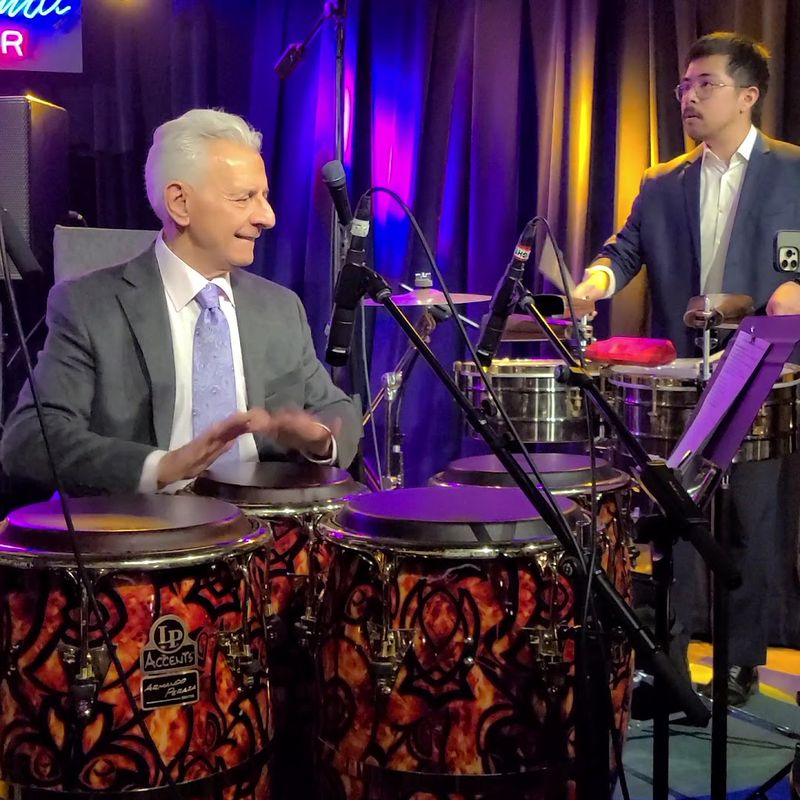
There is a specific kind of evening that Blue LLama delivers which most venues in Michigan simply cannot replicate. It requires the intersection of a calibrated physical space, a kitchen operating at genuine ambition, a bar program with range and intention, and a booking calendar that pulls artists worth traveling to see.
Most places get one or two of those elements right. Blue LLama consistently lands all four in the same room on the same night.
The 4.7-star rating across nearly 800 reviews is not driven by novelty. People return to Blue LLama — sometimes multiple times in a season — because the experience holds up on repeat visits.
The programming rotates, the menu evolves, and the room carries a different energy depending on who is performing. That variability keeps it from becoming predictable while the quality of execution keeps it from becoming a gamble.
For first-timers, the advice is consistent and practical: book early, arrive on time, order more than you think you need, and let the evening move at its own pace. The prix fixe menu is worth committing to fully rather than picking around the edges.
Splitting appetizers before the main courses arrive gives the kitchen time to pace the experience properly.
Blue LLama is not trying to be everything to everyone. It does not have high chairs, it is not a casual drop-in spot, and it is not cheap.
But for the audience it is designed to serve — people who want a complete, considered evening built around exceptional live music and food that earns its place on the same bill — it delivers with a consistency that few places in the Midwest can match. That specificity of purpose is exactly what makes it worth the reservation.
Share this story