Some museums show you history from a distance. The Henry Ford Museum of American Innovation in Dearborn, Michigan, puts you close enough to feel the weight of it.
Inside this massive 12-acre museum, some of the most powerful objects in American life sit under one roof, each carrying a story that still echoes. You can stand near the bus where Rosa Parks helped change the course of civil rights, see the chair tied to Abraham Lincoln’s final night, and move through exhibits that connect invention, struggle, industry, culture, and everyday courage in a way that feels anything but flat.
For anyone who thinks museums are quiet rooms full of labels, this place has a way of changing that fast.
Rosa Parks’ Bus: The Seat That Started a Movement
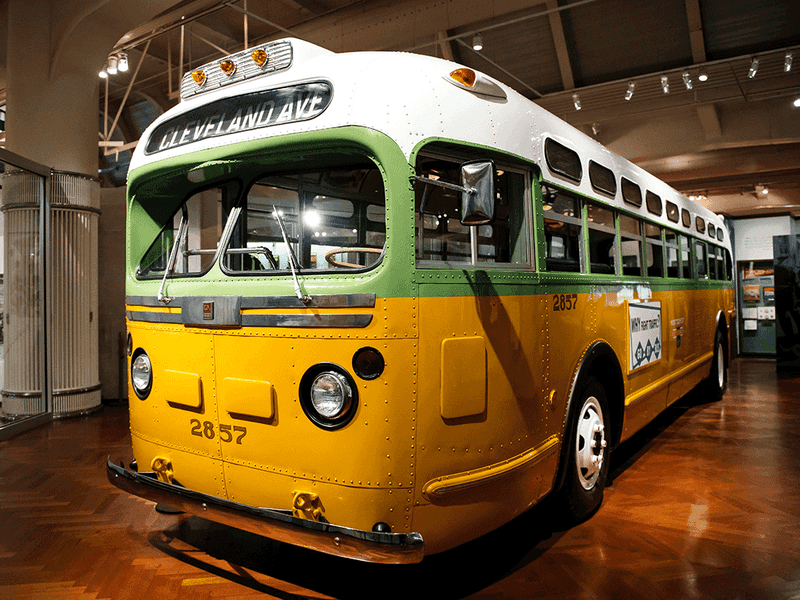
On December 1, 1955, a seamstress named Rosa Parks sat down on a Montgomery, Alabama city bus and quietly refused to give up her seat. That single act of courage helped ignite the Civil Rights Movement.
The actual bus where that moment happened now sits at the Henry Ford Museum, and standing beside it feels nothing like reading about it in a textbook.
The bus is a 1948 General Motors Old Look model, painted in its original green and cream tones. Visitors can board it, walk the aisle, and sit in the seats.
That physical access makes the experience hit differently than any exhibit behind a glass case ever could. You’re not observing history from a distance — you’re stepping directly into the space where it was made.
The museum acquired the bus in 2001 after it was discovered deteriorating in a field in Alabama. A years-long restoration brought it back to its 1955 condition.
The care taken in that process reflects how seriously the museum treats its collection — not as decoration, but as living documentation.
An audio component plays period recordings and narration that give context without overwhelming the moment. Kids and adults alike tend to go quiet once they step inside.
The weight of the space does that on its own.
Spending extra time at this exhibit is worth it. The surrounding displays include photographs, newspaper clippings, and timeline panels that trace the ripple effects of Parks’ decision through the broader Civil Rights Movement.
It’s one of those rare museum experiences where a single object carries an entire chapter of American history inside it. Plan to linger here — the story deserves the time.
Lincoln’s Theatre Chair: Where History Took a Tragic Turn
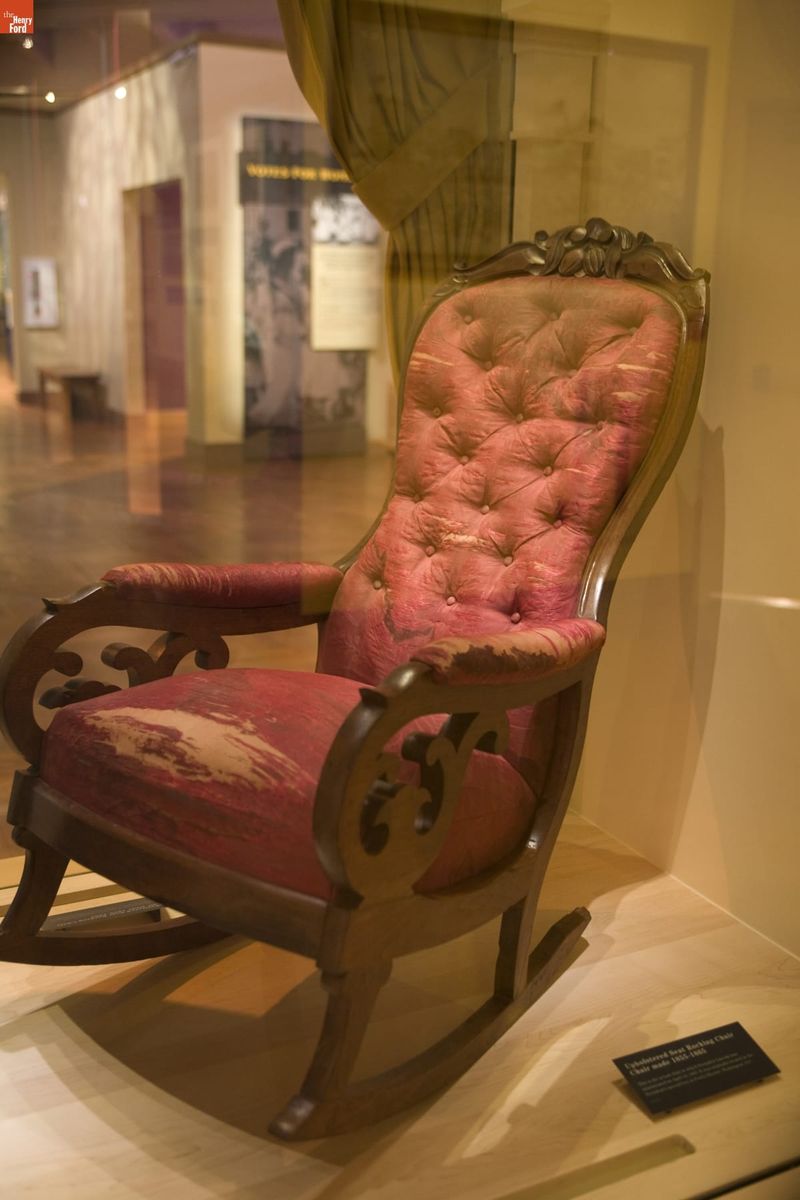
Most people know the story of Abraham Lincoln’s assassination on April 14, 1865, at Ford’s Theatre in Washington, D.C. Far fewer know that the actual rocking chair Lincoln was sitting in that night is on display in Dearborn, Michigan.
Seeing it in person is a genuinely arresting experience.
The chair is a red upholstered rocker with a carved wooden frame, and it looks exactly as period and worn as you’d expect something 160 years old to look. It’s displayed with careful, respectful presentation — no dramatic staging needed when the object itself carries this much historical gravity.
The museum lets the artifact speak without over-producing the moment around it.
Henry Ford acquired the chair in 1929 from the descendants of the theatre’s owner. Ford had a deep personal fascination with Lincoln, and this chair became one of the founding acquisitions of his museum.
That origin story adds another layer to the exhibit — you’re not just seeing Lincoln’s chair, you’re seeing what Henry Ford considered worth preserving for future generations.
The surrounding exhibit contextualizes the assassination within the broader arc of Lincoln’s presidency and the Civil War. Panels trace the events of that evening in clear, straightforward language that works for all ages.
A few personal items from Lincoln’s life are displayed nearby, making the exhibit feel like a fuller portrait rather than a single dramatic object.
For anyone who has ever studied Lincoln in school or simply grown up knowing his story, being this close to a physical piece of that history is quietly overwhelming. It’s one of those exhibits that makes a 12-acre museum feel like it was built around a single, extraordinary object.
The chair earns every second of attention visitors give it.
JFK’s Presidential Limousine: A Car No One Wanted to Ride In Again
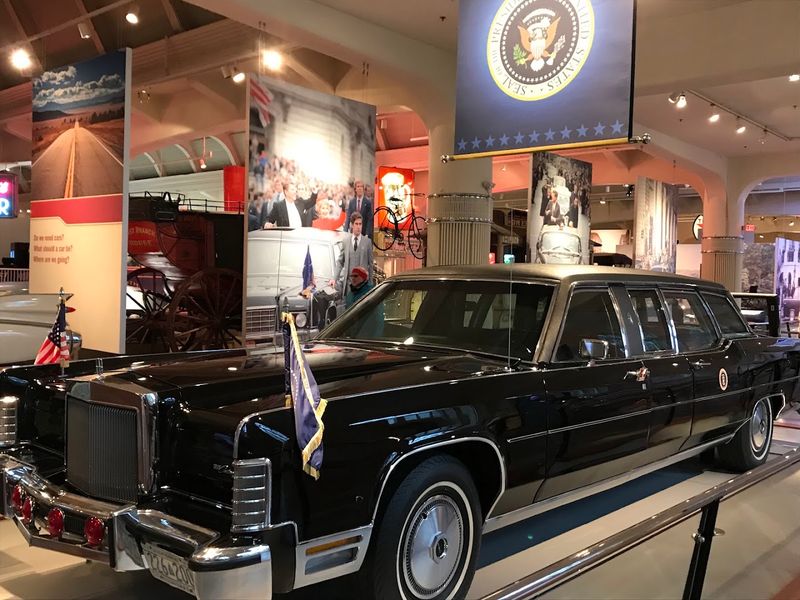
The 1961 Lincoln Continental SS-100-X is one of the most recognized automobiles in American history, and not for any reason its designers intended. This is the car President John F.
Kennedy was riding in through Dealey Plaza in Dallas on November 22, 1963, when he was assassinated. The Henry Ford Museum houses the actual vehicle, and it commands a presence in the exhibit hall that’s hard to describe without standing in front of it.
What surprises many visitors is how the car continued in active presidential service after the assassination. Following extensive modifications and the addition of a permanent roof, the limousine was used by Presidents Johnson, Nixon, Ford, and Carter before finally being retired.
That continued use gives the vehicle a complicated, layered history that the museum’s exhibit explores with considerable depth.
The surrounding display includes photographs, timelines, and detailed explanations of the car’s modifications over the years. Original Secret Service documentation is referenced in the panels, giving the exhibit a level of specificity that serious history enthusiasts will appreciate.
The car itself shows its age in ways that feel appropriate — this is not a polished showroom piece but a preserved historical object.
Lighting in this section of the museum is deliberately measured, creating a tone that matches the gravity of what the object represents. Visitors tend to slow down here in a way that’s noticeably different from other sections of the floor.
The car draws a kind of reverent attention that even the most energetic kids seem to pick up on naturally.
Few objects in any museum carry the simultaneous weight of tragedy, history, and political continuity the way this limousine does. It’s a centerpiece of the collection for good reason, and it rewards careful attention far beyond a quick look and a photograph.
The Scale of the Place Will Reset Your Expectations Immediately
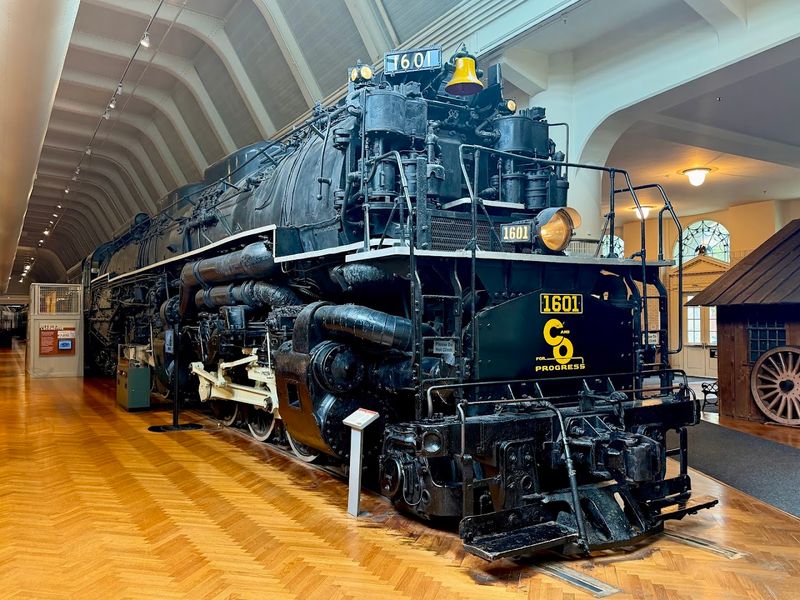
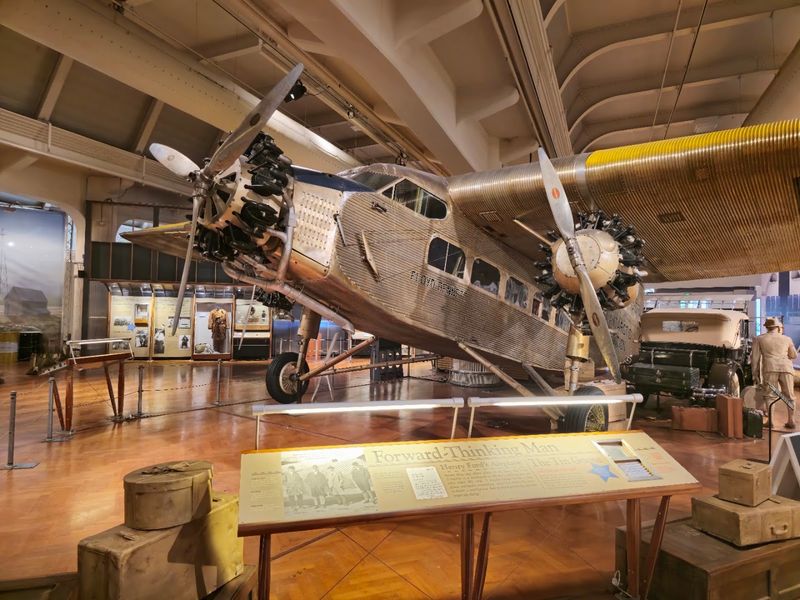
Walking through the entrance of the Henry Ford Museum and encountering the full scale of the main hall for the first time is a genuine jaw-drop moment. The building spans 12 acres of interior space, and that number becomes real the second you see locomotives, full-size aircraft, and rows of automobiles stretching further than you can see from a single vantage point.
This is not a museum you browse — it’s a museum you explore.
The collection includes everything from the Wright Brothers’ bicycle shop and the chair from Ford’s Theatre to the Dymaxion House designed by Buckminster Fuller, a circular aluminum dwelling that looks like it was built for a science fiction film. The Allegheny locomotive — one of the largest steam engines ever constructed — dominates one section of the hall with a physical mass that makes you understand the Industrial Revolution in a way no photograph ever could.
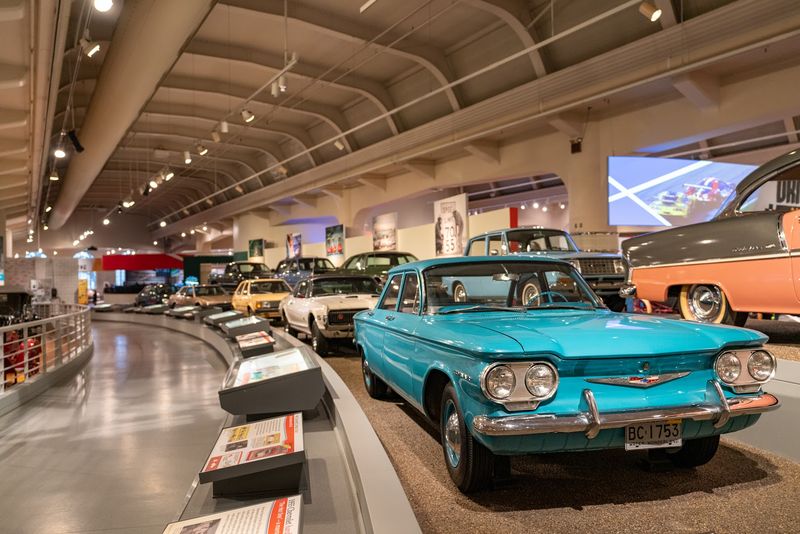
Vintage cars, agricultural machinery, steam generators, early television sets, presidential vehicles, and furniture from different American eras all share the same enormous floor. The layout is organized enough to navigate but varied enough to keep surprising you around every turn.
There’s no single logical path through the space, which actually works in the visitor’s favor — you can drift toward whatever catches your eye and still cover significant ground.
Plan for at least four hours, though six is more realistic if you want to read the panels and take your time with individual exhibits. The museum offers a printed map at the entrance that’s genuinely useful for orienting yourself before you start.
Scooters and wheelchairs are available to rent at the welcome center on a first-come basis, which is worth knowing if mobility is a consideration for anyone in your group.
Michigan’s Most Layered Museum Has a Diner Straight Out of 1946
Somewhere between the locomotives and the presidential cars, hunger is going to hit — and the Henry Ford Museum has one of the more interesting answers to that problem in any museum in the country. The on-site diner serves food from a menu that has not changed since 1946, and that commitment to historical accuracy makes it an exhibit in its own right.
The interior looks the part completely. Chrome countertops, red stools, a working jukebox loaded with classic songs — the diner is designed to replicate the mid-century American dining experience with the same care the rest of the museum applies to its historical artifacts.
The food itself is straightforward diner fare: simple, satisfying, and served quickly by staff who keep the energy friendly and efficient.
A second dining option, the Plum Market Kitchen, offers a more modern selection with higher-end ingredients and broader variety. Multiple visitors have noted that the quality is solid, though the prices lean noticeably upward compared to what you’d expect from a museum cafeteria.
Both options are worth knowing about before you get hungry mid-visit so you can plan accordingly.
Taking a meal break in the diner specifically adds something to the overall museum experience. Sitting at the counter with a sandwich and the jukebox playing in the background gives you a sensory pause that feels connected to the broader theme of American life across different eras.
It’s not just a place to refuel — it’s another layer of the story the museum is telling.
The diner tends to fill up during peak afternoon hours, so arriving for lunch closer to 11:30 AM rather than noon can save you a wait. It’s a small logistical detail that makes a real difference on a busy Saturday.
Planning Your Visit: Timing, Tickets, and What Not to Skip
The Henry Ford Museum opens at 9:30 AM every day of the week and closes at 5 PM. Getting there right at opening is one of the smartest moves you can make, especially on weekends when the main hall fills up steadily through the morning.
Early arrivals get the Rosa Parks bus and the JFK limousine with significantly fewer people around them, which changes the quality of the experience considerably.
Tickets can be purchased at the welcome center before the museum opens, which is also where scooter and wheelchair rentals are handled on a first-come, first-served basis. If anyone in your group needs mobility assistance, arriving early is not optional — it’s necessary.
The museum is large enough that covering it without assistance would be exhausting for anyone with limited mobility.
Parking runs $10, which is the one consistent complaint among otherwise enthusiastic visitors. The lot is large and the walk to the entrance is manageable, but budgeting for that cost upfront avoids any unpleasant surprise.
Annual memberships are available and pay for themselves quickly if you plan to return — the museum is large enough that two full visits still leave things unseen.
The Ford Rouge Factory Tour, located nearby, pairs exceptionally well with the museum visit if you have the stamina for a full day. The factory tour runs roughly two and a half hours and focuses on the active production of Ford F-150 trucks, which gives a modern counterpoint to the historical collection inside the museum.
Together, the two experiences add up to five or more hours, so packing snacks and comfortable shoes is practical advice.
The museum also hosts rotating special exhibitions throughout the year, so checking what’s currently on display before your visit can help you prioritize your time once inside.
Why This Collection Hits Differently Than Any Other American Museum
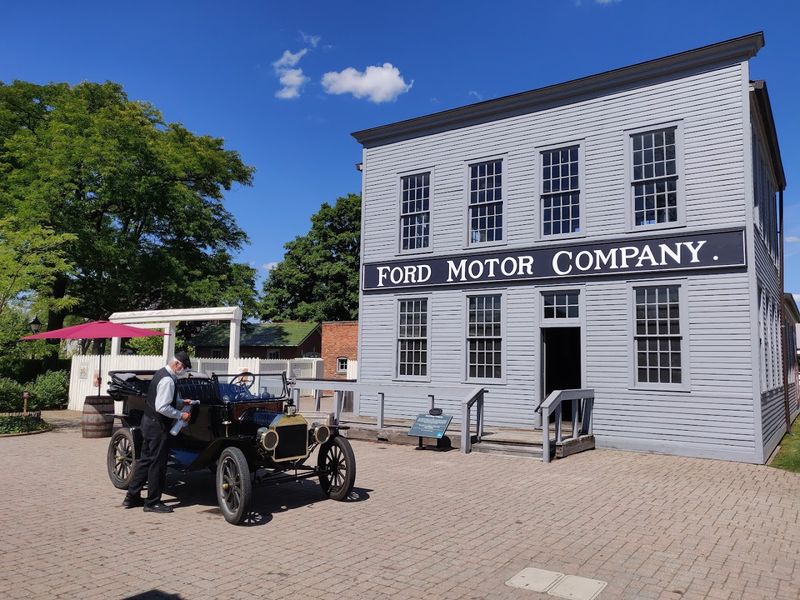
A lot of museums tell you about history. The Henry Ford Museum puts you next to it.
That distinction matters more than it sounds. When the object in front of you is the actual bus, the actual chair, the actual car — not a replica, not a reconstruction — the experience shifts from educational to visceral in a way that’s hard to prepare for.
The collection spans American life from the 1700s through the modern era, covering transportation, industry, domestic life, civil rights, presidential history, and technological innovation without any single theme overwhelming the others. That breadth is part of what makes repeat visits feel worthwhile.
On a second trip, you notice the agricultural machinery section you rushed past the first time, or the glass exhibit that someone mentioned in passing finally gets the hour it deserves.
Henry Ford founded the museum in 1929 with a specific philosophy: that the objects ordinary and extraordinary Americans used in their daily lives were worth preserving as seriously as paintings or sculptures. That founding idea is still visible in how the collection is assembled.
A rocking chair from a theatre sits alongside a locomotive the size of a building, and both receive the same careful, respectful presentation.
The 4.8-star rating across more than 31,000 reviews is not an accident. It reflects a museum that consistently delivers on a genuinely ambitious promise — to house the physical evidence of American innovation and change in one accessible, navigable space.
Families, engineers, history buffs, and casual visitors all seem to find something that holds their attention completely.
Located at 20900 Oakwood Blvd in Dearborn, the museum is close enough to Detroit to fold into a broader Michigan trip without much extra effort. Few stops in the region offer this much concentrated historical weight in a single afternoon.
Share this story