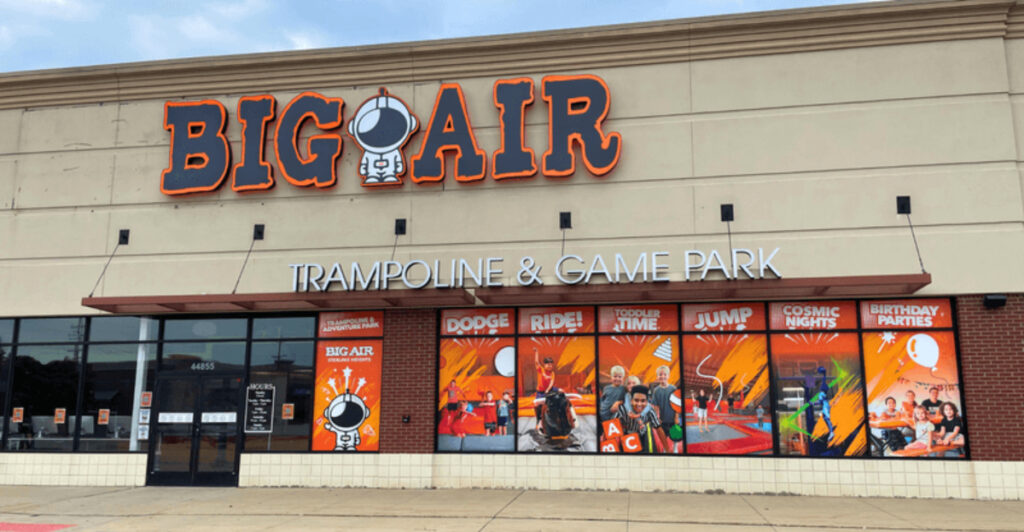
Active fun feels a lot bigger when one building can hold the whole adventure. In Sterling Heights, Michigan, Big Air Trampoline and Adventure Park gives families, kids, and energetic adults far more than a basic jumping session, with ropes, games, trampolines, party energy, and plenty of ways to keep moving under one roof.
The appeal is how easily a simple weekend plan can turn into a full outing without needing a giant downtown entertainment district. It feels lively, flexible, and built for groups that want action instead of another ordinary afternoon.
For anyone looking for a Michigan indoor adventure with movement, variety, and big kid-friendly energy, Big Air stands out fast.
A Loud, Bright First Look That Sets the Pace
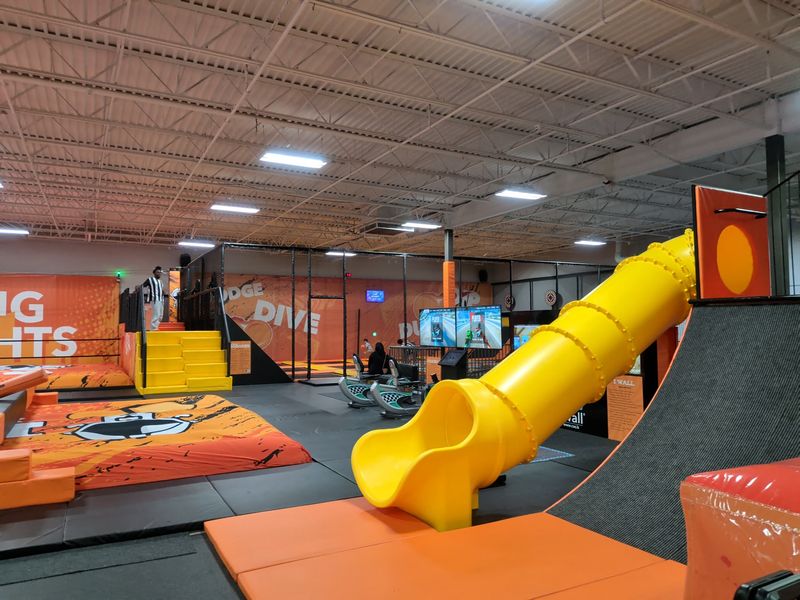
Some indoor play places look exciting for about thirty seconds, then the whole layout reveals itself at once. Big Air Trampoline and Adventure Park avoids that problem.
The space opens with bold color, visible motion, and enough different zones to make the room seem larger than a typical trampoline park.
Instead of presenting one giant court and calling it a day, the park spreads attention across multiple attractions. Trampoline areas draw the eye first, but ropes, obstacle elements, and game-based stations quickly pull focus.
That layered setup creates a stronger sense of scale, which is a big reason the park feels closer to a full family entertainment center than a single-purpose jump spot.
Cleanliness also changes the mood in a place like this. A fresh, updated look helps families settle in faster because the environment feels maintained rather than worn out.
Bright surfaces, padded structures, and organized activity zones support the fast-moving energy without making the building seem chaotic.
For parents, that visual order matters almost as much as the attractions themselves. When zones are easy to spot, adults can track where kids want to go next and plan breaks without wasting time.
That makes the visit smoother, especially when children arrive ready to sprint in three different directions at once.
Big city rivals often lean on sheer size or flashy branding. Sterling Heights has something smarter here: a park that uses variety and layout to create momentum.
Every glance suggests another challenge, another bounce area, or another line worth checking out.
That first impression shapes the whole experience. Rather than peaking at the entrance, the building hints at more activity deeper inside, which keeps the visit moving forward instead of flattening into repetition after the first ten minutes.
Beyond Trampolines, the Attraction Mix Keeps Energy High
Calling this place a trampoline park is accurate, but it also undersells the experience. The jumping zones matter, of course, yet the bigger story is how many ways the park turns motion into play.
That wider mix helps separate Big Air from smaller venues that rely on the same bounce routine from start to finish.
Inside, the fun is spread across classic and active challenge areas. Trampolines offer the easy entry point, while dodgeball, basketball hoops, obstacle features, and ninja-style sections add goals and variety.
Kids can switch from free jumping to skill-based play without feeling like they are repeating the same activity in a different corner.
That variety helps families with mixed age groups. One child may want nonstop bouncing, while another wants a target game, climbing challenge, or timed obstacle lane.
A broader attraction mix lowers the odds that someone gets bored early and starts asking to leave while everyone else just got warmed up.
It also turns the visit into a better workout without making exercise the point. Running, climbing, jumping, balancing, and aiming all demand different movements, so the body stays busy in a natural way.
After ninety minutes, many families are done in the best possible sense of the word.
Another advantage is pacing. When one area gets busy, there is usually another option nearby that offers a different kind of excitement.
That flow can make the park feel more efficient than larger city attractions where long waits eat up half the outing.
Big Air earns attention because it does more than provide a room full of trampolines. It gives active kids choices, gives adults a better value in time spent, and gives Sterling Heights an entertainment stop that competes by offering range instead of relying on one headline feature.
The Ropes Course and Zip Line Add Real Adventure
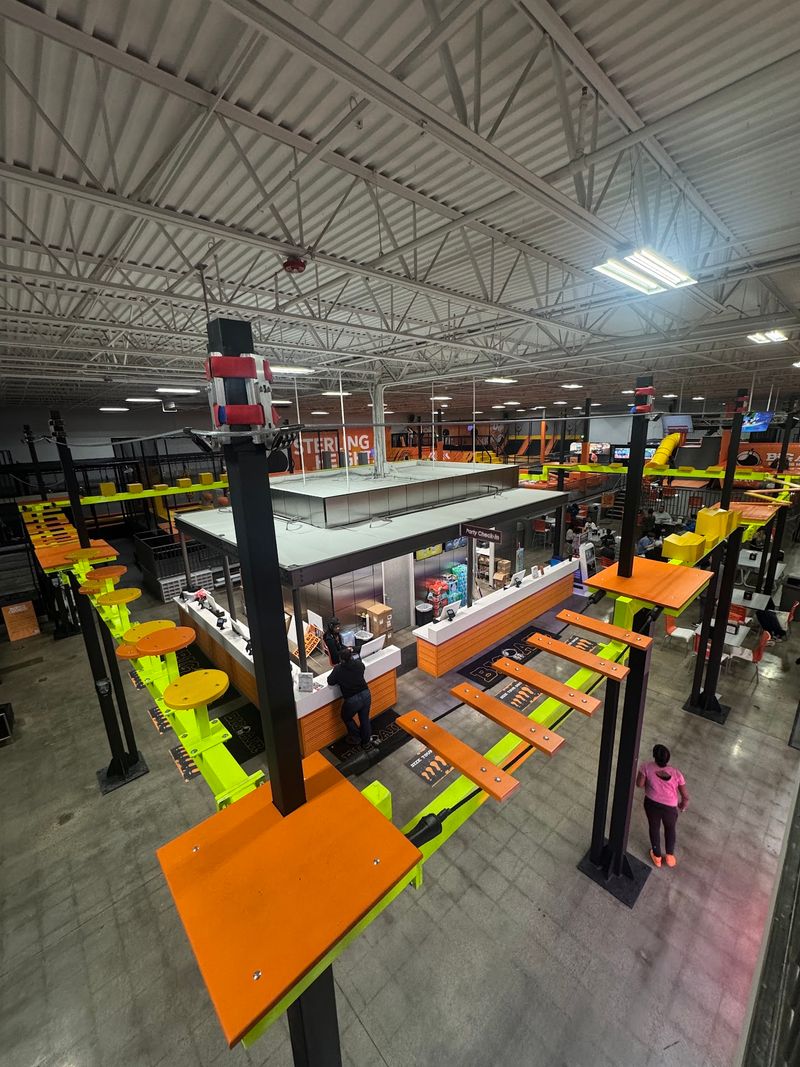
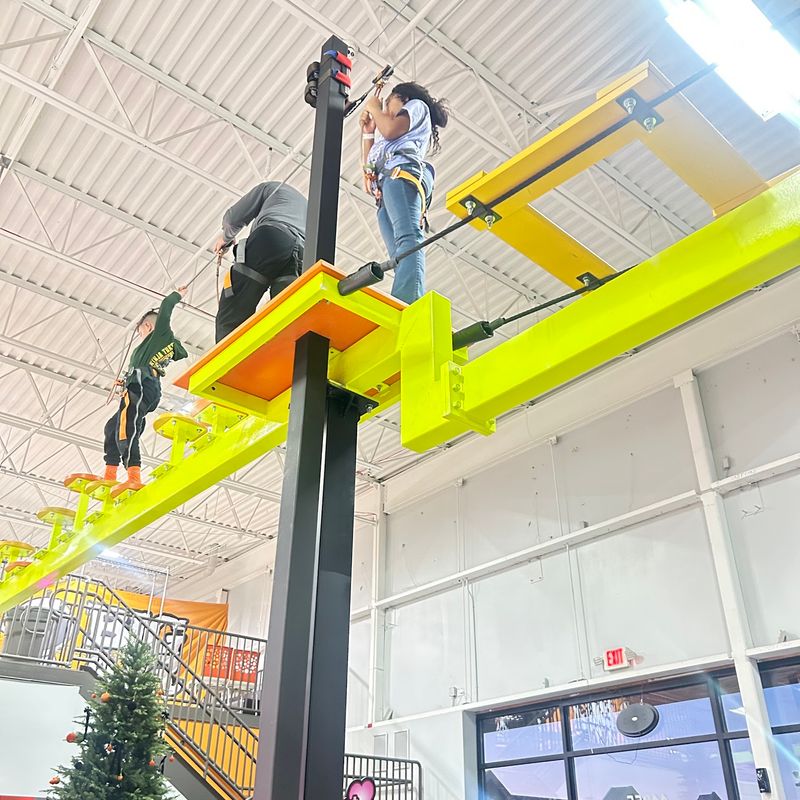
Plenty of trampoline parks promise action, but not all of them bring in true height and suspense. At Big Air in Sterling Heights, the ropes course and zip line add that missing twist.
Suddenly the day is not only about bouncing higher, but also about balancing, gripping, gliding, and taking a small brave step off the platform.
Those attractions matter because they change the rhythm of the visit. Trampolines are fast and repetitive in a fun way, while ropes elements slow the body down and demand focus.
A child who charges through jump zones might become careful and determined up above, working one platform at a time.
The zip line adds a burst of motion that is completely different from jumping. There is a quick build of nerves, a launch, and then a smooth ride that feels dramatic inside an indoor park.
That kind of contrast gives the building a bigger personality than many suburban family venues manage to create.
For older kids especially, height-based attractions can be the difference between good and unforgettable. They bring challenge without requiring expert athletic skill, which is part of the appeal.
You do not need to be a trained climber to enjoy the accomplishment of crossing a rope feature or sailing across the room.
Parents planning a visit should keep these attractions in mind when choosing time. Kids often want a second try once they figure out the technique, so rushing through the park can mean missing one of its strongest features.
A longer pass may make more sense for families with adventurous kids.
Michigan has plenty of indoor fun centers, but the ropes course and zip line push Big Air into a more ambitious category. They give the park vertical drama, visual excitement, and the kind of challenge that makes a regular play day feel much more substantial.
Mechanical Bull, Interactive Games, and the Weirdly Great Extras
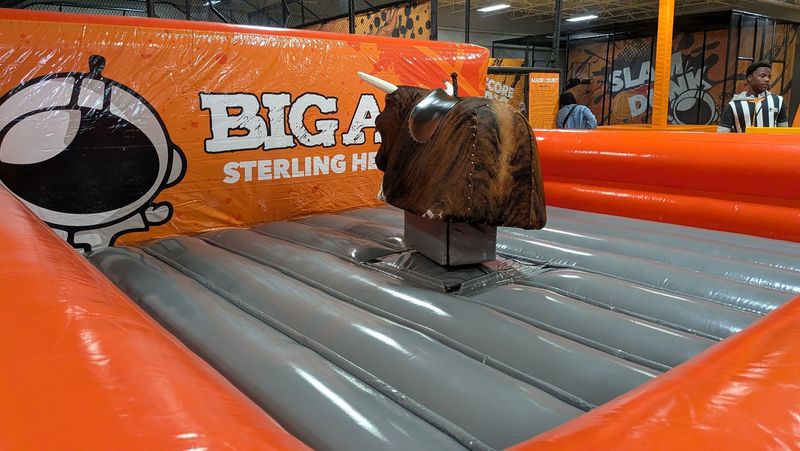
Every big entertainment spot needs one surprise feature that makes kids point across the room and change their plans instantly. Big Air has several.
A mechanical bull, interactive screen games, and other movement-based extras give the park a playful streak that breaks away from the standard trampoline formula.
The mechanical bull is the kind of attraction that changes the mood around it. Even those who never climb on are likely to stop and watch for a minute.
It adds humor, challenge, and a little bit of showmanship, which helps the whole building feel more lively.
Then there are the interactive game areas, where screens become part of the action instead of replacing it. Kids are not standing still with a controller in hand.
They are moving, dodging, reaching, and reacting, which turns digital play into a full-body activity that fits the rest of the park.
That blend is smart for modern families. Some children love climbing and jumping right away, while others warm up faster when a game element gives them a clear goal.
By mixing physical movement with visual prompts and playful competition, the park creates more entry points for different personalities.
Smaller details help, too. Features such as target-based dodgeball or slap-style reaction walls add short bursts of excitement between larger attractions.
They work almost like palate cleansers, giving kids something new to try before heading back to trampolines, ropes, or zip line stations.
Big city fun centers often chase novelty with expensive add-ons or isolated premium experiences. Here, the unusual attractions are part of the identity of the place.
That makes Big Air more memorable and more flexible, especially for families who want one outing that can satisfy thrill seekers, competitive kids, and the child who simply wants to laugh while trying not to fall off a mechanical bull.
A Family Layout That Works for Different Ages
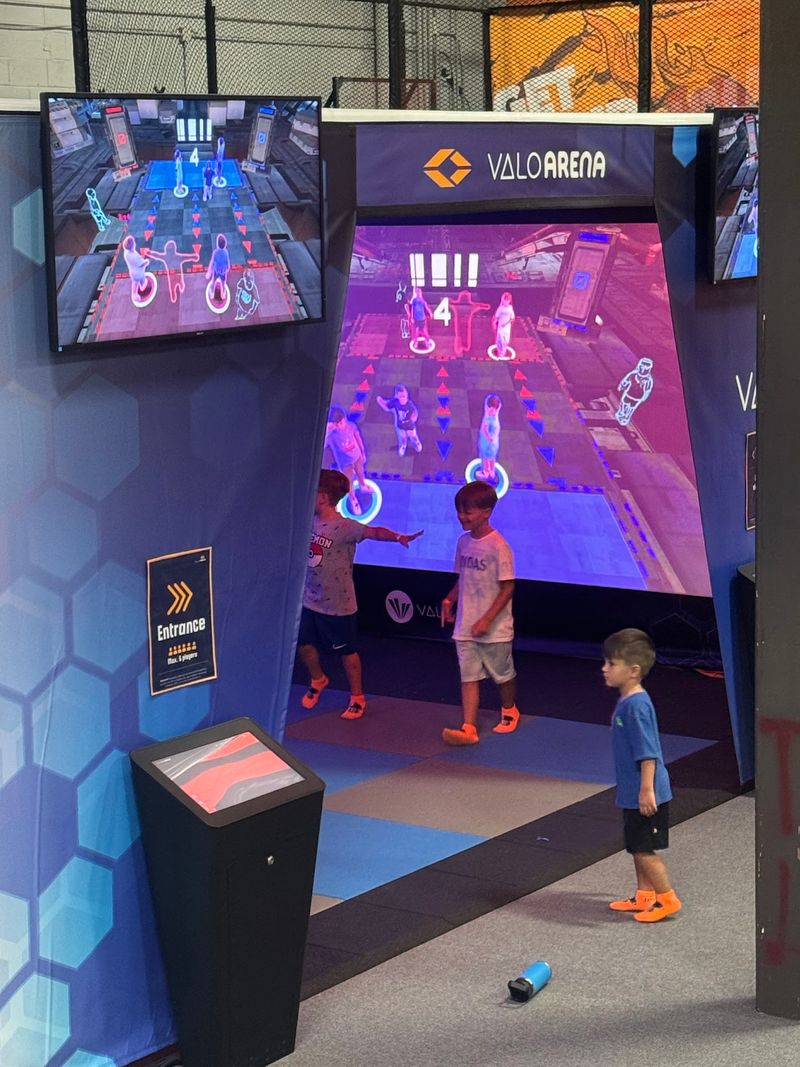
One of the toughest jobs for any indoor amusement park is serving a four-year-old, a ten-year-old, and a parent in the same visit. Big Air makes a strong case for itself by offering enough variety to spread the fun across age groups.
That matters more than flashy branding because real family outings rarely involve kids who want the exact same thing.
Younger children have reason to be here beyond watching bigger kids run past them. Information tied to the park points to little-kid-friendly zones and age-specific obstacle areas, which helps the experience feel less one-size-fits-all.
Instead of being pushed toward the edges, smaller children can join the day in spaces that suit their size and confidence.
Older kids, meanwhile, can chase challenge. Ropes features, zip line action, dodgeball, trampoline lanes, and obstacle sections give them more than a basic play structure.
That wider menu helps prevent the common family problem where one child is thrilled and another is done after twenty minutes.
Adults benefit from the layout as much as children do. A park with recognizable zones makes it easier to supervise, regroup, and move the day along without constant confusion.
Families can split briefly by interest, then reconnect for shared attractions like interactive game areas or side-by-side challenges.
The all-in-one setup also helps during weather swings, which Michigan families know well. When outdoor plans fall apart because of rain, cold, or summer heat, a place with enough attractions for multiple ages becomes more useful than a basic open-play center.
It can carry an entire afternoon without feeling stretched thin.
That family flexibility is part of why Big Air competes so well with larger city venues. Bigger is not only about square footage.
Sometimes it means offering enough choice that siblings, cousins, and parents can all find their lane under one roof.
Planning the Day Takes a Little Strategy
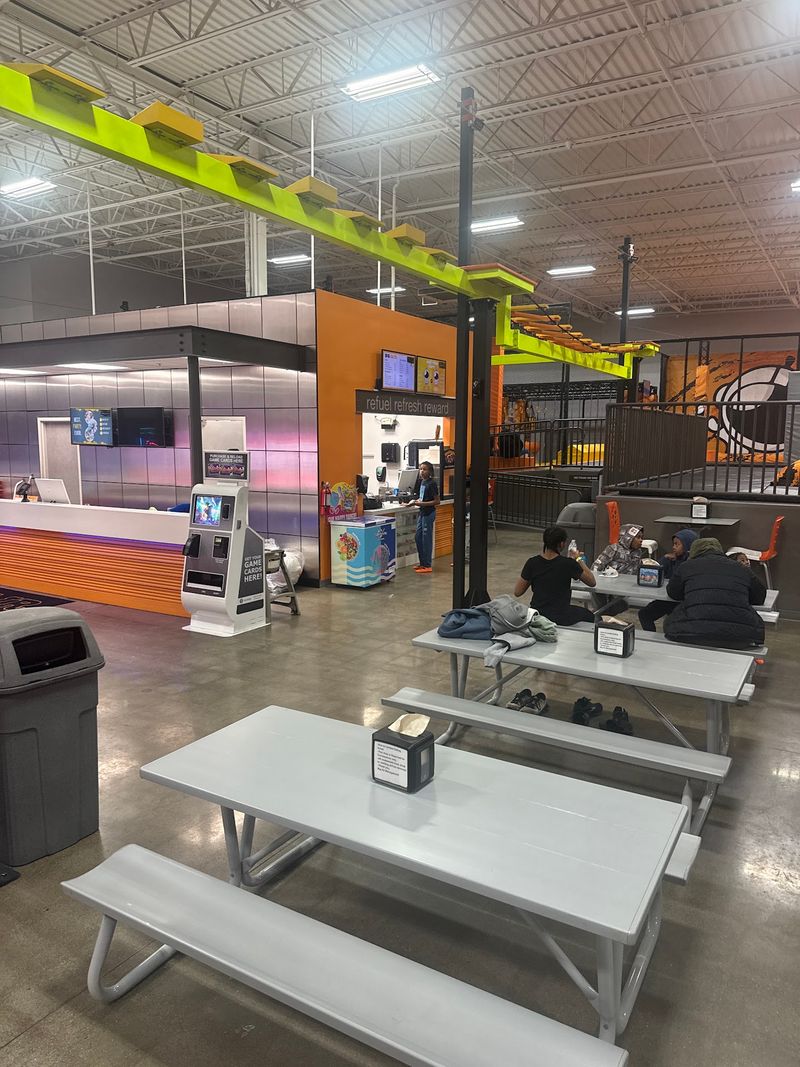
The most successful visit here usually starts before anyone takes the first jump. Big Air runs with the kind of structure that can make the day smoother when families know what to expect.
A little planning goes a long way, especially on weekends, school breaks, or birthday-heavy afternoons.
Operating hours already suggest a smart approach. Weekdays generally open at 11 AM, Friday and Saturday run later into the evening, and Sunday begins at noon.
That creates options for after-school energy burns, weekend outings, and longer play sessions when families want the day to stretch beyond a quick stop.
Pass length is another useful decision point. Recent pricing mentioned in customer feedback points to a ninety-minute option and an all-day pass, which are two very different styles of visit.
Families with younger kids may find ninety minutes plenty, while older children or mixed-age groups might appreciate the freedom to slow down, snack, and circle back to favorite attractions.
There are also a few practical details worth remembering. Grip socks may be required in a brand-specific way, so showing up without the correct pair can lead to an extra purchase.
For party bookings or deal-based tickets, reading the terms ahead of time can save confusion once the group arrives.
Birthday events deserve extra attention because structured party timing can feel quick if adults assume it will unfold casually. Anyone booking should ask clear questions about table use, food timing, and wristband policies before the date.
That small step can help expectations match the format of the package.
None of that takes away from the fun. In fact, it highlights that Big Air is busy enough and feature-packed enough to benefit from a game plan.
A little preparation helps families spend less time sorting out details and more time actually using the park.
Why Sterling Heights Holds Its Own Against Bigger Markets
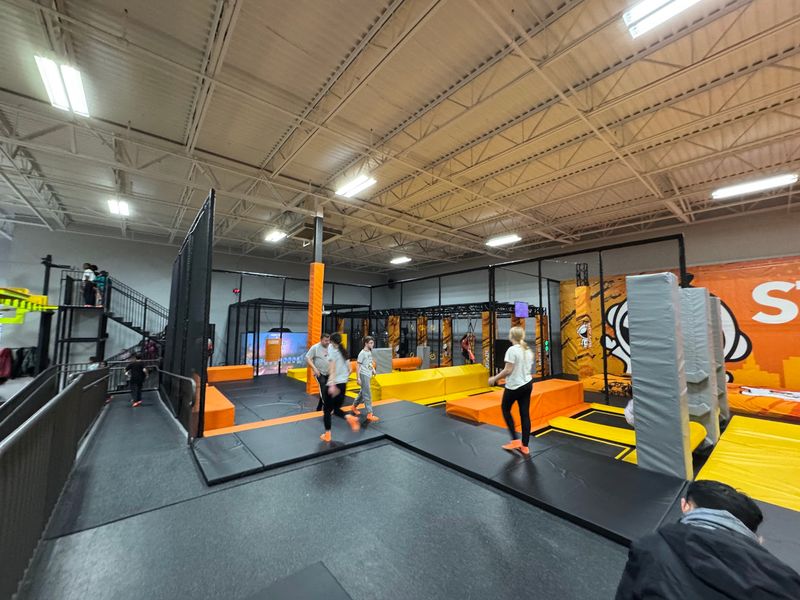
Big city entertainment spots often win attention simply because they are attached to larger metro areas. Sterling Heights does not need that advantage here.
Big Air Trampoline and Adventure Park stands out by delivering depth, pace, and variety in a way that makes the suburban location feel like a strength rather than a compromise.
For one thing, the park combines several categories of indoor fun in one place. It offers classic trampoline appeal, adventure-style attractions like ropes and zip line, challenge-based play, and modern interactive game elements.
That blend gives families the sense of getting a fuller attraction lineup without traveling into a crowded downtown district.
The high rating attached to the location also speaks to consistency. A 4.9-star score across hundreds of reviews suggests the park is doing many small things right, not merely relying on one flashy feature.
Clean surroundings, friendly staff interactions, and broad activity choice all contribute to that larger picture.
There is also a practical suburban advantage that should not be ignored. For many Michigan families, reaching Sterling Heights is easier than committing to a major city outing with more traffic, more parking hassle, and a longer day built around logistics.
When a local option delivers comparable excitement, convenience becomes part of the appeal.
Big Air succeeds because it does not act small. The layout aims high, the attraction list is ambitious, and the activity flow supports repeat play instead of one-and-done novelty.
That is exactly how a regional park can outshine more famous competitors with larger zip codes.
The title claim holds up for a reason. Bigger is not only about skyline views or flashy neighborhoods.
In this case, bigger means more to do, more ways to play, and a stronger all-around family outing at 44855 Hayes Rd in Sterling Heights, where Michigan claims a seriously impressive indoor adventure stop.