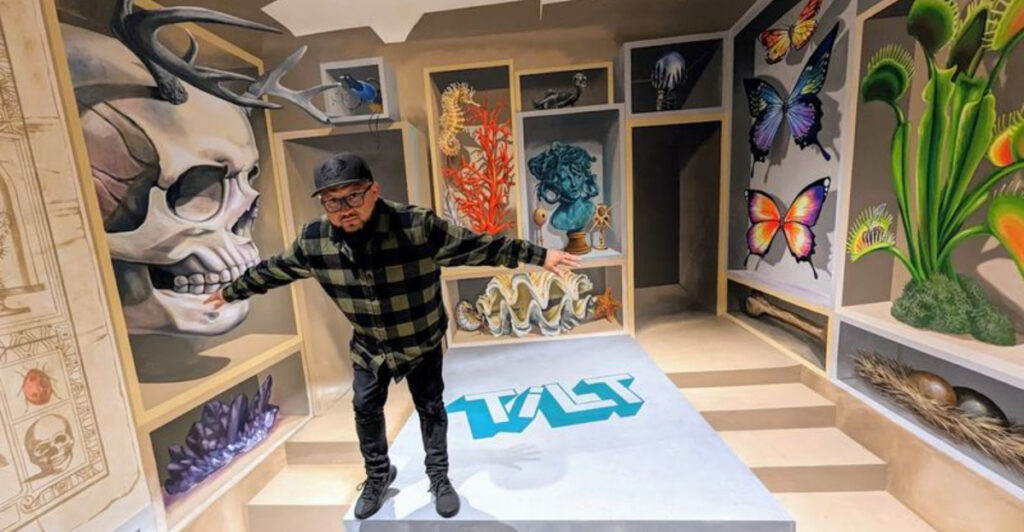
A giant painted snake waits near a ladder, and for one ridiculous second, your brain believes the whole thing. Your feet are safely on the floor inside American Dream in East Rutherford, but your phone says otherwise.
In the photo, you look like you’ve wandered into a scene where the wall has opened up, gravity has started freelancing, and a very large reptile has chosen you personally.
That is the fun of TiLT 3D Art Experience, also known as TiLT A Tracy Lee Stum Museum, a hands-on illusion museum tucked inside New Jersey’s biggest entertainment complex.
It is not the kind of museum where you whisper, fold your hands, and pretend to understand a tiny label beside a painting.
Here, the whole point is to step into the artwork, pose badly until you pose perfectly, laugh at the results, and leave with photos that make your camera roll look like it has been lying to people.
The New Jersey Museum Where the Walls Refuse to Behave
American Dream is already a place where New Jersey likes to show off a little. One minute you’re passing retail stores, the next you’re near an indoor ski slope, a water park, an aquarium, mini golf, and enough food options to derail even the most disciplined “we’re just browsing” visit.
TiLT fits right into that strange Meadowlands energy, but it does something quieter and weirder than the giant attractions around it. It takes a flat wall and convinces you it has depth.
It takes a painted floor and makes you hesitate before stepping on it. It turns a hallway into a place where your eyes start negotiating with your common sense.
The museum sits at 1 American Dream Way in East Rutherford, inside the same massive complex that draws families from North Jersey, New York City, and the rest of the tri-state area. That location matters.
You do not have to plan a whole high-effort cultural day around it. TiLT is the sort of place you can fold into a mall trip, a rainy Saturday, a birthday outing, or an “I need to get everyone out of the house before we all become impossible” afternoon.
Most visits run about an hour, which is just long enough to feel like you did something memorable and just short enough that nobody starts melting down halfway through. What catches you first is the color.
The entrance does not ease you in politely. It announces itself with bright, graphic energy, the kind that makes kids speed up and adults instinctively reach for their phones.
The walls are not background here. They are participants.
Corners bend into scenes, painted surfaces stretch into impossible spaces, and the usual museum rule of “stand back and look” gets swapped for something much better. Stand here.
Lean there. Pretend you’re falling. Now check the photo.
Step Inside the Art Instead of Just Looking at It
The best way to understand TiLT is to stop thinking of it as a gallery. A gallery asks you to observe.
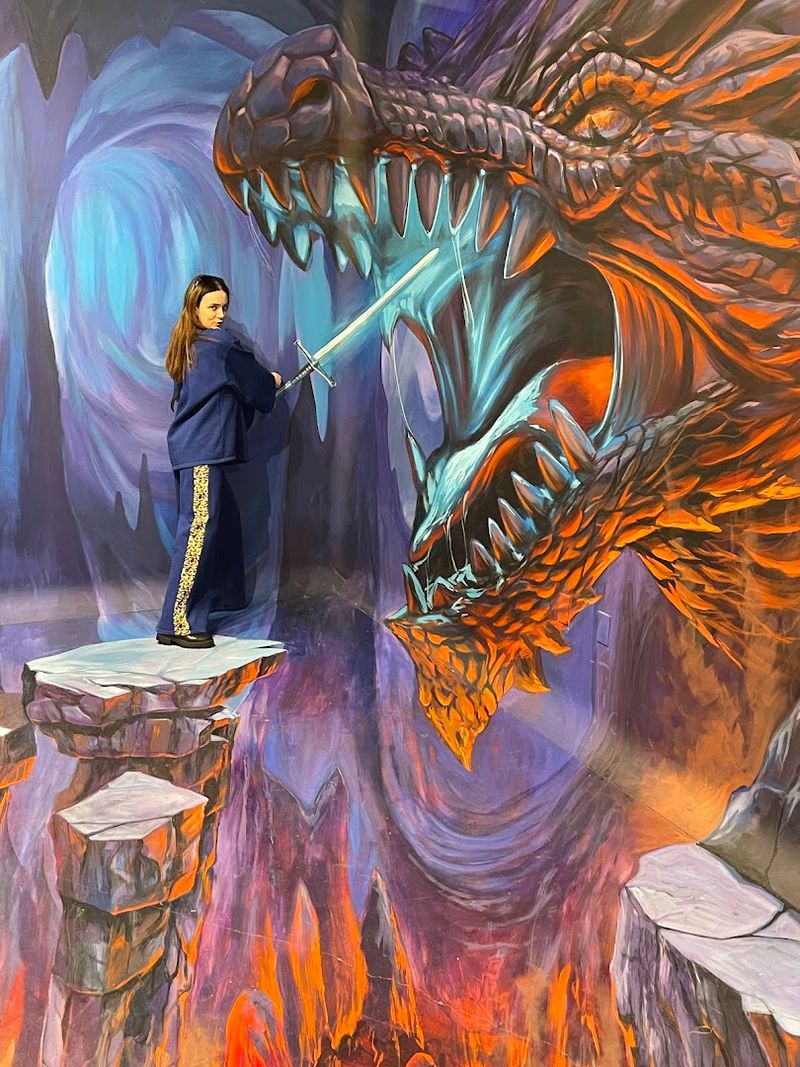
TiLT asks you to commit. You become the missing ingredient in almost every scene, whether that means pretending to battle a dragon, climbing into a video game, dangling from something that only exists in paint, or acting completely normal while the room around you appears to have given up on physics.
That interaction is not a side feature. It is the whole design.
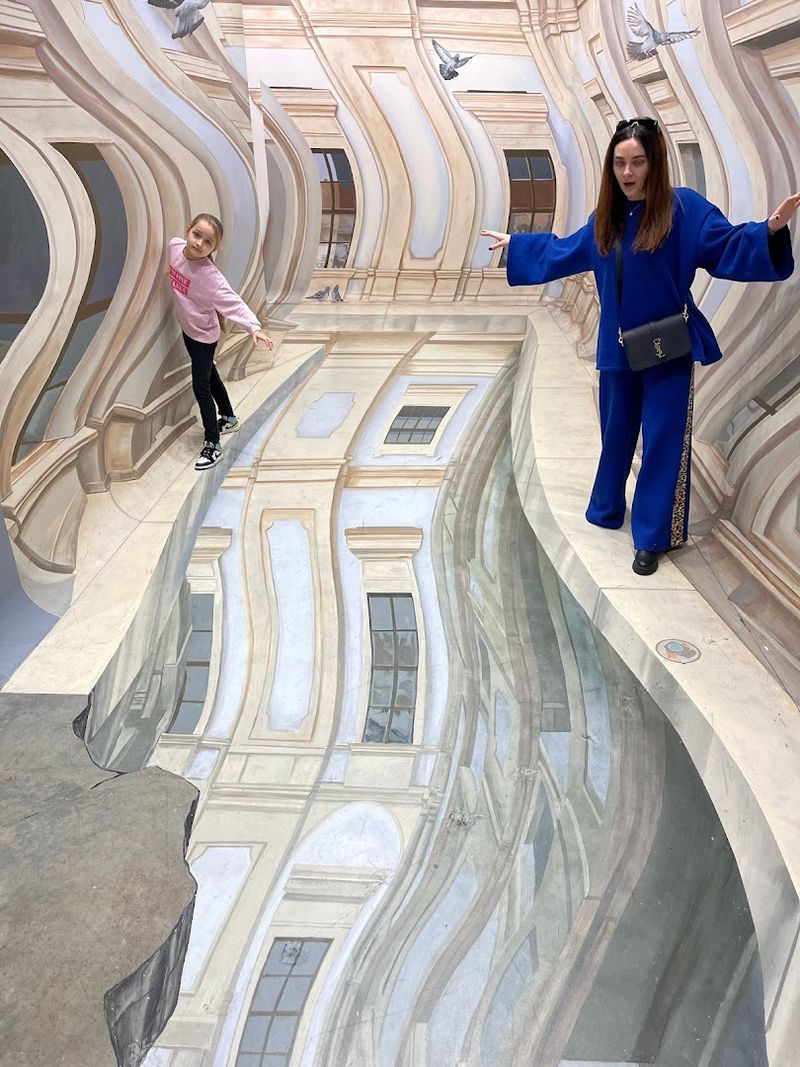
TiLT is built around 3D anamorphic art, the kind of perspective-based work that looks distorted from one angle and suddenly snaps into place from another. From the wrong spot, you may see stretched shapes and odd proportions.
From the marked photo point, everything lines up. The wall becomes a drop-off. The floor becomes a ledge. A painted object suddenly looks like it is pushing into real space.
Your eyes know they are being tricked, but they keep falling for it anyway. This is where the museum gets especially fun with groups.
One person stands inside the scene while another becomes the unofficial director. Move your foot.
Tilt your head. Pretend you’re scared. No, more scared. The photo usually gets better right around the moment everyone starts laughing. That makes TiLT feel more social than a typical museum visit. You are not moving silently from one exhibit to the next.
You are collaborating, badly at first and then surprisingly well, to make each illusion work. The art still deserves attention on its own.
Tracy Lee Stum is known internationally for street painting and large-scale 3D illusion work, and TiLT brings that sidewalk-art spirit indoors where weather, traffic, and accidental shoe prints cannot ruin the fun. The result feels polished without feeling stiff.
It is art you are allowed to play with, which is exactly why people who normally say they are “not museum people” tend to relax here almost immediately.
The Optical Illusions That Make TiLT So Addictive
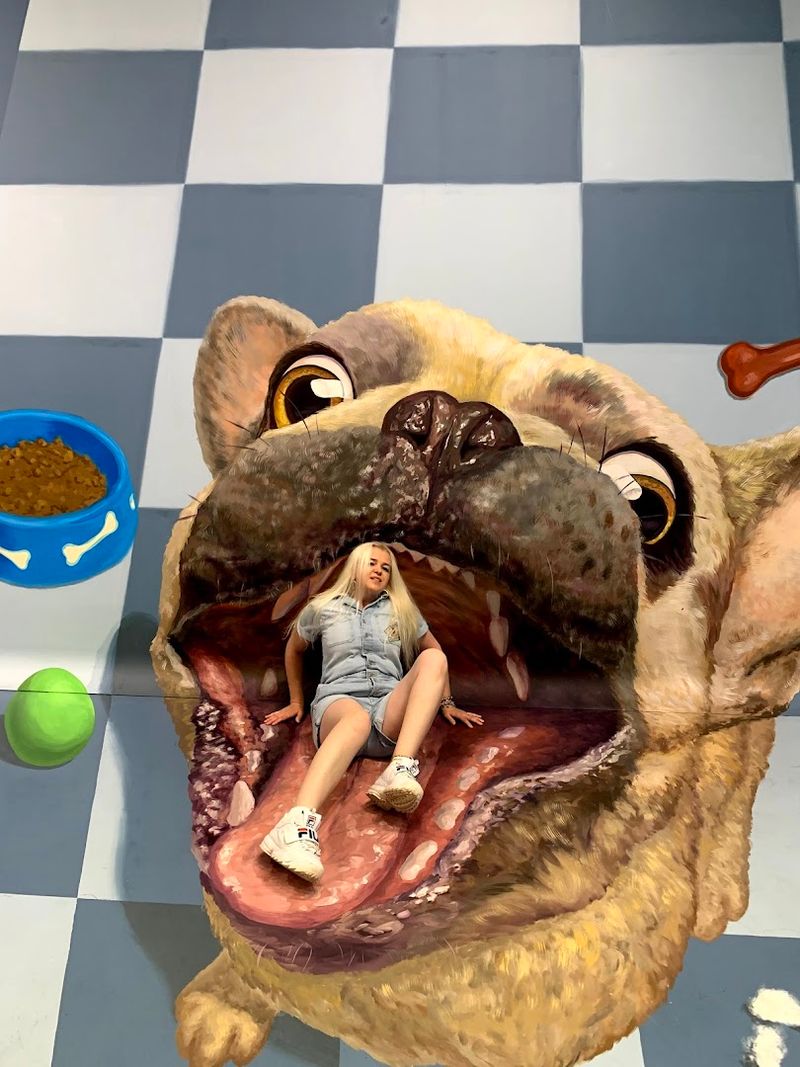
There is a specific little pause that happens after the first good TiLT photo. Someone takes the picture, looks down at the screen, and then calls everyone else over.
Suddenly the person who was standing two feet from a painted wall looks like they are inside a completely different world. That pause is the hook.
Once you see the trick work, you want to try another one. The illusions work because they play with perspective, shading, scale, and camera placement.
Some scenes use the floor and wall together, so the image only makes sense from a particular angle. Others depend on your pose.
A casual stance can flatten the effect, while a dramatic reach or exaggerated expression makes the whole thing come alive. This is one of the rare places where being a little ridiculous genuinely improves the final product.
The scenes lean into fantasy and pop-culture-friendly absurdity. Official descriptions mention guests starring in their own video game or slaying a dragon, and ticketing pages have pointed to playful setups like climbing the Statue of Liberty, flying on a hot dog, or sliding down a dog’s tongue.
That last one tells you nearly everything you need to know about the museum’s sense of humor. It is not trying to be cool in a distant, curated way.
It is trying to get you to loosen up. What makes the experience addictive is that every illusion has a before-and-after built into it.
In person, you can see the brushwork, the angles, the painted surfaces, and the practical setup. Through the camera, the scene becomes the thing it was pretending to be.
That gap between reality and the image is where the fun lives. You know the dragon is paint.
You know the drop is flat. You know nobody is actually floating.
Still, the photo argues its case beautifully.
Why This East Rutherford Spot Is Perfect for Kids and Grown-Ups
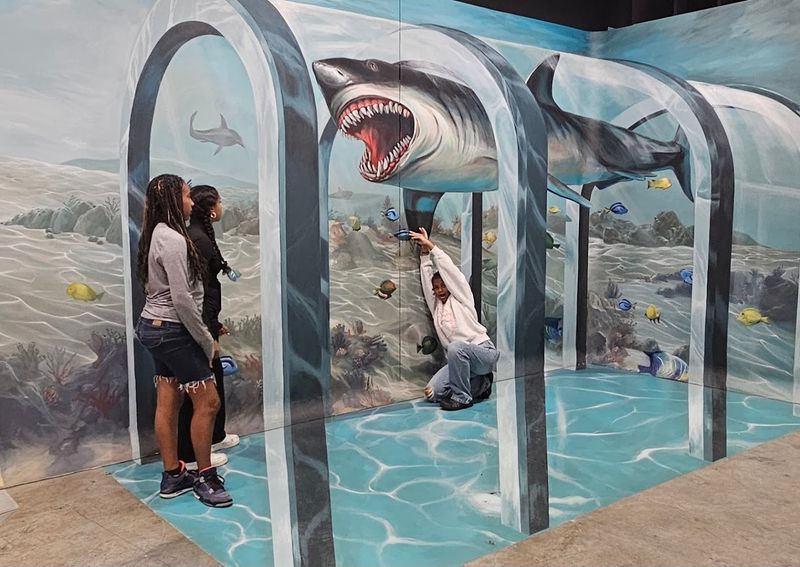
A lot of family attractions quietly choose sides. They are either designed for kids while adults stand around holding coats, or they are aimed at adults while kids are expected to behave like tiny museum donors.
TiLT lands in the better middle. Kids get movement, color, silliness, and permission to interact.
Adults get the pleasure of doing something genuinely playful without it feeling like they have been trapped inside a children’s activity center.
That balance is especially useful in North Jersey, where weekend plans often have to survive traffic, weather, mixed ages, and at least one person who claims they “don’t care” what the group does but rejects every suggestion.
TiLT is indoors, easy to pair with food or shopping, and short enough to work before or after another American Dream attraction. Current official American Dream listings describe TiLT as family-friendly and place it among the complex’s entertainment options, with posted hours that can run from late morning into the evening depending on the day.
As always with mall attractions, checking same-day hours before heading out is smart. For younger kids, the appeal is immediate.
They do not need an explanation of perspective drawing to understand that pretending to escape a monster is funny. For teens, the camera-friendly setups are the draw.
The museum practically hands them a batch of photos that look made for group chats and social feeds. For adults, the surprise is how quickly self-consciousness fades.
You may walk in thinking you will simply take photos of everyone else. Ten minutes later, you are fake-screaming at a painted creature while someone tells you the lighting is better if you move two inches left.
That is the real charm. TiLT gives different age groups the same assignment: play along.
Not forever, not in a forced team-building way, just long enough to remember that being amazed by a visual trick is still a pretty good use of an afternoon.
How Tracy Lee Stum Turned American Dream Into a 3D Playground
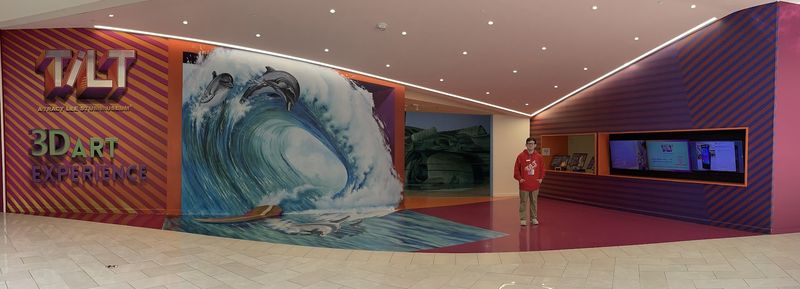
Tracy Lee Stum’s work comes from a tradition that feels both old-school and very modern. Street painting has long relied on public space, temporary materials, and the delight of stopping people in their tracks.
Anamorphic 3D art adds another layer. The artist distorts an image so it only resolves from a specific viewpoint, turning the viewer’s position into part of the artwork.
At TiLT, that idea gets expanded into a full indoor experience. Stum is described by TiLT as a master of 3D anamorphic art whose work has transformed walls and sidewalks around the world, and the American Dream location gives that skill a permanent stage.
Instead of stumbling across a chalk drawing at a festival and hoping it survives the weather, visitors get a concentrated series of illusions built for interaction. The museum also notes a rotating exhibit roster and residency program, which gives the space room to evolve rather than sit frozen as the same photo stop forever.
That matters because the setting could easily have swallowed the art. American Dream is enormous.
Everything around TiLT competes for attention with size, noise, lights, or novelty. The museum takes a different route.
Its spectacle is not about being the biggest thing in the building. It is about making a flat surface feel impossible.
That is a smaller magic trick, but it is also more personal, because it needs you in the frame to finish it. There is also something very New Jersey about the combination.
Of course this place is inside a mega-complex in the Meadowlands, near highways, stadium traffic, and the Manhattan skyline. Of course the museum is both artistic and slightly absurd.
It does not ask visitors to separate culture from fun. It puts them in the same room, paints a giant illusion around them, and lets the camera prove the point.
The Best Kind of Museum Visit Is One You Can Laugh Through
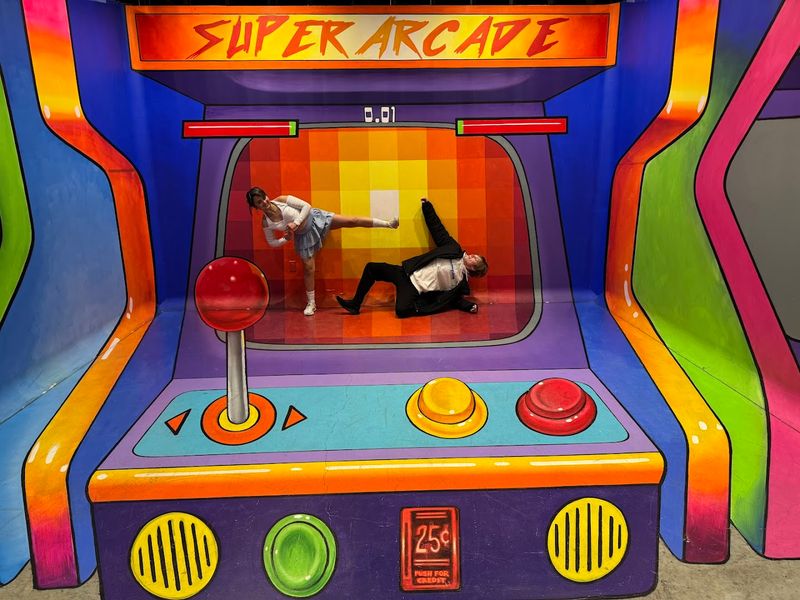
Near the end of a TiLT visit, the camera roll usually tells the story better than memory does. There are the first cautious photos, where everyone is still figuring out the angles.
Then come the better ones, where people start leaning into the bit. By the final few scenes, someone who swore they were only there to watch is suddenly posing like an action hero, a cartoon victim, or a person who has made peace with looking deeply silly in public.
That progression is what makes the museum stick. The illusions are clever, but the shared laughter is the part you remember.
TiLT works because it does not treat fun as something that cheapens the art. It treats fun as the way into the art.
You notice the perspective because the photo surprises you. You appreciate the painting because the trick depends on its precision.
You understand the setup because you physically become part of it. It also helps that the visit does not demand much from you.
Wear something comfortable enough to move in. Bring a charged phone.
Give yourself enough time to try a few poses instead of rushing through every scene like you are checking boxes. If you are visiting with kids, expect them to want repeat shots.
If you are visiting with adults, expect the same thing, just with more pretending that it is “for the group.” By the time you step back out into American Dream, reality returns pretty quickly. The floors behave.
The walls stay where they are. The giant snake is no longer threatening your afternoon.
But your phone still has the evidence from that strange little pocket of East Rutherford where paint became depth, flat surfaces became adventures, and a museum visit turned into one long, cheerful argument with your own eyes.
Share this story