A little kid is nose-to-nose with a helicopter cockpit. A retired pilot is explaining lift with the enthusiasm of somebody who still thinks planes are magic.
Outside, jets keep moving through Teterboro like the airport forgot it’s surrounded by regular suburban life. Then, maybe 20 minutes later, you’re shoulder-to-shoulder at a tiny Hackensack counter, watching onions hit the griddle while burgers the size of your palm disappear almost as fast as they’re made.
That is a very North Jersey kind of day. The Aviation Hall of Fame and Museum of New Jersey is one of those places plenty of locals drive past without realizing how good it is, and White Manna is the opposite: famous, tiny, crowded, and always worth discussing with unusual seriousness.
Put them together and the whole outing just clicks. You get real New Jersey history, real aircraft, real neighborhood character, and a lunch that feels like it belongs in the state’s food hall of fame too.
Why the Aviation Hall of Fame in Teterboro Deserves More Attention
Most people hear “Teterboro” and think private jets, not museum. That is exactly part of the charm here.
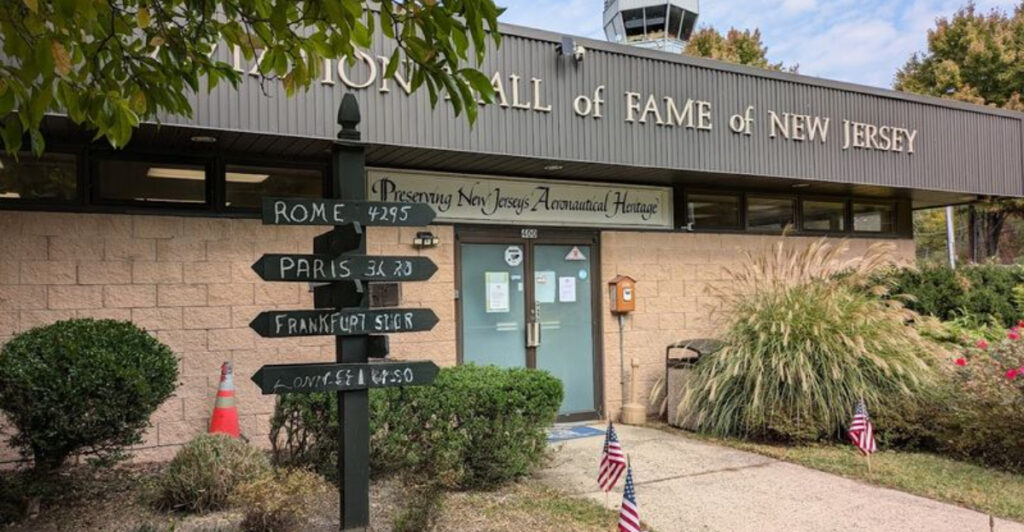
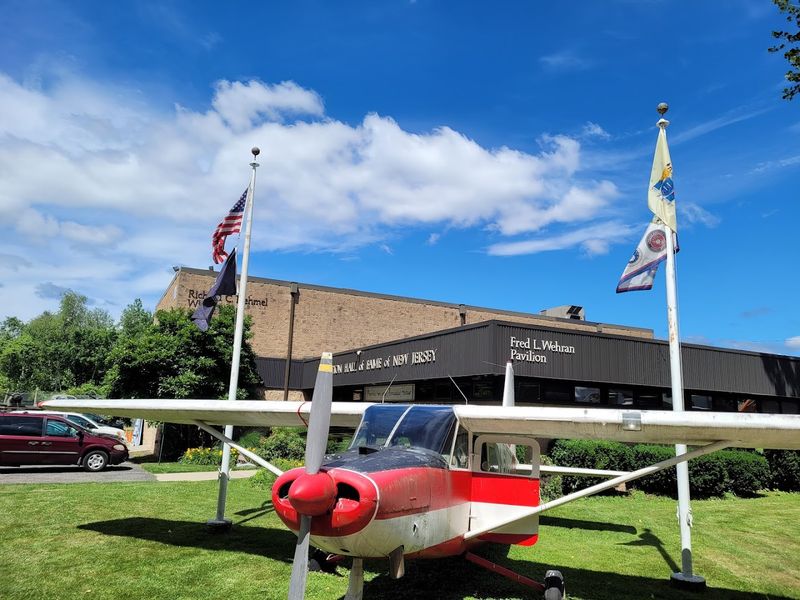
The Aviation Hall of Fame and Museum of New Jersey sits at 400 Fred Wehran Drive on the east side of Teterboro Airport, open Wednesday through Saturday, and it manages to feel both tucked away and surprisingly alive because the setting is not decorative.
You are on actual airport grounds, just past the control tower, not in some generic building pretending to have an aviation connection.
The museum has been around since 1972, charges a very reasonable $15 for adults and $12 for seniors and children ages 3 to 12, and children 2 and under get in free. A typical visit runs about 90 to 120 minutes, which is ideal for a day out because it feels substantial without turning into a full-day commitment.
There is also free parking, though the museum notes that staffing shortages can occasionally affect availability, so checking the reservation system before you go is smart. What makes the place deserve more attention is that it does not try to overwhelm you with scale.
It wins on access, personality, and the sense that New Jersey’s aviation history is bigger than many residents realize.
You walk in expecting a small specialty museum and quickly realize it is doing something much more satisfying: tying global stories of flight back to local streets, local inventors, and local institutions.
In a region full of flashy distractions, this place is refreshingly direct about what it offers and better for it.
The Surprising New Jersey Stories Hiding Inside This Small Museum
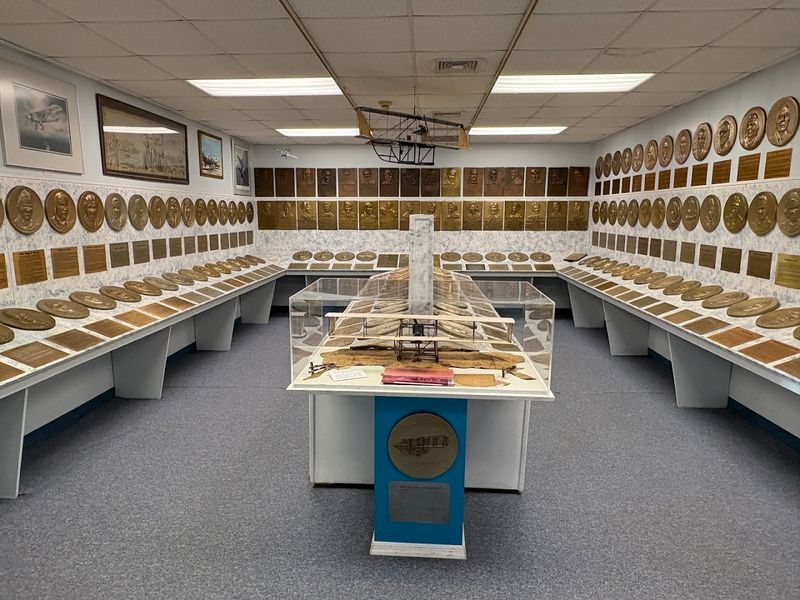
The best thing about this museum is that it keeps ambushing you with the sentence “Wait, that happened here?” New Jersey’s role in aviation is not treated as a footnote. It is the whole point.
Instead of giving visitors a broad national sweep and hoping the local angle shows up somewhere, the museum keeps bringing the story back home. One of the most striking examples is the Hindenburg material.
Because the disaster happened in Lakehurst on May 6, 1937, it is already one of those events permanently attached to New Jersey, but seeing it interpreted in a museum devoted to the state’s aviation legacy gives it more depth than the usual quick-history version.
The museum also highlights bigger names who have New Jersey ties, including Charles Lindbergh and Amelia Earhart, which has a nice effect on the visit: you stop thinking of the state as just a corridor between bigger cities and start seeing it as a real launch point in the history of flight.
Then there are the less-famous but equally interesting stories, like New Jersey’s part in the space age and the state’s engineering culture, which the museum connects through artifacts and exhibits rather than empty hometown bragging.
Even the library and archival side of the institution reinforce that this is not just a room full of cool old machines. It is a place built to preserve a serious body of regional history. For locals, that shift in perspective is half the fun.
You leave with a sharper sense that aviation in New Jersey is not a quirky side note. It is woven into the state’s identity in ways most people never get taught.
Real Aircraft and Hands-On Exhibits Make This Stop Worth the Trip
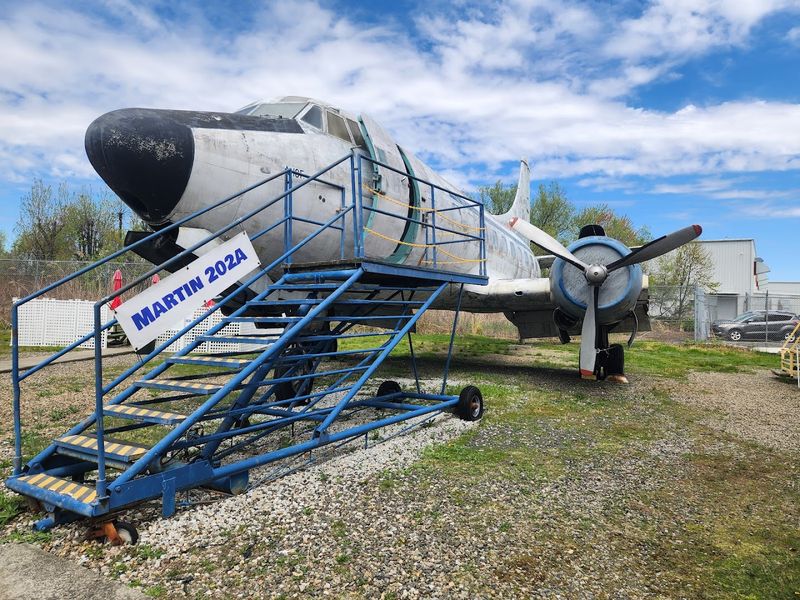
There is a big difference between reading about flight and climbing around the machines that made it real. This museum understands that.
Its exhibits include aircraft, helicopters, space artifacts, a custom-built “Fundamentals of Flight” interactive aerodynamics exhibit, and one especially wild centerpiece: the last surviving Martin 202A in the world.
Built in 1950, the aircraft now preserved at the museum was designed as a postwar replacement for the DC-3 and originally flew for TWA before later serving with Allegheny Airlines.
That alone would be enough to make aviation fans perk up. What pushes the place past niche territory is that it is not only for people who already know what a Pratt & Whitney radial engine is.
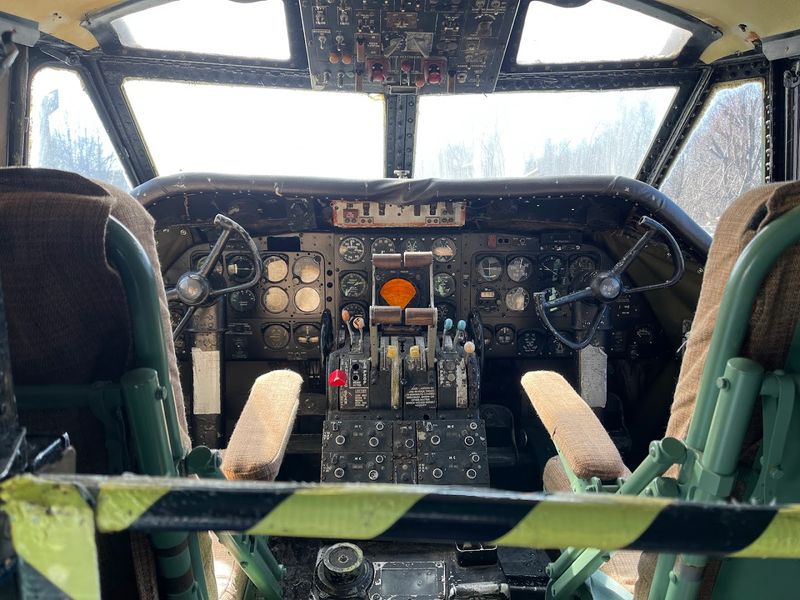
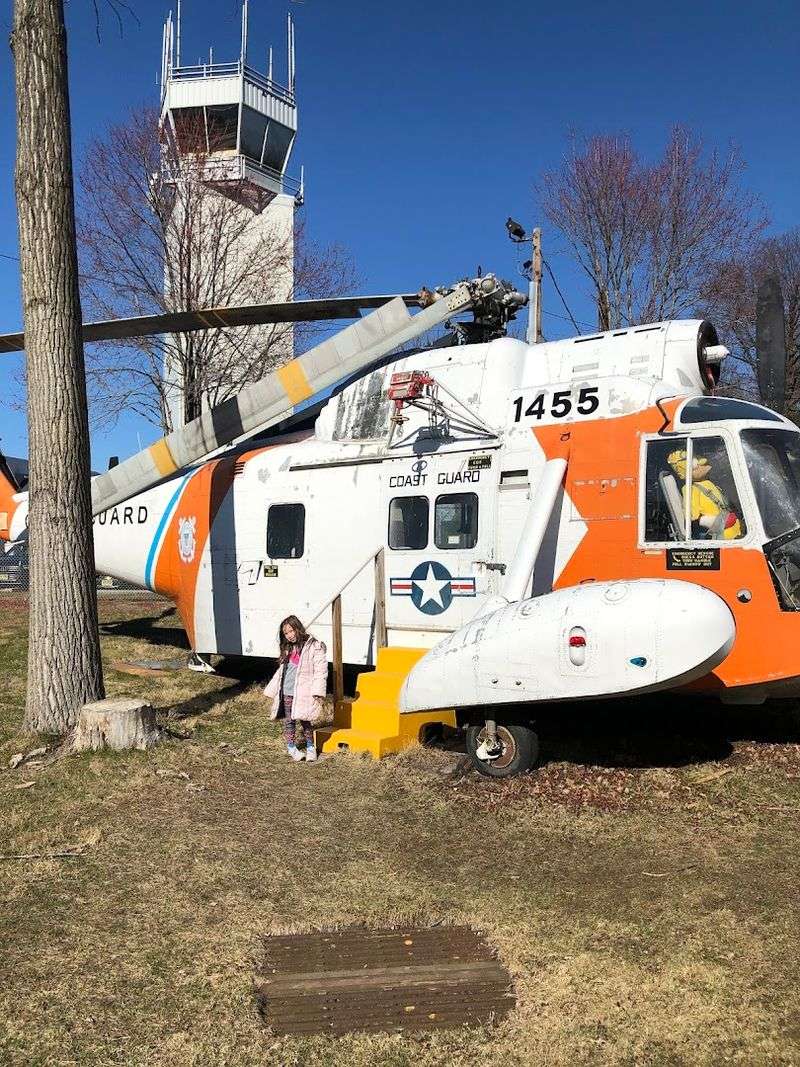
Visitors can move between display cases, full-size aircraft, and interactive exhibits without feeling trapped in a text-heavy history lesson. The museum also offers open cockpit days in 2026 on April 18, May 16, June 20, September 5, October 11, and November 7, when visitors can sit in a rare Lockheed Bushmaster, a U.S.
Coast Guard rescue helicopter, a Bell 47 MAS*H helicopter, and the cabin and cockpit of that Martin 202A. There is even an airport rescue fire truck that younger visitors especially love.
Regular admission is $15 for adults, but open cockpit days are priced at $20 for adults and $15 for seniors, with children under 12 still at $12. This is the kind of museum where the phrase “hands-on” actually means something.
You are not pressing a lonely button to make a light blink. You are standing next to real aircraft and, on the right day, sitting inside them.
What Makes a Visit Here So Fun for Kids and Adults Alike
Some family outings work only if everybody agrees to pretend they are having fun. This is not one of those.
The museum has a practical advantage that parents will recognize immediately: it is compact enough that younger kids do not melt down halfway through, but varied enough that adults do not feel like they are circling the same room for an hour.
The museum’s own planning guide says most visits last 90 to 120 minutes, which is pretty much the sweet spot.
There are indoor and outdoor exhibits, real aircraft to look at up close, and interactive elements that give kids something concrete to do instead of just asking them to be impressed by labels on the wall. The setting helps too.
Because the museum is on the grounds of Teterboro Airport, you get that extra layer of real-world aviation activity around you, which makes the whole experience feel more immediate. For adults, the draw is often the volunteers.
The museum emphasizes reservations partly to match staffing, and those staffers and volunteers are a huge part of why the place works. You are often hearing from people who genuinely care about the subject, and that changes the tone of the visit from passive museum wandering to actual conversation.
Kids can focus on the helicopters, cockpits, and the airport rescue truck. Adults can dig into the Hindenburg story, postwar air travel, or New Jersey’s links to aviation and space development.
Nobody has to fake interest for the benefit of the group. It is rare to find a museum that can entertain a plane-obsessed seven-year-old and a grandparent who mainly came along for the ride, but this one has figured out the balance.
How White Manna in Hackensack Turns This Into the Perfect Bergen County Day Out

By the time you leave Teterboro, lunch should not be an afterthought. It should be part of the plan.
White Manna in Hackensack, at 358 River Street, has been serving its famous sliders since 1946, after first beginning life at the 1939 World’s Fair.
That history matters, but the reason people keep showing up is much simpler: the burgers are terrific and the whole place still feels like a working piece of New Jersey food culture.
The official description is almost comically straightforward in the best way. White Manna says its sliders are made from fresh, extra lean ground beef delivered daily from a local supplier, cooked with onions and cheese, and served on Martin’s Potato Rolls.
That is the formula. No towering gimmick burger, no stack of nine novelty toppings, no menu trying to prove how inventive it is.
The standard move is to order multiple sliders, because these are small, griddled burgers built for repetition rather than one-and-done spectacle. Fries and shakes round things out, and the restaurant itself leans fully into the old-school counter-service identity that made it famous.
White Manna has also been featured on Diners, Drive-Ins and Dives, Best Thing I Ever Ate, Food Feuds, and Anthony Bourdain’s No Reservations, which explains why it gets both die-hard locals and burger pilgrims making the trip.
Pairing it with the museum works because the two stops complement each other instead of competing.
One gives you engines, artifacts, airport views, and regional history. The other gives you sizzling onions, paper-wrapped burgers, and that deeply satisfying feeling that lunch is part of the destination, not just fuel between attractions.
Why This Museum and Burger Pairing Feels So Uniquely North Jersey
North Jersey is really good at this particular kind of contrast.
In one short stretch of the day, you can be standing next to a rare historic airliner on the grounds of one of the nation’s busiest general aviation airports and then find yourself at a modest burger stand that has been embedded in Hackensack life for generations.
The combination works because neither place is trying to perform “authenticity.” They simply are what they are. The Aviation Hall of Fame and Museum of New Jersey is focused, local, a little under-the-radar, and full of stories that make the state look more interesting than outsiders expect.
White Manna is equally no-nonsense: a Bergen County institution built on consistency, speed, and sliders that have outlived endless food trends.
Together they create the kind of outing North Jersey does better than almost anywhere else, where serious history and casual lunch can sit side by side without feeling mismatched.
There is also something very regionally satisfying about the scale of it. You are not committing to an all-day production with timed entries, valet parking, and a meal that requires a reservation three weeks in advance.
You are doing something smarter and more local than that. You spend the morning with aircraft, simulators, archives, and airport energy, then slide into a burger spot whose entire reputation rests on doing a few things extremely well.
It is compact, specific, and grounded in the character of Bergen County. By the end of the day, the planes and the burgers feel like they belong together for the same reason so many North Jersey favorites endure: they are unpretentious, memorable, and much better than they need to be.
Share this story