One minute, you are standing beneath a greenhouse roof surrounded by orchids, hanging baskets, and enough vegetable seedlings to restart your entire backyard. The next, you are walking between berry rows with a picking container in hand, quietly judging every strawberry until you find the reddest one in the field.
That is a normal day at Stony Hill Farms in Chester, where the operation stretches from a vast garden center to orchards, produce fields, a bakery, and one of New Jersey’s most elaborate autumn corn mazes. The family-run farm now cultivates roughly 500 acres, yet a visit never feels like touring an agricultural factory.
You can still choose a flower, pluck an apple, talk yourself into a box of cider donuts, and spend twenty minutes taking the wrong turns through the corn. With different crops and plants appearing throughout the growing season, Stony Hill is less of a single farm stop and more of a year-long collection of excuses to return.
The Chester Farm That Grew From a Basement Flower Business Into 500 Acres
Long before families arrived carrying apple bags and corn-maze maps, Stony Hill’s story revolved around flowers. Dale Davis III and his wife, Carol, established Stony Hill Gardens in 1988, initially concentrating on cut orchids.
The business grew from those modest beginnings into a full greenhouse operation, and the original floral focus remains visible in the orchids and seasonal arrangements sold today. What changed was the scale.
Carol’s parents had purchased the original 40-acre property, and successive generations gradually added new crops, facilities, and experiences rather than abandoning the farm’s horticultural roots. A major expansion followed after Dale Davis IV studied horticulture at Delaware Valley College and graduated in 2002.
Fruit and vegetable production increased, the family opened a farm market, and Stony Hill eventually began farming approximately 500 acres. Twenty of those acres are orchards planted with apple, peach, pear, apricot, plum, and pluot trees.
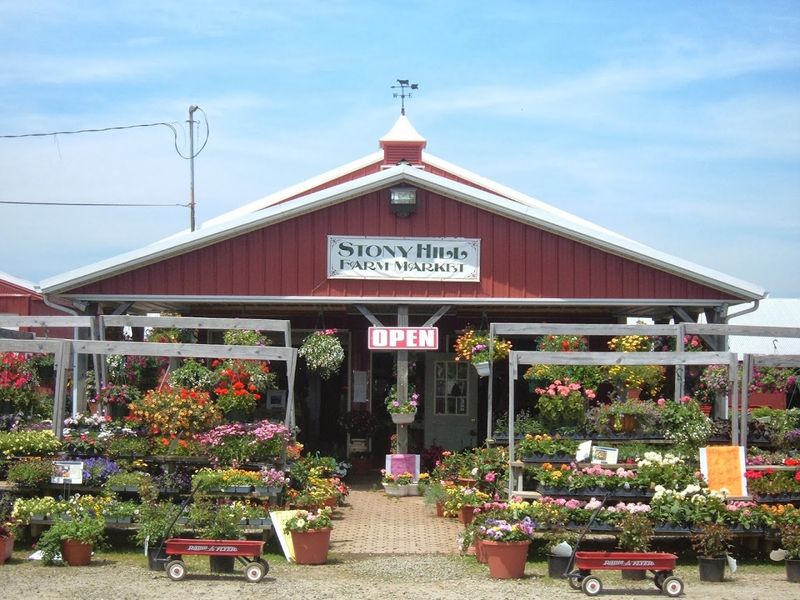
That growth explains why Stony Hill feels like several farms tucked under one familiar name. Stony Hill Gardens, located at 8 Route 24, is where visitors find the greenhouses, garden supplies, floral shop, and seasonal plants.
Roughly a short drive away, the 15 North Road property contains the Farm Market, U-Pick fields, orchards, pumpkin patch, and Maze Fun Park. It is a practical split that allows serious gardeners to browse plants without navigating a fall festival crowd, while pickers can head straight toward the fields.
Despite the acreage, the Davis family remains closely connected to the operation, with multiple generations involved in growing, maintaining, and expanding the farm. The result is not simply a large agricultural business.
It is a flower-growing idea that kept finding new ground to cover.
Twenty Thousand Square Feet of Greenhouses Overflow With Plants in Every Season
Walk into Stony Hill Gardens during spring, and the phrase “I only need one plant” immediately becomes difficult to defend.
More than 20,000 square feet of greenhouse space holds orchids, houseplants, flowering baskets, herbs, vegetable starts, annuals, and perennials, arranged in the kind of abundance that encourages ambitious garden plans.
The selection includes familiar bedding plants for easy bursts of color as well as less common varieties for gardeners who would rather not plant the same petunias as everyone else on the block.
Tomato, pepper, and herb seedlings arrive when New Jersey gardens are ready to wake up, making the greenhouses useful for more than decorative browsing.
You can build a kitchen garden, fill a window box, and find a houseplant for the one empty corner you had promised not to clutter, all during the same visit. The displays shift as the calendar moves.
Summer brings tropical plants, shrubs, herbs, hanging baskets, and warm-weather color. By autumn, the focus turns to mums, pansies, ornamental cabbage, and kale—the unofficial uniform of a New Jersey front porch in October.
Poinsettias, boxwood trees, wreaths, roping, and other holiday greenery take over closer to winter. Orchids, however, remain the thread connecting today’s sprawling garden center to the farm’s earliest days.
Stony Hill also operates a floral shop for arrangements, local pickup, and delivery, so the greenhouses function as both a destination for home gardeners and the growing engine behind the farm’s cut-flower work.
The Route 24 garden location generally follows its own seasonal schedule, separate from the farm market and picking fields on North Road.
That distinction matters when planning a visit, but it also makes it easy to devote real time to the plants without treating the greenhouse as a quick detour. This is a place where browsing is half the point—and where leaving with clean hands and an empty trunk counts as a minor miracle.
Strawberries, Raspberries, Lavender, and Flowers Turn Summer Into Picking Season
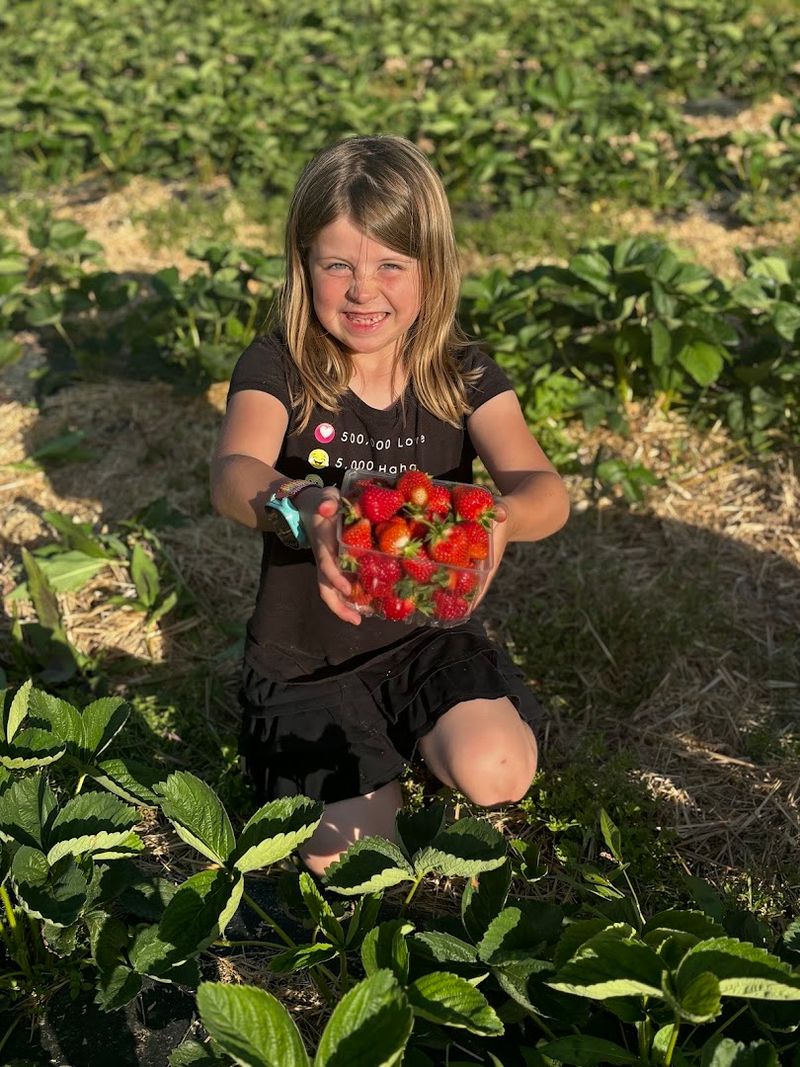
June begins with one of the farm’s simplest pleasures: strawberries warmed by the sun and picked directly from the plant. Stony Hill’s strawberry season typically lands during June, although exact opening dates and field availability depend on weather and how quickly visitors clear the ripe rows.
Picking rarely takes long once the berries are ready. The harder part is resisting the temptation to inspect every plant for one last perfect strawberry before heading to the checkout area.
Raspberries usually follow from late June into mid-July, bringing a shorter season and a good reason not to postpone a visit. Their delicate fruit requires gentler handling than apples or pumpkins, but a container of raspberries picked at peak ripeness has a way of making the careful work feel entirely reasonable.
Lavender is also generally available in June and July. Instead of searching under leaves, visitors move through fragrant purple rows and cut stems to take home, turning a produce-picking trip into something that smells considerably better than the average afternoon outdoors.
The flower fields broaden the summer lineup further. Depending on the point in the season, pickers may encounter sunflowers, zinnias, lavender, and mixed wildflowers, with flower picking typically running from June into early or mid-fall.
Availability changes quickly, especially after busy weekends or stretches of difficult weather, so reservations and a same-day crop check are sensible. All picking takes place at the North Road location rather than the Route 24 greenhouses.
Stony Hill supplies the appropriate containers when needed, and guests are expected to pick only in designated areas and pay for what they gather. Closed-toe shoes are the smart choice because the ground is uneven and the fields can require a decent walk.
Summer here is not built around one signature crop. It unfolds in stages, with strawberries, raspberries, lavender, and flowers each getting a brief turn as the reason to drive to Chester.
Apples, Vegetables, and Pumpkins Keep the Harvest Going Into Fall
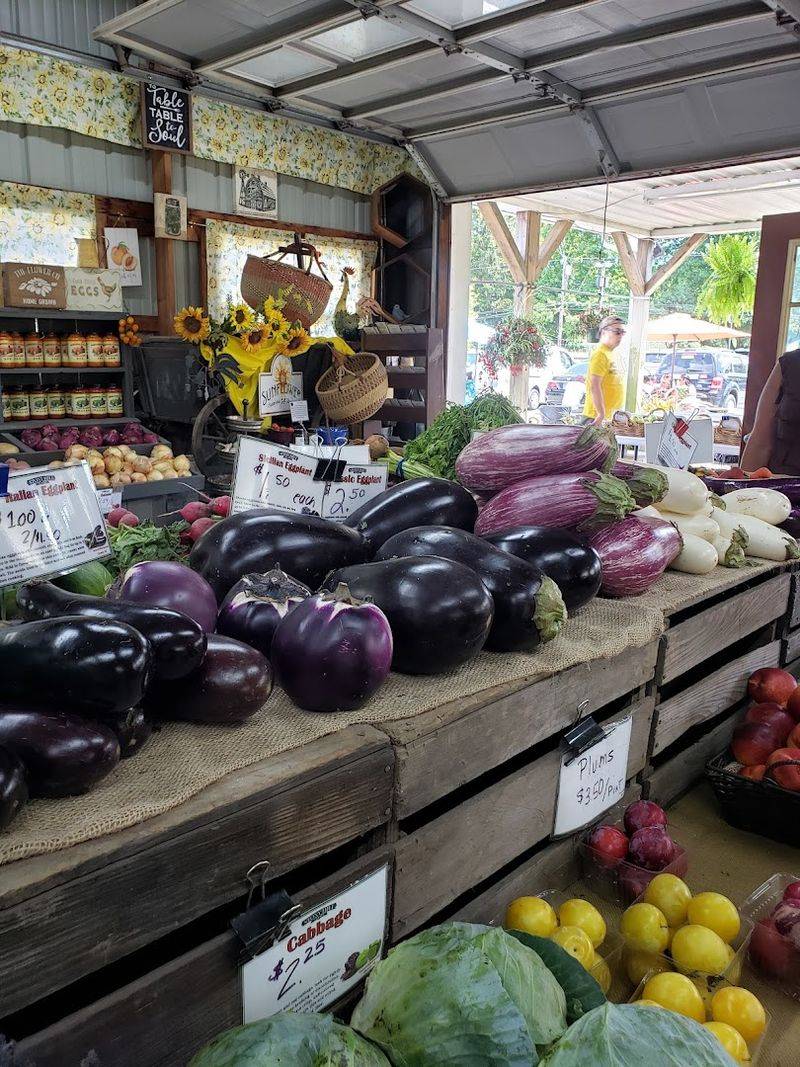
By late August, the baskets become heavier and the picking shifts from delicate berries to vegetables that look ready for dinner. Stony Hill typically opens selected vegetable fields from August through mid-October, with tomatoes, peppers, and eggplant among the crops visitors may harvest.
The selection varies according to ripening conditions, which is part of the fun and occasionally part of the frustration. Farming does not care that you had specifically planned to make eggplant Parmesan on Saturday.
Apples take center stage from early September through roughly mid-October. Stony Hill’s dwarf trees keep much of the fruit within easy reach, so apple picking does not require ladders, advanced climbing skills, or sending the tallest person in the group after everything.
The farm grows several varieties, but the ripe options change as early, midseason, and later apples reach their peak. Its 20 acres of orchards also contain peaches, pears, apricots, plums, and pluots, although apples are the principal pick-your-own orchard attraction.
Weekend hayrides help transport guests toward the orchard during fall, while weekday visitors should expect more walking. Pumpkins complete the progression.
You can head into the patch to select one from the field or choose a pre-picked pumpkin at the Farm Market when muddy shoes are not part of the day’s plan. U-Pick hours are generally 10 a.m. to 5 p.m., with the final entry at 4 p.m., but crop supply can change from one day to the next.
Advance tickets are the safest option during peak weekends. Visitors should also leave pets and personal picking containers at home, follow signs marking open rows, and plan for rugged ground rather than paved paths.
That structure keeps the experience orderly without making it feel overly controlled. You still get the satisfying part: twisting an apple from a branch, finding a pepper without a blemish, and selecting a pumpkin with precisely the right amount of wonkiness.
The Farm Market and Bakery Make It Nearly Impossible to Leave Empty-Handed
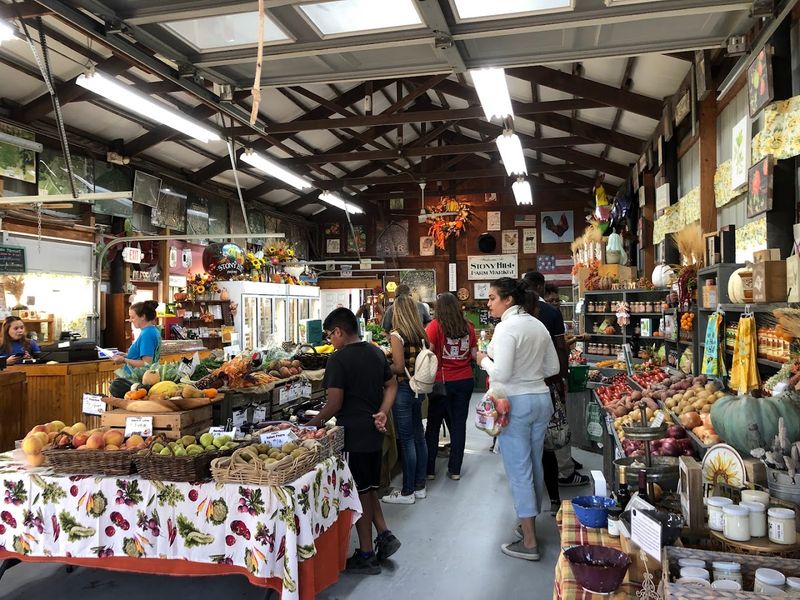
The dangerous part of visiting Stony Hill is assuming the Farm Market will be a quick stop on the way out. Located at 15 North Road beside the U-Pick fields and Maze Fun Park, the market carries fruits and vegetables grown at Stony Hill or sourced from other nearby producers.
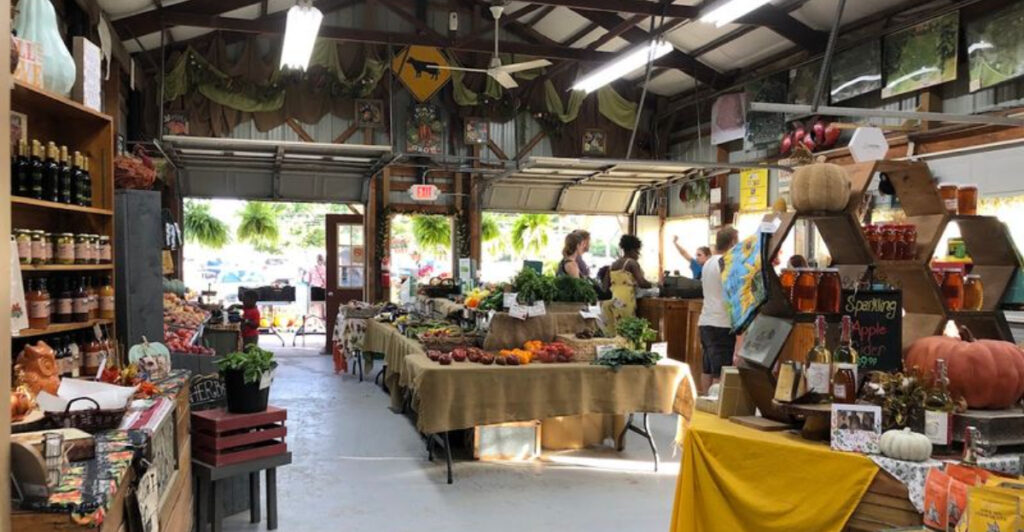
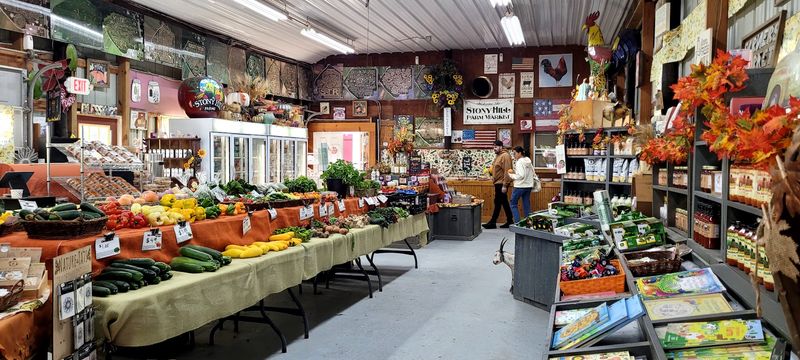
The displays change with New Jersey’s harvest calendar, moving from berries and summer vegetables to sweet corn, apples, winter squash, gourds, and pumpkins. That alone could fill a few bags, but the shelves extend well beyond produce.
Local meat, cheese, eggs, honey, candy, coffee, tea, snacks, dry goods, plants, decorations, and gifts turn the market into a compact pantry for the region. Then there is the bakery.
Cookies, muffins, breads, donuts, and pies are baked fresh on the farm, and the pies are available by the slice, half, or whole. The slice option is theoretically useful for anyone demonstrating restraint.
In practice, the smell of donuts and the sight of full pies tend to weaken otherwise sensible shopping decisions.
Stony Hill also sells homemade ice cream by the scoop, pint, or quart, with flavors that have included classics such as vanilla, chocolate, coffee, strawberry, and cookie dough alongside names such as Blue Moon, My Butter Half, and Sixty Grit.
During festival and event days, a separate concession stand adds hot food, snacks, drinks, and more ice cream to the equation. The Farm Market’s current seasonal schedule runs from early June through December 23, generally from 10 a.m. to 6 p.m., although holiday closures and dates can change.
That long season allows the market to evolve from a summer produce stop into an autumn snack headquarters and, eventually, a place for holiday pies, wreaths, poinsettias, and greenery. It is entirely possible to arrive for tomatoes and leave with cheese, a loaf of bread, six donuts, a houseplant, and an apple pie.
Nobody at Stony Hill will act surprised.
A Giant Corn Maze, Hayrides, and Family Fun Take Over the Farm Each Autumn
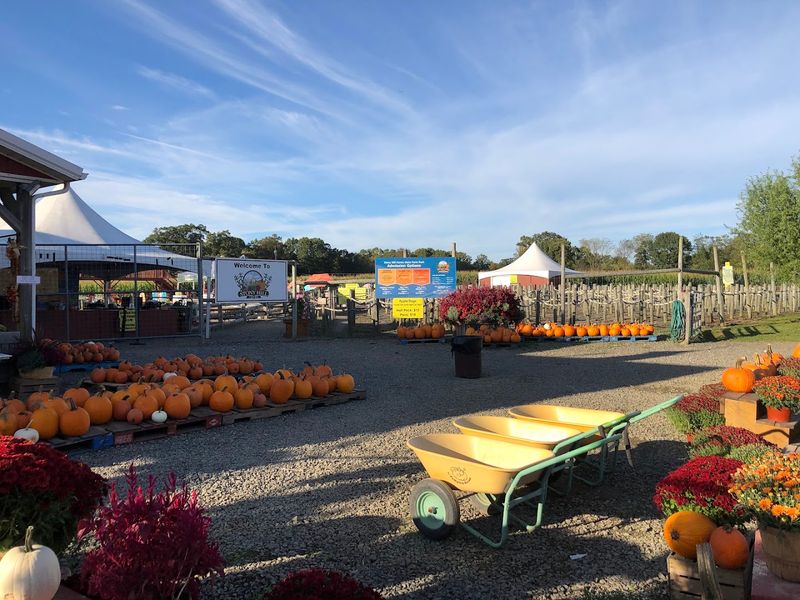
Come fall, ten acres of corn become a full-scale navigation problem. Stony Hill’s giant Maze Quest corn maze is redesigned with a new theme each year, using twisting paths, misleading lanes, activity stations, and bridges that provide just enough elevation to show how thoroughly lost you have become.
It is large enough to feel like the day’s main event rather than a five-minute walk between stalks. For the 2026 season, the Maze Fun Park is scheduled to operate from August 29 through November 7, with exact daily hours and attraction availability varying across the calendar.
The giant maze is joined by a smaller corn maze, a rope maze, trike rides, gemstone mining, play areas, the pumpkin patch, and apple-orchard access. Apple cannons appear on selected fall weekends, giving visitors the oddly satisfying opportunity to launch fruit at distant targets.
Hayrides run on weekends and certain holidays, circling the farm and helping guests reach seasonal picking areas without adding another long walk. October also brings selected flashlight nights, when the corn maze stays open after dark and guests attempt the same puzzle with considerably less visual information.
It is a remarkably effective way to discover who in the group has been pretending to know the route. Families should be prepared for natural farm terrain rather than theme-park pavement.
Fields can be uneven, and bridges and rugged paths mean several attractions are not easily accessible to wheelchairs or strollers. Closed-toe shoes, water, sunscreen, and clothes that can survive dust or mud make the day easier.
The Farm Market remains nearby for donuts, ice cream, drinks, and baked goods once everyone has escaped the maze. During quieter seasons, Stony Hill feels like a working farm that welcomes visitors.
In autumn, it becomes a sprawling harvest playground—still rooted in apples, pumpkins, and corn, but perfectly willing to turn all three into an afternoon of friendly chaos.
Share this story