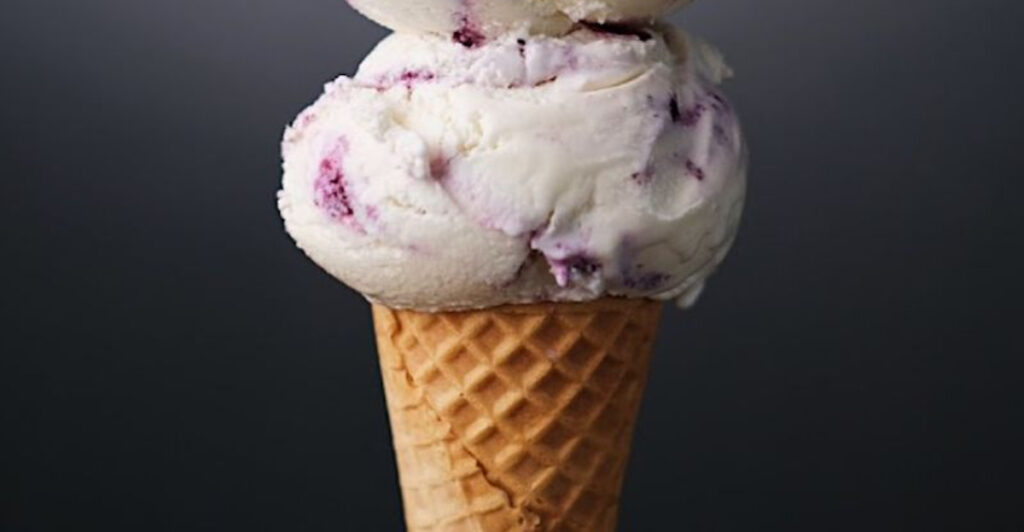
A spoon cuts through maple ice cream and comes back carrying a cube of challah, a few cinnamon-sugared crumbs, and an unmistakable piece of pork roll. It looks like dessert.
It tastes a little like Sunday breakfast. Somehow, neither side of the combination loses the argument.
That unlikely scoop comes from Windy Brow Farms, a century-old orchard tucked along a ridge in Fredon Township, just outside Newton. The farm could easily coast on its apple trees, cider donuts, pies, and country views.
Instead, its small-batch creamery keeps experimenting with ingredients that sound far too bold for the average ice cream counter. Taylor Ham and French Toast is the flavor that gets people talking, but it is only one part of what makes Windy Brow worth finding.
Behind the scoop window are farm-grown fruits, scratch-made breads, seasonal pastries, wood-fired pizzas, and an orchard where the experience remains refreshingly simple. This is not a farm dressed up as an amusement park.
It is a working Sussex County landmark that happens to make one of New Jersey’s strangest—and smartest—desserts.
The Sussex County Orchard Hiding One of New Jersey’s Most Creative Farm Markets
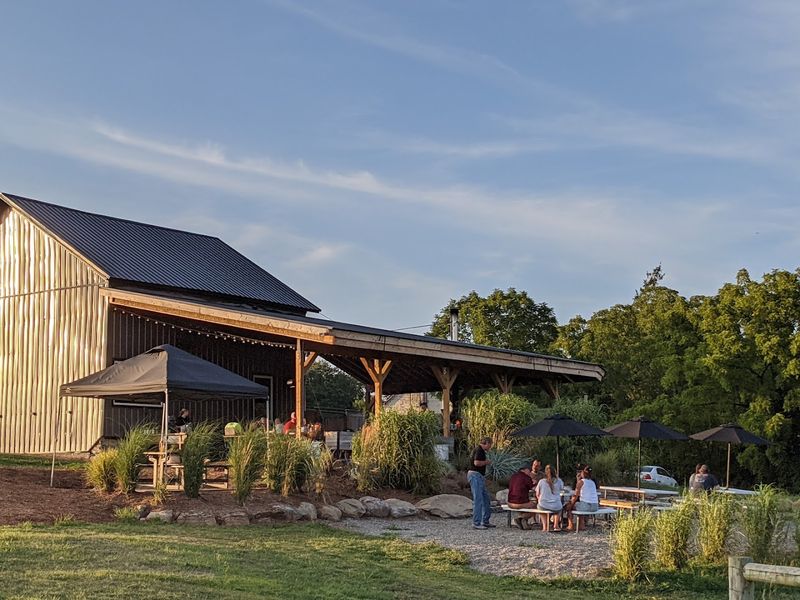
Windy Brow Farms sits at 359 Ridge Road in Fredon Township, although its mailing address is often listed as Newton. The name makes sense as soon as you arrive.
The property occupies the brow of a ridge, where open fields, orchard rows, and steady country breezes create a setting that feels far removed from North Jersey’s busier corridors. Its history goes back much further than the creative ice cream flavors now associated with it.
The land operated as a dairy farm during the late 1800s, and the Inslee family planted its first fruit trees in 1920. After the original dairy barn burned in the 1940s, the family focused on growing fruit and established one of Sussex County’s early retail fruit farms.
Windy Brow officially traces its current farm-market roots to 1946, and some of those old orchard trees are still producing fruit. Today, the farm grows more than 45 varieties of apples, roughly 15 varieties of peaches, plus cherries, nectarines, plums, apricots, and seasonal vegetables.
That agricultural base keeps the market from feeling like a gift shop with a few apples placed near the entrance. Produce actually comes from the surrounding land when weather and harvests allow, while fruit sourced from other growers is chosen with the same emphasis on flavor and quality.
Inside the compact store, baskets of produce share space with pies, loaves of bread, pastries, preserves, pantry goods, and whatever the kitchen has been making that day. Nothing about the place feels overproduced.
Windy Brow has deliberately avoided the bounce houses, pumpkin cannons, cow trains, and carnival-style attractions common at larger agritourism farms. The basic idea is simpler: walk through the orchard, buy something made on the property, sit outside, and let the ridge do the entertaining.
The Cow’s Brow Creamery Where Local Ingredients Become Unexpected Ice Cream Flavors
The scoop window looks modest enough until you begin reading the flavor board. Madagascar vanilla, dark chocolate, mint chip, and salty caramel usually provide a dependable safety net, but the rotating selections can head in much stranger directions.
The Cow’s Brow Creamery works in small batches, changing many of its seasonal flavors every week or so instead of maintaining one oversized menu throughout the year. That gives the kitchen room to respond to whatever is growing, ripening, or being baked nearby.
Peaches can become ice cream when the orchard is heavy with stone fruit. Fresh herbs, berries, honey, corn, baked goods, and other regional ingredients may move from farm or pastry kitchen into the freezer.
Even the standard ice cream begins with a relatively straightforward custard-style recipe made from milk, cream, nonfat dry milk, sugar, and egg yolks. From there, the creamery treats the base more like a blank canvas than a finished product.
The results are not built around novelty for novelty’s sake. A strange name may earn the first order, but texture and balance are what make anyone finish the cone.
Fruit has to taste ripe rather than sugary. Bread and pastry pieces need to stay chewy without turning soggy.
Salty ingredients have to sharpen the sweetness rather than overwhelm it. That approach explains why the farm can place a familiar scoop of mint chip beside something involving pork roll and make both feel as though they belong in the same freezer.
Availability is intentionally unpredictable, which is part of the fun and also a practical reason to check the current lineup before making a long drive for one specific flavor. The everyday choices remain reliable, while the seasonal board rewards people willing to order the flavor that sounds just slightly unreasonable.
Taylor Ham French Toast Ice Cream Turns Breakfast Into a Sweet and Salty Scoop
Local context matters here, because calling the flavor Pork Roll and French Toast would start an argument before the first cone was served. Windy Brow sits in the northern half of the state, where plenty of residents instinctively say Taylor ham, even though Taylor is a brand and pork roll is the product.
The creamery wisely leaned into the debate when it introduced Taylor Ham and French Toast as part of an “Only in Jersey” flavor collection in 2018.
The idea was to celebrate ingredients and foods tied to the state, and few foods inspire more New Jersey loyalty—or more unnecessary shouting—than the round, salty breakfast meat usually tucked into a hard roll with egg and cheese.
Putting it into ice cream sounded like a stunt. Adding French toast is what turned the stunt into an actual dessert.
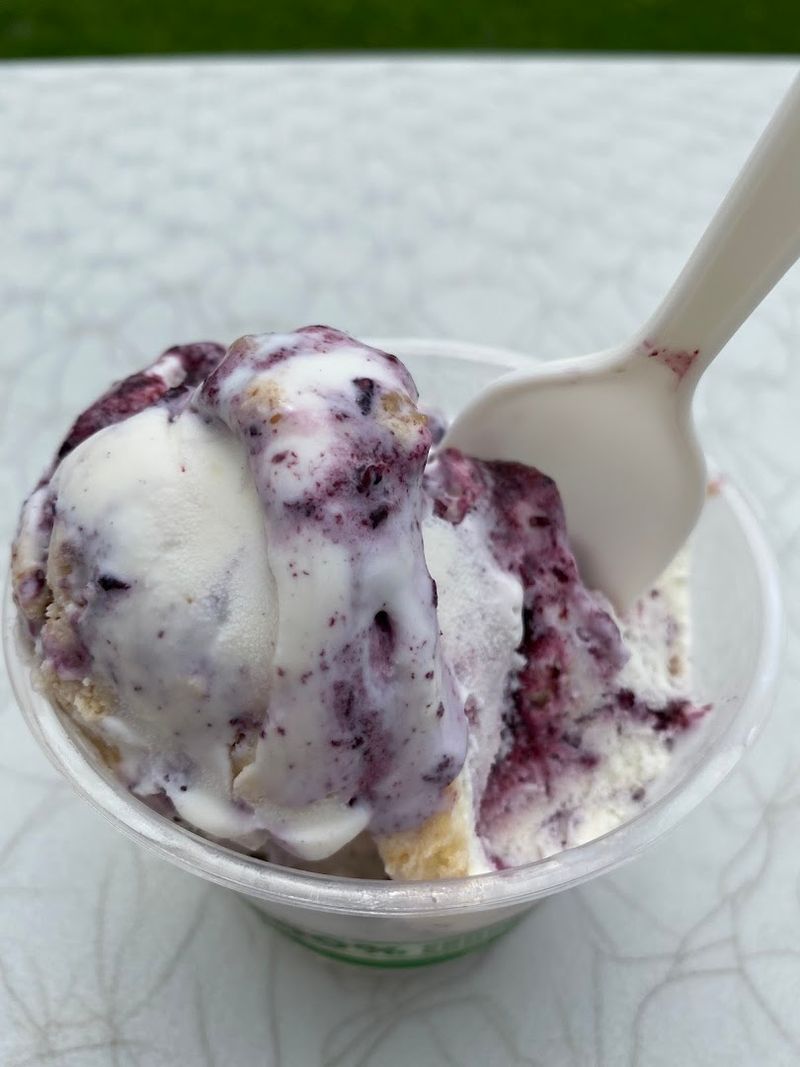
The first taste is mostly maple and cream, familiar territory for anyone who has watched syrup melt into a pat of butter. Then the challah arrives with its soft, slightly chewy texture, followed by crispy bits of pork roll that bring smoke, salt, spice, and a faint cured-meat sweetness.
It is less shocking than the name suggests. Maple already works with breakfast sausage and bacon, while cinnamon and sugar have no trouble making room for a savory edge.
What makes the scoop memorable is the way those flavors arrive in stages rather than all at once. It does not simply taste like cold pork roll, nor does the meat disappear behind an overly sweet base.
You get enough of each component to understand the full breakfast reference. The flavor has returned at different points since its debut, but Windy Brow’s menu remains seasonal and fast-changing, so finding it in the case is never guaranteed.
That slight scarcity has only added to its reputation as the scoop people drive into Sussex County hoping to catch.
Caramelized Pork Roll, Maple Syrup, and Challah Make the Wild Combination Work
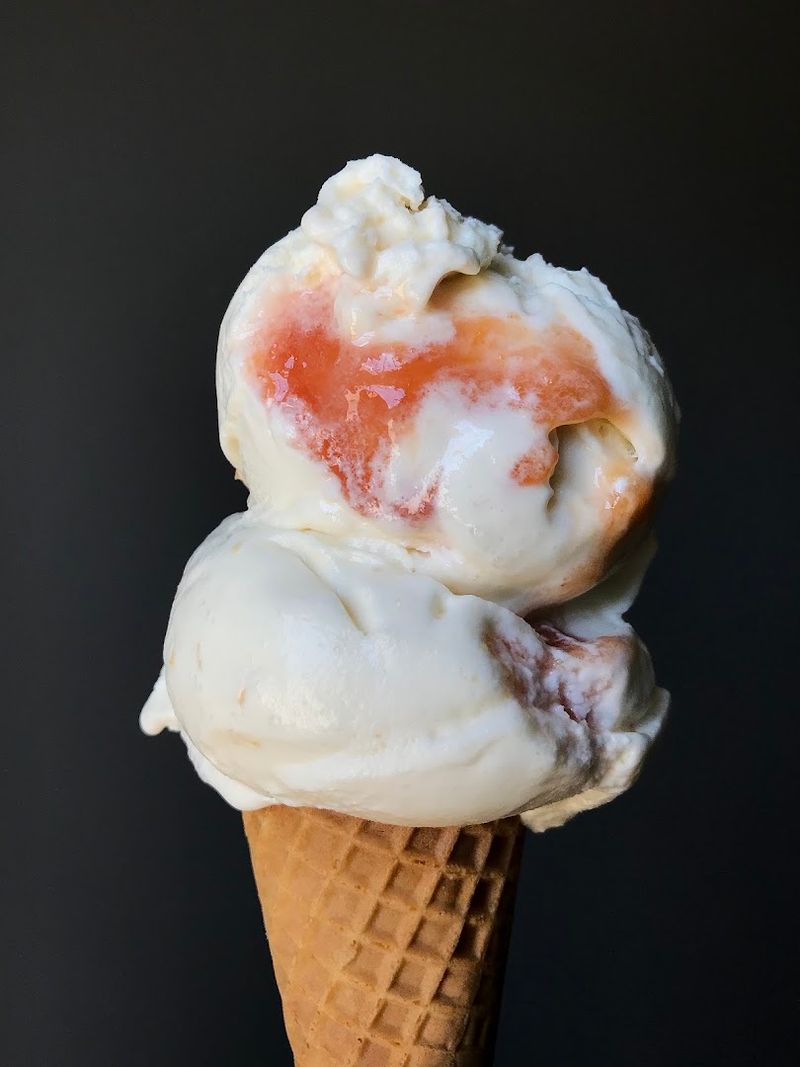
Making this flavor requires considerably more effort than chopping pork roll and throwing it into a tub of vanilla. Each two-gallon batch has historically used around two and a half pounds of the meat, giving the finished ice cream enough savory character to justify its name.
The pork roll is cut into pieces, cooked, baked, and pan-fried until its edges caramelize and its texture becomes crisp. It is then tossed with cinnamon and sugar, a step that creates a bridge between the seasoned meat and the sweeter ingredients waiting in the ice cream base.
That treatment is essential. Soft, undercooked pieces would become unpleasantly chewy once frozen, while untreated pork roll would taste disconnected from the maple custard surrounding it.
The crisping process concentrates its saltiness and creates little bursts of flavor rather than one heavy, meaty note. House-made challah supplies the French toast portion.
The enriched bread has enough density to remain noticeable after being mixed into the ice cream, and its eggy sweetness fits naturally with maple syrup and custard. Pieces of prepared French toast are folded into a maple-flavored base along with the pork roll, distributing soft bread and crisp meat throughout each batch.
The finished texture moves between creamy, chewy, and crunchy, which is a large part of why the idea succeeds. It follows the same logic as dipping breakfast meat into syrup, only with the temperature turned down and the proportions carefully controlled.
The pork roll behaves almost like an unusually savory candied mix-in. The challah keeps the flavor anchored to French toast, while maple ties everything together with a sweetness that is recognizable without becoming cloying.
Remove any one of those parts and the combination would probably feel like a dare. Together, they make it taste like somebody froze an entire New Jersey diner breakfast and worked out the recipe before serving it.
Scratch-Made Pastries, Artisan Bread, and Cider Donuts Fill the Farm Store
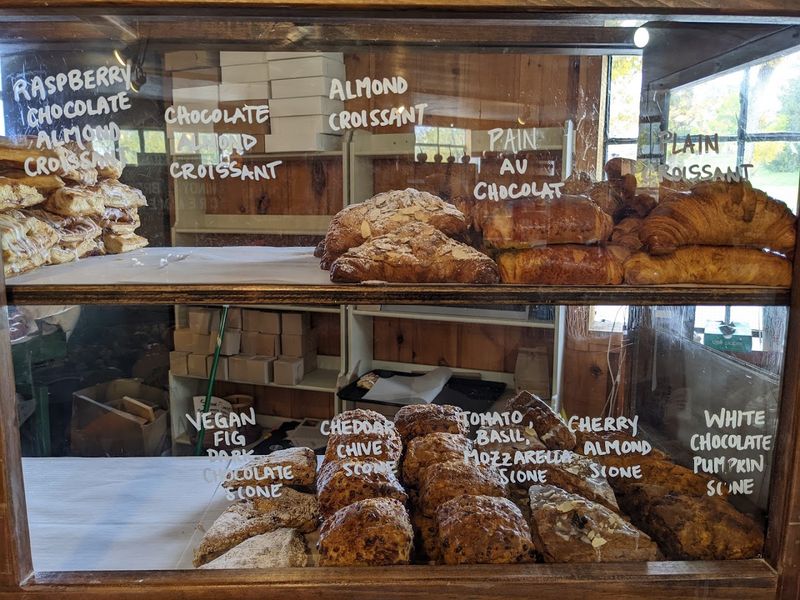
Before ordering ice cream, take a slow look around the bakery shelves. Windy Brow’s pastry and bread program is substantial enough to stand on its own, not merely a supporting act for the orchard.
Bread is generally baked from scratch Wednesday through Sunday using a mix of regional and carefully selected flours. The kitchen works with organic flour from Farmer’s Ground in New York’s Hudson Valley, regenerative flour from River Valley Grain Cooperative in Marksboro, New Jersey, and products from King Arthur Flour.
Loaves are made with either fresh yeast or levain and contain no preservatives, additives, or fillers.
French country loaves, baguettes, and focaccia commonly appear from Wednesday through Sunday, while weekends expand the selection with breads such as seven-grain loaves, einkorn sourdough, seeded sourdough, pull-apart everything rolls, French knot rolls, and sourdough baguettes.
The exact assortment depends on the day and production schedule, which means arriving earlier is useful when a particular loaf matters. Pastries are also prepared by the farm’s in-house team, often using fruit or other ingredients grown on the property.
Depending on the season, the cases might hold croissants, scones, cookies, cakes, fruit pastries, macarons, bread puddings, or pies made with apples and other local produce. The cider donuts are the item most likely to disappear into the car before reaching home.
They are generally available Wednesday through Sunday beginning in early summer, with more limited appearances around holidays during the winter and spring.
Fresh pies are produced primarily on weekends, when the store tends to be busiest and the smell of butter, fruit, cinnamon, and baking bread makes sticking to the original shopping plan nearly impossible.
Coffee and tea are available near the scoop window, creating the dangerous possibility of arriving for one cone and leaving with a latte, a baguette, six donuts, and a pie balanced carefully on the passenger seat.
Apple Picking and Pizza Nights Turn an Ice Cream Stop Into a Country Escape
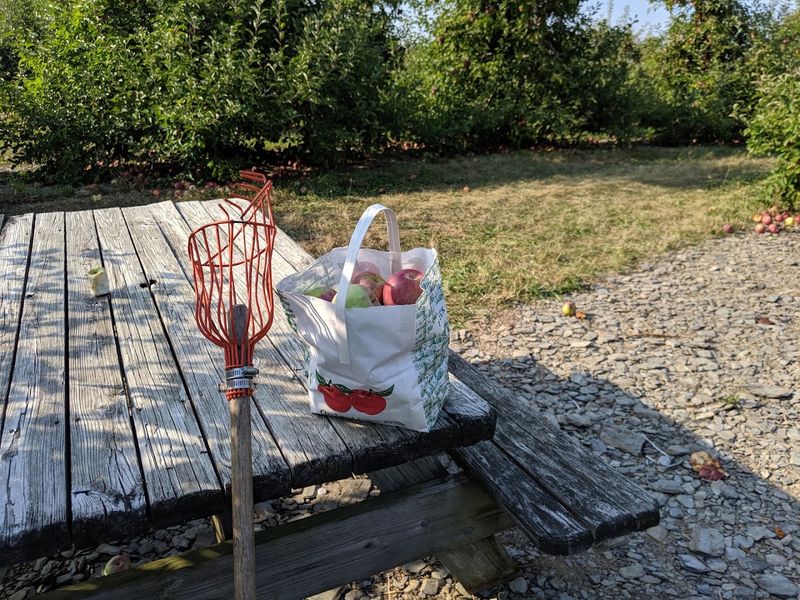
Late in the day, the smell drifting across Windy Brow may come from the wood-fired kitchen rather than the bakery. Pizza nights run on most Fridays and Sundays during the warmer season, typically from 4:30 to 8:30 p.m. and continuing through about the middle of October.
The setup is counter service and first come, first served, with outdoor seating beneath a covered pergola and at picnic tables around the property. Menus rotate, but the kitchen’s approach fits the rest of the farm: straightforward wood-fired pies built around good dough and seasonal ingredients.
A classic Margherita might share the menu with combinations involving farm vegetables, local cheeses, stone fruit, hot honey, fresh herbs, or whatever else makes sense that week. Takeout is available, although orders are generally placed in person and the wait may be similar to the wait for a table.
Well-behaved dogs are welcome around the outdoor property and orchard, though they cannot enter the farm store or sit under the pizza pergola; the surrounding picnic tables offer an alternative.
Earlier in the day, visitors can walk into the orchard during pick-your-own season, which normally begins around the first weekend in September and continues into late October.
There is usually no separate admission charge, parking fee, or per-pound price—the cost is based on the picking bag. The 2026 crop, however, was significantly affected by unstable spring temperatures and a late freeze, so the farm expects a much shorter picking season than usual.
That reality is a useful reminder that Windy Brow remains an actual farm, with plans shaped by weather rather than a fixed entertainment calendar.
Even without a full afternoon of picking, the rhythm of the place works: pizza under the pergola, a walk along the ridge, one last look through the market, and an ice cream cone eaten outside while the orchard settles into evening.
Pork roll may be what starts the conversation, but the wider farm is what makes the stop linger in your memory.
Share this story