Lady Liberty appears before you even reach the water. One moment, you are driving through Jersey City past warehouses, highway ramps, and light rail tracks.
The next, her green silhouette is standing across the harbor with Ellis Island beside her and Lower Manhattan rising behind your shoulder. That sudden reveal is part of what makes Liberty State Park so good.
The scenery feels unmistakably New York, but the experience is refreshingly New Jersey: more room, less commotion, and no need to dodge a wall of tourists every ten feet.
Spread across roughly 1,200 acres at the mouth of the Hudson River, the park combines wide lawns, paved waterfront paths, salt marsh, playgrounds, historic structures, and some of the best-known views in the country.
Admission is free, the gates open at 6 a.m., and an early walk can feel wonderfully calm despite the skyline looming just across the water.
Liberty State Park Delivers New York Harbor Views Without the Manhattan Rush
New Jersey’s most visited state park occupies a remarkable patch of breathing room beside one of the busiest urban areas in America. Directly across the Hudson, Manhattan is packed with offices, subway entrances, sightseeing buses, and sidewalks that seem to move at their own impatient speed.
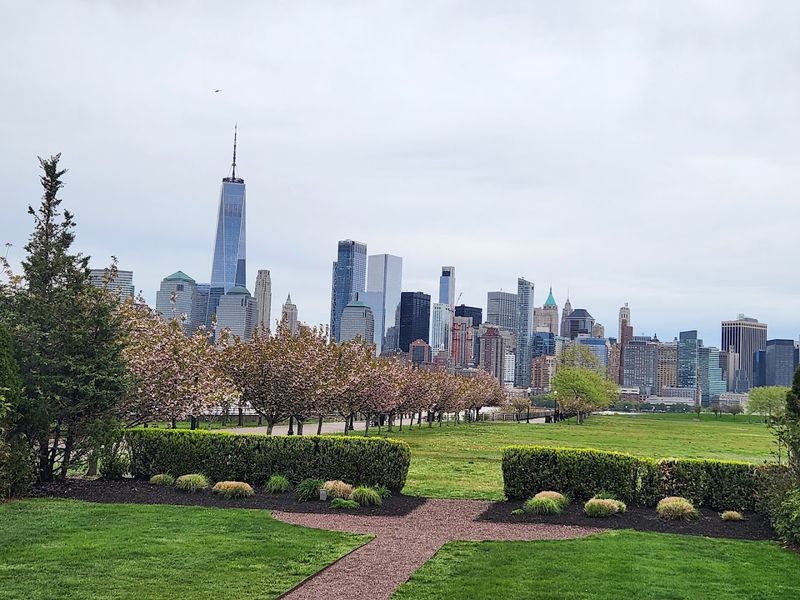
Liberty State Park offers the same famous harbor scenery with considerably more elbow room. The landscape is broad and open rather than tightly built, with grassy fields separating many of the park’s major attractions.
You can watch ferries cut across the water, spot helicopters circling over Manhattan, and see sailboats pass in front of the skyline without feeling as though you need to keep moving.
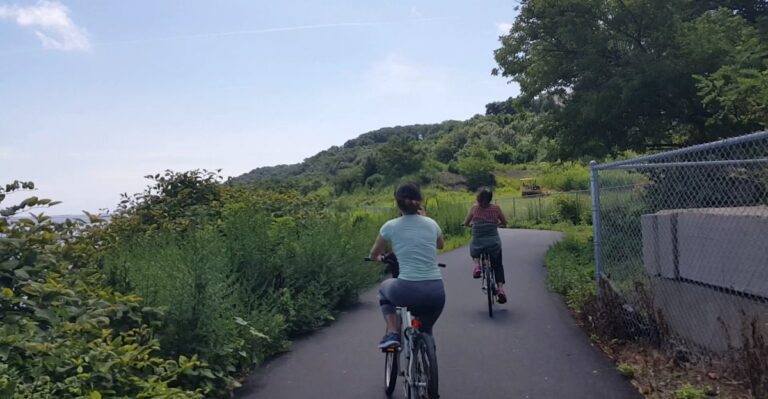
That relaxed pace is especially noticeable in the morning, when runners, dog walkers, cyclists, and photographers are scattered along paths that might be shoulder-to-shoulder if they were on the opposite side of the river.
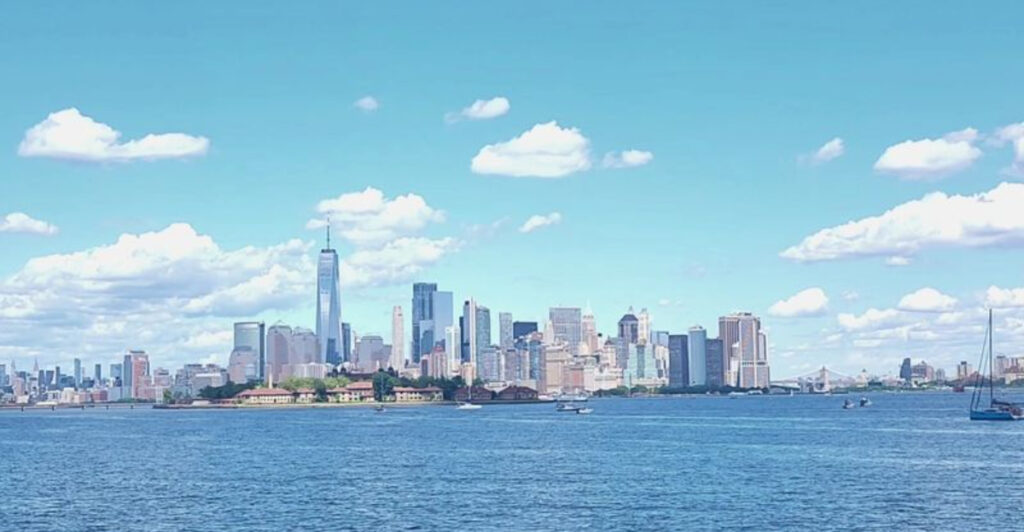
The park’s location also gives the view unusual depth. The Statue of Liberty, Ellis Island, One World Trade Center, and the towers of Lower Manhattan do not appear as isolated landmarks.
They form one enormous harbor panorama that shifts as you move through the park. Walk north and the Manhattan skyline becomes more dominant.
Head toward the southern picnic area and Lady Liberty takes over the scene. Even the ride into the park builds a sense of contrast, moving from dense city streets into an unexpectedly large waterfront landscape.
There is nothing remote about Liberty State Park, and that is exactly the appeal. It provides room to slow down while keeping the entire spectacle of New York Harbor directly in sight.
The park is open daily from 6 a.m. to 10 p.m., and there is no entrance fee.
The Two-Mile Waterfront Promenade Feels Made for Unhurried Walks
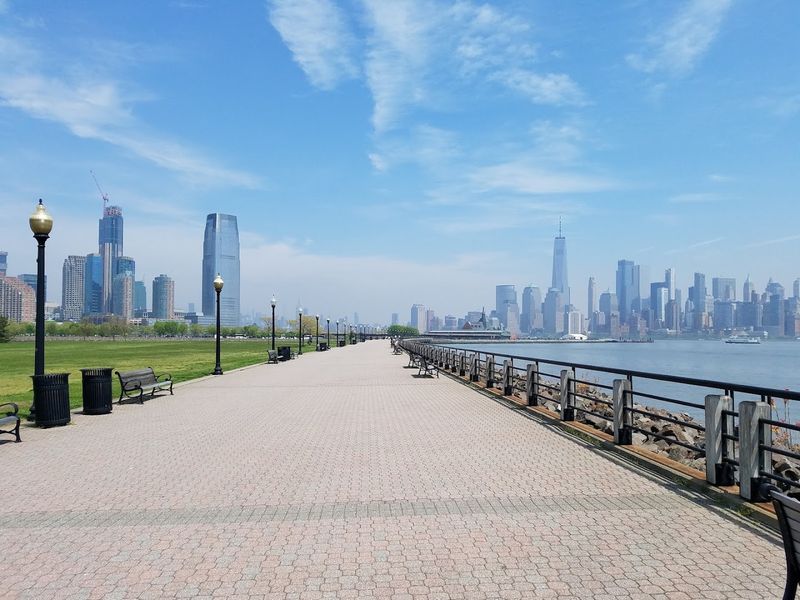
Start near the southern end on a clear morning and the harbor breeze usually reaches you before the biggest views do. The paved Hudson River Waterfront Walkway then runs for roughly two miles through the park, connecting picnic areas, playgrounds, the Nature Center, and the historic railroad terminal.
It is flat, broad, and wonderfully straightforward. There are no confusing trail markers to decode and no rocky climbs pretending to be “moderate.” You simply follow the edge of the water and let the scenery keep changing.
One stretch faces the Statue of Liberty, another opens toward Ellis Island, and farther north the towers of Lower Manhattan begin filling the horizon. Benches give walkers plenty of excuses to pause, while long sightlines make the promenade popular with runners and cyclists who want distance without leaving the city.
The best walks tend to happen early, before midday visitors begin arriving for ferries, picnics, and museum trips. Morning light catches the glass buildings across the river, fishing boats move through Upper New York Bay, and the promenade can briefly feel much farther from Jersey City than it actually is.
This is not a shaded woodland path, so a hat and water matter during the warmer months. The open setting also means the wind can be sharper than expected in fall and winter.
Still, the exposure is part of what makes the walk memorable. Nothing blocks the harbor, and almost every turn delivers another wide-angle view.
Visitors who want to extend the outing can branch toward the 36-acre Richard J. Sullivan Natural Area, where salt marsh, shrubs, and self-guided paths preserve a quieter side of the Hudson River estuary.
It is a striking shift from steel towers and ferry traffic to birds, tidal water, and marsh grass within the same park.
The Statue of Liberty and Ellis Island Sit Right Across the Water
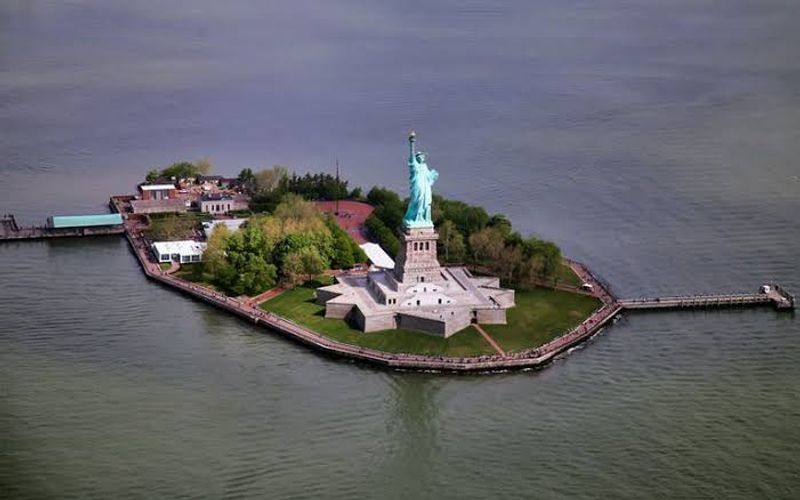
Plenty of places advertise Statue of Liberty views, but Liberty State Park places her so prominently in the landscape that she quickly becomes part of an ordinary walk. There is no need to board a sightseeing boat or find an expensive rooftop.
From the waterfront, the statue stands across Upper New York Bay with remarkably little clutter around her, especially when viewed from the southern portions of the park. Ellis Island sits even closer to the northern waterfront, its red-roofed Main Building and historic complex clearly visible beyond the seawall.
The perspective is particularly satisfying because it connects the landmarks visually. You can look from the statue to Ellis Island and then toward the old Central Railroad of New Jersey Terminal, following the same broad geography that shaped millions of immigration stories.
Between 1892 and 1954, nearly 12 million immigrants were processed at Ellis Island. Many later crossed the water to the Jersey City terminal, where they purchased train tickets and continued toward towns and cities throughout the country.
That history is easy to understand when all three sites are visible at once. Photographers usually have the best luck in the morning, when sunlight falls more cleanly across the statue, though evening brings its own reward as the sky changes color behind the harbor.
Clear winter days often produce especially sharp views, while summer haze can soften the skyline. Visitors who decide that looking across the water is not enough can also leave directly from Liberty State Park on the authorized ferry to Liberty and Ellis islands.
General admission currently starts at $26 for adults and includes round-trip ferry transportation, entry to the grounds of both islands, and access to their museums.
Pedestal and crown access require separate advance reservations, and the National Park Service recommends choosing an early departure when visiting both islands in one day.
Empty Sky Memorial Frames a Powerful View of Lower Manhattan
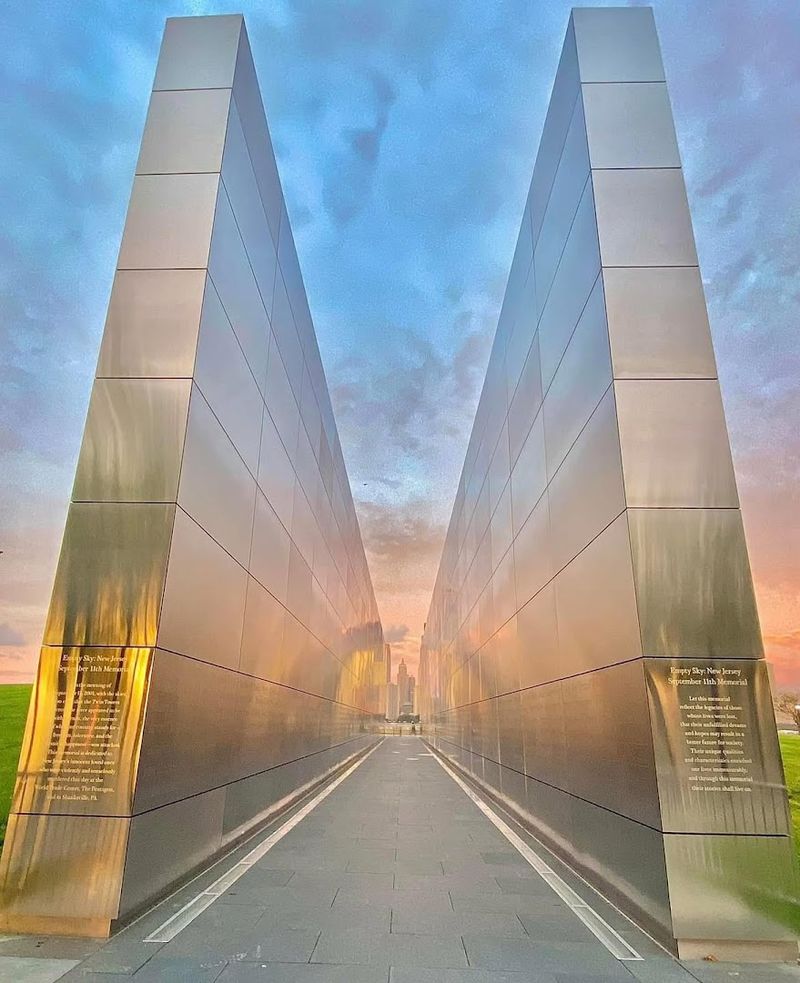
The mood changes as soon as you enter the narrow passage between Empty Sky’s two steel walls. Outside the memorial, Liberty State Park feels open, breezy, and full of movement.
Inside, the skyline is reduced to a single carefully framed view pointing toward the site where the World Trade Center towers once stood. Dedicated on September 10, 2011, New Jersey’s official September 11 memorial honors people killed in the attacks who lived in the state or had strong ties to it.
Their names are engraved at eye level along brushed stainless steel walls that rise 30 feet above a bluestone walkway. Each wall stretches 210 feet, matching the width of one side of the former Twin Towers, and the space between them is only 12 feet wide.
Those dimensions matter when you are standing inside. The tall parallel surfaces shut out much of the surrounding park, focusing attention on the names and the open sky ahead.
Reflections move across the steel as clouds pass, ferries cross the harbor, and the light changes throughout the day. The design is simple enough that nothing competes with the reason the memorial exists.
At the end of the passage, Lower Manhattan returns to view, with One World Trade Center rising near the point where the original towers stood. Visitors often speak more quietly here without being asked.
Some trace engraved names with their fingers, while others remain at the edge of the memorial and look silently across the river. Empty Sky is not tucked into a separate museum or enclosed behind a ticketed entrance.
It occupies a prominent waterfront location near the historic terminal and remains open during the park’s daily hours, from 6 a.m. to 10 p.m. Its placement makes remembrance part of the landscape rather than a detour from it.
The Historic Railroad Terminal Tells a Remarkable Immigration Story
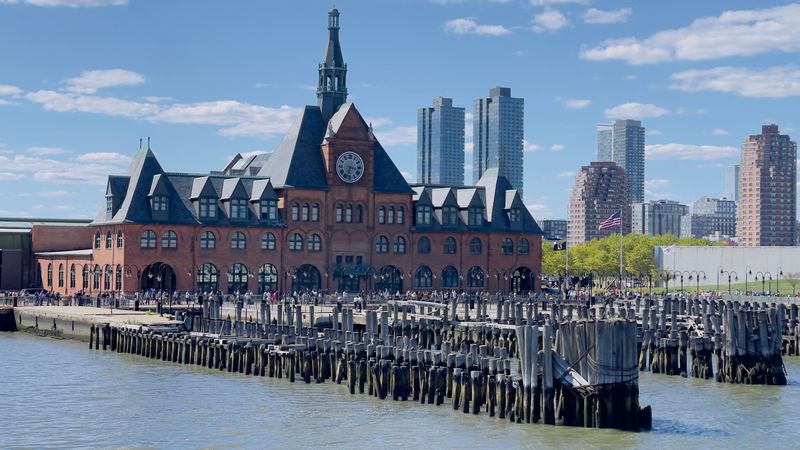
Built in 1889, the Central Railroad of New Jersey Terminal looks almost delicate from a distance, with its brick exterior, arched windows, and clock tower facing the harbor. Its history, however, is anything but small.
During its busiest years, the terminal formed part of the largest railroad complex operating around New York Harbor, moving tens of thousands of daily commuters toward Manhattan by ferry. It also served as a critical gateway for immigrants leaving Ellis Island.
After completing federal inspections across the water, many families boarded ferries to Jersey City, entered the terminal, bought rail tickets, and began the next portion of their journeys. Trains departing from here carried passengers toward destinations throughout New Jersey and far beyond it.
Seen from the waterfront today, the terminal helps tie the park’s famous landmarks into one continuous story. The Statue of Liberty represented arrival, Ellis Island handled inspection, and the railroad terminal provided the route inland.
Train service ended in 1967 after the Central Railroad of New Jersey declared bankruptcy, but the building survived and eventually became a cornerstone of Liberty State Park.
The terminal now contains visitor information, restrooms, ferry ticketing, and occasional history programs, while its waterfront setting remains one of the park’s strongest photography spots.
Restoration work has been carefully addressing the aging structure, including brick repointing and the removal of more than 300 windows for off-site repair. The adjacent train shed is also part of broader improvement plans intended to preserve the site and create space for future gatherings and historical interpretation.
Current public hours for the terminal are generally 7:30 a.m. to 5 p.m. from Memorial Day through Labor Day and 7:30 a.m. to 4 p.m. during the rest of the year, with Christmas Day as the listed closure.
Wide Lawns, Picnic Areas, and Ferry Access Make It Easy to Spend the Day
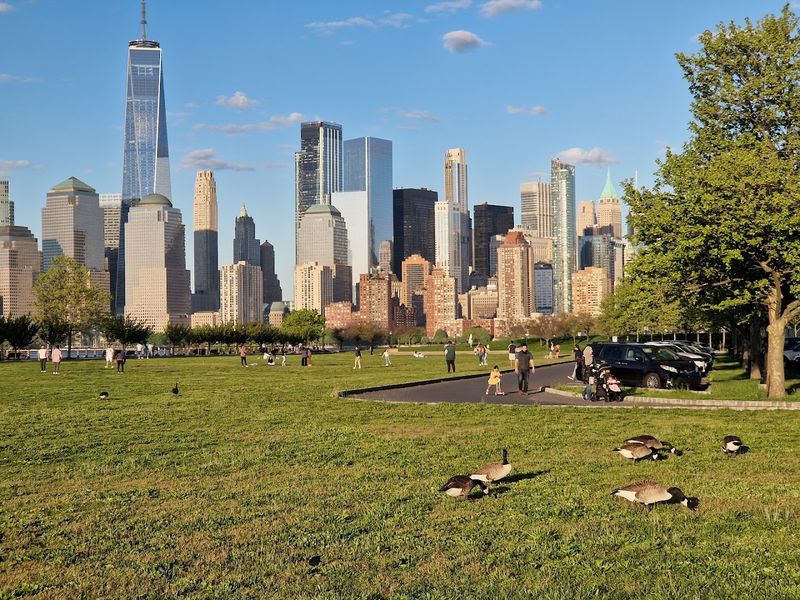
A visit does not need to become an elaborate itinerary. Bring coffee, walk the promenade, claim a patch of grass, and the harbor supplies the entertainment.
Liberty State Park has two main picnic and playground areas connected by the waterfront walkway, along with broad fields that work well for casual games, kite flying, reading, or doing absolutely nothing productive for a while.
Families often gravitate toward the southern picnic area, where the open lawn and playground make it easy to settle in without losing the Statue of Liberty view.
The northern end places visitors closer to the historic terminal, Empty Sky, Liberty Landing Marina, and the ferry departure point. Those distances are worth considering because this is a large park, not a compact riverfront square.
Walking between attractions can take longer than the skyline makes it seem. During the 2026 summer season, a free weekend shuttle makes the park easier to navigate.
It operates Saturdays and Sundays from 11 a.m. to 7 p.m. between May 23 and September 6, with buses expected about every 20 minutes. Stops connect the Liberty State Park Hudson-Bergen Light Rail station with the picnic areas, Nature Center, ferry landing, marina, Liberty Science Center, and other major destinations.
Visitors arriving by car can enter from Jersey City and find parking near different sections of the park, while ferry passengers should head toward the terminal at 1 Audrey Zapp Drive. Airport-style security screening is required before boarding boats to Liberty and Ellis islands, so arriving well ahead of the ticketed time is wise.
Whether the day includes a ferry ride, a playground stop, a long walk, or merely sandwiches on the lawn, the park never demands that visitors rush from one attraction to another. New York Harbor provides the backdrop, but the freedom to spread out is what makes the New Jersey side so appealing.
Share this story