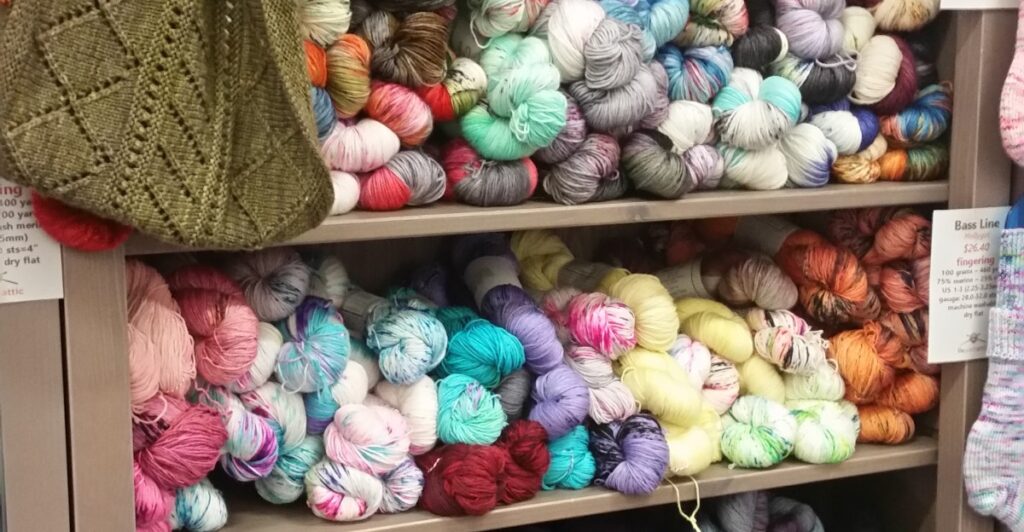
A skein of yarn is a surprisingly effective way to derail a sensible shopping plan. You arrive needing enough for one scarf, spot a color that would make a beautiful sweater, and suddenly your project list has doubled.
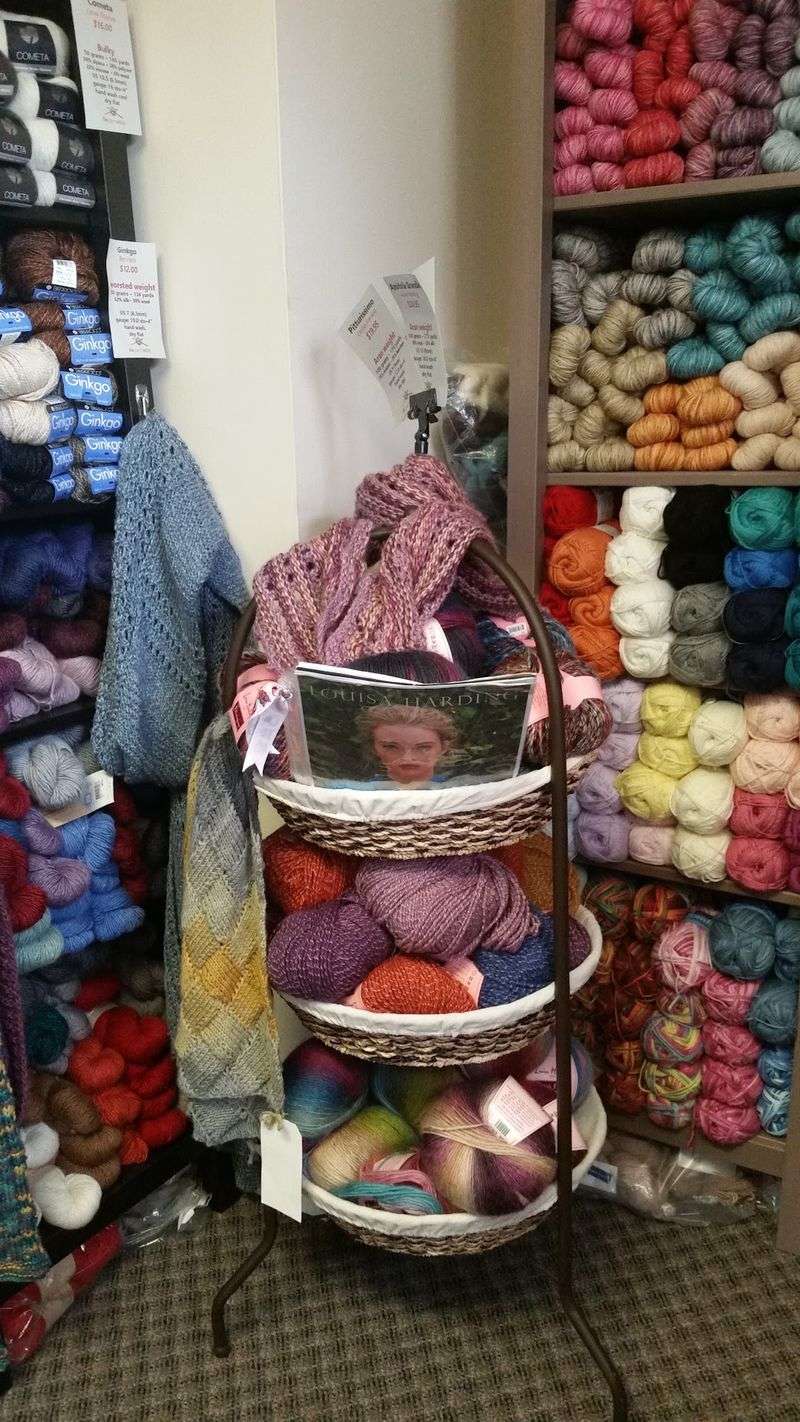
At The Yarn Attic in Hillsborough, that temptation comes with plenty of substance behind it. The shop carries more than 75 brands, bringing familiar favorites, specialty fibers, and independent dyers into one very distracting mix.
Knitters and crocheters have room to explore, while classes and knowledgeable assistance help turn an appealing purchase into something you can actually finish. Whether your current masterpiece is a complicated cardigan or a slightly crooked first attempt, there is something satisfying about choosing supplies in person.
You can compare colors side by side, feel the difference between fibers, and ask the question that has been holding up your project. The hard part may be remembering what you originally came for.
The Yarn Attic Brings a World of Color to Hillsborough
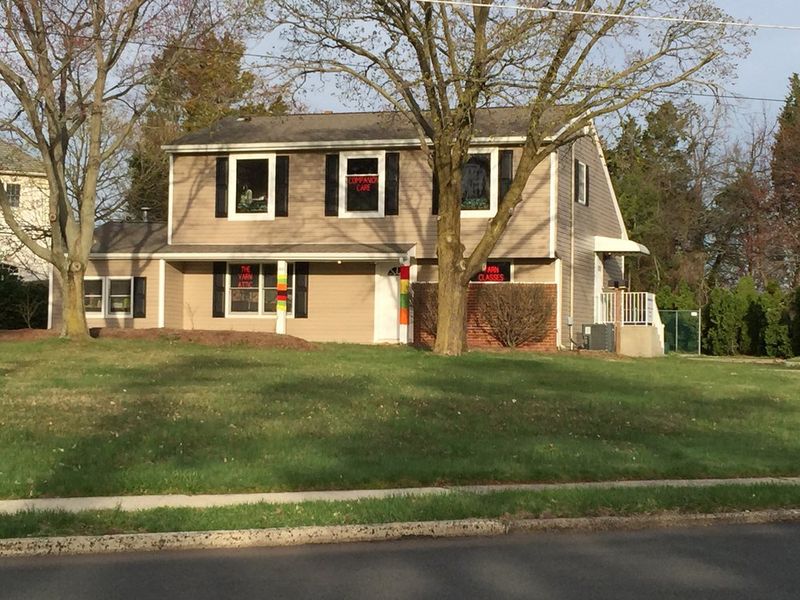
Before there was a storefront full of possibilities, there was a career change. Owner Rhonda Wynston-Kraft spent 20 years working in interior design before turning her love of knitting and crocheting into a business.
She launched The Yarn Attic online in 2013, then opened the Hillsborough shop in December 2014. Her connection to the craft goes back much further, to learning to knit from her mother as a child.
That background gives the business a personal foundation, with an eye for color and materials carried over from her earlier profession. The physical shop sits at 406 US Highway 206, at the corner of Meadowbrook Road, with free parking on site.
It is an accessible stop along a busy Somerset County corridor, rather than somewhere that requires a complicated detour. The listed regular hours are Tuesday and Thursday through Saturday from 10 a.m. to 4 p.m., with Wednesday stretching to 8:30 p.m.; Sunday and Monday are closed.
Checking for holiday changes before a drive is sensible, especially if Wednesday evening is your shopping window. Once you are choosing yarn in person, the advantage becomes obvious.
Two shades that looked nearly identical on a screen may have completely different undertones. A fiber you imagined for a structured bag might feel better suited to a soft wrap.
Those discoveries are part of the pleasure, particularly when you have time to consider them without rushing. Bringing your pattern makes the visit more useful, but arriving with an unfinished idea can be enjoyable, too.
A favorite color, a recipient, or even the desire to finally make something you will wear is enough of a starting point. Here, a practical errand can become the afternoon when a vaguely imagined project starts to feel real.
More Than 75 Yarn Brands Make Choosing Half the Fun
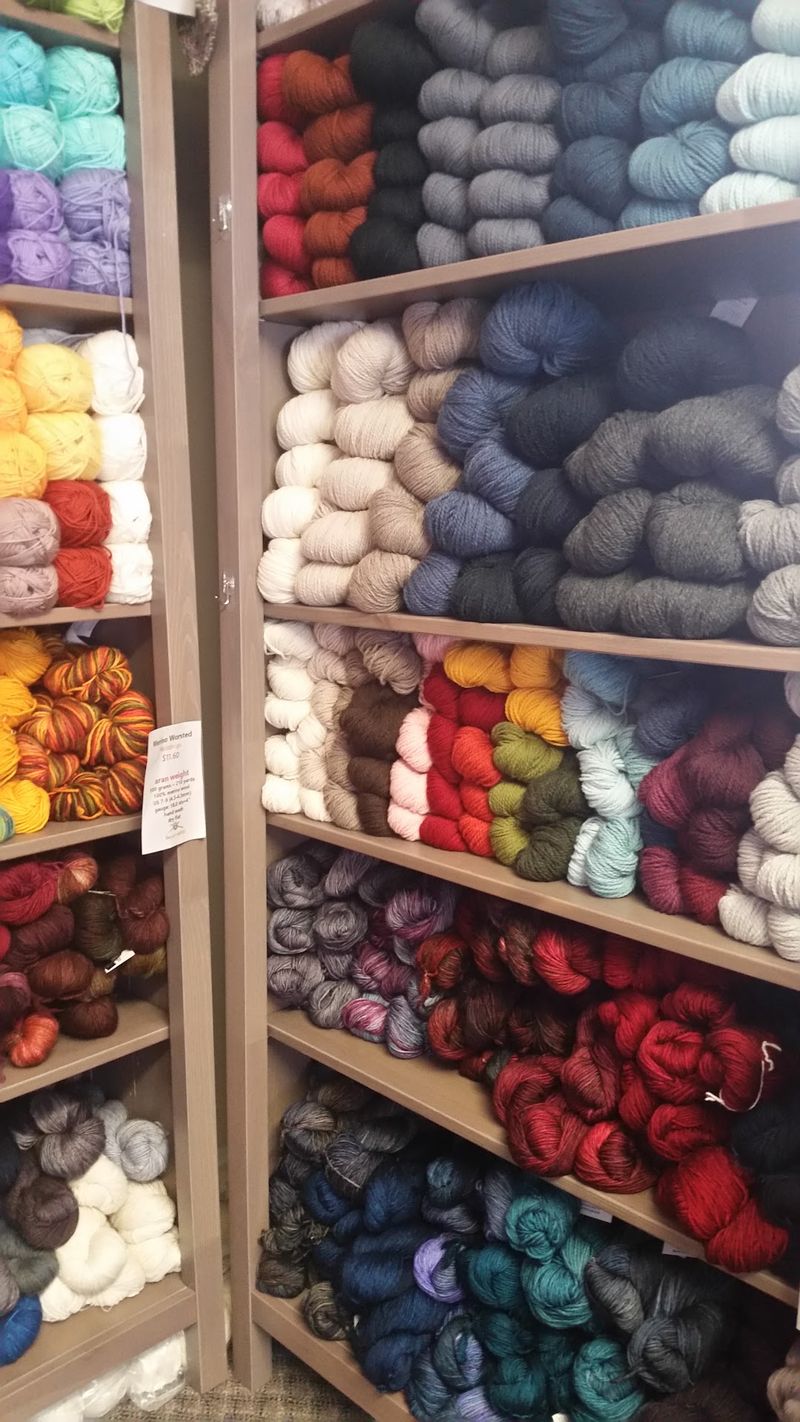
The selection runs well beyond a few variations on basic wool. Among the brands in The Yarn Attic’s catalog are Berroco, Cascade, Blue Sky Fibers, Malabrigo, Noro, Rowan, and Sandnes Garn.
Specific options include Berroco Vintage and Ultra Alpaca, Cascade Heritage, Malabrigo Rios and Rasta, Rowan Felted Tweed, and Sandnes Garn Peer Gynt. That range gives experienced makers familiar names to work with and newer customers a useful introduction to how varied yarn can be.
The smartest way to approach so much choice is to start with what your project needs. A winter hat, a summer top, and a baby blanket have different jobs to do, even if the same blue catches your eye for all three.
Weight, fiber content, yardage, and care instructions deserve a look before color makes the final decision. A beautiful skein becomes a much better purchase when it fits the life of the finished object.
Budget belongs in that conversation, too. Comparing the price of individual skeins only tells part of the story; compare their yardage and work out the cost of the whole project.
A sweater can require a very different commitment from a small accessory. If you are experimenting with an unfamiliar material, a modest first project gives you a chance to learn how it behaves before committing to an entire garment.
There is also a useful freedom in having several possible yarns to consider for one pattern. You might prefer a softer feel, a different texture, or a shade that suits the person who will actually wear it.
Bring the pattern’s requirements and keep an open mind about the label. Choosing can take time, but that time is productive when it ends with materials you understand and a project you are excited to begin.
Hand-Dyed Skeins Put Local Makers in the Spotlight
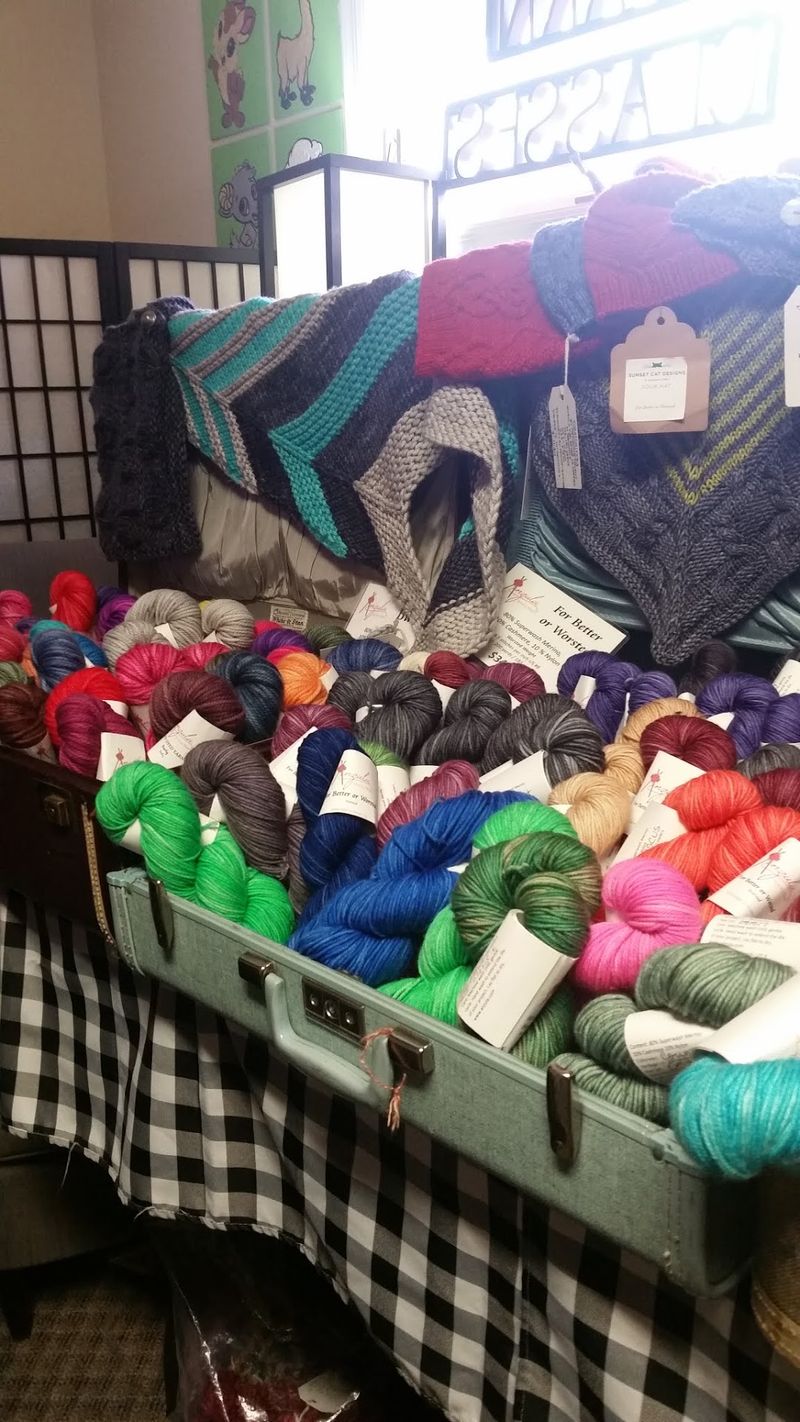
Sometimes the color comes first and the project has to catch up. A hand-dyed skein can have that effect, with subtle shifts or unexpected combinations that make you reconsider your usual choices.
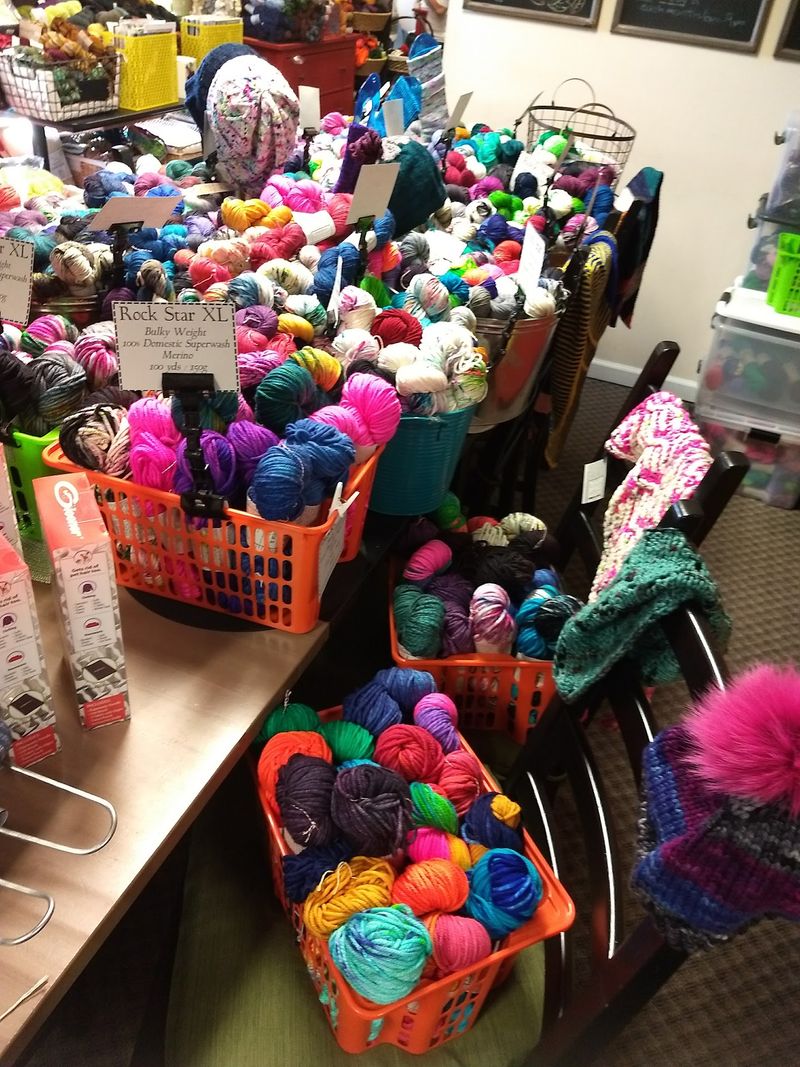
The shop’s selection includes local independent dyers alongside hand-dyed yarns from farther afield, giving smaller producers a place within its broader range. Among the independent brands it carries is Emma’s Yarn, whose Beautifully Basic is hand-dyed in Florida.
This four-ply fingering-weight yarn is made from 100 percent superwash merino and is suited to sweaters, shawls, and accessories. Another option, Marvelous Mohair, combines 72 percent mohair with 28 percent silk and can be used alone or held with another yarn.
Those are different creative possibilities: one offers a fine merino base, while the other introduces an airy, fuzzy layer. Looking at hand-dyed yarn in person is especially useful when you are building a palette.
Lay prospective colors together and consider which one should lead. A lively multicolored skein might benefit from a quieter companion, while two understated shades can make an interesting combination without competing.
You do not have to choose the boldest option to enjoy what an independent dyer brings to the yarn. Small variations can be just as appealing.
For a larger project, ask about matching skeins and whether alternating them would help distribute any differences in color. That conversation is easier before the first sleeve is finished.
It is also worth thinking about the pattern itself: intricate stitchwork and dramatic color changes may compete for attention. A simpler fabric can give a favorite colorway room to show off.
The satisfying part is finding a pairing that makes sense to you, whether that means a vivid crocheted shawl or a sweater in a shade you will reach for every week.
Needles Hooks and Patterns Help Your Next Project Take Shape
The tiny accessory you forgot can stop a project just as effectively as running out of yarn. A missing stitch marker, the wrong needle length, or a hook that feels uncomfortable becomes a much bigger issue once you settle in to work.
The Yarn Attic’s selection extends to knitting needles, crochet hooks, project bags, needle cases, yarn bowls, stitch markers, and stitch stoppers. Brands in its catalog include ChiaoGoo, addi, Clover, KnitPro, and Lykke, giving the tools their own share of browsing attention.
Choosing a tool is personal. Some knitters enjoy a slippery needle surface; others prefer a little more grip.
Crocheters may have strong opinions about handles, hook shape, and how a tool sits in the hand. Those preferences become clearer with experience, so there is no need to buy the most elaborate set before you know what works for you.
Start with the requirements of the project in front of you and build from there. A quick inventory at home can prevent accidental duplicates.
Photograph your needle sizes, note the hooks you already own, and check the small print in your pattern for finishing supplies. The last few steps often need something different from the main work, whether that is a tapestry needle for joining pieces or markers to keep track of shaping.
Patterns and kits offer another way to narrow a sprawling field of possibilities. The shop lists kits among its product categories, including its own selections and Woobles options.
Check exactly what is included rather than assuming every tool comes in the package. A well-chosen pattern gives your shopping a useful direction, and a kit can reduce some of the decisions.
There is pleasure in the accessories themselves, certainly, but the best purchase is the one that makes your next evening of stitching easier.
Classes and Workshops Welcome Beginners and Seasoned Makers
An instruction that seems perfectly clear to one person can look like a secret code to another. That is where an in-person class earns its place.
The Yarn Attic offers group knitting and crochet classes for beginners and more experienced students, with individual attention shaped around each person’s ability and goals. Groups are limited to eight students, and weekly sessions run for either 90 minutes or two hours.
Class yarn must be purchased from the shop and receives a 10 percent discount. Workshops focus on a particular skill, technique, or project, generally lasting 90 minutes to two hours, sometimes across multiple sessions.
Private knitting and crochet lessons are also listed at $50 per hour, with a 10 percent discount on materials purchased for the lesson. Those formats serve different needs.
A weekly class can provide a steady rhythm for someone learning the basics or working through a longer project. A focused workshop makes sense when you want to concentrate on one technique.
Private instruction gives you time to address a specific hurdle without trying to fit your question into a group’s pace. The useful choice depends on what you want to accomplish, rather than how advanced you think you ought to be.
Before registering, describe your experience honestly and ask what to bring. If you have a troublesome project, its pattern and actual stitches will explain more than a hurried description of “something going wrong near the edge.”
For beginners, a manageable goal is helpful: learning to recognize stitches and understand the fabric is progress, even before a finished accessory appears.
More experienced makers can benefit from slowing down, too. A small correction in technique may make the next several hours of work more comfortable or consistent.
Sometimes the breakthrough is simply having someone beside you when the instruction finally clicks.
A Shared Love of Yarn Keeps the Community Connected
Knitting and crochet are portable hobbies, but they do not have to be solitary ones. The shop’s activities include social groups, guest designers, trunk shows, and events, creating opportunities to meet other makers beyond a routine supply purchase.
A trunk show can introduce a different collection or a new approach to a familiar material. A group gathering offers something quieter: time devoted to a project, with people nearby who understand why finishing one difficult row can count as a very good evening.
There is a local charitable connection as well. The Yarn Attic shares information about the Somerset County chapter of Project Linus, which seeks volunteers to make handmade blankets for children.
Its information includes knitted and crocheted blankets, along with 12-inch knitted or crocheted squares that can be joined into blankets. Anyone considering a donation should confirm the chapter’s current needs and requirements first, so the finished work suits its intended use.
That connection gives the craft another purpose, whether someone prefers making complete blankets or contributing smaller pieces. It also makes room for different levels of experience.
An ambitious personal project and a straightforward charitable one can sit comfortably in the same maker’s routine. The pleasure of a shared craft often lives in the ordinary details: comparing color choices, understanding a technique after seeing someone demonstrate it, or having an interested person to show a finished piece.
There is no need for every project to be impressive. A useful hat, a carefully made blanket, or the first scarf that finally has reasonably straight edges can carry plenty of satisfaction.
At this Hillsborough shop, the yarn provides the starting point for those experiences. What follows can be measured in stitches, but also in the small, familiar pleasure of making something alongside people who enjoy the process.
Share this story