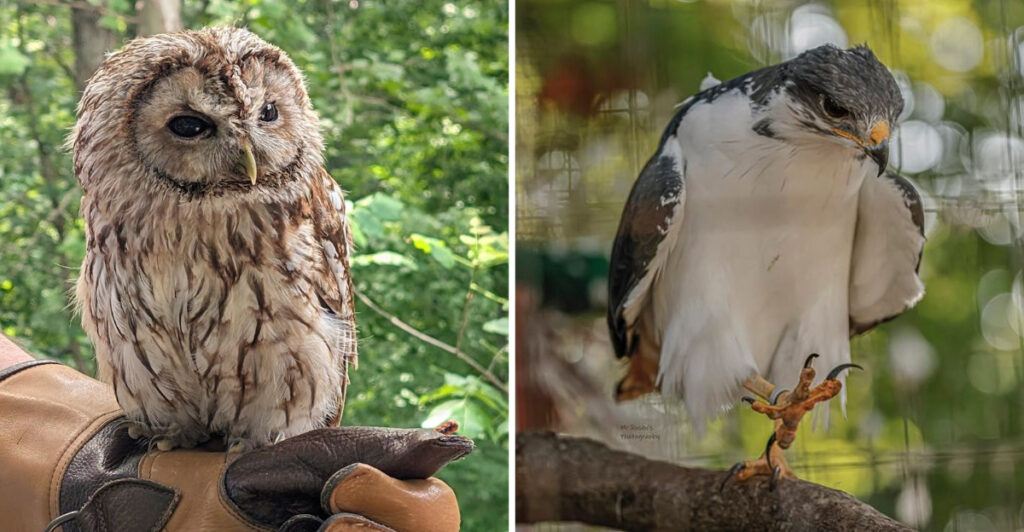
A lot of wildlife attractions keep you at a distance. World Bird Sanctuary does the opposite, bringing you eye level with bald eagles, owls, vultures, and other raptors in a setting that feels surprisingly open and calm.
Tucked into the woods in Valley Park, this nonprofit pairs a strong rescue mission with an easygoing visit that works for serious bird lovers, curious kids, and anyone who wants a different kind of St. Louis area outing. If you think birds of prey are all seen best from far away, this place will reset that idea fast.
Where the Road Turns Quiet and the Raptors Take Over
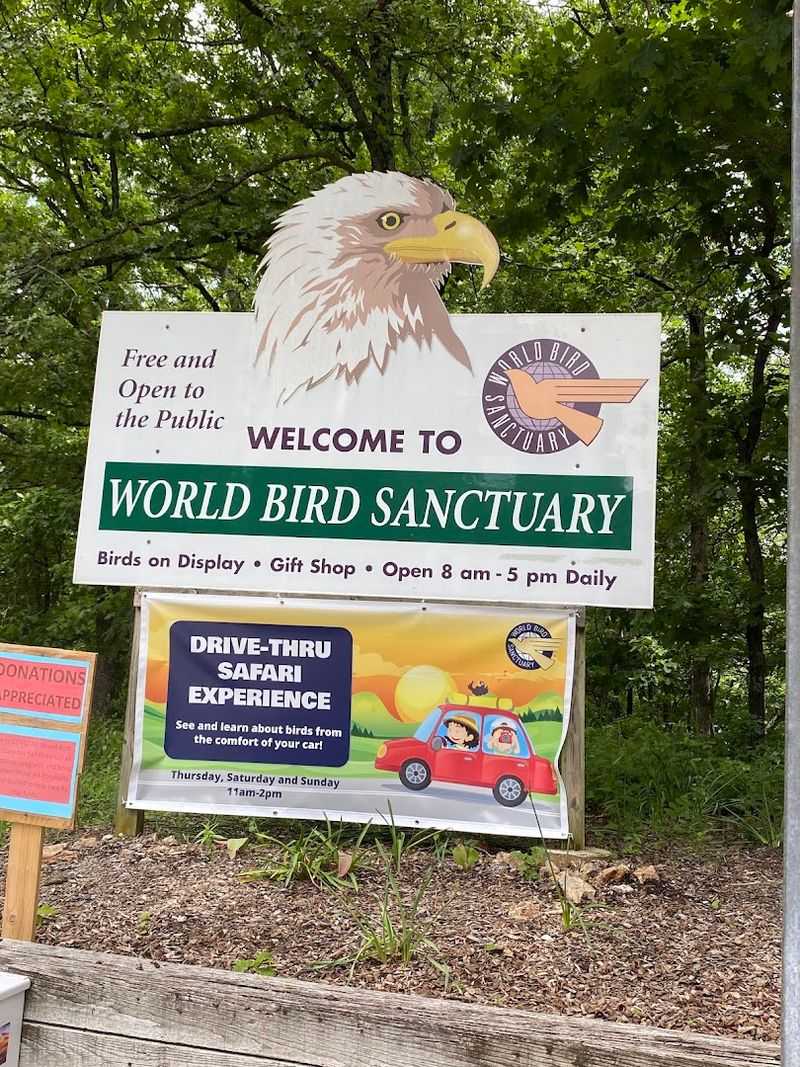
The approach to World Bird Sanctuary sets the tone before a single bird comes into view. Bald Eagle Ridge Road sounds dramatic on paper, but in person the bigger surprise is how quickly the suburban rhythm falls away into woods, gravel, and a quieter kind of attention.
By the time you reach the sanctuary grounds, the place already asks you to slow down and look upward. That matters here because the setting is part of the experience, not a decorative backdrop around cages.
The sanctuary sits on a large reserve near Lone Elk Park, and the landscape gives everything more breathing room than many casual visitors expect.
Instead of pushing you through a dense attraction, it opens in stages, with trees, open sky, and pathways creating a natural pause between one encounter and the next.
The entrance area is practical rather than flashy, which suits the mission. You are not being funneled into a theme park version of wildlife education.
You are stepping into a working nonprofit refuge where the stars happen to be eagles, owls, hawks, falcons, vultures, and other birds that command attention without needing theatrical framing.
Even the first walk inward has a nice visual rhythm. There is usually a mix of families, photographers with long lenses, couples out for an easy afternoon, and kids who immediately start scanning for the biggest wingspan on site.
That range of visitors tells you something useful: this place works whether you arrive ready to study species details or simply want an outdoor visit with a memorable hook.
Before long, the sanctuary starts delivering exactly what the road promised. You are in Missouri, surrounded by forest, with raptors close enough to examine feather patterns, hooked beaks, and those fixed, unmistakably intense stares.
Avian Avenue Delivers the Close-Up Most Zoos Never Quite Match
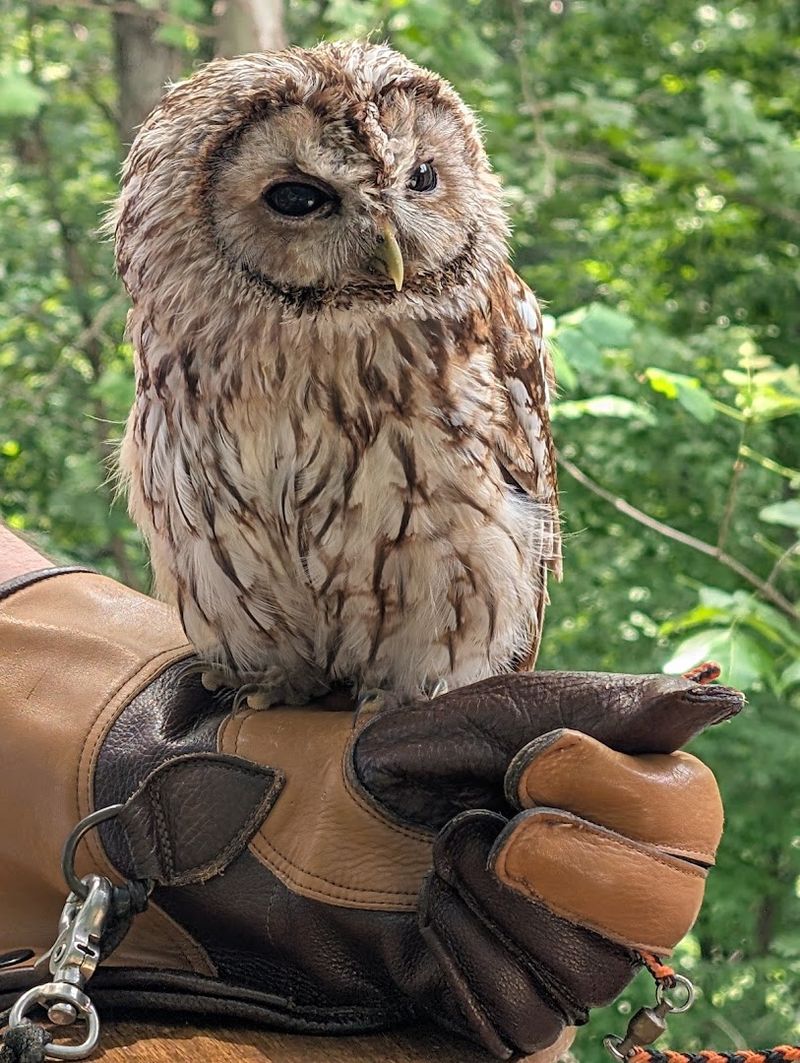
The signature experience at World Bird Sanctuary is not complicated, and that is exactly why it lands so well. You walk a paved path lined with spacious enclosures and meet one bird of prey after another at a distance that feels thrillingly close without turning chaotic.
Every few steps, another set of eyes locks onto yours, and suddenly the whole outing sharpens. This main route, often referred to as Avian Avenue, works because it creates momentum.
You are not standing in one viewing plaza staring into a distant habitat and trying to locate an animal through branches.
Here, the birds are visibly present, the sightlines are generally clear, and the progression from eagle to owl to hawk to vulture keeps the walk moving with fresh scale and texture.
That variety does more than hold attention. It helps you compare form and behavior in real time, noticing the barrel-chested look of an eagle, the eerie stillness of an owl, the angular alertness of a hawk, and the raw, prehistoric architecture of larger scavengers.
The educational signs add context without overloading the path, so you can read, look up, then immediately connect the facts to a living animal in front of you.
There is also a big difference between seeing a raptor overhead for three seconds and seeing one settle, turn, blink, and adjust its feathers.
At this sanctuary, you get the second kind of encounter. That slower viewing changes the experience from a checklist into observation.
For visitors who assume birds are hard to appreciate unless they are flying, this walkway is the correction. The stillness becomes the drama, and the details do the rest.
The Real Story Behind the Stares, Talons, and Giant Wings
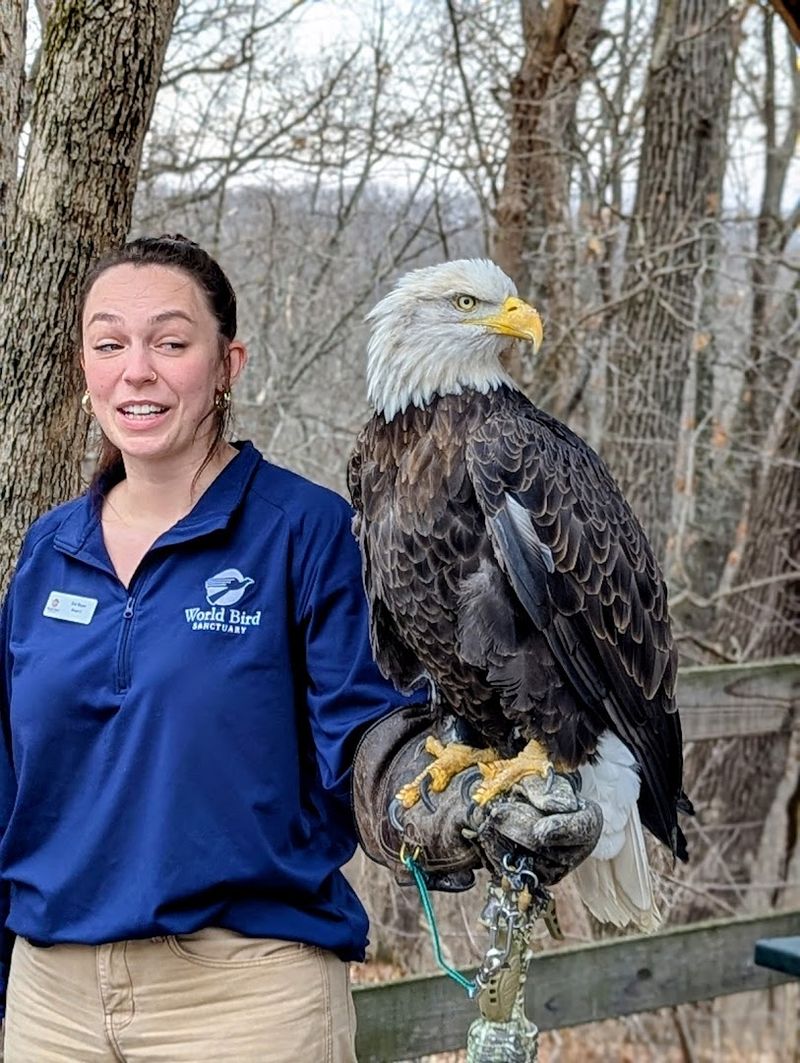
It would be easy to treat World Bird Sanctuary as a scenic bird park and stop there. The more important layer is that many of the resident birds are not on display for entertainment first, but because they cannot return to the wild.
Injury, impaired vision, wing damage, or other lasting limitations have turned them into ambassadors for the species they represent.
That changes how you read the enclosures. Instead of asking only which bird is biggest or most photogenic, you start noticing the interpretive signs and the way individual stories add weight to the visit.
A bald eagle is already visually arresting, but a bald eagle with a rescue history pulls your attention in a different direction, toward survival, human impact, and the long afterlife of wildlife rehabilitation.
The sanctuary is known for taking in large numbers of injured birds every year, and that rescue mission gives the public side of the property its purpose. Not every bird being treated is visible, and that distinction matters.
Birds intended for release need space from human contact, while permanent residents help educate visitors about raptor biology, conservation pressures, and what rehabilitation work actually looks like beyond the dramatic moment of rescue.
That balance keeps the place grounded. You are seeing extraordinary animals, but the sanctuary does not pretend every close encounter is cute or uncomplicated.
Raptors are powerful, specialized predators, and the educational framing makes room for that. You leave with a clearer sense of how much expertise goes into handling them, feeding them, housing them, and deciding whether a return to the wild is realistic.
In other words, the birds are impressive on sight. Their stories are what deepen the visit and turn admiration into respect.
Missouri’s Most Striking Bird Show Is Built Around Flight, Not Gimmicks
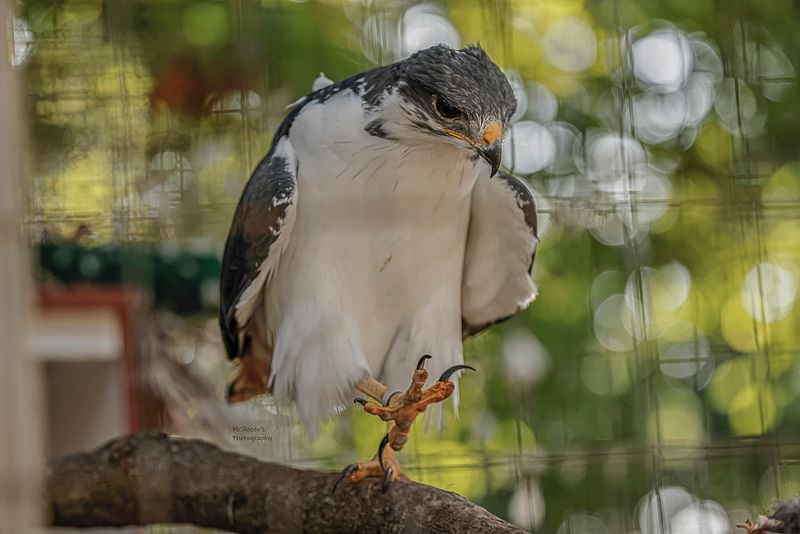
If your timing lines up with one of the sanctuary’s live programs, take it. Static viewing gives you scale, feather detail, and quiet observation, but a demonstration adds the missing dimension of movement.
The instant a bird crosses open air over the amphitheater, all those earlier close-ups reorganize in your mind around speed, control, and wings built for work.
What makes these presentations effective is their tone. They are educational without going flat, and engaging without slipping into circus energy.
Handlers tend to focus on how birds fly, hunt, adapt, and survive, which keeps the attention on the animal rather than on showmanship for its own sake.
That approach fits the sanctuary well. A nonprofit rescue center would feel off if the public program pushed pure spectacle, yet nobody wants a lecture that drains the wonder out of seeing a hawk bank across the stage area.
The sweet spot is practical interpretation paired with the undeniable thrill of a large bird in motion, and this place seems to understand that balance.
The setting helps too. An outdoor amphitheater ringed by trees gives the demonstrations a natural frame, so the flights read as part of the landscape rather than as tricks performed against a blank wall.
For kids, this is often the moment that turns general excitement into focused curiosity. For adults, it usually sharpens appreciation for just how much body design goes into one controlled pass through the air.
Even if you arrive mainly for the self-guided walk, the live program can become the pivot point of the day. It translates feathers and talons into lift, silence, acceleration, and landing precision in a way exhibits alone cannot.
Beyond Eagles and Owls, the Grounds Make Room for an Easy Half-Day
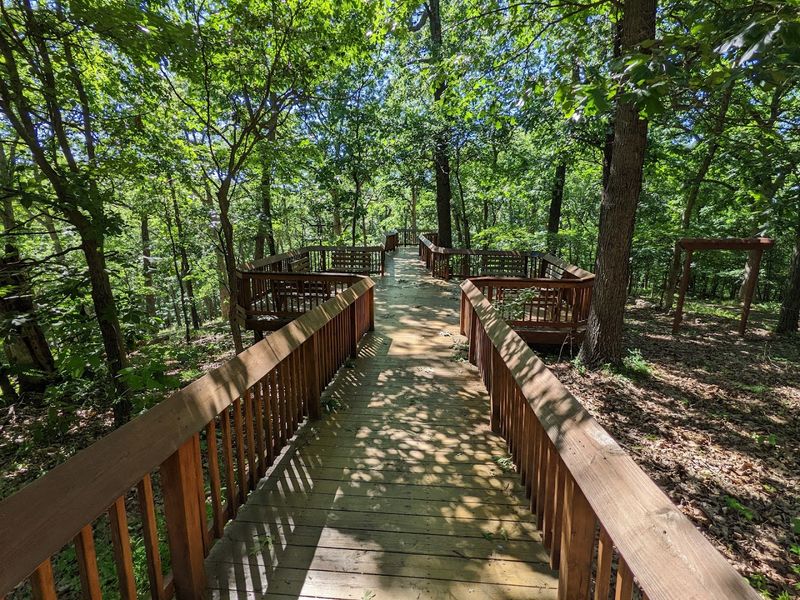
One reason World Bird Sanctuary works for more than hardcore bird enthusiasts is that the grounds are laid out for an actual outing, not just a quick pass down a single path.
You can focus hard on raptor species, or you can let the day breathe with a slower circuit that includes picnic tables, wooded stretches, and time for kids to burn energy. That flexibility is a bigger asset than it sounds.
The sanctuary’s main bird walk gives the visit structure, but it does not trap you in one tempo. Once you reach the end of the primary viewing stretch, the landscape opens into additional walking options that feel quieter and less curated.
That shift matters, especially if you have just spent time face to face with large, intensely watchful birds and want a few minutes to reset under the trees.
Families tend to notice the practical advantages fast. Restrooms, open space, and a playground can make the difference between a pleasant afternoon and a rushed one, particularly for younger kids who need variety between wildlife viewing stops.
At the same time, none of those amenities overwhelm the sanctuary’s identity. They support the visit instead of competing with it.
Photographers and casual nature walkers get their own reward from this layout. The mix of paved sections and more natural trails creates changing backgrounds, changing light, and occasional glimpses of smaller local birdlife beyond the sanctuary residents.
You are not stuck in a single visual mode the whole time. That makes the property useful for different attention spans and different kinds of curiosity.
You can come for the eagles, stay for the woodland calm, and leave without feeling like the experience was padded out or stretched thin.
How to Time Your Visit for Cooler Paths, Better Viewing, and Less Rush
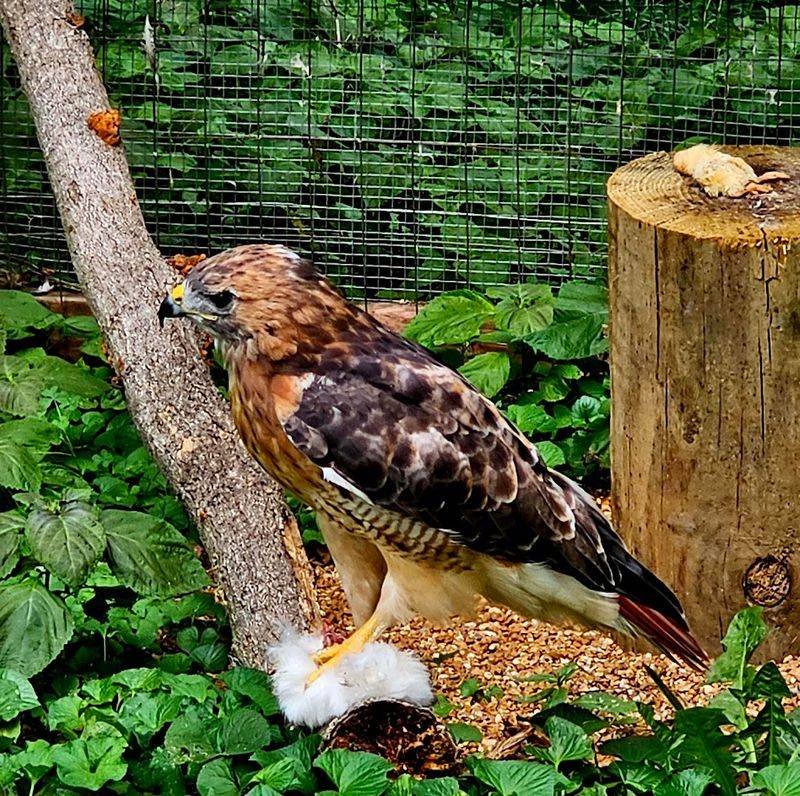
World Bird Sanctuary is open daily from morning through late afternoon, and the simplest planning advice is also the most useful: go early if you can.
Cooler temperatures, softer light, and a less crowded path make the first part of the day especially good for both photos and unhurried viewing.
You get more room to pause, read the signs, and spend real time at the enclosures without constantly stepping aside. That is not just a comfort issue. Raptor viewing depends on patience and angle.
When the path is quieter, it is easier to watch subtle behaviors such as head turns, feather ruffling, posture shifts, or the moment a bird fixes its gaze on movement across the grounds. Those details can disappear when the walkway gets busier and everyone moves at a faster clip.
Weekends add another variable because live programs may be part of the draw. If that is your goal, it makes sense to build the day around the demonstration rather than trying to squeeze it in after a full walk.
Arriving with enough time for the main route first lets you recognize species and compare sizes before seeing any of them in action.
Length of stay is easy to calibrate. A focused walk can be relatively quick, but most visitors will want at least a couple of hours if they plan to linger at enclosures, explore additional trails, or let kids use the playground.
The sanctuary is also fairly well suited to mixed groups because paved areas keep the core experience accessible and straightforward.
For the smoothest visit, think calm rather than ambitious. Pick a comfortable day, start early, and leave enough unclaimed time for the birds that unexpectedly hold your attention the longest.
Why This Valley Park Sanctuary Lands Harder Than a Typical Animal Attraction
Plenty of places can promise a family outing, a nature walk, or a chance to see impressive animals up close. World Bird Sanctuary stands apart because it combines all three without diluting any of them.
The birds are genuinely commanding, the grounds are easy to enjoy, and the nonprofit rescue mission gives the whole visit a seriousness that never turns heavy handed.
That combination changes the emotional register of the experience. A bald eagle behind mesh can still be striking anywhere, but here the context keeps nudging your attention beyond surface spectacle.
You are looking at an animal with power and presence, while also standing inside a place organized around rehabilitation, education, and long-term care. The encounter stays vivid because it is anchored to purpose.
The sanctuary also benefits from restraint. It does not appear to chase constant overstimulation or stack every corner with distractions.
Instead, it relies on strong fundamentals: spacious-looking enclosures, informative signage, wooded surroundings, manageable paths, and occasional programming that adds motion to the story. That confidence in the core material is refreshing.
For the St. Louis area, it fills a niche that is surprisingly rare. You can bring children, out of town guests, amateur photographers, or someone who simply wants an outdoor afternoon that is more distinctive than another park loop.
The visit can be low key or highly focused, and either approach still works. In the end, the sanctuary’s biggest advantage is clarity.
It knows exactly what it is: a refuge for birds of prey, a public education space, and a peaceful place to spend a few hours looking carefully at animals most people only ever glimpse at a distance. That is a strong identity, and it comes through in every step.
Share this story