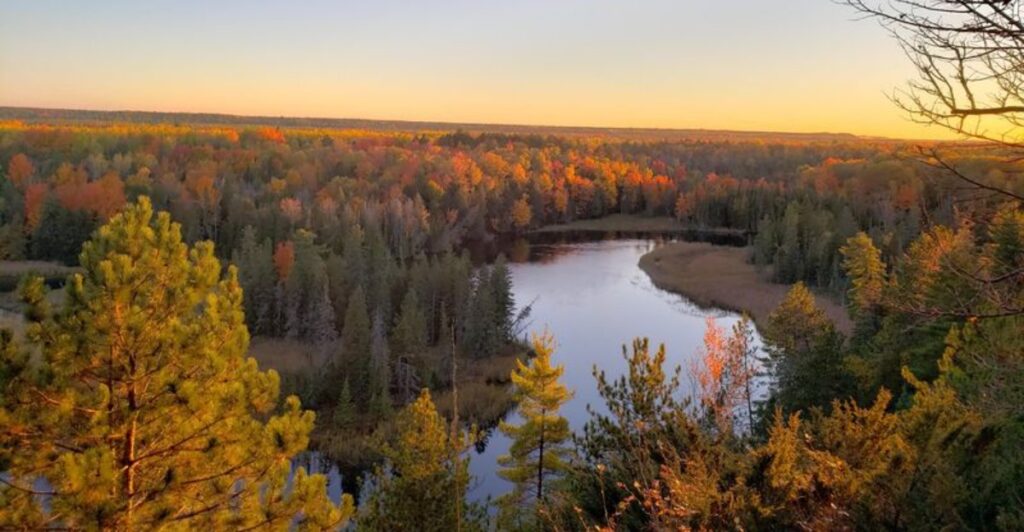
Spotting a black bear can turn an ordinary fall drive into a story you remember for years. In northern Michigan, the Huron-Manistee National Forests stretch across miles of woods, rivers, and open clearings where bears live and occasionally make an appearance.
There is never a guarantee you will see one, which is part of what makes the search feel exciting. Knowing where to watch, keeping a safe distance, and staying alert can make the outing more rewarding even if the bears stay hidden.
With fall color filling the forest, this Michigan wilderness still gives you plenty to enjoy while you keep an eye on the trees.
A Big Forest, Not One Bear-Spotting Trail
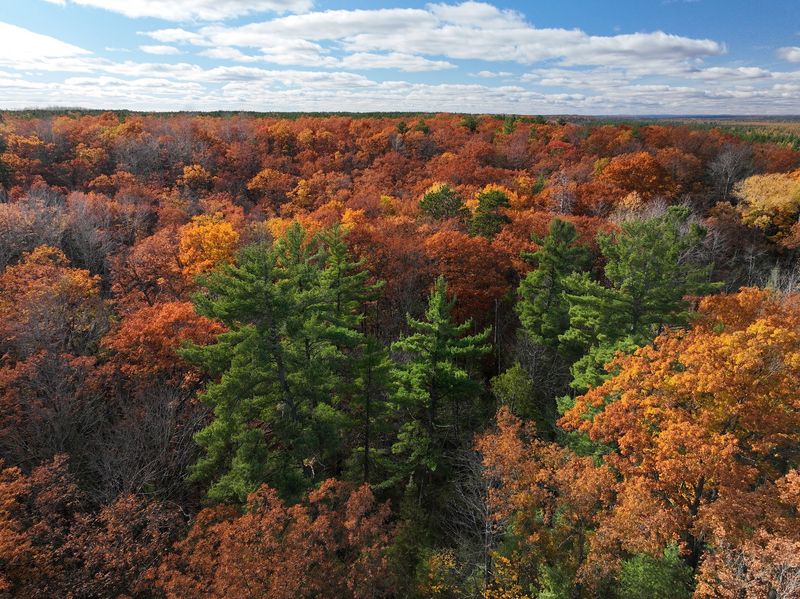
A black bear has room to disappear here. The Huron-Manistee National Forests cover separate areas of Michigan’s Lower Peninsula, with the Manistee side in the west and the Huron side farther east.
They are not one small park with a single entrance or a marked bear-viewing stop. That wide, varied setting is the first thing to understand before you go.
The Cadillac address at 1755 S Mitchell St identifies a Forest Service office, not the starting point for every trail. If you enter that address and expect a trailhead, you could spend your best daylight hours in the wrong place.
Pick a specific forest area and check its current access information before leaving home. A paper map is useful when cell service weakens.
As you travel, notice how quickly the scenery changes. A stand of tall pines can give way to leafy trees, a sandy track, or a patch of low, thick growth.
Bears use different parts of a landscape as food and shelter change. You do not need to push into dense brush to appreciate that pattern.
An open view from a permitted trail or road is safer and easier for watching.
Keep your expectations grounded: a huge forest can support wildlife while still making any one animal hard to see. Choose a manageable route instead of trying to cover miles at top speed.
Stop where it is safe, scan the edges, and listen before moving on. Look for a dark shape that moves with purpose, not just a black stump beside the trail.
If nothing appears, the trip has not failed. Learning the layout helps you return another day with a better plan.
Start with the map, then let the forest set your pace. Bears have no reason to follow your schedule.
Fall Turns a Bear’s Day Into a Food Search
Fall is busy season for a black bear’s appetite. Before winter, bears spend much of their time finding food, though their daily movements still depend on weather and what is available.
In the Huron-Manistee National Forests, that search can bring them through woods, along openings, and near places where natural food grows. It does not mean they will appear on demand.
Watch the borders between thick cover and more open ground. A bear crossing one of those edges may be easier to notice than an animal moving deep among trees.
Give your eyes time to adjust to shadows under branches. A rounded back or a swinging walk can help you tell a moving bear from a stump, especially when leaves partly block your view.
Keep your search quiet, but never try to lure a bear closer. Leaving food, scattering snacks, or using bait changes an animal’s behavior and can put both bears and people at risk.
A wildlife sighting is better when the bear stays wild. Use binoculars or a zoom lens to bring a distant animal into view without shortening the distance between you.
Food supplies do not stay the same across the forest or throughout fall. One patch may be active while another looks empty.
Heavy rain, human activity, and changing temperatures can alter what you see on any visit. Treat advice about promising spots as a starting point for observation, not a guarantee.
If a bear appears, enjoy the moment from where you are. Do not follow it into cover to improve a photo.
Note which way it traveled, give it plenty of space, and allow it to keep feeding or moving. Your best view may last only a few seconds, and that is enough.
River Corridors Add a Different Kind of View
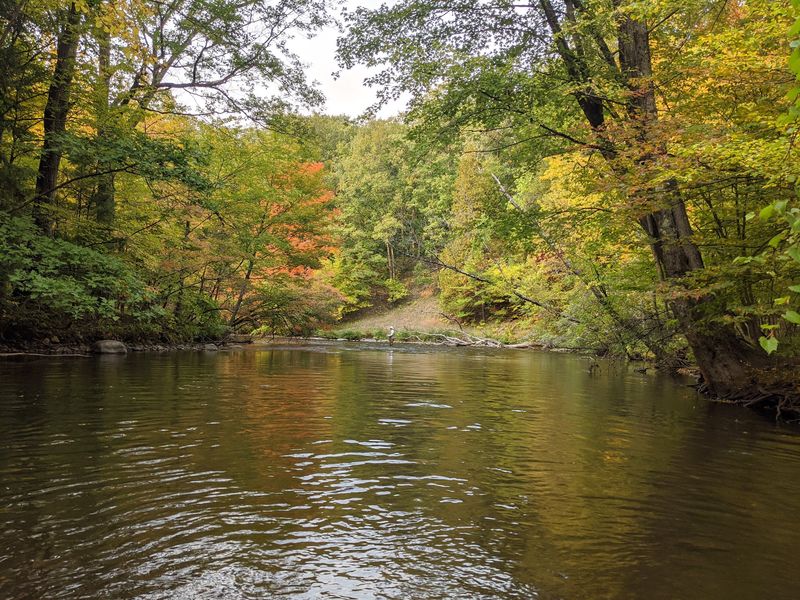
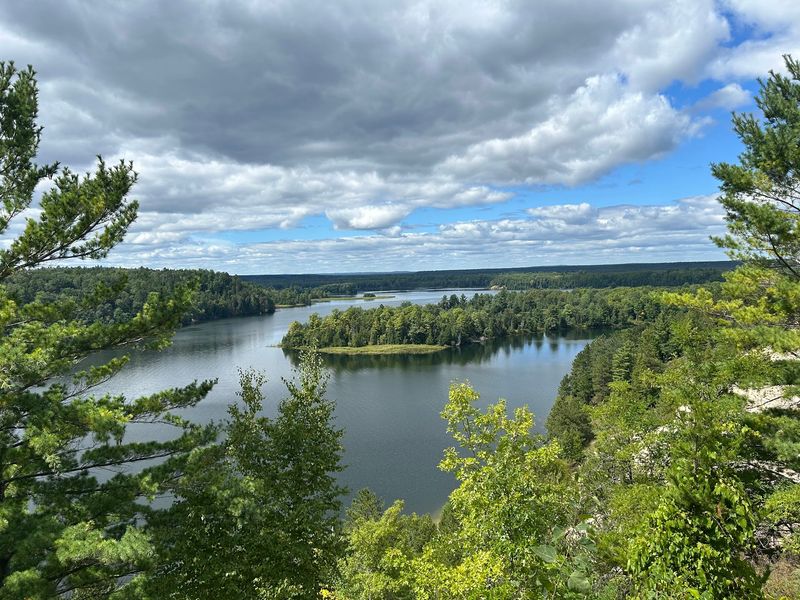
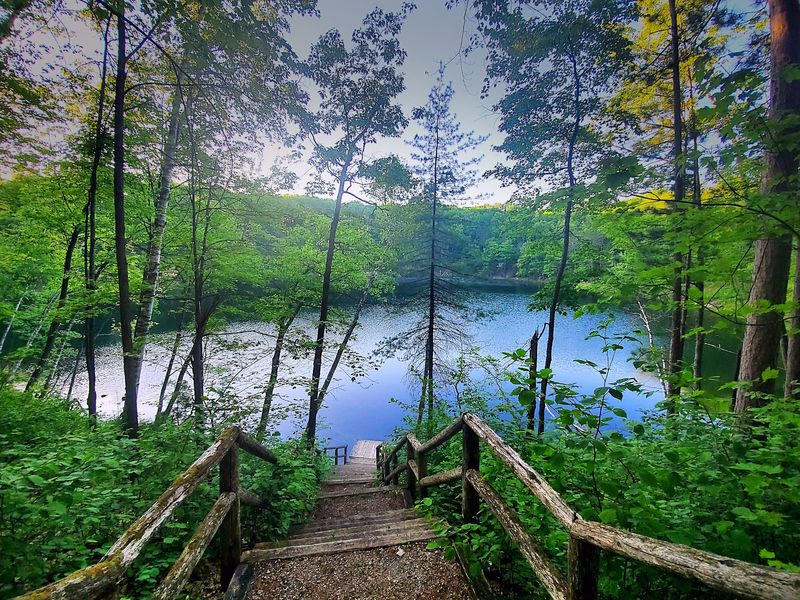
Water breaks up the wall of trees. Rivers and lakes are a major part of the Huron-Manistee National Forests, and their open banks can let you see farther than a narrow woodland trail.
That makes a waterside walk an interesting choice for wildlife watching. It also gives you something lively to study while the bears remain out of sight.
On the Manistee side, the Manistee River is a well-known focus for hiking and paddling. The forests also include other river landscapes, so choose an established route that matches your time and skill.
Before setting out, check where the trail actually begins and whether your planned walk has a clear return. A line on a map may lead farther than you expect.
Scan the opposite bank rather than walking right to the edge of every thicket. Open sand, fallen logs, and breaks in the brush make movement easier to notice.
You might spot birds, deer, or changing leaves reflected in the water instead. Bear sightings are possible, not a regular feature of any river outing.
Stay on approved paths and respect closed areas.
A river also brings practical hazards. Banks can be steep or slippery, and cool fall water is no place for a rushed step.
If you paddle, wear a properly fitted life jacket, plan your takeout, and remember that a current can carry you past an interesting sight before you can stop. Never approach wildlife from a boat or block its route along shore.
Bring binoculars if you want a closer look across the water. They weigh less than a camera with a large lens and help you check a distant shape without crossing ground you should leave alone.
When the bank bends out of sight, keep walking and let the next opening come to you.
Michigan’s Changing Leaves Help You Read the Woods
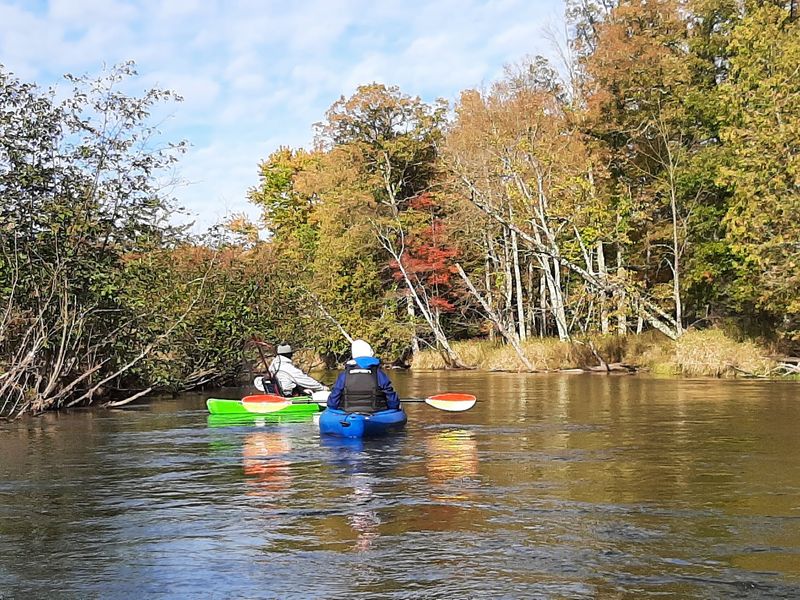
Yellow leaves against dark pines can make a fall walk look like a painted map. In Michigan’s Huron-Manistee National Forests, those color shifts also show how varied the woods can be over a short distance.
An open stand lets you see farther; thick young growth hides almost everything a few steps away. Noticing that difference helps you choose where to pause.
Look ahead for natural windows between trunks. If a trail passes a clearing, stop before entering it and scan from a safe spot.
Movement stands out best when you hold your gaze still for a moment instead of sweeping your eyes back and forth. A bear may be dark, but fallen branches, shadows, and wet logs can fool you.
Check for a change in shape or position.
Leaf color follows the season, not a fixed appointment. One area may still look green while another has begun to shed its leaves.
Wind can change a trail overnight, covering roots and hiding small holes under a fresh layer. Wear shoes with steady grip and slow down on slopes.
A good view is not worth a twisted ankle.
Use sound as a clue without treating every crack as a bear. Squirrels can make a surprising racket in dry leaves, and wind can shake branches hard enough to startle you.
Listen, look, and leave animals room to move. Avoid stepping off the trail to investigate a noise in heavy cover, where you could surprise wildlife at close range.
The shifting colors offer a simple reward even on a bear-free day: you can watch the forest change as you walk. Pines hold their green while nearby hardwoods brighten and thin out.
That contrast makes each turn easier to remember when it is time to head back to your starting point.
Give Any Bear the Right of Way
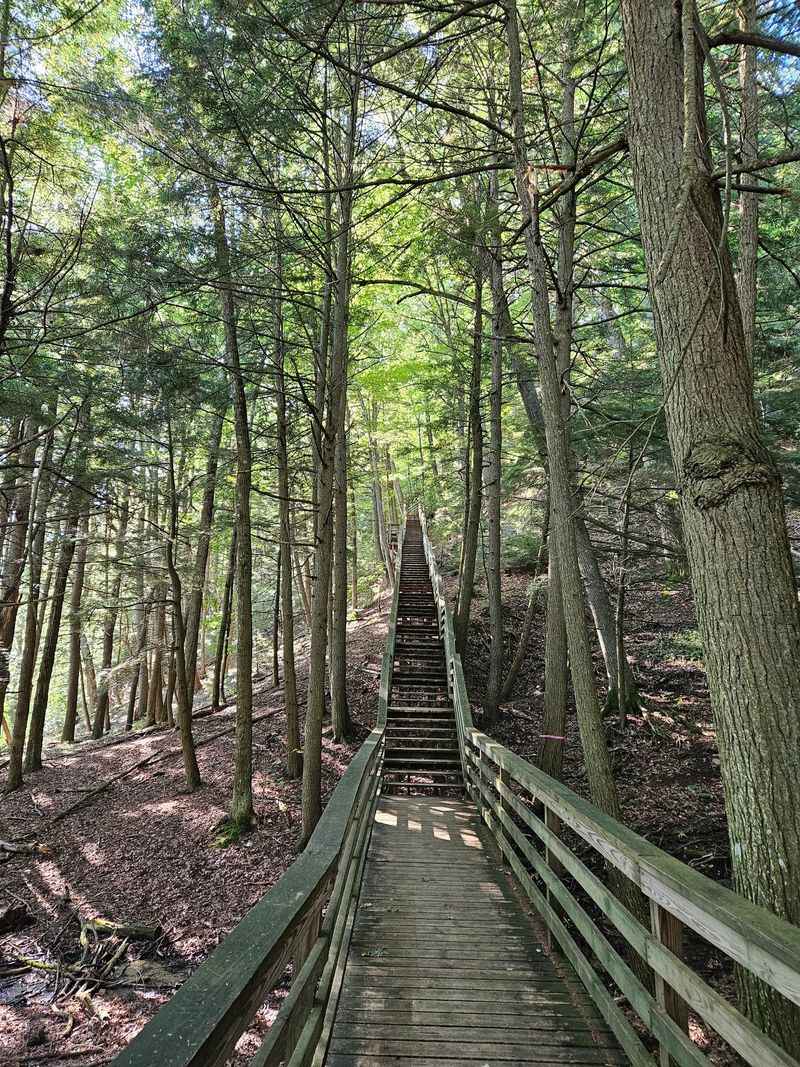
The smartest bear encounter may be one that ends with the animal walking away. Black bears usually want space, not an audience.
If you spot one in the Huron-Manistee National Forests, stay back and keep a clear route for it to leave. A photo is never a reason to close the gap, step between a mother and cubs, or follow a bear into brush.
If a bear notices you, remain calm. Speak in a normal voice, face the animal, and slowly move away when you can do so safely.
Do not run. If you are with others, stay together and keep children close.
Give the bear room rather than crowding it from several sides. Watch its behavior as you retreat, and follow current Forest Service wildlife guidance before your trip.
Dogs can complicate a quiet encounter. Keep yours under control and follow the leash rules for the area you visit.
A dog that chases wildlife may return with an upset bear behind it. Even a friendly pet can make it harder for you to leave calmly or hear what is happening nearby.
Check trail rules ahead of time instead of guessing at the trailhead.
Distance protects the bear, too. Animals that learn to approach people for food can become dangerous, so never offer a snack to hold one in place.
Do not crowd a roadside sighting with parked cars or stand in a road while taking pictures. Find a safe place to stop, or continue on and let the bear pass.
Pack binoculars to make faraway sightings satisfying. You can study a bear’s steady walk and round ears without disturbing its route.
When it disappears among the trees, resist the urge to trail after it. Leaving a wild animal in control of the encounter is the best possible ending.
Plan for Hunters, Shorter Days, and Sandy Roads
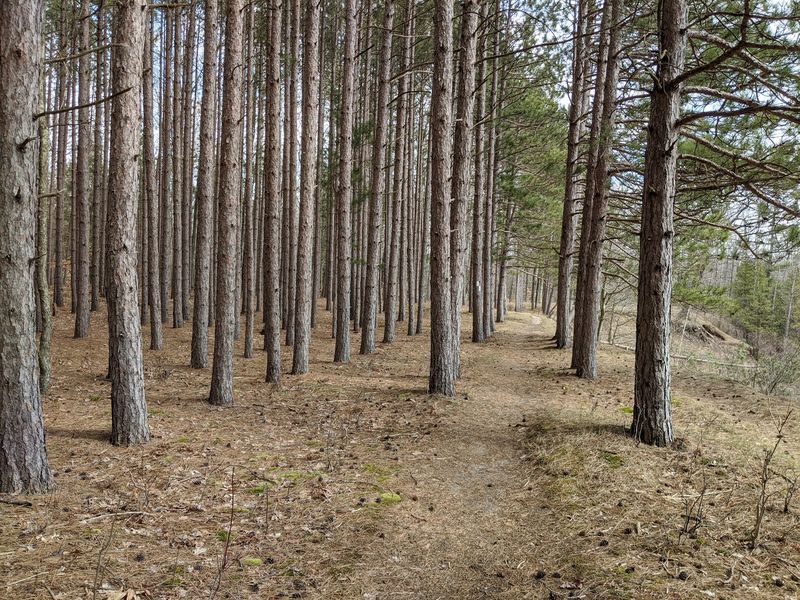
Fall planning is not only about leaf color. Hunting seasons can bring other forest users onto trails and nearby lands, while daylight gets shorter as the season moves along.
Check current dates and rules for the part of the Huron-Manistee National Forests you will visit. Wearing bright orange during hunting season helps you stand out, even if you are only hiking or watching wildlife.
Pick a route you can finish well before dark. Sunrise and sunset light may make an outing tempting, but a late start can leave you navigating an unfamiliar trail in fading light.
Tell someone where you plan to go and when you expect to return. Carry water, an extra layer, and a light you can use if plans change.
Many forest roads are sandy or narrow, and conditions can change after rain. Your map app may suggest a route that suits a high-clearance vehicle better than a small car.
Do not block a gate, trail entrance, or road when you park. If a track looks rough, turn around where it is safe rather than risking a long walk back to help.
Hours listed for the Cadillac Forest Service office describe office access, not a single closing time for the entire forest. Individual recreation sites may have their own seasons, fees, or rules.
Check those details for your chosen trail or campground before you travel. The address is useful for finding the office, but your day’s route needs a separate destination.
Weather deserves one last look before departure. A sunny afternoon can follow a cold morning, and a wet trail can slow your return.
Pack for the conditions you may meet, not just the ones outside your window. A little preparation leaves more attention for the woods and any dark shape moving through them.
A Clean Campsite Keeps Bears Wild
A forgotten snack can change a bear’s route more than your quiet footsteps ever will. Camping in the Huron-Manistee National Forests gives you extra time outdoors, but it also means taking food storage seriously.
Keep meals, wrappers, and scented supplies secured according to the rules for your campsite. Never leave them in a tent, even for a short walk.
Clean up right after you eat. Pack out food scraps, close trash containers properly where they are provided, and do not leave a bag beside an overflowing bin.
Toothpaste and other scented items deserve care, too. If you are using a campground, read the posted guidance when you arrive.
If you are considering dispersed camping, check current rules before choosing a spot.
A tidy campsite helps the next person as much as it helps you. Bears that find easy meals near people may return, putting campers and wildlife in a difficult position.
Keeping food out of reach lowers the chance of a close encounter that neither side wanted. The goal is to watch a bear living on wild food, not searching beside your picnic table.
Use daylight to learn your camp layout. Find the way to your vehicle or trail, note where your light is packed, and keep your walking area clear of loose gear.
At night, do not wander toward a rustle just to find out what made it. Use your light, stay calm, and give any animal space.
You do not have to camp to practice the same habits. Day hikers should carry every wrapper and crumb back out, including fruit peels.
A clean trailhead gives wildlife fewer reasons to approach cars and people. If your fall trip ends without a bear sighting, leaving no food behind still counts as doing right by the forest.
Share this story