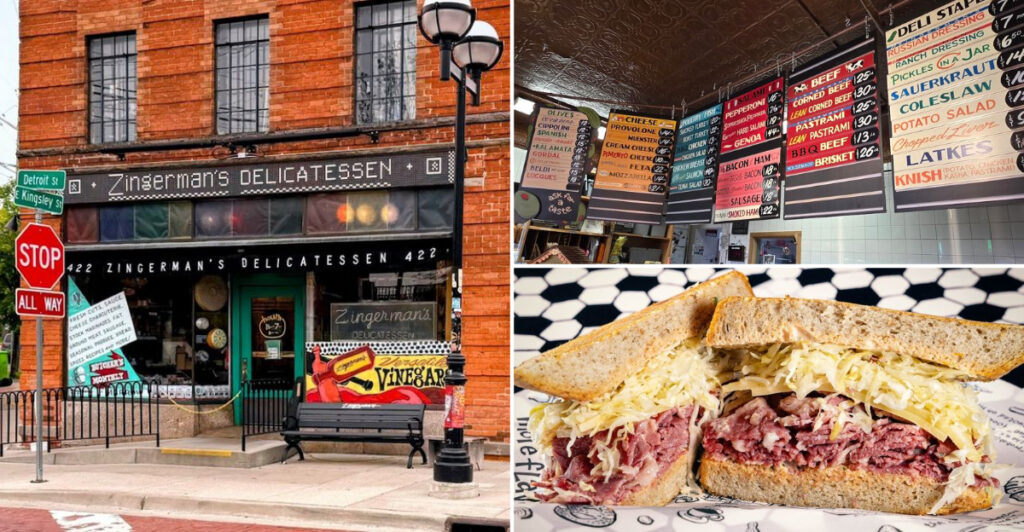
Some restaurants chase hype. Zingerman’s Delicatessen in Ann Arbor, Michigan, has spent decades earning something better: loyalty.
Since 1982, this Kerrytown landmark at 422 Detroit Street has turned sandwiches, deli cases, baked goods, and big personality into a full-blown Michigan food institution. People do not drive hours here for a quiet little lunch.
They come for the energy, the packed counter, the generous portions, the serious ingredients, and the feeling that every order is part of the experience. The crowds are not a problem to work around — they are proof that Zingerman’s still knows exactly why people showed up in the first place.
The Kerrytown Corner That Stops You Cold
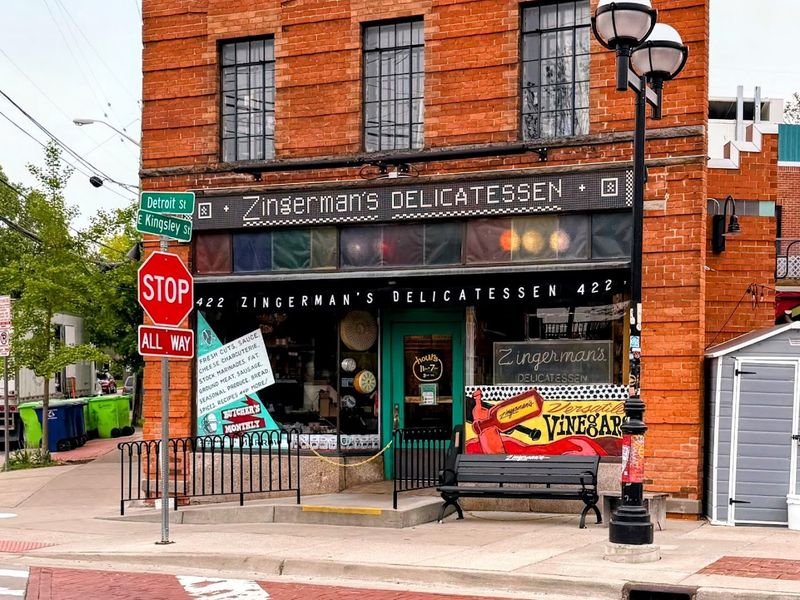
Before you even touch the door handle, the line outside Zingerman’s tells you everything. On a typical weekday, customers are already queuing by the time 11 AM rolls around, and by noon, the crowd spills past the entrance and wraps toward the street.
This is not a fluke. It has been happening for over four decades in the Kerrytown neighborhood of Ann Arbor, Michigan, a block that now practically orbits around the deli.
The building itself is low-key from the outside — no flashy signs or neon gimmicks. What draws the eye is the energy.
People carry paper-wrapped sandwiches the size of small novels, staff move with the kind of focused urgency that only comes with high volume, and the smell of rye bread and cured meat drifts out every time the door swings open. That combination hits before you’ve ordered a single thing.
Kerrytown adds its own layer to the experience. On weekends, the Ann Arbor Farmers Market operates just steps away, filling the surrounding block with produce stands, flower vendors, and foot traffic that blends naturally with Zingerman’s crowd.
The two institutions share the same neighborhood energy — local, purposeful, slightly chaotic in the best way.
Outdoor seating lines the perimeter of the building, shaded enough to be comfortable in warm months. Tables fill up fast, and sharing space with strangers is standard practice.
Nobody seems to mind. The outdoor setup gives the whole arrival a casual, communal feel that a formal dining room never could.
First-timers often stand at the entrance for a moment, just absorbing the scene before stepping inside to figure out what comes next.
Stacked High and Meant That Way — The Sandwich Menu
The corned beef Reuben is the benchmark. Thick slices of deeply flavored corned beef sit between two pieces of grilled rye bread that have actual weight to them — not the thin, forgettable kind.
Sauerkraut stays tangy without going watery, Russian dressing ties it together, and the whole construction requires both hands and a certain level of commitment before the first bite. This is a sandwich built with intention, not assembled out of habit.
The pastrami Reuben on pumpernickel runs a close second. The pastrami carries a peppery, smoky edge that lingers through the entire sandwich, and pumpernickel holds it together without overpowering the meat.
Both versions are large enough that finishing one in a single sitting is more of a personal challenge than a given. The menu suggests sizes — large is the practical choice, with leftovers that hold up well for a second meal.
Beyond the Reubens, the pulled pork sandwich has developed its own following, and the turkey on buttered toasted rye with coleslaw and cheese draws regulars back on a rotation. The chopped liver, spread on bread with a bit of onion, is earthy and rich in a way that surprises people who approach it skeptically.
Matzo ball soup rounds out the menu with broth that tastes slow-cooked and a matzo ball that is soft without falling apart.
Every sandwich comes with a pickle — old style or new style, the choice is yours. It is a small detail that signals the deli takes the full experience seriously.
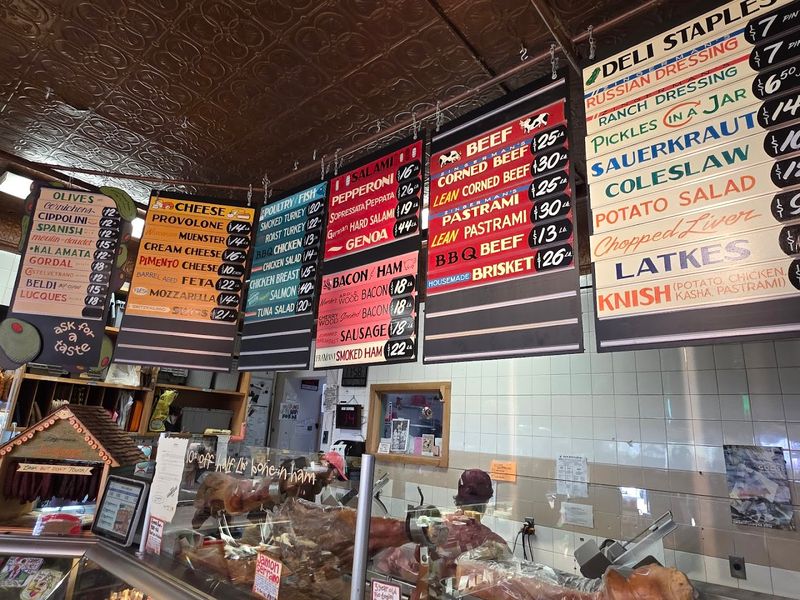
The pickle alone is worth the $0.75 add-on for a second one, which regulars tend to order without thinking twice. The menu is long enough to take fifteen minutes to parse, and that is not a complaint.
Inside the Counter — Cheese, Oils, and a Grocery Store Worth Exploring
Past the ordering kiosks and the sandwich pickup area, Zingerman’s opens up into something closer to a specialty grocery than a typical deli. Shelves run deep with pantry items — high-grade olive oils, aged balsamic vinegars, imported condiments, and specialty ingredients that are hard to find anywhere else in Ann Arbor.
The balsamic tasting station is a genuine highlight. Side by side comparisons of a 6-year and a 30-year bottle make the difference immediately obvious, and most people walk out with at least one bottle they had not planned to buy.
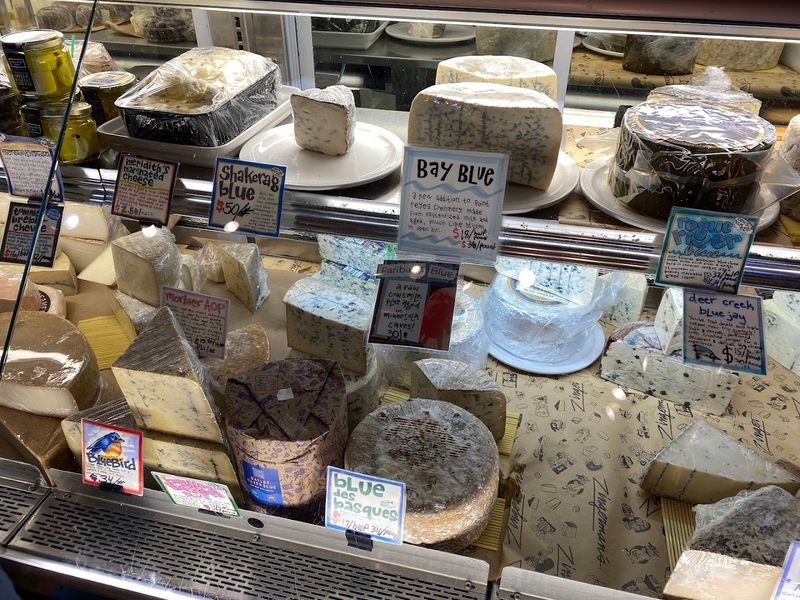
The cheese counter operates with the same seriousness applied to the sandwich menu. The cheesemonger offers samples generously and can walk through the selection without rushing, whether the customer knows exactly what they want or needs help narrowing it down from a very long list.
A fish counter handles whitefish, kippers, nova, and lox — the kind of selection that feels out of place in a mid-sized college town but fits Zingerman’s completely.
Bread is its own category here. Around twenty varieties of freshly baked loaves rotate through the display, all produced at Zingerman’s Bakehouse located a few miles away.
Jewish rye, pumpernickel, sourdough, and specialty loaves sit in rows thick enough to justify a separate trip just for groceries. Buying a two-pound cut of pastrami and a full loaf of rye breaks down to a remarkably reasonable cost per meal when the math is done at home.
Books about food, cooking, and Zingerman’s own publishing imprint line a small section near the entrance. Frozen items and pantry staples round out the selection.
Browsing after lunch is not a hurried experience — the store layout encourages moving slowly through it, and the staff throughout the floor are approachable without being pushy.
Forty-Plus Years of Feeding Ann Arbor, Michigan
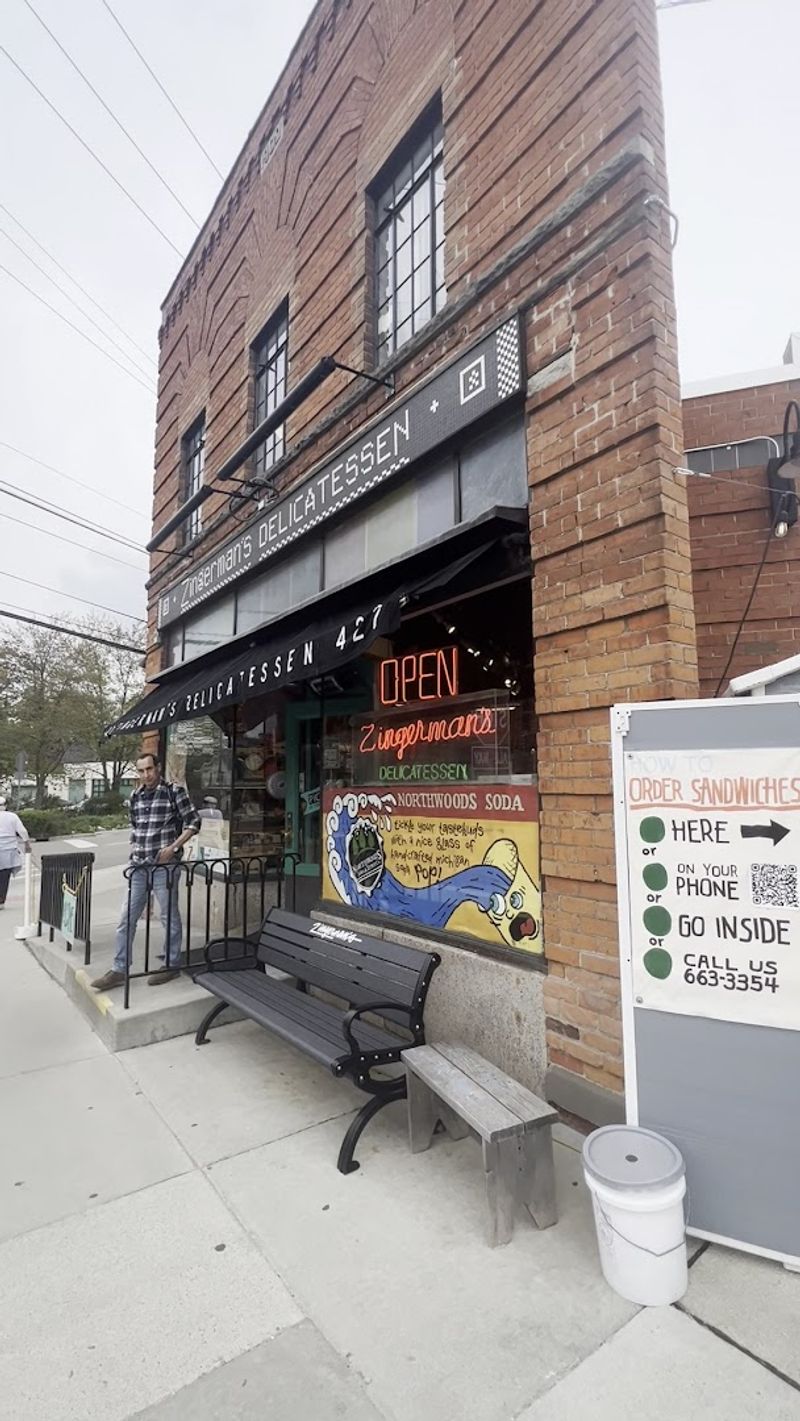
Zingerman’s opened in 1982 at the same Detroit Street address where it still operates today. That kind of geographic consistency is rare for any business, but especially for a restaurant in a college town where turnover tends to run high.
Ann Arbor grows and shifts around it every few years, yet the deli holds its position in Kerrytown like a fixed point on a moving map.
The founders built the business around sourcing quality ingredients intentionally — a philosophy that predated the farm-to-table wave by years. Bread comes from the Zingerman’s Bakehouse, which operates separately a few miles away.
Meats are cured and handled with the same specificity applied to the bread program. That internal supply chain gives the deli a level of consistency that outside sourcing rarely achieves over long periods.
Over the decades, Zingerman’s expanded into a community of businesses — a bakehouse, a creamery, a roadhouse restaurant, a candy manufactory, a coffee company, and even a mail-order operation that ships bread and pastries nationwide. Each business operates independently but shares the founding standards.
Locals who grew up eating Zingerman’s sandwiches now order sourdough loaves and jumbleberry coffee cake through the mail when they move out of state.
The deli’s reputation extends well beyond Michigan. Food writers, chefs, and travelers make deliberate stops in Ann Arbor specifically for Zingerman’s, often building the visit around it the way others plan around a museum or landmark.
That pull has never required a major advertising campaign. The sandwich does the work.
Four decades of packed rooms and lines out the door reflect something that marketing alone cannot manufacture — a product people genuinely return to, and bring others along to experience for the first time.
How the Ordering System Actually Works
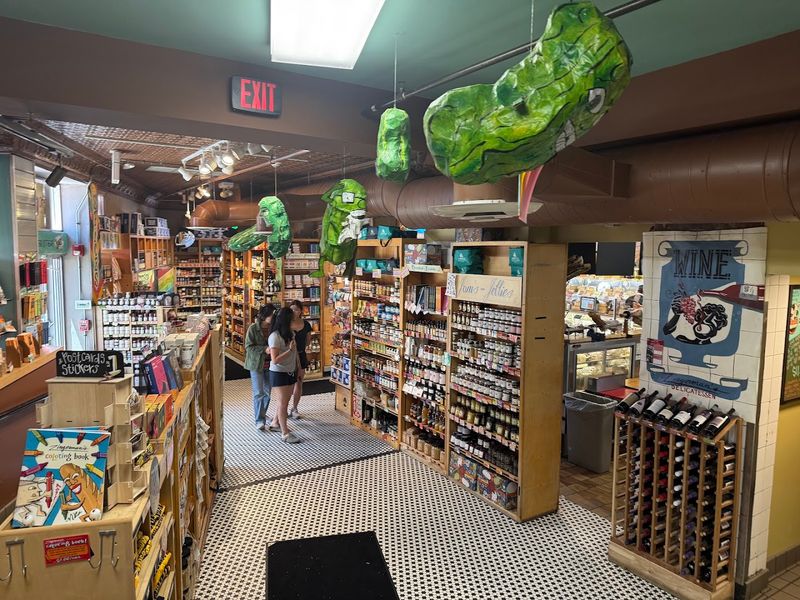
Ordering at Zingerman’s runs through touchscreen kiosks now, which catches first-timers off guard in a place that opened during the Reagan administration. The transition away from counter ordering has drawn some grumbling, but the system moves efficiently once the initial learning curve passes.
Staff position themselves near the kiosks specifically to help people who are not sure where to start, and the assistance is offered without condescension.
The kiosk menu is detailed. Each sandwich lists its ingredients with the same specificity you would find on a restaurant menu three times the price.
Bread options, protein choices, add-ons, and customizations are all accessible through the screen. The process takes longer than a quick counter order would, but the tradeoff is accuracy — the kitchen receives a precise ticket, which reduces errors on complex builds.
A double meat option on the pastrami or corned beef is possible, though navigating to it requires some patience with the interface.
After ordering, customers receive a text notification when the food is ready for pickup. The pickup room sits adjacent to the main ordering area.
Finding a seat — indoor or outdoor — happens before the food arrives, which keeps the flow moving without a bottleneck at the counter. The outdoor area fills quickly, and sharing a table with strangers is the norm rather than the exception.
Drinks and sides are handled separately from the main sandwich order. The process requires some navigation on a first visit, but the staff presence throughout the space keeps anyone from feeling stranded.
Tips are requested at the kiosk checkout, which has generated debate given the counter-service format. That friction aside, the overall operation handles a very high volume of orders with a speed that would be difficult to match through traditional counter service at peak hours.
Timing Your Visit to Avoid the Worst of the Rush
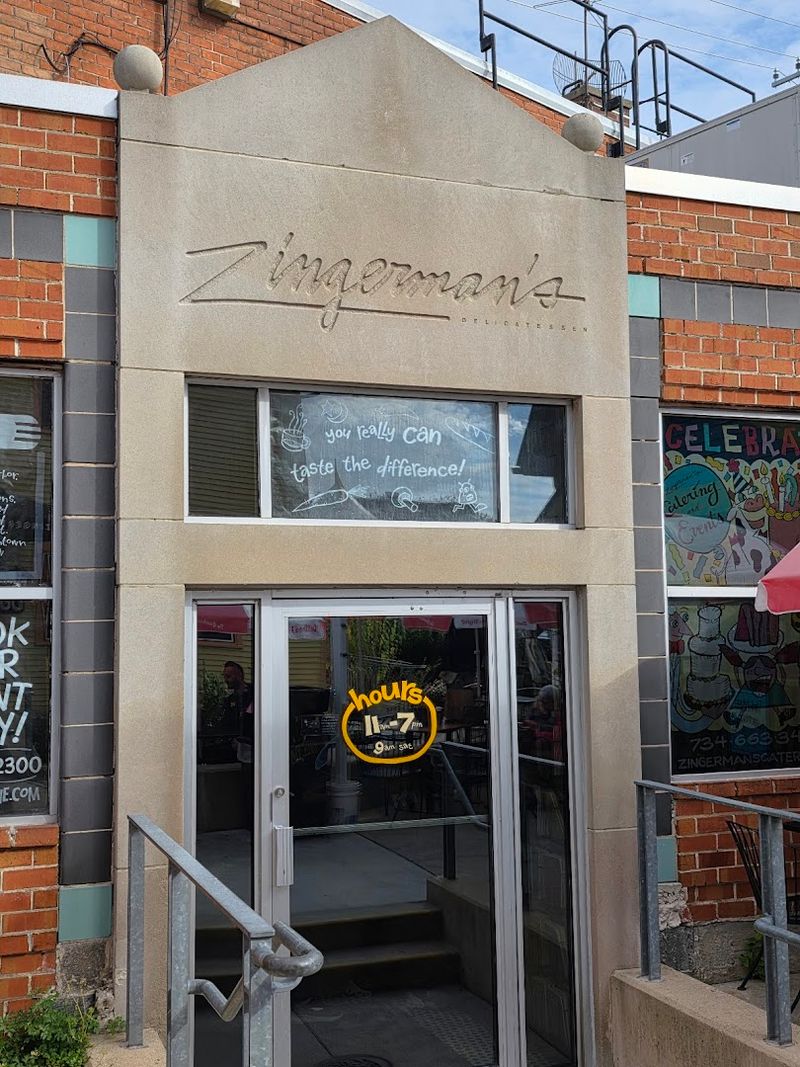
Arriving at opening — 11 AM on most days — is the clearest strategy for beating the crowd. A line forms immediately at opening time, but it moves faster than the midday surge, and the staff is fresh.
Orders placed in the first thirty minutes of service tend to come out quickly, and outdoor seating is still available without negotiation. By noon, the dynamic shifts considerably.
Weekday afternoons between 2 PM and 4 PM represent a relative lull. The lunch rush has cleared, the farmers market crowd has dispersed on non-market days, and the deli counter staff has had time to restock.
Waiting times for sandwiches drop noticeably during this window. The tradeoff is that some specialty items or daily bread varieties may be picked over by then, particularly the more popular loaves from the Bakehouse display.
Saturday hours run shorter than the rest of the week — closing at 4 PM rather than 7 PM — which compresses the available window and makes Saturday mornings particularly packed. The farmers market runs on Saturdays year-round, pulling additional foot traffic into the Kerrytown block and extending the wait times at the deli significantly.
Sunday through Thursday evenings, the final hour before 7 PM closing tends to be quieter and is a solid option for people who cannot make a midday visit work.
The deli operates every day of the week, which removes the planning pressure of tracking closed days. Mail order is available for those who want Zingerman’s bread or pastries without the trip, though the in-person experience — the counter, the smells, the controlled chaos of a full house — does not translate through a shipping box.
Planning around the quieter windows makes the visit smoother, but even the busiest midday rush is manageable if the expectation is set correctly before walking through the door.
Why a $22 Sandwich Still Draws a Full Room Every Day
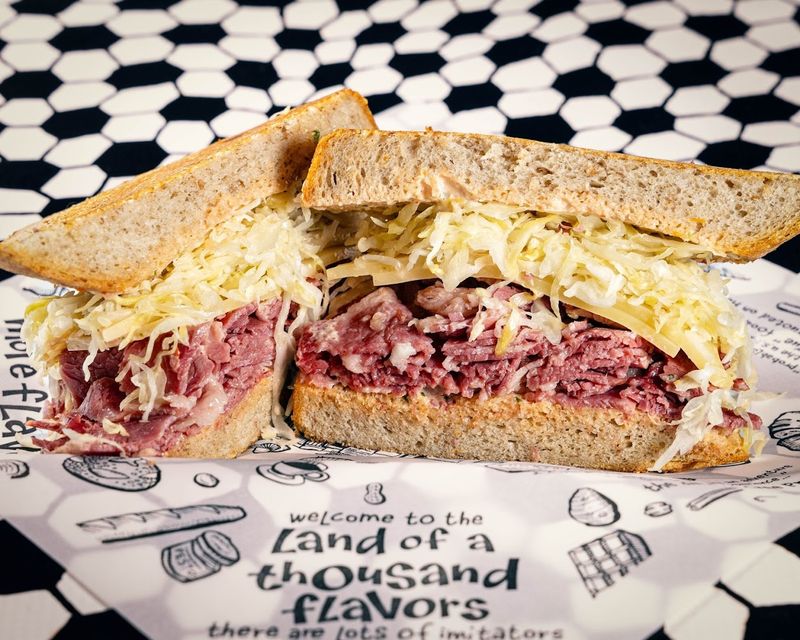
The price point at Zingerman’s is not subtle. A single sandwich runs around $22 to $24, a bowl of matzo ball soup adds to that, and a drink pushes a solo lunch past $30 without much effort.
Two people eating a full meal with sides and drinks will likely spend $60 to $70. That number surprises people who associate deli food with budget eating, and it generates the most consistent friction in any conversation about the place.
The counterargument is structural rather than sentimental. The portions are large enough that finishing a full-size sandwich in one sitting is not guaranteed.
The ingredients are sourced with specificity — bread baked in-house at the Bakehouse, meats handled with care, produce that is not the cheapest available option. The staff-to-customer ratio is high, meaning there are actual people around to help at every stage of the visit.
All of that costs money, and the price reflects it directly.
For road trippers or out-of-state visitors, the math tends to feel more comfortable because the meal is framed as a destination experience rather than a routine lunch. For Ann Arbor locals, the calculation is more complicated.
Buying groceries at the deli counter — a pound or two of pastrami, a full loaf of rye — stretches the per-meal cost considerably lower than eating in, and regulars have figured this out.
The room fills every day regardless of the price because the product holds up to the expectation. A sandwich that requires two hands, sourced from a bread program built over four decades, served in a room that has been doing this since 1982, occupies a specific category.
It is not cheap. It is also not trying to be. That clarity of purpose is exactly why the line forms before the door opens every single morning.
Share this story