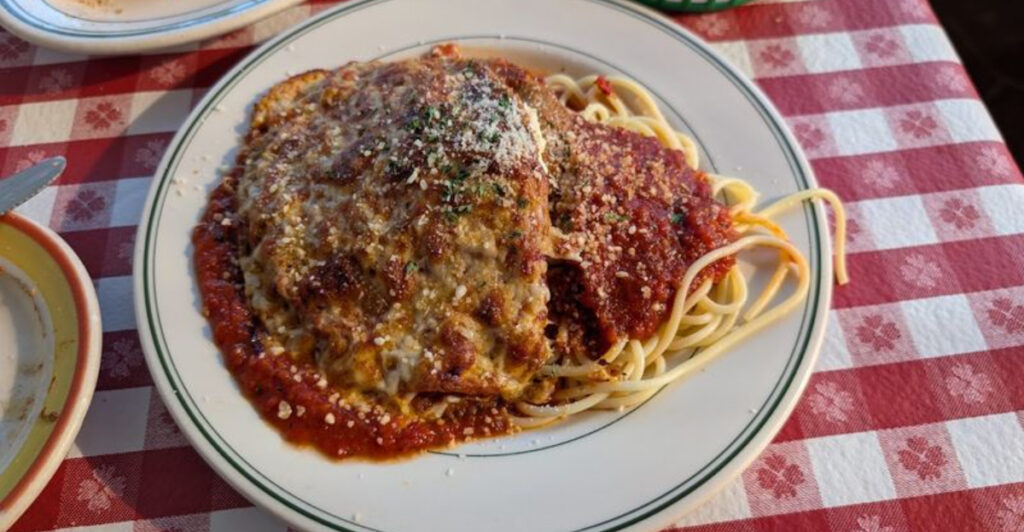
A chicken cutlet disappears beneath bubbling mozzarella and red sauce, the side of ziti could pass for a separate meal, and somebody at the table is already asking for a takeout container. That is a normal dinner at Jimmy’s Italian Restaurant, an Asbury Park landmark that has never warmed to the idea of dainty portions.
Since 1982, the Marrucca family has kept the focus on made-to-order Italian-American cooking, fresh ingredients, and plates designed for people who showed up genuinely hungry.
The white-tablecloth dining room has polished up over the years, but Jimmy’s still operates with the generous spirit of an old neighborhood restaurant.
Chicken parmigiana, veal, stuffed lobster, and seafood-loaded linguine arrive without modern-menu trickery or unnecessary reinvention. Prices remain approachable by Jersey Shore dinner standards, especially once tomorrow’s lunch is factored in.
In a city packed with fashionable places to eat, Jimmy’s endures by serving the kind of substantial meal that never needed fixing.
Jimmy and Diane Marrucca Built an Asbury Park Institution in 1982
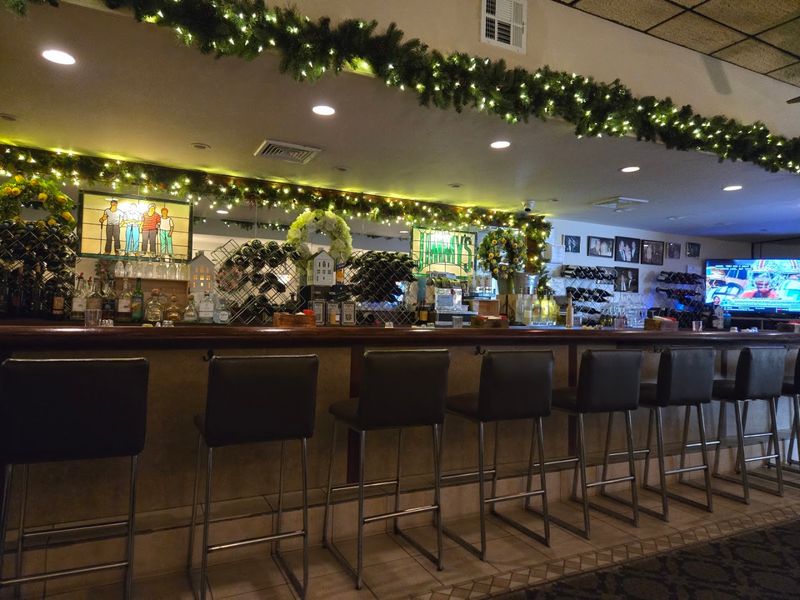
The story began with a problem plenty of New Jersey diners could understand: Jimmy and Diane Marrucca were tired of traveling into New York City whenever they wanted a seriously good Italian meal.
The couple already operated a successful wholesale produce business near Asbury Avenue, so they knew quality ingredients and understood the local market.
When the opportunity came to purchase Freddie’s Restaurant and Pizzeria, they turned it into Jimmy’s in 1982. Their original plan was not to build a sprawling dining destination.
They wanted a relatively small restaurant where meals would be prepared after the order reached the kitchen, using fresh ingredients rather than frozen or premade shortcuts. Asbury Park responded immediately.
Jimmy’s became successful from its earliest days, eventually growing into the kind of institution that families use as a reference point: the place for a birthday dinner, a post-church Sunday meal, an anniversary, or an evening when nobody feels like gambling on a tiny entrée. The restaurant also survived dramatic changes around it.
Asbury Park moved through difficult decades, followed by a major revival that brought boutique hotels, cocktail bars, chef-driven restaurants, and new development to the city. Jimmy’s kept cooking.
After Jimmy’s death, Diane continued the family operation with daughter Kim, son James, and a staff known for remarkable longevity. That continuity explains why the restaurant feels established rather than staged.
Its history is not a decorating concept dreamed up to manufacture nostalgia. It comes from more than four decades of serving the same community, adapting when necessary while holding tightly to the ideas that made the dining room popular in the first place.
Jimmy’s even received the Asbury Park Chamber of Commerce Landmark Business Award in 2013, a fitting honor for a restaurant that had already become woven into the city’s identity.
The Old-School Dining Room Feels Like a Place New Jersey Forgot How to Make
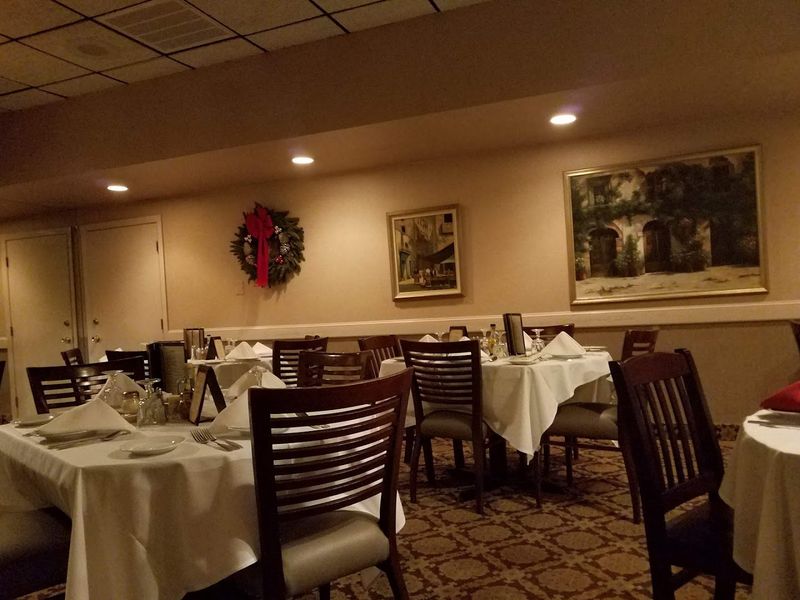
Some dining rooms look designed for social media first and actual comfort second. This one sounds like the opposite, and that is exactly the appeal.
You can picture the familiar details right away: the glow of warm lights, sturdy tables, framed memories on the walls, and a room that feels lived in instead of staged.
There is something deeply Jersey about a place that lets atmosphere come from use, not from branding. You are not being sold a fantasy of old-school Italian dining.
You are stepping into a room that seems to trust its own identity, where the mood comes from conversations, clinking glasses, and servers moving with the confidence of people who know the floor by heart.
That kind of setting changes how a meal lands. It invites you to settle in, order a little more, and stay longer than planned.
In a state full of restaurants trying to stand out, this sort of quiet authenticity can feel surprisingly rare, and honestly, a lot more memorable than anything overly polished or precious.
Fresh Made-to-Order Cooking Keeps the Menu Rooted in Tradition
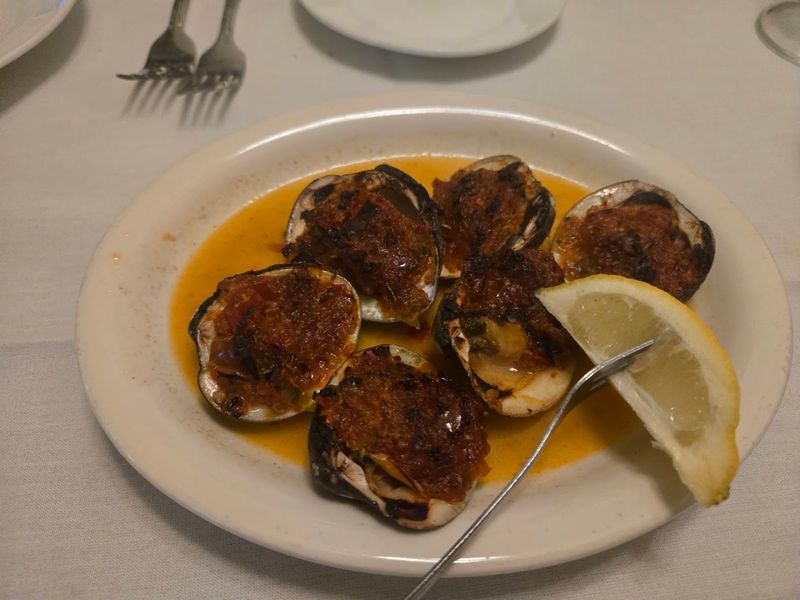
The kitchen’s most important rule has remained refreshingly straightforward: meals are prepared to order with quality ingredients, and nothing is supposed to be sitting around frozen or premade. That philosophy matters on a menu this large.
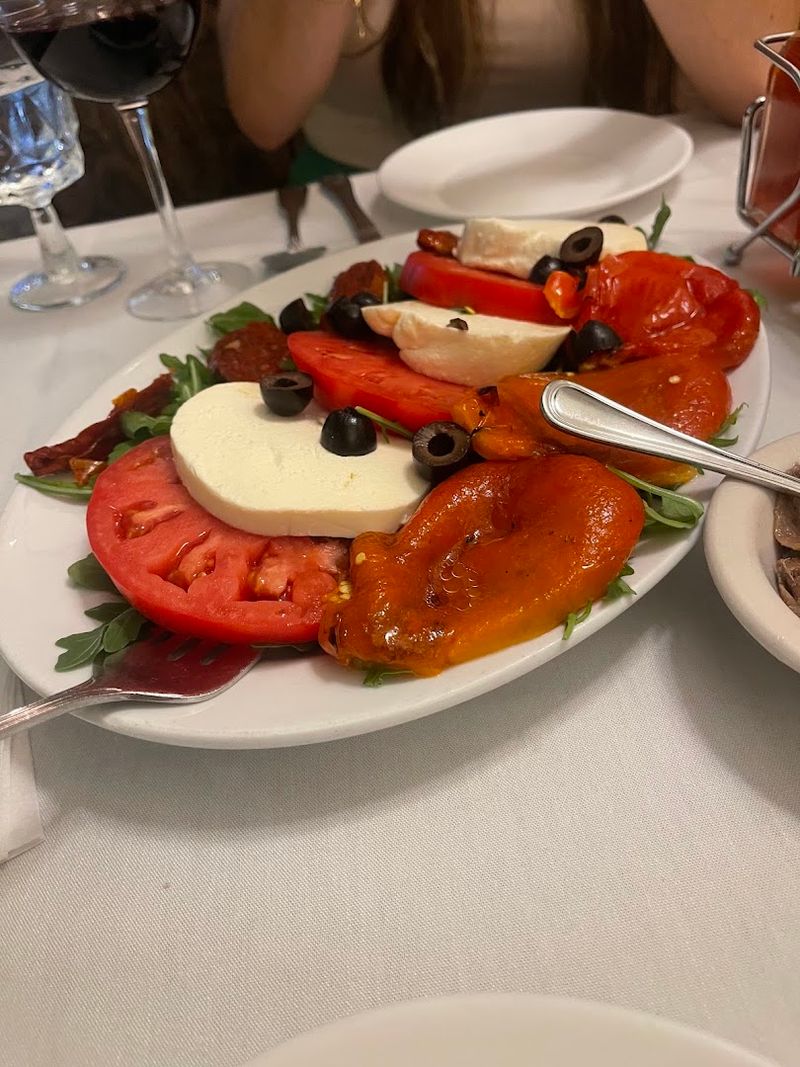
Jimmy’s could easily coast on red sauce and melted cheese, but the choices stretch from familiar comfort food to dishes requiring a more careful hand. A table might begin with clams casino, eggplant rollatini, escarole and beans, fried calamari, or a hot antipasto for two loaded with shrimp, stuffed eggplant, and baked clams.
Seasonal ingredients still get a little respect, too. Jersey tomato salad appears when local tomatoes are at their best, while broccoli rabe is offered when available rather than treated like an ingredient that magically tastes identical every week of the year.
Pasta covers the expected favorites and a few less predictable options. Linguine can come with red or white clam sauce, rigatoni and penne get vodka sauce, and cavatelli is paired with fresh broccoli, garlic, and oil.
Pasta Di Giovanni brings a spicy Sicilian-style garlic sauce, while Pasta Vincenzo combines Gaeta olives with capers or anchovies. There is also pappardelle in sun-dried tomato and basil cream sauce for anyone temporarily willing to wander away from marinara.
The entrée setup is equally traditional. Most main courses include a vegetable and whipped potatoes, though diners can swap those for ziti with tomato sauce or sautéed escarole.
Salads are ordered separately, another unapologetically old-school detail. Jimmy’s does not narrow the menu to a precious handful of plates or rebuild Italian-American cooking around whatever ingredient happens to be fashionable.
It concentrates on getting recognizable food to the table hot, fresh, and properly finished, which sounds simple until a restaurant tries doing it consistently for more than 40 years.
Chicken Parmigiana, Veal, and Pasta Arrive in Seriously Generous Portions
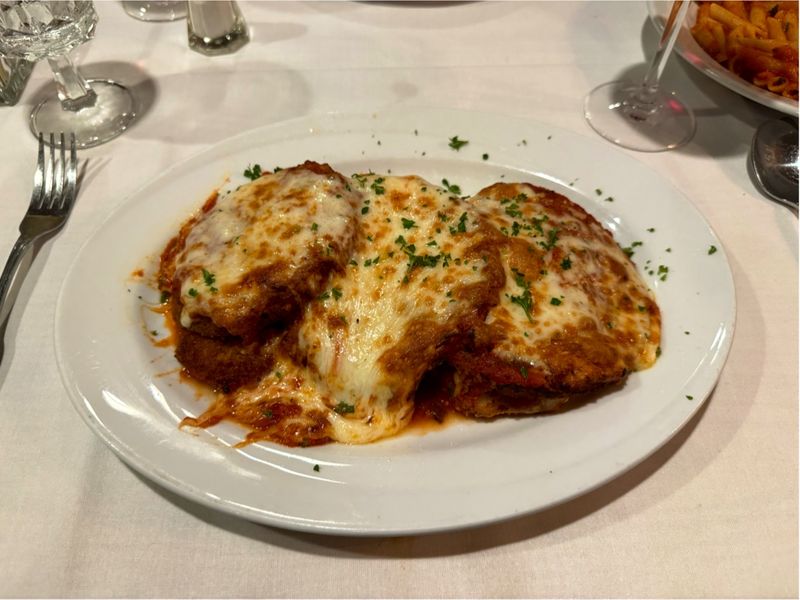
At Jimmy’s, ordering an entrée often creates two meals whether you planned for that or not. Chicken cutlet parmigiana arrives in the full red-sauce tradition, with a broad breaded cutlet, plenty of mozzarella, and enough sauce to justify choosing ziti on the side.
Chicken Francaise offers a lighter direction without turning into diet food, while Chicken Scarpariello brings sausage, garlic, and white wine together in a dish built for unapologetic appetite. The veal selection is even more revealing.
Veal Francaise, piccata, Marsala, and parmigiana cover the classics, but the kitchen keeps going. Veal medallions are sautéed with vinegar, roasted peppers, and mushrooms.
Veal Villa D’Aste stacks prosciutto, eggplant, Swiss cheese, and mushrooms over the meat. The double-cut veal chop can be ordered broiled or oreganato, while another version is stuffed with fontina and served with shallots in Burgundy sauce.
These are not entrées designed to leave a lot of white space visible around the rim. Recent published menu listings have placed chicken cutlet parmigiana around $24.95, veal dishes generally in the upper $20s, and the double-cut veal chop in the mid-$30s, though diners should confirm current prices when ordering.
Those numbers look more reasonable once the scale of the plates becomes clear and a takeout box enters the picture. Pasta provides an easier route for anyone who does not need a towering main course.
Stuffed shells, manicotti, lasagna, ravioli, linguine marinara, and ziti Bolognese keep the comfort level high, while broccoli rabe and sausage add a pleasantly bitter, garlicky edge. Even then, restraint is relative.
Jimmy’s has spent decades building a reputation on feeding people generously, and the kitchen does not suddenly become shy when somebody orders pasta.
Stuffed Lobster, Zuppa di Pesce, and Shrimp Bring the Shore to the Table
Being in Asbury Park gives an Italian restaurant every reason to take seafood seriously, and Jimmy’s menu reads like the kitchen accepted that responsibility with enthusiasm. The headline order is stuffed lobster, an impressive platter that turns dinner into an event before anyone takes the first bite.
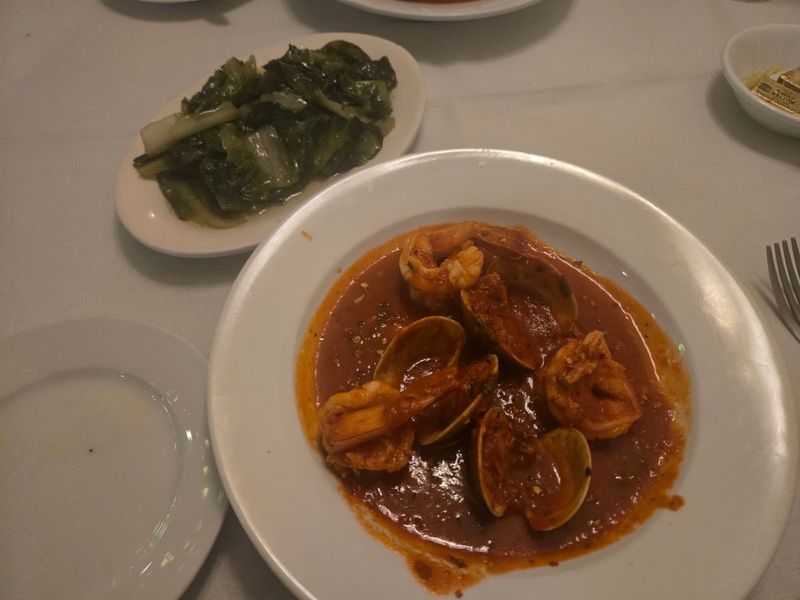
Lobster also appears fra diavolo with clams, bringing sweetness, briny shellfish, tomato, garlic, and chile together in one gloriously messy combination. Zuppa di pesce comes with linguine and clams, delivering the sort of bowl that requires bread nearby to chase every last streak of sauce.
Shrimp could practically have its own menu. It is served parmigiana, Francaise, scampi-style over linguine, in white wine, or fra diavolo with clams.
Shrimp à la Jimmy adds linguine, mushrooms, and clams, while another dish pairs shrimp and lobster over linguine in pink cream sauce with fresh asparagus. For diners who believe one kind of seafood is never enough, shrimp, scallops, and clams can arrive fra diavolo over linguine.
The combinations continue with shrimp, filet of sole, and scallops prepared either broiled or in marinara, plus shrimp, calamari, and scungilli served with linguine and clam sauce or tomato sauce. Even the stuffed preparations are more ambitious than expected.
Sole oreganato and stuffed shrimp use crabmeat and shrimp fillings, while the crab cakes combine Maryland lump crabmeat with shrimp. Salmon Provencal joins poached salmon with plum tomatoes, shrimp, and clams in a natural broth.
This is shore dining without the weathered picnic tables or paper baskets. Jimmy’s brings the seafood inside, places it on white linen, and serves it with the same large-portion philosophy applied to its chicken, veal, and pasta.
Fair Prices and Family Hospitality Keep Generations Coming Back
Longevity at Jimmy’s is measured in more than years. It shows up in staff members who have worked there for decades, children who grew up eating in the dining room and now arrive with families of their own, and regulars who barely need to look at the menu before ordering.
Diane Marrucca has long described the restaurant as a place where customers feel like family, but the phrase carries more weight here than it does on a generic dining-room sign. Jimmy’s has remained under Marrucca family ownership since 1982, with Kim and James helping continue what their parents started.
The restaurant’s value comes from that same long view. Jimmy’s is not necessarily bargain dining, particularly when lobster, filet mignon, or a double-cut veal chop enters the evening, but the kitchen makes the bill easier to understand.
Main courses are substantial, sides are included with most entrées, and leftovers are common enough to feel like an unofficial second course served the following day. Recent listings have shown several chicken dishes in the mid-$20 range, veal in the upper $20s, and many pasta choices below the cost of the larger entrées.
Exact prices can change, but the overall formula has stayed steady: recognizable cooking, large servings, and a dining experience that feels complete rather than stripped down. Jimmy’s sits at 1405 Asbury Avenue and currently lists hours from noon to 10 p.m.
Monday, Wednesday, and Thursday; noon to 11 p.m. Friday; 1 to 11 p.m.
Saturday; and 1 to 10 p.m. Sunday, with Tuesday closed.
Reservations are welcomed, and parties of eight or more have a 20 percent gratuity added. Those details may be practical, but they also describe the kind of place Jimmy’s remains—a full-service family restaurant built for lingering dinners, crowded celebrations, familiar faces, and plates nobody could reasonably accuse of being too small.
Share this story