Tucked along Michigan Avenue in the charming small town of Marshall, Michigan, the American Museum of Magic is exactly the kind of place that makes you slow down and pay attention. Inside a historic two-story building, you’ll find original posters, rare props, and artifacts tied to some of the most legendary names in magic history.
This is not a theme park or a tourist trap — it’s a serious, densely packed archive of an art form that has fascinated people for centuries. Whether you’re a lifelong magic enthusiast or just curious, this museum delivers something genuinely hard to find anywhere else.
A Building That Sets the Tone Before You Even Step Inside
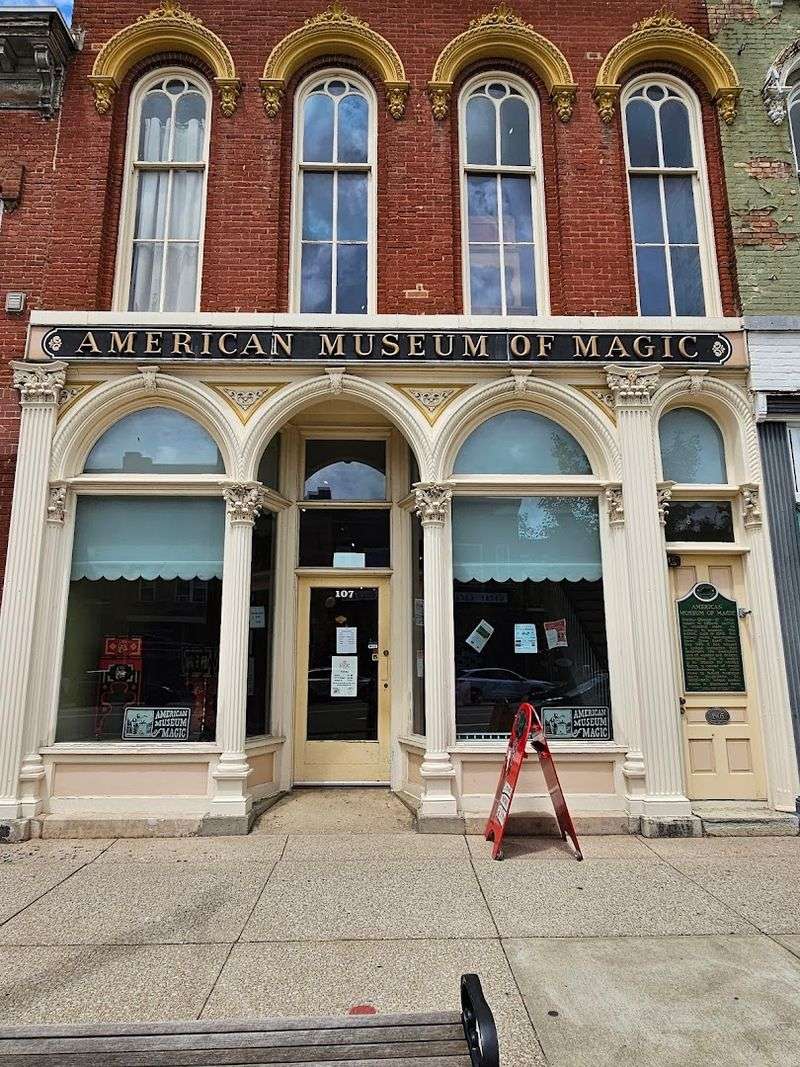
Before a single trick is revealed or a single poster catches your eye, the building itself makes a statement. The American Museum of Magic occupies a well-aged two-story structure on East Michigan Avenue in Marshall, Michigan — a town that already has a reputation for beautiful historic architecture.
The exterior has the kind of quiet authority that comes from decades of standing in one place, and it gives you the impression that whatever is inside has been carefully preserved rather than quickly assembled.
Marshall is one of Michigan’s best-kept architectural gems, with a downtown that looks like it stepped out of a different era. Placing a museum dedicated to magic history here makes a certain kind of sense.
The setting doesn’t feel random — it feels curated, like the town and the museum were made for each other.
Walking up to the entrance, there’s already a sense that this visit will be different from a typical museum stop. The building’s age adds texture to the experience.
You’re not entering a modern glass-and-steel exhibition hall. You’re stepping into a place where the walls have absorbed decades of stories, performances, and personalities.
One practical note worth knowing before you visit: the museum is spread across two floors, and the staircase is the primary way to access the upper level. People with mobility concerns should contact the museum ahead of time to ask about accessibility options.
That small detail aside, the building’s character is very much part of the overall experience, not just a backdrop to it. It signals immediately that this is a place run by people who care about history and presentation in equal measure.
Floor-to-Ceiling Posters That Tell the Full Story of Stage Magic
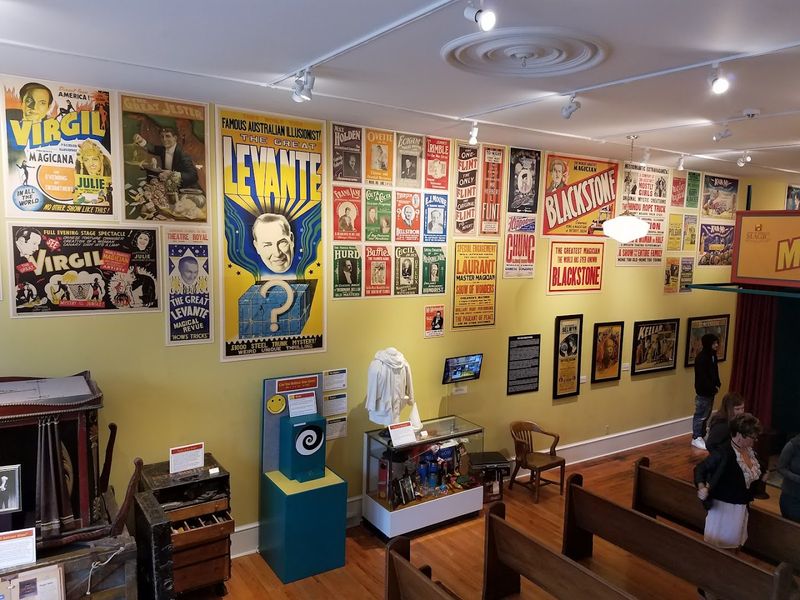
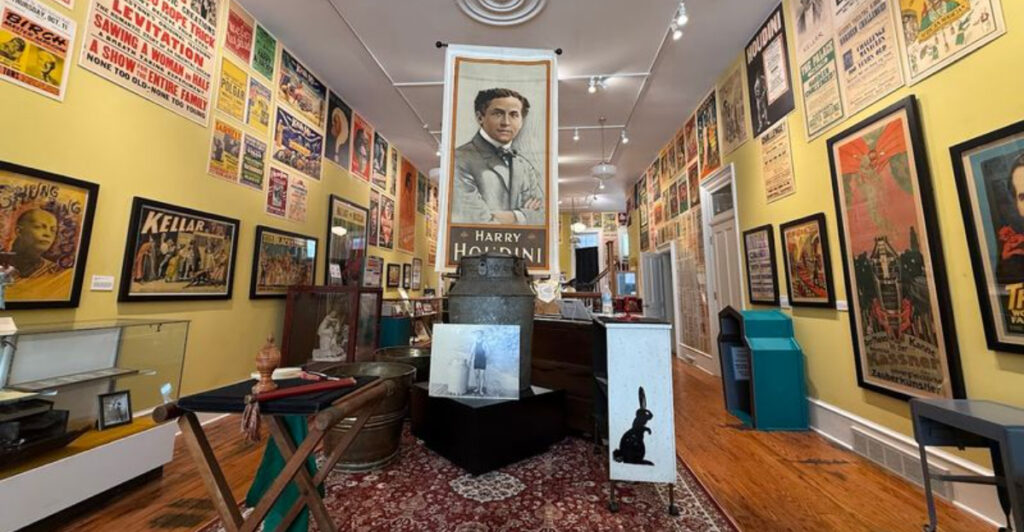
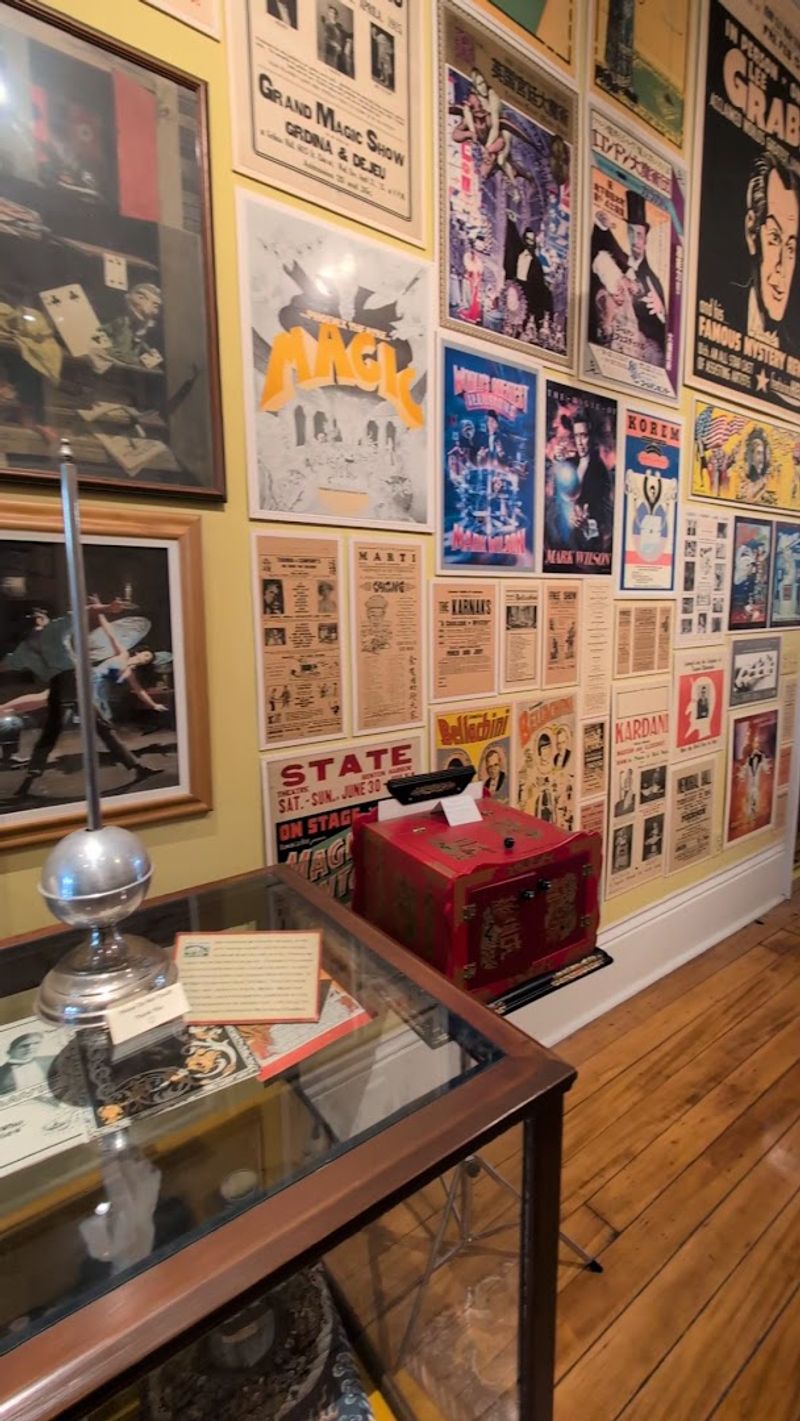
One of the first things that hits you inside the American Museum of Magic is the sheer volume of original posters covering nearly every inch of wall space. These aren’t reprints or decorative copies — they’re original lithographs and promotional materials from magic acts spanning more than a century.
The colors are bold even after all these years, and the artwork reflects the theatrical excess that defined stage magic during its golden era.
Posters in this collection feature names that magic historians know well, including Harry Blackstone, along with dozens of performers who may be less famous today but were headliners in their time. Each poster is essentially a small window into a specific moment in entertainment history — the fonts, the imagery, the promises of impossible feats all reflect the culture and showmanship of their era.
For graphic designers and visual artists, this collection is particularly striking. The poster and ephemera collection at this museum is considered one of the strongest of its kind anywhere.
The variety of styles, printing techniques, and artistic approaches across the collection gives it real depth beyond just being a wall of old advertisements.
People who love history will find themselves reading the fine print on posters, noting the venues, the dates, the billing. There’s something almost archaeological about it.
Each piece holds clues about where magic was performed, how it was sold to audiences, and what people expected from a live show during those decades.
The density of the display means a single pass through the room isn’t enough. Loyal visitors recommend slowing down and letting your eyes travel the walls systematically rather than jumping from object to object.
The posters reward that kind of attention with details you’d easily miss at a glance.
The Houdini Connection That Draws People From Across the State
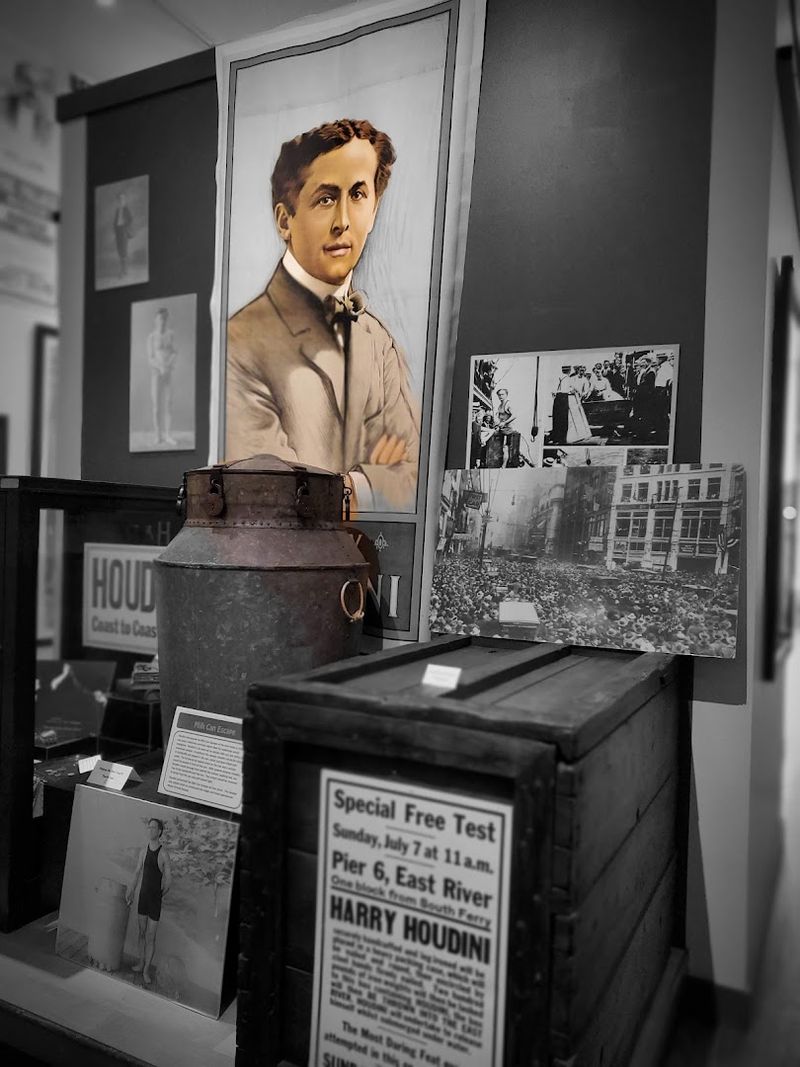
Harry Houdini remains the most recognizable name in magic history, and the American Museum of Magic holds a collection of Houdini-affiliated items that people specifically travel to Marshall, Michigan to see. These aren’t generic tributes or printed biographies behind glass — they’re physical objects connected to the man himself, the kind of artifacts that carry real historical weight.
Seeing actual restraints, personal effects, and promotional materials tied to Houdini creates a very different experience than reading about him online. There’s a tangibility to it that no digital archive can replicate.
People who grew up reading about Houdini’s escapes or watching dramatizations of his life often describe the Houdini display as the emotional centerpiece of the visit.
Houdini’s story is also bigger than magic — it touches on immigration, reinvention, showmanship, and the psychology of public fascination with danger. The museum’s presentation of his artifacts invites that broader context without turning the display into a lecture.
The objects speak for themselves, and the staff can fill in the historical gaps when asked.
What makes this display particularly valuable is its authenticity. The museum has built its collection over decades with a focus on genuine provenance rather than spectacle.
An item in this collection has been handled, used, and lived with — not manufactured for display purposes. That distinction matters enormously to serious collectors and history enthusiasts.
For families visiting with older kids who already have an interest in history or performance, the Houdini section tends to be the moment that fully captures their attention. It connects a famous name to real, touchable history in a way that makes the past feel surprisingly close.
That connection is one of the museum’s strongest recurring themes throughout the entire collection.
Props With Real Age on Them — Not Staged, Actually Used
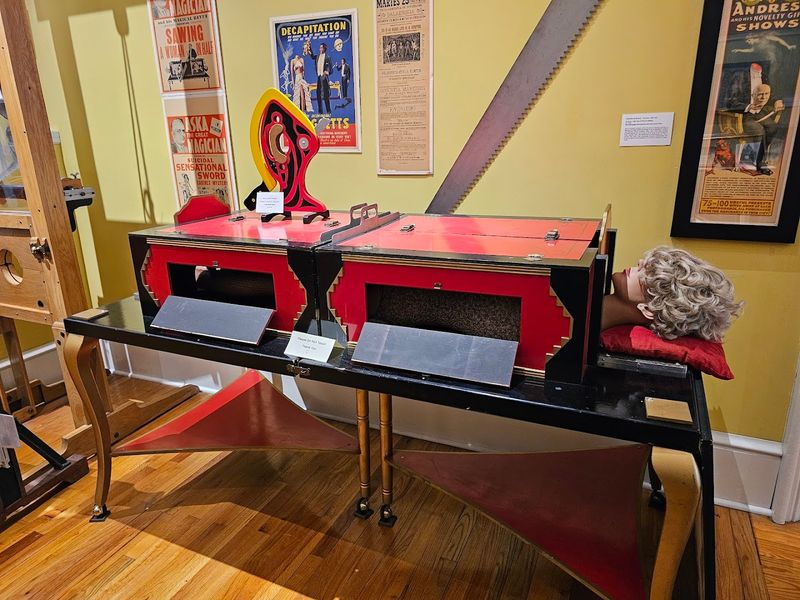
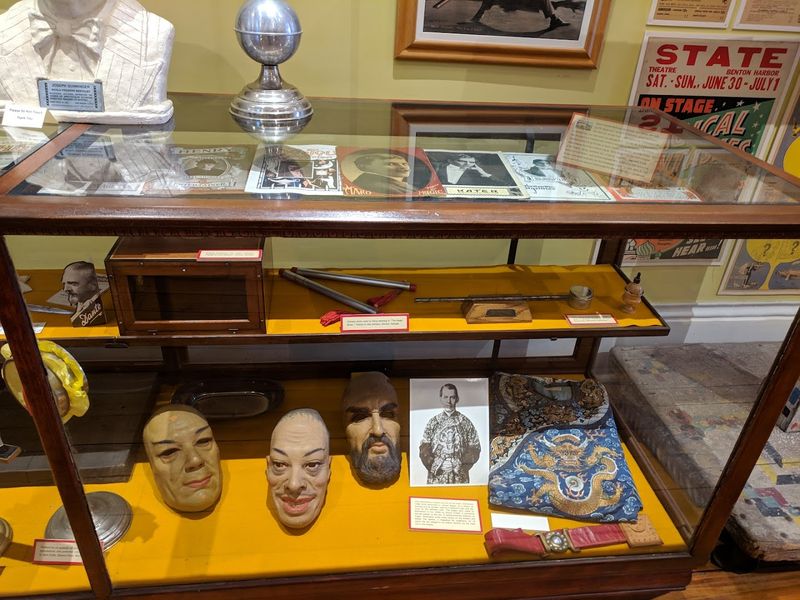
Beyond the posters and the Houdini items, the American Museum of Magic holds a remarkable collection of actual stage props — the physical tools that real performers used in front of real audiences. These aren’t replicas built for exhibit purposes.
They show wear. They show use.
The hinges are worn, the paint is scuffed in the right places, and the mechanisms carry the evidence of countless performances.
Trick boxes, illusion cabinets, and escape devices fill the collection alongside smaller close-up magic tools and personal effects from performers across multiple generations. Each object has a biography attached to it, even if that biography isn’t always fully printed on the label beside it.
The staff — particularly the knowledgeable docents who work the floor — can often fill in those stories with impressive detail.
One docent named Scott has been specifically mentioned by multiple visitors as a standout presence at the museum. Described as a walking encyclopedia of magic history and general history, he connects artifacts to their broader cultural context in a way that transforms a solo browse into something much richer.
Asking questions here is strongly encouraged — the answers tend to be genuinely surprising.
The props collection also spans an impressive geographic range. Magicians from across the United States and internationally are represented, giving the museum a scope that extends well beyond American performers despite its name.
That breadth is part of what makes repeat visits worthwhile — there’s always something you missed or a connection you didn’t notice the first time.
For anyone who has ever wondered how a particular illusion actually works, some of the props offer tantalizing clues without fully giving away the method. The museum strikes a careful balance between education and preserving the mystery that makes magic worth caring about in the first place.
Live Magic Shows and Camp Abracadabra Keep the Place Active Year-Round
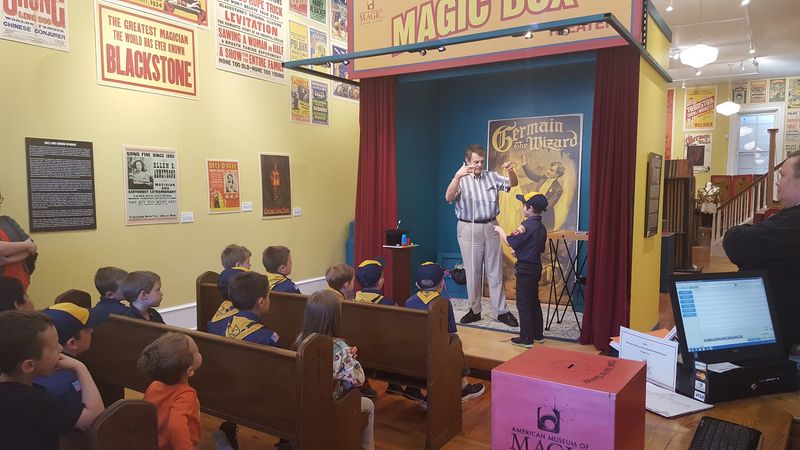
The American Museum of Magic isn’t a static archive that simply sits quietly between opening and closing time. The museum runs live magic shows that give the collection an active, performance-driven energy that most history museums simply don’t have.
During 2025, every Saturday at 2 p.m. from April through Halloween, a magic show takes place on the museum’s stage — a schedule worth planning around if you’re visiting during that window.
The stage itself is a draw even outside of show times. Families with kids who are interested in performing often let their children try out the space, and the museum’s layout encourages that kind of hands-on engagement in a way that feels natural rather than forced.
A few interactive elements scattered throughout the museum also give younger visitors something to do beyond reading labels and looking at glass cases.
Each July, the museum hosts Camp Abracadabra, a summer camp for kids ages 7 to 13 taught by magician John Dudley. The camp is a genuine instructional program where kids learn real magic techniques from an experienced performer.
Tickets for special events and camps sell out, so advance booking is necessary — this isn’t the kind of program you can drop into without planning ahead.
The International Brotherhood of Magicians, Neil Foster Ring 89, meets at the museum monthly on the second Monday at 7 p.m. That ongoing connection to an active community of practitioners gives the museum a living relationship with the art form it documents.
History and current practice exist side by side here, which keeps the energy of the place from ever feeling dusty or removed from the present.
Checking the museum’s current schedule before visiting is the smartest move, especially for anyone hoping to catch a live show during their trip.
How to Get the Most Out of Your Visit to This Marshall, Michigan Gem
Getting the most out of a visit here comes down to one key habit: slow down and talk to whoever is working the floor. The museum’s compact footprint — it covers two floors in a historic building — means it’s easy to assume you can move through it quickly.
That assumption will cost you the best parts of the experience.
Plan for at least an hour, though people who love magic history or graphic design often find themselves wanting more time than that. The poster collection alone rewards extended attention, and the props and artifacts gain considerably more meaning when you’re asking questions and getting context rather than just reading the brief labels beside each item.
The museum is open Thursday through Sunday, 11 a.m. to 4:30 p.m., and is closed Monday through Wednesday. Those hours are important to double-check before making the drive, since Marshall is a destination visit for many people rather than a casual walk-in.
The admission price has been noted by visitors as very reasonable for what the collection offers.
For families, the museum works best when kids already have some curiosity about magic or history. This is more of an archive than a playground, and younger children without that existing interest may find the pace slow.
Older kids and teenagers who have ever been into card tricks, escape acts, or stage performance tend to connect with the collection much more readily.
Parking along East Michigan Avenue is generally easy to find, and the museum sits in a part of Marshall’s downtown that has other shops and restaurants nearby. Combining the museum visit with a longer afternoon in Marshall makes for a satisfying day trip from anywhere in southwest or central Michigan without feeling rushed or overprogrammed.
Why No Other Museum in the Country Covers This Ground
There’s a simple fact about the American Museum of Magic that sets it apart from every other attraction in Michigan and, frankly, most of the country: this is the only place of its kind. No other museum dedicates itself specifically to the history of stage magic and illusion with a collection of this depth and authenticity.
That’s not a marketing claim — it’s a straightforward description of what exists and what doesn’t.
The collection has been assembled over decades by people who treat magic history as seriously as any other branch of performing arts history. Original posters, used props, personal effects, Houdini artifacts, and materials connected to magicians from around the world are all housed under one roof in a small Michigan town.
The specificity of the focus is precisely what makes it so strong. A museum that tries to cover everything often ends up covering nothing particularly well.
This one goes deep.
Marshall itself adds to the overall experience in ways that are hard to quantify. The town has a preserved, unhurried quality that makes it a pleasant destination independent of the museum.
But the museum gives the visit a clear focal point and a reason to seek Marshall out specifically rather than just passing through.
People who care about entertainment history, graphic design, performance art, or American cultural history in the 19th and 20th centuries will find the American Museum of Magic genuinely rewarding. It doesn’t oversell itself or rely on flashy presentation to compensate for thin content.
The collection is the thing, and the collection is strong.
For anyone who has been curious about this museum and hasn’t made the trip yet, the straightforward answer is that nothing else like it exists. That alone makes it worth the drive to Marshall.
Share this story