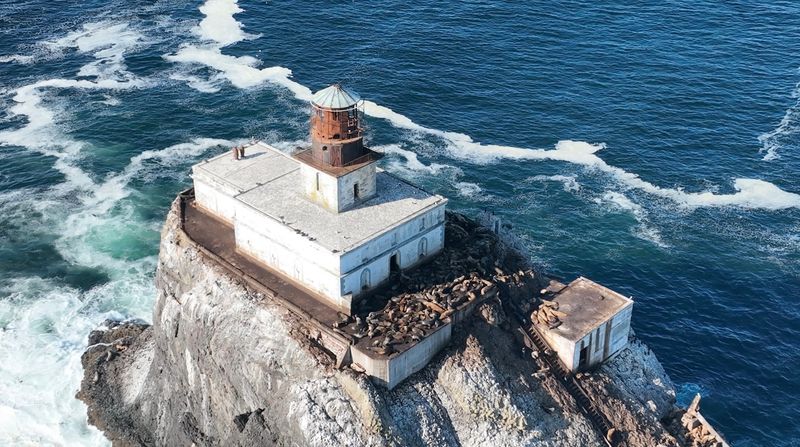
Some Oregon landmarks sell postcards. This one sold for millions, took a beating from the Pacific for decades, and later held urns instead of lamp oil. It sits on a lonely rock off the north coast, a little over a mile from shore, and nobody has been able to stroll up to its door in generations.
Locals gave it a nickname that sounds like a villain from an old pirate tale. The keepers who served there had one of the hardest jobs on the West Coast, and the building itself spent years as something far stranger than a light station. Its story covers storms, a long and risky construction, a quiet second life, and a price tag that made headlines.
Keep reading for the history, the best overlooks, the trail mileage, the parking headaches, and the timing tricks that make a trip worth it.
A Rock Off Cannon Beach, Oregon
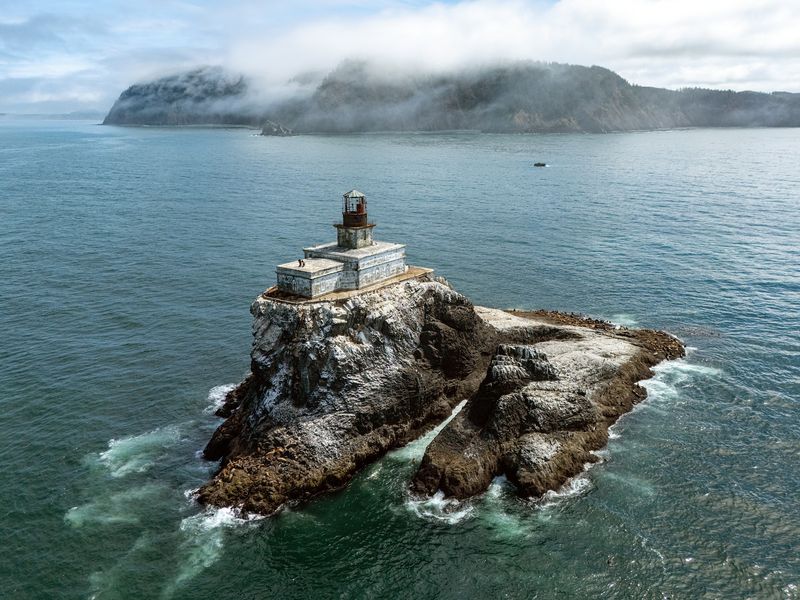
Every coastal legend needs a home address, and this one keeps it simple. The Tillamook Lighthouse is listed in Cannon Beach, OR, on the northern stretch of the Oregon coast in the United States.
Officially it is a historical landmark, though the actual tower stands on Tillamook Rock, an island of stone out in the Pacific. You will often hear it called Tillamook Rock Lighthouse, and both names point to the same place.
The rock sits roughly 1.2 miles offshore. That distance shapes everything about a visit, because nobody walks, drives, or wades out to the tower.
Instead, the lighthouse is a sight to be admired from land. Most people head to Ecola State Park, just north of downtown Cannon Beach, where trails and overlooks face the rock directly.
Some catch it straight from the sand in Cannon Beach itself, small on the horizon but clearly there. Others hike for a closer angle from the headland.
Getting the location right matters more here than at most landmarks. The tower cannot come to you, so the trick is knowing which bluff, beach, or trail lines you up with it.
The rest of this guide covers exactly that, along with the history that turned a working light into one of the most talked about structures on the coast.
First Lit in 1881
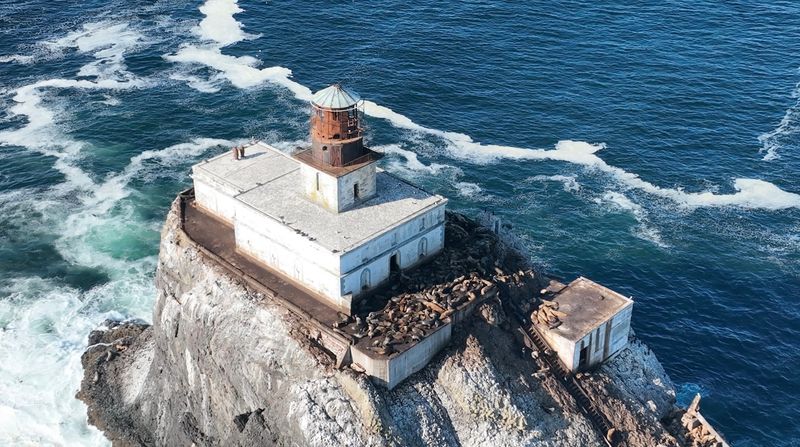
Back in 1881, the Oregon coast was a busy and risky place for ships. That year, a new light began shining from Tillamook Rock to guide vessels along this hazardous stretch.
It counts among the early lighthouses on the Oregon coast. For a region still growing its ports and shipping lanes, a light out on the water was a serious upgrade.
Engineers did not pick an easy site. Rather than a calm point on the mainland, they chose a bare rock surrounded by open ocean.
The idea made sense for navigation. A light placed out on the rock could warn ships before they drifted too close to the headland behind it.
What looked smart on paper turned into a decades long test of patience. Storms, supply runs, and maintenance would all prove far harder than planners expected.
Still, the light did its job for 76 years. From 1881 until 1957, keepers lived and worked on that rock through every season the Pacific could throw at them.
That kind of commitment is part of why the lighthouse still draws so much attention today. It is less a pretty ornament and more a monument to stubborn people doing a tough job in a tough spot.
575 Days of Building on a Wave-Swept Rock
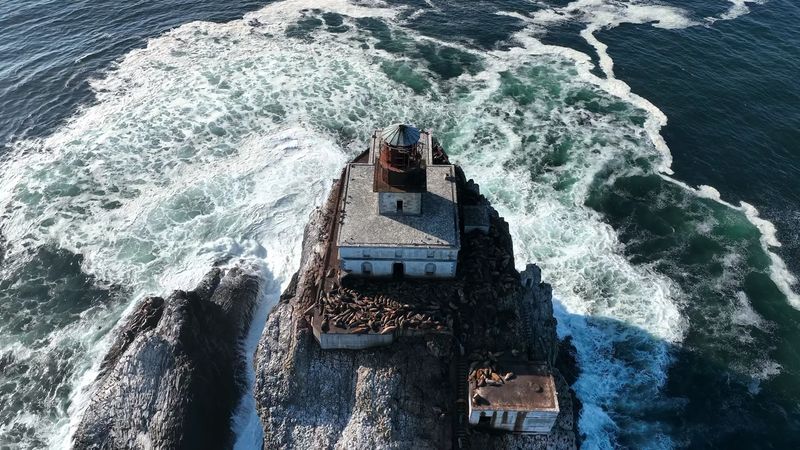
Construction schedules rarely go to plan, but this one blew past the estimate in spectacular fashion. Finishing the lighthouse took 575 days, more than twice as long as originally planned.
The work was risky from the very start. Even landing crews on the rock was dangerous, and one construction worker was lost before building had truly begun.
Every board, tool, and bag of material had to arrive by boat. Deliveries came through rough seas, and many of those supply runs failed or vanished into the ocean.
Picture a job site with no road, no dock in the usual sense, and weather that changes the rules every afternoon. That was ordinary life for the builders here.
Here is a quick snapshot of the challenge:
Planned timeline: less than half of what it actually took.
Actual timeline: 575 days.
Supply method: boats only, storms or not.
Knowing all of this changes how the tower looks from shore. The squat building on the rock is not just old, it is a hard won piece of engineering finished against the odds.
How Terrible Tilly Got Her Name
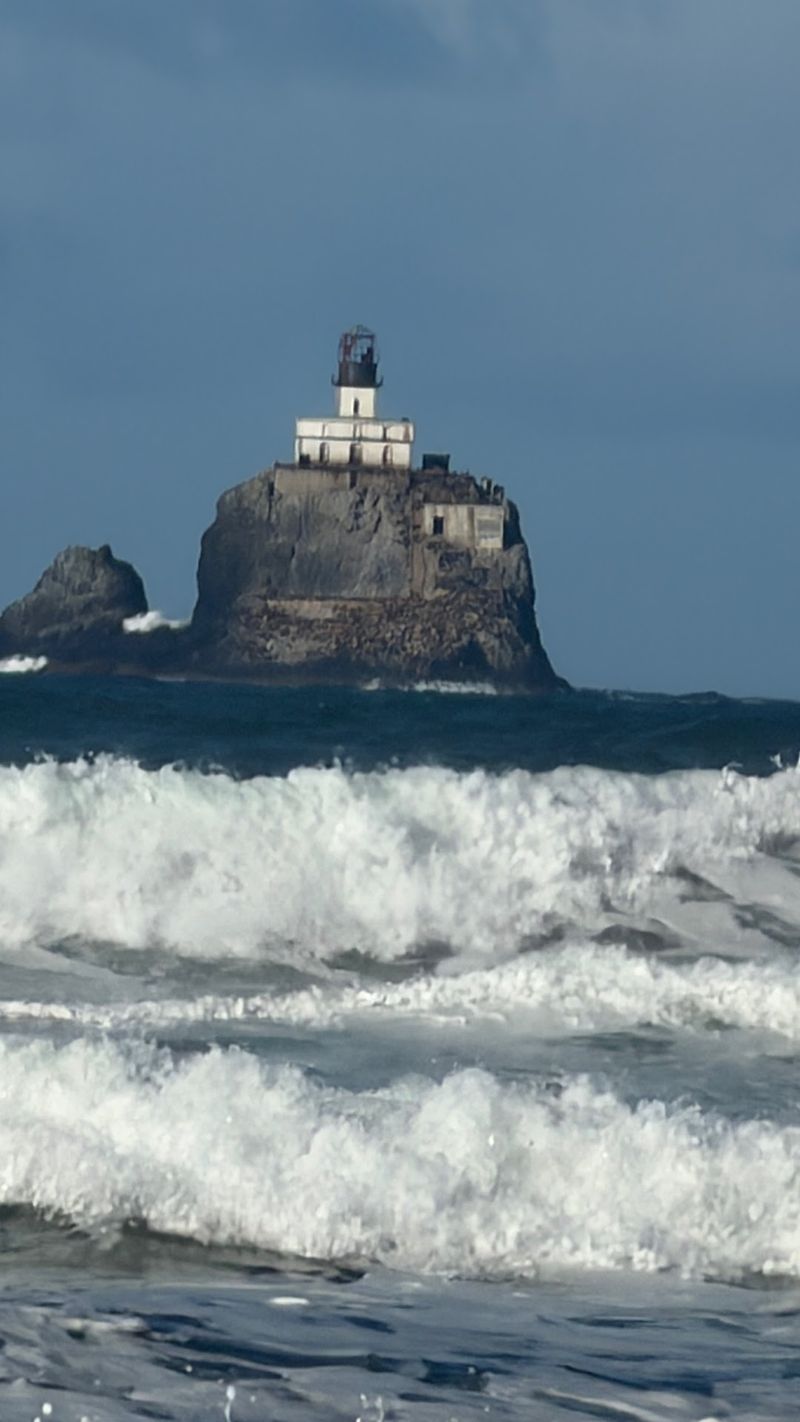
Nicknames tend to stick when they are earned, and this one was earned the hard way. Locals call the lighthouse Terrible Tilly, a title it picked up thanks to brutal weather and relentless waves.
Storms out on the rock were so violent that flying rocks shattered the windows. Seawater then soaked everything inside, which is not the cozy keeper lifestyle anyone dreams about.
The reputation fits the setting. Out on open water, the rock has no shelter from the full force of Pacific weather.
From shore, the tower can look spooky and almost unreal. Many people describe it as something lifted from a pirate movie, perched alone on its stone island.
That mood is a big part of the appeal. A lighthouse on a sunny bluff is charming, while a lighthouse on a storm battered rock tells a whole saga at a glance.
The name also captures a kind of affection. Oregonians tend to love landmarks with a little grit, and Tilly has more grit than most.
So when someone on the trail points offshore and says Terrible Tilly, they are not insulting the old girl. They are paying respect to a survivor.
Why the Light Went Dark in 1957
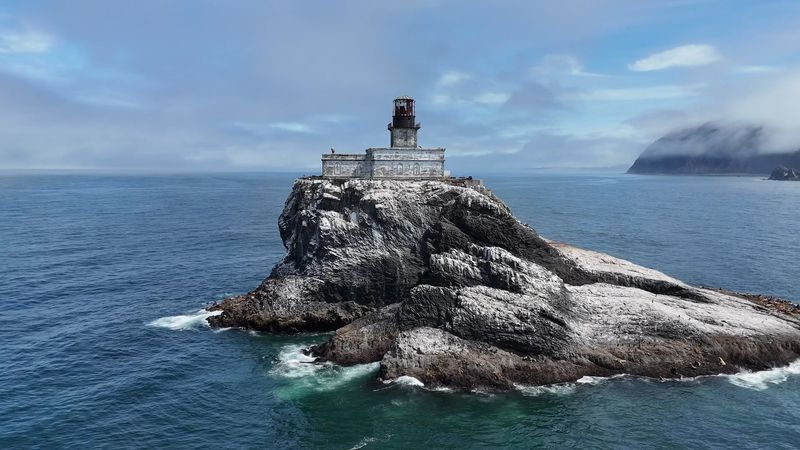
Plenty of lighthouses retire because newer technology replaces them. Tillamook Rock retired largely because getting to work was simply too much trouble.
The station was deactivated in 1957. The main reason was the treacherous commute required to maintain it, along with the high costs of keeping it running.
Every trip to the rock meant crossing open water and landing on a slippery stone island. Doing that again and again, year after year, wore down both budgets and nerves.
After 76 years of service, the light was switched off for good. The keepers left, and the building stood alone on its rock.
That moment marks the turning point in the story. A working station became an empty structure, and the question of what to do with it became surprisingly complicated.
Most retired lighthouses become museums, inns, or parks people can tour. This one could not easily become any of those, because reaching it remained the same old problem.
The answer, when it came, was unusual enough to give the lighthouse its most famous chapter. That chapter is next.
A Columbarium at Sea
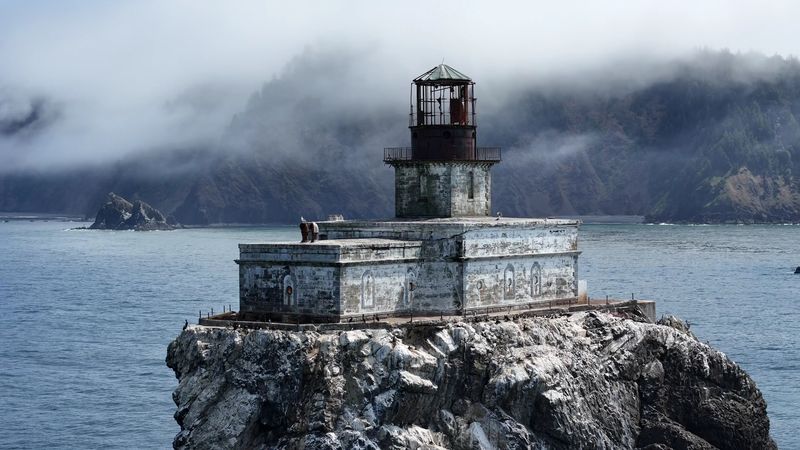
Here is the twist that gives this lighthouse its eerie fame. After it was decommissioned, the building became a columbarium, a site for storing urns.
In other words, the old light station turned into a final resting place. A tower once built to protect sailors took on a much quieter purpose out in the ocean.
The idea fits the location in its own way. Few places on the coast feel as remote, undisturbed, and set apart as this rock.
That second life is the detail that sticks with most people. A storm battered lighthouse is interesting, but a storm battered lighthouse holding urns is unforgettable.
It also explains why the tower feels so solemn from shore. The building is not just abandoned, it has been entrusted with something personal.
For anyone gazing out from the Ecola bluffs, this history adds weight to the scene. The small structure on the horizon carries generations of stories inside its walls.
It is a reminder that landmarks do not always end with a ribbon cutting or a museum plaque. Some simply find a new and very human role.
The $6.5 Million Listing
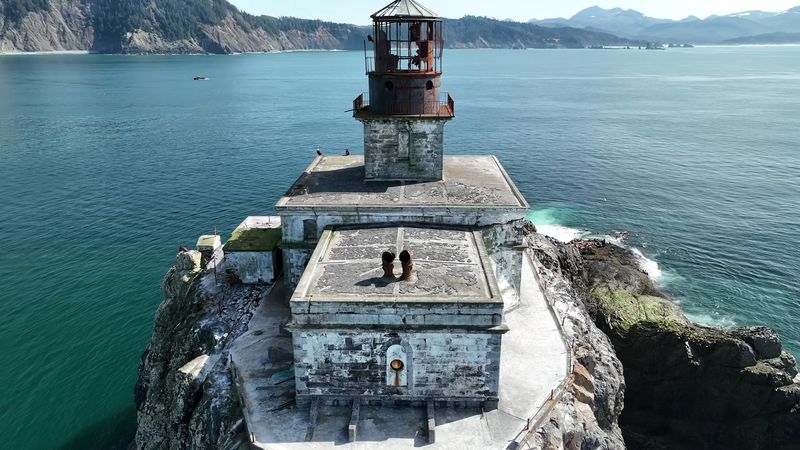
Real estate listings rarely come with storm history and urns included. In March 2022, Terrible Tilly was put up for sale with an asking price of $6.5 million.
That number grabbed attention far beyond Oregon. A private lighthouse on its own island sounds like a dream, until you remember the commute that shut it down in the first place.
For Oregonians, the listing raised a familiar question. What happens to a beloved coastal landmark when it is in private hands and in rough shape?
The lighthouse is not restored and is in poor repair, and people who love it wonder how long it will remain standing. That worry is part of why the tower inspires such loyalty.
Here are the key facts worth remembering:
Listed: March 2022.
Asking price: $6.5 million.
Condition: unrestored and showing its age.
Landmarks like this one are part of what makes the north coast feel like home. Keeping an eye on Tilly, even from a mile away, is a small way of caring for a place that has weathered more than its share.
Ecola State Park, the Front Row Seat
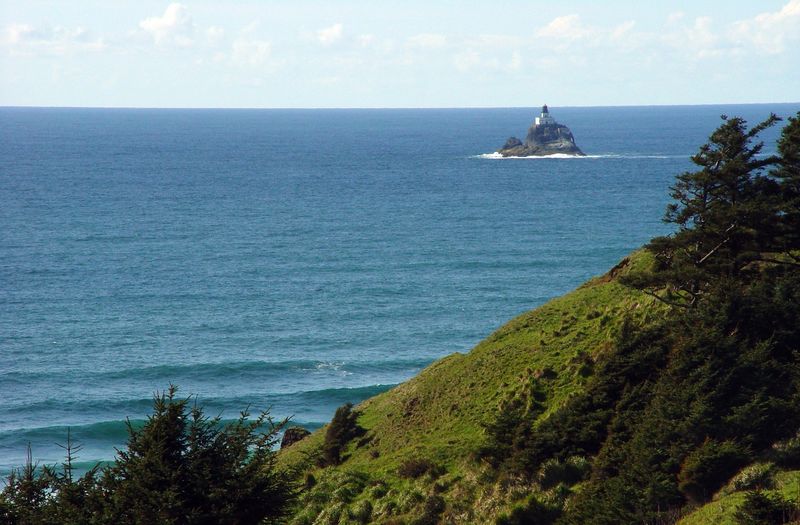
Front row seats do not get much better than a grassy bluff above the Pacific. Ecola State Park, just north of Cannon Beach, is the most popular place to see the lighthouse from land.
The easiest approach is wonderfully short. Drive the park road as far as it goes, park, and walk about 100 feet across the grass toward the point.
That makes it a solid option for anyone who cannot handle a long hike. Even someone nursing a sore ankle can enjoy the scene without tackling a trail.
The area works nicely as a picnic spot too. Families spread out on the grass, bring a blanket, and settle in with the lighthouse on the horizon.
Wildlife often shows up as a bonus. A herd of elk sometimes grazes in the open meadow near the parking lot, calmly ignoring the people around them.
On clear days, the bluff opens up long stretches of coastline. Movie fans also like spotting the famous sea stack linked to The Goonies from this part of the coast.
Short walk, big payoff, and plenty of room to linger. Few lighthouse viewpoints ask so little and offer so much.
Trail Choices and Real Mileage
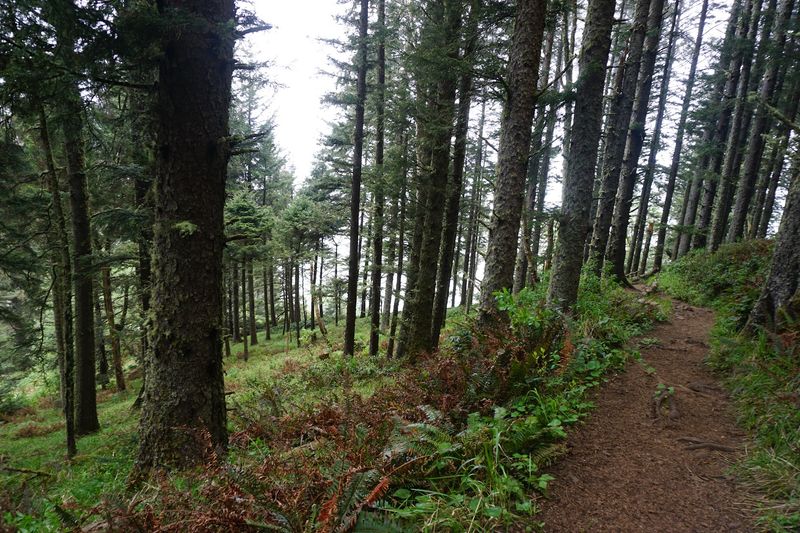
Signs say one thing, and boots sometimes say another. The trail from the south side is posted at 2.6 miles round trip, though hikers have measured it closer to 3.1 miles.
At the fork, the path to the left is the friendlier choice. It climbs more gradually and offers glimpses of the lighthouse before the main overlook.
The path to the right is meant for driving and is almost entirely uphill. Save your legs and skip it.
Another popular route is a loop of about 2.8 miles with two or three spots to look out toward the rock. The lighthouse cannot be seen from the parking area, so the walk is part of the deal.
Those wanting a bigger adventure can follow trails over Tillamook Head toward Seaside. That version runs around eight miles round trip and tends to be muddier.
The trail from Indian Beach to the lighthouse viewpoint is tougher than many expect, with roughly half of it heading uphill. Good hiking shoes and water make a real difference.
The trail itself is generally well groomed, with mossy trees and tide creatures to discover along the way. Pick the route that matches your energy, not your ego.
Indian Beach and the Low Tide Trick
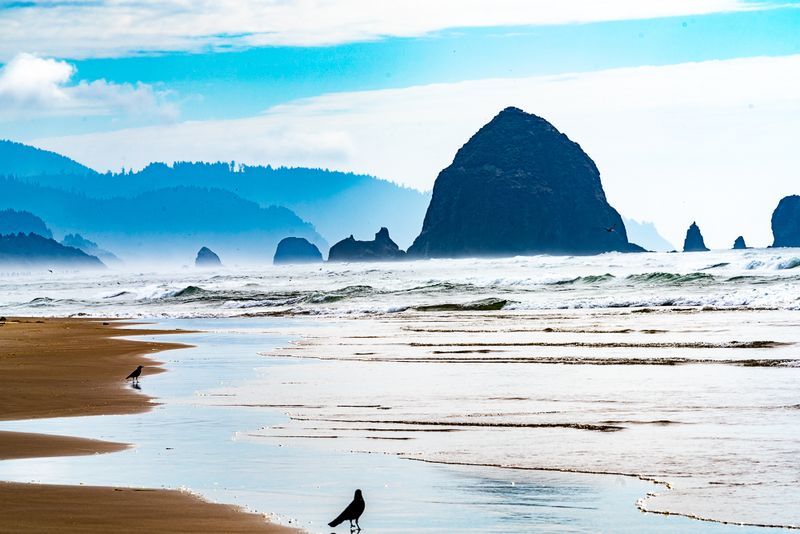
Good timing can turn a beach walk into a lighthouse sighting. At Indian Beach, inside Ecola State Park, low tide opens up a handy viewing angle.
The method is simple. Walk down to the beach, cross the first shallow stream, then turn and look to the right.
There she is, Terrible Tilly, sitting on her rock out in the ocean. No steep climb required.
Indian Beach is also a fun place to linger once the lighthouse has been spotted. Beachcombers hunt for sea shells and sand dollars along the shoreline.
Surfers often use this area as well, adding some entertainment while you wait for the clouds to cooperate. A few sea lions may also make an appearance offshore.
For families, this spot hits a sweet balance. Kids get a beach to explore, adults get a slice of history, and nobody has to march uphill for an hour.
Check a tide chart before heading out. A little planning here goes a long way, and it keeps your shoes a lot drier.
Binoculars, Drones, and Distance
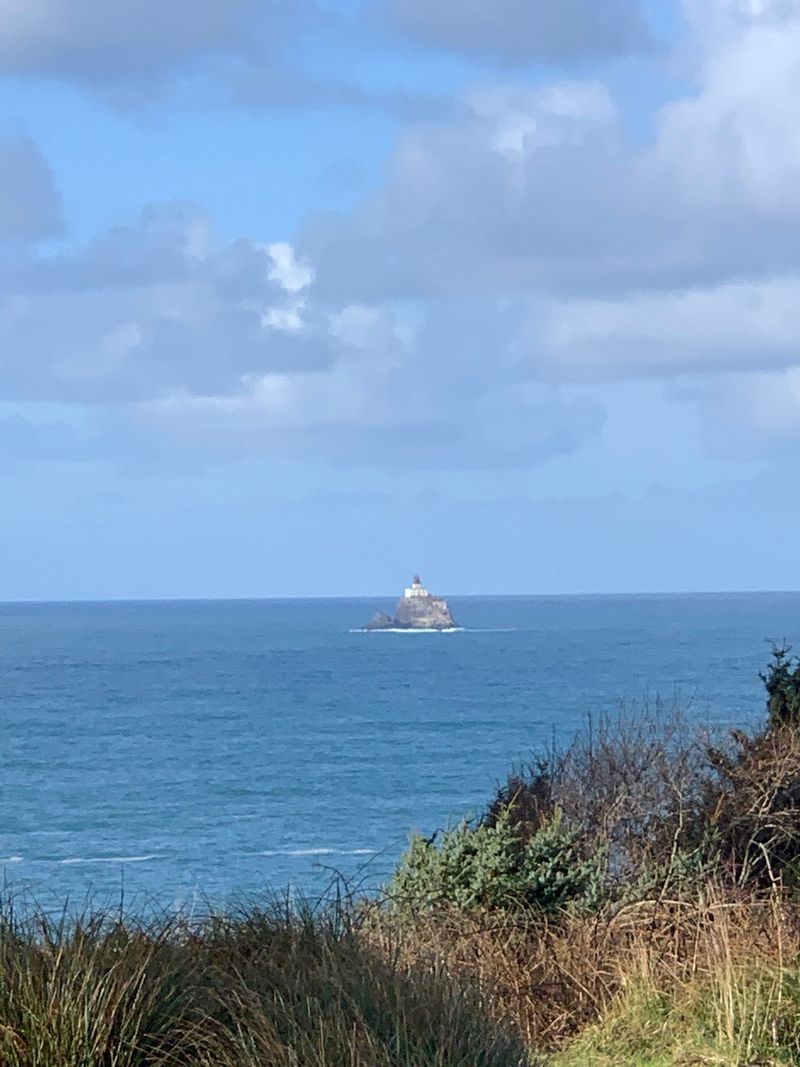
Expectations matter with a lighthouse that lives a mile out to sea. From land, Tilly often appears small, so a quick glance may leave some people wanting more.
Strong binoculars make a big difference. Without them, details of the building are hard to make out.
Anyone visiting purely for a close look at the tower should know this up front. The drive into the park is worth it for the full coastal experience, not only for a zoomed in lighthouse photo.
Camera gear helps too. A long lens can pull the rock and its tower into much clearer focus.
Drone pilots have found the landmark especially exciting. Beginners enjoy the challenge of flying out toward such a striking feature, though local rules on drone use are worth checking before launching.
Quick gear checklist:
Binoculars: the single most useful item.
Zoom lens: great for photos of the tower.
Hiking shoes and water: essential for the longer trails.
Bring the right tools and the distance stops being a drawback. It becomes part of the mystery that makes Tilly so memorable.
Parking Lines and Off-Season Timing
Popularity has a price, and here it is usually paid in parking spaces. Ecola State Park can get extremely busy, especially during summer.
Lots fill up, and lines at the restrooms can grow long. Even the overflow parking farther away may come with its own wait at the outhouse.
That overflow lot also adds a longer walk to the lighthouse viewpoints. A quick stop can easily turn into a much bigger time commitment than planned.
Arriving early in the day helps. So does planning a visit outside the peak summer rush.
The off season is a favorite for people who prefer fewer crowds. Cooler months bring more breathing room on the trails and overlooks.
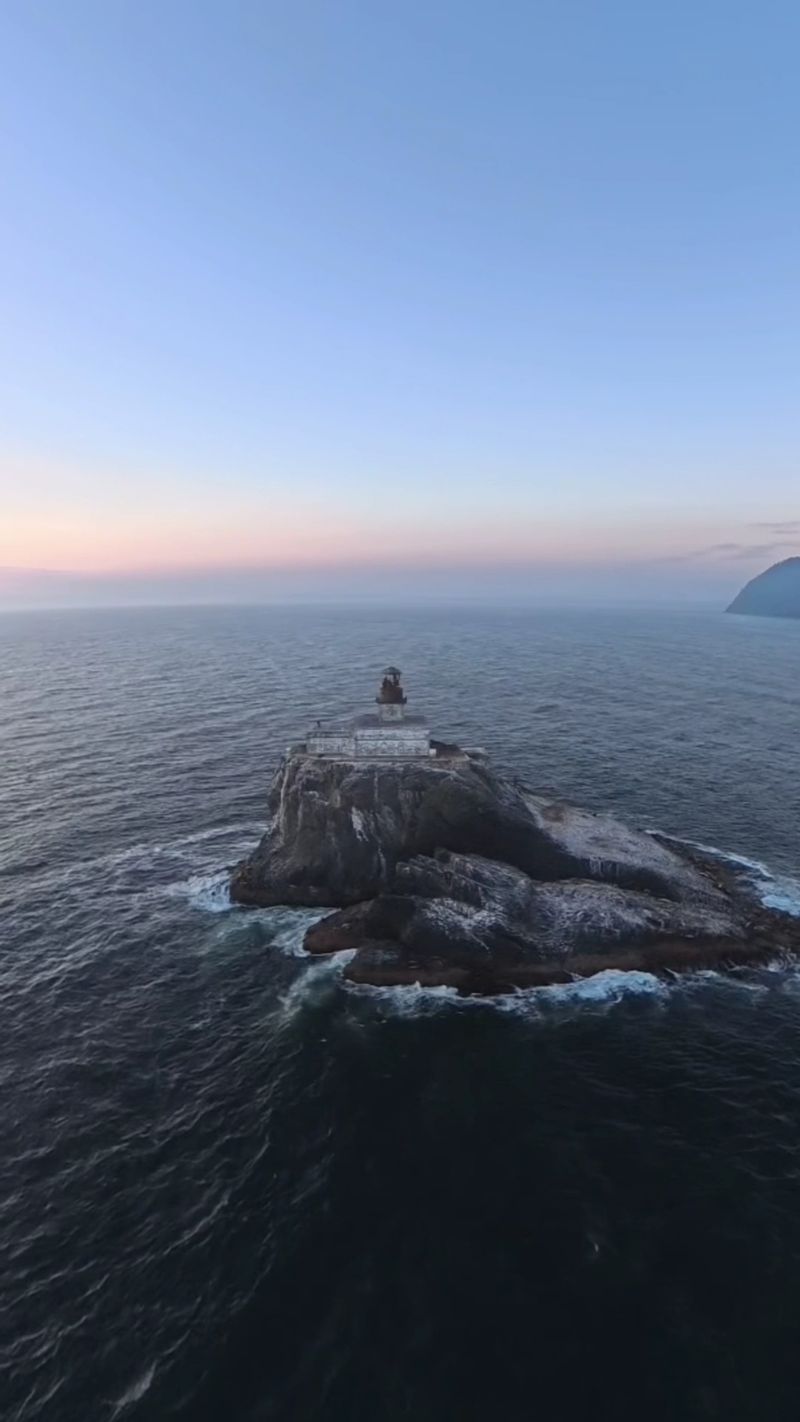
Golden hour is another popular window, when the sun dips toward the horizon behind the rock. Photographers love lining up the tower against an evening sky.
The data available does not include park hours or fees, so check with Oregon State Parks before heading out. A few minutes of research can save an hour of circling the lot.
A Landmark Worth Watching Over
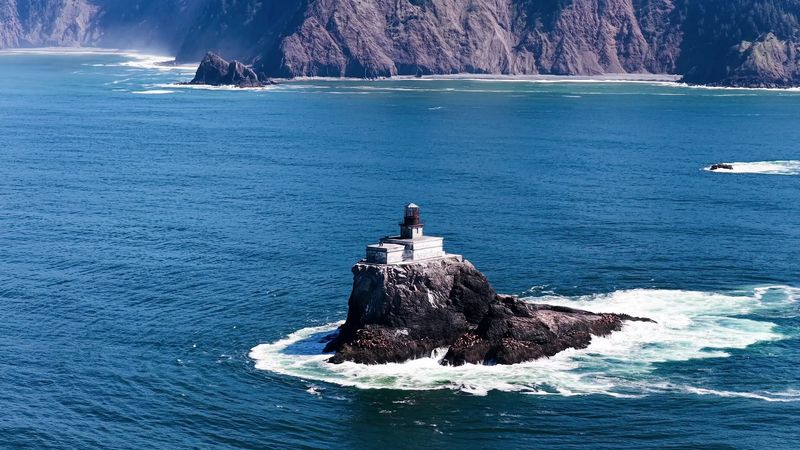
Some places ask you to come inside. Terrible Tilly asks you to stand on the shore and pay attention.
Nobody can tour her rooms or climb her tower, and the building shows its age. Even so, the lighthouse remains one of the most loved landmarks on the north Oregon coast.
Part of that love comes from the story. A 1881 light, a 575 day build, decades of storms, a 1957 retirement, and a second life as a columbarium make for a remarkable timeline.
The rest comes from the setting. Ecola State Park adds elk in the meadow, forest trails, picnic lawns, and beaches full of shells and sand dollars.
The best fit is someone who enjoys history, short or long hikes, and a little mystery. Those wanting a quick, close up look may find the distance frustrating.
Bring binoculars, check the tides, and aim for a quieter day. The reward is a calm moment with a structure that has outlasted almost everything the Pacific has thrown at it.
Oregon has many lighthouses, but only one carries this much drama on a single rock. Tilly may be far away, yet she has a way of staying with you long after the drive home.
Share this story