From the street, the Cathedral Basilica of Saints Peter and Paul looks grand, but stepping inside reveals an even more impressive space. Its soaring dome, colorful stained-glass windows, ornate details, and quiet chapels give visitors plenty to notice as they move through the interior. This historic Philadelphia church serves as a place of worship while also standing as an important work of architecture and art, with details that are easy to miss if you only make a quick visit.
Whether you come for the history, the design, or simply a moment of quiet, there is something worth taking time to appreciate. Here are nine details that make its interior memorable, along with a few tips for enjoying your visit.
1. A Dome That Draws Your Eyes Up
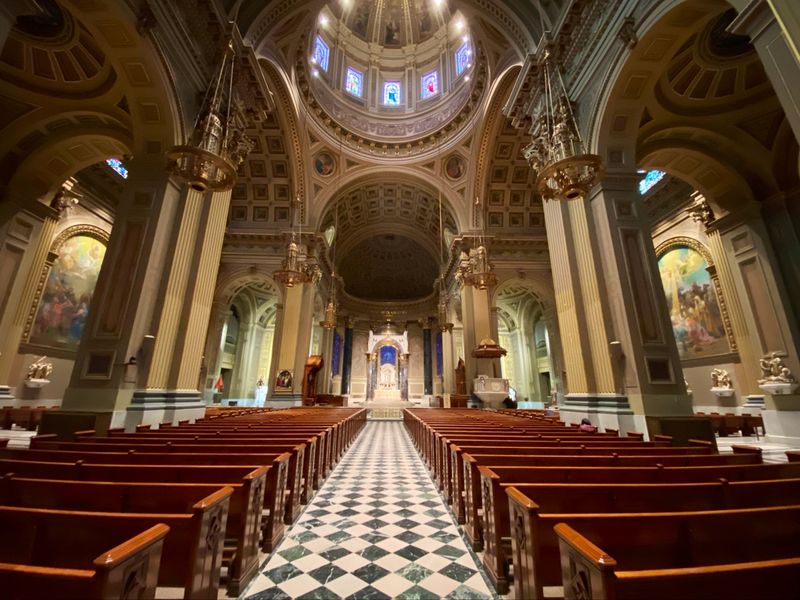
Look up soon after you enter.
The cathedral’s great dome rises above the center of the building and gives the room a sense of height that photographs can struggle to capture.
From below, its shape guides your eyes upward, away from the busy floor and toward the artwork overhead.
For a good first view, stand near the middle of the nave, the long central space where people sit for services.
Pause there before walking closer to the altar.
You can take in how the dome fits with the columns, arches, and open space around it.
Then try looking from a side aisle for a different angle.
The dome is also a reminder that the cathedral took years of planning and building.
Work began in 1846, and the church was completed in 1864.
Today, that effort is easy to feel.
Even a brief stop beneath the dome can make the city outside seem far away.
2. The Long View Down the Nave
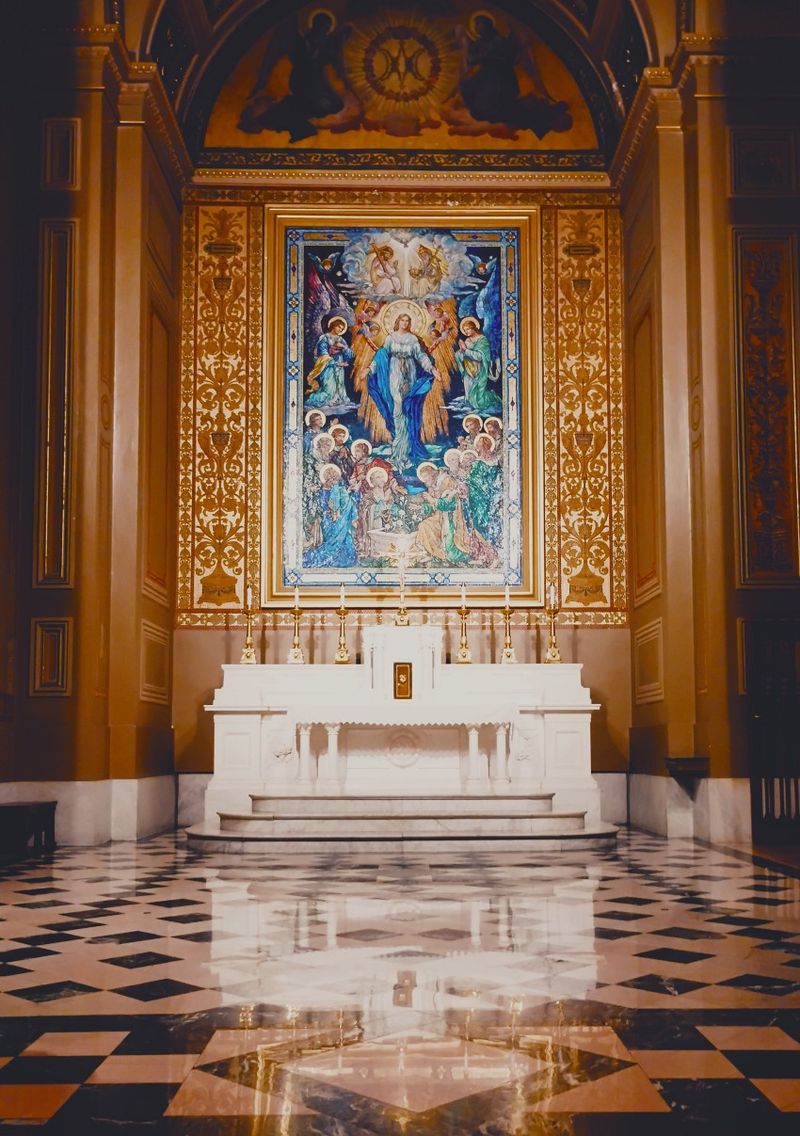
Few entrances prepare you for such a long, open view.
Rows of pews lead toward the main altar, while columns and arches frame the path.
The design gives you plenty to notice without making the room feel crowded.
It also helps explain why visitors often spend more time here than they planned.
Walk slowly down the nave rather than heading straight to the front.
Look at how the view changes as you move: details that seemed small from the doorway become clearer, and the scale of the building becomes easier to judge.
If people are praying or a service is underway, choose a seat and enjoy the space quietly.
This is an active Catholic cathedral, not only a historic attraction.
The pews are there for worship, reflection, and community gatherings.
Taking a few calm minutes in one lets you experience the interior as visitors and parishioners have for generations, rather than simply passing through it.
3. Colorful Stained Glass
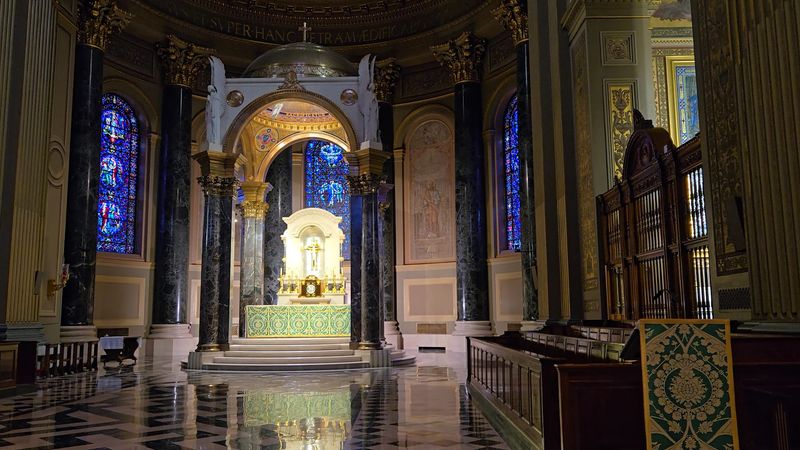
Sunlight does some of the decorating here.
As it passes through the cathedral’s stained glass, color appears along the walls and draws attention to the windows themselves.
The effect may change with the weather and time of day, so two visits can feel surprisingly different.
Give your eyes a moment to adjust after coming in from outside.
Then look at several windows, not just the first one you spot.
From farther away, you can enjoy their overall color and shape.
From a respectful distance nearby, you may notice smaller figures and patterns.
There is no need to identify every scene to appreciate the work.
Because stained glass is easy to overlook when the dome and altar command attention, try making it a separate part of your walk.
Follow a side aisle and glance back across the room.
You will see how the windows add warmth to a space built on such a large scale.
4. Side Chapels Worth a Slower Walk
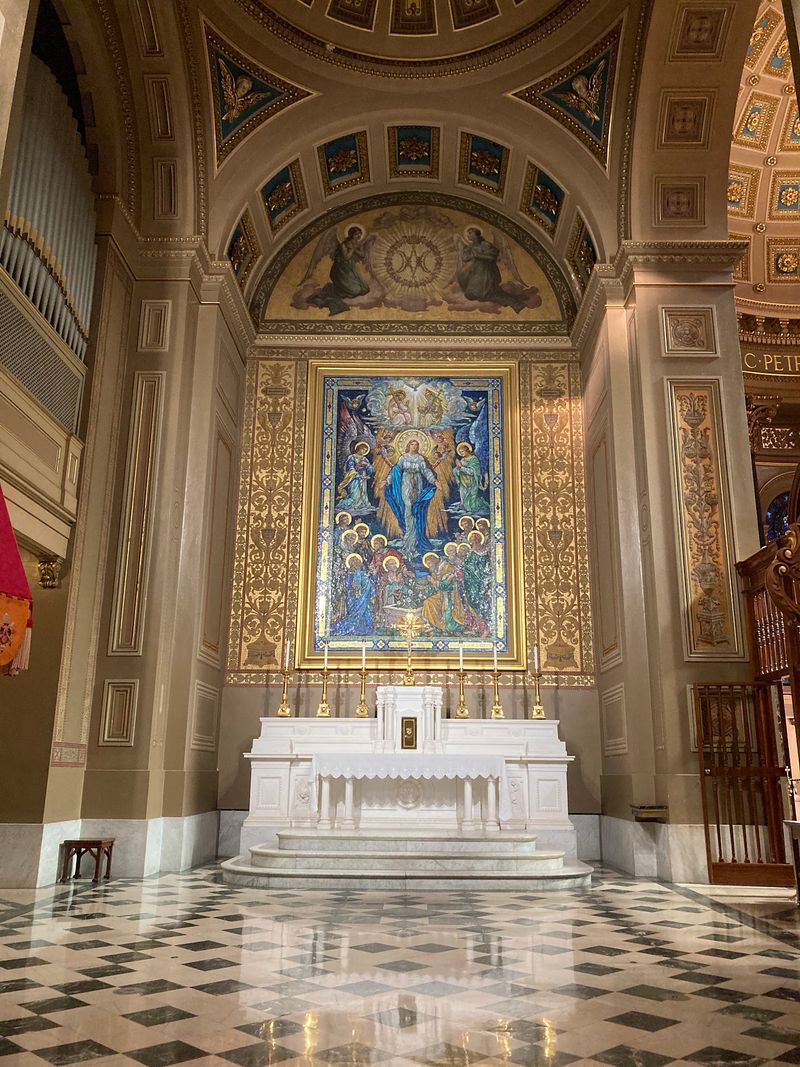
The grand central room gets most of the attention, but the side chapels invite a closer look.
Set along the cathedral’s side walkways, these smaller spaces offer a change of pace.
Visitors may find altars, religious artwork, and decorative details that are easier to study up close than the towering features in the nave.
Try walking one side of the cathedral on your way toward the front and the other on your way back.
That simple route helps you notice more without retracing every step.
Stay aware of anyone praying in a chapel, and give them room and quiet.
A chapel may be small, but it is still a meaningful place for worship.
Each side view also offers a fresh look toward the center of the church.
Stop occasionally and turn around.
You may spot a painting, a window, or a carved detail that vanished into the background from the main aisle.
Exploring slowly rewards curiosity here.
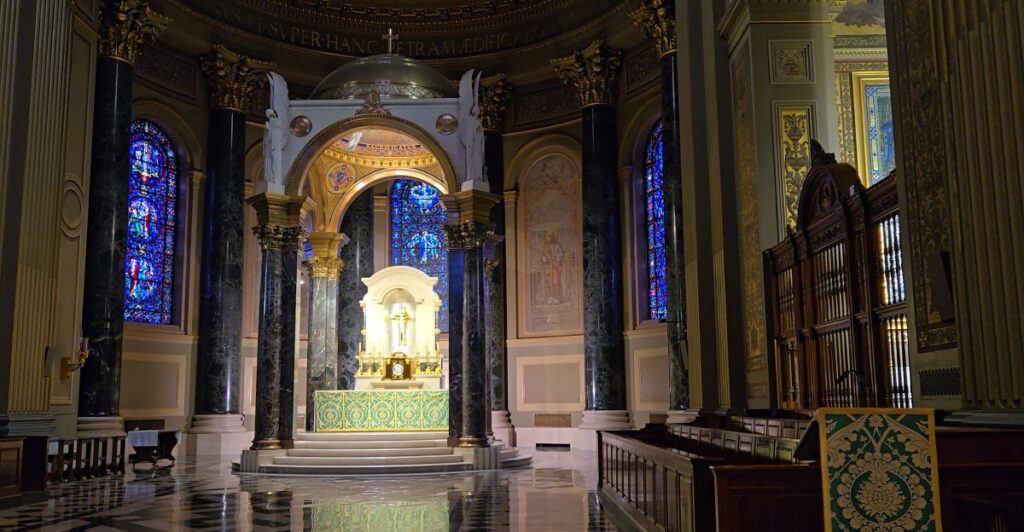
5. A Main Altar Full of Detail
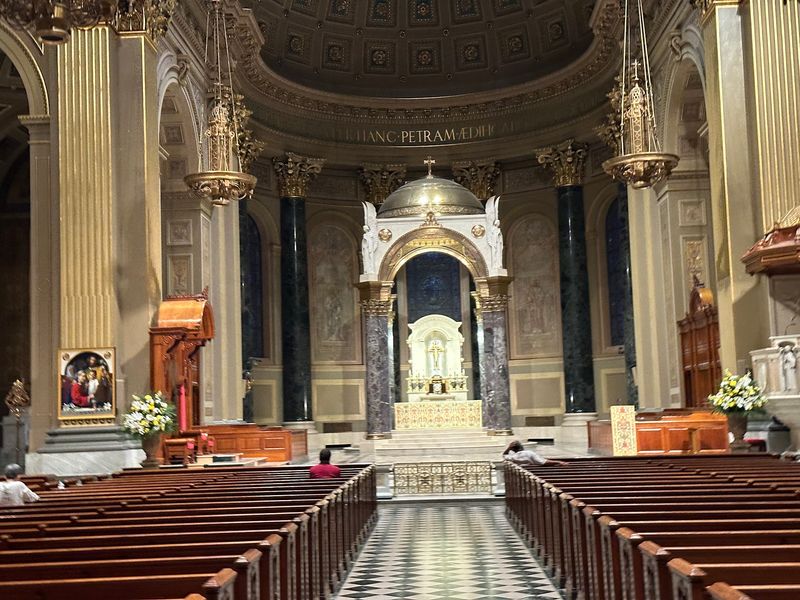
At the far end of the nave, the main altar gives the whole room a clear focus.
Its setting brings together the cathedral’s large shapes and fine details.
What looks like one grand view from the entrance becomes a collection of smaller features as you approach, including artwork and carefully finished surfaces.
Start by looking from the back, where you can see how the altar anchors the long central aisle.
Later, move closer only where visitors are allowed.
During Mass or another service, remain in the appropriate seating area and avoid walking around to inspect details.
The altar is part of a living place of worship, not a display behind a rope.
If you visit outside a service, a quiet seat offers time to take in the full scene.
Notice how the surrounding architecture leads your gaze forward.
That balance of beauty and purpose helps make the cathedral impressive even when no music is playing.
6. Artwork Above and Around You
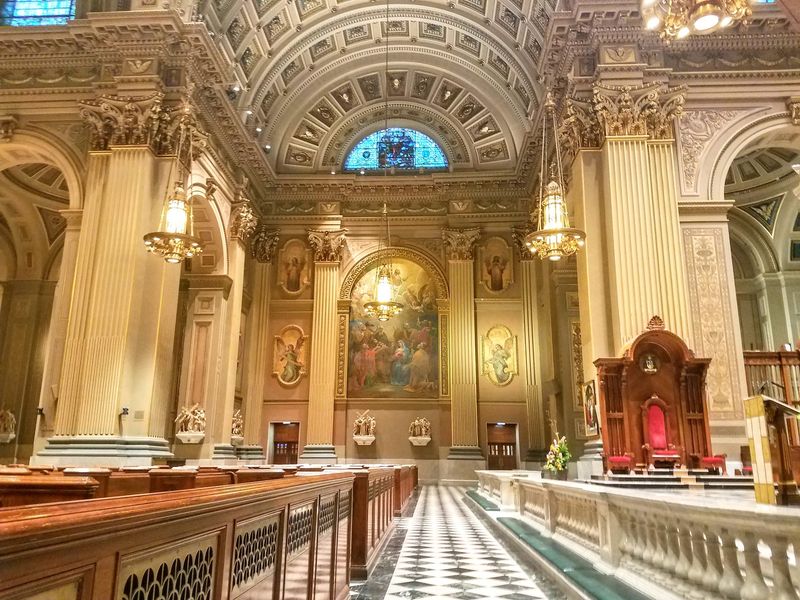
A quick glance cannot catch all the artwork in this building.
Paintings, mosaics, sculpture, and ceiling details appear throughout the cathedral.
Some pieces are easy to see from the central aisle; others reward a slower look along the sides.
Together, they turn a simple walk into a search for small discoveries.
Pick one area and study it for a minute before moving on.
Look at the colors, the people shown, and the materials used.
Then step back to see how the artwork fits within the larger room.
That approach works well for younger visitors, too: ask them to find a color or repeated shape rather than trying to explain every religious image.
Bring your curiosity, but leave the walls and artwork untouched.
Historic interiors need care so that others can enjoy them later.
If you would like more background, check whether a visitor brochure or tour is available when you arrive.
A little context can make familiar details feel new.
7. The Great Pipe Organ and Cathedral Sound
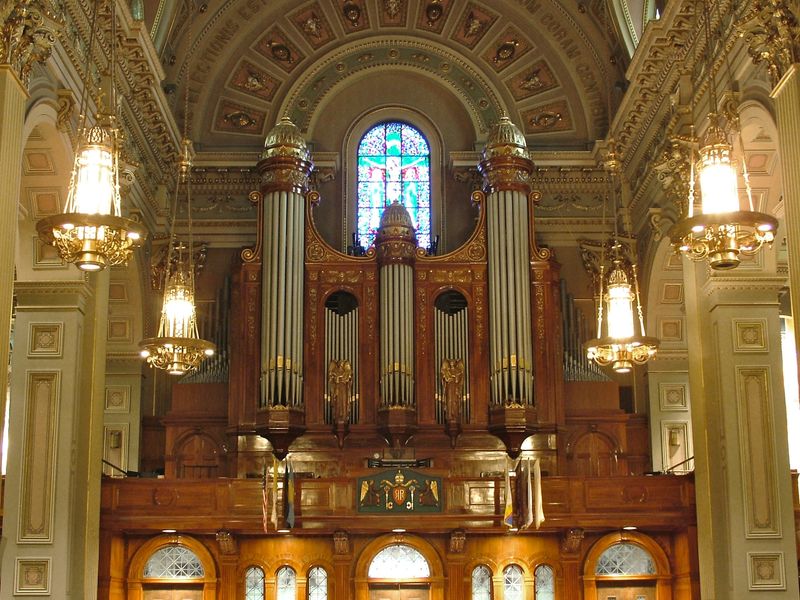
You do not have to hear a note to know music matters here.
The cathedral has a large pipe organ, and its size suits the soaring interior.
When music fills a space with high ceilings and long aisles, listening can become as memorable as looking around.
If you hope to hear the organ or a choir, check the cathedral’s official schedule before you go.
A quiet sightseeing visit does not guarantee a performance, and a scheduled service should be treated as worship rather than a concert.
Arrive with enough time to settle into a seat, turn off your phone’s sound, and follow any guidance from staff.
Even without music, take a short pause to listen.
Footsteps soften, voices carry, and the city feels less present inside.
Those everyday sounds reveal something photographs cannot show: the building has a character you can hear.
It is one more reason to visit at an unhurried pace.
8. A Place to Remember Saint Katharine Drexel
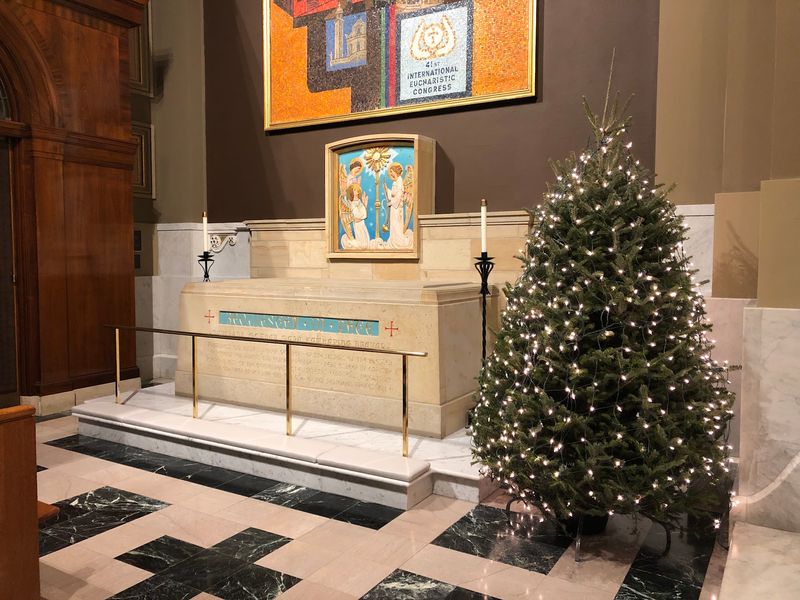
Beauty is not the only reason people stop at this cathedral.
It is also home to the shrine of Saint Katharine Drexel, a Philadelphia-born Catholic saint.
Her resting place gives visitors a connection to a real person’s life, making the historic interior feel personal as well as grand.
Drexel used her resources to support education and religious work among Native American and Black communities.
You do not need to share her faith to understand why people come to remember her.
If you visit the shrine, read any information provided there and allow space for those who have come to pray.
Young visitors may connect with a simple idea from her story: one person can use what they have to help others learn.
After seeing the huge dome and altar, this quieter stop offers a different way to think about the cathedral.
Its walls hold stories of service as well as art and architecture.
9. A Quiet Visit in the Heart of Philadelphia
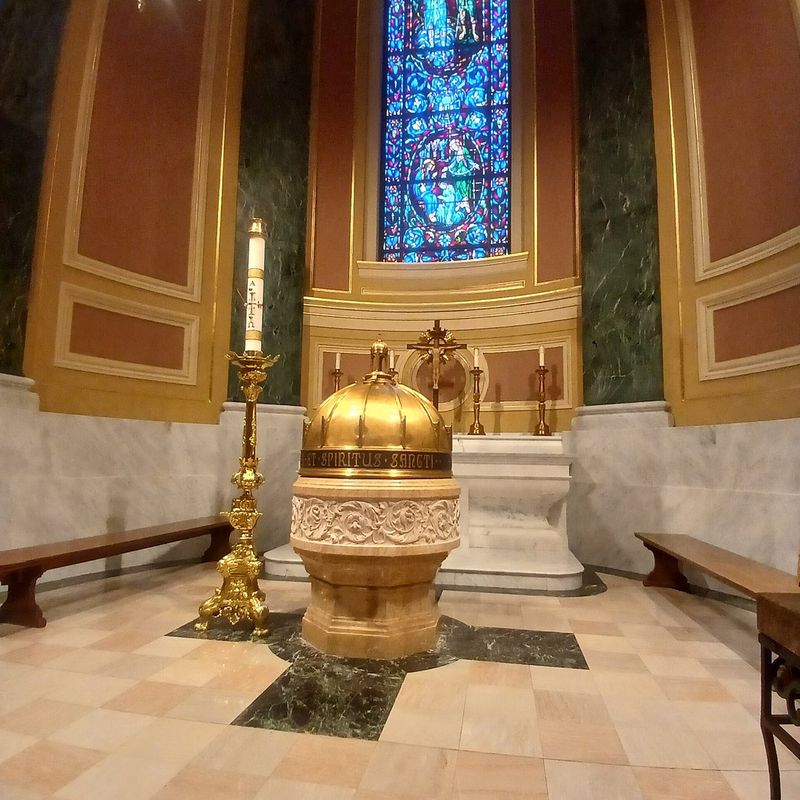
Outside, Philadelphia moves at city speed.
Inside the Cathedral Basilica of Saints Peter and Paul, you can sit still for a while.
That contrast makes the ornate interior especially striking: it offers a place to notice art, think quietly, or attend Mass without rushing to the next stop.
You will find the cathedral at 1723 Race Street, near the Benjamin Franklin Parkway.
Posted visiting hours are 7 a.m. to 5 p.m.
Monday through Friday, 9 a.m. to 6:30 p.m.
Saturday, and 8 a.m. to 7:30 p.m.
Sunday.
Hours and access may change for services or special events, so check the official website or call before making a trip.
Dress respectfully, speak softly, and follow signs about where to walk or take pictures.
Give yourself time to see the dome, windows, chapels, and altar, then spend a few minutes seated.
The calm may be what you remember most.
Share this story