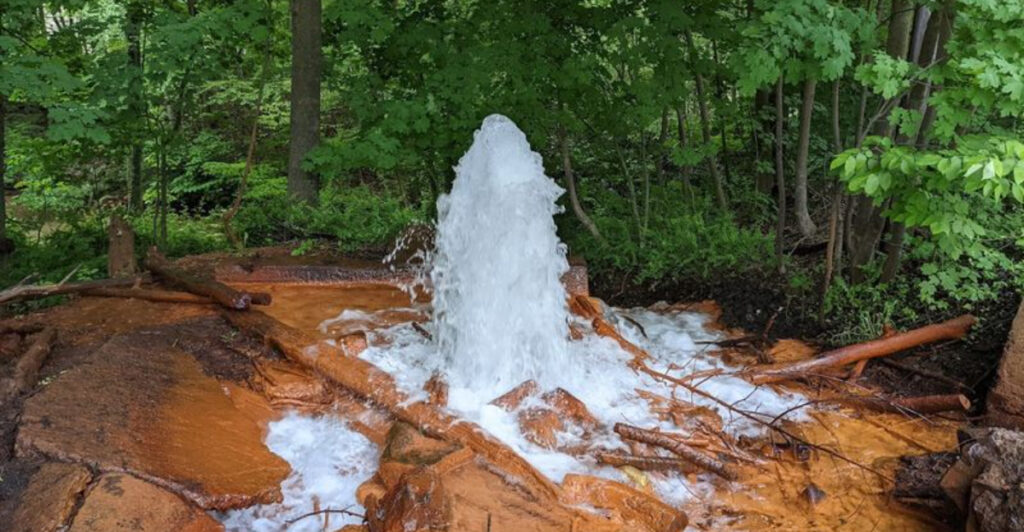
Pennsylvania hides a roadside spectacle you can watch from your car window, and it is the only known geyser on the East Coast. In Ashland, the Big Mine Run Geyser erupts beside a quiet lane, staining the rocks orange and perfuming the air with sulfur as water and gas pulse steadily from the old mining ground.
You do not need tickets or hiking boots, just a few minutes and a sense of curiosity, though most visitors end up lingering longer than planned as they try to time the bursts and take in the unusual, almost otherworldly setting. It’s a small stop, but it leaves a strong impression because of how unexpected it feels in such an ordinary roadside landscape. Here is how to make your stop easy, respectful, and unforgettable.
1. What You Are Seeing
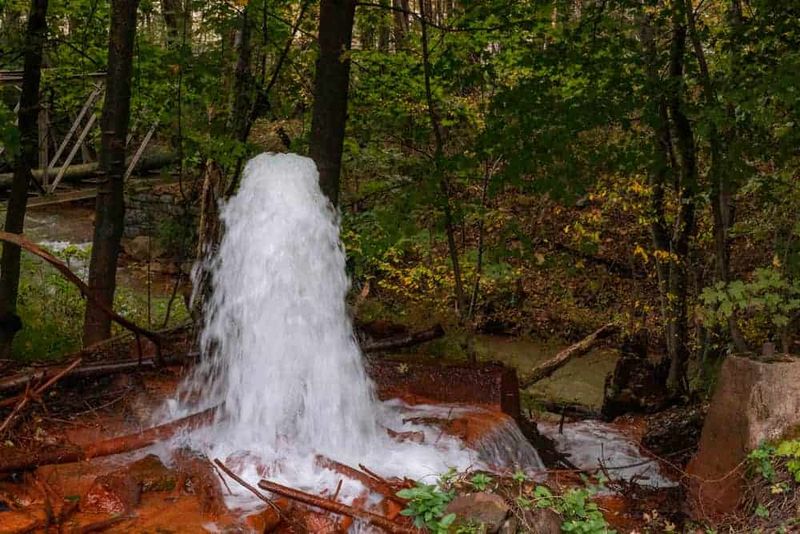
You are looking at the East Coast’s only geyser, a quirky roadside wonder tucked into the hills of Ashland, Pennsylvania.
Locals call it the Big Mine Run Geyser, and it erupts from a vent linked to old coal works beneath the valley.
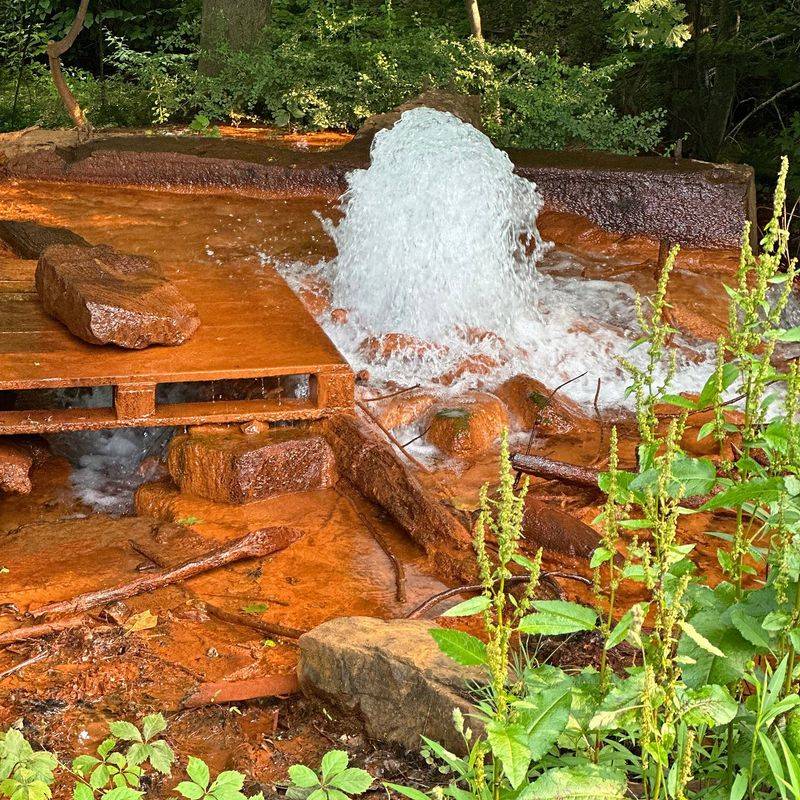
It is not a Yellowstone-style thermal feature, yet the water jets high enough to turn heads and paint the streambed a vivid orange with minerals.
What makes it special is the mix of spontaneity and simplicity: you roll up, step out, and the splash show is right there beside the road.
No tickets, no turnstiles, and often no crowds, just a rhythmic pulse of water and a soft sulfur tang in the air.
If you crave little discoveries that feel personal, this five-minute stop can become the story you share for days, the tiny marvel that makes your road trip feel wonderfully unexpected.
2. How This Geyser Works
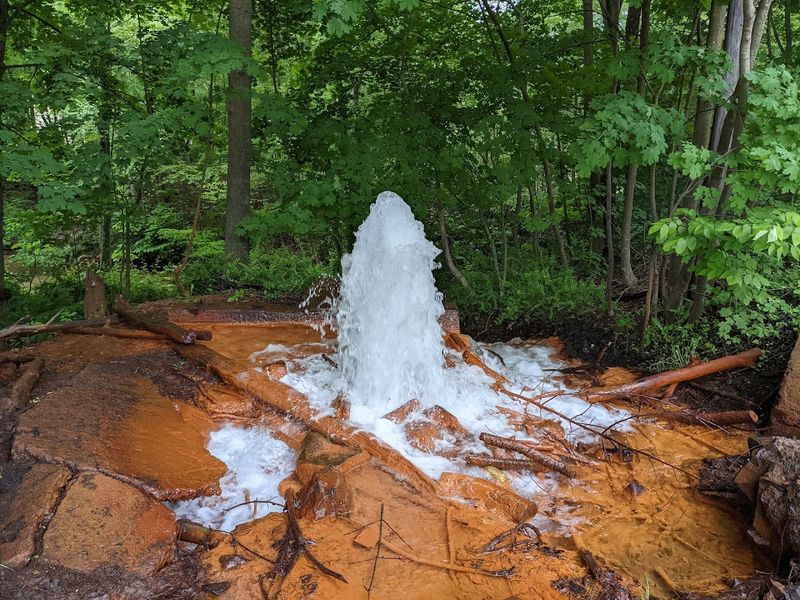
The geyser is a pressurized release from a flooded mine system roughly hundreds of feet below the surface.
Groundwater fills abandoned shafts, builds head pressure, and races up an old air vent until it bursts out in pulses you can hear.
Iron and sulfur in the water oxidize on contact, streaking rocks orange and perfuming the air with that classic miner’s-ledge scent.
Locals sometimes describe a thump just before a push, like the mine is clearing its throat.
Flow changes with the weather.
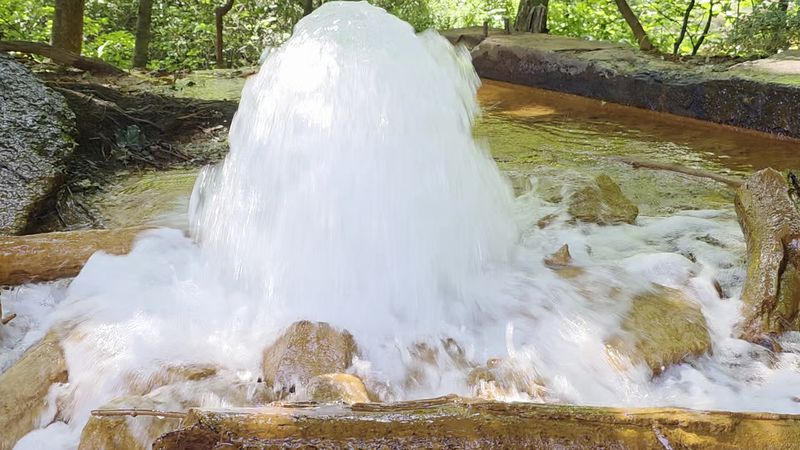
After long rains, you might find a tower of spray several feet high and a roaring stream plunging to the creek.
During drought or deep freezes, it may shrink, trickle, or freeze into wild icicles, proving this is a living, breathing feature tied to the valley’s hydrology rather than volcanic heat.
Either way, you are watching pressure seek the quickest path to daylight, an industrial echo turned natural spectacle.
3. Getting There and What To Expect
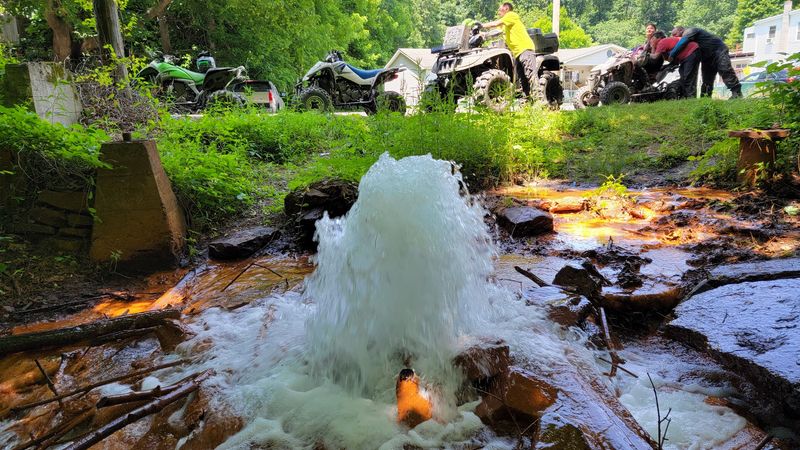
Set your GPS to 2-528 Big Mine Run Rd, Ashland, PA 17921, and it will deliver you to the splash beside the shoulder.
The spot is right off a narrow back road with a tiny pull off that fits one or two cars.
Hours are easy: it is open 24 hours, but daylight makes footing safer and photos better.
Parking can be scarce on weekends, so patience and courtesy matter.
Treat the surroundings as private property and stay along the road edge unless signage clearly invites you closer.
You can admire the plume from your vehicle if mobility is limited, or step out for a quick photo and the sulfur-kissed mist.
Keep your stop short, leave room for neighbors, and be ready to move if space is tight so everyone gets a chance to see it.
Avoid blocking driveways, keep noise down, and pack out every scrap of trash.
4. When To Go For The Best Show
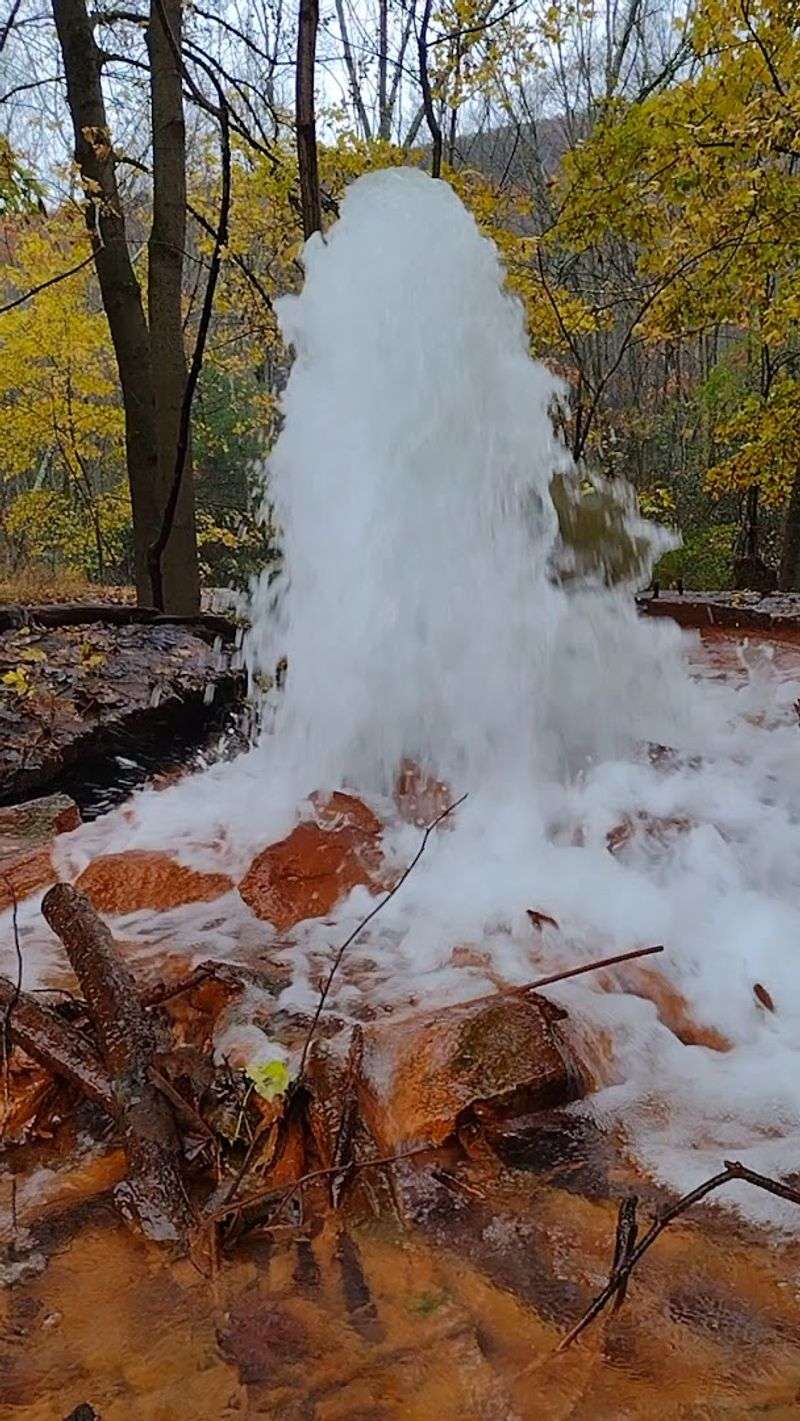
This geyser is moody, and that is half the fun.
After sustained rain, it often surges, sometimes reaching six or more feet with a satisfying whoosh.
In summer drought, the spray can fade to a sputter, while deep winter may swap the fountain for sculpted icicles.
Spring thaws can create dramatic bursts, though spray varies by the hour.
There are moments where it pauses, gathers itself, and suddenly punches skyward again.
If you are chasing photos, aim for morning or late afternoon when light rakes the orange rocks and turns mist into sparkle.
Weekdays reduce traffic and help you snag the tiny pull off safely.
Bring a backup plan in case the flow is low, then circle back after a storm to watch the valley’s plumbing crank up and the vent come roaring to life.
Cloudy skies also help by softening glare.
Stand upwind to keep your lens dry.
5. Safety, Etiquette, and Access
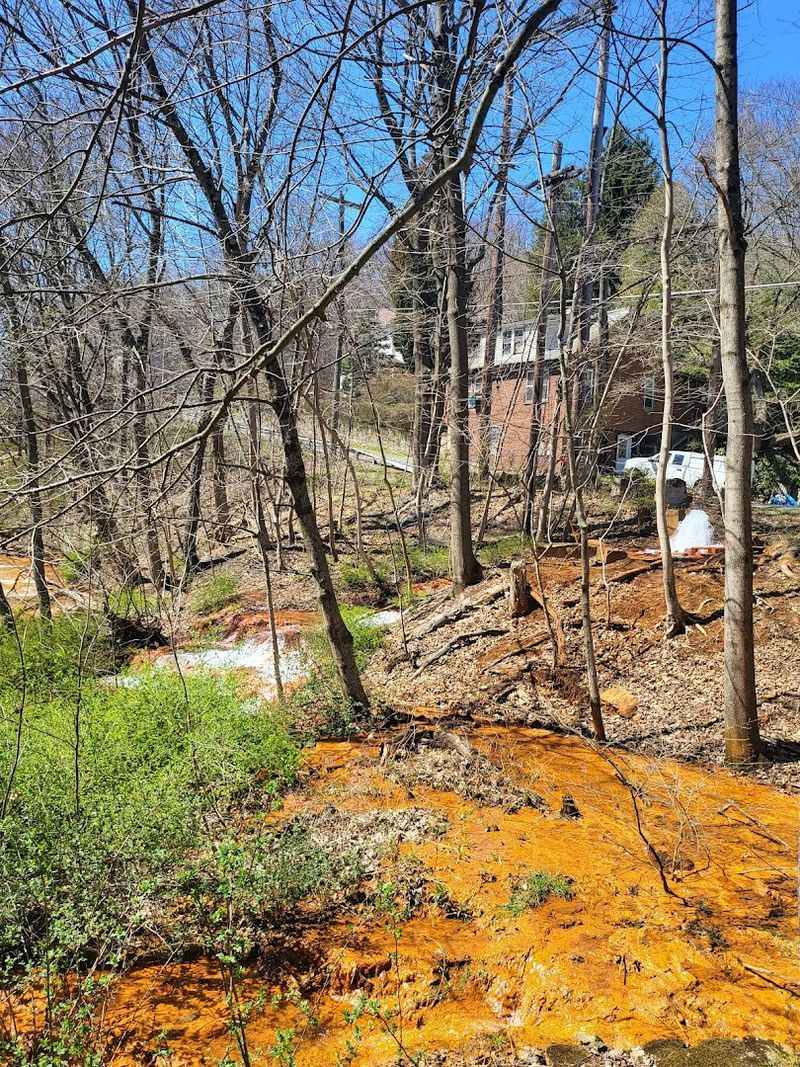
Because the geyser sits beside a narrow road and across from homes, thoughtful behavior matters.
Park fully in the pull off, never block a driveway, and keep visits brief so others get a turn.
Rocks and orange slime can be slick, so watch your step and keep curious kids close to the shoulder.
If you use a drone, observe FAA rules and avoid buzzing over yards.
The water has a sulfur smell that some love and others do not, so plan accordingly.
You might encounter barking dogs or traffic rolling by, another reason to stay alert and respectful.
Pack out all trash, skip graffiti or rock tossing, and treat the place like a shared privilege so the homeowner and township feel good about keeping access open.
Step lightly on vegetation, skip dam building in the creek, and leave the scene looking cleaner than you found it.
6. Photography Tips You Can Use
Bring a phone or a light camera, because you will be close and do not need a heavy lens.
For motion, set a fast shutter to freeze droplets, or drag it to a quarter second for silky threads.
A small tripod or phone clamp on the guardrail can steady long exposures without stepping off the shoulder.
If you shoot video, capture short clips between traffic for cleaner audio.
Shoot low from the pull off to frame the plume against trees, then switch to a higher angle for the glowing orange channel.
Morning backlight can halo the spray, while overcast days give clean color and fewer blown highlights.
Wipe your lens often, shield it from mist with your hand, and tuck a microfiber cloth in your pocket so streaks do not ruin the shot you waited for.
Consider a polarized filter to tame glare on wet rocks and deepen colors.
7. History, Myths, and Quick Answers
Stories swirl around this pocket geyser, and you will hear different takes from locals and travelers.
Most agree the vent began as infrastructure for coal mining, later becoming a pressure outlet once shafts flooded.
That origin explains the orangish water, the sulfur smell, and the way rainfall controls the show instead of underground heat.
Some folks even report a muffled thud between bursts, like the hill is breathing.
Common questions pop up.
Is it on private land?
Yes, which is why you should stay near the road unless you see posted guidance.
Is it worth a detour?
If you appreciate odd, photogenic moments that feel uniquely regional, absolutely.
Is there always water?
No, and that unpredictability is part of the charm, so check the weather, bring flexible expectations, and enjoy whatever the valley decides to offer when you roll up.
Bring patience, smile at neighbors, and treat the stop like a gift.
Share this story