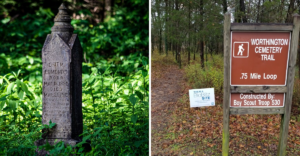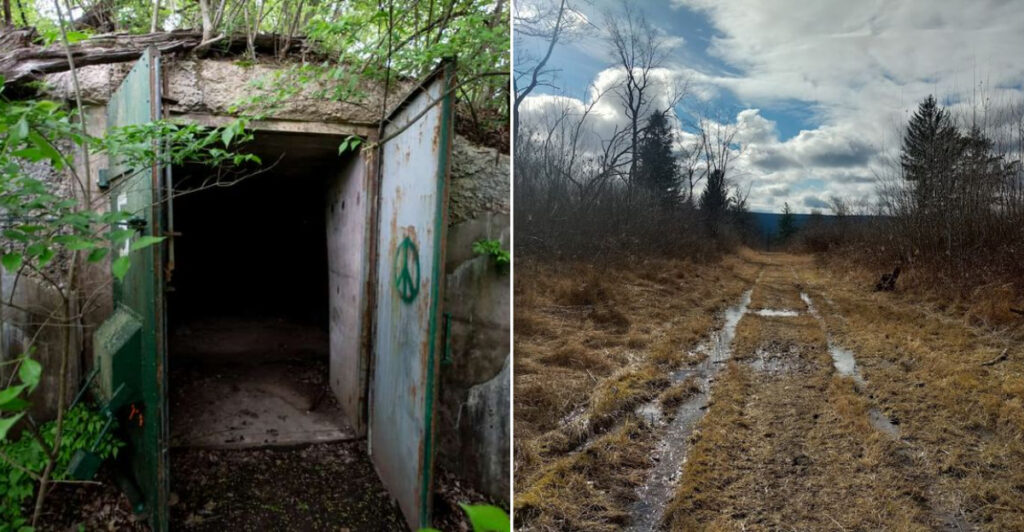
At the Bunkers of Alvira in Allenwood, Pennsylvania, an ordinary walk through the woods turns into something far stranger, where quiet trails suddenly reveal concrete domes, broken foundations, and the memory of a town that vanished for war. You are not just hiking here – you are moving through a place where families were displaced, military plans reshaped the landscape, and nature slowly folded everything back into the trees, leaving behind a setting that feels equal parts history lesson and ghost story.
What makes this site unforgettable is how easily it shifts from peaceful to eerie, especially when the forest opens and another bunker appears, half hidden in brush, with the kind of echo that makes you lower your voice without knowing why. If you love abandoned places, overlooked Pennsylvania history, and trails that make you feel like you discovered something secret, this landmark has a way of pulling you deeper with every step.
1. A Woodland Trail That Feels Like a Vanished World
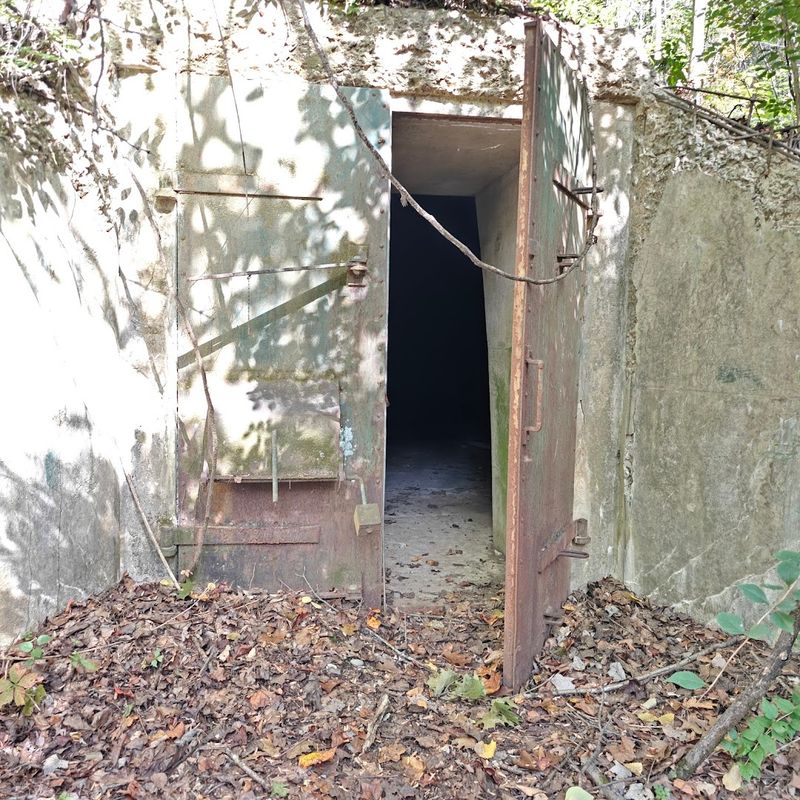
The first thing that struck me at the Bunkers of Alvira was how normal the woods seemed until they suddenly did not.
You follow a dirt road through State Game Lands and then, without much warning, a rounded concrete bunker rises out of the trees like a relic from another time.
That contrast is what gives this place its pull.
It is not a polished historic park with fences, exhibits, and tidy walking loops.
Instead, you get a raw landscape where history sits in the open, weathered and partly reclaimed by brush, mud, and leaf cover.
The site feels discovered rather than displayed, which makes every turn more personal.
As you move farther in, the area starts to feel like a lost settlement scattered across the forest floor.
Concrete structures, old road traces, and hints of vanished homes create an experience that is both peaceful and unsettling.
You are hiking, but you are also reading the land.
2. The Lost Town of Alvira Beneath the Trees
Long before hikers came here looking for abandoned bunkers, this was the village of Alvira, a real community with homes, farms, roads, and family life.
During World War II, the federal government acquired the land and displaced local residents to build the Susquehanna Ordnance Depot.
That decision erased the town in a practical sense, but not in an emotional one.
When you visit now, you are walking through a place where everyday life was interrupted and never fully restored.
Reviews often mention the ghost town feeling, and it makes sense because the remaining traces are subtle but powerful.
A foundation here, a cemetery there, and a bunker beyond the next stand of trees all suggest absence as much as presence.
That layered history is what separates Alvira from a typical abandoned site.
It is not just military infrastructure in the woods.
It is a landscape shaped by loss, relocation, and time.
3. Why the Bunkers Were Built Here
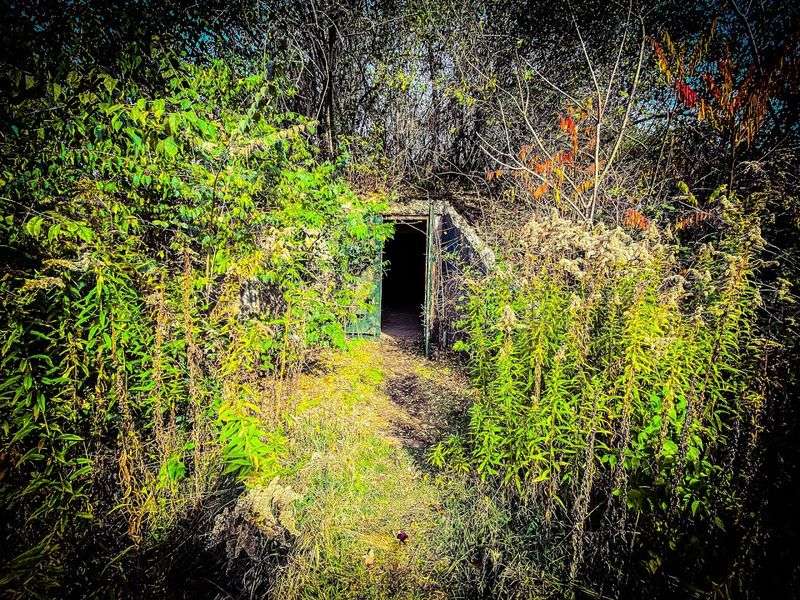
The bunkers are the most visible reminder of why Alvira changed so dramatically during the war years.
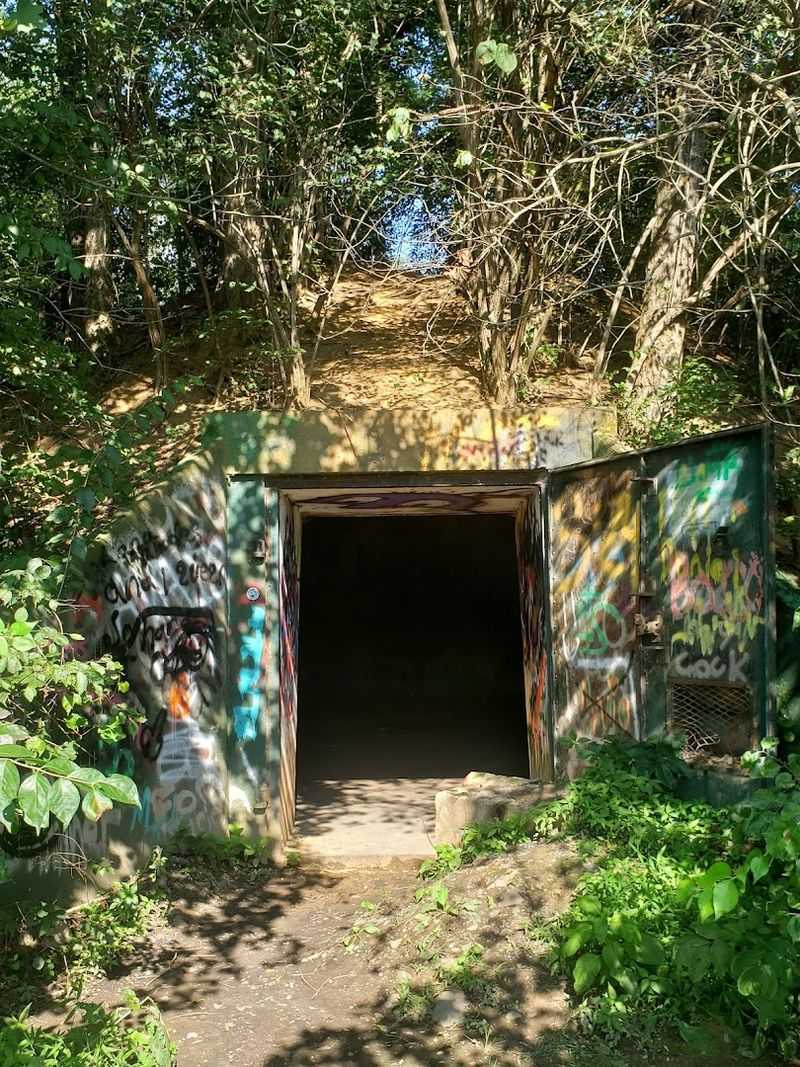
The government built this area into a military storage complex connected to munitions production and supply, and the concrete igloo-like structures were designed to store explosive materials safely apart from one another.
Their shape, spacing, and durable construction were all part of that logic.
Even if you arrive knowing only a little background, the design tells you these were not ordinary buildings.
They sit low and thick against the landscape, built for containment, distance, and function rather than comfort.
That practical purpose is exactly why they still dominate the woods decades later.
Visitors often mention finding more bunkers than expected, and that is part of the fascination.
There are many spread through the game lands, enough to make the forest feel like a hidden military grid.
Each one reinforces the scale of what once operated here.
4. What Exploring the Site Feels Like Today
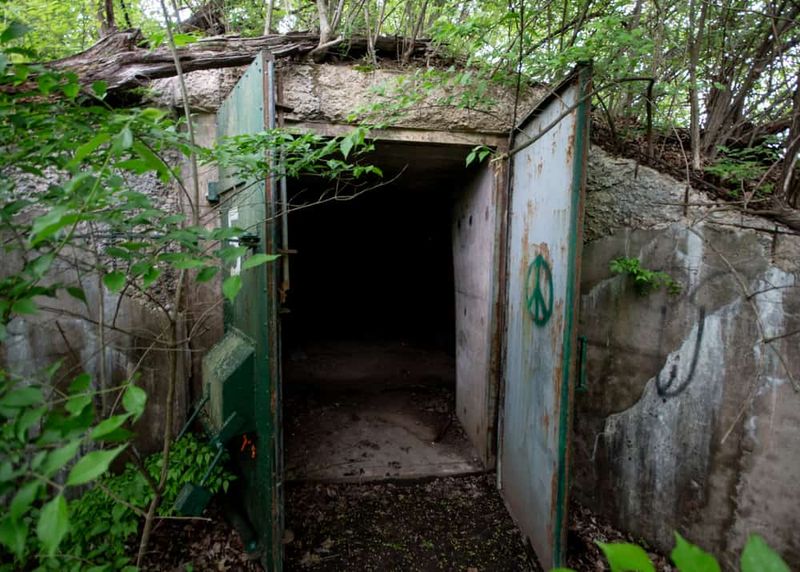
Exploring the Bunkers of Alvira today feels part hike, part scavenger hunt, and part history walk with no formal script.
People often rely on online maps, overhead photos, or shared route tips because the site is spread out and not presented like a conventional attraction.
That loose, exploratory feel is a big part of its appeal.
You may start at the stone parking area on Alvira Road and follow the dirt roads deeper into the game lands, watching for side paths and concrete forms tucked off the main route.
Some bunkers appear quickly, while others take patience to find through seasonal growth.
The deeper you go, the more the place rewards curiosity.
At the same time, the roughness is real.
Mud, puddles, overgrowth, graffiti, and scattered debris can all shape the experience depending on recent weather and the time of year.
This is not a manicured walk, and that is exactly why it feels memorable.
5. Inside the Domes: Echoes, Scale, and Unease
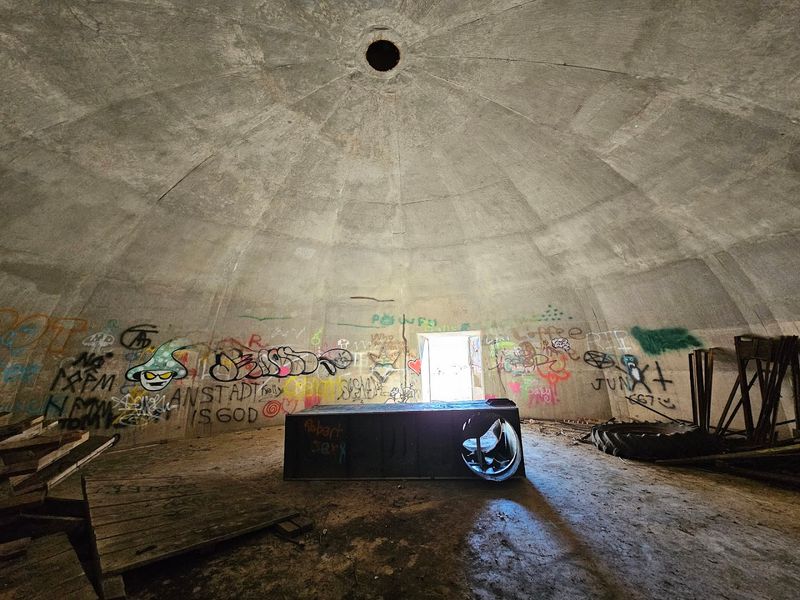
One of the most talked about details at Alvira is the acoustics inside the bunkers, and that reputation is deserved.
Step through an open doorway and the curved concrete interior changes the sound of every footstep, whisper, and laugh.
Even a casual conversation suddenly feels amplified, strange, and slightly theatrical.
That acoustic effect makes the spaces memorable, but so does their size.
From the outside, some bunkers can look modest, almost like half-buried shells, yet the interiors feel larger once you enter.
More than one visitor has compared them to the size of a small house, which makes the structures feel more imposing than expected.
There is also an undeniable unease to standing inside them.
Graffiti, darkness, damp air, and the knowledge that these were built for wartime storage give the rooms a tension that the quiet woods outside do not have.
You do not have to believe ghost stories to feel the mood shift.
6. Cemeteries, Foundations, and the Human Story
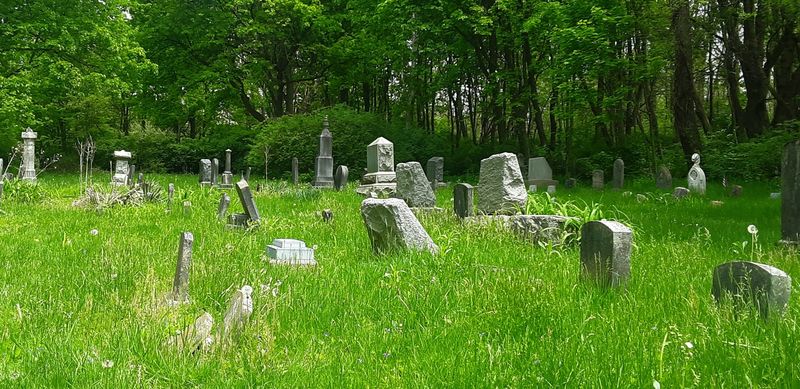
If the bunkers show the military story of Alvira, the cemeteries and foundations preserve its human one.
Visitors sometimes come for the concrete domes and leave thinking most about the graves, the cellar holes, and the small physical reminders that people once built lives here.
Those traces can be easy to miss if you rush.
What stays with you is the contrast between military permanence and domestic disappearance.
The bunkers, built for war, still stand in rows across the woods, while the homes and routines of the original town survive mostly as fragments.
That imbalance gives the site an emotional weight that goes beyond novelty.
Walking among those remnants changes the tone of the visit.
It becomes less about checking off abandoned structures and more about recognizing what was displaced when the depot arrived.
In that sense, Alvira is not only an exploration site.
It is also a place of memory.
7. What You Need to Know Before You Go
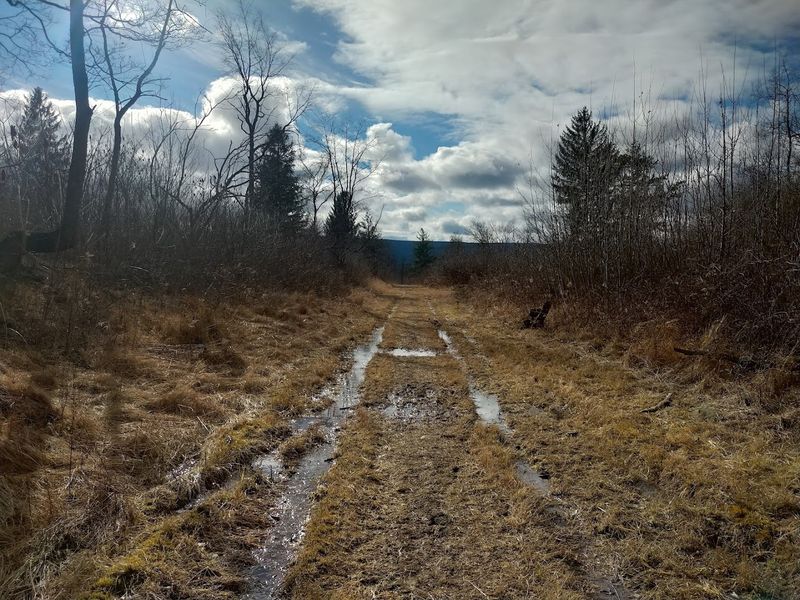
The Bunkers of Alvira are open around the clock, but that does not mean the visit is effortless or risk free.
The site sits within active State Game Lands, so if you go during hunting seasons, bright orange clothing is smart and repeatedly recommended by visitors.
A map, solid boots, water, and a flashlight also make a real difference.
Conditions can change the experience quickly.
Reviews mention mud after rain, giant puddles, heavy summer overgrowth, strong bug activity, and plenty of ticks, so preparation matters more here than at a typical park trail.
You should also stay aware of boundaries and avoid crossing into restricted federal prison property nearby.
Because these structures are abandoned and not maintained, you are responsible for your own caution.
Watch footing, be selective about entering bunkers, and keep children close if they are with you.
The place is absolutely worth seeing, but it rewards visitors who treat it with respect and common sense.
8. Why This Place Lingers After the Hike Ends
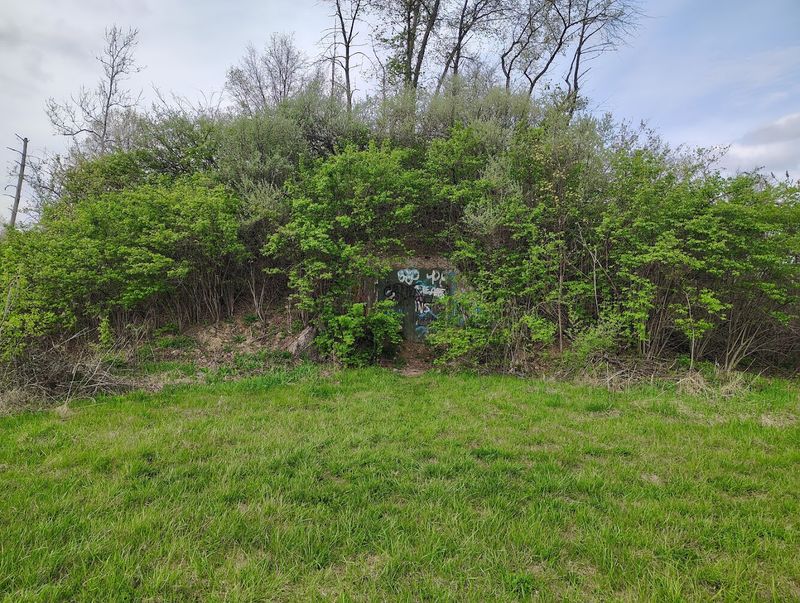
Some historic places impress you with restored buildings and curated exhibits, but Alvira works differently.
It lingers because so much is left unresolved in the landscape, from the erased town to the quiet bunkers to the stories visitors bring back about echoes, wildlife, graffiti, and hidden paths.
You leave with questions, not just facts.
That unfinished quality is exactly what makes the site compelling.
It is peaceful enough for a long walk, eerie enough to spark your imagination, and historically important enough to feel meaningful beyond the thrill of exploration.
Few places blend those elements as naturally as these woods near Allenwood.
If you go at the right time of year, with good preparation and a little patience, the Bunkers of Alvira offer more than a photo opportunity.
They give you a rare chance to feel history underfoot in a direct, physical way.
Even after you return to the road, the silence of those domes tends to follow you.
Share this story