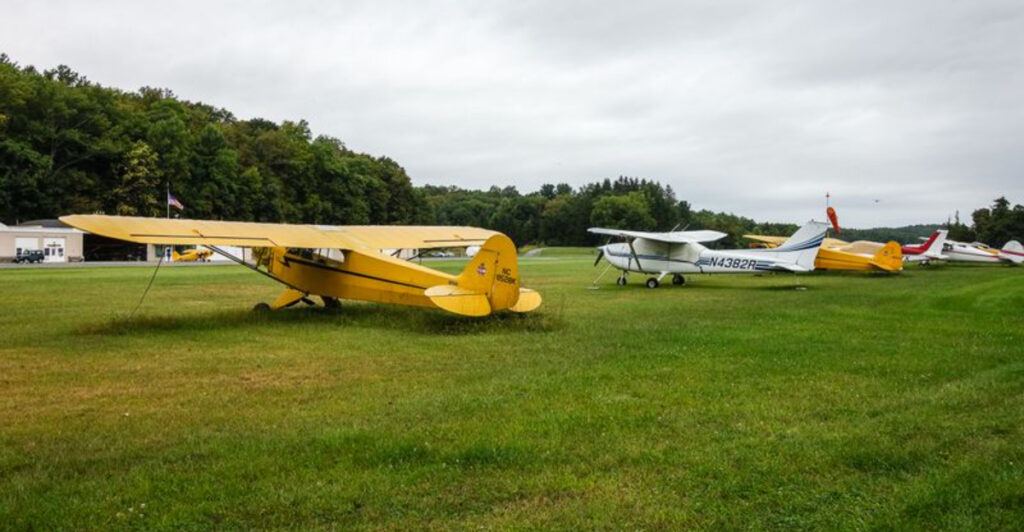
A single-engine plane drops over the treetops, lines up with a narrow strip of asphalt, and touches down between two glacial lakes. A few yards away, hikers pause on a trail while anglers keep their eyes on the water.
This is not an aviation museum, a private resort, or a scene from an old newsreel. It is an ordinary afternoon at Kittatinny Valley State Park, one of the most quietly surprising places in northwestern New Jersey.
Hidden among the forests and rolling hills of Sussex County, Aeroflex–Andover Airport has aviation roots extending back to the 1920s. Better yet, it never became a relic behind glass.
Small planes still use its compact runway, giving visitors a front-row view of living aviation history. The airfield may be the park’s headline-grabbing secret, but the surrounding lakes, wooded trails, wildlife habitats, and peaceful meadows turn that surprise into a full day outdoors.
Kittatinny Valley State Park Is a Quiet Escape in Sussex County
Just a few miles from downtown Newton, the traffic thins, the roads narrow, and northwestern New Jersey begins to show off its calmer side. Kittatinny Valley State Park spreads across more than 5,000 acres in Sussex County, yet it remains less familiar than some of the state’s headline parks.
That low profile is part of the appeal. Instead of crowded overlooks and tightly packed picnic lawns, visitors find broad meadows, deep woods, glacial lakes, and long stretches where birds provide most of the background noise.
The park was officially dedicated in 1994 after land was acquired through New Jersey’s Green Acres Program. Its name comes from a Lenape word commonly translated as “great mountain” or “endless hill,” a fitting description for a landscape shaped by ridges and valleys.
Those contours make the park feel much farther from suburban New Jersey than it really is. The main visitor area sits along Goodale Road, where a stone building, native plant gardens, and nearby trails provide an easy introduction.
Wildflowers fill parts of the park during the warmer months, drawing monarchs, swallowtails, bees, and hummingbirds. Beyond the cultivated garden, the wildlife gets considerably larger.
Black bears, foxes, beavers, muskrats, wild turkeys, and white-tailed deer all inhabit the surrounding forests and wetlands. What makes the park especially enjoyable is its ability to accommodate different definitions of a good day outside.
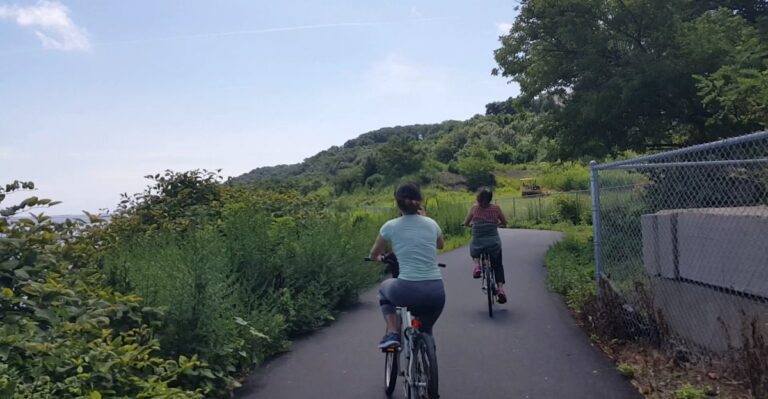
One person can spend hours mountain biking while another barely leaves the edge of Lake Aeroflex. Families can choose a manageable loop near the visitor center, and experienced hikers can connect multiple routes for a longer outing.
Then there is the unexpected rumble of an engine overhead. The sound never quite matches the sleepy setting, which is precisely why discovering the airport feels like stumbling across a secret the park has been casually keeping for decades.
Aeroflex-Andover Airport Has Roots Stretching Back to the 1920s
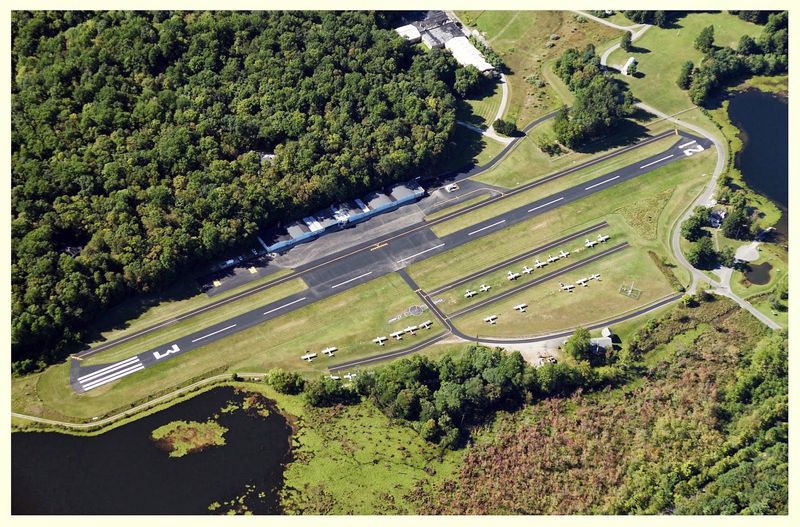
Aviation was still young when flying activity began taking shape here in the 1920s. Pilots were testing what small aircraft could do, airfields were often little more than open stretches of grass, and every flight carried more adventure than convenience.
The site that became Aeroflex–Andover Airport grew from that era, developing into a destination for private pilots, small planes, and glider enthusiasts. Its position within the Kittatinny Valley was more than scenic luck.
The surrounding ridges and uneven terrain can produce rising currents of warm air, known as thermals, that allow gliders to gain altitude and remain aloft without relying on an engine. That made this corner of Sussex County naturally attractive to pilots interested in soaring.
Over the following decades, the little airfield survived changes that erased many early aviation sites. Land around New Jersey was rapidly developed, older runways disappeared beneath housing and commercial projects, and flying became increasingly concentrated at larger facilities.
Aeroflex remained. When the surrounding property became part of the state park system, the runway was preserved instead of being paved over for a parking lot or reclaimed by the forest.
Today, Aeroflex–Andover is a public-use airport with the Federal Aviation Administration identifier 12N. It is owned by the New Jersey Forest Fire Service, giving the historic field a practical modern role in addition to its recreational aviation activity.
The agency uses aircraft to help detect and respond to wildfires, so the airport is connected not only to the park’s past but also to the protection of New Jersey’s forests. That continuity is what makes the site more compelling than an abandoned runway.
The same patch of Sussex County that attracted early aviators still welcomes aircraft roughly a century later. There is no elaborate monument announcing that history.
Instead, the runway, hangars, windsock, and occasional plane do the storytelling.
Small Aircraft Still Take Off From the Historic Lakeside Runway
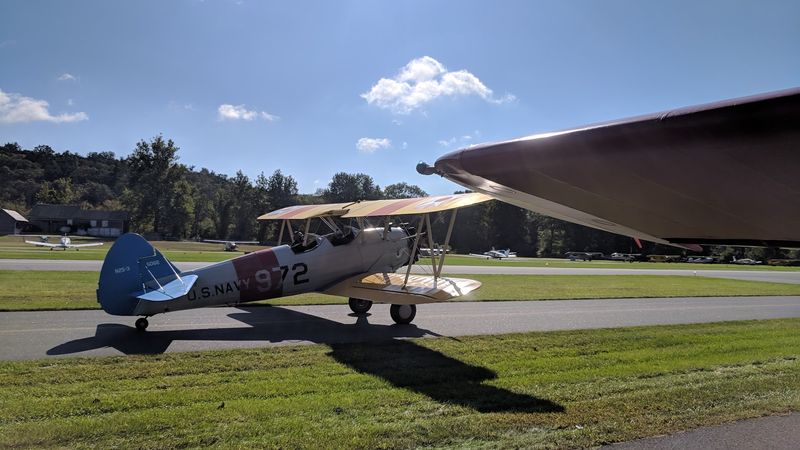
When an aircraft begins its approach, the park’s quiet breaks in stages. First comes a faint engine note above the trees.
Then a small plane appears over the lake, descends toward the runway, and touches down with wooded hills filling the background. The entire sequence lasts less than a minute, but it can stop walkers in their tracks.
Aeroflex–Andover has one asphalt runway designated 3/21, measuring approximately 1,981 feet long and 50 feet wide. By airport standards, that is short and narrow, particularly when compared with the sprawling runways used by commercial jets.
The airfield covers only about 12 acres and sits 583 feet above sea level. Its compact dimensions help explain why the place feels like part of the park rather than a separate transportation complex.
There are no packed terminals, baggage belts, or lines of taxis. Most activity involves single-engine planes and other light general-aviation aircraft.
The runway’s setting also makes it memorable for pilots. Lake Aeroflex lies immediately beyond its northern end, while Gardner’s Pond borders the southern approach.
With water at both ends, the landing strip has sometimes been compared to an aircraft carrier. That description may be a little dramatic, but one glance at the layout makes the nickname understandable.
Visitors should remember that this is an operating airport, not an outdoor exhibit. Fences, signs, runway boundaries, and restricted areas deserve the same respect they would receive at any active airfield.
Plane movements can vary with weather, season, maintenance, and pilot schedules, so there is no guarantee of catching a takeoff during a short visit. On an active day, however, watching a small aircraft roll along a runway framed by forest is an experience few people expect from a New Jersey state park.
The planes are not performing for spectators. They are simply continuing a local flying tradition that began when aviation itself was still finding its wings.
Lake Aeroflex Creates a Remarkable Backdrop for Watching Planes
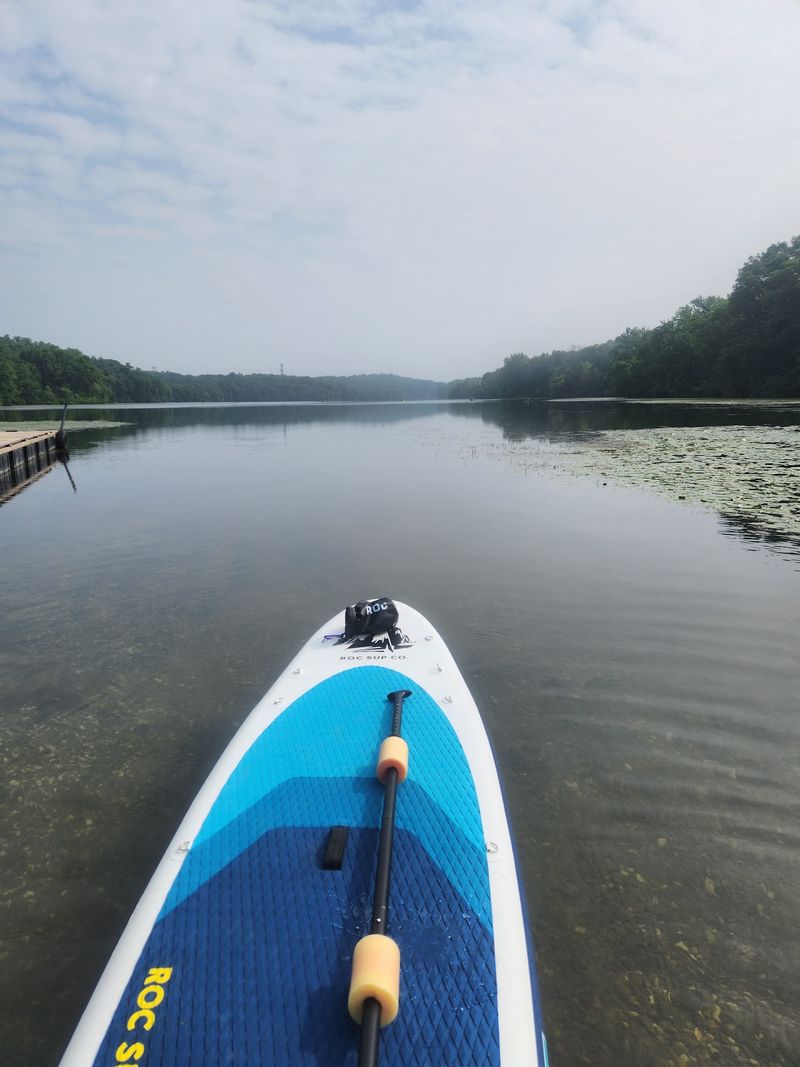
At first light, Lake Aeroflex can become so still that the opposite shoreline appears twice, once above the water and once in its reflection. Then a plane passes overhead and the scene suddenly gains a moving piece.
The combination of glassy water, wooded hills, and a working runway is what gives this corner of the park its unusual character. Lake Aeroflex covers approximately 119 acres and reaches a depth of about 110 feet, making it New Jersey’s deepest natural lake.
It was created by glaciers rather than a modern dam, and its steep underwater contours are part of what distinguishes it from the state’s shallower ponds and reservoirs. From shore, though, the first thing visitors notice is usually the view.
In spring, fresh green leaves surround the water. Summer brings kayaks and canoes onto the lake, while early mornings often remain quiet enough to hear individual birdcalls travel across the surface.
Autumn is the scene-stealer. Red, orange, and gold foliage wraps around the lake, and the changing colors make every passing aircraft look as though it has flown into an oversized postcard.
Winter strips the landscape back to bare branches and long sightlines, revealing shapes hidden during the leafy months. The airport occupies a narrow piece of ground between Lake Aeroflex and Gardner’s Pond, so water defines both ends of the runway.
That geography creates several interesting vantage points around the public areas, although visitors must remain safely outside operational zones. A plane descending over the lake can appear surprisingly low before its wheels meet the asphalt.
Even when no aircraft arrive, the lake hardly feels like a consolation prize. A bench, a patch of shoreline, or a slow walk nearby is enough to fill an hour without trying very hard.
The view changes constantly with the wind and light, and the possibility of a small plane appearing above the trees adds just enough suspense to keep everyone glancing skyward.
Miles of Wooded Trails Reveal the Park’s Wild Side
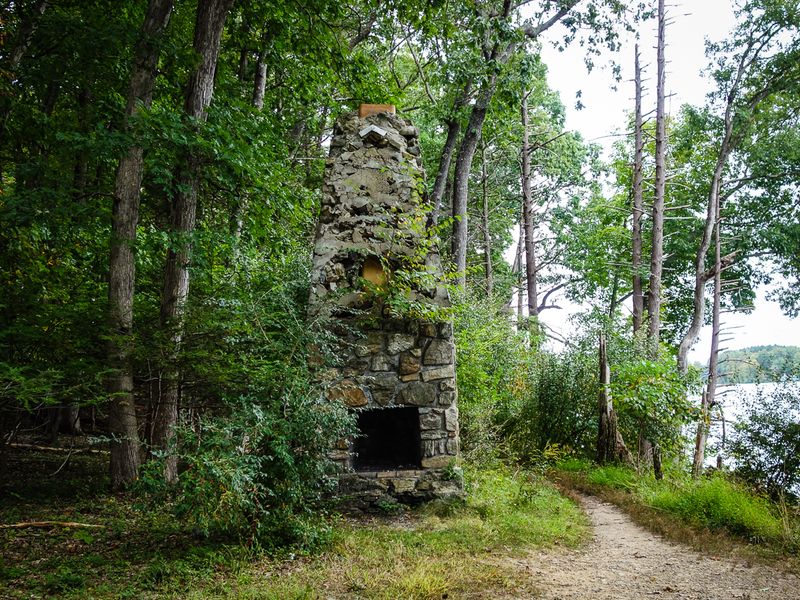
Long before hikers arrived with trail apps and hydration packs, trains moved through this landscape carrying passengers and freight. Two former railroad corridors now help form the recreational backbone of the park.
The Sussex Branch Trail follows roughly 20 miles of an abandoned Delaware, Lackawanna and Western Railroad route, while the Paulinskill Valley Trail extends for about 27 miles along another historic rail bed.
Together with the park’s interior paths and connecting routes, they contribute to a network of approximately 75 miles available for hiking, biking, and horseback riding.
The rail trails offer relatively gentle grades because locomotives were never fond of steep climbs. Their broad, mostly level surfaces make them useful for visitors who want distance without scrambling over every boulder in Sussex County.
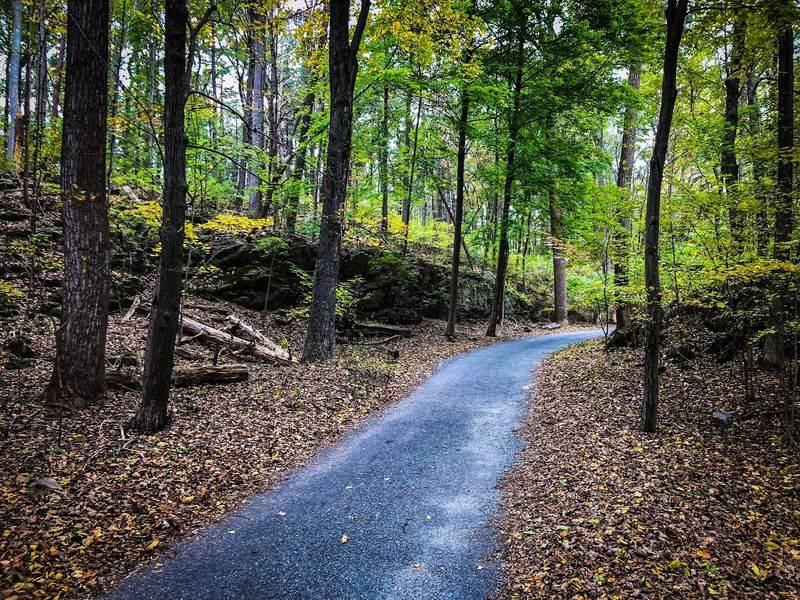
The interior trails have a different personality. Narrower paths weave around lakes, cross meadows, and enter forests of oak, maple, hemlock, and other hardwoods.
Exposed roots and rocky sections keep walkers paying attention, while short climbs provide enough effort to make lunch taste deserved. Routes near the visitor center and Lake Aeroflex work well for a relaxed outing, but the larger network allows ambitious hikers and mountain bikers to keep exploring for hours.
Trail intersections make a map worth carrying, especially when turning a casual stroll into a longer loop. Each season changes the experience.
Spring can leave damp or muddy stretches while wildflowers brighten open ground. Summer shade offers relief beneath the canopy, though ticks and mosquitoes make repellent a sensible addition to the daypack.
Fall brings cooler temperatures and brilliant color, along with extra leaf cover that can hide rocks and roots. Winter opens views through the trees and occasionally turns the old rail corridors into snowy ribbons.
Wildlife signs appear everywhere once visitors slow down enough to notice them. A gnawed tree may reveal beaver activity, muddy tracks can record a deer’s morning route, and a distant rustle may belong to a turkey rather than anything more dramatic.
This is bear country, too, so keeping food secured and giving every wild animal plenty of room remains part of hiking responsibly.
Fishing, Paddling, and Birdwatching Complete the Adventure
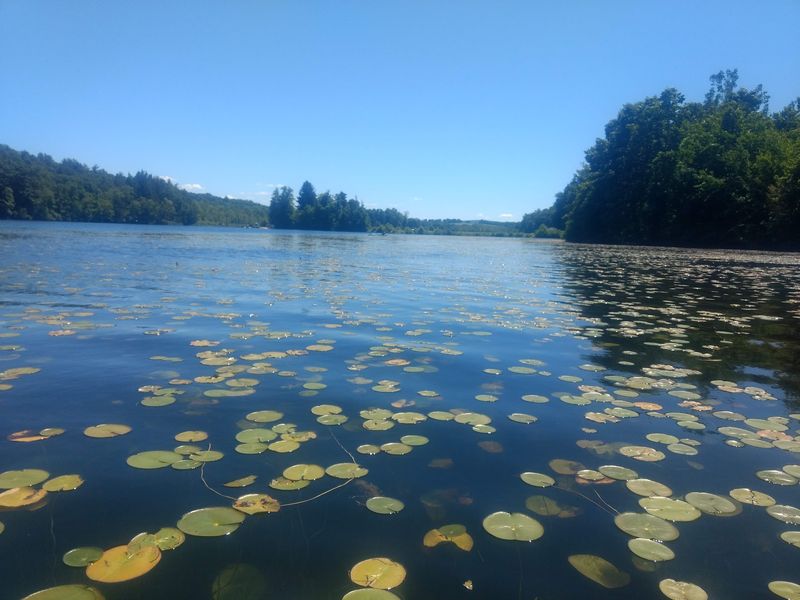
Lake Aeroflex has enough depth to hold some genuine surprises beneath its surface. Anglers come for brown and rainbow trout, largemouth and smallmouth bass, chain pickerel, sunfish, and landlocked salmon, a relatively unusual catch in New Jersey waters.
Trout and salmon favor colder conditions, and the lake’s deep water helps maintain the habitat they need. A valid New Jersey fishing license is required for most anglers age 16 and older, and current state regulations determine seasons, size limits, and permitted catches.
Even without a trophy fish, sitting beside the water while a small plane crosses overhead beats staring at a bobber beside a highway. Paddlers get another perspective entirely.
Canoes and kayaks can be launched onto Lake Aeroflex, allowing visitors to move beyond the shoreline and see the wooded basin from water level. Electric motors are permitted under park rules, but gasoline-powered motors are not, helping preserve the lake’s quieter character.
Personal flotation devices and sensible attention to changing weather are essential, particularly because conditions on open water can shift faster than they appear from shore. Birdwatchers have plenty to occupy them without leaving dry land.
The park’s mix of lake, wetland, meadow, and mature forest creates habitat for waterfowl, songbirds, raptors, and migrating species. Kingfishers patrol the shoreline, herons and egrets work the shallows, and warblers pass through during spring and fall migration.
Hawks may circle over the open areas, sharing the sky with aircraft that are considerably louder and far less graceful. Early morning is usually the sweet spot, when the water is calm, bird activity is high, and the human traffic remains light.
It is possible to fish at dawn, paddle before lunch, walk a wooded trail in the afternoon, and finish beside a runway that has served aviators for generations. Few state parks combine those experiences within one landscape, and fewer still make the combination feel so wonderfully unforced.
Share this story