Before Lewis and Clark headed into the American West, months of crucial preparation unfolded on the Illinois side of the Mississippi River. At the Lewis & Clark State Historic Site in Hartford, visitors can explore the area where the Corps of Discovery spent the winter of 1803–1804 training, organizing supplies, and preparing for the journey ahead.
A recreated log fort, full-size keelboat replica, and free museum bring that chapter of history into focus near the expedition’s departure point. The river setting makes the story feel especially tangible. For history lovers exploring near St. Louis, this fascinating Illinois stop is an easy detour with a big story.
A Riverside Starting Line Hiding in Plain Sight
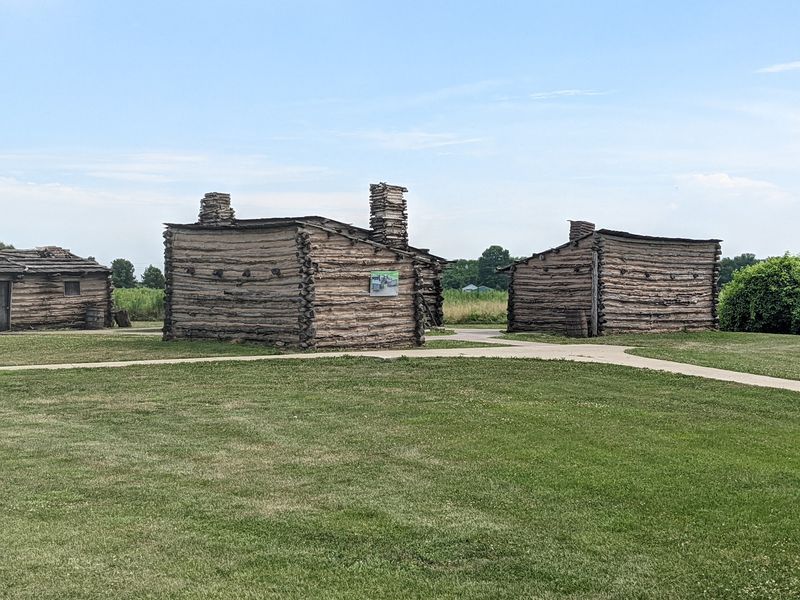
Picture a huge story starting in a very ordinary-looking place. Flat farmland, a wide sky, and a long levee are what greet drivers rolling into Hartford, Illinois. Few would guess that one of America’s most famous adventures began just a short walk from the parking lot.
In December 1803, Captain William Clark and a group of men arrived near the mouth of the Wood River. They built a winter camp, which history now calls Camp River Dubois. Meriwether Lewis spent much of that season across the river in St. Louis, gathering supplies and information, while Clark ran the camp.
For about five months, this patch of riverbank was the busiest training ground in the young United States. Men chopped wood, practiced shooting, repaired gear, and learned to follow orders. Some got into trouble, too, and discipline was part of daily life.
Here is the twist that makes the site fun to explore. The rivers have moved since 1804. The Mississippi and Missouri have shifted their paths over the past two centuries, so the exact original campsite is believed to be lost to the water or buried under changed land.
The state historic site stands close by and tells the story in the right neighborhood. That changing landscape is part of the lesson.
Rivers in this region are powerful, and they reshape everything around them. The same muddy currents that carried the expedition west also rewrote the map of where they started.
Today the grounds feel calm and wide open. Parking is free, the lawns are mowed, and the interpretive center sits low against the horizon.
Travelers coming from St. Louis can reach it in roughly 20 to 30 minutes, making it an easy add-on to a day in the city. Step out of the car and look west. That direction is exactly where the Corps of Discovery was headed.
The Cutaway Keelboat Steals the Show
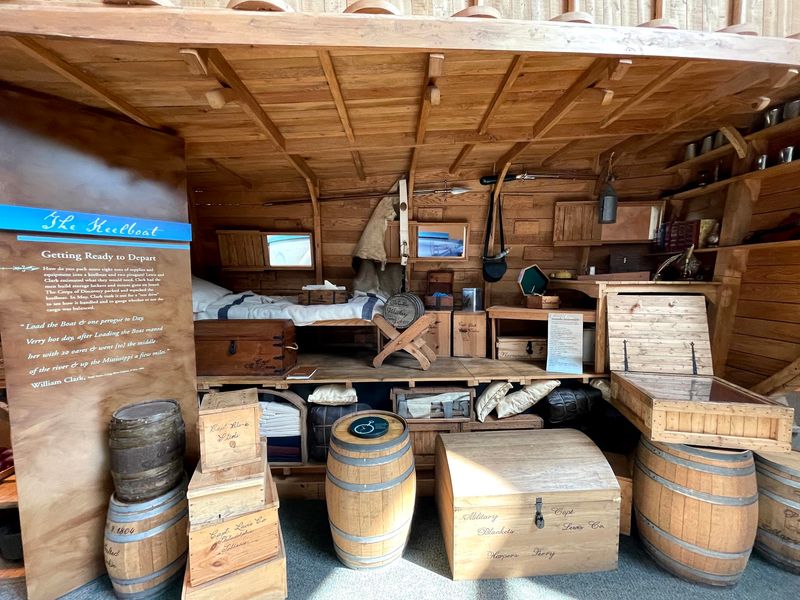
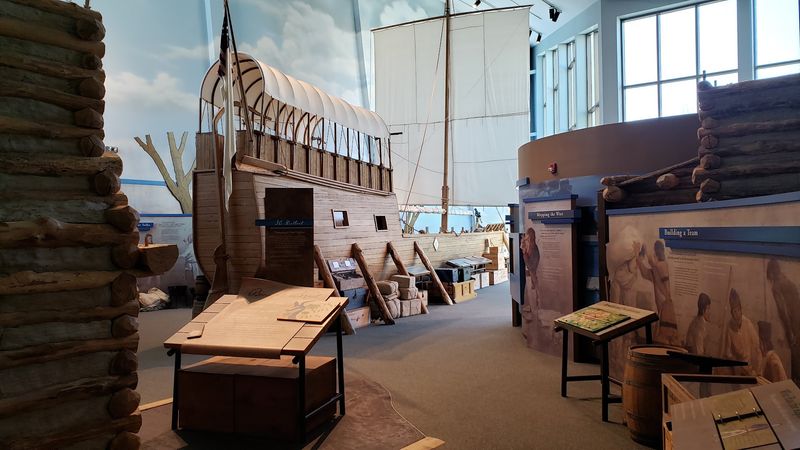
Fifty-five feet. That is roughly how long the expedition’s main boat was, and the museum has built a full-size replica to prove it. Walking up to it inside the interpretive center is a little like meeting a whale indoors.
The best part is that one side of the boat has been cut away. Instead of just seeing a smooth wooden hull, you can peek inside and see how the crew packed everything. Barrels, boxes, and bundles fill the space, showing how tightly the supplies had to fit.
Look closely and the hard work becomes clear. This was no speedboat. Going upstream on the Missouri meant pushing against a strong current, so the men often rowed, used long poles, or even pulled the boat with ropes while walking along the shore.
Kids tend to circle the replica more than once. There is a lot to spot, from the oar positions to the small sail and the cramped areas where men stored their gear. Adults usually start doing math in their heads about how many weeks of food could fit inside.
The keelboat also helps explain why the camp mattered so much. Before the trip, Clark and his men had time to load, test, and adjust the boat. Packing it wrong could mean tipping, leaking, or losing supplies in the river.
Spend a few minutes reading the signs around the display. They explain what the expedition carried, including tools, trade goods, medicine, and scientific instruments. Some of those items were meant as gifts for Native American nations the Corps hoped to meet.
For the best photos, stand at an angle where both the open side and the bow show up in one frame. That view captures the size and the stuffed interior together, and it makes a great image to show friends back home.
Hands-On Exhibits That Follow the Trail West
Spelling mistakes might be the last thing anyone expects to enjoy at a history museum. Yet the copies of Lewis and Clark’s journal entries are full of creative spelling, and young visitors love catching them. It turns out even famous explorers had trouble with words like mosquito.
The exhibits are arranged to move you through the expedition in stages. You start with planning and the winter at camp, then travel through the long journey up the Missouri, across the mountains, and toward the Pacific. Each area adds a new chapter, so the story builds as you walk.
Plenty of displays invite touching, lifting, or trying things out. Mapping tools show how the Corps measured distance and direction without modern technology. Other stations explain what the men ate, how they stayed warm, and what dangers they faced.
Native American nations play a big role in the story, too. The museum shows how the expedition depended on help, trade, and guidance from people who already knew the land. Sacagawea, the Shoshone woman who joined the journey later, gets attention as well.
Families with children should ask at the front desk for a junior ranger booklet. The booklet sends kids searching for answers throughout the museum, which keeps them focused. At the end, they return to the desk, share what they learned, and take a junior ranger oath.
Plan on about an hour inside if you read most of the signs. History fans can easily stretch that longer. Some panels near the windows have faded in the sun, so give your eyes an extra second in brighter spots.
One tip helps a lot. Read a few journal quotes out loud as you go. Hearing the explorers’ own words, odd spelling and all, makes the trip feel personal instead of like a textbook page.
Inside the Log Walls of the Illinois Winter Camp
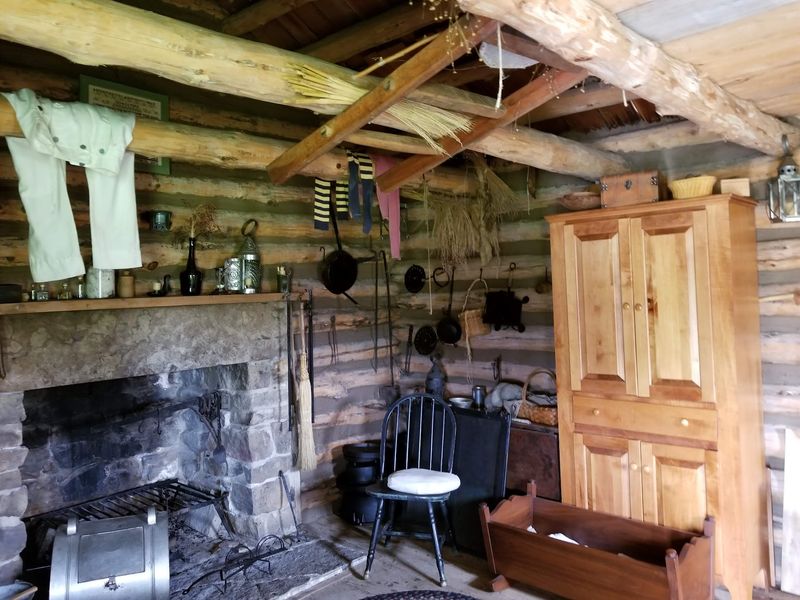
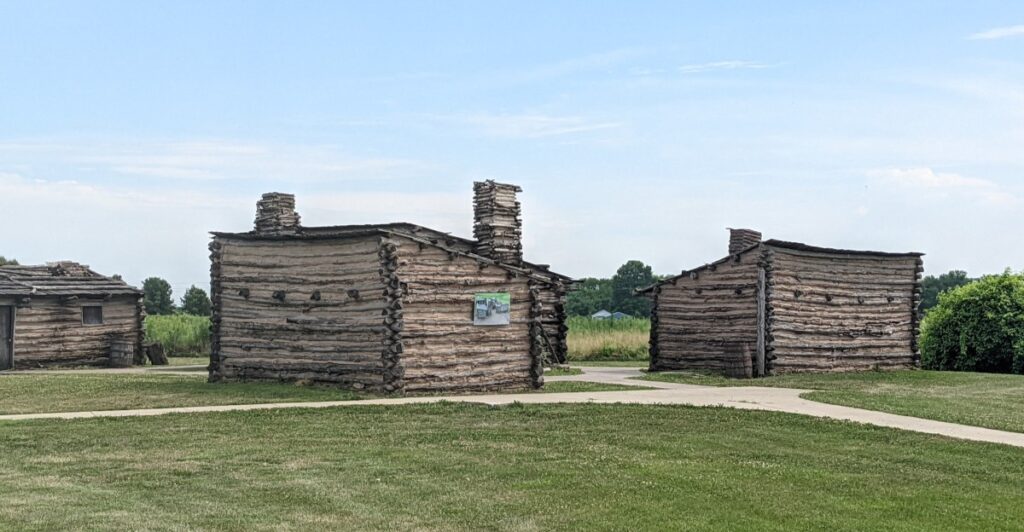
Cold wind, smoky fires, and about forty restless men packed into wooden huts. That was winter at Camp River Dubois, and the recreated fort outside the museum gives a peek at how they lived.
The reconstruction is based on a sketch William Clark drew in his field notes. His drawing showed log cabins arranged in a square, with walls that helped protect the camp. Builders used that sketch as a guide, so the shape you see outside connects directly to the captain’s own pencil.
Life here was not easy. The men slept in tight quarters, hunted for meat, and spent long days preparing for the journey. Clark kept a close eye on everyone, and soldiers who broke rules could face punishment.
Honesty helps here. The outdoor fort has needed repairs in recent years, and parts of it have been closed while crews work on restoration. Depending on when you visit, you may only be able to look through windows or gaps in the logs instead of walking inside.
Even from the outside, the fort is worth a slow lap. Notice how the logs fit together, where the doors face, and how small each cabin is. Imagine a snowy morning with a crowd of men stamping their boots to stay warm.
Staff inside the museum can tell you the current status of the fort before you head out. Asking first saves a walk if a section is fenced off. Sometimes guided tours of the fort have been offered, so check while you are at the desk.
The fort also makes a good spot for kids to burn off energy after the museum. Open grass surrounds it, and there is room to run. Bring a jacket on breezy days, because this flat ground near the rivers catches every gust.
Free Admission, a Short Film, and Volunteers Who Know Their Stuff
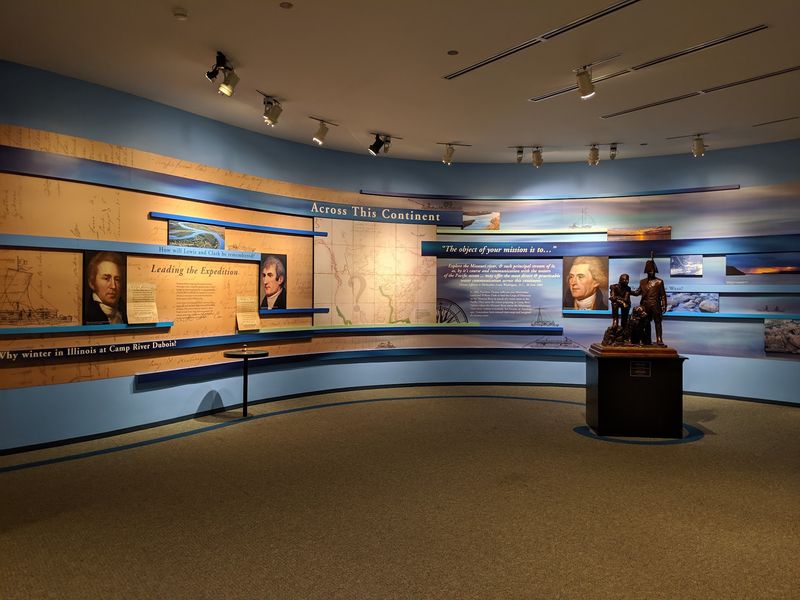
Zero dollars. That is what it costs to walk into the museum, and parking is free as well. A donation box sits near the entrance, and many travelers drop in a few bills after seeing how much the place offers.
Visitors are asked to sign the guest book when they arrive. It only takes a moment, and flipping through the pages shows names from all over the country. Some visitors come from far away specifically to follow the Lewis and Clark trail from its start.
The people behind the desk are a big reason the visit runs smoothly. Volunteers and staff here clearly know the expedition well. Ask them a question about the keelboat or the winter camp, and you may get a story that is not printed on any sign.
Do not skip the theater. A film of about 15 minutes plays in a comfortable room with plenty of seats. It gives a clear overview of the journey, which helps everything else in the museum make more sense.
Watching the film near the start of your visit is a smart move. It sets the timeline in your head before you begin reading exhibits. The audio can be a little uneven, so sitting closer to the screen may help.
There is also a small gift shop with books, toys, and souvenirs tied to the expedition. Prices are reasonable, and the selection leans toward items kids actually enjoy. History books here make solid picks for readers who want more after the trip.
Restrooms are clean, and the building is easy to get around. On quiet weekday afternoons, you might have whole rooms nearly to yourself. That gives plenty of space to linger at the keelboat or ask the volunteers more questions without feeling rushed.
Planning Your Visit Around the Hours and the Rivers
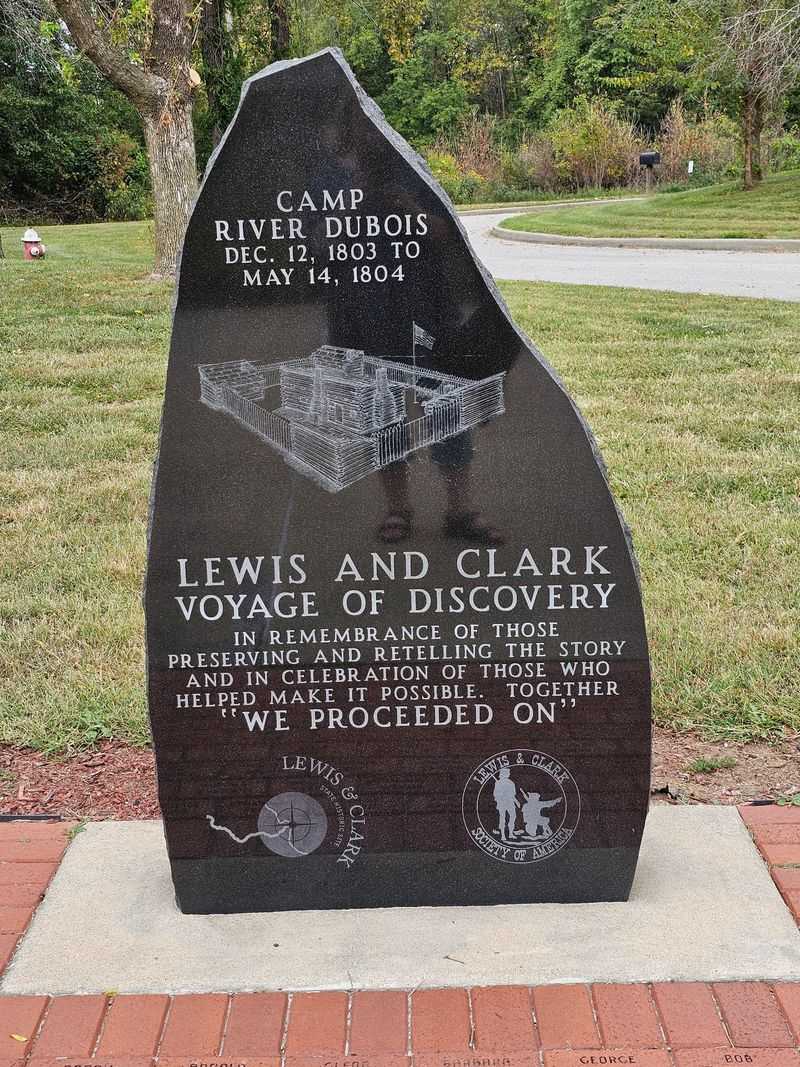
Timing matters more than you might think. The site is open Wednesday through Sunday from 9 AM to 5 PM, and it closes on Monday and Tuesday. Showing up early in the week means staring at locked doors.
An hour or two covers the museum, film, and outdoor fort at a comfortable pace. Arriving in the morning leaves time to explore the area afterward. Late afternoon arrivals often wish they had more time outside before closing.
Hartford sits close to where the Missouri River pours into the Mississippi. Nearby levee roads and viewing spots let you see this meeting of two giant rivers. It is the same water route the Corps of Discovery followed when they rowed away in May 1804.
For walkers and bikers, the Madison County Transit Confluence Trail runs nearby. It is a paved path that follows the river region and offers long, flat stretches. A walk or ride here pairs nicely with the museum, especially on a mild day.
Like many quiet outdoor areas, the remote spots along the river are best explored with a buddy and during daylight. Stick to open trails and keep an eye on your surroundings. Common sense goes a long way.
Season can shape the trip, too. Spring and fall bring comfortable temperatures for outdoor walking. Summer can get hot and buggy near the water, so pack bug spray and plenty of drinks.
The site works well as part of a bigger day. Gateway Arch National Park in St. Louis is about a 20 to 30 minute drive away, and the river towns of Alton and Grafton are close. Building a loop that starts at the Arch and ends at the confluence makes a fun river-themed adventure.
Why the Real Beginning Belongs in Hartford
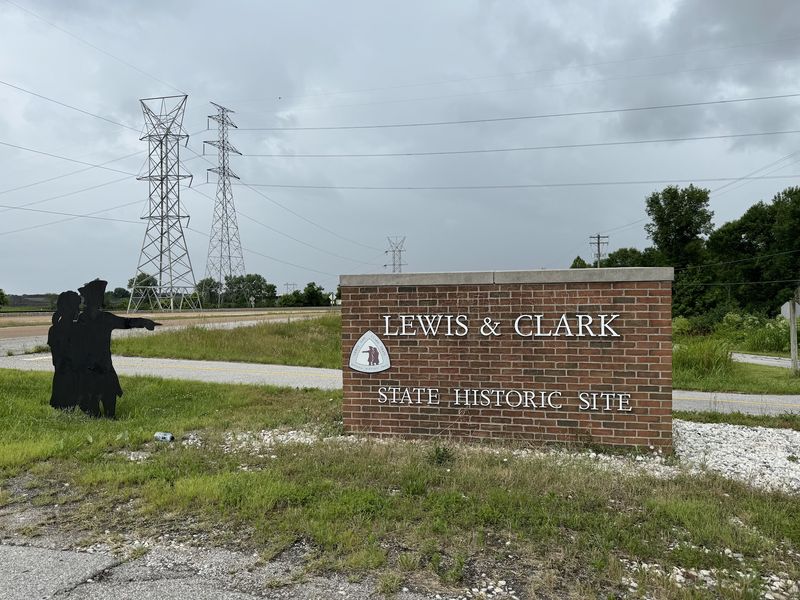
Ask most people where Lewis and Clark started, and you will hear St. Louis or maybe somewhere in Missouri. Few say Illinois. Yet on May 14, 1804, the Corps of Discovery left from this side of the river, and Hartford has every right to claim the starting line.
That fact flips the usual story around. Before the famous journey across mountains and plains, there were months of planning, practice, and waiting here. Without that winter, the expedition might not have been ready for what came next.
The site captures that overlooked chapter better than anywhere else. The keelboat shows the tools, the exhibits show the plan, and the fort shows the daily grind. Together they explain how a group of soldiers became a real team.
A nearby Lewis and Clark monument adds another layer to the visit. It honors the departure and the long trail that followed. Standing near it, with the rivers just beyond, helps connect the dots between this quiet spot and the Pacific Ocean thousands of miles away.
Compared to big national landmarks, Camp River Dubois stays relaxed and uncrowded. You can take your time, ask questions, and look closely without pushing through crowds. For families, that slower pace makes learning easier.
History lovers who follow the full trail often say the Illinois site holds its own against bigger stops. The care put into the exhibits shows in the details, from journal quotes to packed supply barrels. Even short visits deliver a solid understanding of the whole journey.
So next time you hear about Lewis and Clark, picture this flat stretch of Illinois riverbank in winter. Smoke rising from log huts, a long boat waiting at the shore, and a westward river ready to carry them into the unknown.
Share this story